
The market price of output affects
a. the supply of the resources used to produce it
b. the demand for the resources used to produce it
c. the marginal product of the resources used to produce it
d. the marginal resource cost of the resources used to produce it
e. the total cost of the resources used to produce it
An increase in supply will cause equilibrium price to __________ and equilibrium
quantity to __________.
a. increase; increase
b. increase; decrease
c. decrease; increase
d. decrease; decrease
e. remain constant; increase
Which of the following is not true regarding the argument for protection as a way of
maintaining jobs and wage levels?
a. Wages may be only a small fraction of total production costs.
b. High wages do not necessarily imply high labor costs when productivity is taken into
account.
c. U.S. workers are among the most productive in the world partly because they are
well educated and trained compared to other countries.
d. U.S. workers are highly productive partly because they are provided with abundant
supplies of machines and physical capital.
e. It is not possible that the U.S. wages, even when supported by high U.S. output per
worker, can render U.S. products competitive with low-wage countries.
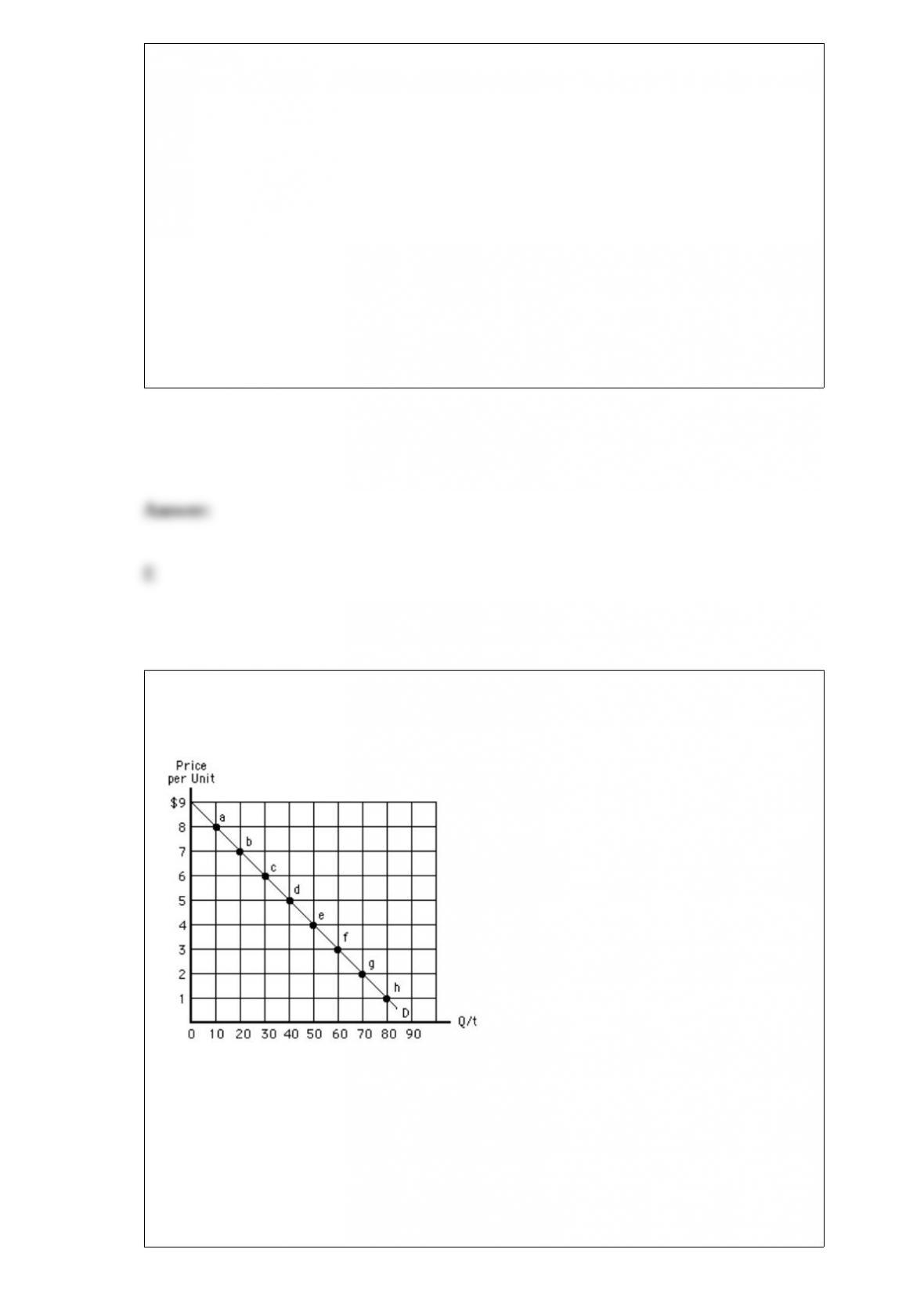
Exhibit 5-7
Between points b and c in Exhibit 5-7, price decreases by $1, quantity demanded
increases by 10,
a. total revenue decreases by $1, and demand is elastic
b. total revenue decreases by $1, and demand is inelastic
c. total revenue increases by $40, and demand is elastic
d. total revenue increases by $40, and demand is inelastic
e. and total revenue increases by $80
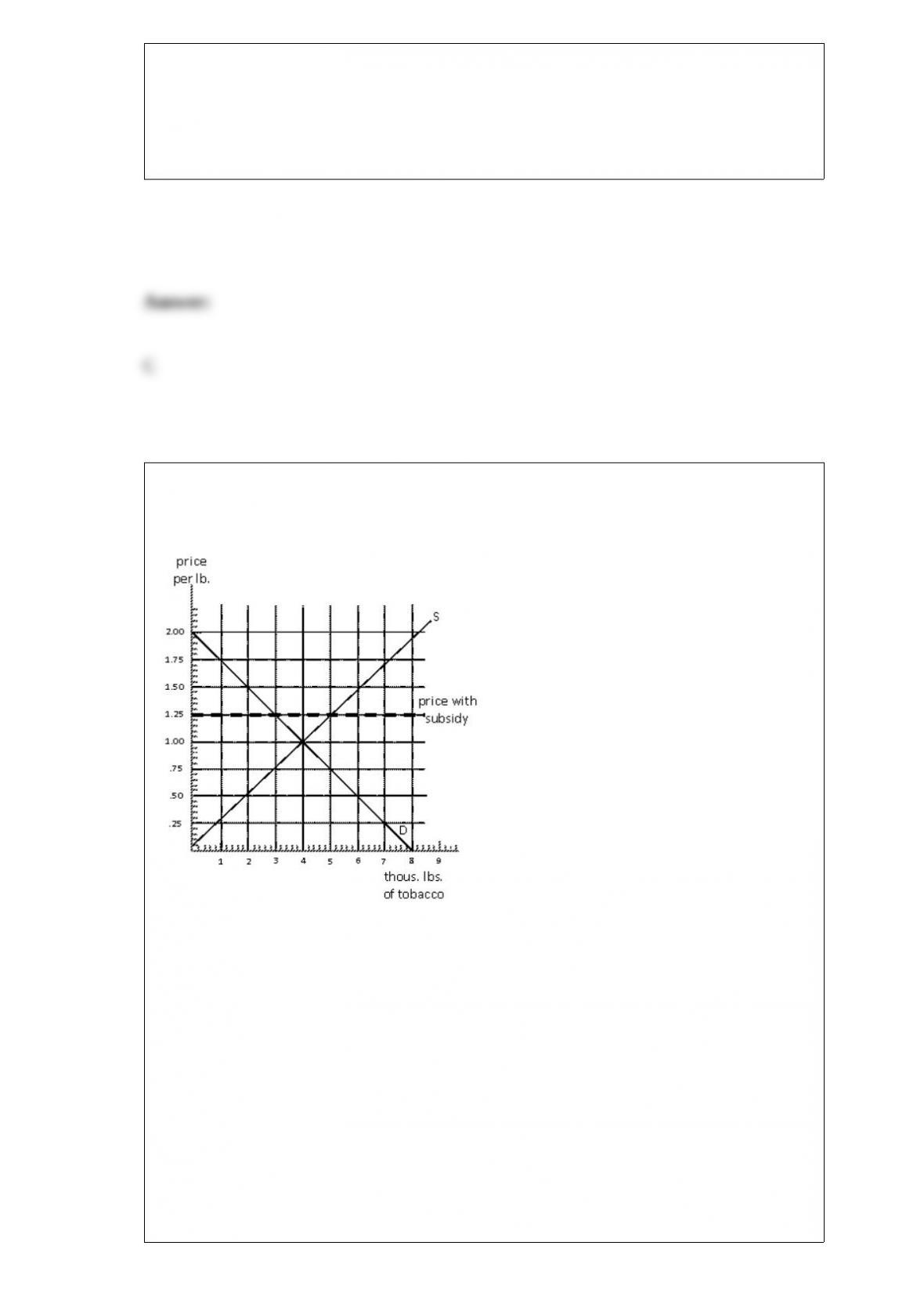
Exhibit 16-5
Exhibit 16-5 represents the market for leaf tobacco. Suppose the government imposes a
floor of $1.25 in this market. How much will tobacco buyers and taxpayers combined
spend on tobacco?
a. $5250
b. $5500
c. $5750
d. $6000
e. $6250
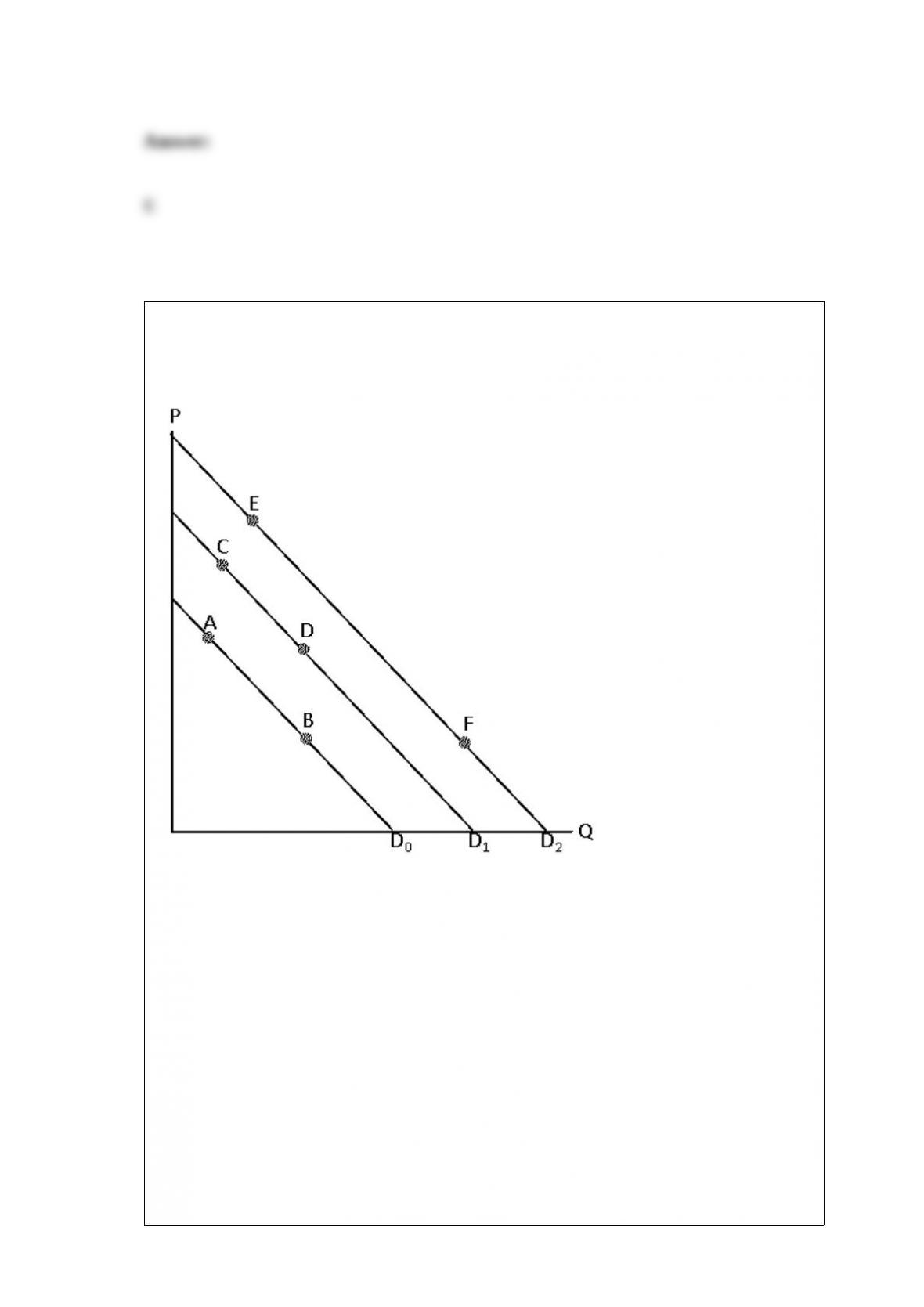
Exhibit 4-1
Consider Exhibit 4-1 which shows 3 demand curves for corn flakes. Which of the
following would be most likely to shift the demand curve from D0 to D1?
a. a report that eating corn flakes increases the risk of cancer
b. a decrease in consumer incomes if corn flakes is an inferior good
c. a decrease in the price of oatmeal which many consumers consider to be a substitute
for corn flakes
d. an increase in the price milk which many consumers consider to be complement for
corn flakes
e. a widely anticipated recession

If an economy increases the amount of roundabout production today,
a. more consumer goods can be produced in the present
b. fewer consumer goods can be produced in the future
c. more capital accumulates
d. less capital accumulates
e. fewer capital goods can be produced in the future
A labor union is a group of
a. employees who join together to improve their working conditions
b. firms that join together to hire workers
c. firms that work together to negotiate better prices in the market
d. farmers who work together to receive better prices for their agricultural products
e. workers and firm owners who join together to improve working conditions

In one week, Mohammed can knit 5 sweaters or bake 240 cookies. In one week, Tetah
can knit 15 sweaters or bake 480 cookies. In this example,
a. Mohammed has the absolute and comparative advantage in both tasks
b. Tetah has the absolute and comparative advantage in both tasks
c. Mohammed has the absolute advantage in both tasks and the comparative advantage
in knitting sweaters
d. Tetah has the absolute advantage in both tasks and the comparative advantage in
knitting sweaters
e. Mohammed has the absolute advantage in both tasks and the comparative advantage
in baking cookies
Although both perfectly competitive and monopolistically competitive firms earn
normal profits in the long run, monopolistically competitive firms will not
a. operate where price equals marginal cost
b. charge a higher price than firms in perfect competition
c. produce a smaller quantity than firms in perfect competition
d. produce where price equals average total cost
e. exit when demand falls below long-run average costs

If the marginal revenue product of the fifth worker hired by a firm is $15 and the price
of the last unit of output produced is $5, then the marginal product of the fifth worker is
a. 15 units of output if the product market is perfectly competitive
b. 3 units of output if the product market is perfectly competitive
c. 45 units of output if the product market is perfectly competitive
d. 5 units of output if the product producer is a price searcher
e. 15 units of output if the product producer is a price searcher
A cartel’s profit-maximizing quantity occurs where the cartel’s
a. marginal cost equals marginal revenue
b. marginal cost equals demand
c. price is highest
d. cost is lowest
e. demand curve has a kink
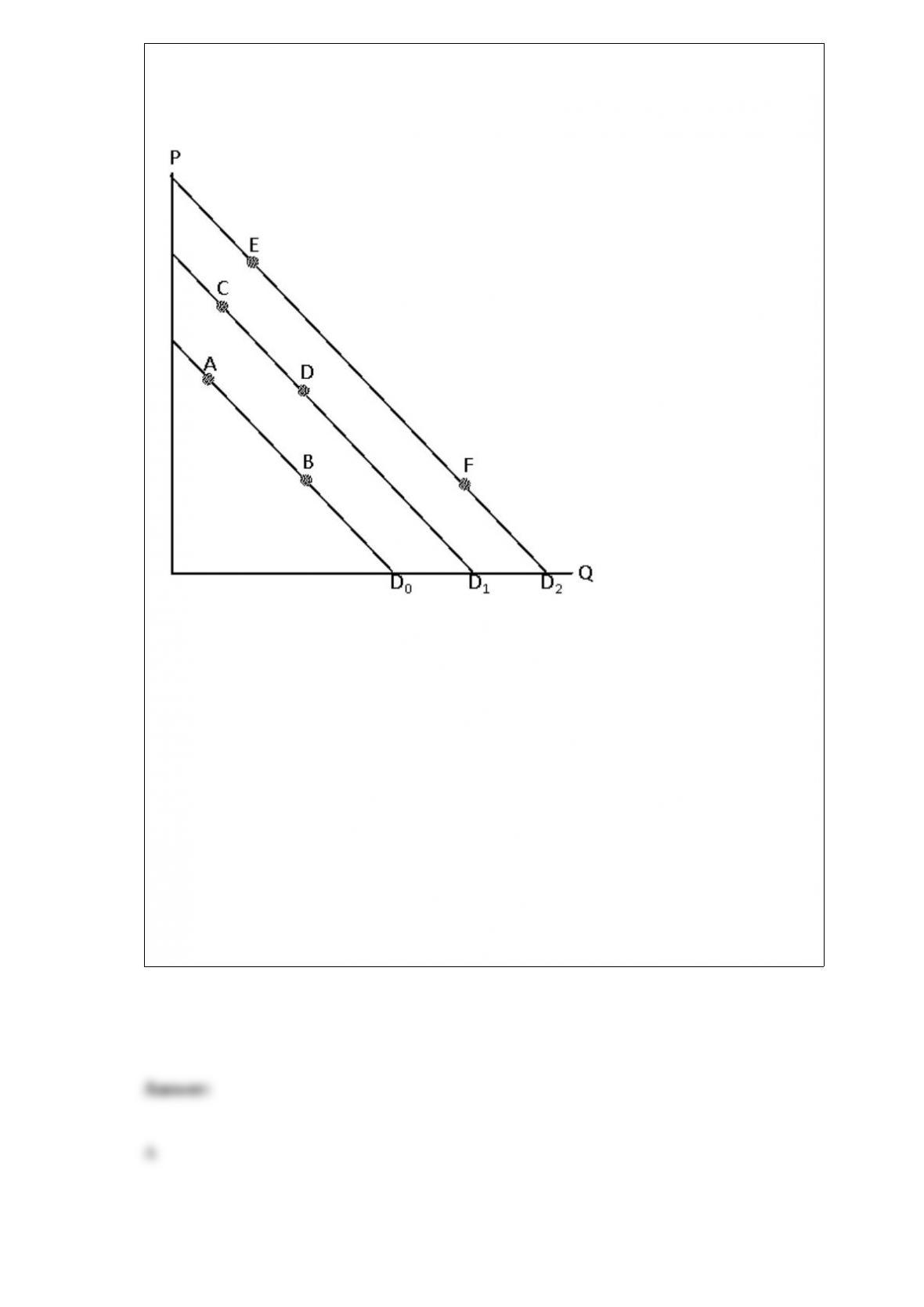
Exhibit 4-1
Consider Exhibit 4-1 which shows 3 demand curves for corn flakes. Which of the
following would be most likely to shift the demand curve from D0 to D1?
a. a report that eating corn flakes reduces the risk of cancer
b. an increase in consumer incomes if corn flakes is an inferior good
c. a decrease in the price of oatmeal which many consumers consider to be a substitute
for corn flakes
d. an increase in the price milk which many consumers consider to be complement for
corn flakes
e. a decrease in the number of consumers
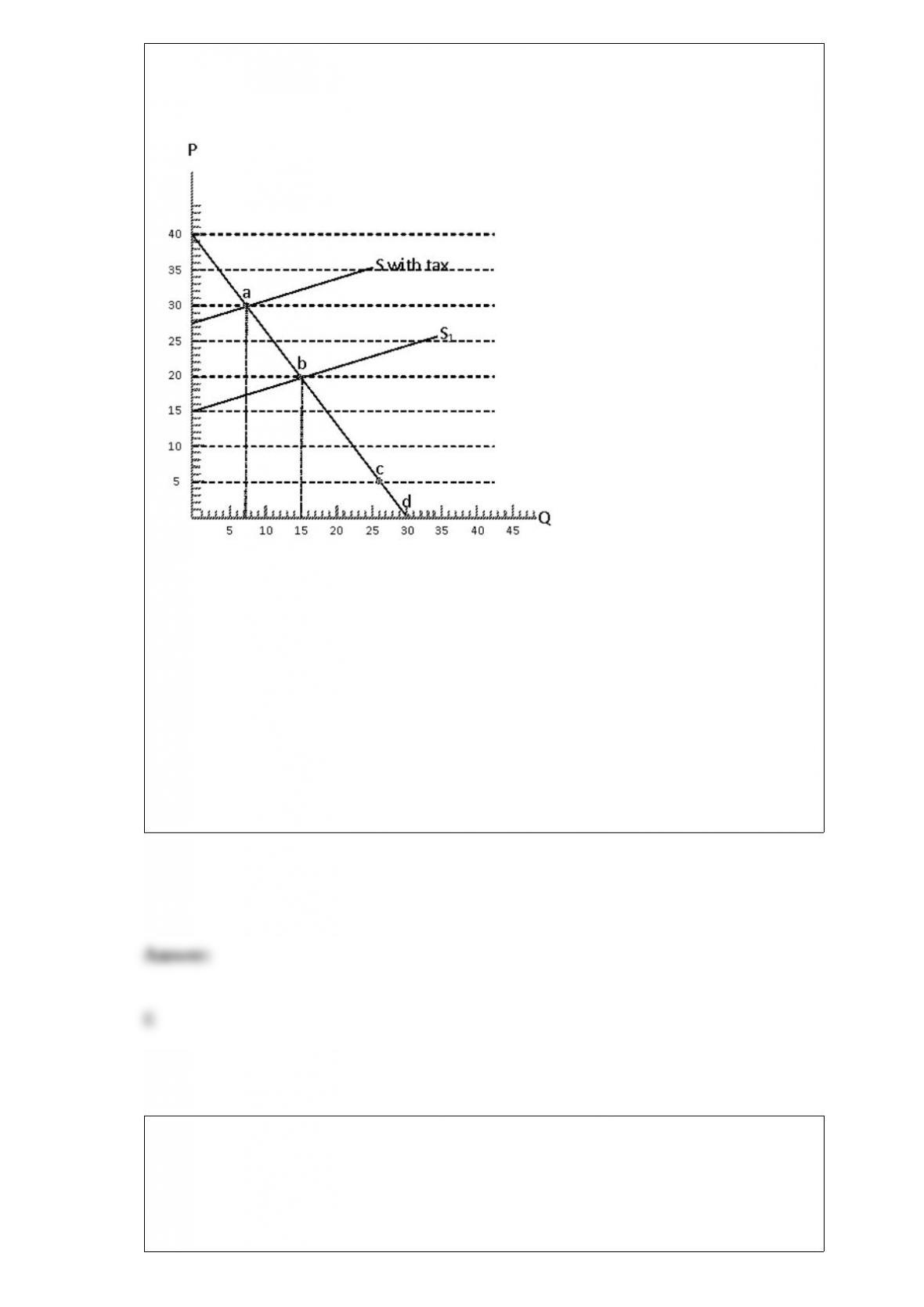
Exhibit 5-32
Refer to Exhibit 5-32. The revenue generated by the $12.50 tax is:
a. $12.50
b. $25.00
c. $37.50
d. $62.60
e. $87.50
It is in the long-run economic interest of the world to preserve rainforests, but it is not
in the short-run economic interest of the inhabitants of the countries involved to do so.
a. True
b. False
An industry consists of all firms that supply output to a particular market.
a. True
b. False
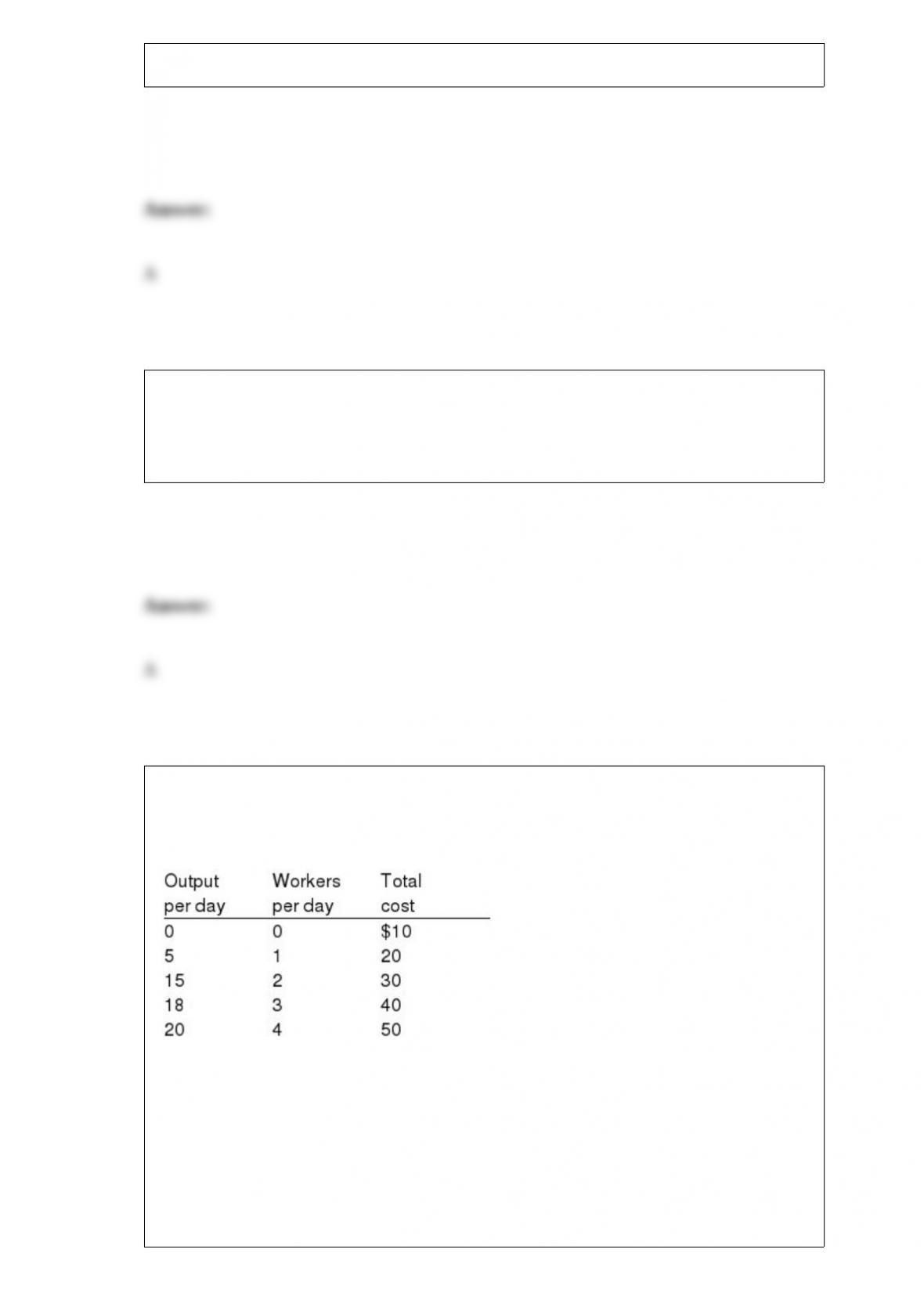
Exhibit 7-5
In Exhibit 7-5, what is fixed cost at 15 units of output?
a. $0
b. $10
c. $30

d. it is impossible to calculate fixed cost unless we know the daily wage
e. it is impossible to calculate fixed cost unless we know variable cost at Q = 0
Tina Makumbi imports sesame oil from Ethiopia and sells to a market that has a
downward sloping demand curve.The demand curve indicates that some consumers are
willing to pay $1.50 or more per pound for the first few pounds, but every consumer
gets to buy at the market clearing price of $0.50 per pound. The difference between the
most that consumers would pay and the actual amount they do pay is called
a. exporter surplus
b. trade balance
c. producer surplus
d. consumer equilibrium
e. consumer surplus
If the cross-price elasticity of demand between good x and good y is 0.4, then
a. the demand for good x is highly responsive to changes in the price of good y
b. a 10 percent increase in the price of good y leads to a 0.4 percent increase in the
quantity demanded of good x

c. a 10 percent decrease in the price of good y leads to a 4 percent decrease in the
demand for good y
d. good x and good y are complements
e. good x is a normal good and good y is an inferior good
A person who can produce more of a good than another person is said to possess a
comparative advantage.
a. True
b. False
Helen gives up the opportunity to bake 40 cakes for each room she paints; Josh can
paint one room in the time it takes him to bake 60 cakes. The opportunity cost of a cake
for Josh is
a. painting one room
b. painting 1/40 of a room
c. painting 1/60 of a room
d. painting 2/3 of a room

e. painting 3/2 of a room
In “closing the gold window” in 1971, President Nixon
a. did both d and e
b. did all of the following
c. refused to exchange gold for dollars
d. forced the dollar to appreciate
e. called in all gold circulating domestically
A line on a graph will shift if
a. the independent variable changes
b. there are no changes in any variables considered in the model
c. there is a change in a variable that had previously been assumed to be constant
d. a change in the independent variable causes a change in the dependent variable
e. the independent variable and the dependent variable are unrelated
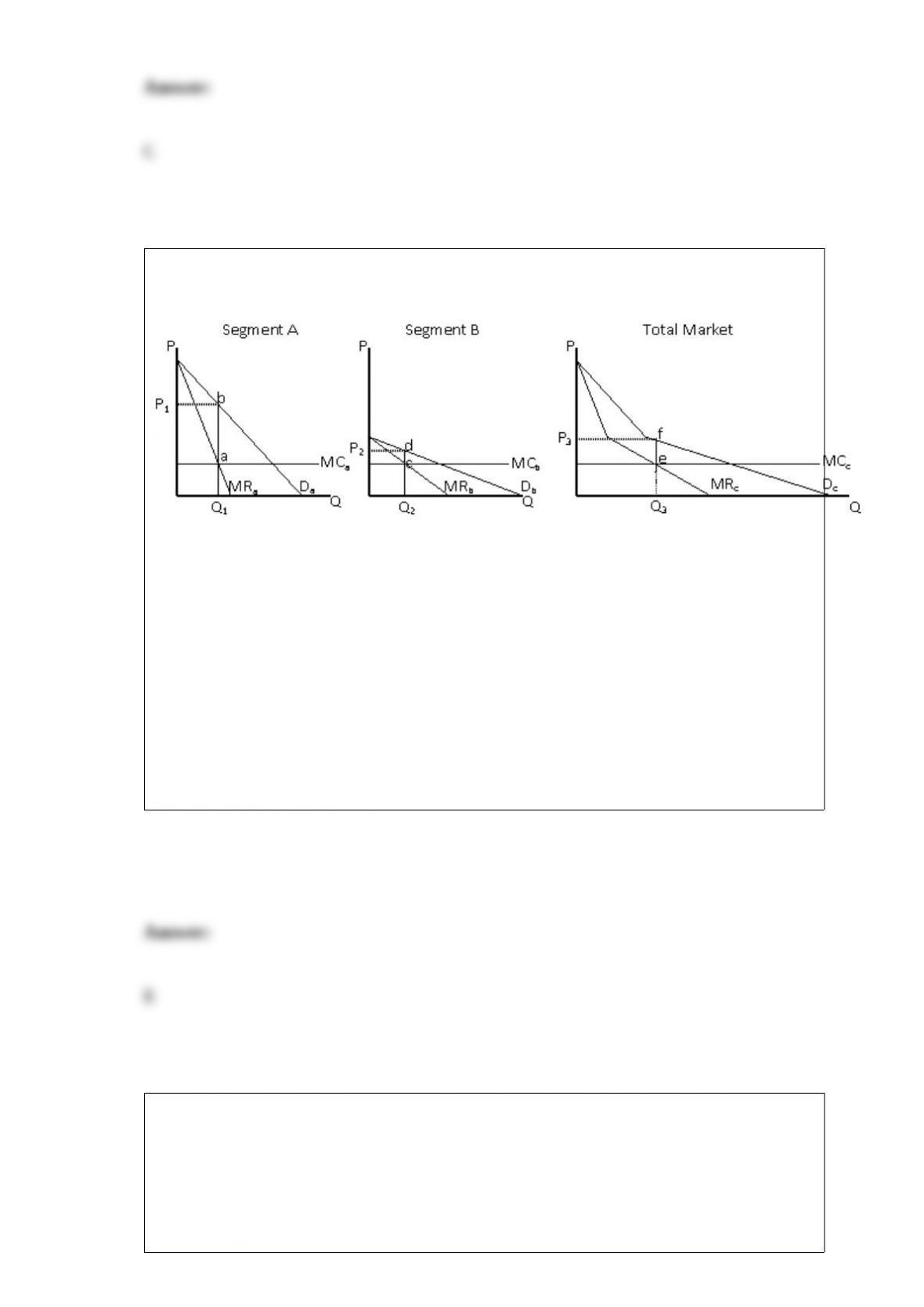
Exhibit 9-20
In Exhibit 9-20, how does market segment A differ from market segment B?
a. demand is relatively more elastic in segment A than in segment B
b. demand is relatively more income elastic in segment A than in segment B
c. demand is relatively more income elastic in segment B than in segment A
d. there are more consumers in segment A than in segment B
e. demand is relatively more inelastic in segment A than in segment B
The Sherman Act
a. prohibited restraint of trade
b. created the Federal Trade Commission

c. prohibited fraudulent advertising
d. regulated the railroads
e. exempted insurance companies from antitrust law
The United States economy has experienced a decrease in competition over the last
three decades.
a. True
b. False
A rational decision maker compares the expected marginal cost to the expected
marginal benefit of any activity.
a. True
b. False
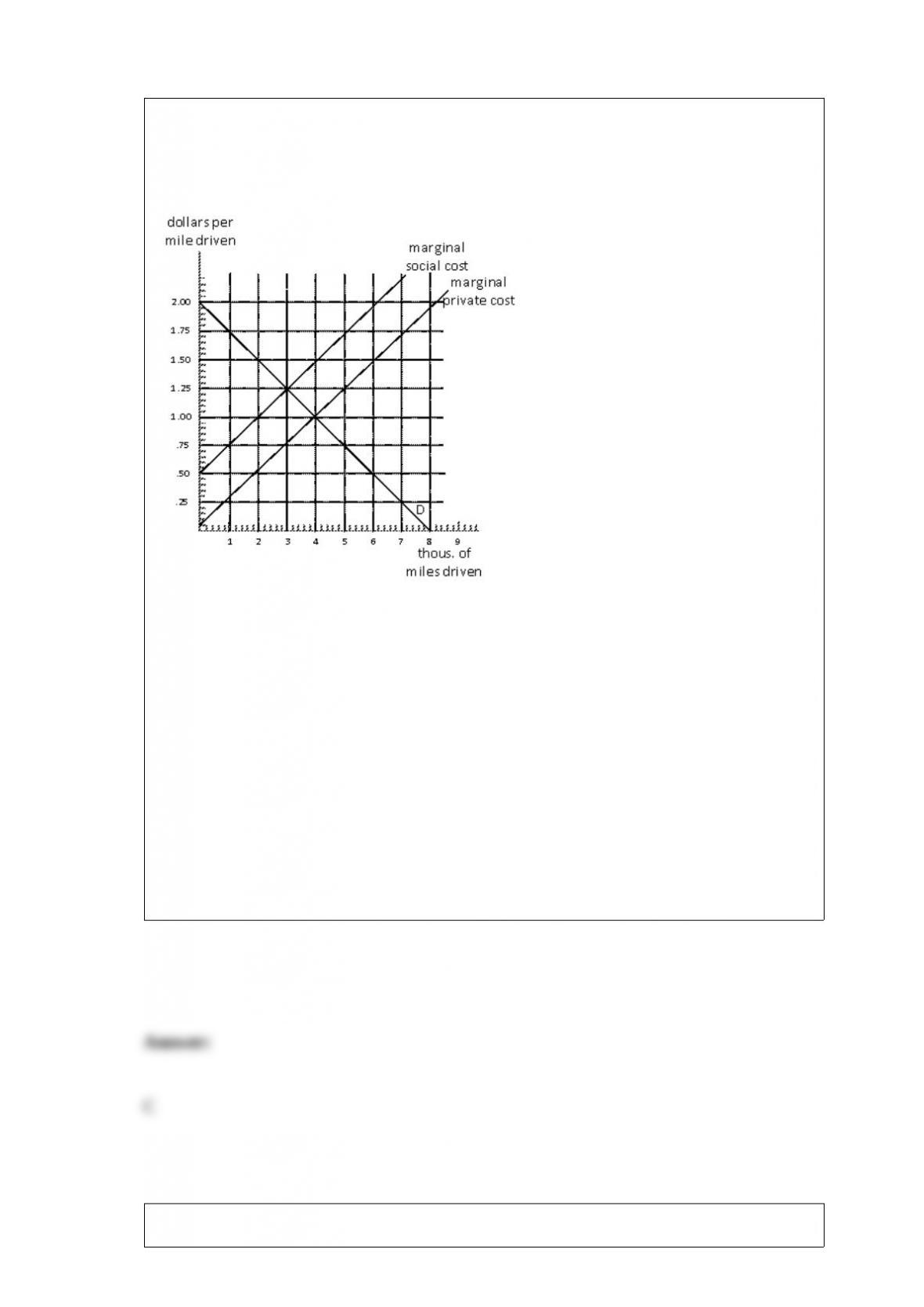
Exhibit 17-7
Exhibit 17-7 represents the consumer market for driving their automobiles. If drivers
base their driving decisions on the marginal social cost of driving their cars, what would
be the social gain?
a. $150
b. $200
c. $250
d. $300
e. $350
Those who simultaneously buy and sell currency to take advantage of exchange rate
differences are called
a. speculators
b. hedgers
c. entrepreneurs
d. arbitrageurs
e. underwriters
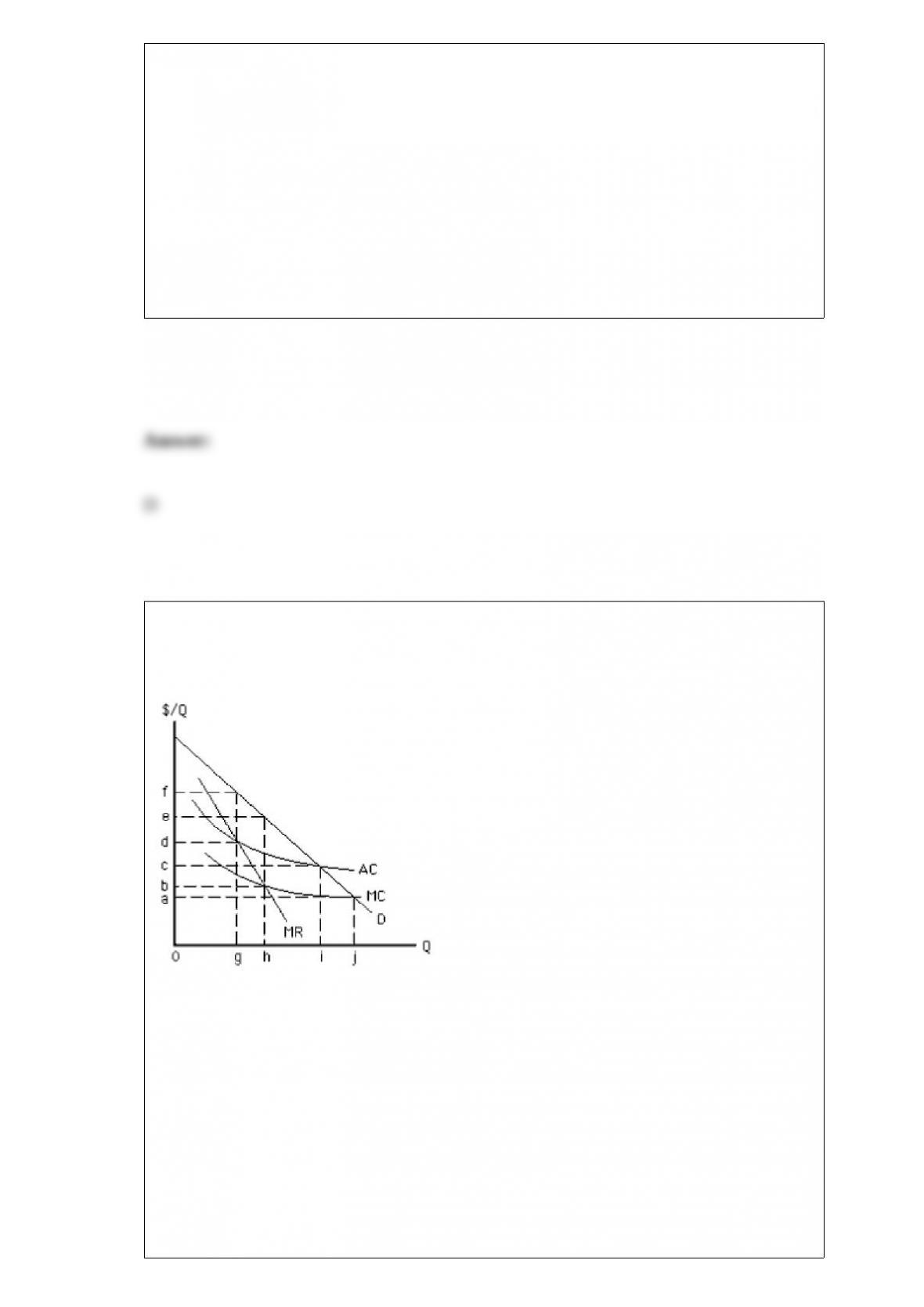
Exhibit 15-4
If regulators allow the natural monopolist in Exhibit 15-4 to earn only a normal profit, it
will produce an output equal to
a. 0
b. g
c. h
d. i

e. j
If demand is unit elastic, a price reduction will
a. increase revenues
b. reduce revenues
c. reduce quantity demanded
d. have no effect on revenues
e. increase profits
An industrial union is a union composed of workers in the same skilled profession.
a. True
b. False