1) Minimum wage laws have contributed to higher unemployment levels among
teenagers and minorities.
2) Unintended consequences can result from the government’s desire to enforce laws
uniformly.
3)
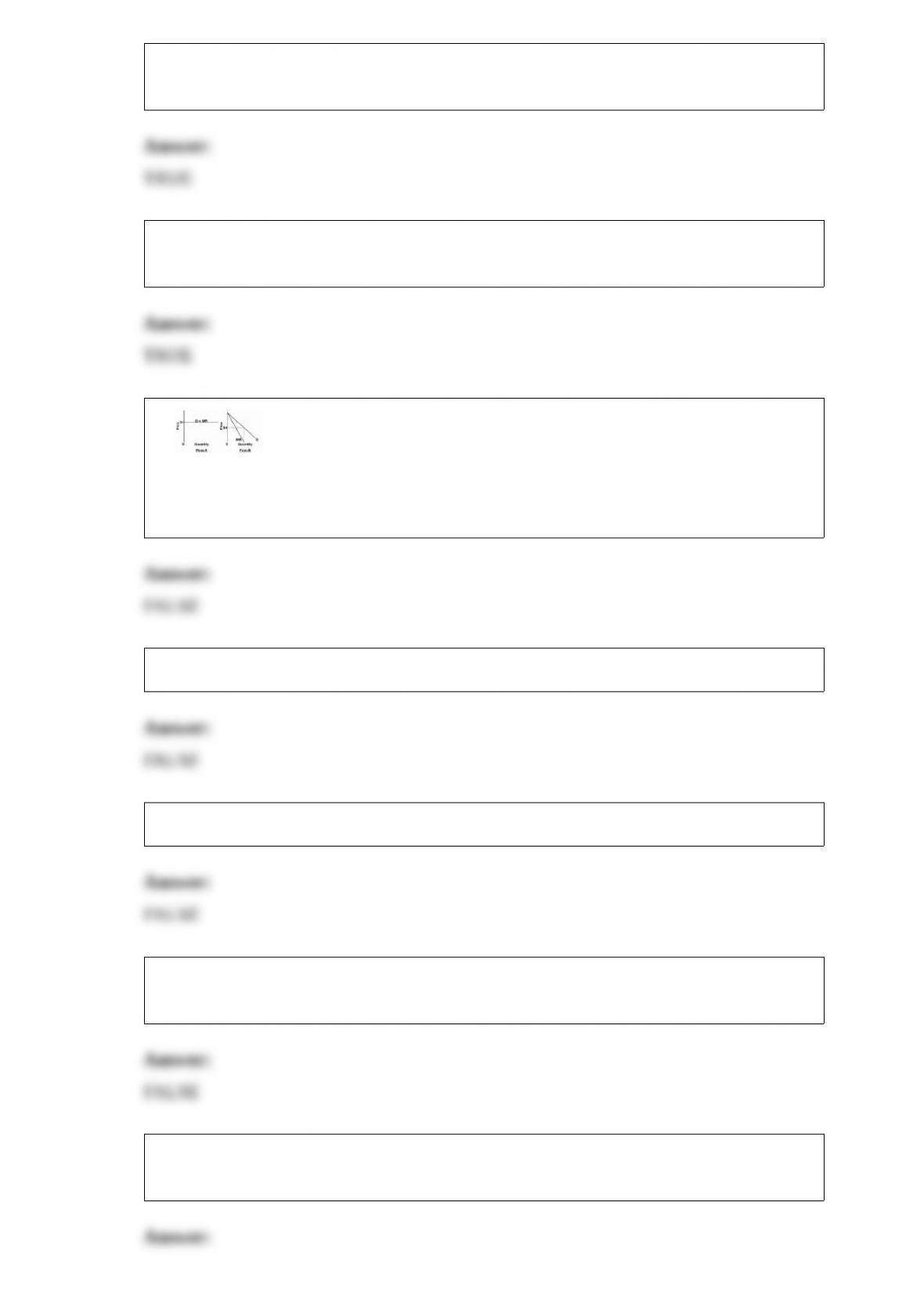
Refer to the diagrams. Both firms are selling their products in purely competitive
markets.
4) Efficiency wages are established at below-equilibrium levels.
5) Import tariffs benefit the consumers of the product involved.
6) When technological advances are of the capital-using kind, it is possible for an
economy to increase its productivity without any net investment in capital goods.
7) The total cost of extracting and selling a resource in a given year is the sum of the
extraction cost and user cost.
8) A parallel shift in a budget line is caused by changes in a consumer’s level of
satisfaction.
9) The user cost of a resource is the market price paid by the buyer of the resource.
10) The capricious universe view is the idea that the IACs are exploiting the DVCs.
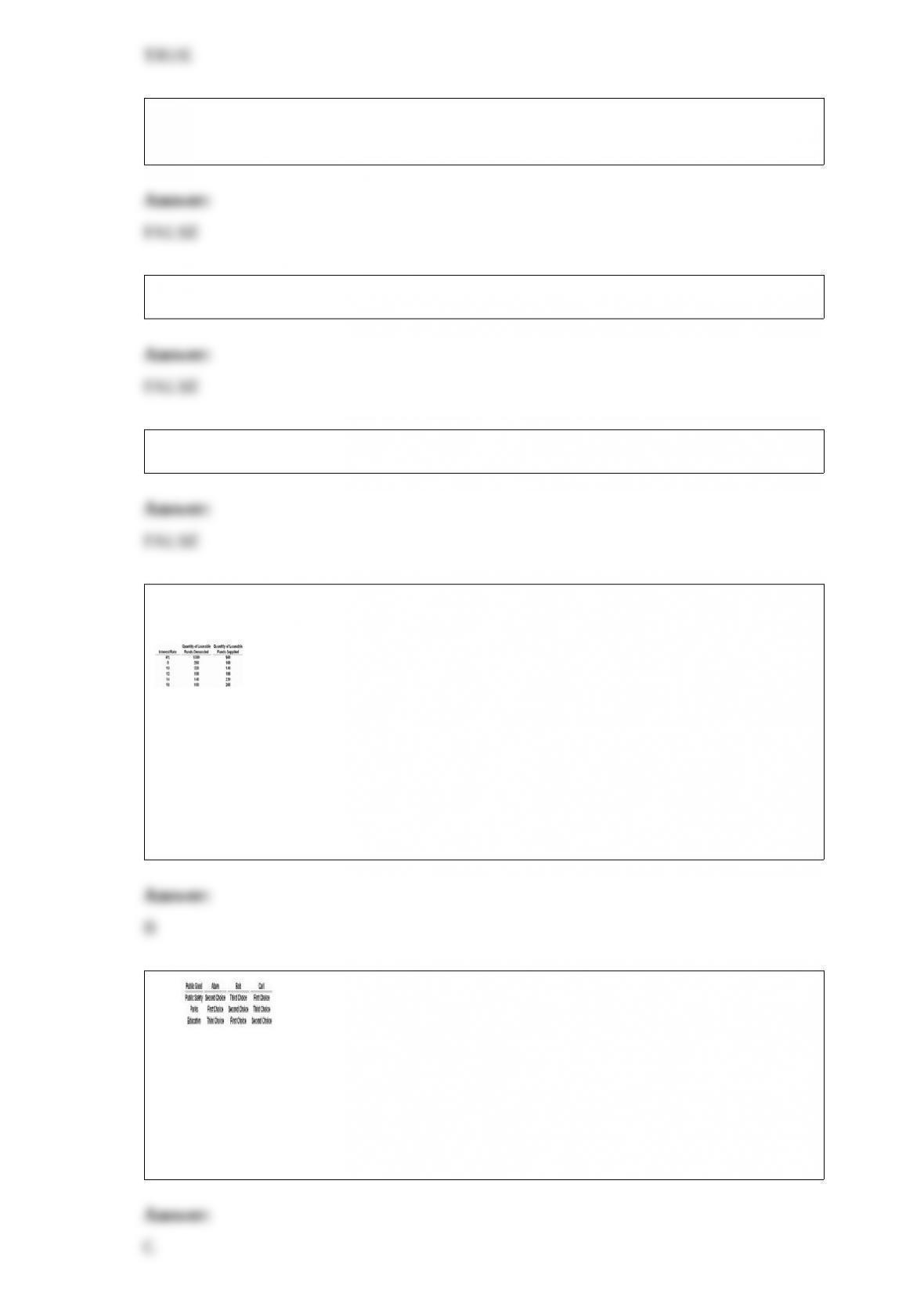
11) Answer the question using the following table. Figures are in billions of dollars.
Refer to the above table. A usury law that sets the interest rate 2% below the market rate
of interest will result in a shortage of funds of:
A.$120 billion
B.$80 billion
C.$40 billion
D.$20 billion
12)
Refer to the table. In a choice between education and public safety:
A.a majority of voters would favor education.
B.no voter decision is possible.
C.a majority of voters would favor public safety.
D.the outcome would depend on which item was listed first on the ballot.
13) Given the products below and the events that affect them, indicate what happens to
demand, supply, equilibrium quantity, and equilibrium price in a competitive market.
Identify the determinant of demand and supply that causes the shifts.
(a)Calculators. More schools require students to buy and use calculators; improved
productivity shortens the time it takes to make calculators.
(b)Gasoline. Oil production declines due to a crisis in the Middle East; people take
more car vacations and drive more.
(c)New homes. The average incomes fall as the economy moves into recession; the
productivity of home construction workers and builders increases.
(d)Tobacco. The government cut its subsidy to tobacco farmers; more people quit
smoking.
14)
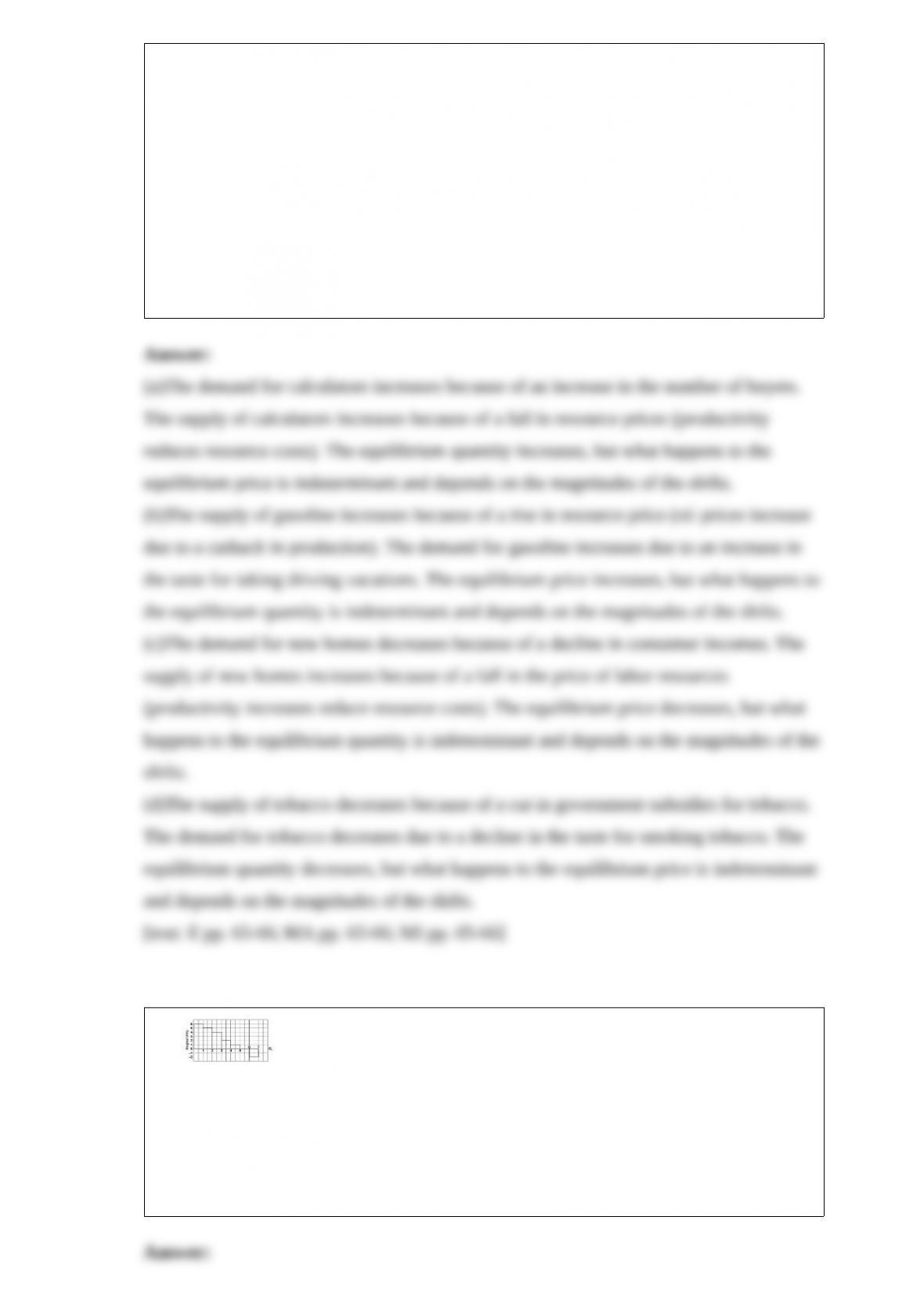
Refer to the diagram. The total utility yielded by 4 units of X is:
A.4
B.15
C.17
D.18

15) If products were in short or surplus supply in the Soviet Union:
A.price and profit signals eliminated those shortages and surpluses.
B.price and profit signals intensified those shortages and surpluses.
C.producers would not react because no price or profit signals occurred.
D.the planners would immediately adjust production to achieve equilibrium.
16) Which of the following is correct?
A.The rapid expansion of foreign incomes will reduce U.S. agricultural exports.
B.A decrease in the international value of the dollar will reduce U.S. agricultural
exports.
C.An increase in the international value of the dollar will reduce U.S. agricultural
exports.
D.Changes in the international value of the dollar have no effect on U.S. agricultural
exports.
17) “Consumer sovereignty” means that:
A.buyers can dictate the prices at which goods and services will be offered.
B.advertising is ineffective because consumers already know what they want.
C.buyers control the quality of goods and services through regulatory agencies.
D.buyers determine what will be produced based on their “dollar votes” for the goods
and services offered by sellers.
18) The long-run supply curve for a purely competitive industry would be horizontal
when:
A.An increase in product demand causes an increase in resource prices
B.An increase in product demand causes a decrease in resource prices
C.A decrease in product demand causes a decrease in the number of firms
D.A decrease in product demand causes no effect in resource prices

19) What do economies of scale, the ownership of essential raw materials, and patents
have in common?
A.They must all be present before price discrimination can be practiced.
B.They are all barriers to entry.
C.They all help explain why a monopolist’s demand and marginal revenue curves
coincide.
D.They all help explain why the long-run average cost curve is U-shaped.
20)
Refer to the diagram. From society’s perspective, if MB2 and MC1 are relevant:
A.Q4 represents too little pollution abatement.
B.Q1 represents too little pollution abatement.
C.Q3 represents an optimal amount of pollution abatement.
D.Q2 represents too little pollution abatement.
21) Regarding people’s preferences, behavioral economists observe that these
preferences are:
A.Stable and not affected by context
B.Fluid and easily influenced by framing
C.Readily and accurately predictable
D.Consistent from one period to the next
22)
Refer to the table above for a certain product’s market in Econland. If the world price of
the product were $6 and a tariff of $1 per unit imported is imposed, then the quantity of
output that would be supplied domestically would be:
A.1,400 units, and the quantity of output that would be imported would be 800 units
B.1,600 units, and the quantity of output that would be imported would be 800 units
C.1,600 units, and the quantity of output that would be imported would be 400 units
D.1,400 units, and the quantity of output that would be imported would be 400 units

23) Suppose a firm can produce 70 units of a product, Zenia, by combining labor, land,
capital, and entrepreneurial ability, as in the four alternative techniques shown in the
table below. Assume further that the firm can hire labor at $3 per unit, land at $3 per
unit, capital at $6 per unit, and entrepreneurship at $9 per unit.
Refer to the above table, and suppose that the firm uses production technique D. If each
of the 70 units of Zenia that are produced sells for $1 apiece, then how much will be the
profits of the firm from 70 units?
A.$70
B.$57
C.$13
D.$83
24) Deregulation:
A.tends to improve outcomes in industries generating substantial negative externalities.
B.eliminates regulatory capture and can improve outcomes by increasing competition.
C.is most appropriate to undertake by government agencies responsible for human
safety, financial regulation, and environmental protection.
D.always generates greater economic efficiency.
25) Which of the following is a per se violation?
A.Price discrimination
B.Price-fixing
C.Extremely high Herfindahl index
D.Horizontal merger
26) The parity ratio initially stood at 0.50. Then after several years, the prices received
by farmers doubled while the prices they paid tripled. This will bring the parity ratio to:
A.0.25
B.0.33
C.0.75
D.0.80
27) Which of the following statements is correct?
A.The price support program hastened the exodus of resources from agriculture.
B.The main beneficiaries of government price support assistance were the very
low-income farmers.
C.If the demand for agricultural products is inelastic, a relatively small decrease in
supply will increase gross farm incomes.
D.There is a misallocation of resources in rural America because of absolute and
relative increases in the size of the farm population.
28)
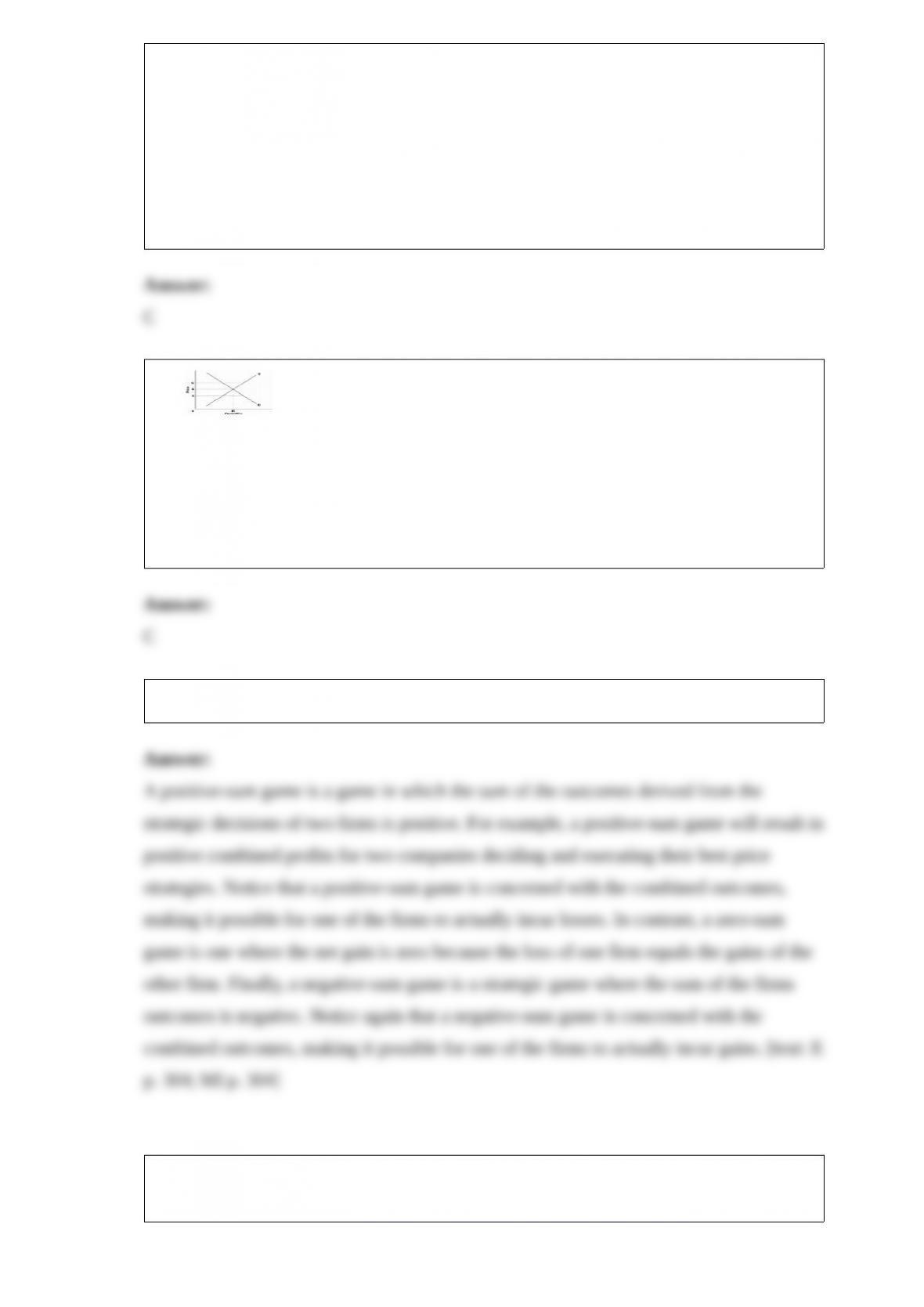
Refer to the diagram. A government-set price floor is best illustrated by:
A.price A
B.quantity E
C.price C
D.price B
29) What are the differences among positive-sum, negative-sum, and zero-sum games?
30) Distinguish between and give examples of nonrenewable resources and renewable
resources.
31)
32) What are types of firms that exemplify monopolistic competition?
33) Compare the progressivity of the United States tax system compared to other
OECD countries.
34) Use the following data to answer the question.
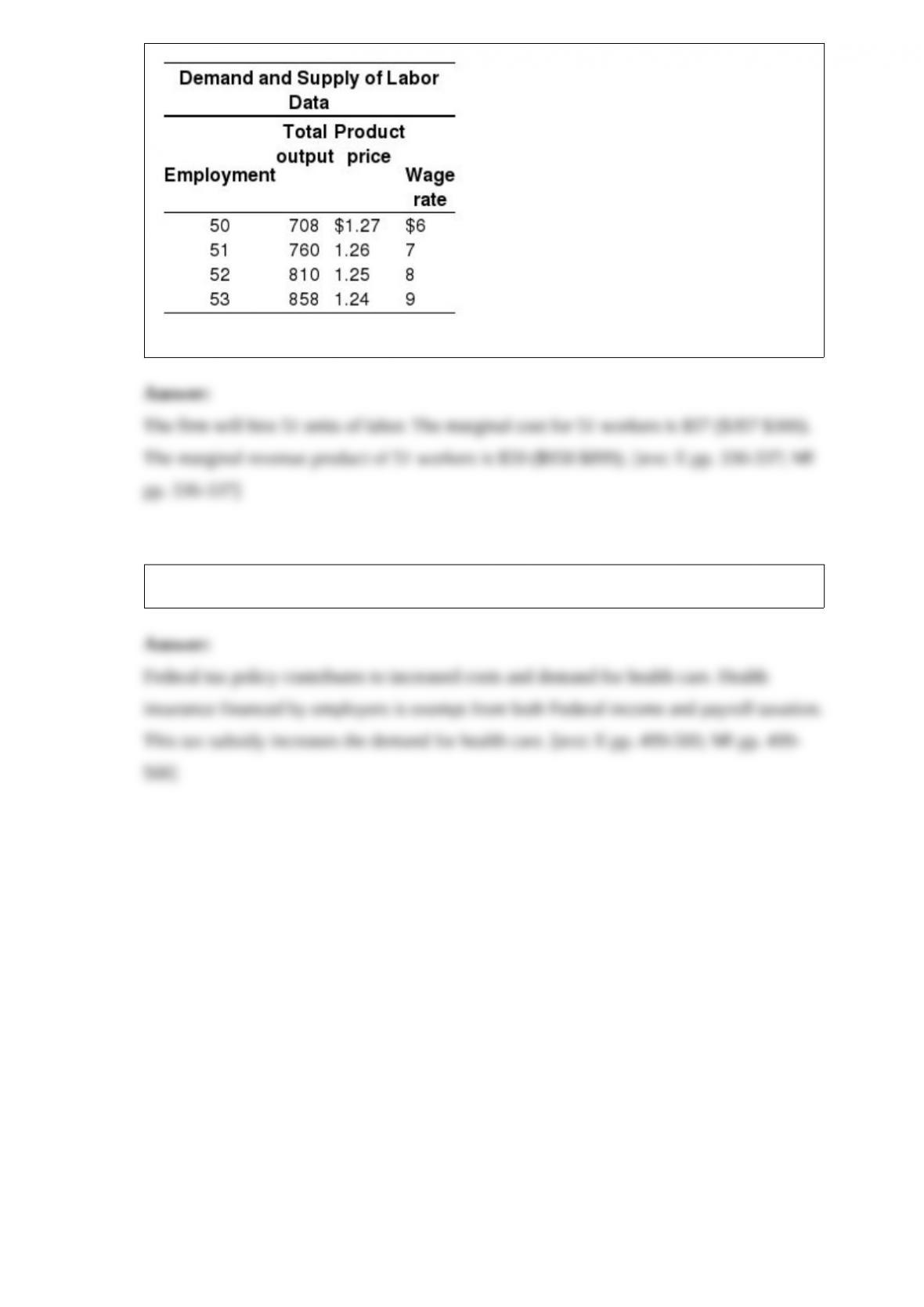
How many units of labor will this firm hire in maximizing its profits?
35) Explain the effect of Federal tax policy on the cost of health insurance.