
A decrease in the wage rate
a. shifts the supply curve of labor rightward.
b. increases the quantity supplied of labor.
c. shifts the supply curve of labor leftward.
d. decreases the quantity supplied of labor.
If medical research were to find that grain consumption lowers human life expectancy,
agricultural land rents would
a. increase.
b. decrease.
c. not be affected.
d. increase in the short run and decrease in the long run.
As long as there are advancements in technology, some workers will be temporarily
displaced.
a. True
b. False
If economies of scale are so pronounced in an industry that only one firm can survive in
the industry, this firm is called a(n) __________ monopoly.
a. financial
b. natural
c. structured
d. independent
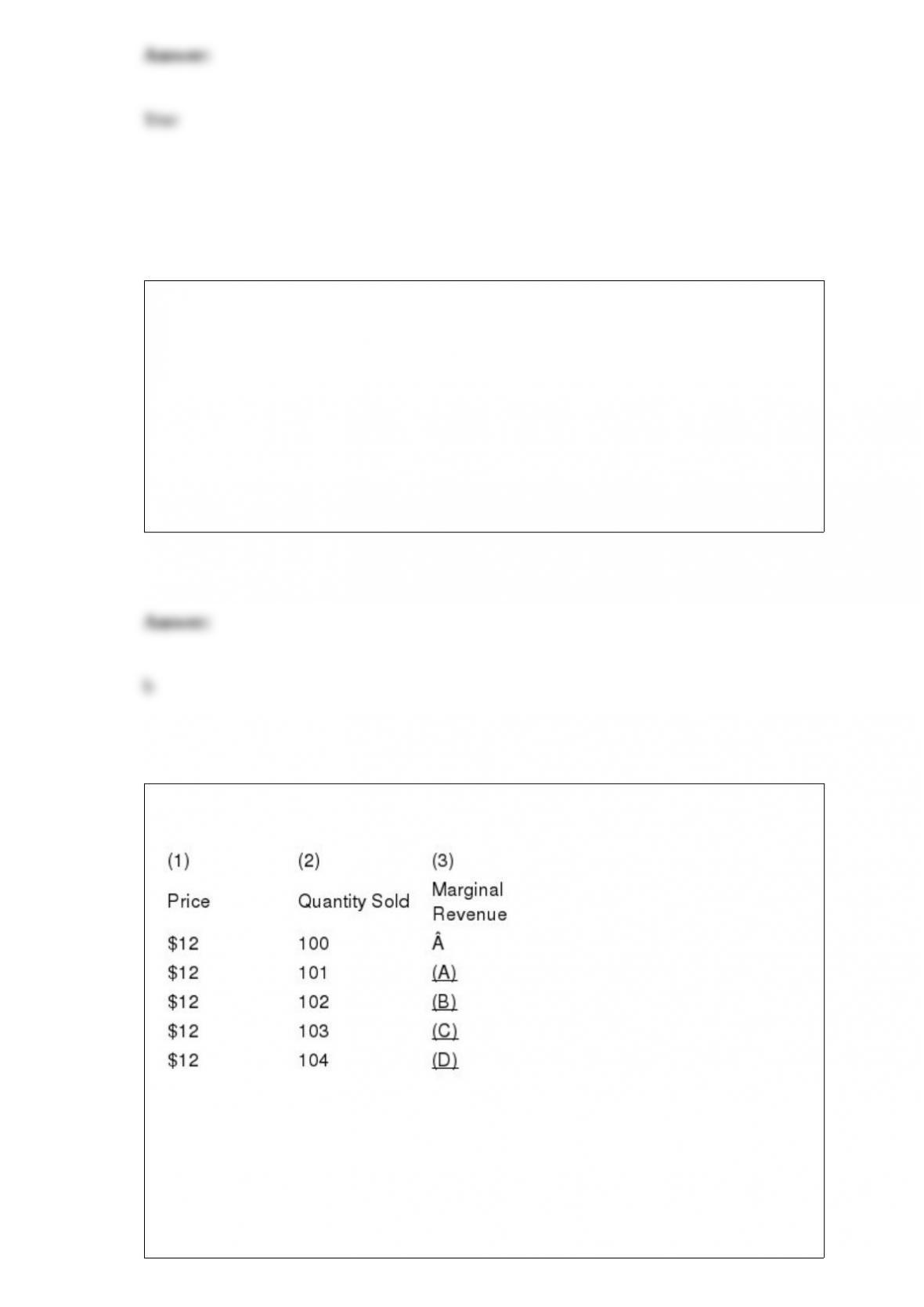
Exhibit 23-1
The marginal revenue curve represented by the information in this table is
a. downward-sloping.
b. upward-sloping.
c. horizontal.
d. vertical.
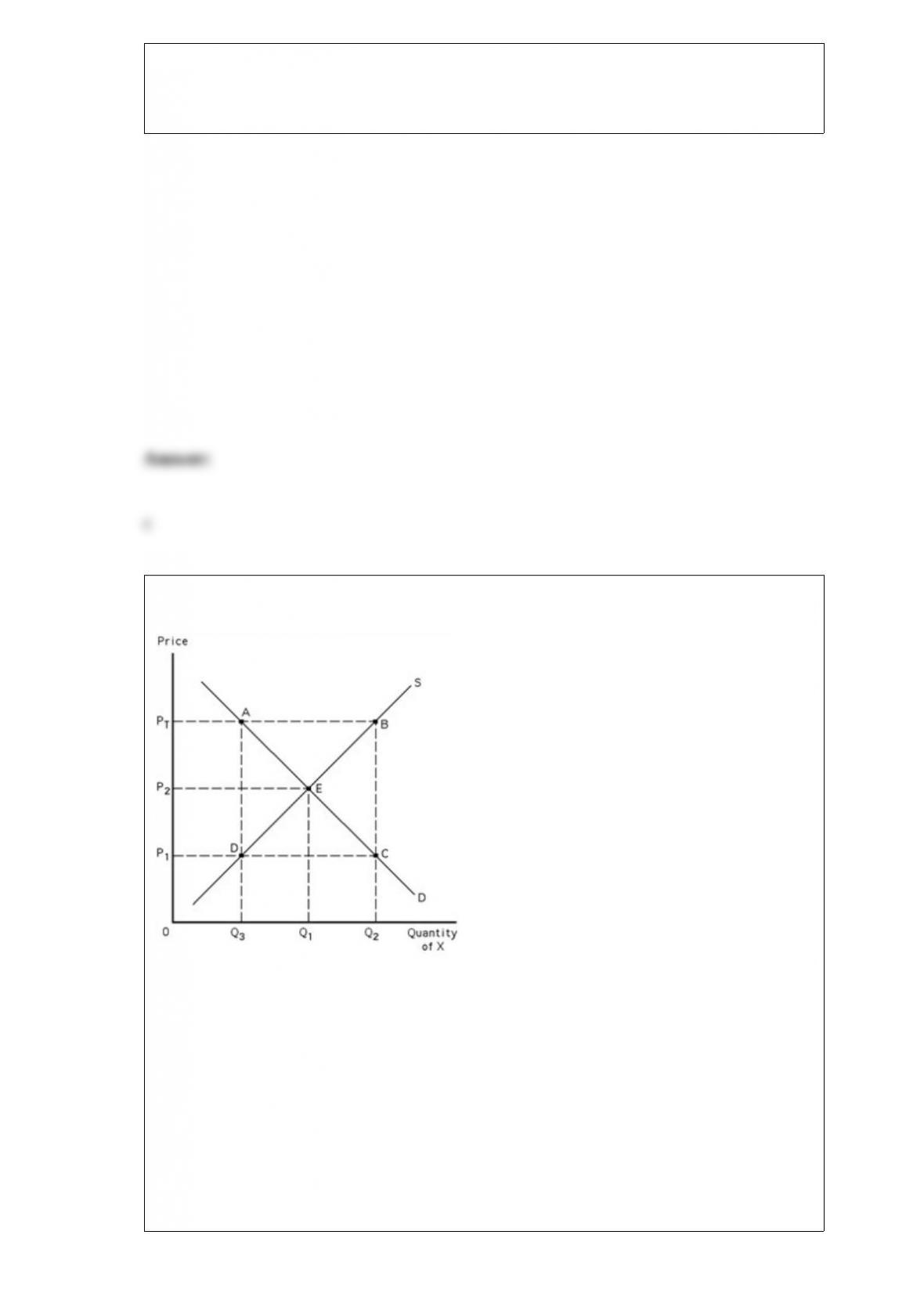
Exhibit 39-1
Given the target price PT, what is the quantity supplied?
a. Q1
b. Q2
c. Q3
d. Q3 – Q1
The monopolistic competitor is a price
a. taker, because of the many buyers and sellers in the market.
b. searcher, because of product differentiation.
c. taker, because of identical products.
d. searcher, because of the few buyers and sellers in the market.
e. searcher, because of the few buyers and sellers in the market and product
differentiation.
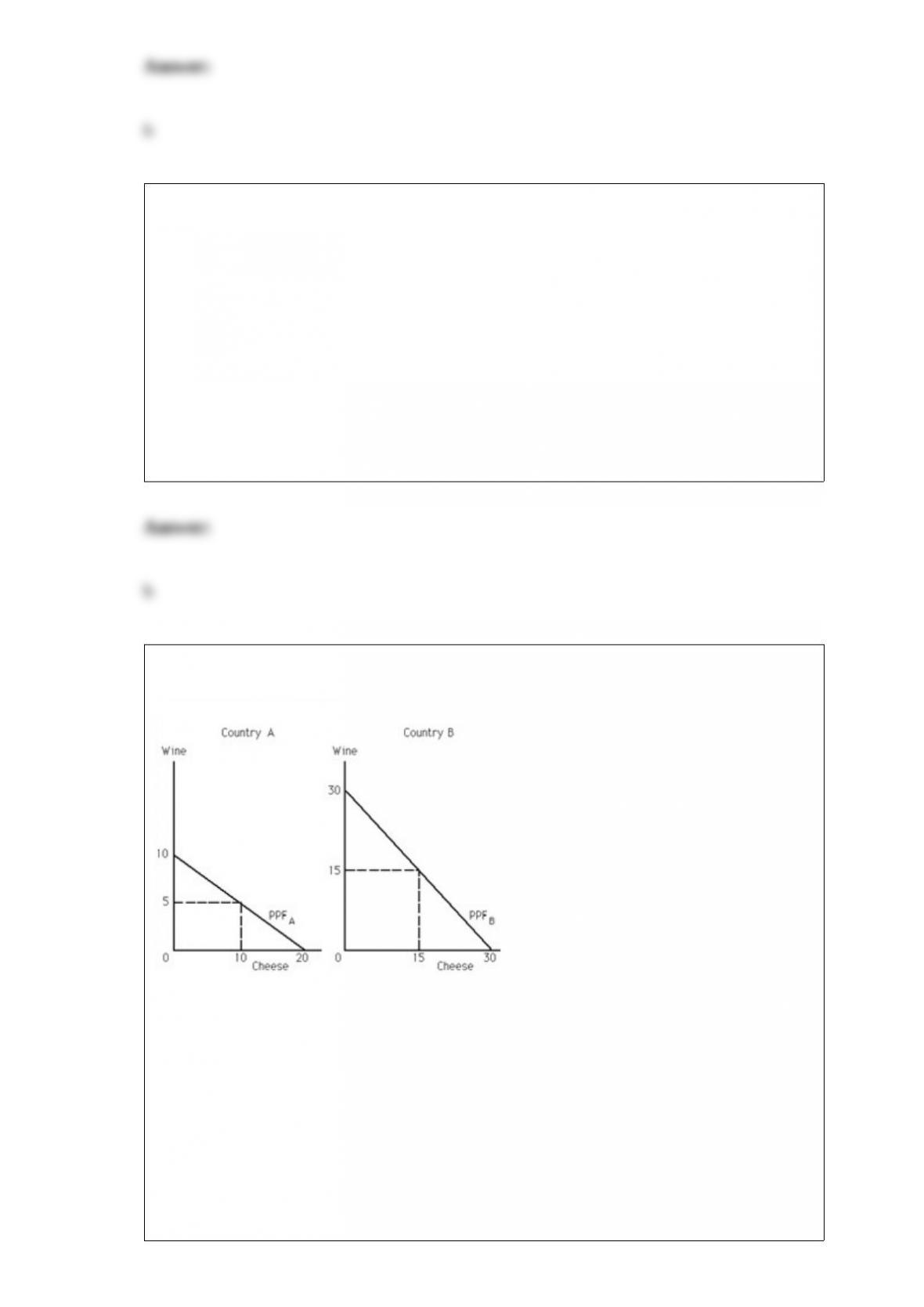
Exhibit 34-6
The opportunity cost of 1 unit of wine in terms of units of cheese is __________ for
country A.
a. 1/2
b. 2
c. 10
d. 5

e. none of the above
A perfectly competitive market is initially in long-run competitive equilibrium. Then,
market demand increases. This causes existing firms in the market to __________ and
__________. As a result of the latter, the market supply curve shifts __________.
a. produce more output; some existing firms to exit the market; leftward
b. produce less output; new firms to enter the market; rightward
c. produce more output; new firms to enter the market; rightward
d. expand their plant size; some existing firms to exit the market; leftward
e. none of the above
Supply-restricting policies are intended to shift the
a. supply curve to the left.
b. supply curve to the right.
c. demand curve to the left.
d. demand curve to the right.
e. b and d
Situation 22-3

Gizmos, Inc. produces gizmos at an average total cost of $15 and an average variable
cost of $12. The only fixed input used in the production of gizmos costs $240.
What are the total variable costs?
a. $1,200
b. $2,400
c. $840
d. $960
e. There is not enough information to answer the question.
If the maximum price a person is willing and able to pay for a good is $50, and
consumers€ surplus is $20, then it follows that the price the buyer paid for the good is
a. $20
b. $70
c. $50
d. $30
e. There is not enough information to answer the question.
A theory is
a. built on the major factors or variables that the theorist believes explain some event.
b. a simplified abstract representation of the real world.

c. used to understand the real world.
d. a and b
e. a, b, and c
The theory of perfect competition generally assumes that
a. sellers act independently of other sellers, but buyers do not act independently of other
buyers.
b. buyers act independently of other buyers, but sellers do not act independently of
other sellers.
c. buyers and sellers act independently of other buyers and sellers.
d. neither buyers nor sellers act independently of other buyers and sellers.
According to economists, competition exists because of
a. scarcity.
b. capitalism.
c. money.
d. unintended effects.
Exhibit 24-9
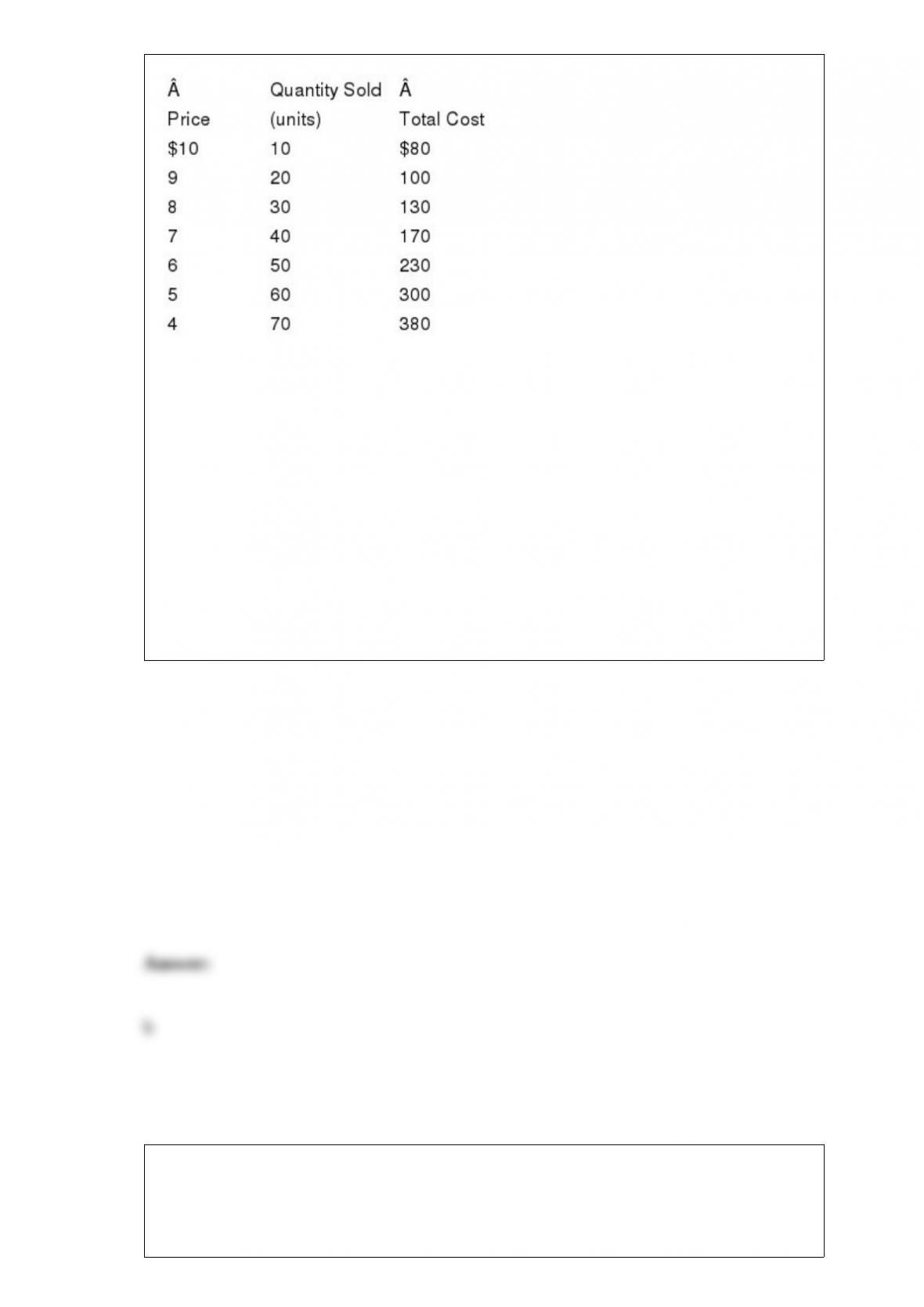
A single-price monopolist that seeks to maximize profits will sell __________ units and
charge a per-unit price of __________.
a. 20; $9
b. 40; $7
c. 50; $6
d. 10; $10
e. 7; $40
Which of the following is an example of an oligopoly market in which the firms
produce a homogeneous product?
a. aluminum

b. soap
c. breakfast cereals
d. tires
e. all of the above