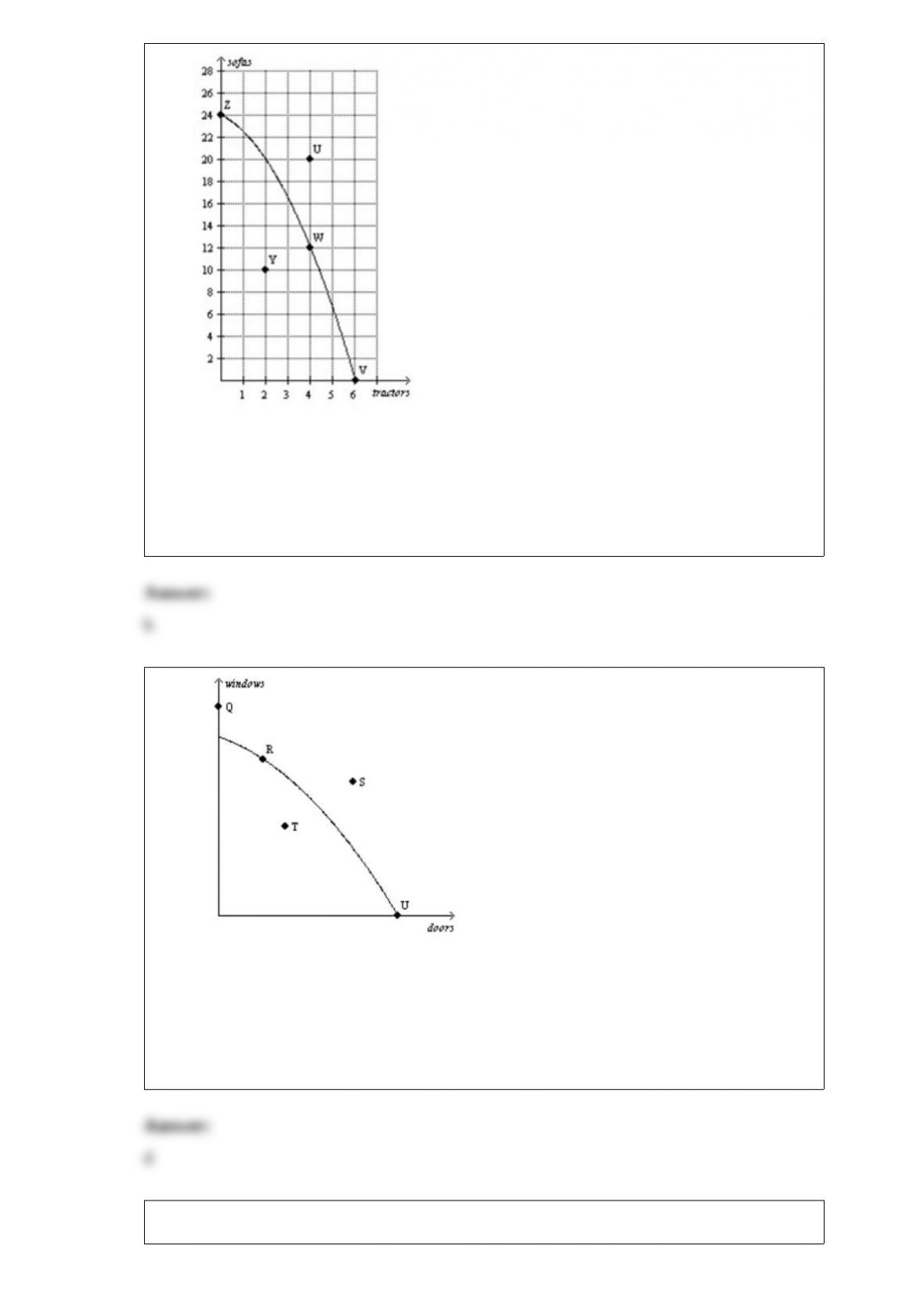
1)
The movement from point W to point Y could be caused by
a.economic growth.
b.unemployment.
c.an improvement in efficiency.
d.an advance in production technology.
2)
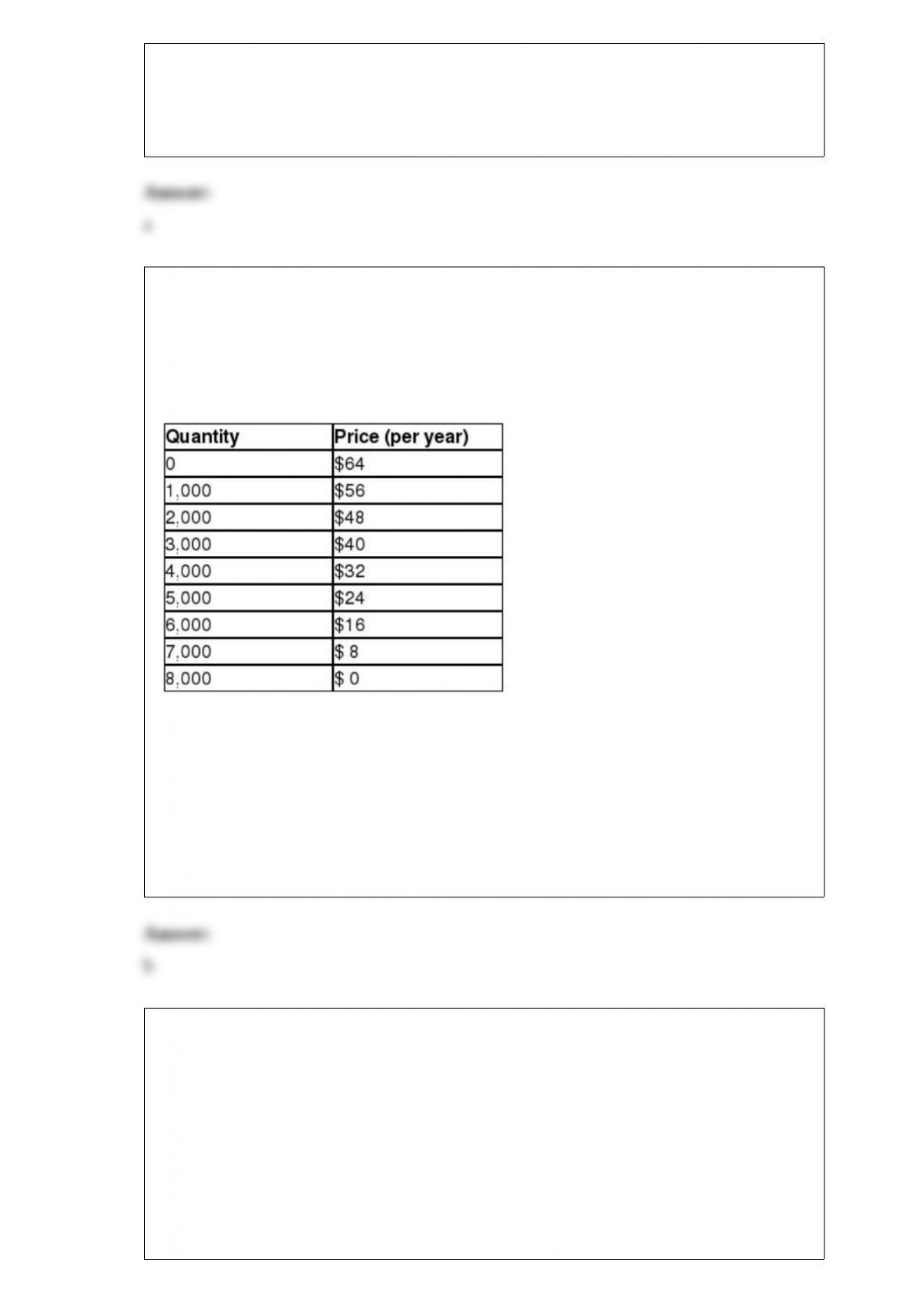
Inefficient production is represented by which point(s)?
a.Q, S
b.Q, S, T
c.R, U
d.T
3) In 1789, the average American paid approximately what percent of income in taxes?
a.5%
b.15%
c.33%
d.50%
4) Table 17-7
The information in the table below shows the total demand for internet radio
subscriptions in a small urban market. Assume that each company that provides these
subscriptions incurs an annual fixed cost of $20,000 (per year) and that the marginal
cost of providing an additional subscription is always $16.
Refer to Table 17-7. Assume there are two internet radio providers that operate in this
market. If they are able to collude on the quantity of subscriptions that will be sold and
on the price that will be charged for subscriptions, then their agreement will stipulate
that
a.each firm will charge a price of $40 and each firm will sell 3,000 subscriptions.
b.each firm will charge a price of $40 and each firm will sell 1,500 subscriptions.
c.each firm will charge a price of $32 and each firm will sell 2,000 subscriptions.
d.each firm will charge a price of $20 and each firm will sell 3,000 subscriptions.
5) Which of the following statements about the consumers’ responses to rising gasoline
prices is correct?
a.About 10 percent of the long-run reduction in quantity demanded arises because
people drive less and about 90 percent arises because they switch to more fuel-efficient
cars.
b.About 90 percent of the long-run reduction in quantity demanded arises because
people drive less and about 10 percent arises because they switch to more fuel-efficient
cars.
c.About half of the long-run reduction in quantity demanded arises because people
drive less and about half arises because they switch to more fuel-efficient cars.
d.Because gasoline is a necessity, consumers do not decrease their quantity demanded
in either the short run or the long run.
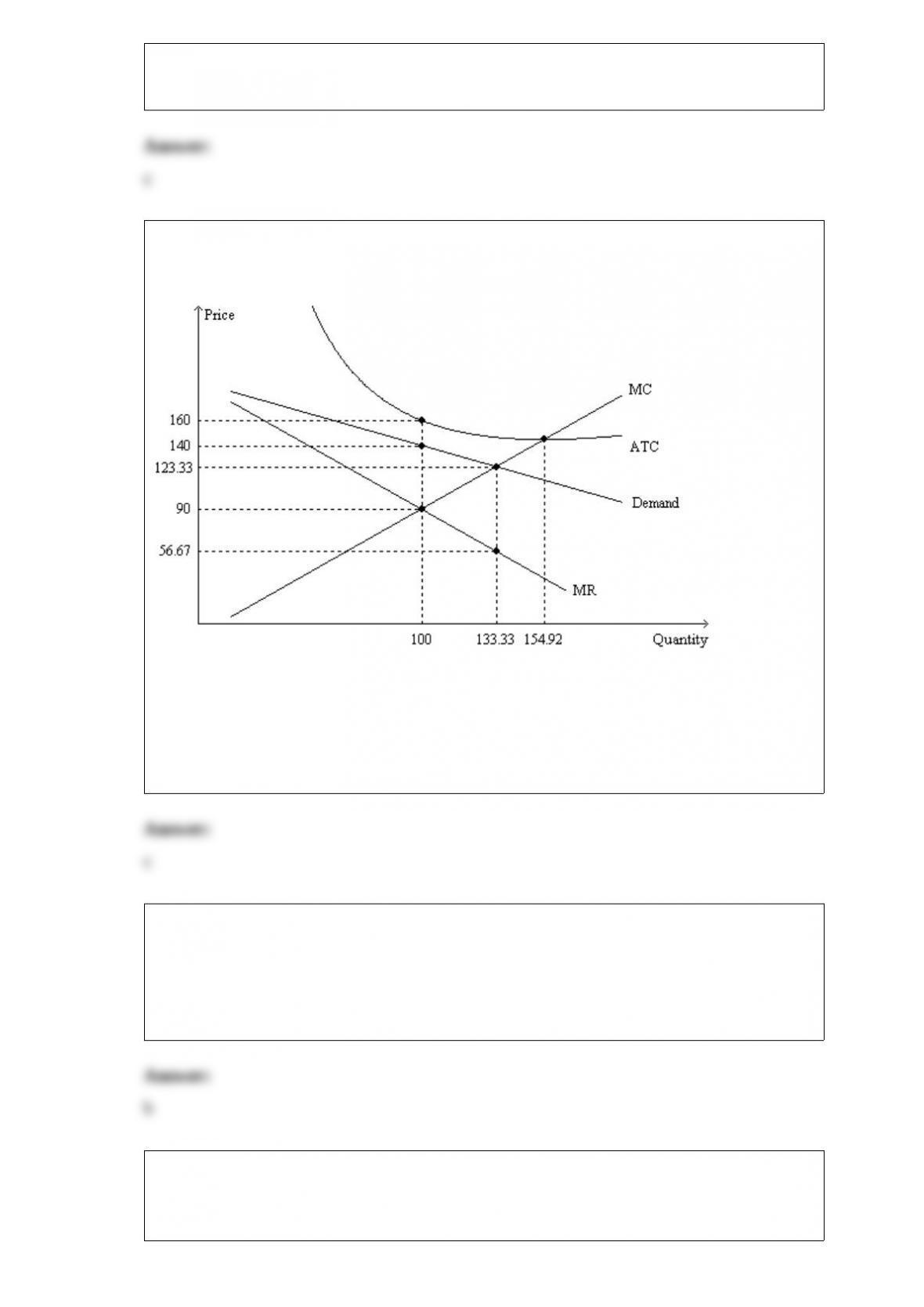
6) Figure 16-10
The figure is drawn for a monopolistically-competitive firm.
The firm’s maximum profit is
a. $-7,000.
b. $-5,000.
c. $-2,000.
d. The firm’s maximum profit cannot be determined from the figure.
7) If the demand for textbooks is inelastic, then a decrease in the price of textbooks will
a.increase total revenue of textbook sellers.
b.decrease total revenue of textbook sellers.
c.not change total revenue of textbook sellers.
d.There is not enough information to answer this question.
8) The measured poverty rate may not reflect the true extent of economic deprivation
because it does not include some forms of government assistance.
a.True
b.False
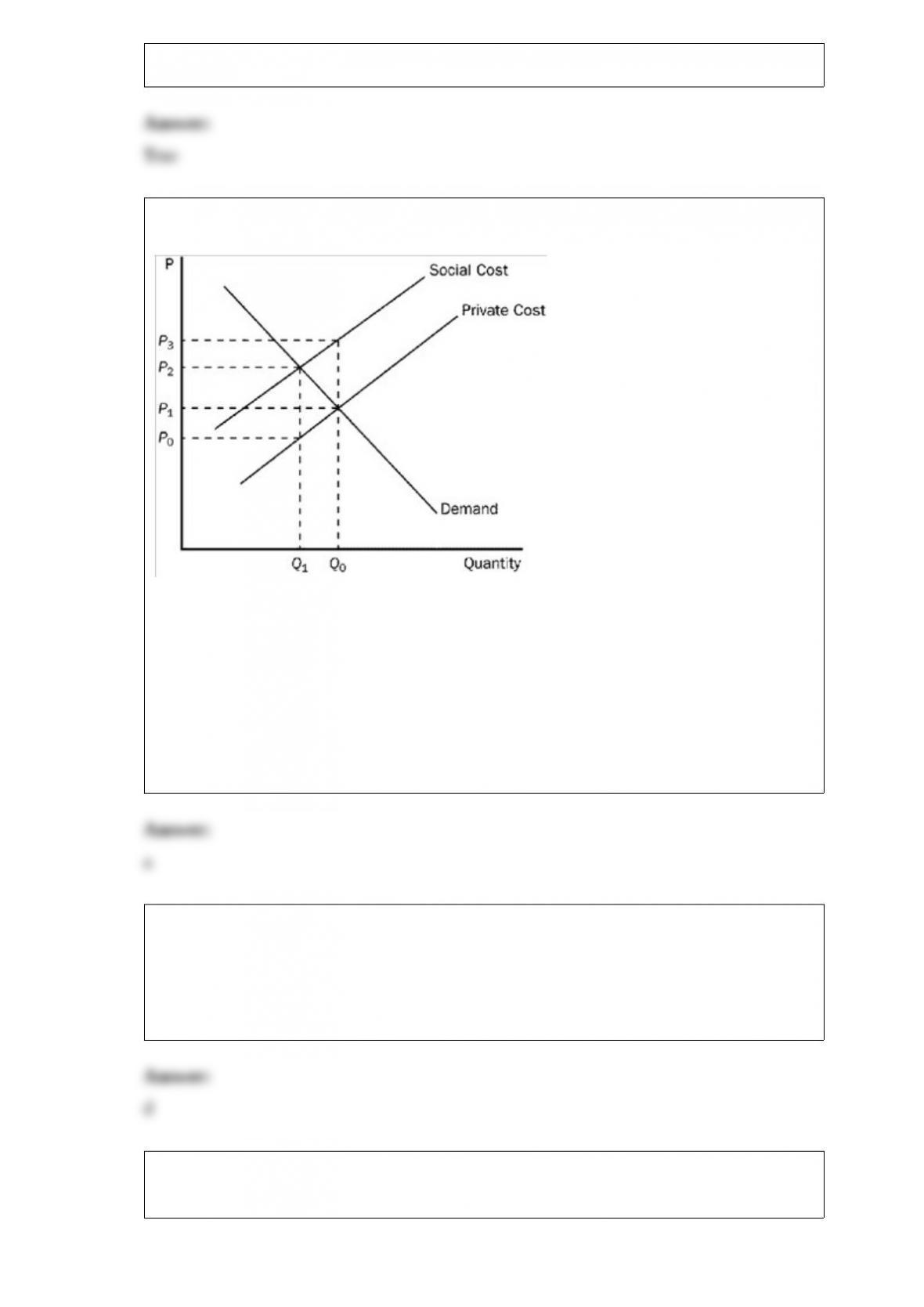
9) Figure 10-14
Which of the following statements is correct?
a.To induce firms to internalize the externality in this market, the government should
impose a tax measured by P2 – P0.
b.To induce firms to internalize the externality in this market, the government should
offer a subsidy measured by P2 – P0.
c.To induce firms to internalize the externality in this market, the government should
impose a tax measured by P2 – P1.
d.There is no externality in this market.
10) Supplemental Security Income (SSI) is a type of
a.in-kind transfer.
b.minimum wage law.
c.private charity.
d.welfare payment.
11) Panel (a)
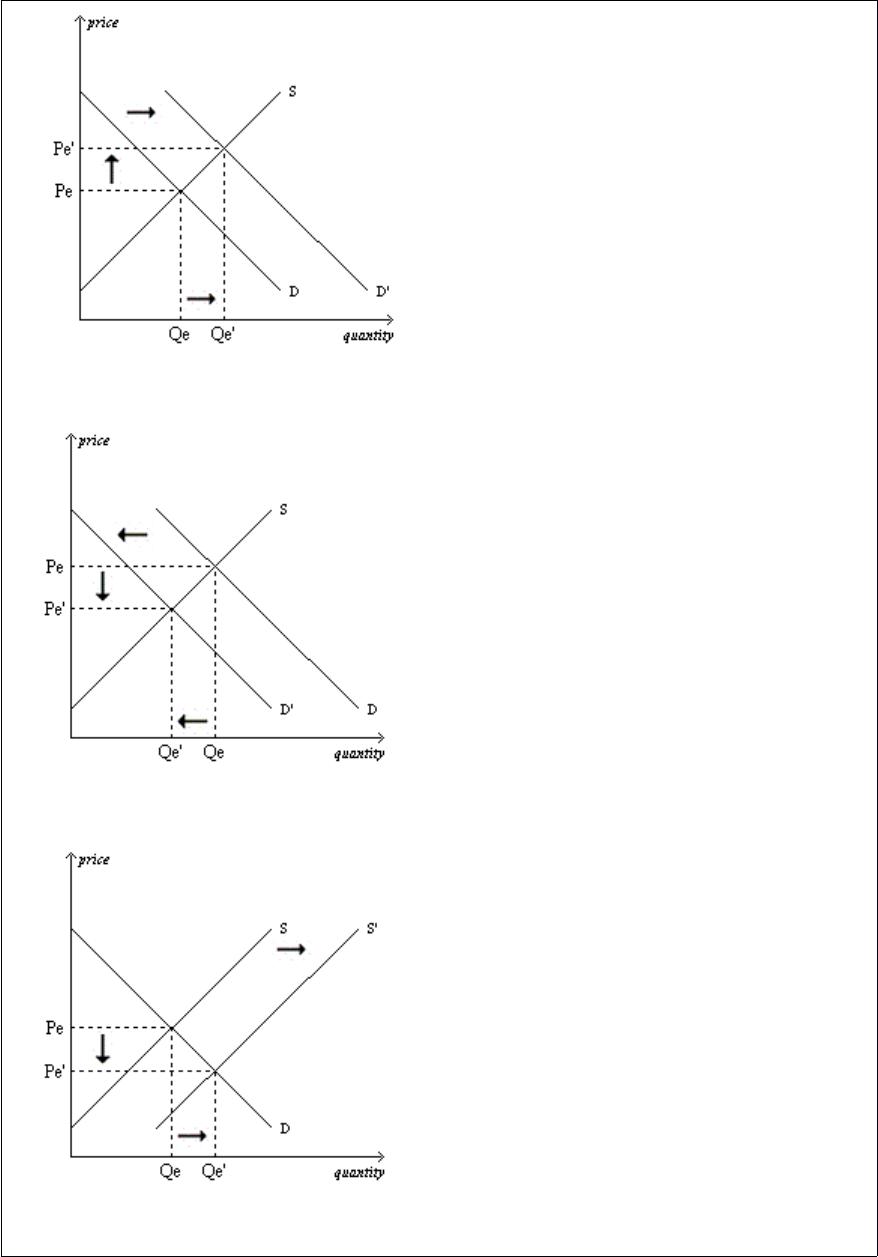
Panel (b)
Panel (c)
Panel (d)
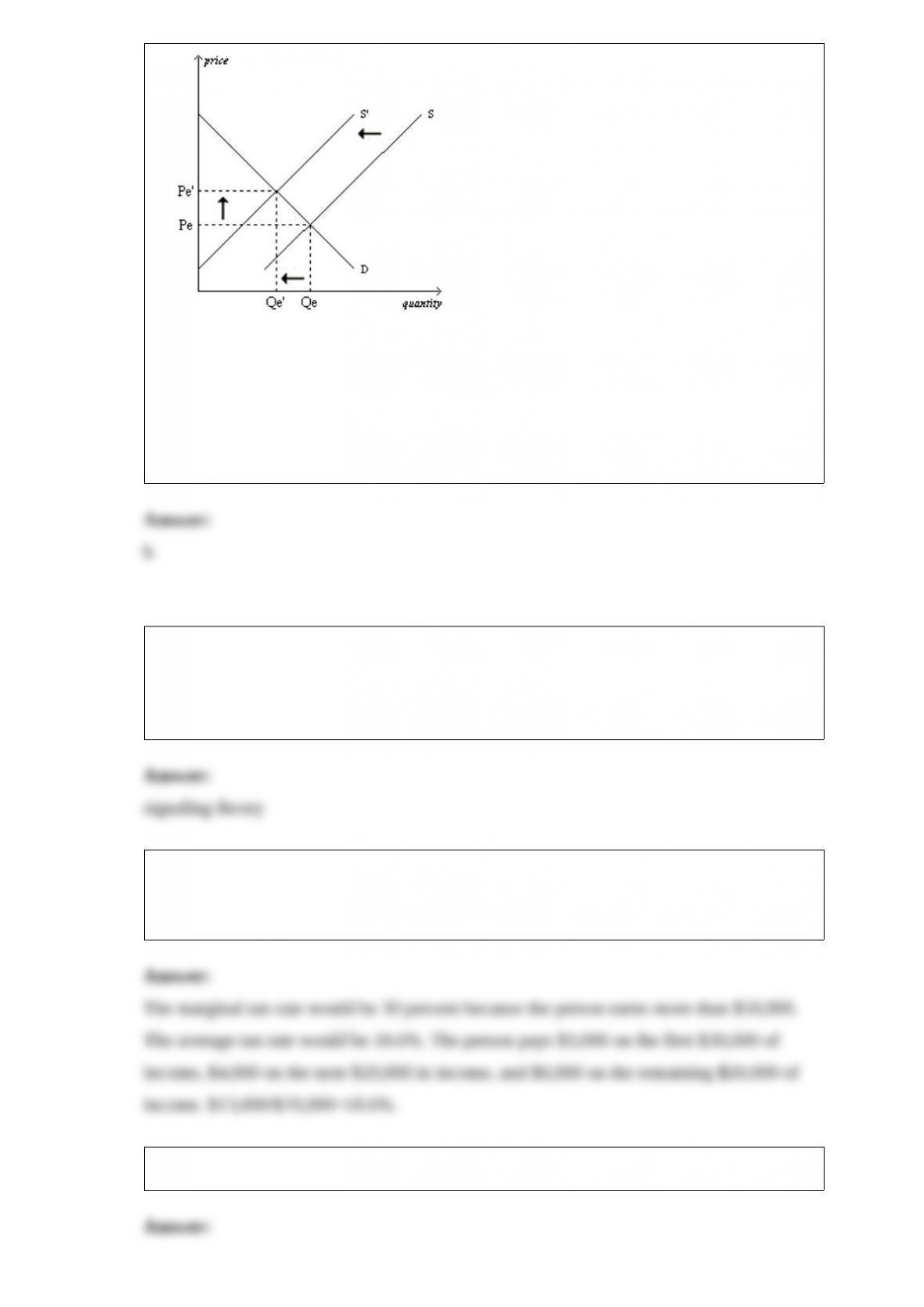
Which of the four panels represents the market for winter coats as we progress from
winter to spring?
a.Panel (a)
b.Panel (b)
c.Panel (c)
d.Panel (d)
12) Chris just completed his college degree from a prestigious university. He did not go
to school to become more productive. Rather, he went to school and completed his
degree to convey his innate productivity to employers. To which theory of education
does he subscribe?
13) Suppose the government taxes 10 percent of the first $30,000 in income, 20 percent
of the next $20,000 in income, and 30 percent of all income over $50,000. Calculate the
marginal tax rate and the average tax rate for a person who earns $70,000.
14) d.
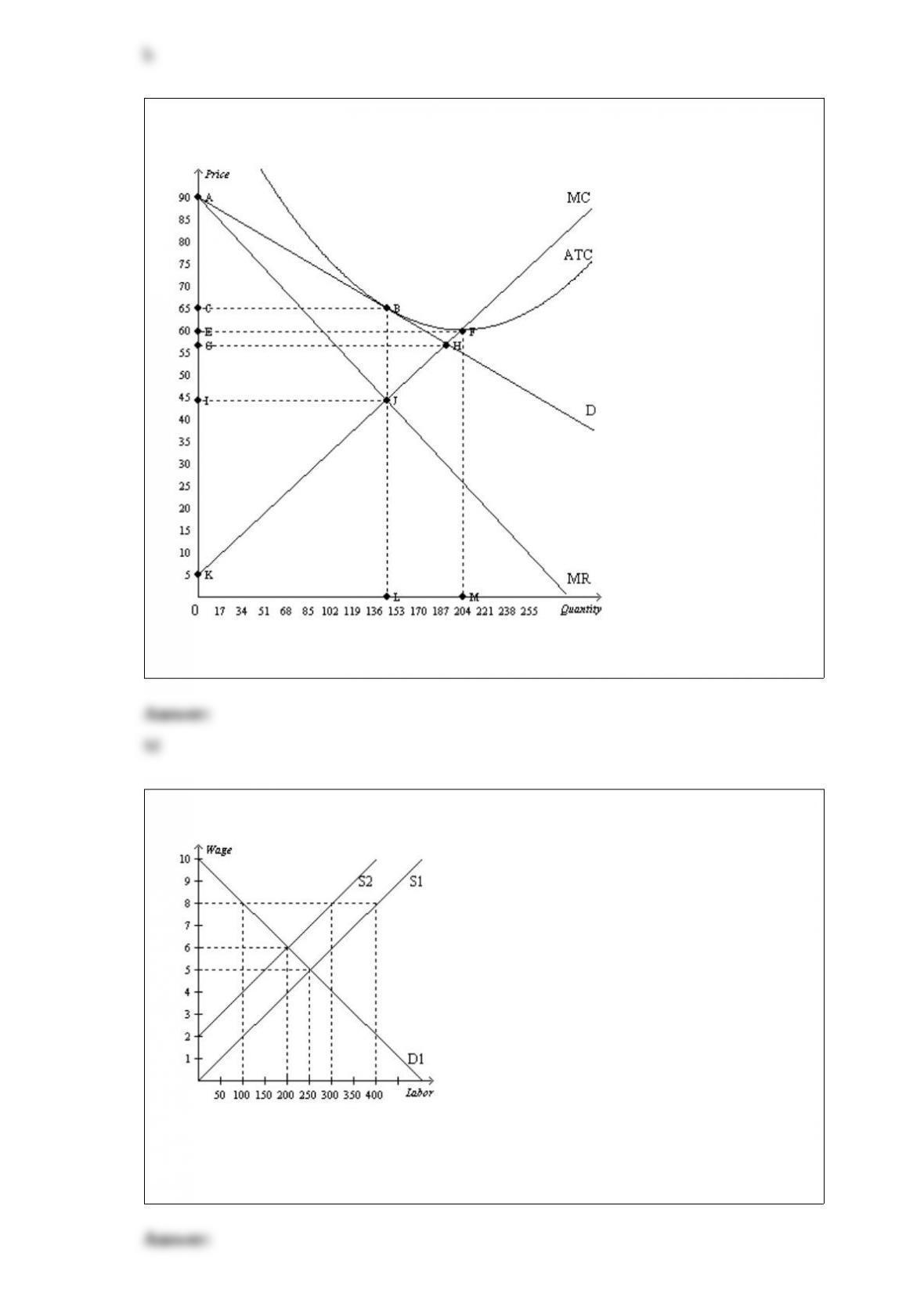
15) Figure 16-14
Which letter identifies the
efficient level of output for this firm?
16) Figure 19-6
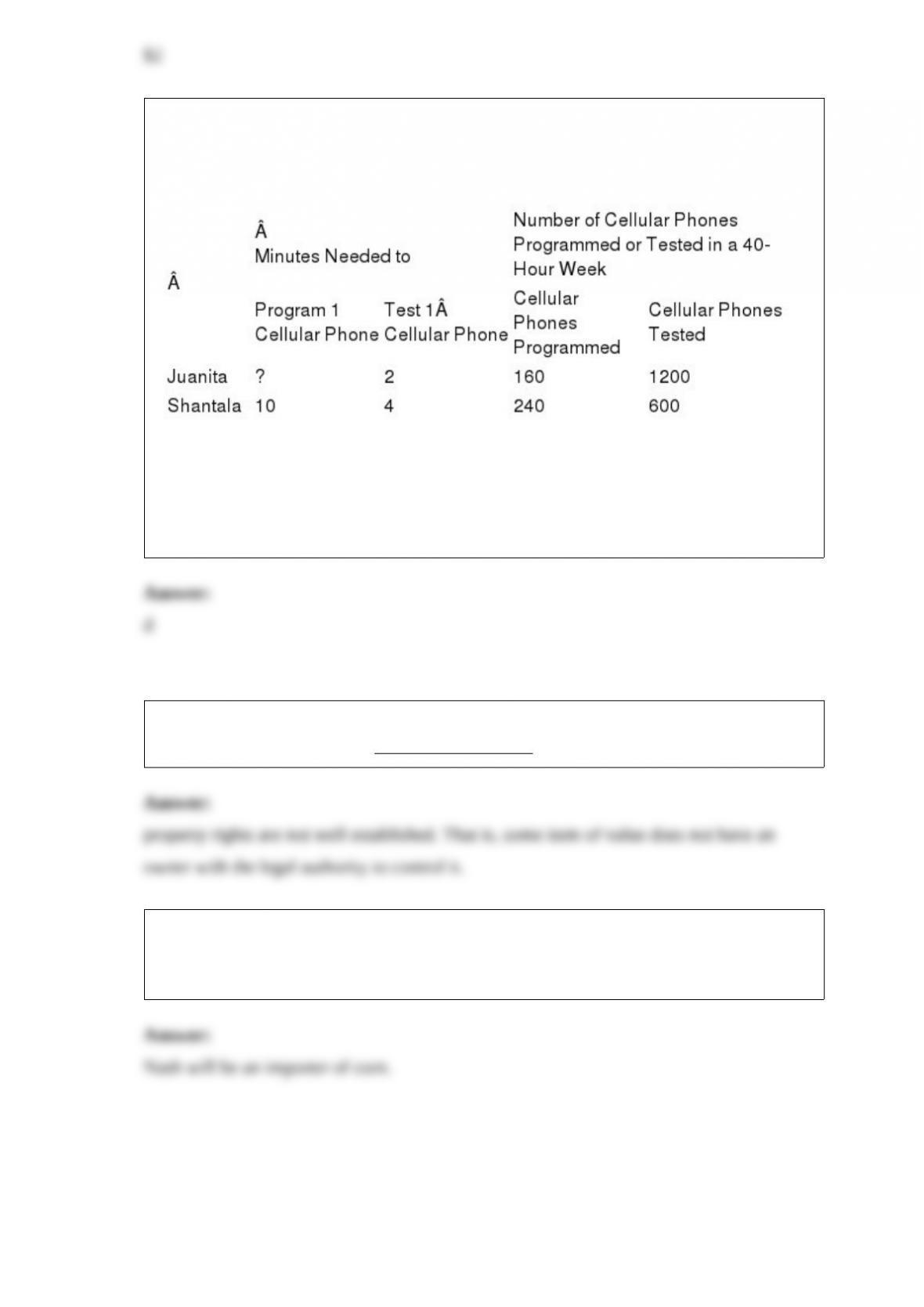
Refer to Figure 19-6. Given demand, D1, and supply, S2, how much more do the
workers with jobs earn per hour if a minimum wage of $8 per hour is imposed on this
market?
17) Juanita and Shantala run a business that programs and tests cellular phones. Assume
that Juanita and Shantala can switch between programming and testing cellular phones
at a constant rate. The following table applies.
The number of minutes needed by Juanita to program a cellular phone is
a. 4
b. 5
c. 7.5
d. 15
18) For all types of goods that are not private goods, the market fails to allocate
resources efficiently because _________________.
19) Suppose in the country of Nash that the price of corn is $4 per bushel with no trade
allowed. If the world price of corn is $3 per bushel and if Nash allows free trade, will
Nash be an importer or an exporter of corn?