
Suppose that the income elasticity of demand for new clothes is positive. Other things
being equal, which of the following statements is correct?
A) New clothes are a normal good.
B) The quantity demanded of new clothes decreases as a consumer’s income declines.
C) There exists a positive relationship between income and the demand for new clothes.
D) all of the above
Suppose that the quantity of cars demanded exceeds the quantity of cars supplied. We
would expect that:
A) the price of cars will increase.
B) the price of cars will decrease.
C) the supply will increase (supply will shift to the right) to meet the demand.
D) the demand will decrease (demand will shift to the left) to meet the supply.
Refer to Figure 12.3. The decision tree shows the payoffs for two firms based on the
strategies they choose. If they agree to collude and hold prices at $10, and both stand by
the agreement, each will earn profits of $5 million. If one firm cheats and the other does
not, the firm that cheats will earn profits of $8 million and the other firm will have
losses of $2 million. If they both cheat and cut prices, they will each earn profits of only
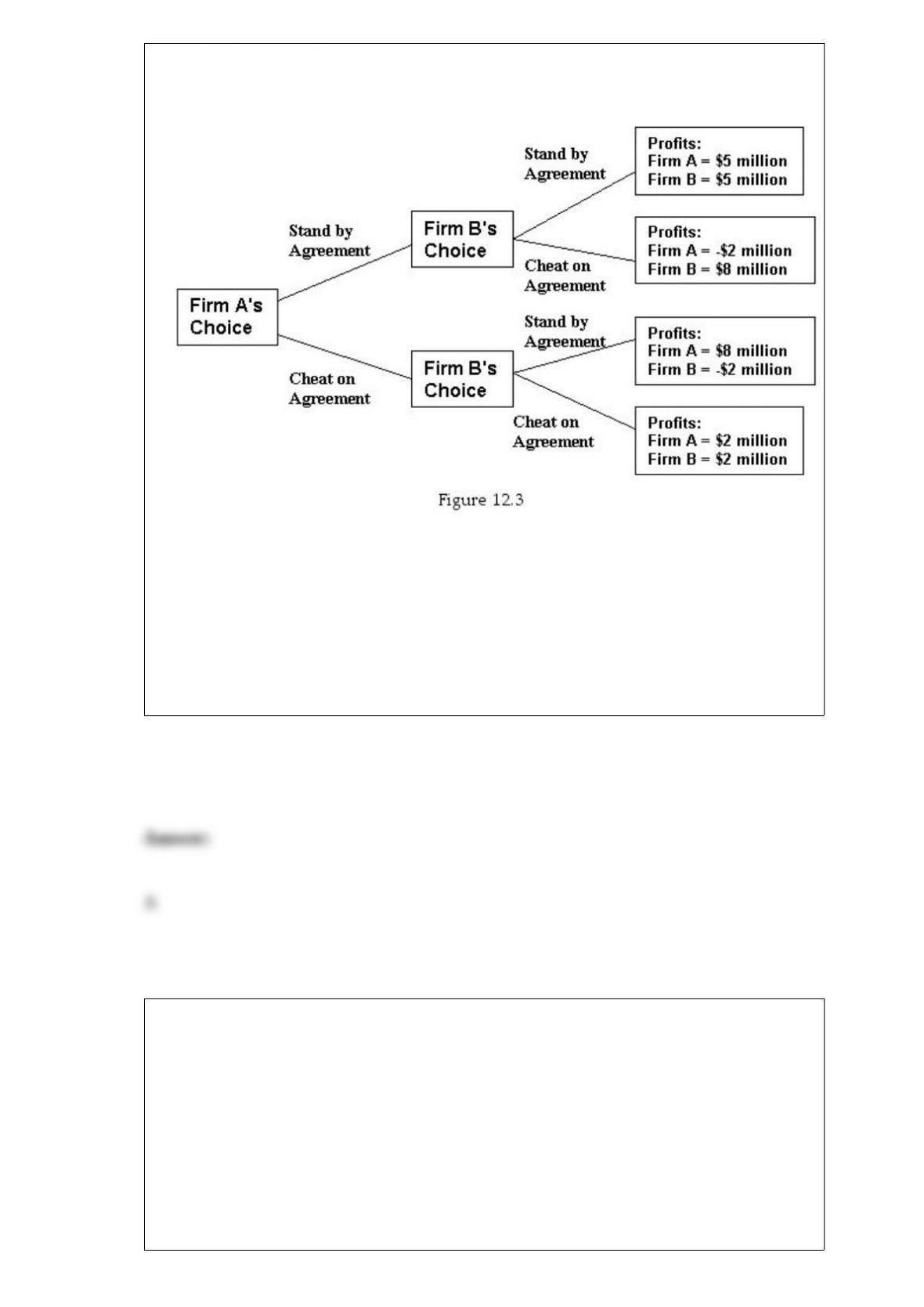
$2 million. In this game the dominant strategy for A is to:
A) cheat.
B) stand by the agreement.
C) cheat only if B cheats.
D) maximize the maximum losses.
A good for which demand decreases when income decreases is known as a(n) ________
good.
A) normal
B) inferior
C) complementary
D) substitute

An increase in demand will cause a relatively small increase in price when:
A) the increase in demand is small.
B) demand is highly elastic.
C) supply is highly elastic.
D) all of the above
Figure 4.5 illustrates the supply of guitars. An increase in the price of rosewood, which
is used to make guitars, would most likely cause a movement from:
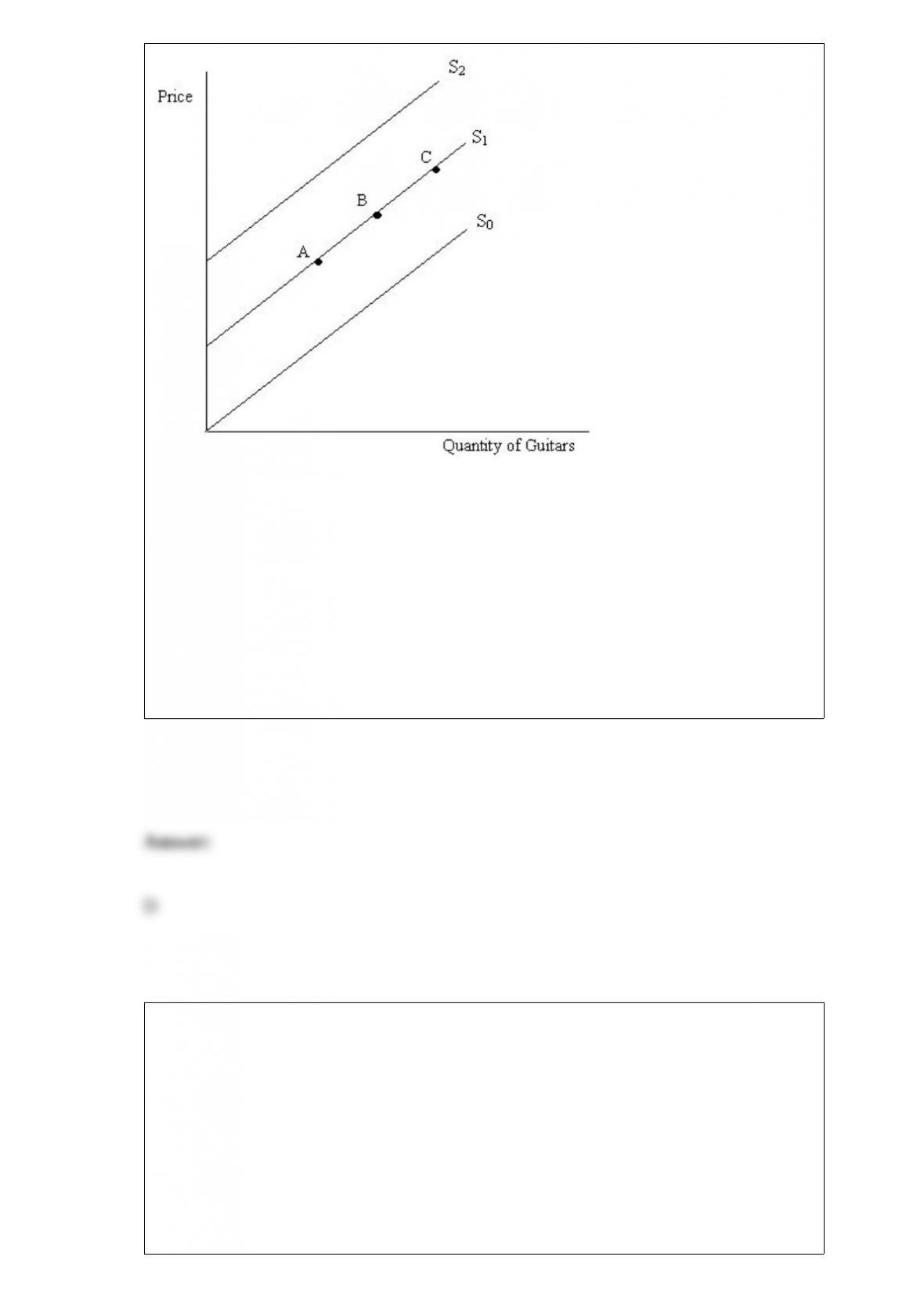
Figure 4.5
A) point B to point C.
B) point B to point A.
C) S1 to S0.
D) S1 to S2.
Booksellers are able to charge ________ prices to consumers who buy hardback books
because their demand for the book is more ________ than consumers who wait until the
paperback comes out.
A) lower; inelastic
B) lower; elastic
C) higher; elastic

D) higher; inelastic
If marginal cost is above average variable cost, then:
A) average variable cost is increasing.
B) marginal cost must be decreasing.
C) average variable cost is constant.
D) average variable cost is decreasing.
A firm’s short-run supply curve is the firm’s:
A) marginal revenue curve.
B) marginal cost curve above the minimum point of the average total cost curve.
C) marginal cost curve above the minimum point of the average variable cost curve.
D) average cost curve, below the minimum point of the marginal cost curve.

Recall the Application. The market for baseball pitchers suffers from an asymmetric
information problem because:
A) the pitcher’s current team has superior information concerning the health of the
pitcher.
B) the potential new teams have superior information concerning the health of the
pitcher.
C) baseball teams never sign injury-prone pitchers.
D) a physical exam ensures that both the player’s current team and potential new teams
have the same information concerning the player’s health.
A curve that shows the relationship between the wage and the quantity of labor
demanded in the short run is:
A) the marginal revenue product of labor curve.
B) the marginal revenue curve.
C) the marginal product of labor curve.
D) none of the above.

A group of firms that coordinate their pricing decisions is called:
A) a monopoly.
B) a duopoly.
C) a cartel.
D) monopolistic competition.
If a firm spends $200 to produce 20 units of output and spends $440 to produce 40 units
of output, then the marginal cost of increasing output is:
A) $22.
B) $12.
C) $20.
D) $10.
Suppose that a monopolistically competitive market is in its long-run equilibrium. If the
market demand curve shifts to the left due to a recession:
A) the number of firms in the market decreases in the short run.

B) some firms may earn negative profits in the short run.
C) firms’ average costs of production decreases as they decrease output levels in the
short run.
D) none of the above
Suppose that in a month the price of a dozen of eggs increases from $1.50 to $2. At the
same time, the quantity of dozens of eggs demanded decreases from 200 to 150. The
price elasticity of demand for dozens of eggs is:
A) perfectly inelastic.
B) inelastic.
C) unitary elastic.
D) elastic.
What happens if the price of a product is below the equilibrium price?
A) The buyers will stop purchasing a “cheap” product.
B) The producer will lower the price to sell more product.
C) There will be an excess demand for the product.
D) There will be a surplus of the product.
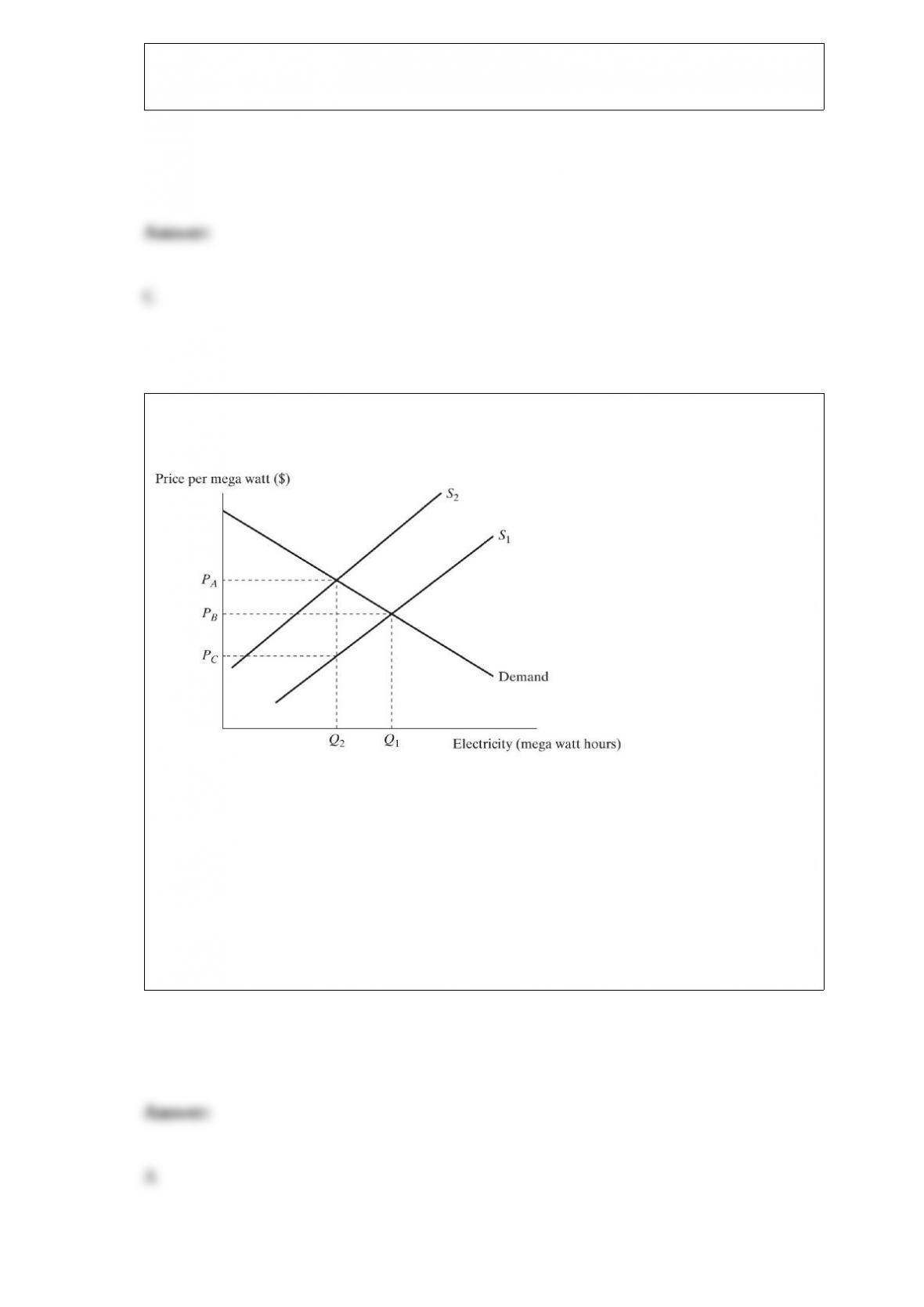
Figure 16.3 depicts a market for electricity. Assume electricity production incurs
external costs. If the government imposes a pollution tax $T per mega kilowatt:
Figure 16.3
A) the equilibrium price of electricity increases but the equilibrium output decreases.
B) the equilibrium price of electricity decreases but the equilibrium output increases.
C) both the equilibrium price and output increase.
D) both the equilibrium price and output decrease.
Suppose that Polaroid instant cameras had a guarantee that would be valid only if the
camera was used with Polaroid film. This would then be an example of:
A) a tie-in sale.
B) monopoly pricing.
C) price discrimination.
D) predatory pricing.
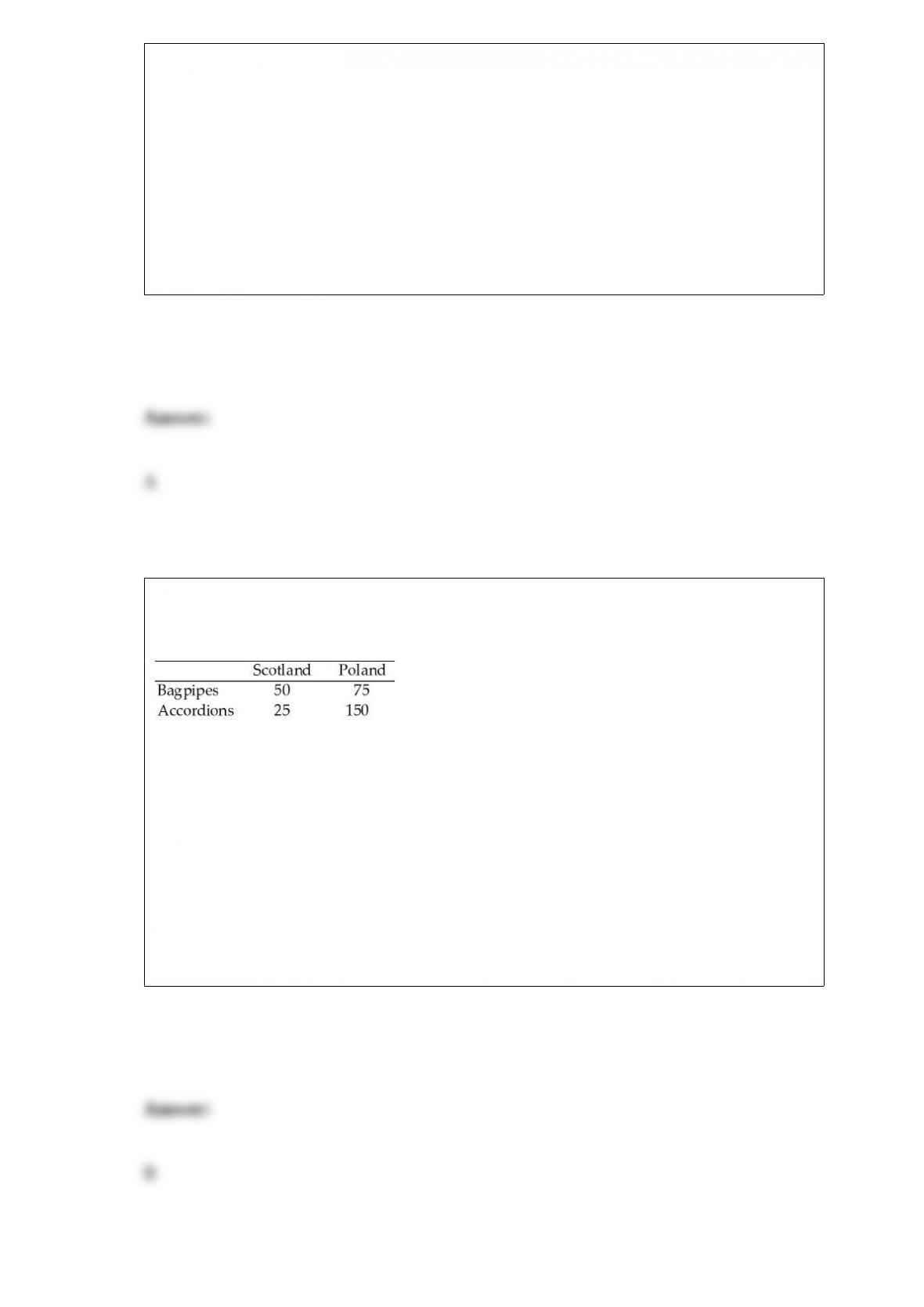
Daily Output of Scotland and Poland
Table 18.1
Refer to Table 18.1. The opportunity cost of a bagpipe in Scotland is:
A) 2 accordions.
B) 1/2 accordion.
C) 6 accordions.
D) 1/3 accordion.
If a producer is imposing an external cost on society, the best response would be to:
A) lower the producer’s taxes to offset pollution.
B) increase the production.
C) internalize the externality.
D) subsidize the producer.
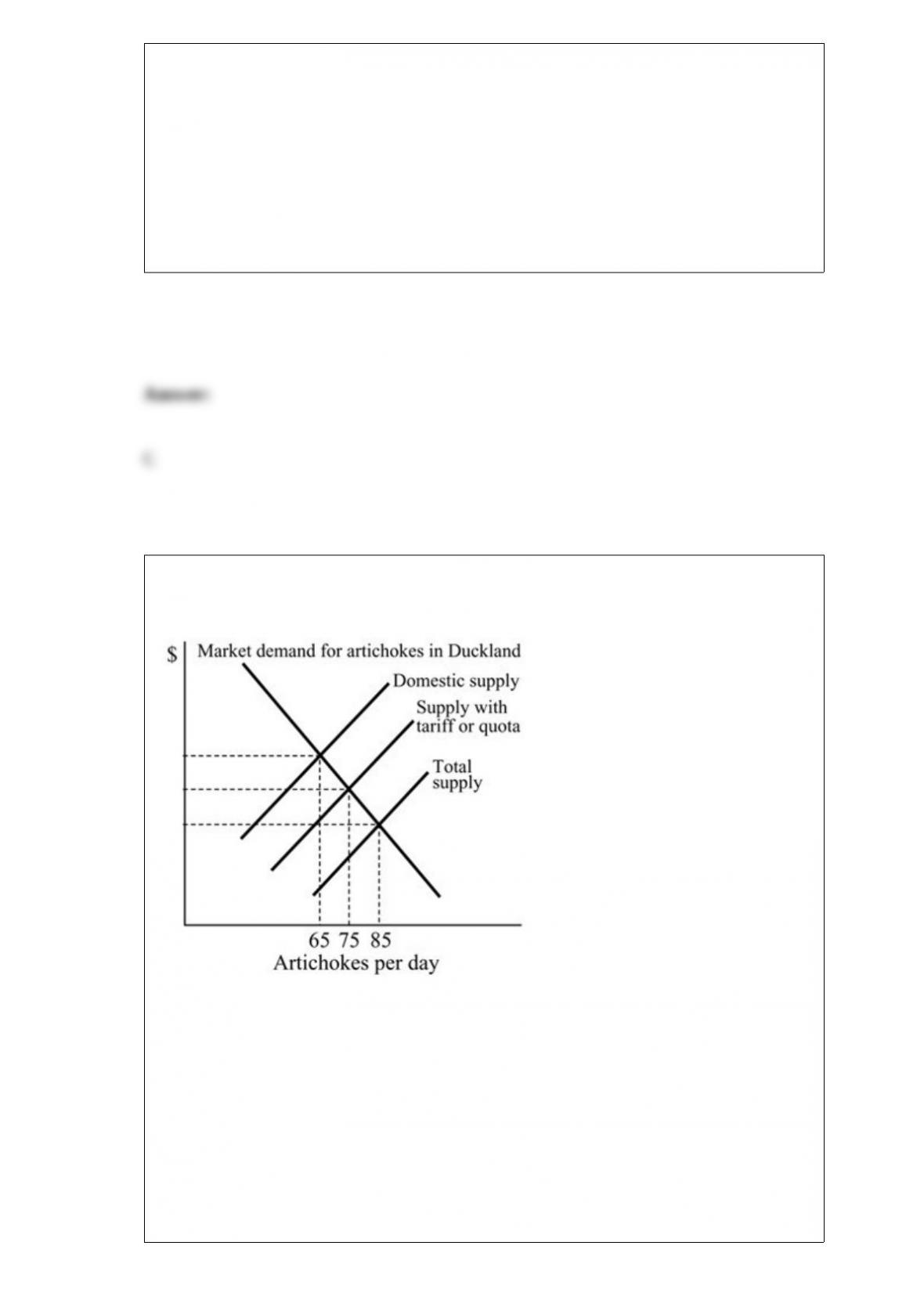
Figure 18.4
Refer to Figure 18.4. With free trade, how many artichokes are produced domestically
in Duckland?
A) 75
B) 65
C) 30

D) 0
Which of the following situations will arise in the domestic market following the
imposition of an import ban?
A) domestic production decreases, prices increase
B) domestic production decreases, prices decrease
C) domestic production increases, prices increase
D) domestic production increases, prices decrease
Demand for items people do not really need for their survival, such as cars, is generally
________ than demand for items such as water.
A) higher
B) lower
C) more elastic
D) less elastic

The cross-price elasticity of demand measures:
A) the relationship between the demand for one good and the supply of another.
B) the relationship between the demand for one good and the price of another.
C) the relationship between the demand and supply of one good at the intersection of
the curves.
D) the elasticity of demand at the intersection of the supply and demand curves.
If the ________ is greater than the ________, additional searching by the consumer is
sensible.
A) discovered price; reservation price
B) reservation price; discovered price
C) marginal cost; discovered price
D) marginal cost; reservation price
You sell your good in a perfectly competitive market where the market price is $7.00.
When you sell 100 units your total revenue is $700. When you sell 101 units:
A) total revenue increases by less than $7.
B) total revenue increases by exactly $7.
C) total revenue increases by more than $7.
D) total revenue may increase or decrease.
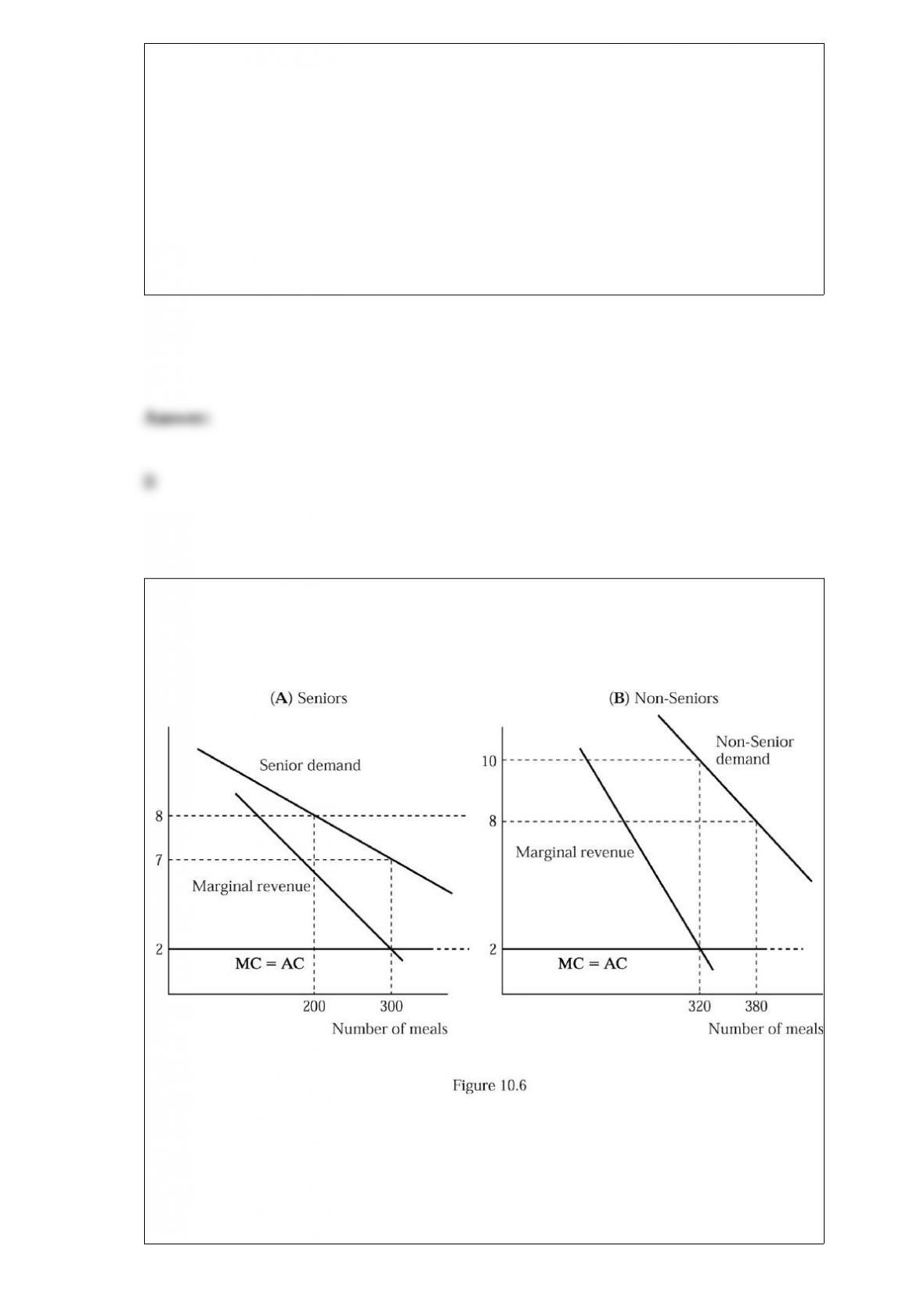
Figure 10.6 shows prices, demands, and cost data for the only restaurant in a small
town. What is its profit from non-senior customers under the senior discount policy of a
$7 senior price and a $10 non-senior price?
A) $1,200
B) $1,500
C) $2,280

D) $2,560
Since 1973 in the United States, wages of skilled workers have:
A) risen more slowly than those of unskilled workers.
B) fallen due to foreign trade.
C) remained constant.
D) risen faster than those of unskilled workers.
Suppose that in a month the price of milk increases from $2 to $3 a gallon. At the same
time, the quantity of gallons of milk demanded decreases from 200 to 190. The price
elasticity of demand for milk (calculated using the initial value formula) is:
A) 0.1.
B) 0.2.
C) 1.
D) 10.
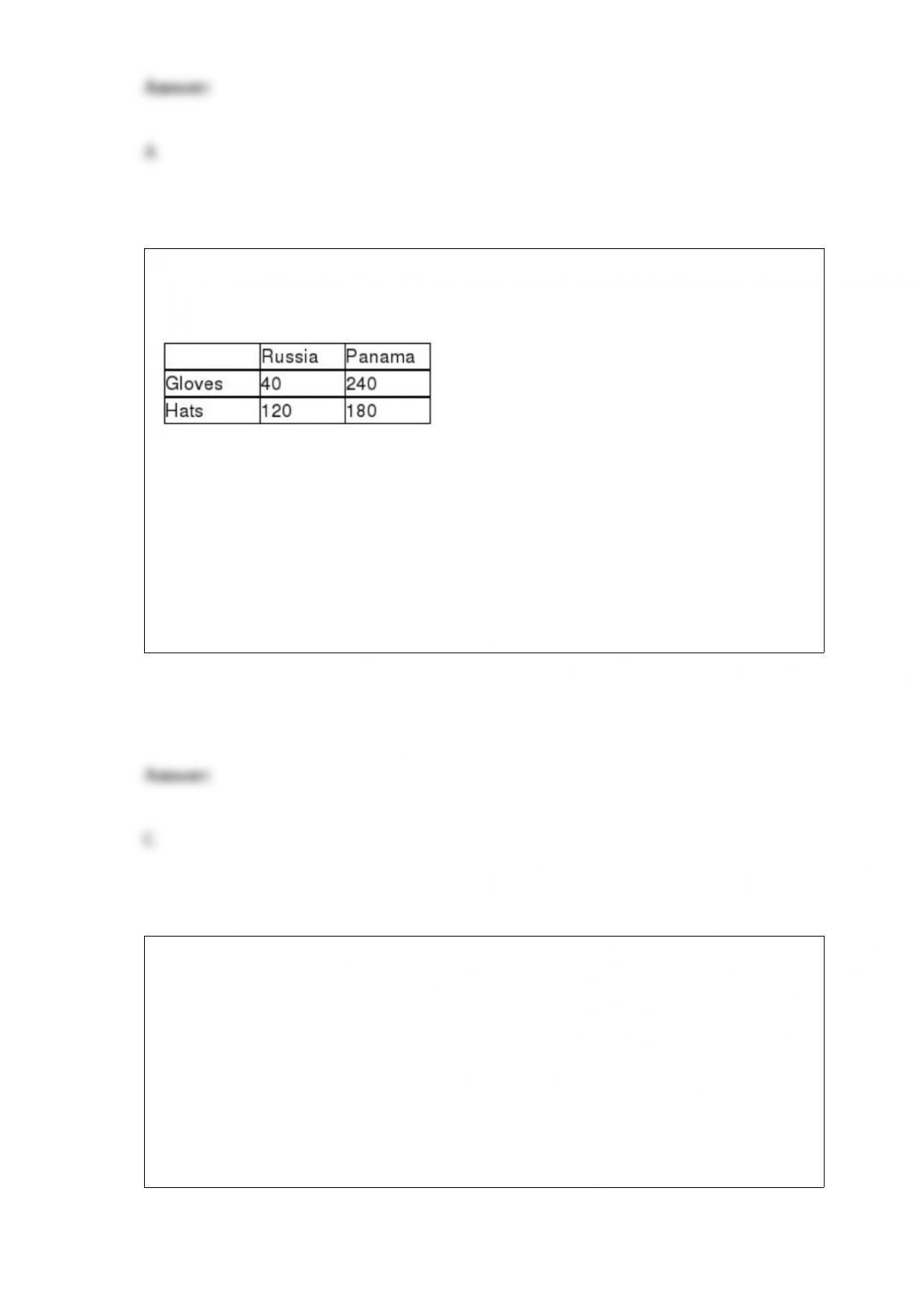
Refer to Table 18.1. The opportunity cost of a hat in Panama is:
Daily Output of Russia and Panama
Table 18.1
A) 1/2 of a glove.
B) 3/4 of a glove.
C) 4/3 gloves.
D) 2 gloves.
If Sparkling Cleaning Service uses only one variable input, labor. The firm’s short-run
demand curve for labor is the:
A) total product curve.
B) marginal product curve.
C) marginal revenue product curve.
D) wage rate.

Who is associated with the following summary of the economic way of thinking: “The
theory of economics does not furnish a body of settled conclusions immediately
acceptable to policy. It is a method rather than a doctrine, an apparatus of the mind, a
technique of thinking which helps its processor draw correct conclusions.”
A) John Maynard Keynes
B) Alfred Marshall
C) Adam Smith
D) President Harry Truman
The relationship between the wage and the quantity of labor that a given worker is
willing to provide is called:
A) individual labor demand.
B) market labor demand.
C) individual labor supply.
D) market labor supply.