1)
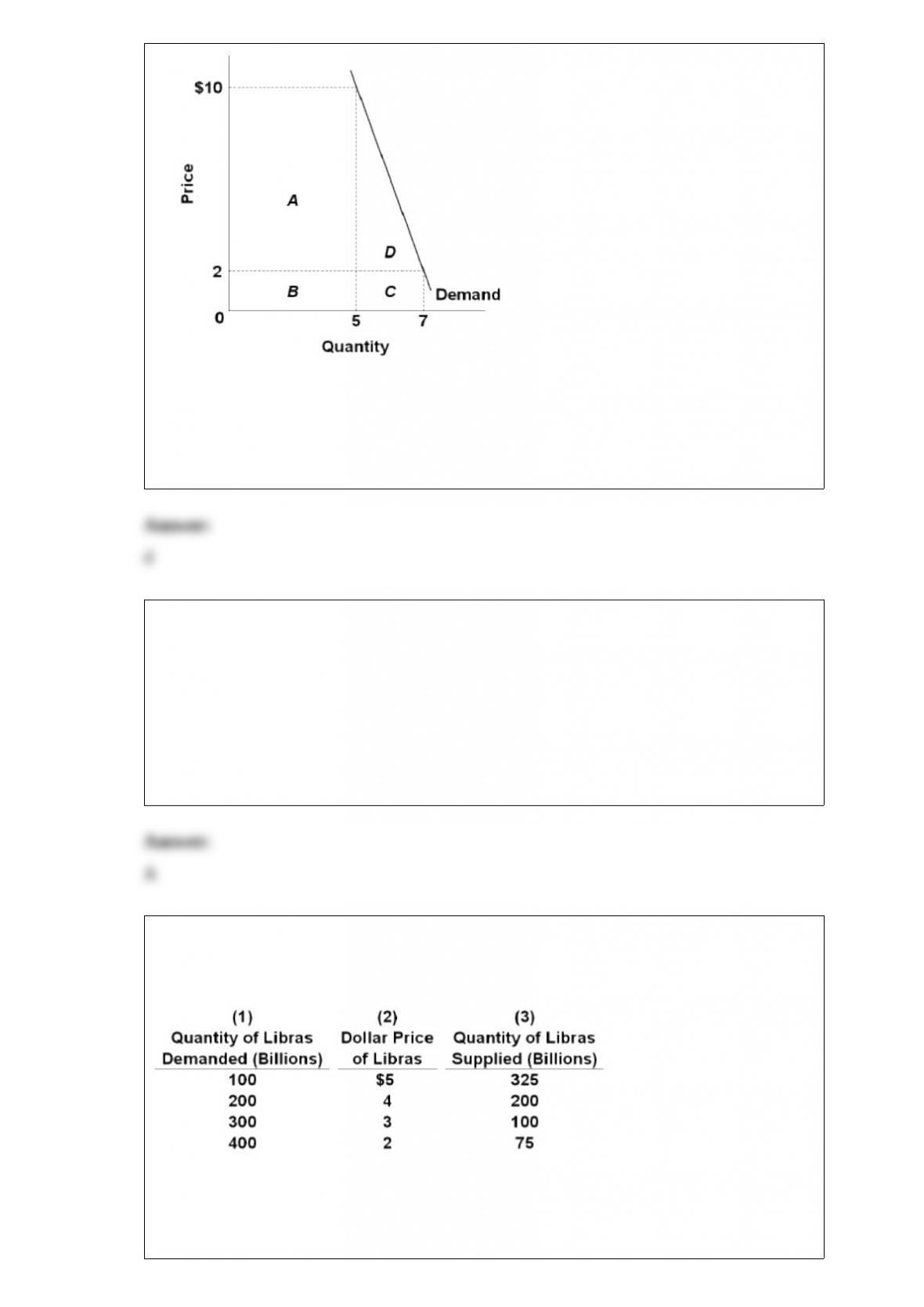
refer to the above diagram. if price falls from $10 to $2, total revenue:
a.rises from a + b to a+ b + d + c and demand is elastic.
b.falls from a + d to b + c and demand is inelastic.
c.rises from c + d to b + a and demand is elastic.
d.falls from a + b to b + c and demand is inelastic.
2) In a certain year the aggregate amount demanded at the existing price level consists
of $100 billion of consumption, $40 billion of investment, $10 billion of net exports,
and $20 billion of government purchases. Full-employment GDP is $120 billion. To
obtain price level stability under these conditions the government should:
A.increase tax rates and/or reduce government spending.
B.discourage personal saving by reducing the interest rate on government bonds.
C.increase government expenditures.
D.encourage private investment by reducing corporate income taxes.
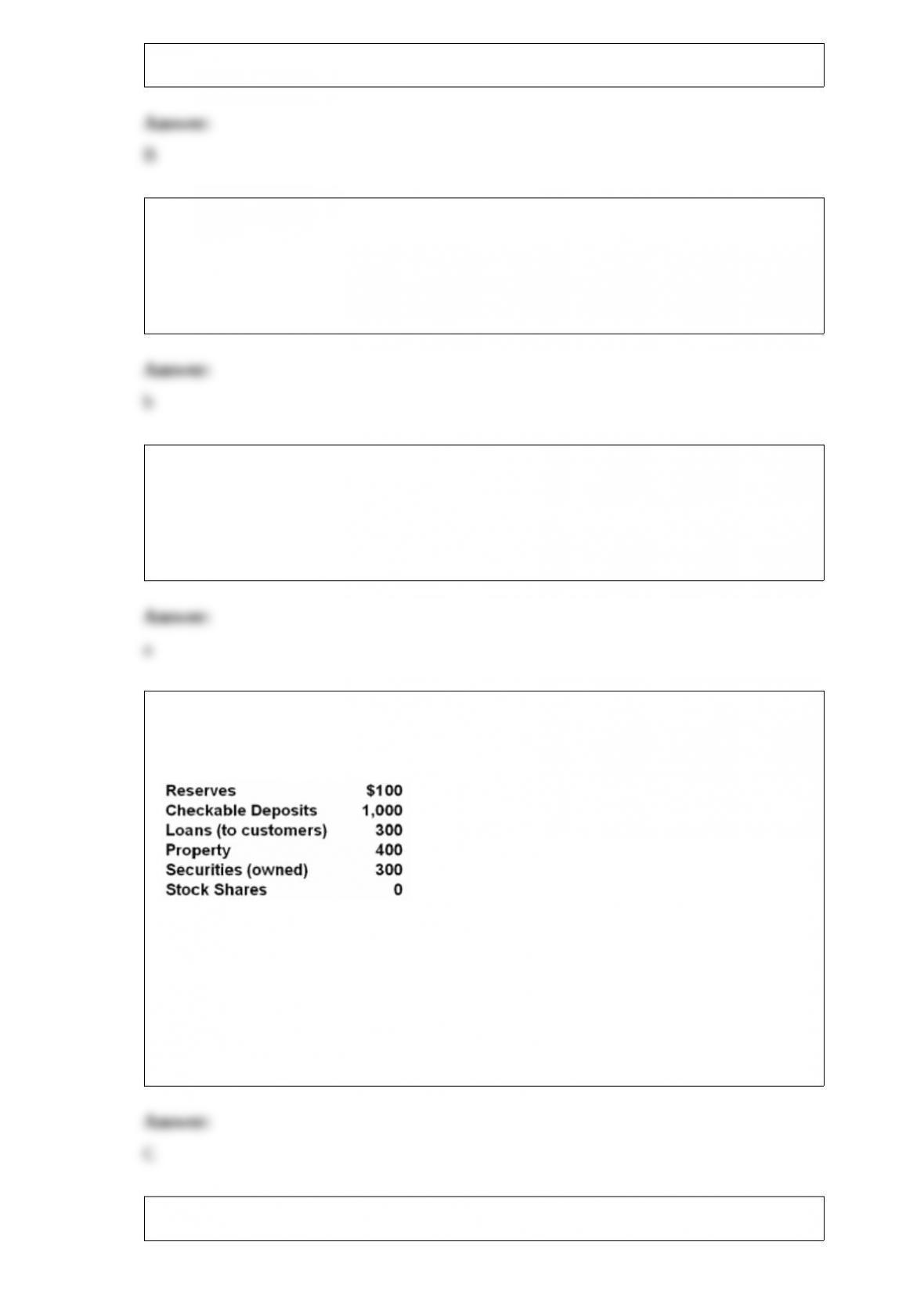
3) The following table which indicates the dollar price of libras, the currency used in
the hypothetical nation of Libra. Assume that a system of freely floating exchange rates
is in place.
Refer to the above table. The equilibrium dollar price of libras is:
A.$5.
B.$4.
C.$3.
D.$2.
4) an increase in the price of product a will:
a.increase the marginal utility per dollar spent on a
b.decrease the marginal utility per dollar spent on a
c.not affect the marginal utility per dollar spent on a
d.cause utility-maximizing consumers to buy more of a
5) a demand curve which is parallel to the vertical axis is:
a.perfectly inelastic.
b.perfectly elastic.
c.relatively inelastic.
d.relatively elastic.
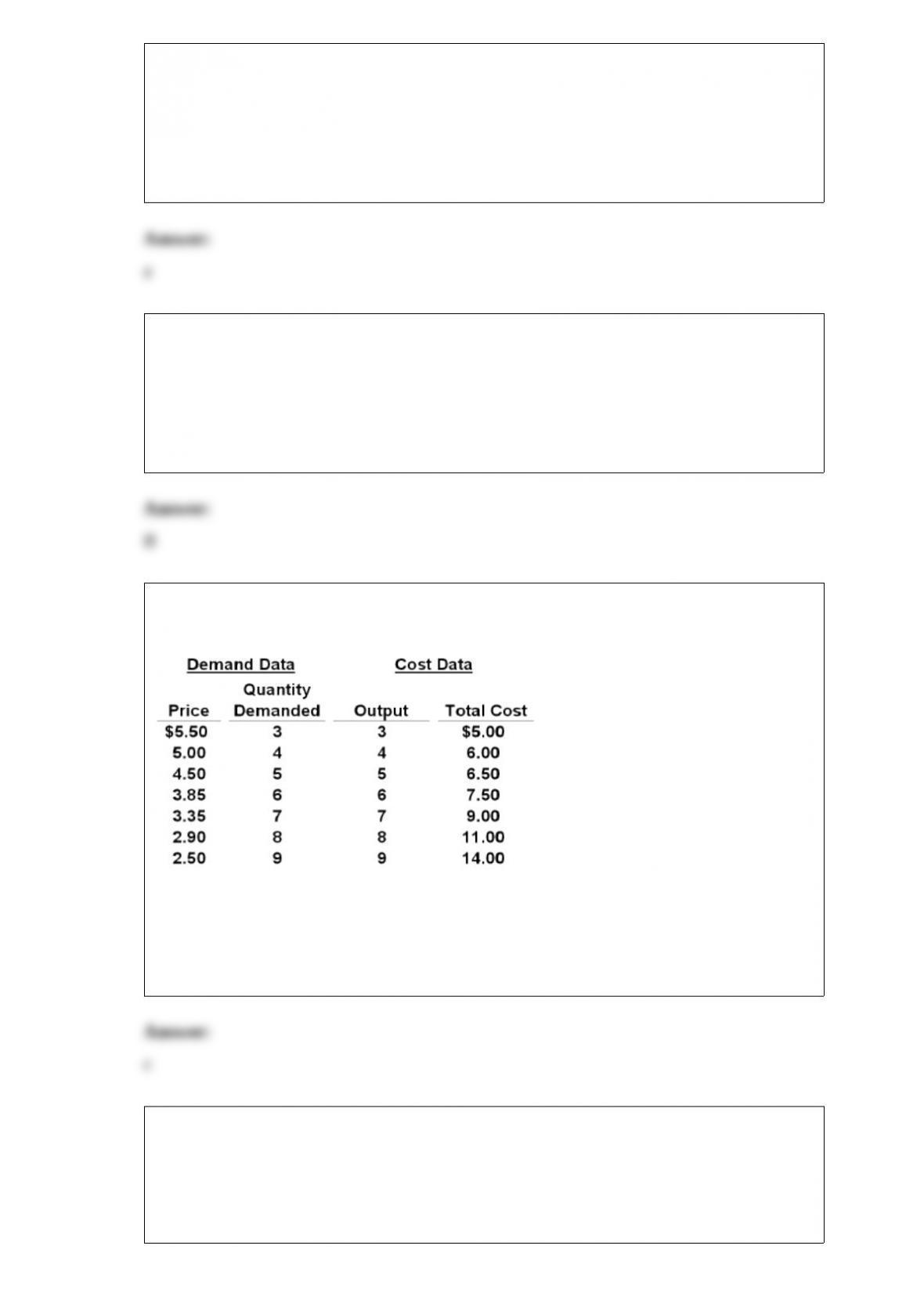
6) The following information for the Moolah Bank.
Refer to the above information and assume that Moolah Bank is “loaned up.” If it
receives a $100 deposit of currency, the banking system of which Moolah is a part
could expand loans by:
A.$100.
B.$90.
C.$900.
D.$1000.
7) a pure monopolist:
a.will realize an economic profit if price exceeds atc at the
profit-maximizing/loss-minimizing level of output.
b.will realize an economic profit if atc exceeds mr at the
profit-maximizing/loss-minimizing level of output.
c.will realize an economic loss if mc intersects the downsloping portion of mr.
d.always realizes an economic profit.
8) The function of investigating instances of fraudulent advertising has been assigned to
the:
A.Joint Economic Committee of Congress.
B.Federal Trade Commission.
C.Bureau of Standards.
D.Department of Justice.
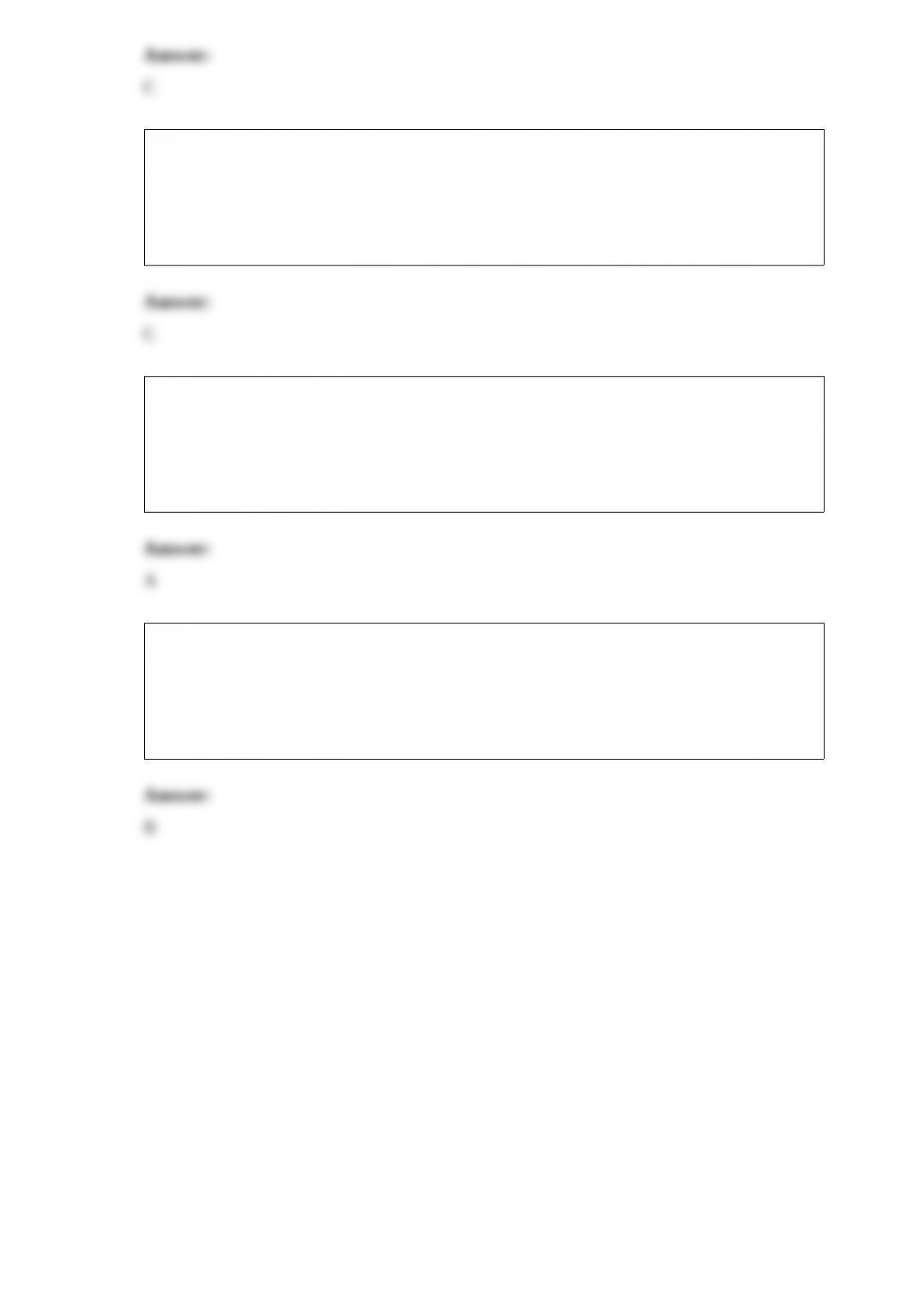
9) the following demand and cost data for a pure monopolist:
refer to the above data. the profit-maximizing monopolist will realize a:
a.profit of $8.50.
b.profit of $7.50.
c.profit of $16.
d.loss of $14.
10) Marginal product is:
A.the output of the least skilled worker.
B.a worker’s output multiplied by the price at which each unit can be sold.
C.the amount an additional worker adds to the firm’s total output.
D.the amount any given worker contributes to the firm’s total revenue.
11) The aggregate supply curve (short-run):
A.slopes downward and to the right.
B.graphs as a vertical line.
C.slopes upward and to the right.
D.graphs as a horizontal line.
12) Which of the following is an example of a labor-intensive commodity?
A.digital cameras
B.beer
C.aspirin tablets
D.gasoline
13) An increase in nominal GDP increases the demand for money because:
A.interest rates will rise.
B.more money is needed to finance a larger volume of transactions.
C.bond prices will fall.
D.the opportunity cost of holding money will decline.