Based on the Application, the marginal cost of sailing a ship faster is:
A) more cargo delivered per year.
B) more fuel cost incurred.
C) less fuel costs incurred.
D) less cargo delivered per year.
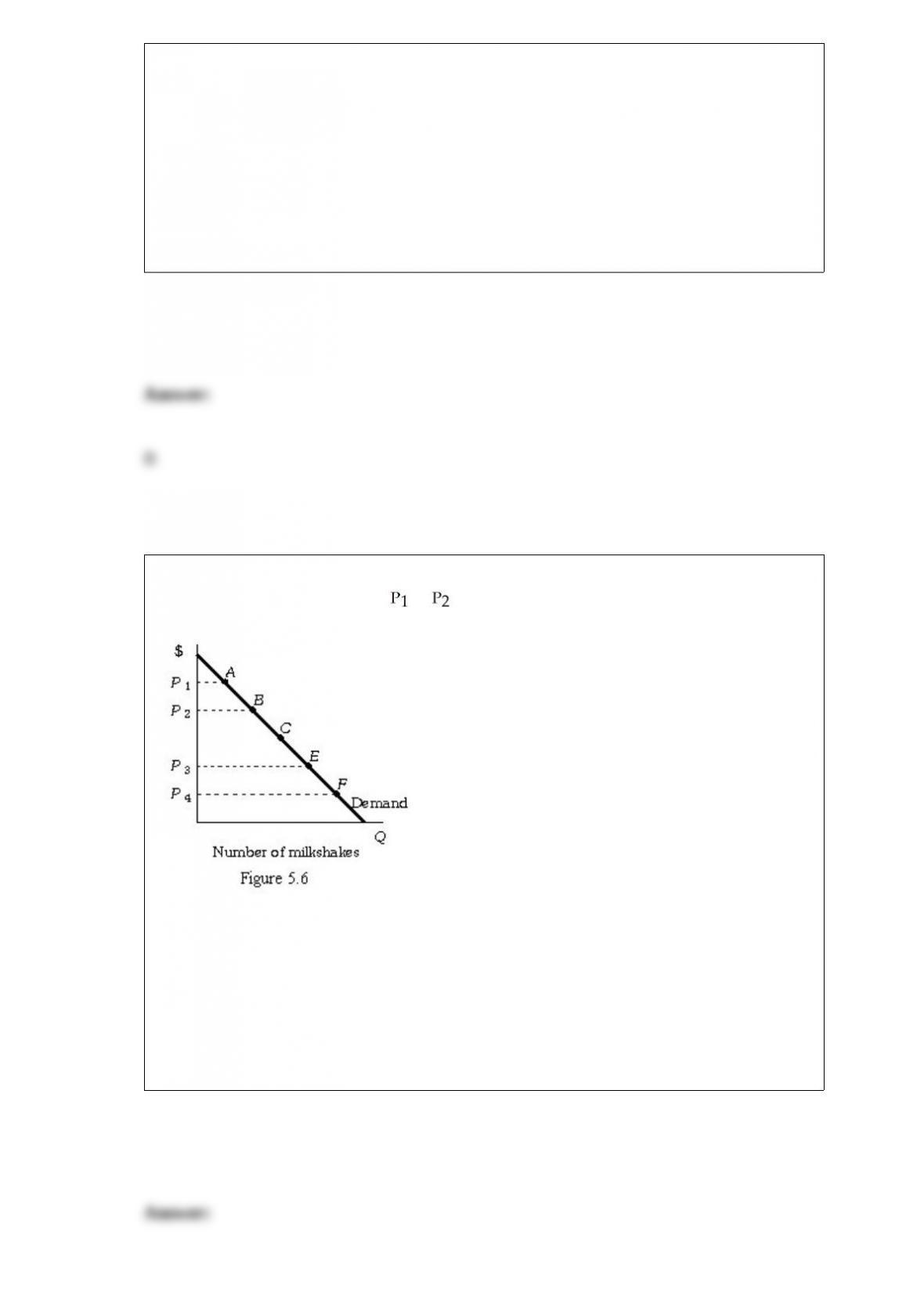
Refer to Figure 5.6. The demand for milkshakes is unitary elastic at point C. If the price
of a milkshake is reduced from to , total revenue:
A) will increase.
B) will decrease.
C) will remain constant.
D) could either increase or decrease.
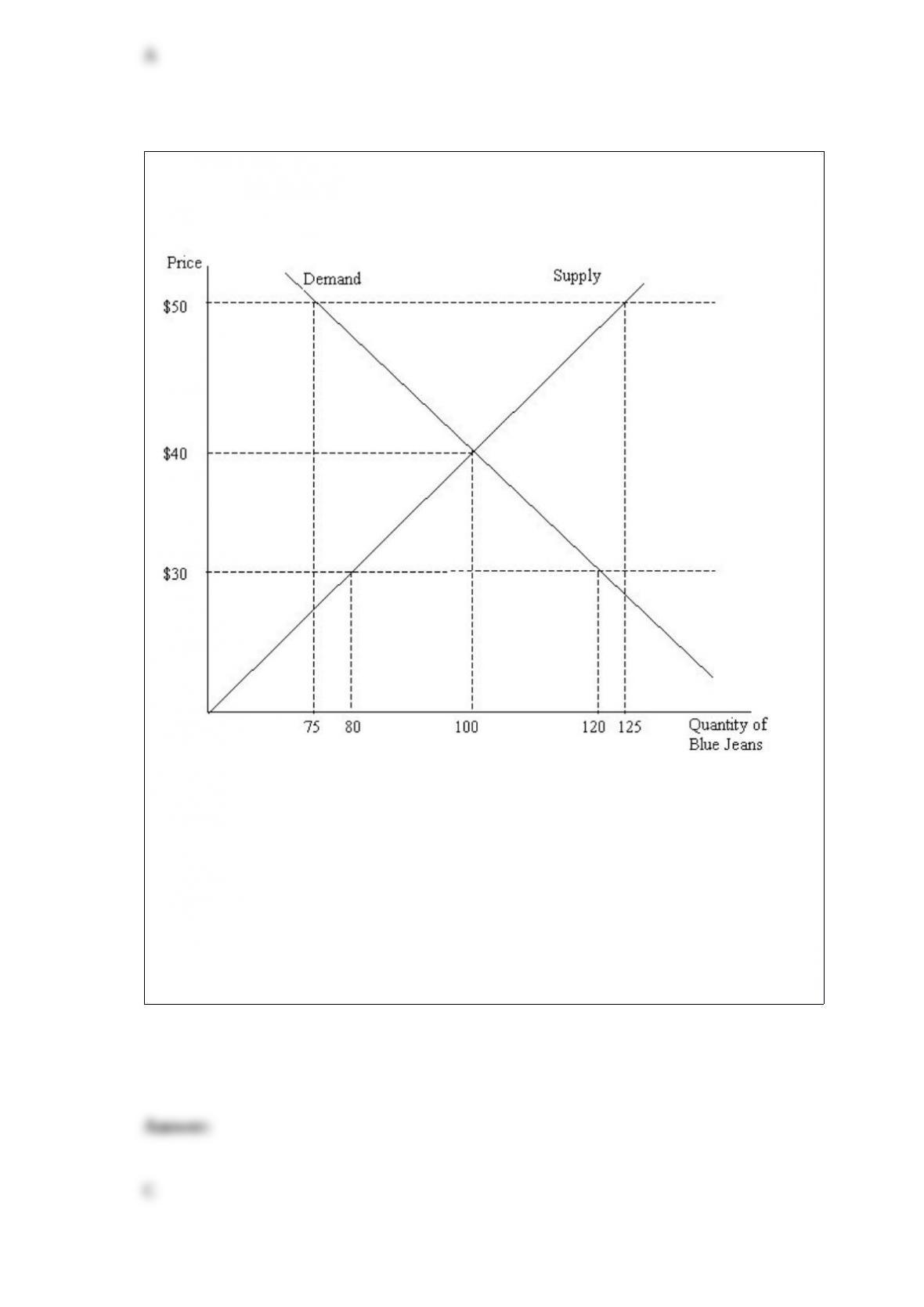
Figure 4.3 illustrates the supply and demand for blue jeans. If the actual price of blue
jeans is $50, we would expect that:
Figure 4.3
A) demand will increase until quantity demanded equals quantity supplied.
B) supply will decrease until quantity demanded equals quantity supplied.
C) price will decrease until quantity demanded equals quantity supplied.
D) no change will occur since the market is in equilibrium.
According to the application, the goods that lower income individuals consume tend to
be:
A) non-durable goods.
B) durable goods.
C) non-tradeable goods.
D) services.
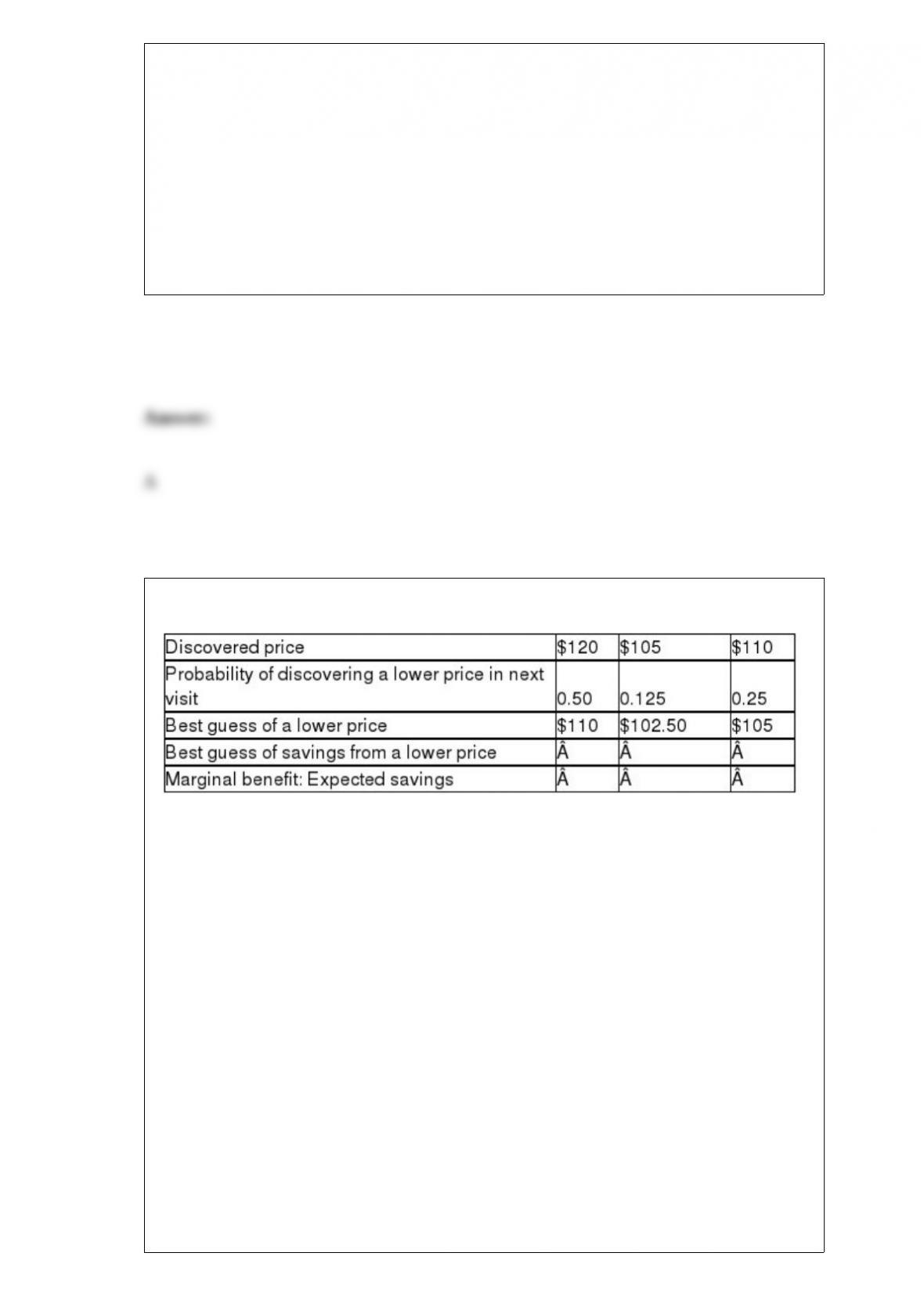
Table 14.5
Table 14.5 contains data on the marginal benefit of searching for a lower price for a
digital camera.
The price of the camera ranges from $100 at the lowest price store to $140 at the
highest price store.
For any randomly selected store, any price from the low price to the high price is
equally likely.
The marginal cost of visiting each store is constant at $1.50 per visit.
Refer to Table 14.5. Based on the marginal cost of $1.50 per store visit, it is sensible to
visit another store if the discovered price is:
A) $120.
B) $120 or $110.

C) $120 , $110, or $105.
D) It is not beneficial to visit another store at any of the above discovered prices.
Normative economic analysis:
A) is the focus of most modern economic reasoning.
B) answers the question “What ought to be?”
C) predicts the consequences of alternative actions.
D) All of the above are correct.
Suppose that a new advertising campaign extolling the virtues of apple juice is
successful, and a major freeze destroys half of the country’s apple crop. What happens
to the price and quantity of apple juice?
A) The equilibrium price of apple juice might rise or fall and the equilibrium quantity
of apple juice falls.
B) The equilibrium price of apple juice might rise or fall and the equilibrium quantity of
apple juice rises.
C) The equilibrium price of apple juice rises and the equilibrium quantity of apple juice
might rise or fall.

D) The equilibrium price of apple juice falls and the equilibrium quantity of apple juice
might rise or fall.
If consumers have an expectation of a product’s price increasing in the near future, they
will usually:
A) wait to see if the price really increases.
B) purchase more at the current price.
C) wait for the new price and compare.
D) none of the above
Suppose that in a month the price of a cup of coffee increases from $1 to $1.50. At the
same time, the quantity of cups of coffee demanded decreases from 200 to 190. The
price elasticity of demand for cups of coffee (calculated using the midpoint formula) is:
A) zero.
B) inelastic.
C) unitary elastic.
D) elastic.
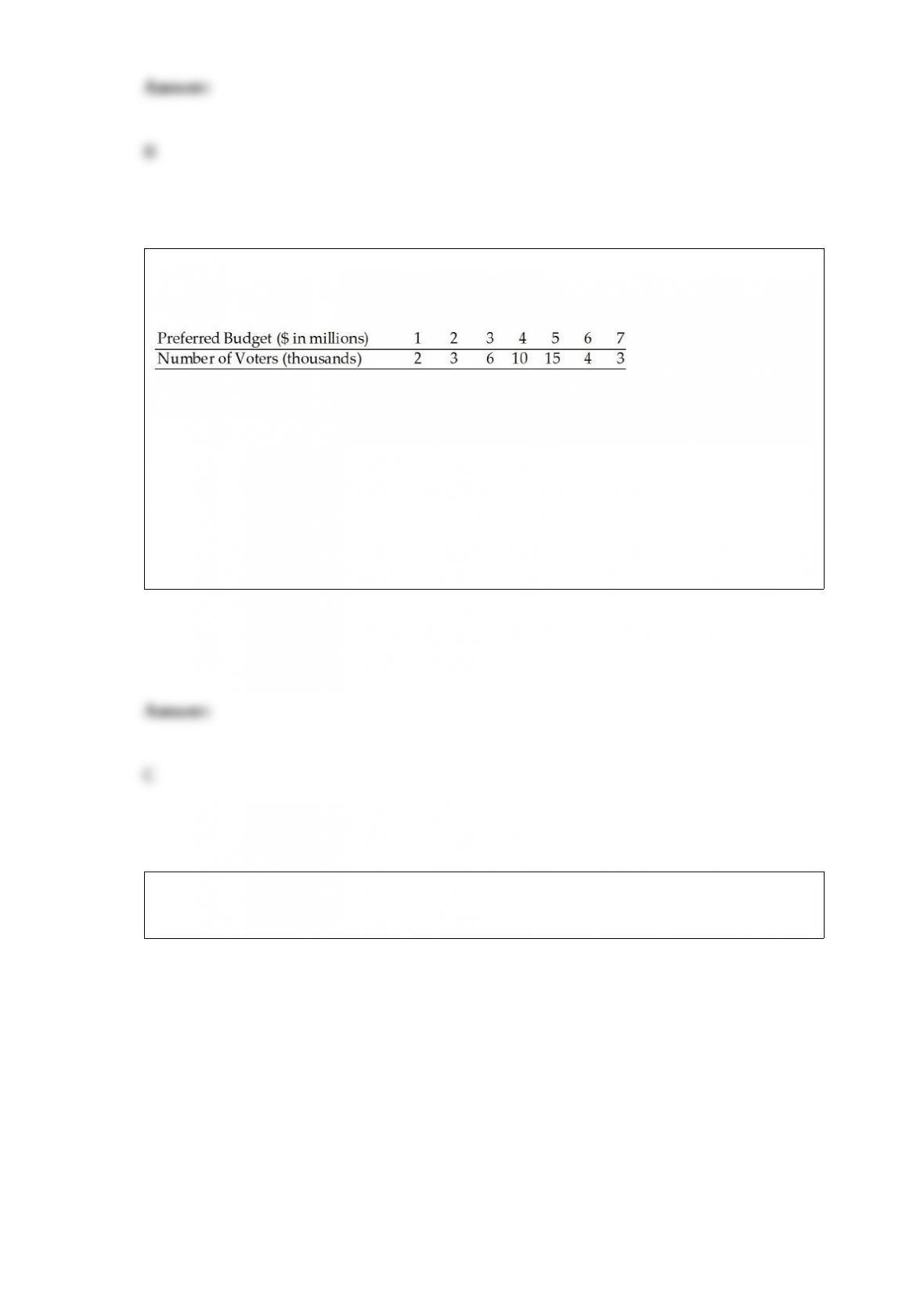
Table 15.1 shows the preferred budget in millions for a new sports facility and the
number of thousands of voters in a community who prefer that budget. What budget
does the median voter prefer?
Table 15.1
A) 3
B) 4
C) 5
D) 6
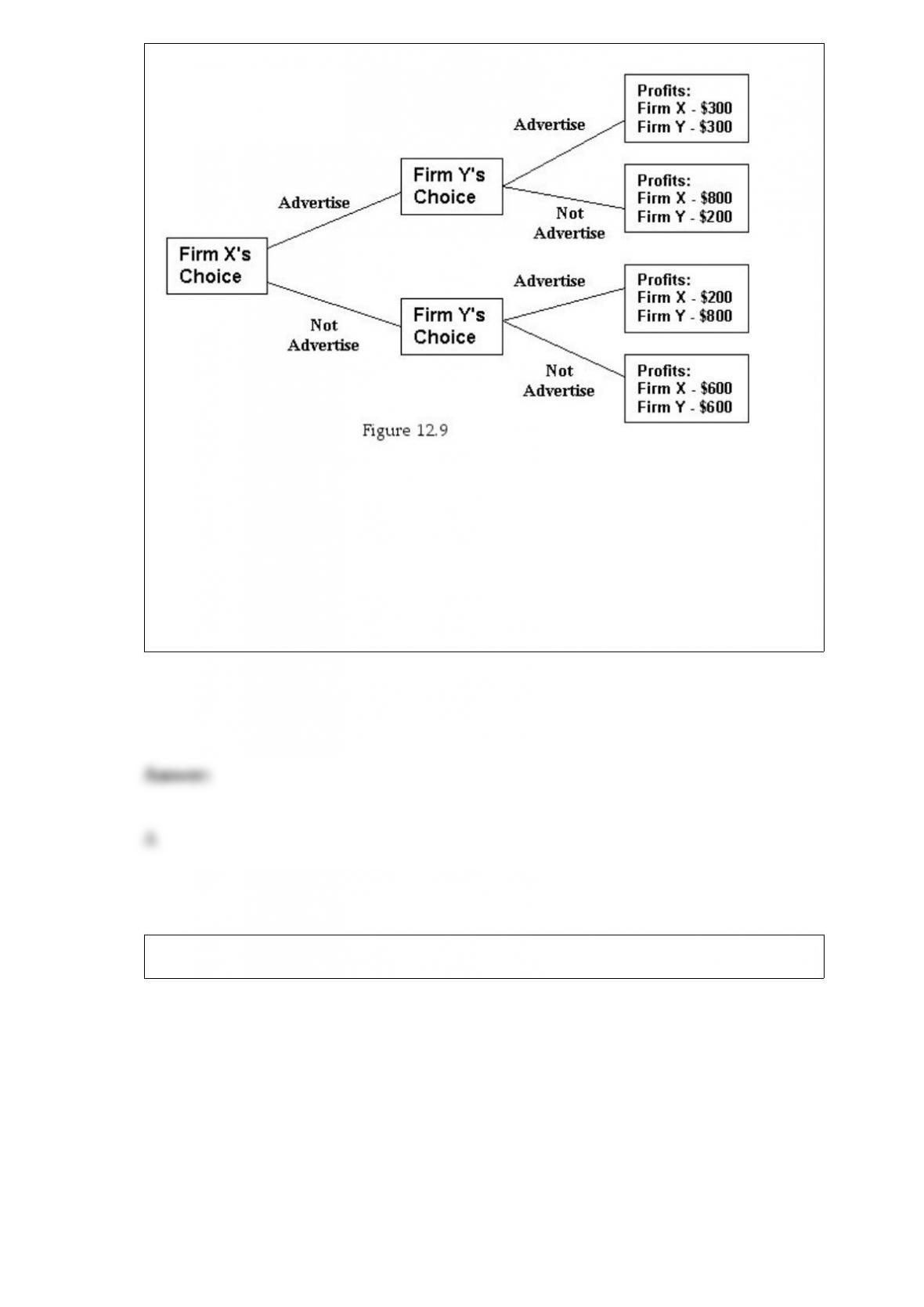
Refer to Figure 12.9. If both firms follow their dominant strategies, Firm X will earn
profits equal to:
A) $300.
B) $400.
C) $200.
D) $600.
The market in Figure 15.1 produces:
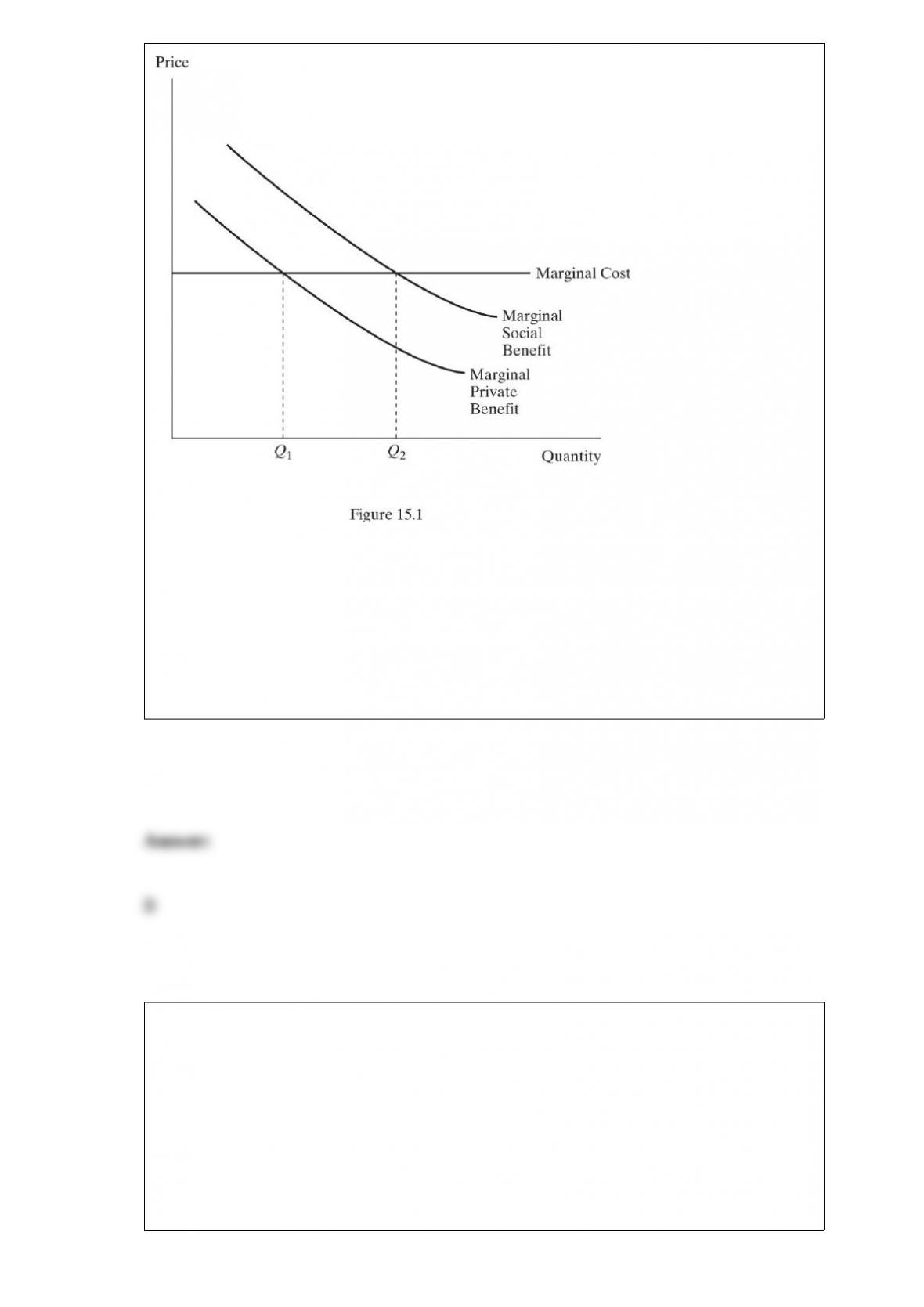
A) the efficient amount of the good.
B) less than the social optimum quantity.
C) more than the social optimum quantity.
D) the right amount of the good.
If the price elasticity of supply is 0.3, supply is:
A) unaffected by price changes.
B) inelastic.
C) unitary elastic.
D) elastic.
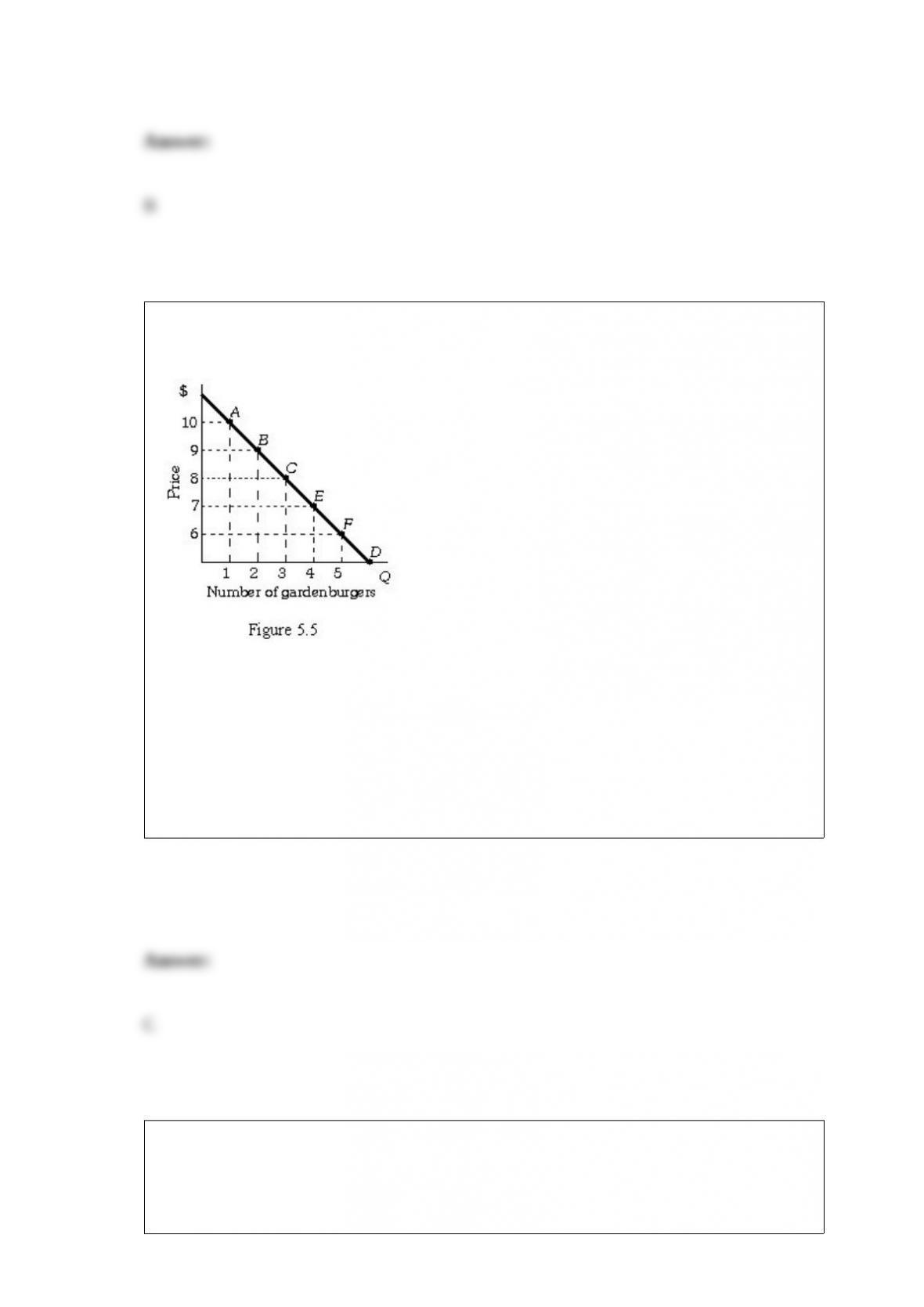
Refer to Figure 5.5. Using the midpoint method, if the price of a gardenburger is
increased from $6 to $7, the price elasticity of demand equals:
A) 0.13.
B) 0.33.
C) 1.44.
D) 13.
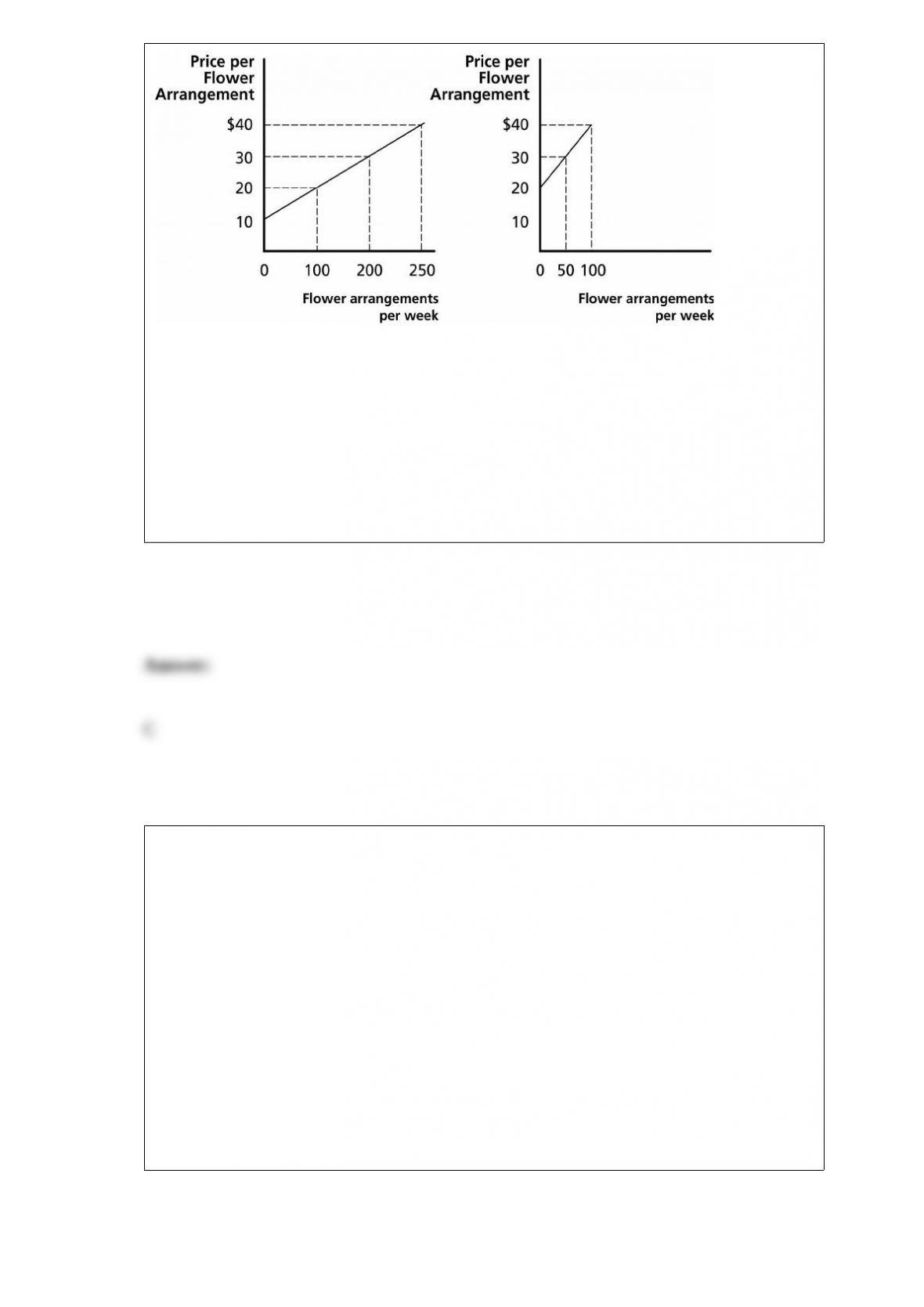
Refer to Figure 4.6, which shows David’s and Celeste’s individual supply curves for
flower arrangements per week. Assuming David and Celeste are the only producers in
the market, if the market quantity supplied is 50, the price must be:
Figure 4.6
David’s Supply Schedule Celeste’s Supply Schedule
A) $0.
B) $10.
C) between $10 and $20.
D) $30.
Recall the Application about the developer who is interested in building a casino in
Creswell, Oregon to answer the following question(s).
Recall the Application. By offering the citizens of Creswell, Oregon a yearly cash
payment if they voted to approve his casino, the developer was engaged in:
A) price discrimination.
B) rent seeking.
C) applying for a patent.
D) network externalities.

If the government sets a maximum price for gasoline above the equilibrium price:
A) quantity demanded of gasoline will be equal to quantity supplied of gasoline.
B) there will be excess demand for gasoline.
C) there will be excess supply for gasoline.
D) demand for gasoline will be less than supply for gasoline.
Recall the Application about the short-run and long-run elasticity of supply of
milk to answer the following question(s). According to the Application, the price
elasticity of supply of milk over a one-year period is about 0.10, and in the long
run, the price elasticity of supply is 2.5.
Recall the Application. If the price of milk increases by 100 percent and stays there for
a year, the quantity of milk supplied will rise by about:
A) 1 percent.
B) 10 percent.
C) 100 percent.
D) 1,000 percent.
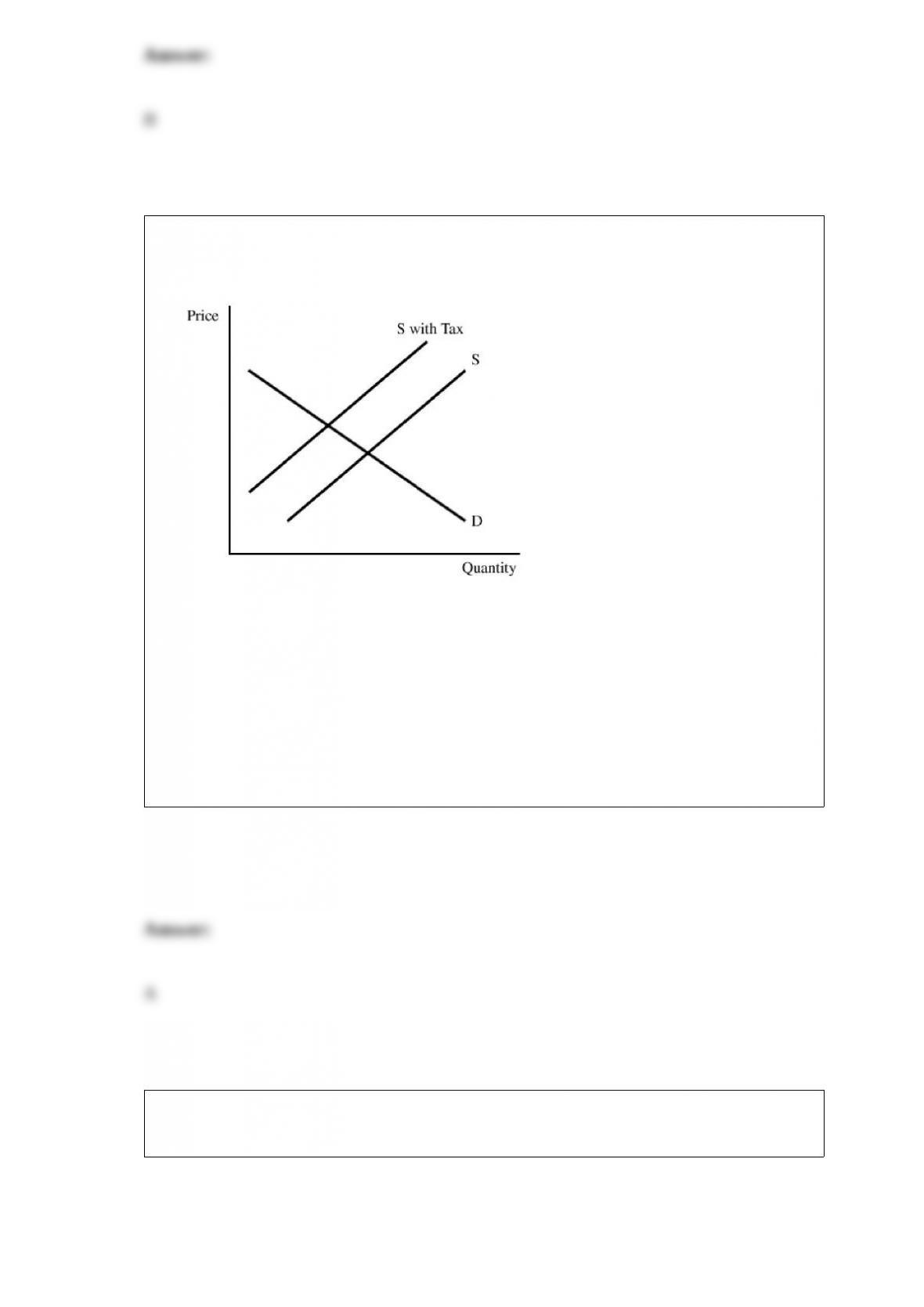
The pollution tax in Figure 16.4:
Figure 16.4
A) reduces equilibrium output.
B) reduces equilibrium price.
C) increases supply.
D) all of the above
Figure 11.2 shows demand and costs for a monopolistically competitive firm. In the
long run we expect:
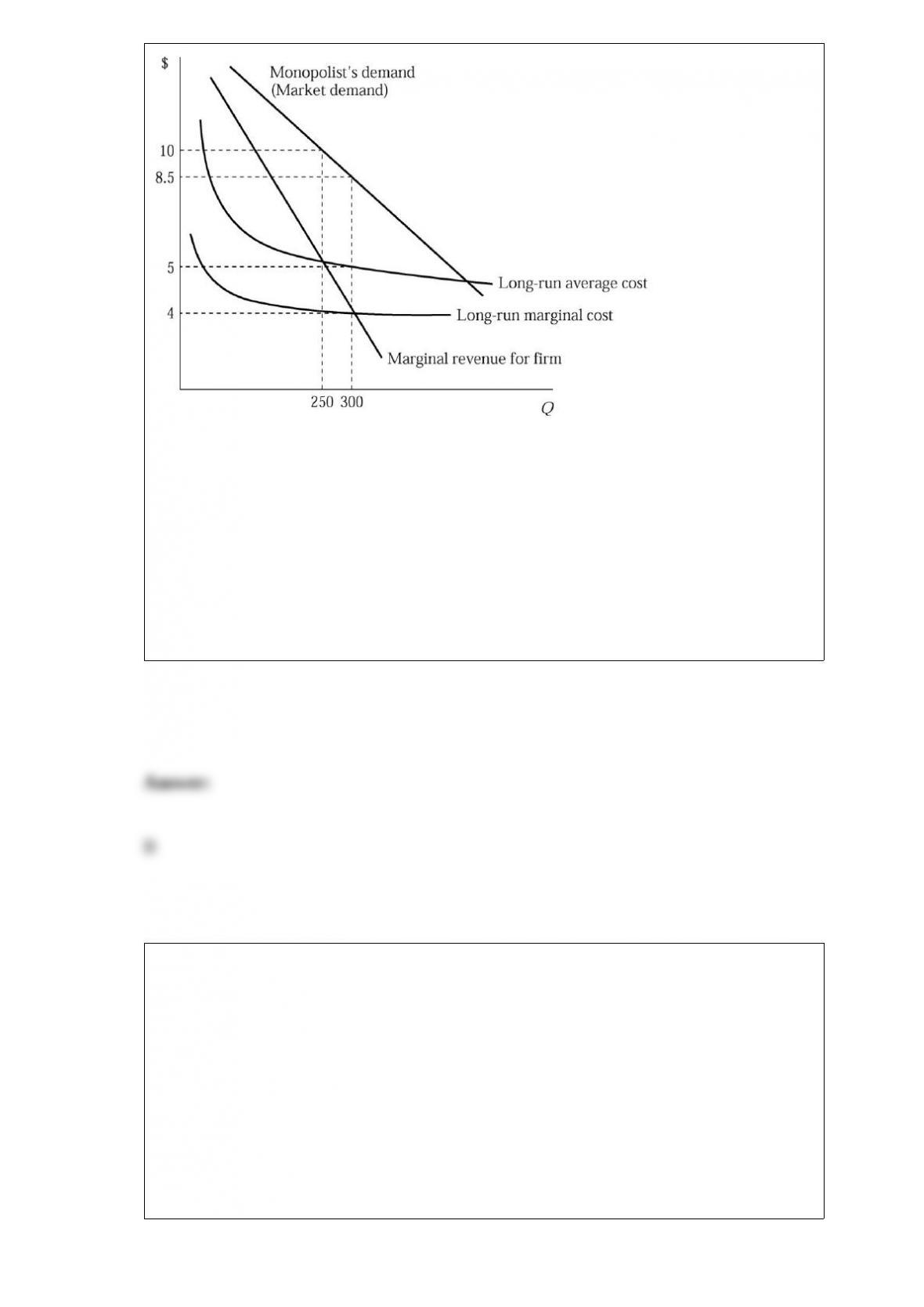
Figure 11.2
A) the firm’s demand curve to shift to the right.
B) the firm’s marginal revenue curve to shift to the left.
C) the firm’s average cost curve to shift upward.
D) the firm’s marginal cost curve to shift downward.
Which of the following statements is true?
A) An assumption of monopolistic competition is that firms can differentiate their
products.
B) An assumption of perfect competition is that firms can differentiate their products.
C) Monopolistic competition is not subject to free entry and exit.
D) An assumption of monopolistic competition is that there are only a few large firms
in the industry.

Economists say that labor demand is a derived demand because:
A) it does not come from competitive markets.
B) it depends on the demand for products that workers produce.
C) it is derived from nature.
D) it is derived from production.
Recall the Application. If a fake killer whale to be used to scare sea lions away from
steelhead and other threatened and commercially valuable species cost $11,000 for the
mold and $5,000 for materials for each fake killer whale made, then the producer would
face:
A) increasing returns to scale.
B) decreasing returns to scale.
C) increasing average total costs.
D) decreasing demand.

Adam Smith:
A) is considered the founder of economics.
B) introduced the concept of ceteris paribus to the discussion of supply and demand.
C) is responsible for refining the model of supply and demand.
D) is the author of this text.
Suppose that the government sets a minimum price for soybeans at $5 a pound above
the equilibrium price. This leads to a quantity traded:
A) at the equilibrium quantity.
B) below the equilibrium quantity.
C) above the equilibrium quantity.
D) There is not sufficient information.

Which practice helps health insurance companies overcome the problem of adverse
selection?
A) They sell insurance only to unhealthy people.
B) They sell insurance only to healthy people.
C) They have switched to the experience rating system.
D) all of the above
Which of the following is a main factor that explains the differences in the incomes of
U.S. households?
A) inheritances
B) luck and misfortune
C) discrimination
D) all of the above
Recall Application 2, “The Market for Meteorites,” to answer the following
questions:
According to the Application, a chunk of space debris that enters our atmosphere is

called a:
A) meteor.
B) meteorite.
C) meteoroid.
D) All of the above are correct.
For country A, an import is a good produced in:
A) country B and purchased by residents of country B.
B) country B and purchased by residents of country A.
C) country A and purchased by residents of country B.
D) country A and purchased by residents of country A.
Based on what you learned from the application, can a firm who exports to the U.S. be
charged with dumping even though the price they sell at home is lower?
A) no
B) yes, because the “constructed value” estimated by the department of Commerce can
overstate the price that the firm charges at home

C) yes, because the firm that brings forward the charges can supply overstated figures
data to the Department of Commerce
D) B and C are correct.
A firm scaled down its operation by reducing all inputs by 50% and experienced a
less-than-50% decrease in output. If all input prices remain unchanged, the firm’s
long-run average cost exhibits:
A) economies of scale at the current output level.
B) diseconomies of scale at the current output level.
C) a constant long-run average cost at the current output level.
D) diminishing marginal returns at the current output level.
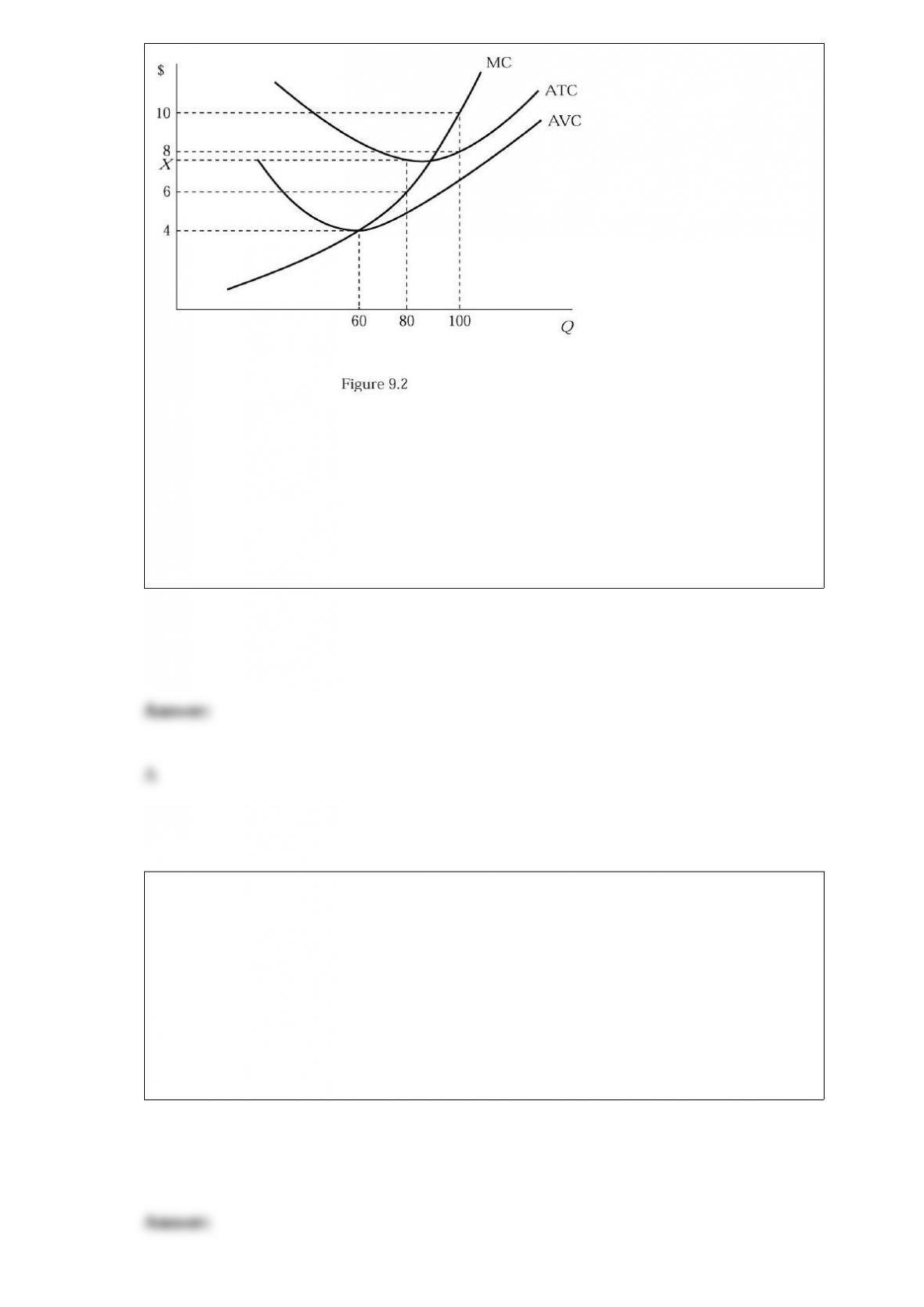
Figure 9.2 shows the cost structure of a firm in a perfectly competitive market. Suppose
the current market price is $6 and the firm produces at a given output level. If the firm’s
total fixed cost increases due to a new government regulation,the short-run response of
the firm should be to:
A) produce its current output level.
B) decrease its current output level.
C) increase its current output level.
D) There isn’t sufficient information.
If sellers have an expectation of lower future prices:
A) the current supply of that good will decrease.
B) the current demand for that good will increase.
C) the current supply of that good will increase.
D) the current demand for that good will decrease.
Suppose the wage rate in a certain industry rises, and firms hire fewer workers. The best
explanation of this is that labor:
A) demand fell.
B) demand increased.
C) supply fell.
D) supply increased.
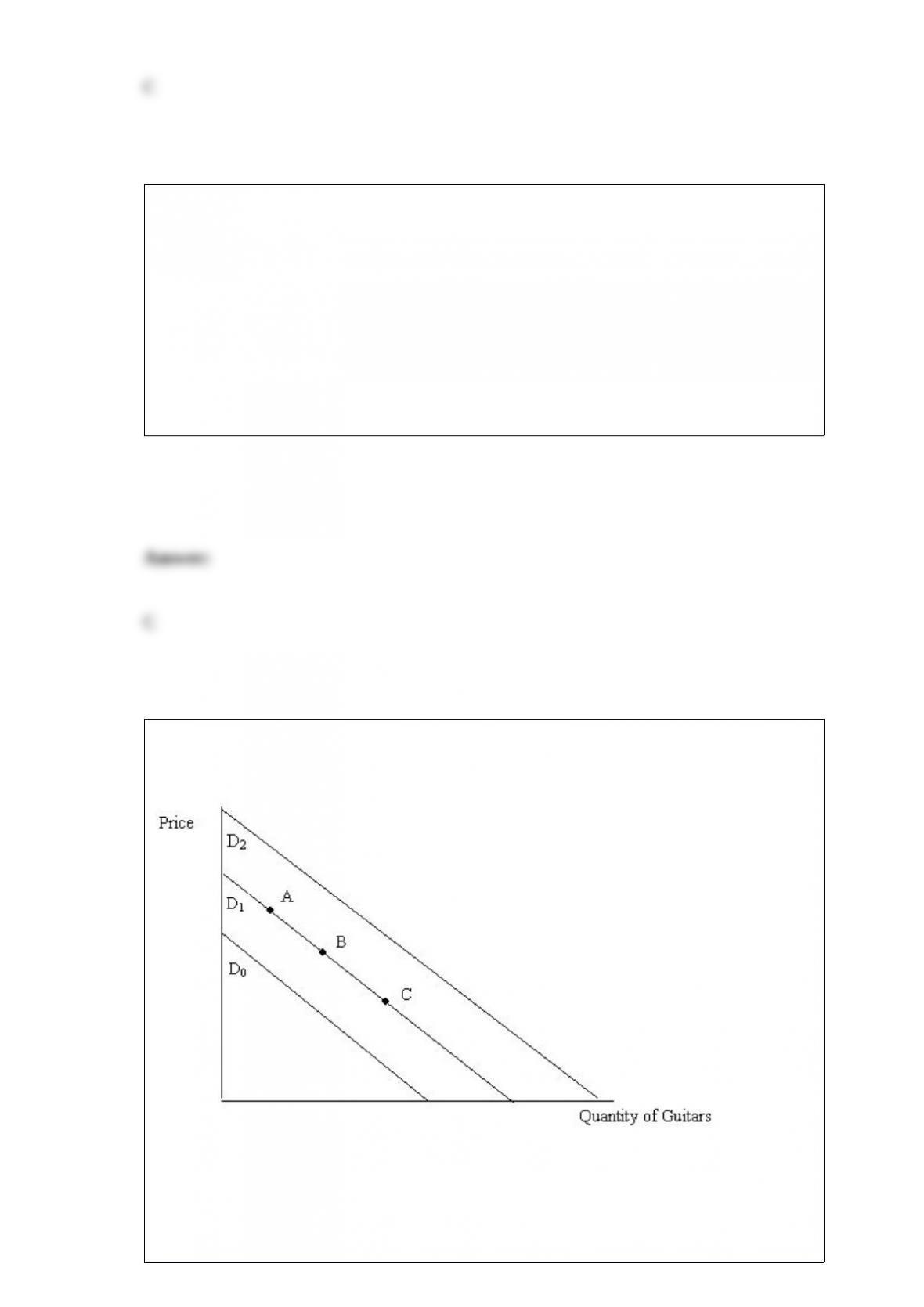
Figure 4.4 illustrates the demand for guitars. Assume guitars are an inferior good. An
increase in income would bring about a movement from:
Figure 4.4
A) point B to point C.

B) point B to point A.
C) D1 to D0.
D) D1 to D2.