1) a market is in equilibrium:
a.provided there is no surplus of the product.
b.at all prices above that shown by the intersection of the supply and demand curves.
c.if the amount producers want to sell is equal to the amount consumers want to buy.
d.whenever the demand curve is downsloping and the supply curve is upsloping.
2) Over the past decade, total and per capita trash generated in the United States have:
A.both increased at about the same rate.
B.increased and leveled off, respectively.
C.both fallen.
D.leveled off and fallen, respectively.
3)
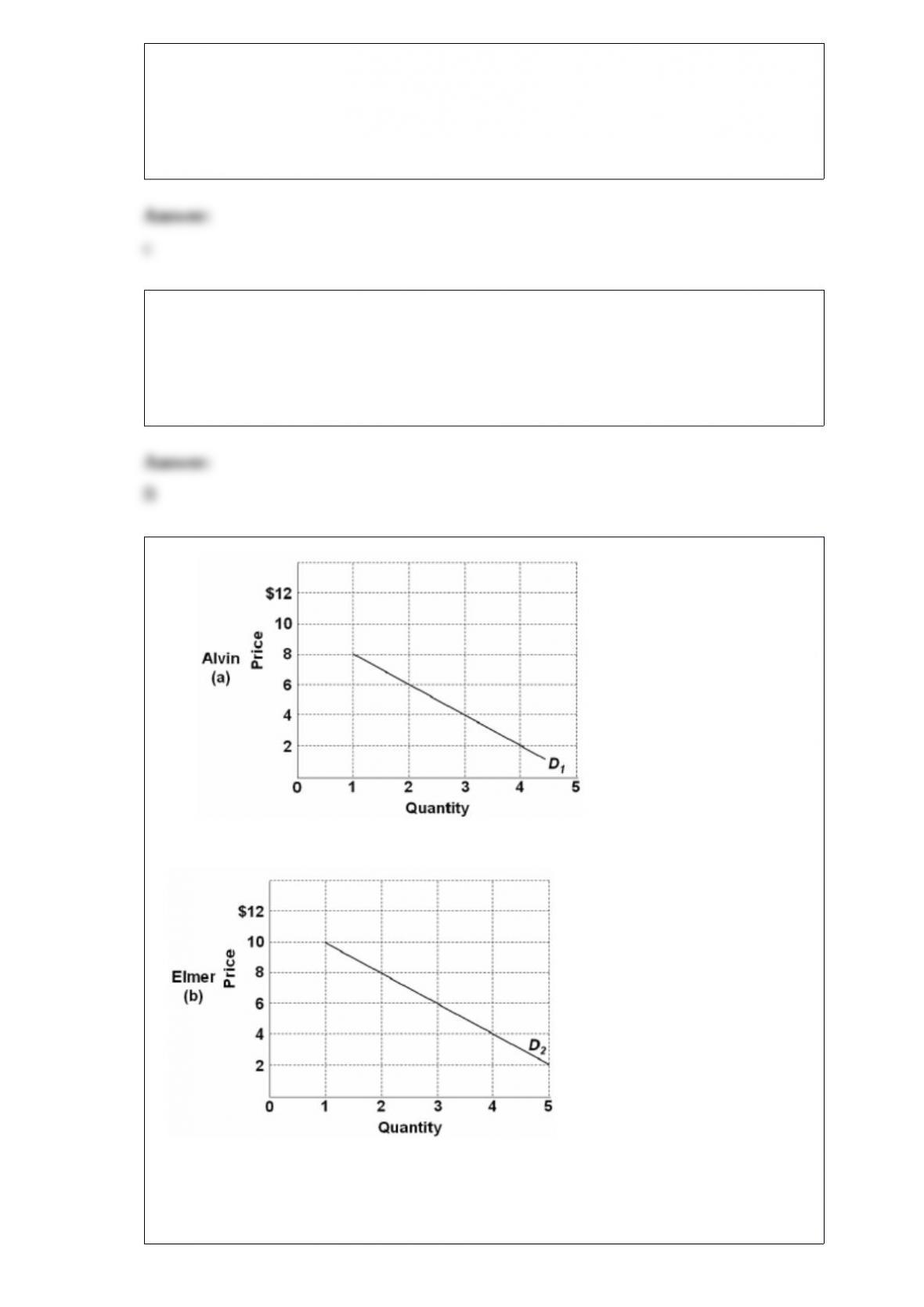
Refer to the above diagrams in which figures (a) and (b) show demand curves reflecting
the prices Alvin and Elmer are willing to pay for a public good, rather than do without
it. The collective willingness to pay for the 1st unit of this public good is:
A.$18.
B.$14.
C.$10.
D.$6.
4) The value of the monetary multiplier is:
A.1/MPS.
B.1/Excess Reserves.
C.1/MPC.
D.1/Required Reserve Ratio.
5)
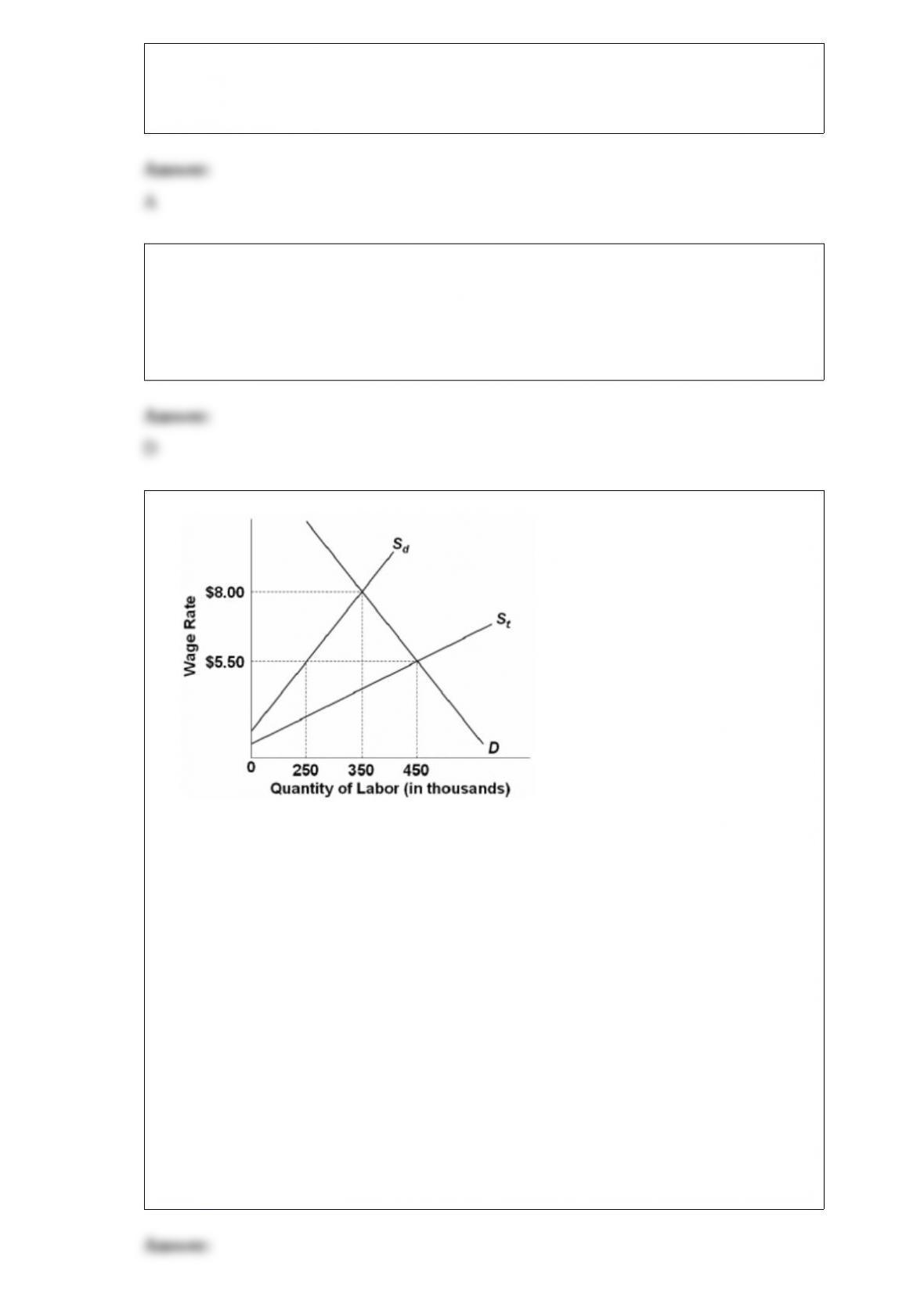
assumptions: 1) employers in this market are willing and able to ignore minimum wage
laws; 2) sd represents the supply of domestically-born (and legal immigrant) workers;
3) st represents the total supply of workers in this labor market (sd plus illegal
immigrants); and 4) unless otherwise stated, illegal immigration is not effectively
blocked by the government.
refer to the above figure. assume initially that government does not effectively block
illegal immigration. if the government then finds a way to prevent all illegal immigrants
from working in this labor market:
a.100,000 domestically-born workers will gain employment at the expense of 200,000
illegal immigrants.
b.200,000 domestically-born workers will gain employment at the expense of 200,000
illegal immigrants.
c.100,000 domestically-born workers will gain employment at the expense of 250,000
illegal immigrants.
d.100,000 domestically-born workers will gain employment at the expense of 100,000
illegal immigrants.

6) a perfectly inelastic demand curve:
a.has a price elasticity coefficient greater than unity.
b.has a price elasticity coefficient of unity throughout.
c.graphs as a line parallel to the vertical axis.
d.graphs as a line parallel to the horizontal axis.
7) Economic profit affects:
A.the allocation of resources, but not the level of resource use.
B.the level of resource use, but not the allocation of resources.
C.the allocation of resources and the level of resource use.
D.neither the allocation of resources nor the level of resource use.
8) which of the following generalizations is not correct?
a.the larger an item is in one’s budget, the greater the price elasticity of demand.
b.the price elasticity of demand is greater for necessities than it is for luxuries.
c.the larger the number of close substitutes available, the greater will be the price
elasticity of demand for a particular product.
d.the price elasticity of demand is greater the longer the time period under
consideration.
9) which of the following statements is correct?
a.if demand increases and supply decreases, equilibrium price will fall.
b.if supply increases and demand decreases, equilibrium price will fall.
c.if demand decreases and supply increases, equilibrium price will rise.
d.if supply declines and demand remains constant, equilibrium price will fall.
10) other things equal, if the prices of a firm’s variable inputs were to fall:
a.one could not predict how unit costs of production would be affected.
b.marginal cost, average variable cost, and average fixed cost would all fall.
c.marginal cost, average variable cost, and average total cost would all fall.
d.average variable cost would fall, but marginal cost would be unchanged.
11) Underemployment occurs:
A.when workers do not have jobs.
B.when farm workers become more productive.
C.when workers are working fewer hours than they desire or when they are working
less productively than they are capable.
D.in IACs, but not in the DVCs.
12) in drawing a production possibilities curve we hold constant:
a.the money supply.
b.the consumer price index.
c.both technology and resource supplies.
d.resource supplies only.
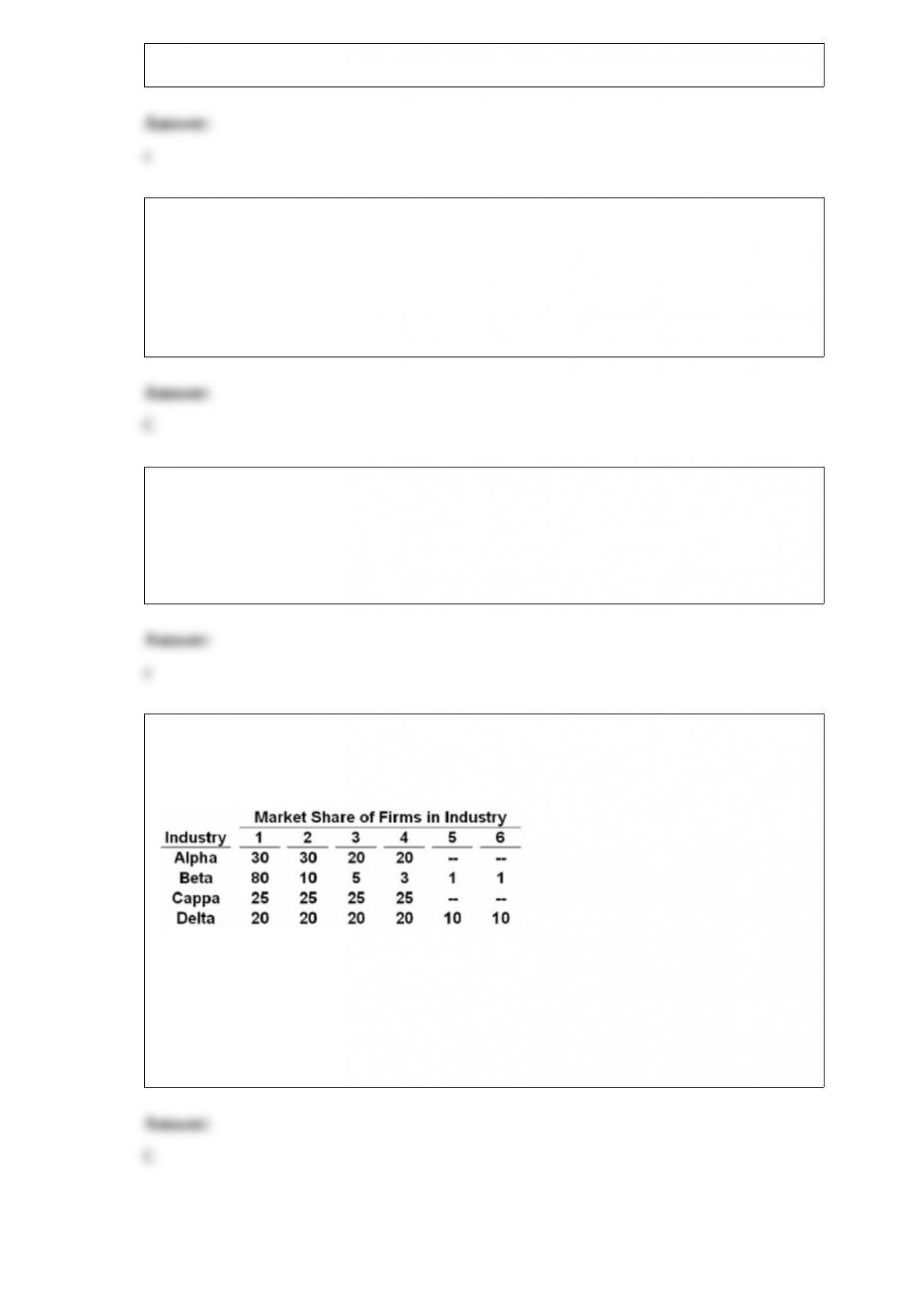
13) The basis of the following table shows market shares of firms in hypothetical
industries. Assume these are distinct industries with no buyer-seller relationships or
competition among them.
Refer to the above table. A merger between Firm 1 in Alpha and Firm 2 in Delta would
be a:
A.vertical merger.
B.horizontal merger.
C.conglomerate merger.
D.diagonal merger.