
The most efficient way of reducing greenhouse gases is
a. discouraging attempts to develop alternative energy sources.
b. subsidizing “green” fuels.
c. implementing carbon taxes.
d. outlawing smog-producing industries.
e. giving away cap-and-trade permits instead of auctioning them.
An effluent fee induces a polluter to
a. increase his or her profits.
b. reduce waste discharge.
c. eliminate pollution entirely.
d. overspend on pollution reduction to the point where profits disappear.
e. stop production.
Excluded from the generally recognized limitations of the price system is its inability to
a. create an equitable distribution of income.
b. provide sufficient amounts of public goods.
c. allocate resources.
d. minimize external diseconomies.
e. produce adequate amounts of necessities consumed primarily by the poor.
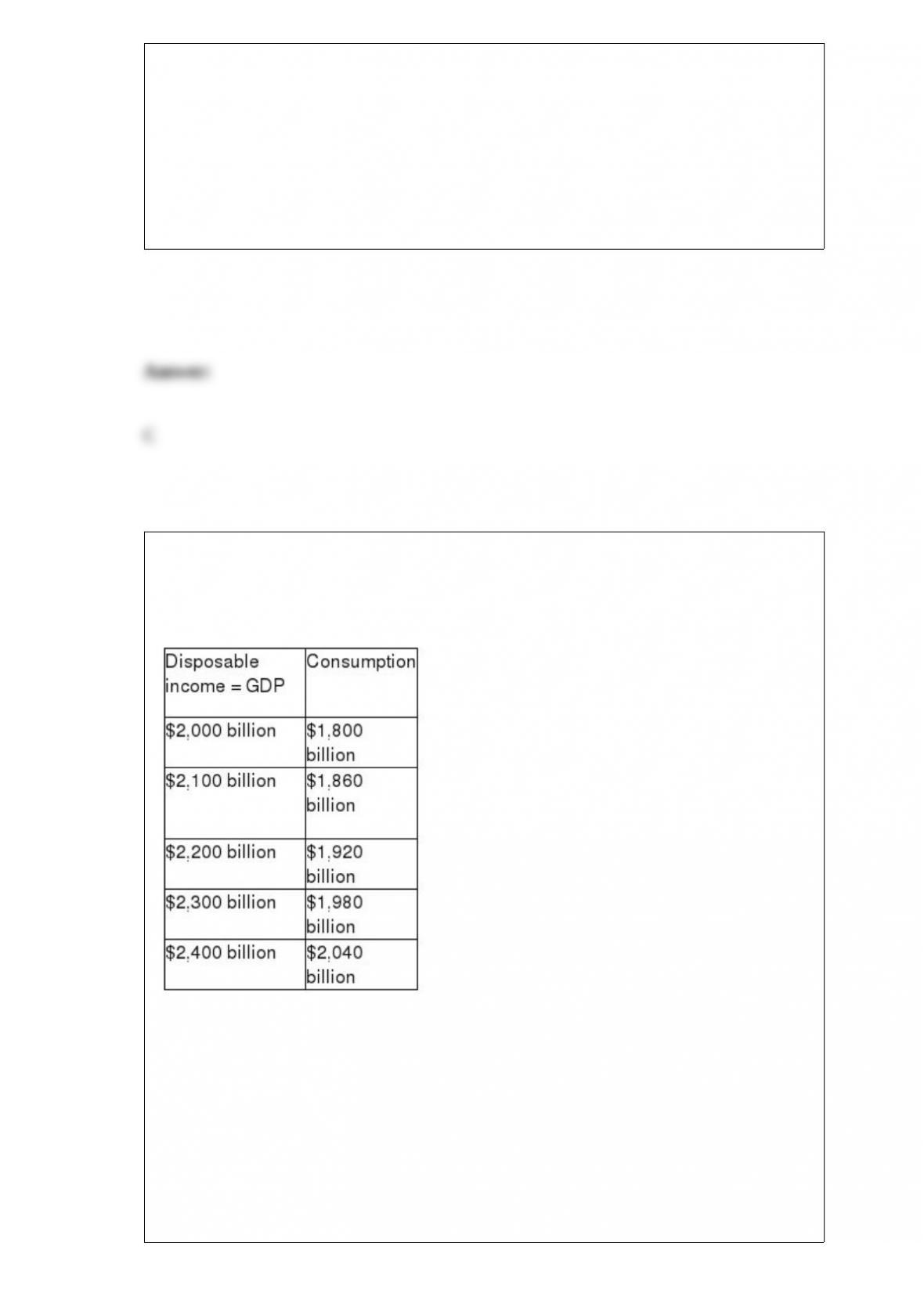
The following questions are based on the following consumption function for a
hypothetical economy. Assume autonomous intended investment is $200 billion and
there are no government expenditures, exports, or imports.
The current equilibrium level of GDP is ________ billion.
a. $2,000
b. $2,100
c. $2,200
d. $2,300

e. $2,400
The primary reason for arguing that the sales tax imposes a greater relative burden on
the poor is that
a. the incidence of the sales tax falls entirely on the consumer.
b. sales taxes lower the final prices of the goods taxed.
c. the poor spend a greater percentage of their incomes than do the rich.
d. poor people have more trouble evading sales taxes than the rich.
e. poor people live primarily in rental dwellings, whereas rich people own their own
houses.
The following questions are based on the following cost and revenue schedule for the
Presto Piano Company:
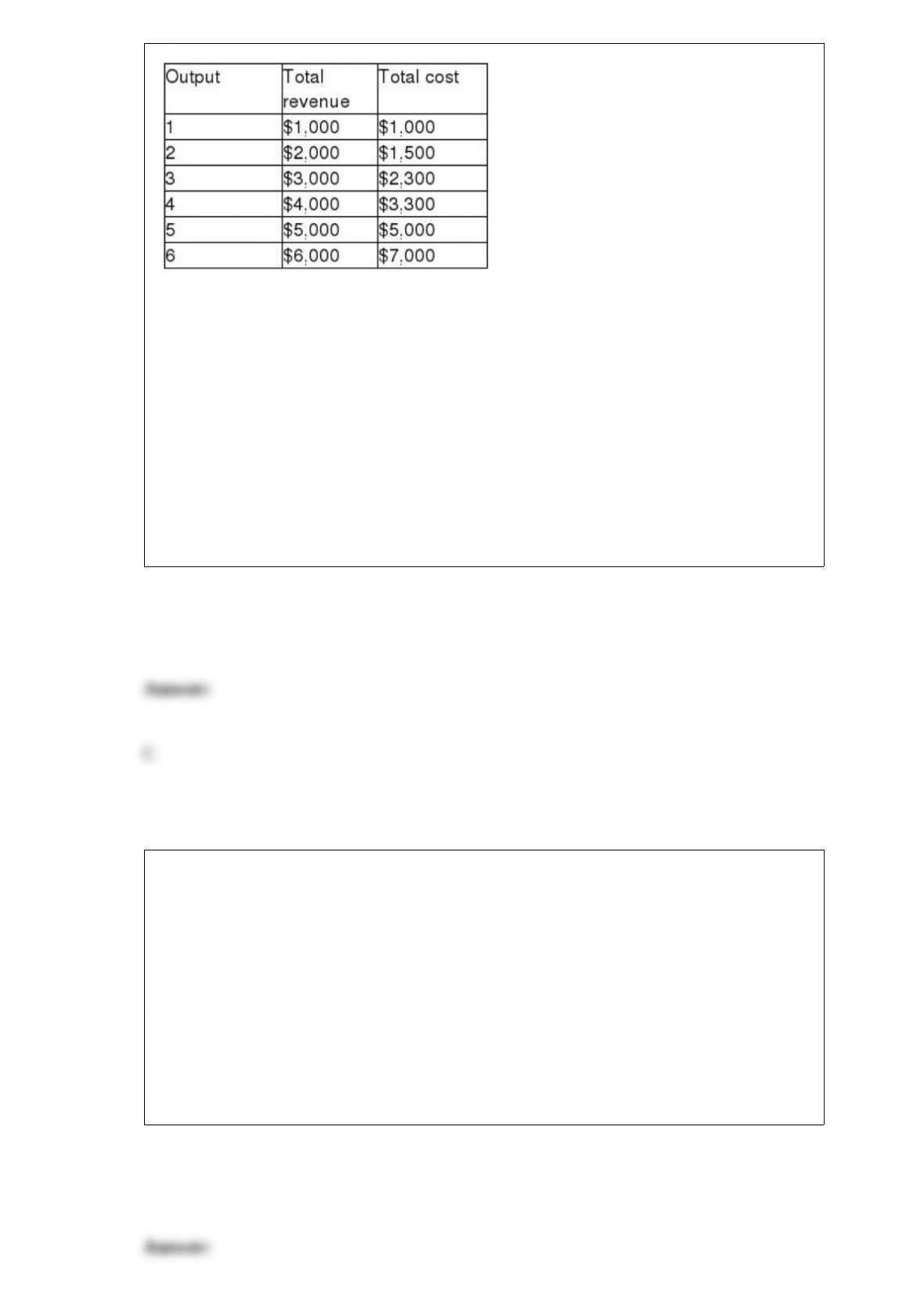
To maximize profits, the firm should produce between ________ units per period.
a. 1 and 2
b. 2 and 3
c. 3 and 4
d. 4 and 5
e. 5 and 6
The major determinant of the rapidity with which an innovation spreads is its
a. durability.
b. complexity.
c. sex appeal.
d. exclusiveness.
e. profitability.
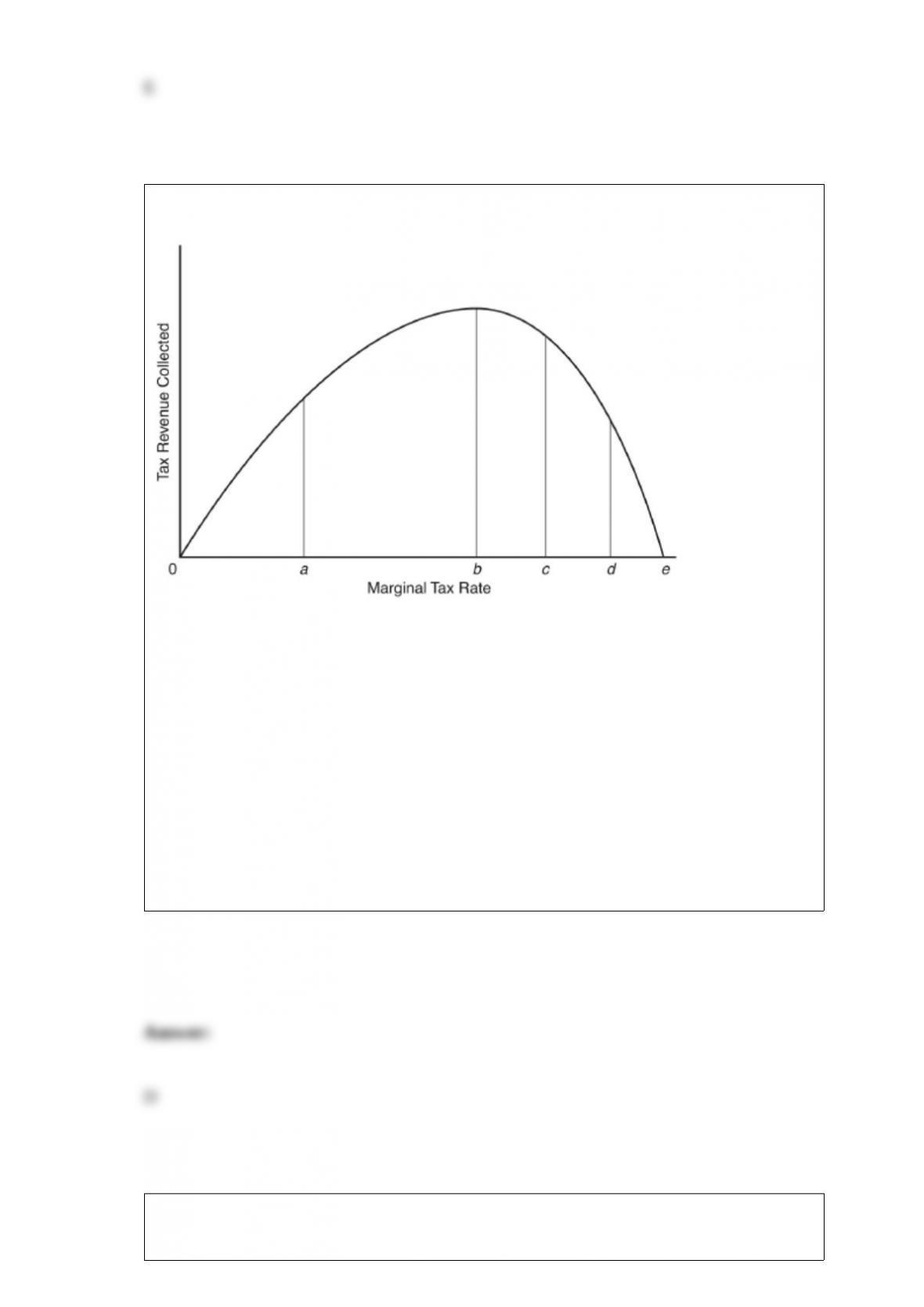
The following questions are based on the following Laffer curve:
Advocates of supply-side tax reductions, such as a reduction in the capital gains tax,
argue that these taxes currently have marginal tax rates that are
a. 0.
b. to the left of 0a.
c. between 0a and 0.
d. to the right of 0b.
e. greater than 0e.
The term stagflation refers to

a. periods of falling prices.
b. a period of high unemployment coupled with rising prices.
c. techniques of policy the government can use to promote economic stability.
d. a combination of high rates of employment coupled with rising purchasing power of
the currency.
e. periods of rising labor productivity leading to unemployment.
Which of the following is an example of a government security?
a. treasury bills
b. Federal Reserve notes
c. gold certificates
d. treasury deposits
e. member bank reserves
Wage and price controls
a. are an effective means to control strong cost-push inflation over the long haul.

b. are an easy and inexpensive means to contain inflation.
c. typically are enthusiastically supported by labor unions.
d. ultimately break down if monetary and fiscal policies are overly expansive.
e. are least desirable during a period of all-out war or other national emergency.
Following World War II, the United States gradually moved from a balance-of-trade
surplus into a deficit. This shift was a result of the
a. devaluation of the dollar.
b. failure of many European countries to honor the Bretton Woods agreement.
c. increasing capacity of European countries to compete with the United States in world
markets.
d. U.S. reluctance to provide economic assistance to developing countries.
e. European countries’ investing heavily in the United States.
In addition to the level of real GDP, the transactions demand for money is positively
related to the
a. capital output ratio.

b. exchange rate.
c. expected rate of return.
d. interest rate.
e. price level.
That profits are a consequence of the exploitation of labor and the appropriation of
labor’s surplus value is a theory closely associated with
a. Karl Marx.
b. Henry George.
c. Frank Knight.
d. Thomas Malthus.
e. Joseph Schumpeter.
The following questions are based on the following information. Five adolescents are
willing to buy the latest iPhone game at these prices:

Another name for opportunity cost is ________ cost.
a. out-of-the pocket
b. irrelevant
c. manageable
d. alternative
e. historical
The exchange rate system for which the International Monetary Fund was designed is
best described as
a. fixed.
b. flexible.
c. floating.
d. indexed.
e. the gold standard.

The Federal Trade Commission Act declared that
a. tying contracts substantially lessen competition.
b. contracts and combinations in restraint of trade are illegal.
c. the rule of reason is reasonable.
d. perfect competition results in optimal efficiency and an optimal distribution of
income.
e. unfair methods of competition in commerce are unlawful.
The money supply exerts an influence on GDP and thus on unemployment by affecting
a. the volume of government tax revenues.
b. total intended spending.
c. the rate of change in labor force participation.
d. the profitability of banking institutions.
e. the mix between currency and demand deposits.
If the marginal propensity to save is 0.6, a $1.2 billion increase in intended investment
will increase equilibrium GDP by ________ billion.
a. $0.4
b. $0.6
c. $1.2
d. $1.67
e. $2
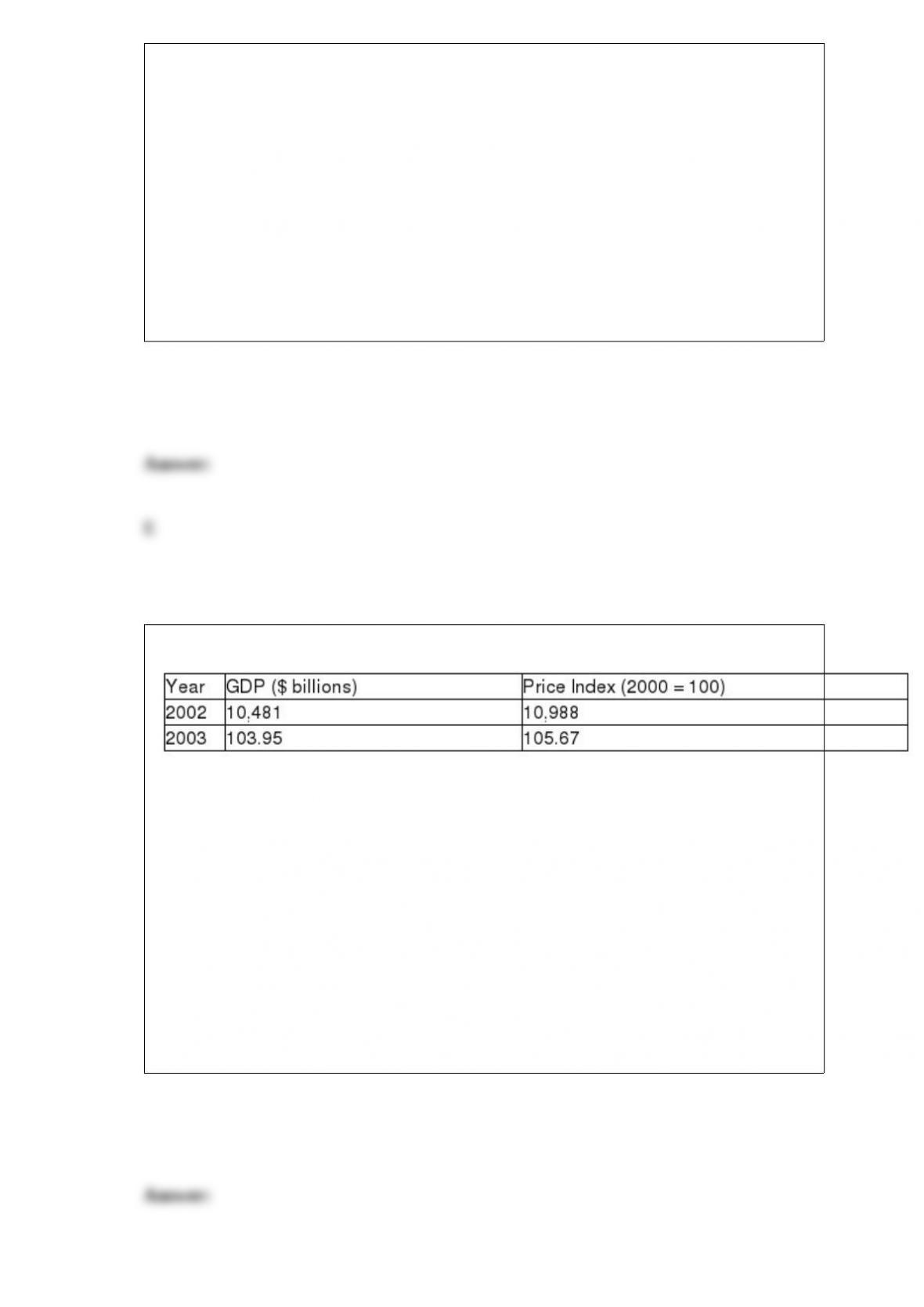
The following question is based on the following table:
According to the data in the table, from 2002 to 2003, GDP in constant dollars rose by
________ percent.
a. 6.5
b. 5.7
c. 4.8
d. 3.1
e. 1.7
If the House and Senate pass different versions of a tax bill
a. the president gets to choose which version becomes law.
b. the Treasury Department is called in to arrange a compromise.
c. the legislation automatically dies and the process must begin all over again.
d. a conference committee is formed to iron out the differences between the two houses.
e. the Senate version prevails unless vetoed by the president.
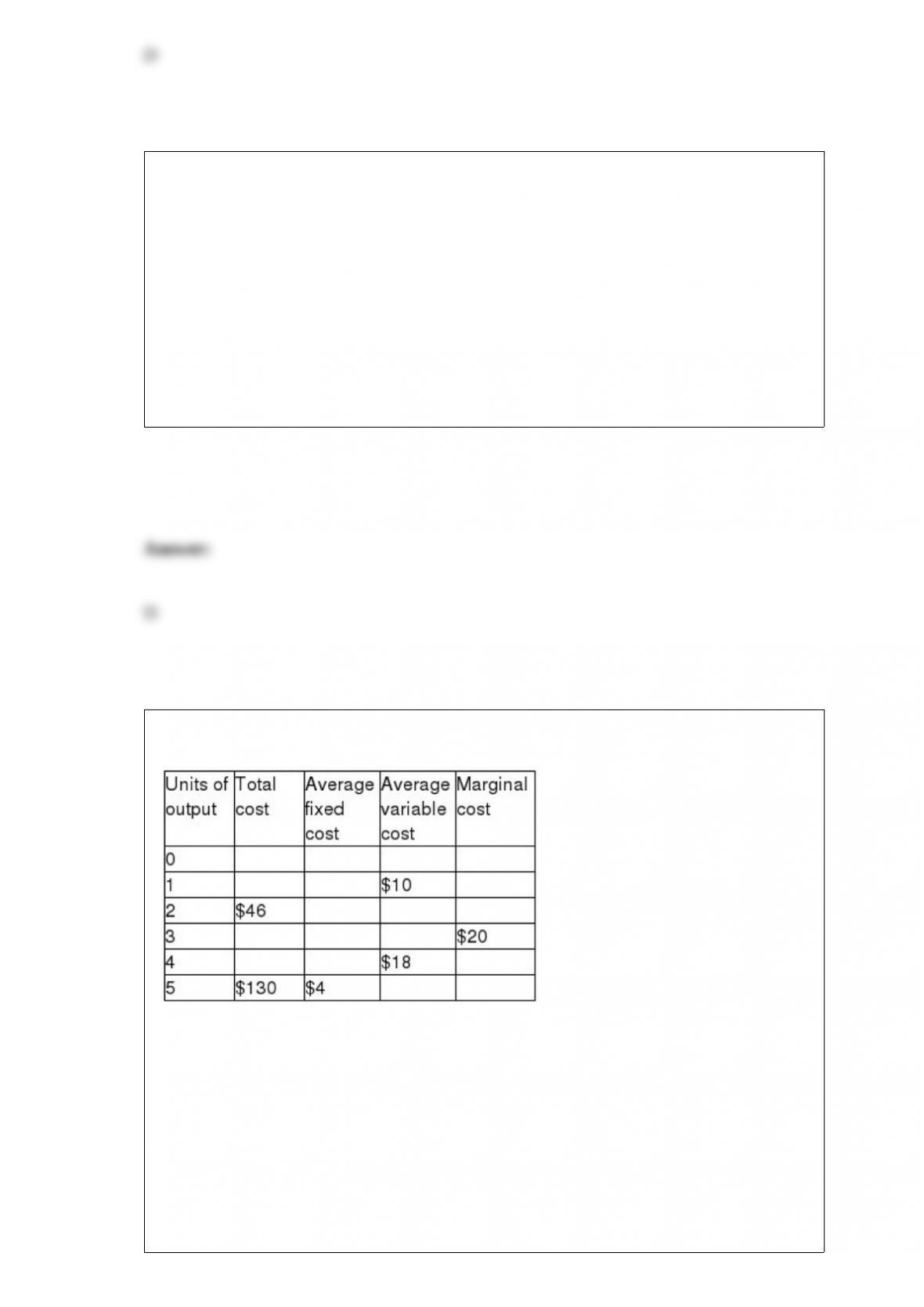
The following questions are based on the following table:
The marginal cost of producing the first unit is
a. $5.
b. $10.
c. $16.
d. $20.

e. $30.
According to Richard Gill in the Economics U$A video, the opportunity costs for
preserving the Alaskan wilderness are measured by the loss of
a. worker health benefits in textile manufacturing.
b. minerals rendered unavailable for development.
c. wilderness areas in the lower 48 states.
d. tax revenues to the federal government.
e. foreign oil because of the cutback in OPEC oil production.
The distinction between substitutes and complements can be made on the basis of
computing the ________ elasticity of demand.
a. price
b. relative
c. income
d. absolute

e. cross
In an economy experiencing a high unemployment rate, appropriate fiscal policy would
attempt to
a. wait for wages and other input prices to fall.
b. discourage firms from investing.
c. increase personal tax rates.
d. reduce welfare payments to households.
e. shift the aggregate demand curve to the right.
If the marginal products of the first five units of labor are 120, 105, 85, 60, and 30,
respectively, then five units of labor can produce ________ units of output.
a. 30
b. 80
c. 90
d. 210
e. 400
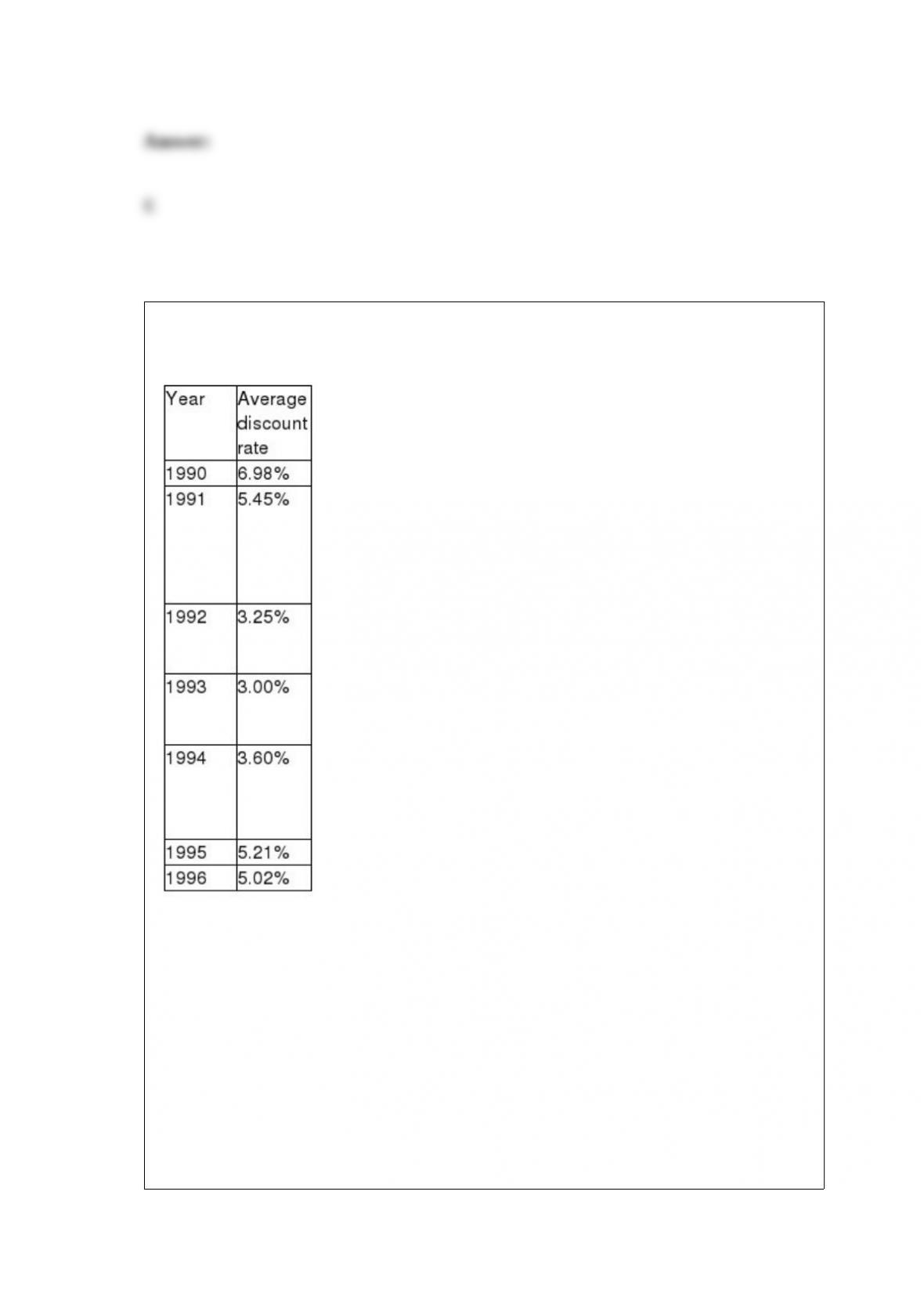
The next question is based on this table.
Changes in the discount rate principally affect
a. expectations.
b. the ratio of reserves to deposits.
c. foreign exchange rates.
d. policy lags.
e. government spending levels.

An advantage in increasing the per capita annual rate of growth, however slightly, is
that it will
a. shift the production possibilities curve inward.
b. lead to a more rapid increase in population.
c. lead to a substantially higher level of real output two or three decades later.
d. ensure the elimination of the business cycle.
e. eliminate the problem of relative scarcity.
Demand-side inflation results in a downward-sloping Phillips curve when the
a. aggregate demand curve slopes downward.
b. aggregate supply curve shifts to the left.
c. aggregate demand curve does not shift to the right or the left.
d. aggregate supply curve slopes upward.
e. price level is constant.
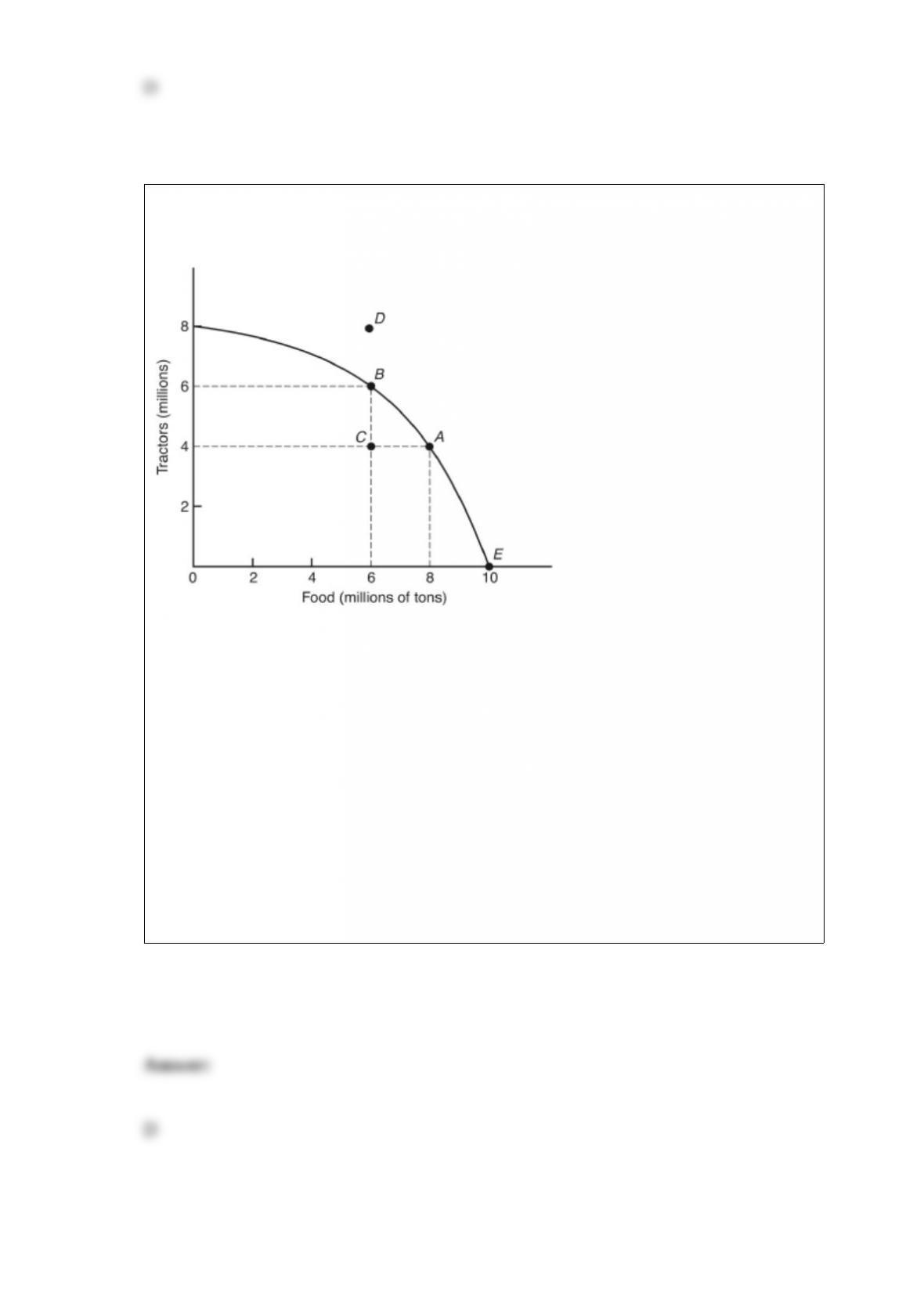
The following questions are based on the following production possibilities curve:
Suppose 4 million tractors wear out each year. If society chooses point A as this year’s
output combination, then this year’s food output is 8 million tons, and at the end of the
year
a. there will be 4 million more tractors than at the beginning of the year.
b. the production possibilities curve will shift outward.
c. there will be 4 million fewer tractors than at the beginning of the year.
d. there will be the same number of tractors as at the beginning of the year.
e. output cannot be determined due to insufficient information.
Until the Great Depression of the 1930s, the prevailing theory on the price level was the
________ theory.
a. rational expectations/supply
b. pendular
c. crude quantity
d. sunspot
e. Keynesian
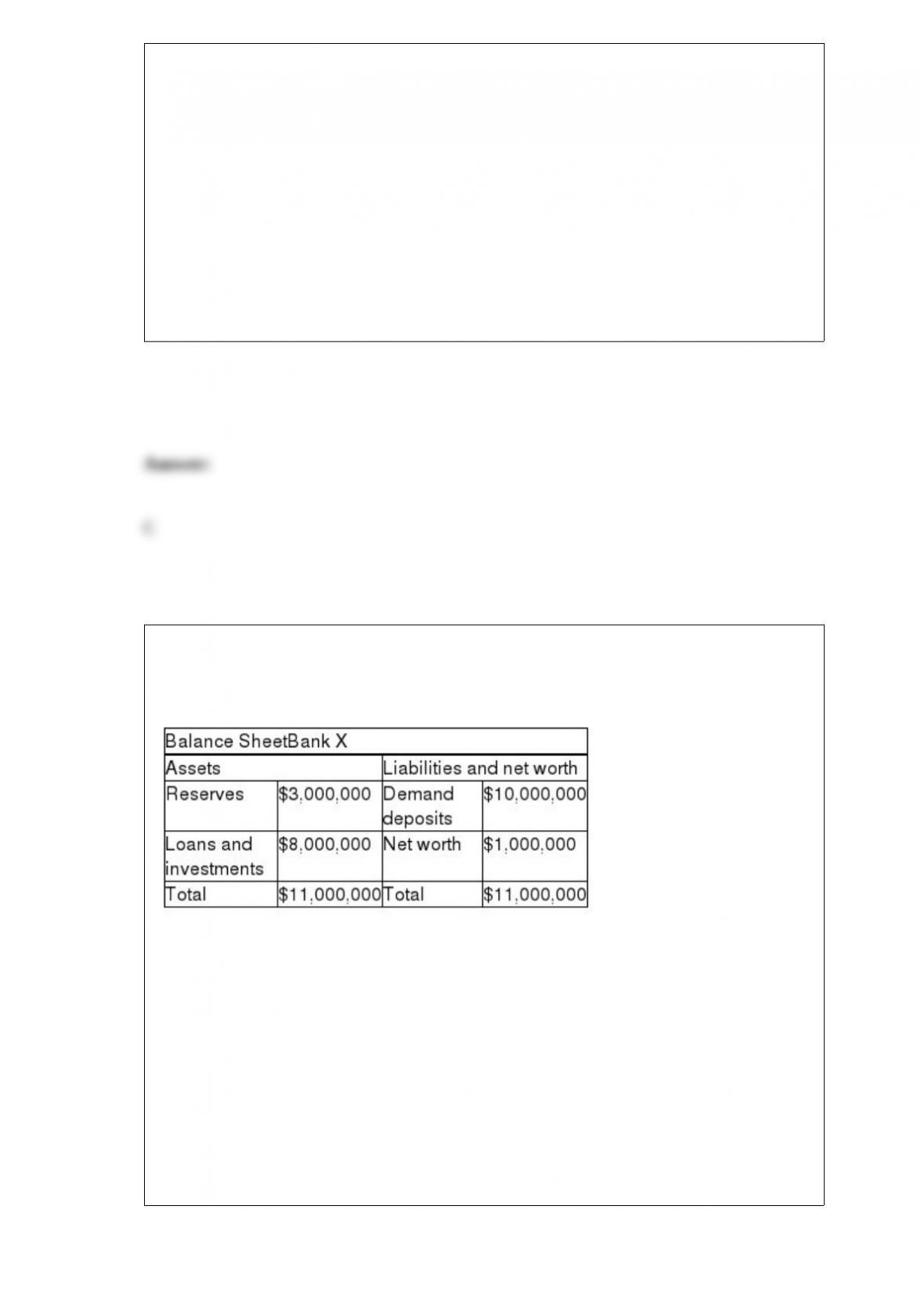
The following questions refer to the table that follows. Assume that there is a
fractional-reserve banking system, that the legal reserve requirements are 10 percent,
and that the balance sheet for Bank X is as follows:
Bank X has legal reserve requirements of
a. $3,000,000.
b. $2,000,000.
c. $1,667,000.
d. $1,000,000.
e. $0.

The following questions are based on the following information: The country has a
fractional-reserve banking system, required reserves are 12.5 percent of demand
deposits, each bank initially has reserves exactly equal to the required amount, each
wants to maintain this equality, and no person withdraws cash from the banking system.
At the same time bank B, compared to its original position, has had its
a. cash holdings increased by $8,750.
b. reserve requirements increased by $8,750.
c. reserves increased by $8,750.
d. net worth increased by $8,750.
e. loans increased by $8,750.