
1) a primary reason that explains the appreciation in the value of the u.s. dollar in the
1980s is:
a.large trade surpluses for the united states
b.relatively high inflation rates in the united states
c.lack of investor confidence in the u.s. monetary policy
d.relatively high interest rates in the united states
2) concerning possible determinants of international trade, which are sources of
comparative advantage? differences in:
a.methods of production
b.tastes and preferences
c.technological know-how
d.all of the above
3) if canadian speculators believed the swiss franc was going to appreciate against the
u.s. dollar, they would:
a.purchase canadian dollars
b.purchase u.s. dollars
c.purchase swiss francs
d.sell swiss francs
4) economic theory suggests that if france is a net importer of automobiles, whose
production is subsidized by the korean government, the overall welfare of france
decreases because of the korean subsidy.
a.true
b.false
5) which device has the international tin agreement utilized as a way of stabilizing tin

prices?
a.multilateral contracts
b.export subsidies
c.buffer stocks
d.export tariffs
6) all of the following nations except ____ have recently utilized export-led (outward
oriented) growth policies.
a.hong kong
b.south korea
c.argentina
d.singapore
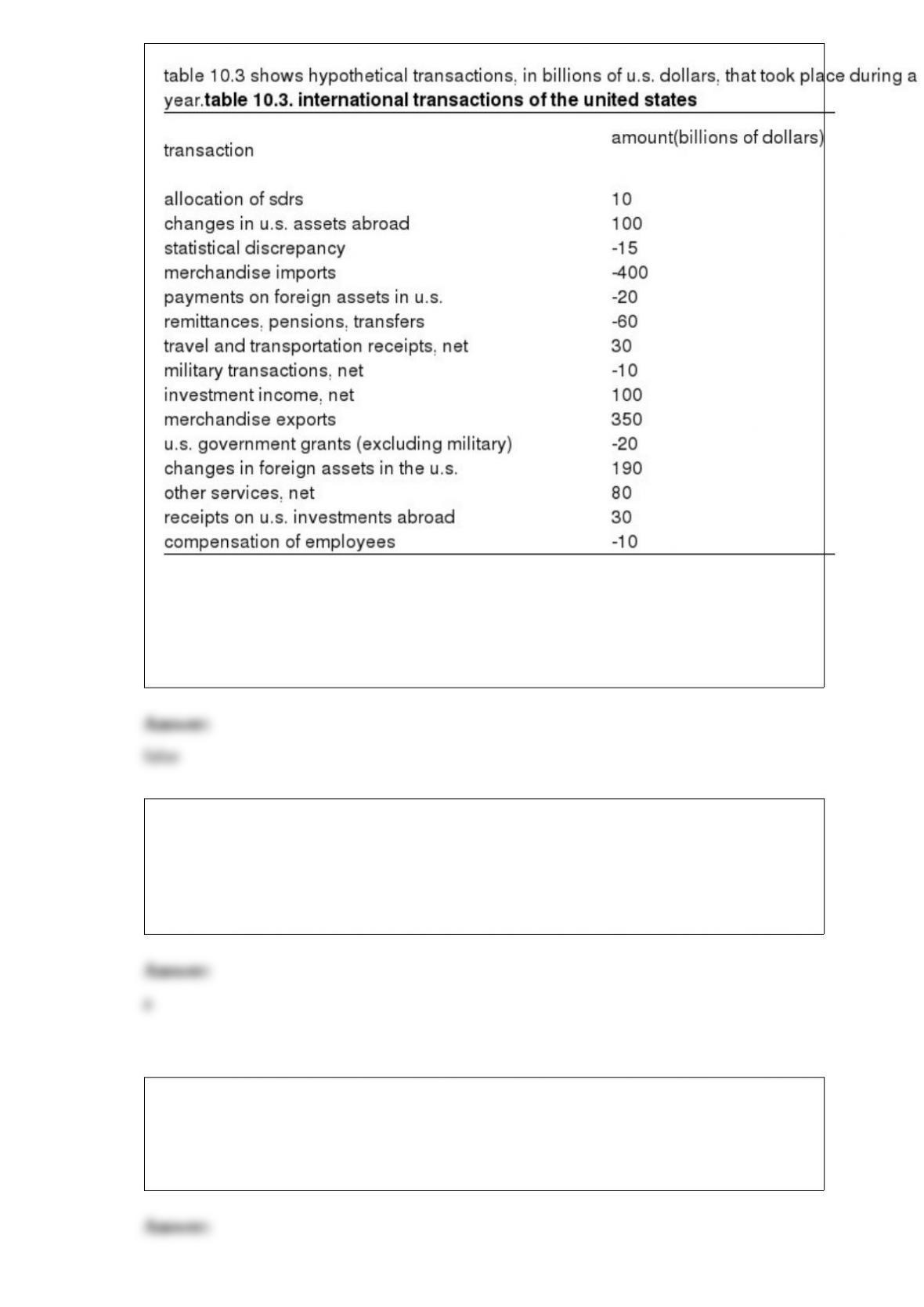
7) refer to table 10.3. the unilateral-transfers balance registered a deficit of $40 billion.
a.true
b.false
8) during the last century, the relative importance of international trade for the u.s. has:
a.significantly increased
b.slightly increased
c.significantly decreased
d.slightly decreased
9) with the passage of the smoot-hawley act in 1930, u.s. average tariffs were raised to
over 50 percent on protected imports.
a.true
b.false

10) during the late 1980s and early 1990s, china dismantled much of its
centrally-planned economy and permitted free enterprise to replace it.
a.true
b.false
11) as the dollar depreciates against the peso, u.s. residents tend to import more
mexican goods and thus demand more pesos.
a.true
b.false
12) for countries forming a customs union, the trade-creation effect represents a welfare
loss and the trade-diversion effect represents a welfare gain.
a.true
b.false
13) the average tariff rate today on dutiable imports in the united states is
approximately:
a.5 percent of the value of imports
b.15 percent of the value of imports
c.20 percent of the value of imports
d.25 percent of the value of imports