Negative externalities impose most of their costs:
a. directly on consumers of polluting processes.
b. whenever individual health is harmed in the production process.
c. only in large cities.
d. on individuals other than consumers of the polluting product.
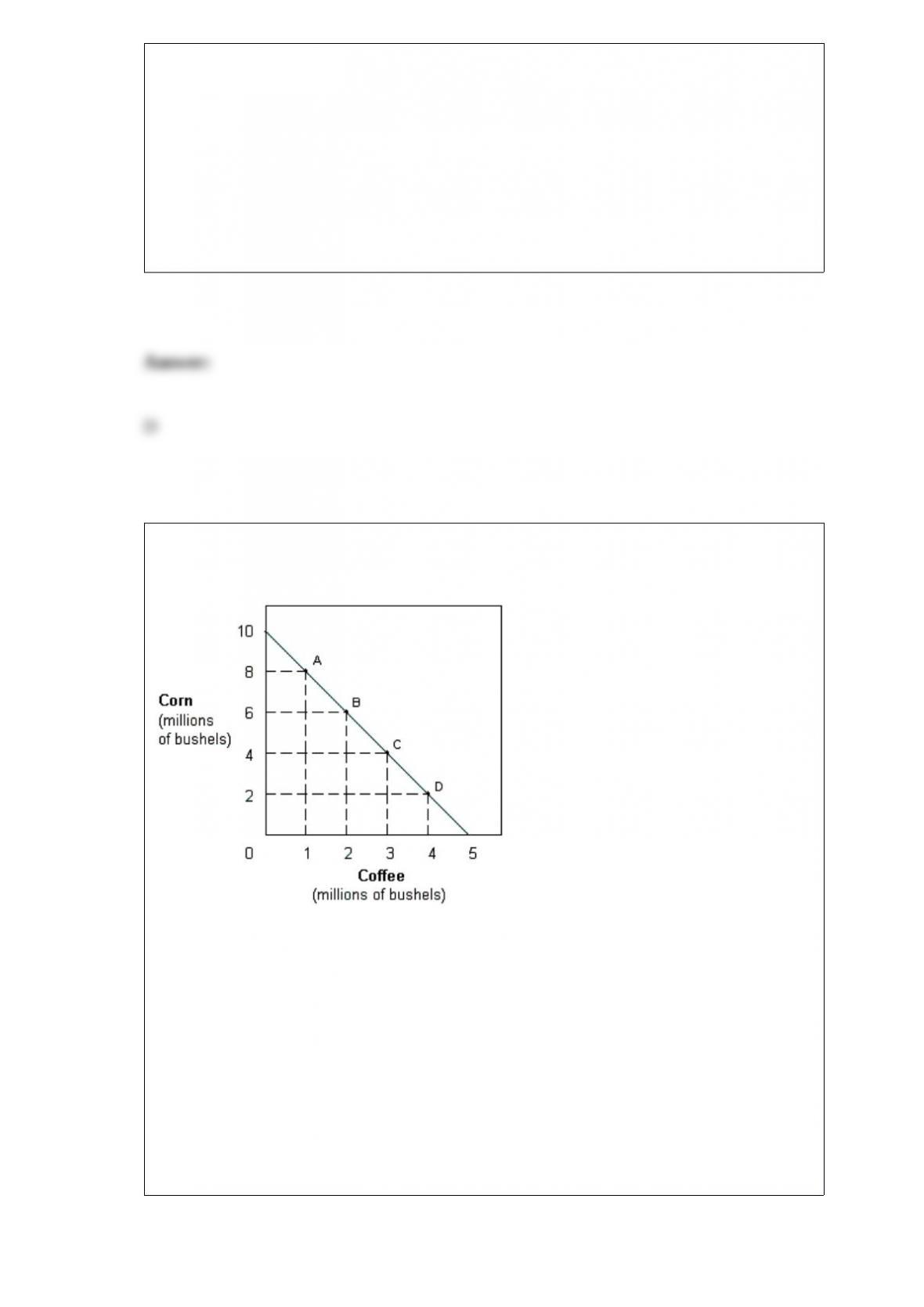
Exhibit 2-2 Production possibilities curve
In Exhibit 2-2, the opportunity cost of coffee when moving from A to B is:
a. 2 million bushels of corn.
b. 6 million bushels of corn.
c. 8 million bushels of corn.
d. 14 million bushels of corn.
e. it is not possible to determine.
A good is classified as inferior if:
a. consumers buy less when the price rises.
b. consumers buy less when income rises.
c. consumers buy less when the price falls.
d. consumers buy more when income rises.
e. better quality goods exist.
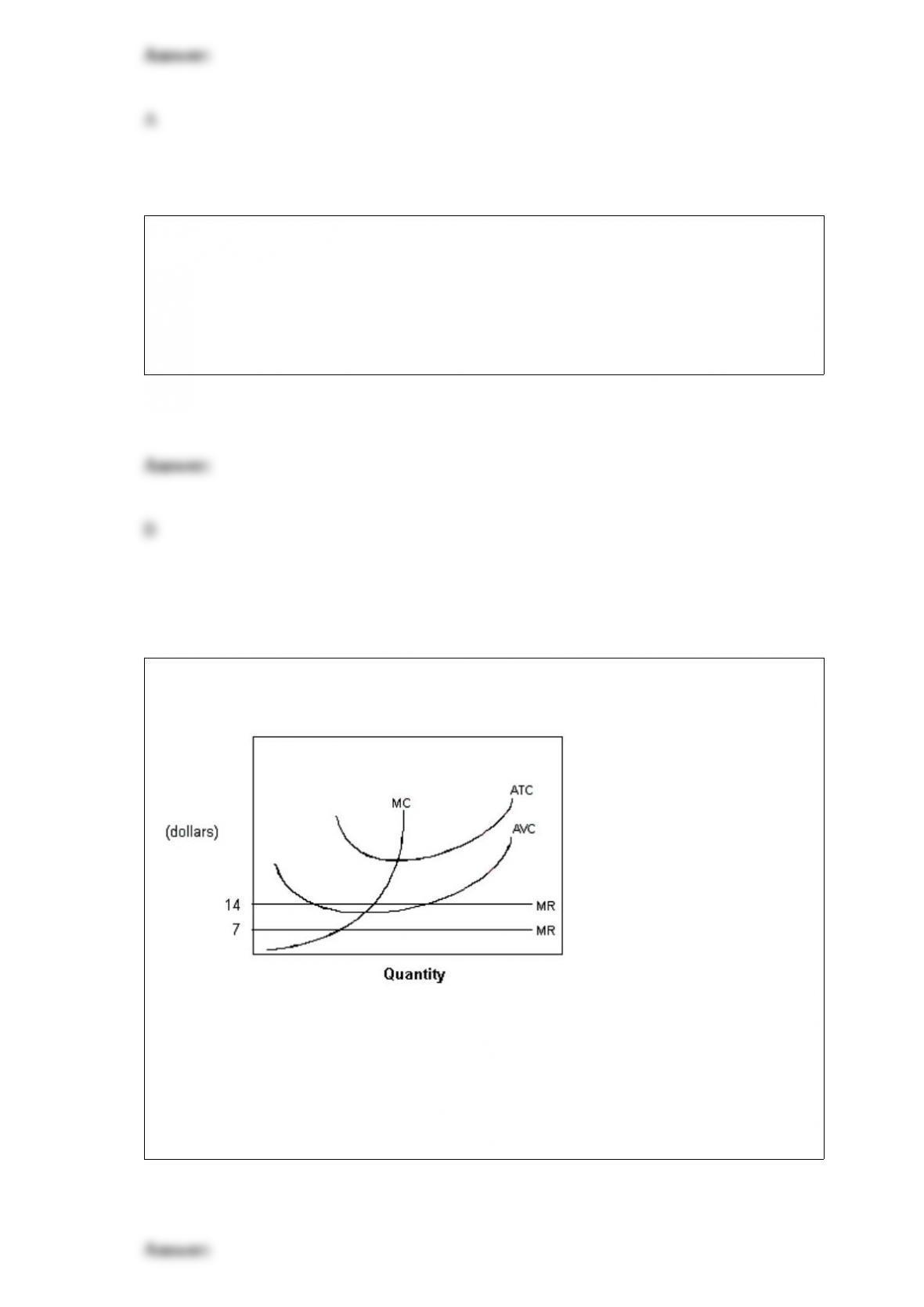
Exhibit 8-9 A firm’s cost and marginal revenue curves
In Exhibit 8-9, product price in this market is fixed at $14. This firm is currently
operating where MR = MC. What do you advise this firm to do?
a. This firm should shut down.
b. This firm could increase profits by increasing output.
c. This firm could increase profits by decreasing output.
d. This firm should continue to operate at its current output.
e. This firm should decrease price.

The long run is a period of:
a. at least one year.
b. sufficient length to allow a firm to expand output by hiring additional workers.
c. sufficient length to allow a firm to alter its plant size and capacity and all other
factors of production.
d. sufficient length to allow a firm to transform economic losses into economic profits
by hiring better workers.
In contrast to a perfectly competitive firm, a monopolist operates in the long run at a
quantity of output at which:
a. P = MC.
b. MR = MC.
c. P = ATC.
d. P > MR.
Exhibit 6A-1 Budget line
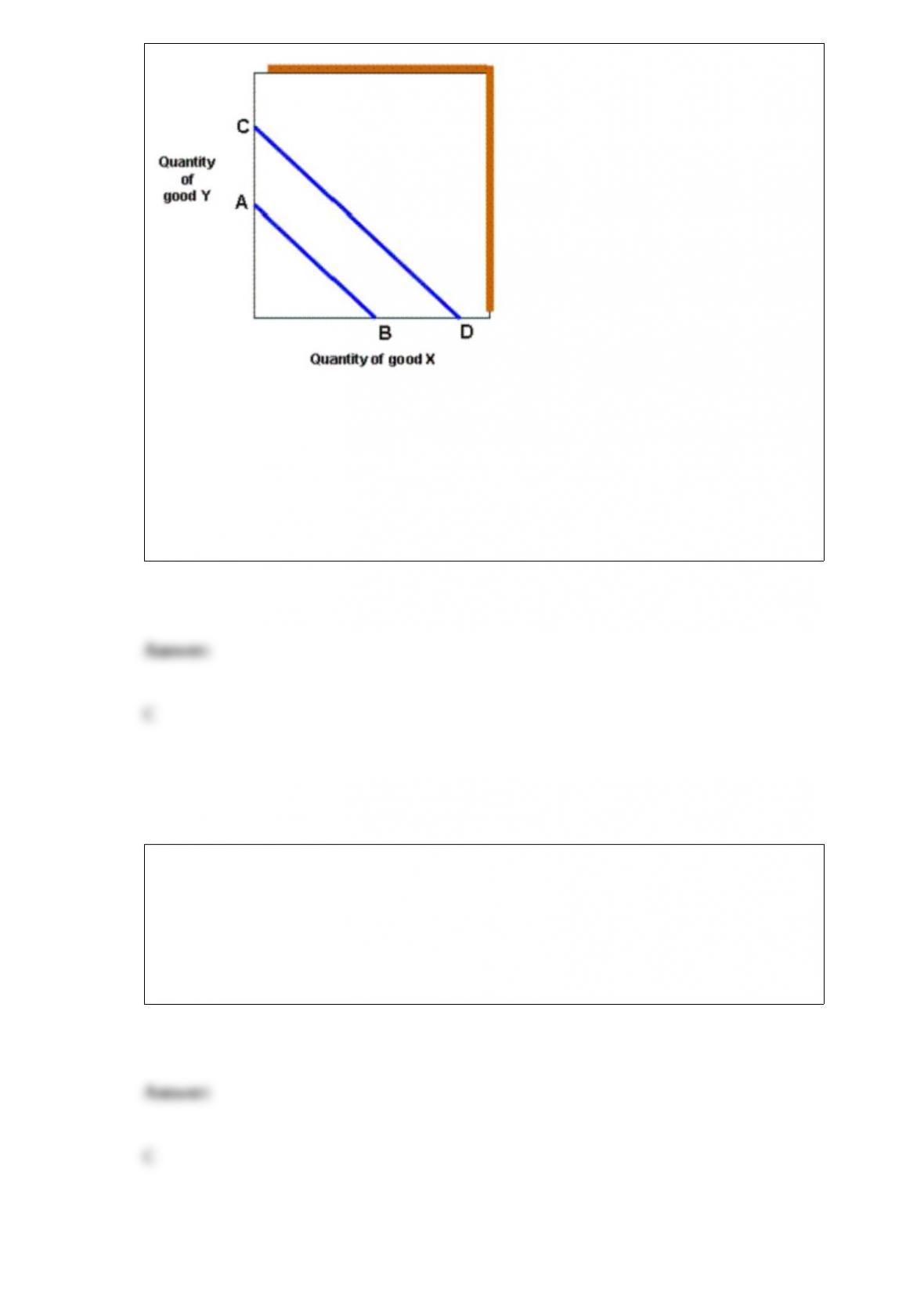
Assume the price of good X is Px, price of good Y is Py, and B is the budget. The
formula for the budget line for these two goods is:
a. PyQy / PxOx.
b. PxB + PyB = B.
c. PxX + PyY = B.
d. (1 Py / B) Px.
If the income elasticity of demand for a good is .59, then it is what type of good?
a. Price elastic.
b. Price inelastic.
c. Income inelastic.
d. Income elastic.
e. Inferior.

Why do negative externalities like pollution result in inefficiency?
a. Because producers artificially restrict their supply.
b. Because producers ignore the external costs they impose on third-parties.
c. Because producers manufacture more goods than people can afford to buy.
d. Because producers will receive an unequal distribution of profits.
A government policy that charges coal producers a fee per ton of coal produced (an
“effluent charge”), where the fee is determined by the amount of pollutants discharged
into the air or water, will lead to a(n):
a. decrease in the market equilibrium quantity of coal produced.
b. decrease in the market equilibrium price of coal.
c. increase in the market equilibrium price of coal.
d. a and c are correct.
If the average total cost curve is always above the demand curve for a monopolist:
a. the profits of the monopolist will be large.
b. the monopolist must be producing inefficiently.
c. the monopolist will suffer economic losses.
d. entry will occur, forcing the monopolist to reduce price and expand output.

The price elasticity of demand for gasoline measures the:
a. responsiveness of gasoline producers to changes in the quality of gasoline.
b. responsiveness of customers to changes in the price of gasoline.
c. responsiveness of consumer preferences to changes in the quality of gasoline.
d. both a and c above.
What is the key feature shared by all oligopoly markets?
a. A large number of sellers. c. Product differentiation.
b. Mutual interdependence. d. Easy entry and exit.
Exhibit 7-5 Workers and output data

In Exhibit 7-5, diminishing returns set in when the ____ worker is hired.
a. first
b. second
c. third
d. fourth
e. fifth
In Adam Smith’s competitive market economy, the question of what goods to produce is
determined by the:
a. “invisible hand” of the price system. c. “invisible hand” of public interest.
b. “invisible hand” of government. d. “visible hand” of laws and regulations.
Which of the following is the best example of a microeconomic topic?
a. The impact that the money supply has on inflation.
b. The reasons for increases in the price of soft drinks.
c. The effect that federal budget deficits have on the interest rate.
d. The tradeoff between inflation and unemployment.

Since it is always a negative number, economists use the convention of taking the
absolute value of:
a. income elasticity of demand.
b. cross price elasticity of demand.
c. price elasticity of supply.
d. price elasticity of demand.
e. any elasticity calculation.
Marginal product measures the change in:
a. total cost brought about by changing production by one unit.
b. product price brought about by changing production by one unit.
c. a firm’s revenue brought about by changing production by one unit.
d. the firm’s output brought about by employing one additional unit of input.
e. the firm’s profit brought about by employing one more input.