
If one person has the absolute advantage in producing both of two goods, then that
person
a. must also have a comparative advantage in both goods
b. cannot benefit from trade
c. cannot have a comparative advantage in either good
d. will have the comparative advantage in only one good
e. should specialize in the production of both goods
Which of the following would notbe considered price discrimination?
a. setting separate rates for residential and commercial uses of electricity
b. giving a senior citizen discount at restaurants
c. renting recently released videos at a higher price than the old classic videos
d. giving children a discount at the movies
e. giving students a discount on ski lift tickets
International trade equalizes the opportunity cost of producing any good around the
world.
a. True
b. False

When competitive market equilibrium determines a level of output for which the
marginal social cost exceeds the marginal social benefit, the private equilibrium results
in
a. a positive externality
b. a Coase equilibrium
c. underproduction of the product
d. a market failure
e. external benefits
Domestic producers of goods that compete with imports benefit from protectionism in
the short run.
a. True
b. False
The law of diminishing marginal utility implies that the marginal utility of my fifth hot
dog is less than the marginal utility of my second soft drink, other things constant.
a. True
b. False
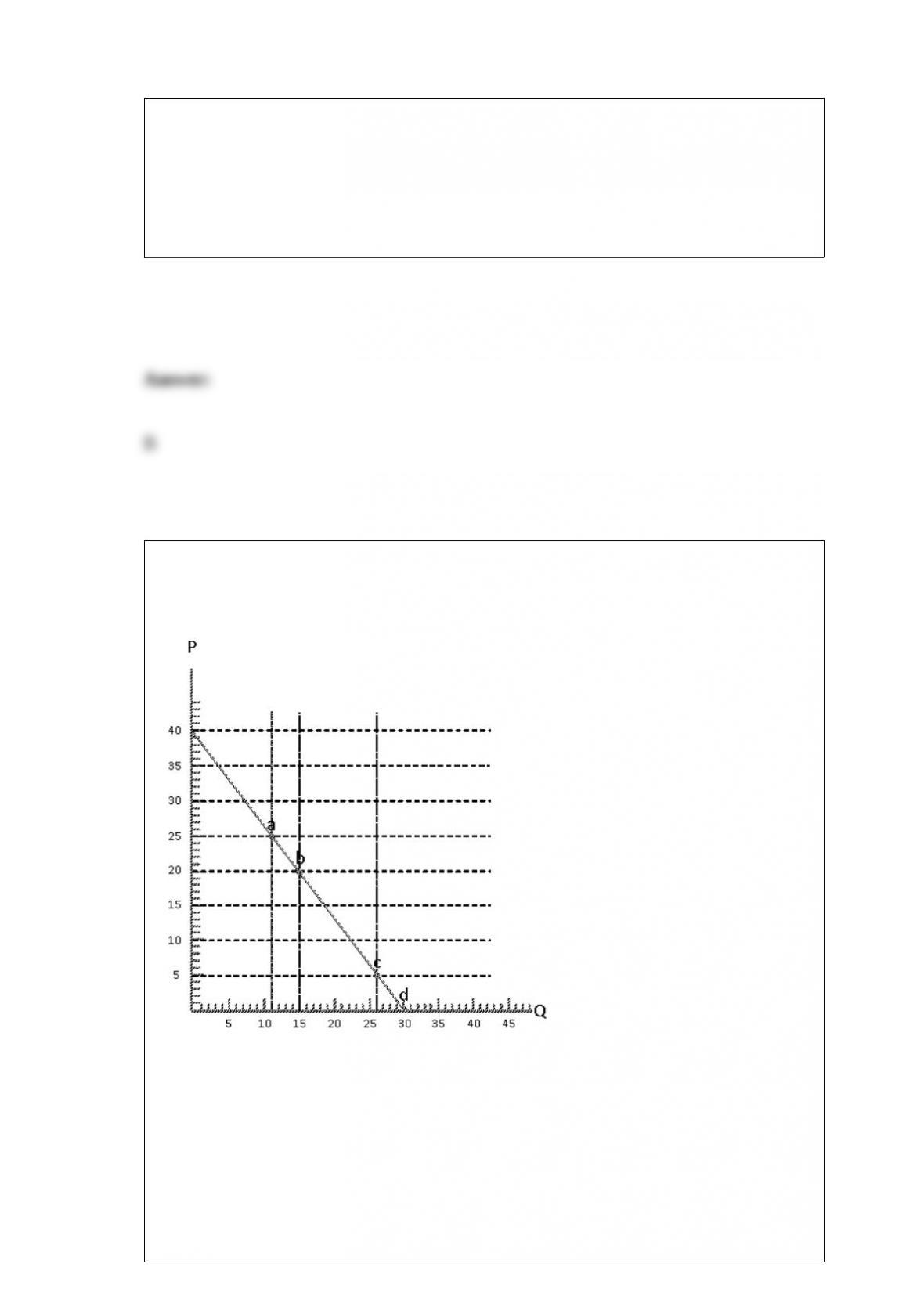
Exhibit 5-28
Consider Exhibit 5-28. When supply increase from S1 to S2, total revenue increases
from $275 to $300. This means that demand must be
a. perfectly elastic
b. elastic
c. perfectly inelastic
d. inelastic
e. unit elastic
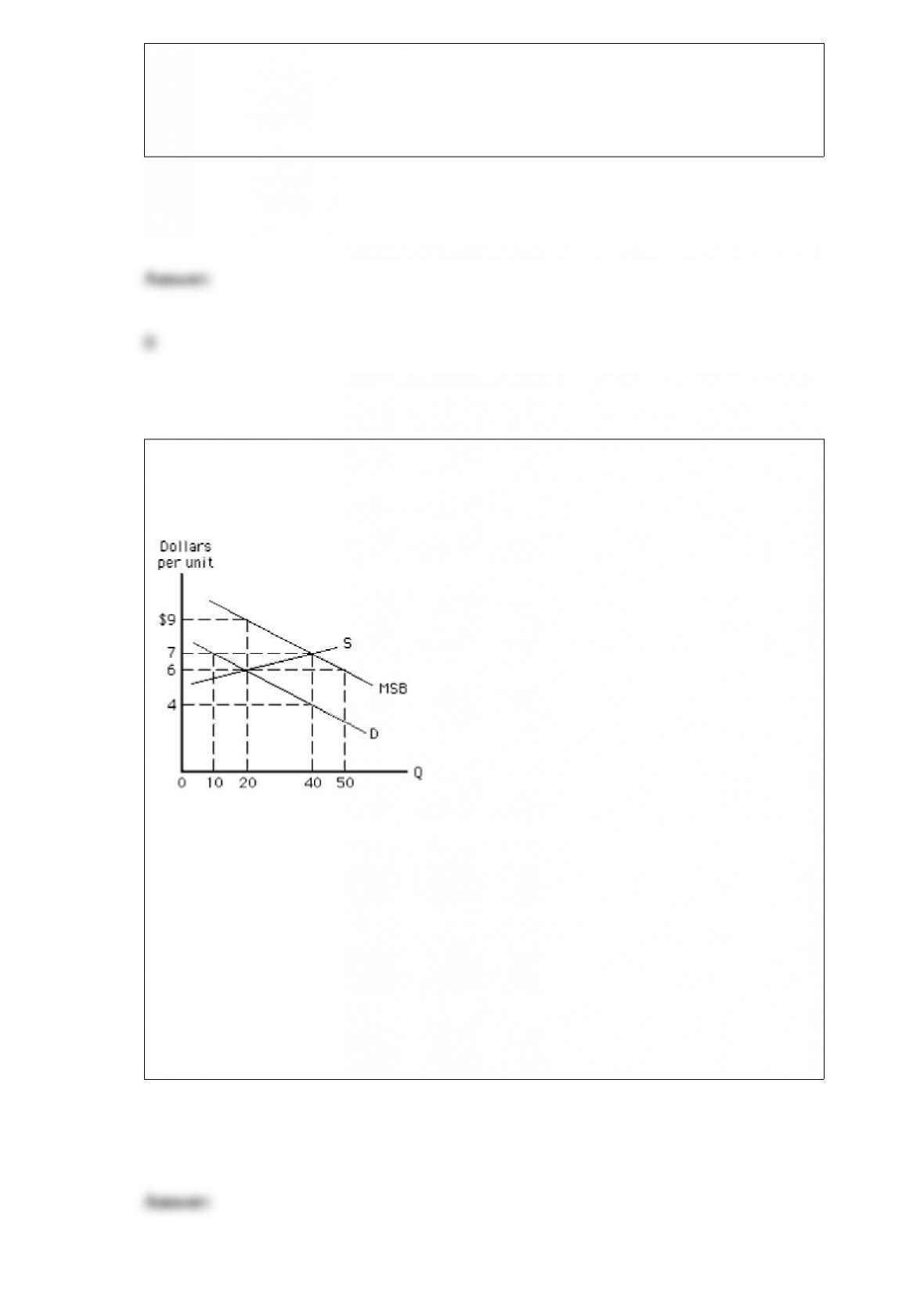
Exhibit 17-6
In Exhibit 17-6, an unregulated market would produce
a. 0 units
b. 10 units
c. 20 units
d. 40 units
e. 50 units
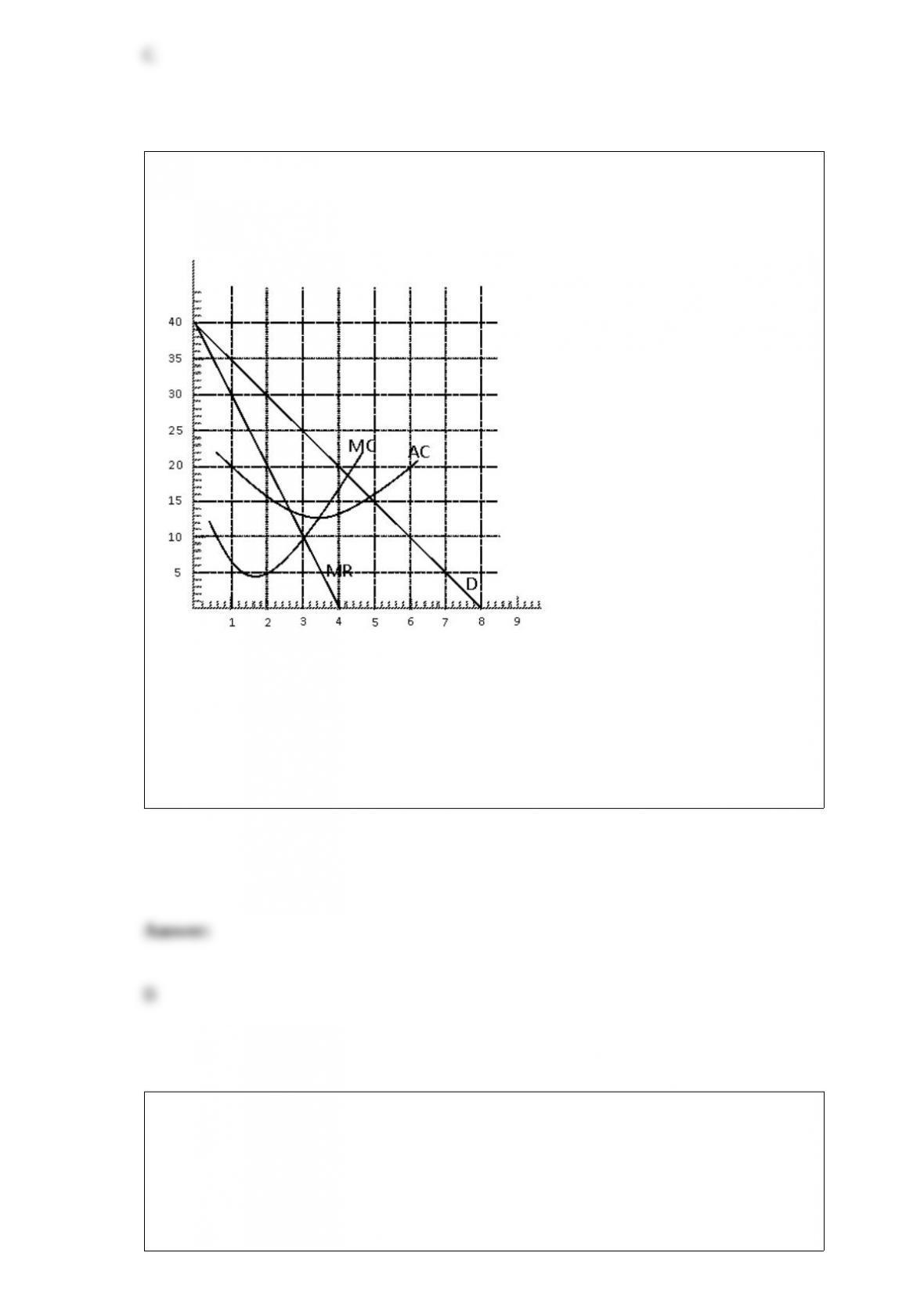
Exhibit 9-18
The firm in Exhibit 9-18, who charges the same price to all customers, will incur how
much cost?
a. somewhere between $0 and $30
b. somewhere between $30 and $45
c. somewhere between $45 and $60
d. somewhere between $60 and $75
e. cannot tell from the information available
An increase in the cost of training to acquire a skill, which must be paid by the worker,
a. increases both the supply of and demand for labor in that market
b. decreases both the supply of and demand for labor in that market

c. increases the supply of labor and decreases the demand for labor in that market
d. decreases the supply of labor and increases the demand for labor in that market
e. decreases the supply of labor only in that market
If the administration raises tuition on our campus in order to increase revenue, it will
a. not be successful if the demand curve slopes downward
b. be successful if demand is elastic
c. be successful if demand is inelastic
d. be successful if supply is elastic
e. be successful if supply is inelastic
When a firm is experiencing diminishing marginal returns, marginal cost is
a. rising
b. falling
c. constant
d. rising at first, then falling
e. zero
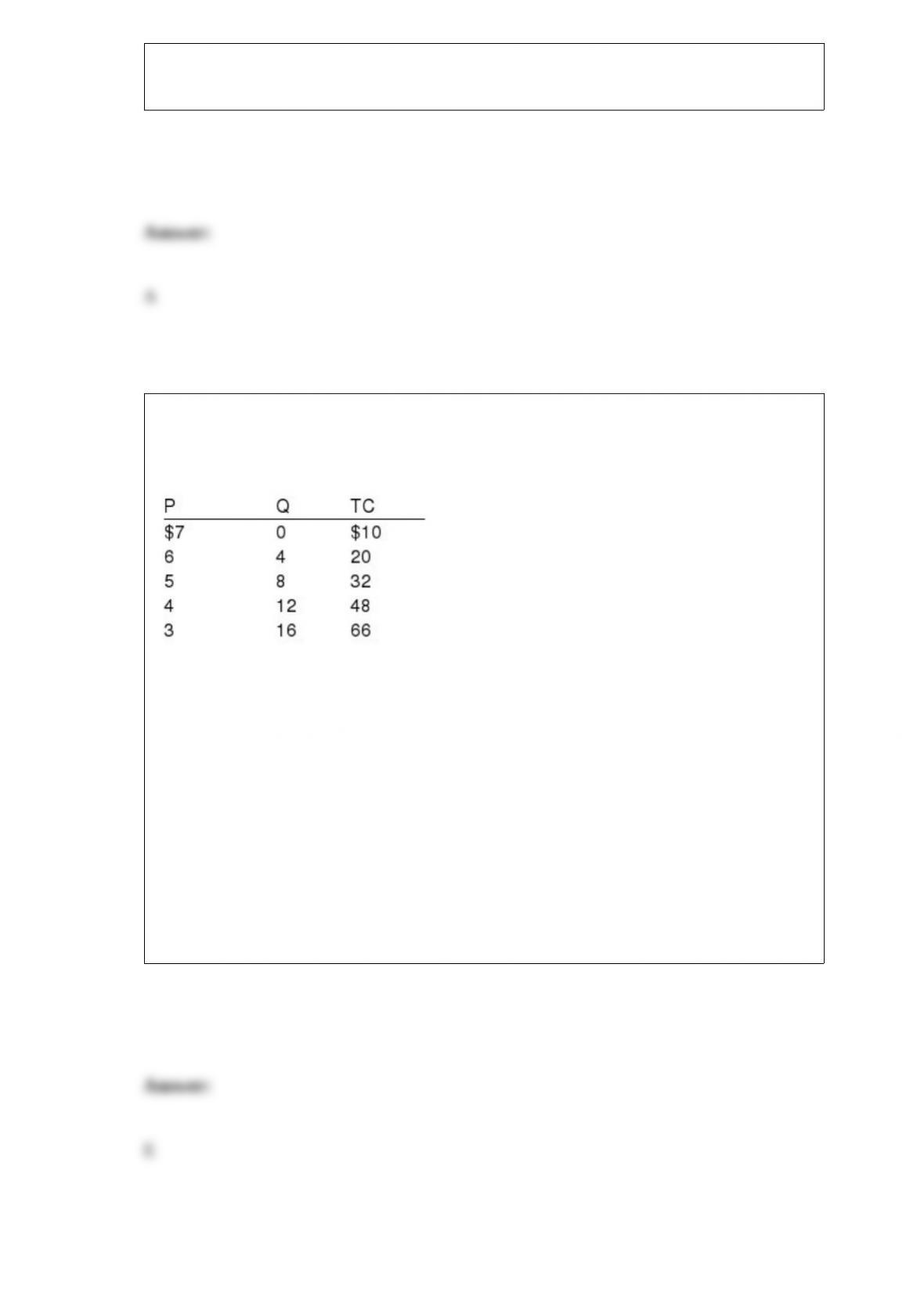
Exhibit 10-10
In Exhibit 10-10, what is the maximum profit this monopolistic competitor can earn in
the long run?
a. $40
b. $4
c. $48
d. $8
e. $0

The union participation rate in the United States is
a. lowest among service workers in the private sector
b. highest among service workers in the private sector
c. lowest among service workers in the public sector
d. highest in heavy industry
e. highest in high-technology industries
Each firm has a downward-sloping demand curve for loanable funds because its
a. marginal resource cost curve slopes downward
b. marginal revenue product curve slopes upward
c. marginal rate of return on investment curve slopes downward
d. marginal resource cost slopes upward
e. marginal rate of return on investment curve slopes upward
In the long run, a monopolistically competitive firm will find
a. its demand curve shifting until price equals average total cost
b. its cost curve shifting until price equals average total cost
c. its demand curve shifting until marginal revenue equals marginal cost

d. its cost curve shifting until marginal revenue equals marginal cost
e. no changes in its demand or cost curves if it is earning an economic profit
The demand curve for foreign exchange
a. slopes downward
b. slopes upward
c. is horizontal, because no individual country can influence the price of foreign
exchange
d. is vertical, because no individual country can influence the price of foreign exchange
e. may slope downward or upward
For perfectly competitive firms, what is the relationship among market price (P),
average revenue (AR), and marginal revenue (MR)?
a. P = AR = MR
b. P > AR = MR
c. P = AR > MR
d. P = AR < MR
e. P < AR = MR

Apple Computer is more likely to continue to use input markets rather than manufacture
its own inputs internally when
a. the quality of inputs is difficult to determine
b. switching among input suppliers is easy
c. there are very few firms producing the input
d. the input is difficult to identify and define
e. transaction costs go up
The “invisible hand” described by Adam Smith refers to the
a. allocative role of markets and market forces
b. importance of government intervention and central planning
c. actions of successful entrepreneurs in directing the economy
d. role of monopolized industries in leading the nation
e. value of religious belief in creating an ideal economy
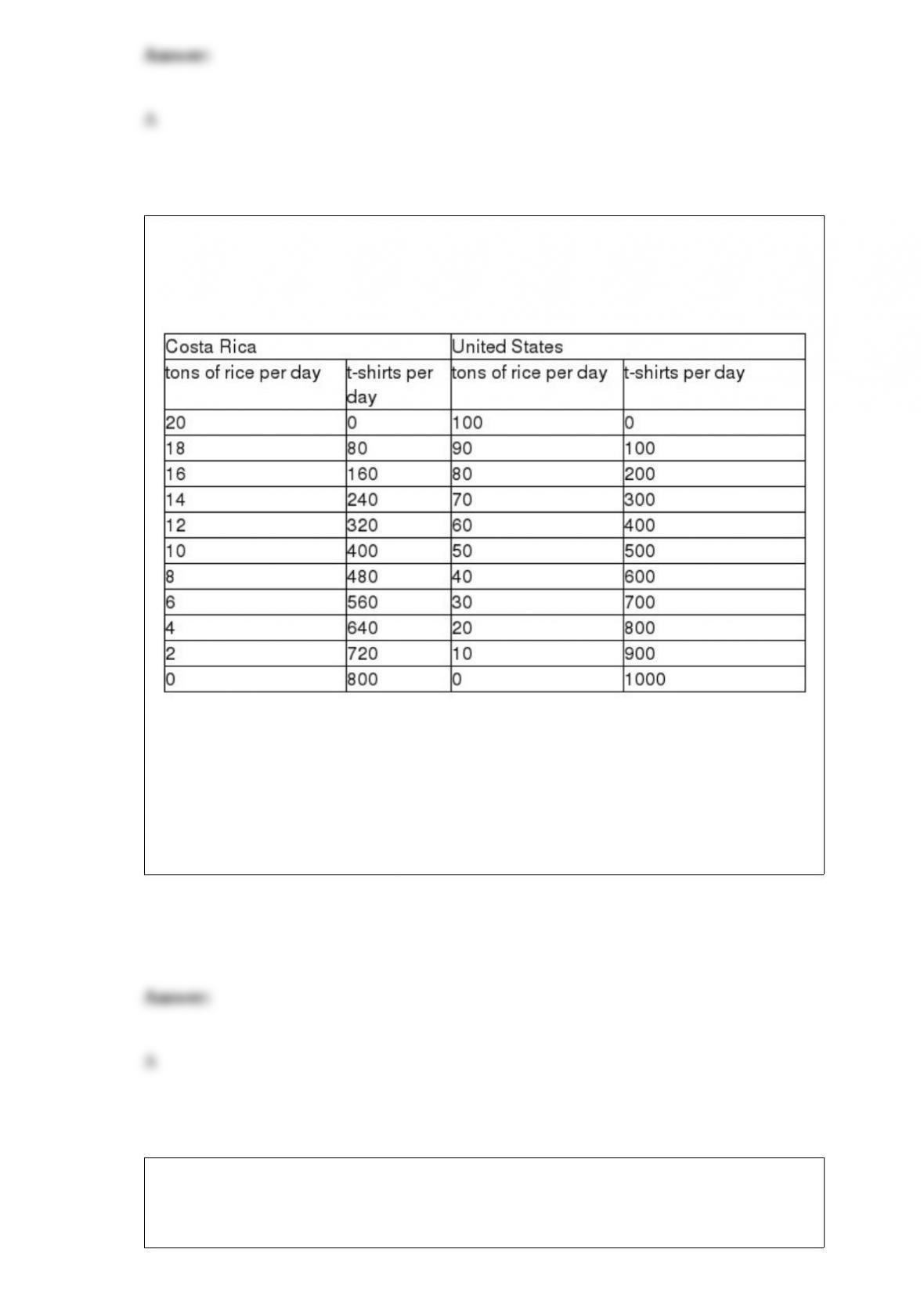
Exhibit 19-2
In Exhibit 19-2, the United States has an absolute advantage in the production of both
rice and t-shirts.
a. True
b. False
More water pollution in the United States comes from __________ than any other
source.

a. factories
b. sulfur dioxide (i.e., acid rain)
c. cars
d. chemicals (used in pesticides and fertilizers) and sewage
e. garbage
If 15 workers produce 100 license plates, 16 workers produce 120 license plates, and 17
workers produce 130 license plates, then
a. diminishing marginal returns have not set in because the marginal product is positive
b. the marginal product of the seventeenth worker is 130
c. diminishing marginal returns must begin with the sixteenth worker
d. the marginal product of the sixteenth worker is greater than the marginal product of
the seventeenth worker
e. the marginal product of the fifteenth worker must be 20
If slope = -2 for a line on a graph with x on the horizontal axis and y on the vertical
axis, then if

a. x increases by 4, y increases by 8
b. x increases by 4, y increases by 2
c. y increases by 4, x increases by 8
d. x = 4, y = 8
e. x increases by 4, y decreases by 8
If the demand for a product is price inelastic,
a. producers’ revenues will increase if supply increases
b. producers’ revenues will increase if supply decreases
c. a small change in price will cause a large shift in the demand curve
d. a large change in price will cause a small shift in the demand curve
e. a small change in price will cause a small shift in the demand curve
The rail system in Metropolis is a natural monopoly. If the government regulates the
system by setting the fare equal to marginal cost, which of the following will be true?
a. Price and output will be higher than if the monopoly were unregulated.

b. Price and output will be lower than if the monopoly were unregulated.
c. Price will be lower and output higher than if the monopoly were unregulated.
d. Price will be higher and output lower than if the monopoly were unregulated.
e. Profit will be lower than if the monopoly were unregulated, but price and output
could either increase or decrease.
Ersatz Kreme will sell its filling to Hunky Donuts only if Hunky Donuts agrees not to
buy filling from other suppliers. This is an example of
a. price discrimination
b. exclusive dealing
c. a tying contract
d. interlocking directorates
e. a trust
Which of the following is not an example of foreign aid?
a. U.S. discount department stores purchasing toys from Chinese manufacturers
b. The International Monetary Fund extending loans to countries that have trouble with
their balance of payments
c. The World Bank providing loans and grants to support health and education programs
d. The U.S. government paying to build an electricity plant in Albania
e. The Australian government paying to repair highways in Tonga
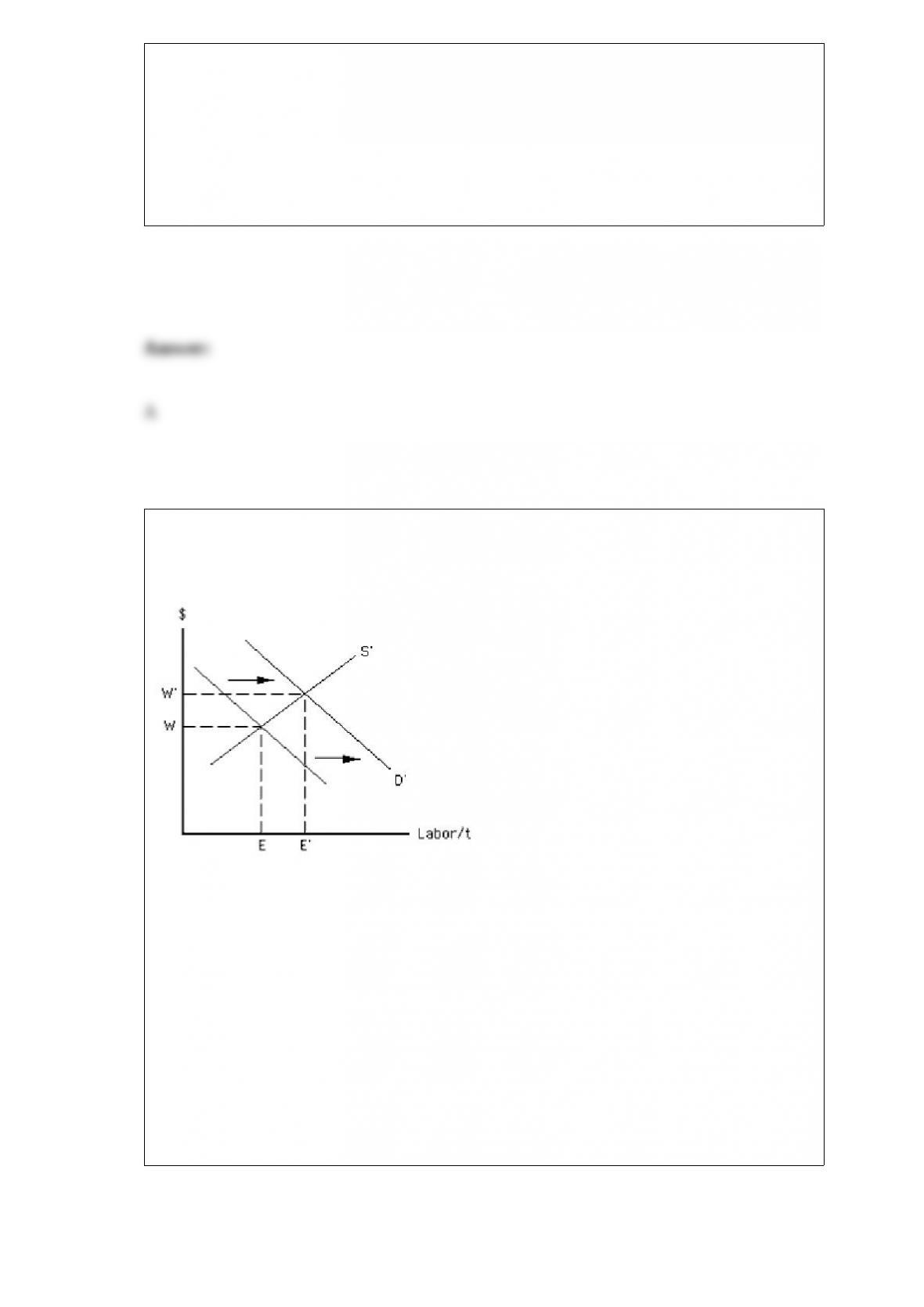
Exhibit 12-8
Which of the following does Exhibit 12-8 illustrate?
a. The demand for labor increases and wages increase when a union disbands.
b. The supply of labor increases and wages increase when a union disbands.
c. Demanders of labor must pay higher wages after a craft union forms.
d. Demanders of labor must pay higher wages after an industrial union forms.
e. A union causes the productivity of labor to increase, causing an increase in the firm’s
demand for labor.

If a firm is experiencing diminishing marginal returns to labor, which of the following
must be true?
a. The first workers the firm hired were better than the workers hired later on.
b. The firm is experiencing decreasing returns to scale.
c. The positive effect of specialization in production is being offset by the negative
effect of crowding of inputs.
d. Output is decreasing.
e. The firm should buy more nonlabor inputs.
The income effect of an increase in the price of hominy grits (an inferior good) is a(n)
a. decrease in the demand for hominy grits
b. decrease in the quantity demanded of hominy grits
c. increase in the demand for hominy grits
d. increase in the quantity demanded of hominy grits
e. new demand curve because everything else is no longer constant
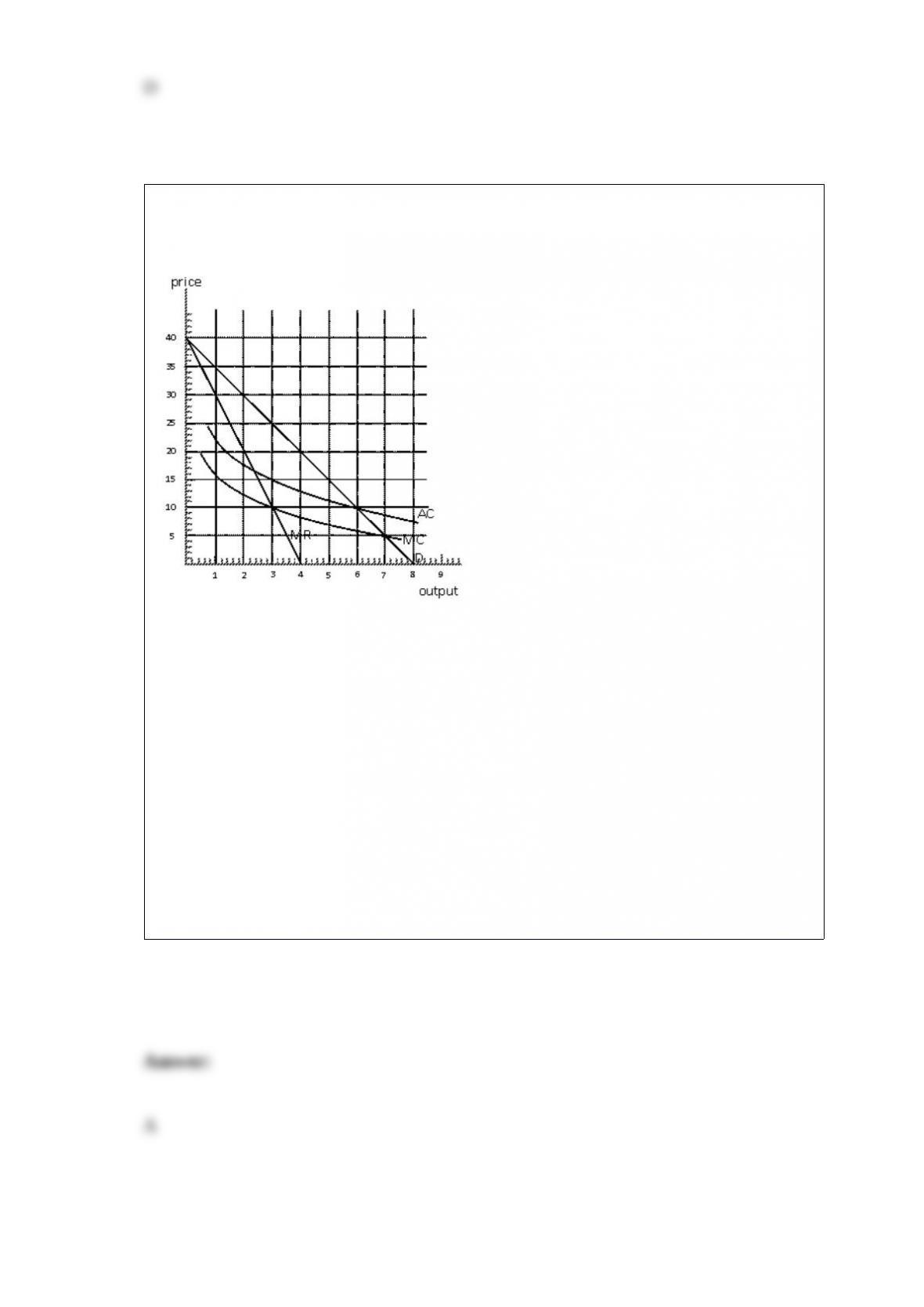
Exhibit 15-5
Consider the natural monopoly depicted in exhibit 15-5. If regulators set the price so as
to achieve the socially efficient level of output, how much profit will the monopolist
earn?
a. no profit, the firm will lose about $28
b. no profit, the firm will lose about $12
c. no profit, the firm will roughly break-even
d. $12 of profit
e. $28 of profit

Exhibit 11-2
In Exhibit 11-2, the twentieth unit of the resource is earning a wage of
a. $4, all of which is economic rent
b. $4, none of which is economic rent
c. $8, all of which is economic rent
d. $8, none of which is economic rent
e. $8, half of which is economic rent