
Of the following high-income countries, which has the highest mortality ratio for
cancer?
A) Canada
B) Japan
C) the United Kingdom
D) the United States
Consider the following pricing strategies:
a. perfect price discrimination
b. charging different prices to different groups of customers
c. optimal two-part tariff
d. single-price monopoly pricing Which of the pricing strategies leads to the
economically efficient output level?
A) a only
B) a and b only
C) a and c only
D) a, b, and c only
Suppose two countries use different combinations of inputs, such as labor and capital,
to produce the same product. This implies all of the following except that
A) the two countries use different technologies to produce the product.
B) the inputs are not equally productive in the two countries.
C) the prices of the inputs are not the same in the countries.
D) one country is more efficient in the production of the good than the other.
Under the Patient Protection and Affordable Care Act (ACA), insurance companies will
be required to participate in a high-risk pool that will cover individuals with
pre-existing medical conditions.
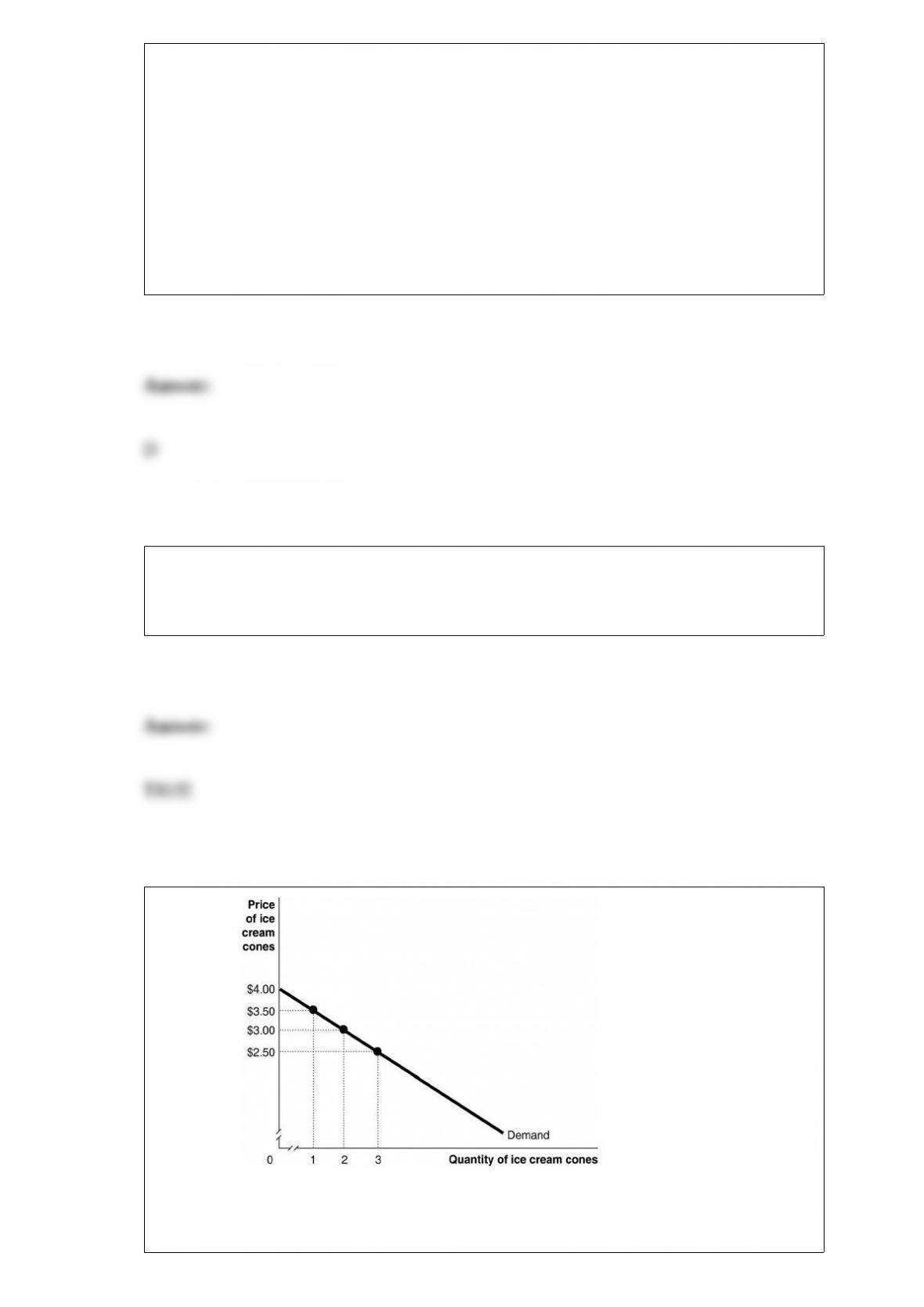
Figure 4-3 Figure 4-3 shows Kendra’s
demand curve for ice-cream cones.
Kendra’s marginal benefit from consuming the first ice cream cone is

A) $9.00
B) $7.50
C) $3.50
D) $0.50
Some economists have suggested that network externalities result in consumers being
locked into the use of products with inferior technologies. Economists Stan Leibowitz
and Stephen Margolis have studied cases that have been cited as examples of this and
found
A) there is no convincing evidence that the alternative technologies were superior.
B) consumers sometimes do become locked into the use of products with inferior
technologies.
C) that in all of these cases network externalities resulted in market failure.
D) that consumers use products with inferior technologies when their prices are lower
than products with superior technologies.
The most important determinant of the price elasticity of demand for a good is
A) the definition of the market for a good.
B) the availability of substitutes for the good.

C) the share of the good in the consumer’s budget.
D) whether the good is a necessity or a luxury.
Unlike a perfectly competitive firm, for a monopolistically competitive firm
A) price marginal cost for all output levels.
B) price marginal revenue for all output levels.
C) price average revenue for all output levels.
D) marginal revenue = marginal cost at the profit-maximizing output.
What are menu costs?
A) the full list of a firm’s costs of production
B) the costs to a firm of changing prices
C) the cost to a household of borrowing money when there is deflation
D) the opportunity cost of dining in a restaurant instead of at home
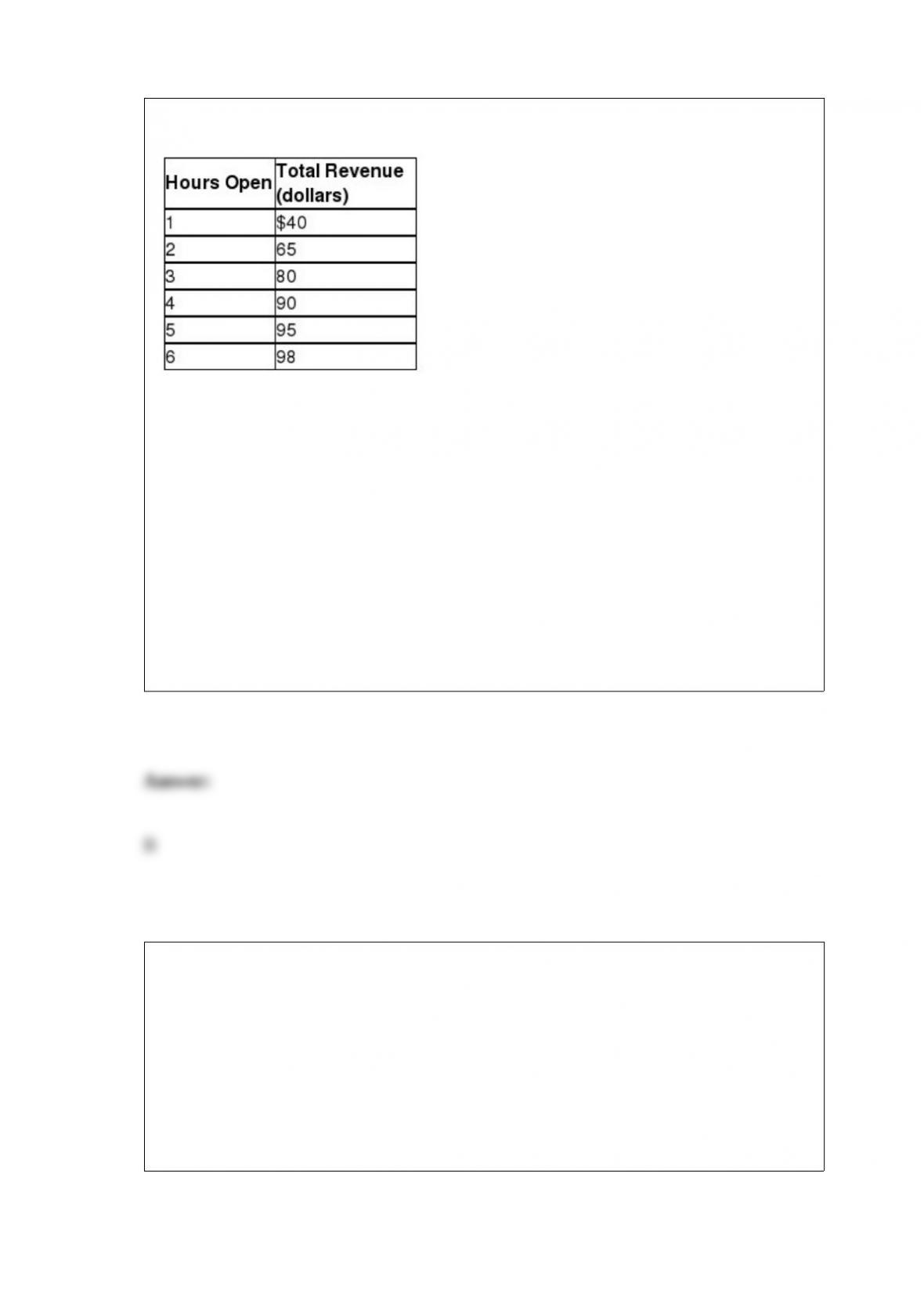
Table 1-5
Julius runs a small tailor shop in the city of Bloomfield. He is debating whether he
should extend his hours of operation. Julius figures that his sales revenue will depend
on the number of hours the tailor shop is open as shown in the table above. He would
have to hire a worker for those hours at a wage rate of $18 per hour.. What is Julius’s
marginal cost if he decides to stay open for three hours instead of two hours?
A) $0
B) $18
C) $54
D) $65
When net capital flows are positive,
A) capital inflows are greater than capital outflows.
B) net foreign investment is negative.
C) capital outflows are greater than capital inflows.
D) A and B are both correct.
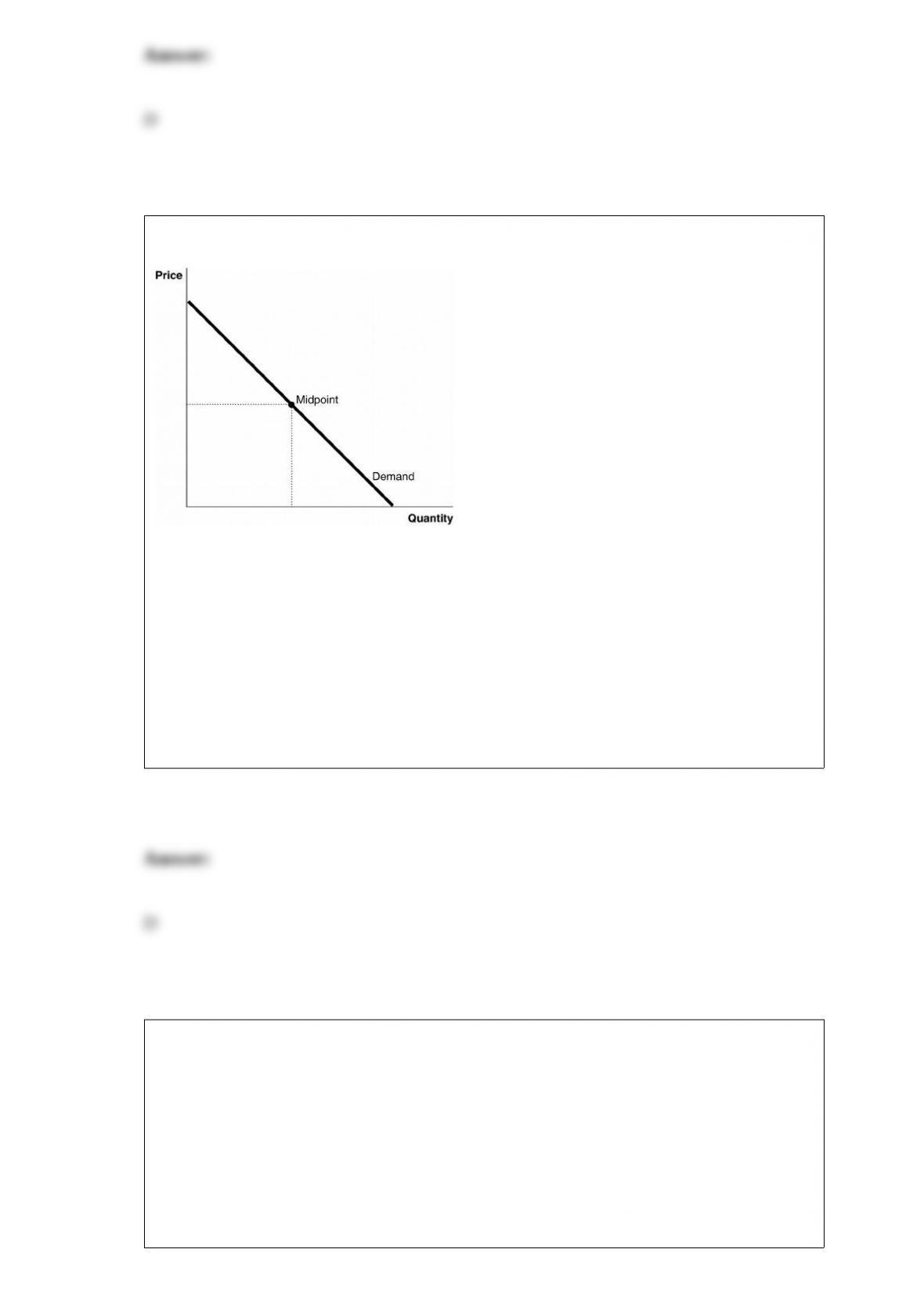
Figure 6-4
At the midpoint of the demand curve, in absolute value
A) the price elasticity coefficient is at a maximum.
B) the price elasticity coefficient is at a minimum.
C) the price elasticity coefficient is zero.
D) the price elasticity coefficient is one.
Economists believe the most persuasive argument for protectionism is to protect infant
industries. But the argument has a drawback. What is this drawback?
A) Governments always make the level of protection for infant industries too high.
B) Governments are usually too impatient and do not allow protection to remain in
place long enough to allow industries to be competitive in international markets.
C) Governments usually use tariffs, rather than quotas, to protect infant industries in
order to collect tariff revenue. (Quotas do not result in government revenue).
D) Protection lessens the need for firms to become productive enough to compete with
foreign firms; this often results in infant industries never “growing up.”
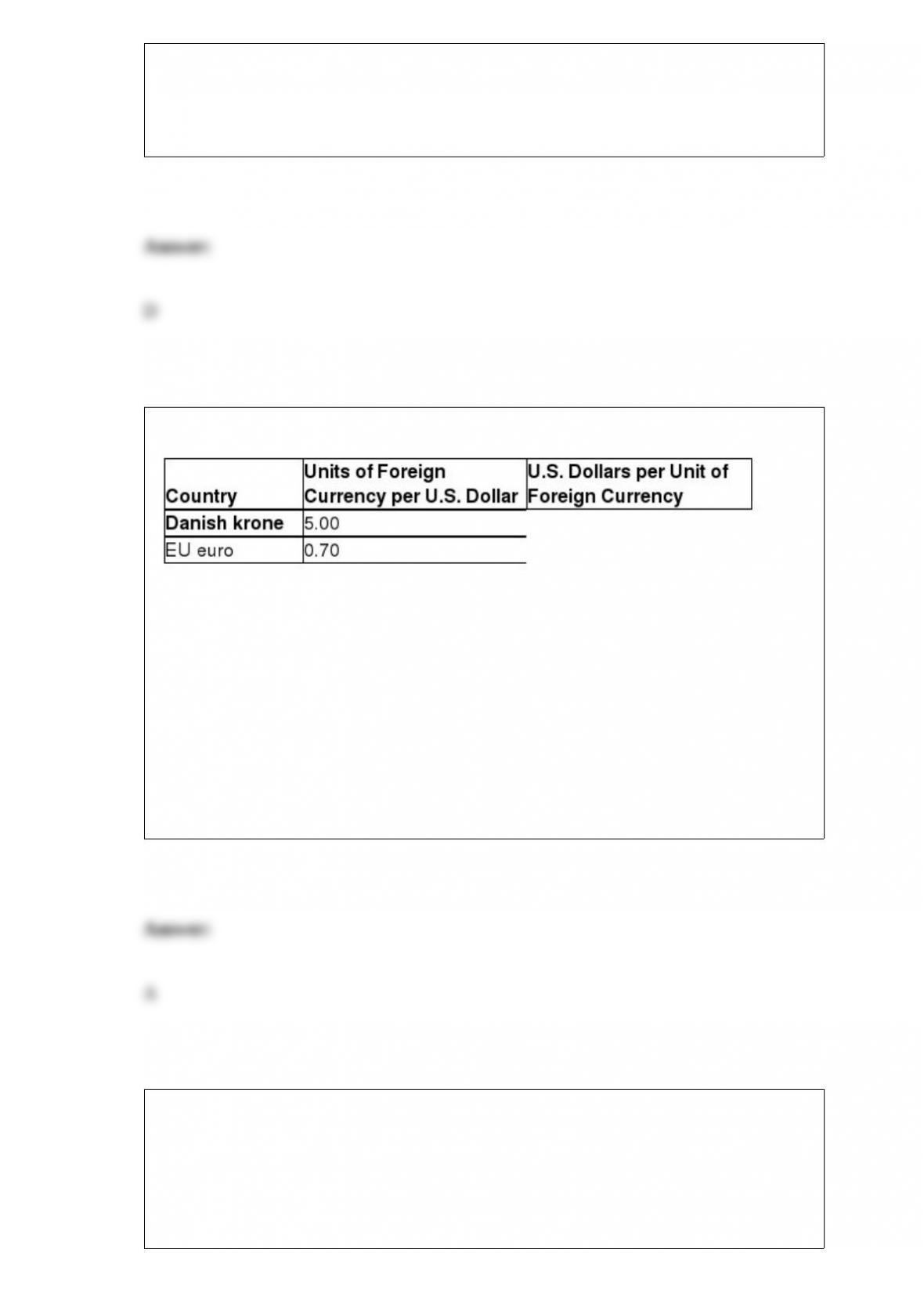
Table 18-3
Given the following exchange rates in the above table, what are the exchange rates
stated as U.S. dollars per Danish krone and U.S. dollars per EU euro respectively?
A) 0.20 dollars per krone and 1.43 dollars per euro
B) 2.00 dollars per krone and 7.14 dollars per euro
C) 0.02 dollars per krone and 0.70 dollars per euro
D) 0.05 dollars per krone and 1.30 dollars per euro
Which of the following would contribute to a sustained high rate of economic growth in
the long run in an economy?
A) growth in capital per hour accompanied by technological change
B) increases in labor force participation rates as workers who are out of the labor force

pursue rising wages
C) a shift of workers in the economy from the agricultural sector to the nonagricultural
sector
D) an influx of immigrant labor into an economy without any accompanying
technological change
The excess burden of a tax
A) measures the efficiency loss to the economy that results from a tax, causing a
reduction in the quantity of goods and services produced.
B) is measured by the administrative costs required to implement a tax system.
C) is a measure of the hardship imposed on low-income individuals in a society.
D) is a measure of the foregone consumption as a result of having to pay taxes.
In 1960, out-of-pocket spending on health care in the United States was
A) 2.2 percent.
B) 6 percent.
C) 48 percent.
D) 64 percent.

Identify whether each of the following transactions will take place in the factor market
or in the product market:
a. Shondra buys a Harley-Davidson Softail motorcycle.
b. Aimee works 20 hours a week at a grocery store.
c. Gustavo sells a warehouse to a produce delivery company.
d. Ocean Spray increases employment at its Middleboro, Massachusetts plant.
A good measure of the standard of living is
A) real GDP per capita.
B) nominal GDP per capita.
C) total real GDP.
D) total nominal GDP.