
The price of a gallon of gasoline was $0.35 in 1972 when the CPI equaled 0.418. The
cost of a gallon of gasoline was $2.25 in 2005 when the CPI equaled 1.68. The real cost
of a gallon of gasoline between 1972 and 2005:
A. increased.
B. decreased.
C. remained constant.
D. may have either increased or decreased.
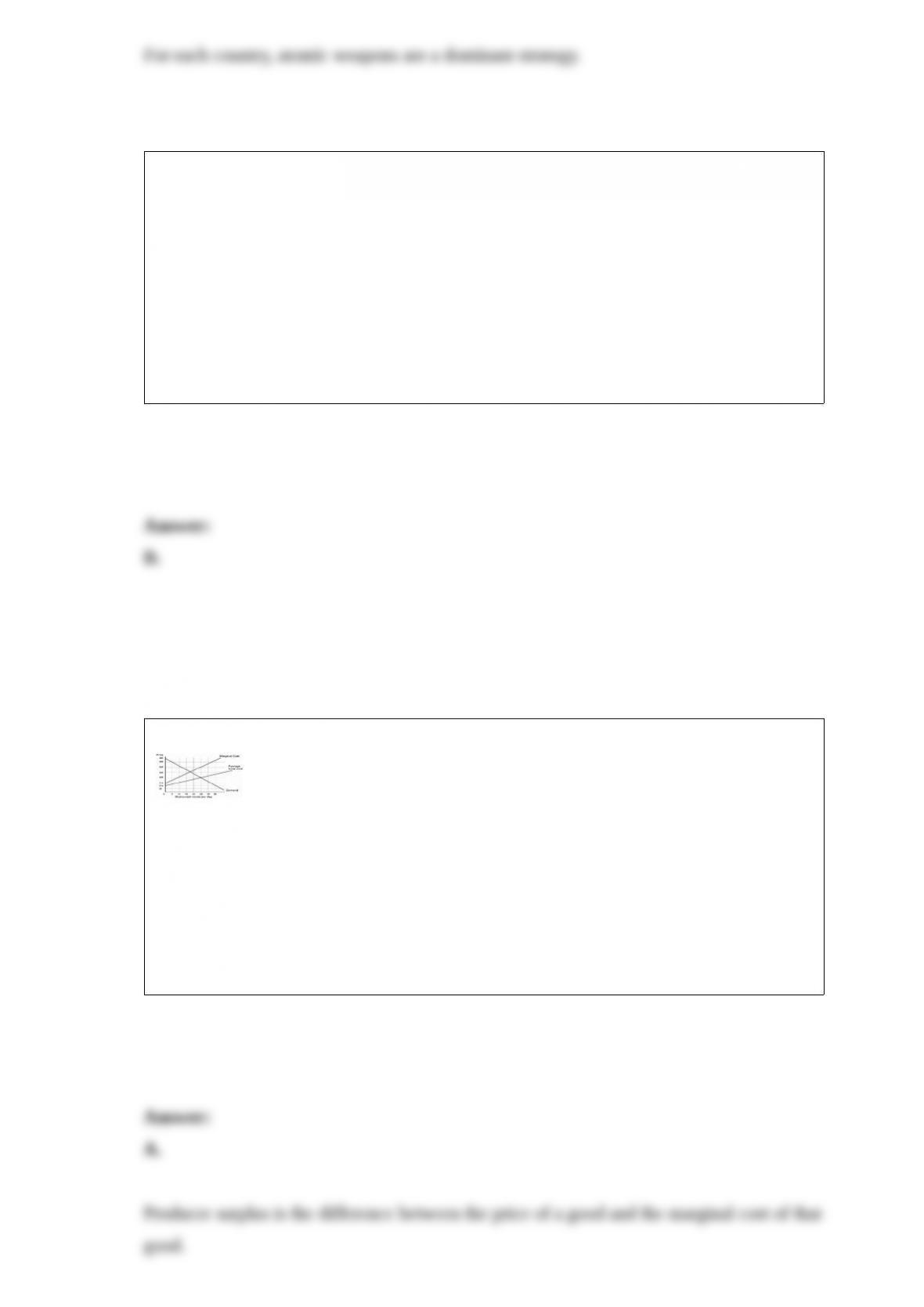
The following payoff matrix shows the outcomes for the US and the USSR from relying
on conventional weapons or atomic weapons. The percentages refer to the fraction of
the population that would die if a war occurred under the two weapons strategies.
Assume the payoff matrix is for 1945, shortly after the US had demonstrated the
effectiveness of the atomic bomb in World War II, i.e., the example begins in the upper
right cell where USA has atomic weapons and the USSR has only conventional
weapons.
Refer to the information given above. The Nash equilibrium in this situation is for:
A. both countries to have conventional weapons.
B. both countries to have atomic weapons.
C. the USSR to have atomic weapons and the USA to have conventional weapons.
D. the USA to have atomic weapons and the USSR to have conventional weapons.
An explanation for the low saving rate in the United States consistent with the
demonstration effect includes:
A. relatively generous government assistance for the elderly and large down payments
required for home purchases.
B. households spending beyond their means to keep up with community standards.
C. well-developed financial markets making it easy to borrow against home equity.
D. large and persistent capital gains.
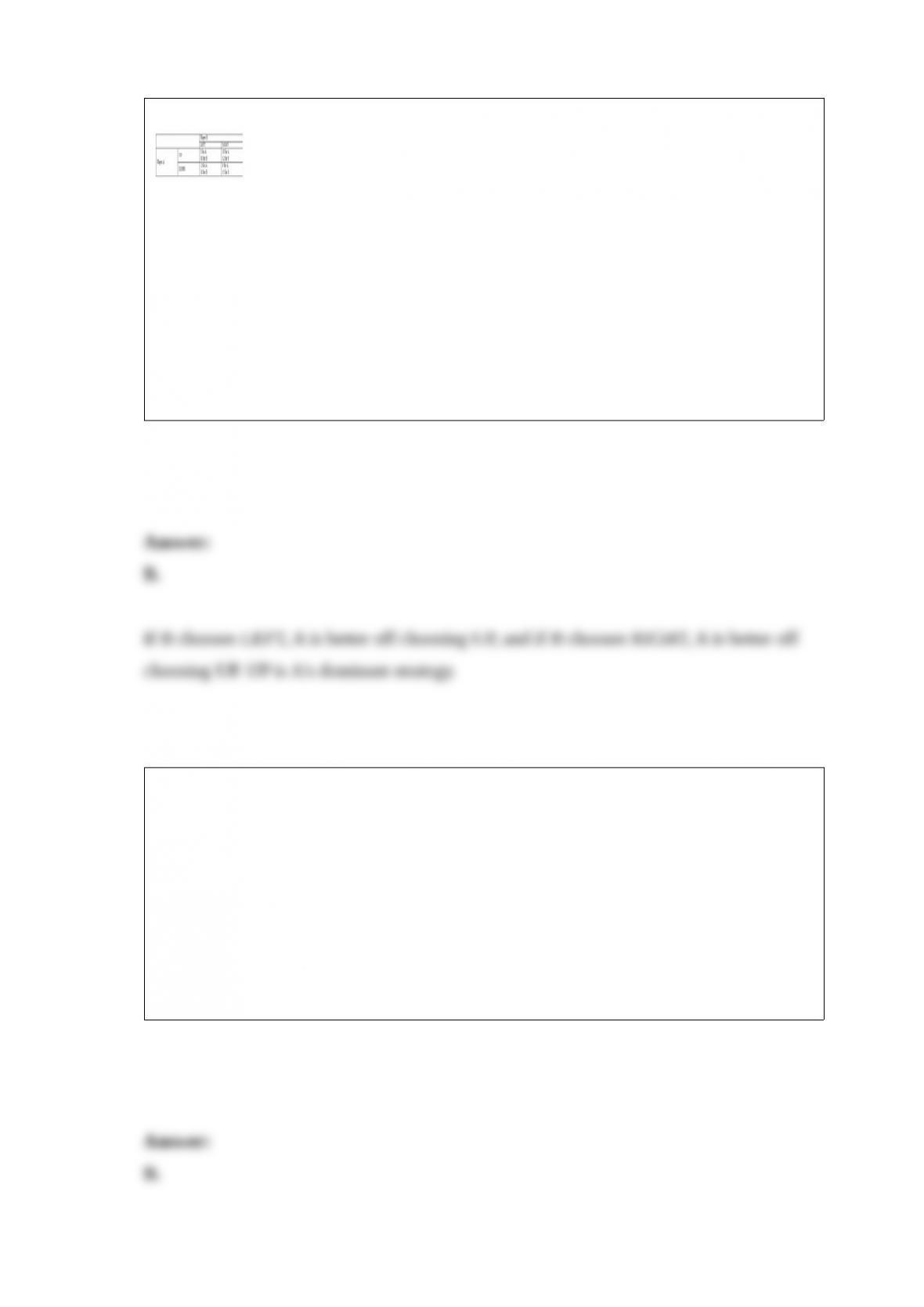
The difference between the price of a good and the marginal cost of that good is called
A. producer surplus
B. profit
C. variable cost
D. consumer surplus
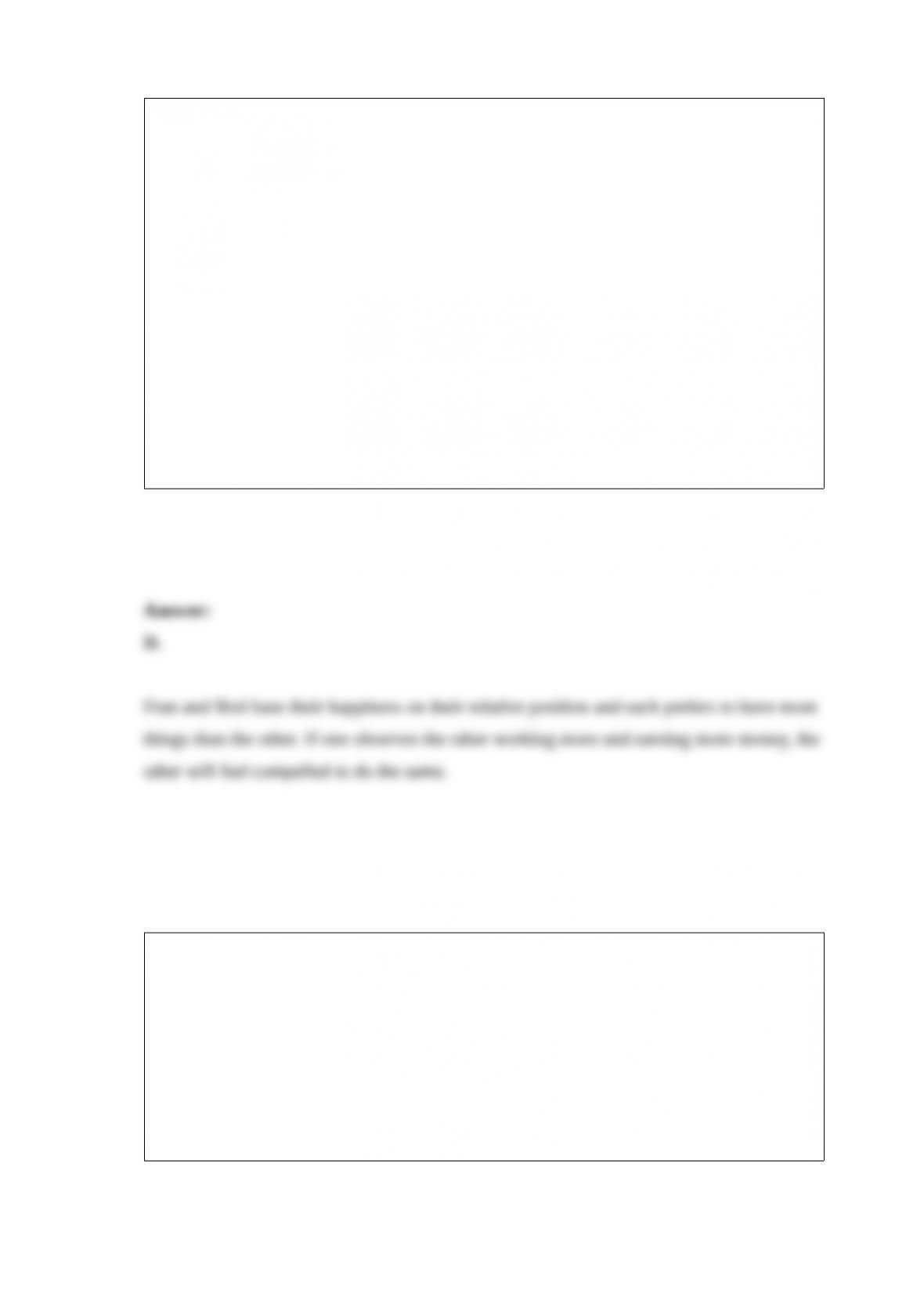
Refer to the figure above. In this game, how many dominant strategies does Player A
have?
A. 0
B. 1
C. 2
D. 4
Holding other factors constant, if a change in tax laws discourages people from saving
more for retirement, then the real interest rate will ______ and the equilibrium quantity
of saving and investment will _____.
A. increase; increase
B. increase; decrease
C. decrease; decrease
D. decrease; increase
Shel and Fran are neighbors. They work at the same firm and hold the same title. Shel
finds that when Fran’s consumption rises, Shel feels worse off. Fran feels the same way
towards Shel’s consumption.
Refer to the information given above. Suppose that the firm that employs both Fran and
Shel began offering an hour of overtime at 1.5 times their base hourly wage and that
both Fran and Shel worked the additional hour. Now suppose that the firm that employs
Fran and Shel offers a second hour of overtime also at 1.5 times their base hourly wage.
One can predict that:
A. Fran will work even more but not Shel.
B. Shel will work even more but not Fran.
C. neither Fran nor Shel will change their work hours.
D. both Fran and Shel will work even more.
A firm that emerges as the only seller in an industry with economies of scale is termed
a(n):
A. antitrust violator.
B. oligopoly.
C. natural monopoly.
D. natural oligopoly.
An exchange rate that is set by official government policy is called a ______ exchange
rate.
A. real
B. nominal
C. fixed
D. flexible
The short run is defined as:
A. one year or less.
B. a period in which all factors of production are variable.
C. the period of time between quarterly accounting reports.
D. a period in which at least one factor of production is fixed.

If two countries are identical except that citizens in one country have more leisure time,
then the level of GDP:
A. will be higher in the country with more leisure time.
B. will be higher in the country with less leisure time.
C. will be the same in both countries.
D. will be greater than the level of economic well being in each country.
One problem with using monetary policy to address “bubbles” in asset markets is that:
A. doing so presupposes that the Federal Reserve is better than financial-market
professionals at identifying bubbles.
B. monetary policy is well-suited for addressing the problem of inappropriately high
asset prices.
C. reducing the real interest rate to deal with the bubble could lead to inflation.
D. the Federal Reserve is not interested in stabilizing output.

Arguments against programs that tax income to redistribute wealth include:
A. these programs increase the wealth differences between the rich and poor, increasing
crime rates.
B. these programs penalize people who are productive.
C. these programs penalize people who are unable to work through no fault of their
own.
D. these programs prevent the economy from reaching equilibrium in the labor market.
If workers and employers agree to a three-year wage contract under the expectation of
3% inflation, and inflation turns out to be 5%, then:
A. workers gain and employers gain.
B. workers gain and employers lose.
C. workers lose and employers gain.
D. workers lose and employers lose.
According to the textbook, the real mean income of the top 5% of families increased by

__________ % from 1980 to 2000.
A. 12
B. 20
C. 95
D. 58
Suppose a jar of DeLux popcorn that is ultimately sold to a customer at Friendly
Groceries is produced by the following production process:
What is the value added of Friendly Groceries?
A. $1.50
B. $2.50
C. $3.50
D. $4.00
Morgan lives in San Francisco and likes to dine out. Morgan has noticed that prices at
restaurants near popular tourist destinations in the city tend to be higher than at
restaurants of the same quality in other neighborhoods. One reason for this is that
A. search costs are higher for people who are unfamiliar with the area.

B. residents don’t like to eat in restaurants frequented by tourists.
C. tourists don’t like to worry about money or calculate savings while on vacation.
D. restaurant meals are a small fraction of the total cost of a vacation.
If two countries are identical except that there is significant air and water pollution in
one, then the level of GDP:
A. will be higher in the country with pollution.
B. will be higher in the country with no pollution.
C. will be the same in both countries.
D. will be greater than the level of economic well being in each country.
A market in disequilibrium would feature:
A. a stable price.
B. consumers able to purchase all they wish at the market price.
C. a stable quantity.
D. either excess supply or excess demand.
Joe earns $10,000 in income and pays $1,000 in taxes while Jack earns $30,000 and
pays $4,000 in taxes. The structure of this tax is
A. progressive.
B. proportional.
C. regressive.
D. a head tax.
You have noticed that there is a persistent shortage of teachers in an inner-city school
district in your state. Based on this observation, you suspect that:
A. the wage for teachers at those schools is higher than at other schools in the state.
B. the wage for teachers at those schools is lower than the equilibrium wage.
C. there is an excess supply of teachers.
D. the reservation price among teachers is lower than for other professions.
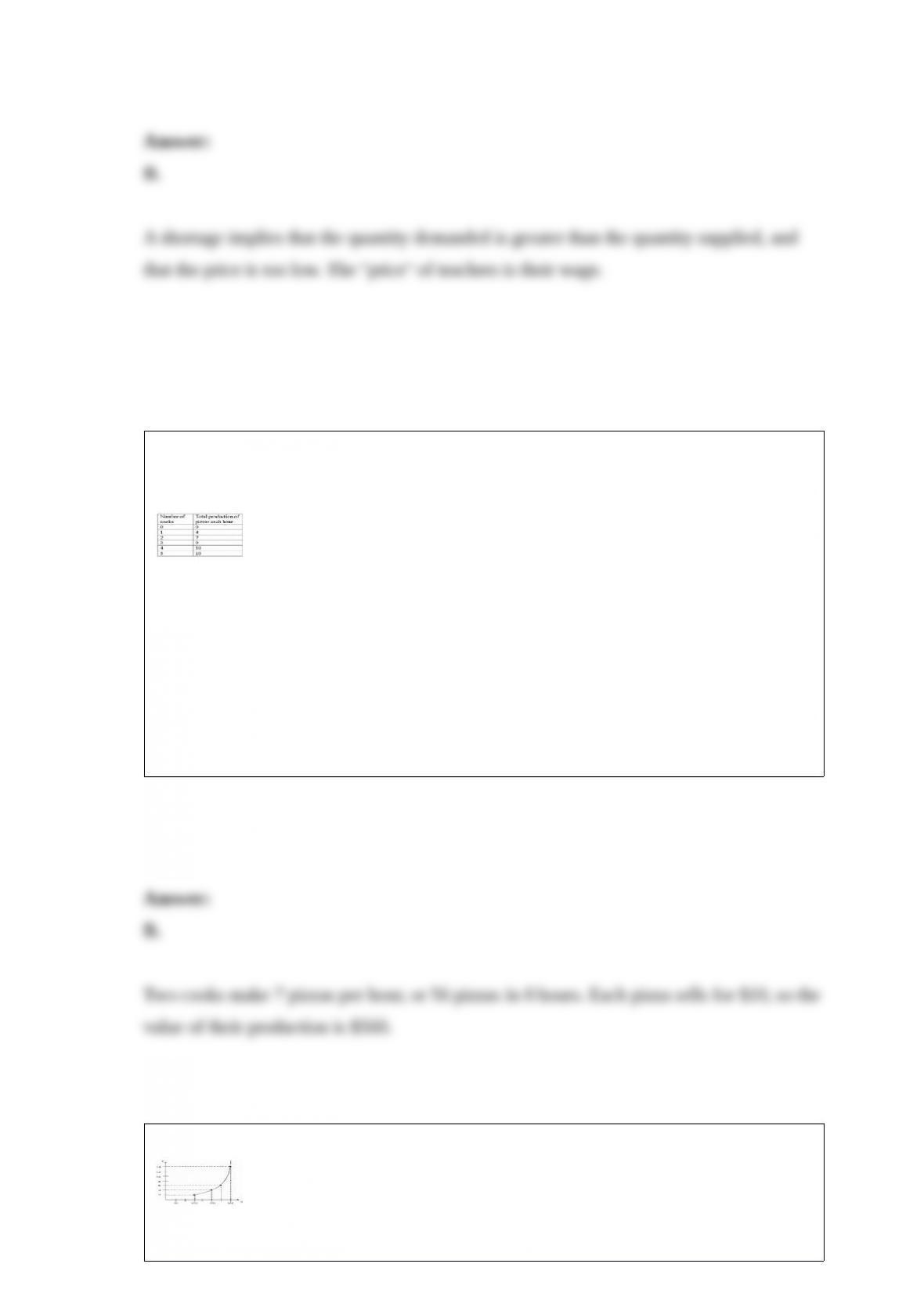
You own a pizza shop called “Pizzas’R’ Us”. Currently you are paying your cooks an
hourly wage of $20. You sell a medium pizza for $10. By hiring more cooks, you can
increase your pizza production as shown in the following table.
What is the dollar value of total production during an 8-hour shift if you hire 2 cooks?
A. $320
B. $560
C. $70
D. $140
The figure above shows one seller’s opportunity costs. If the market consists of 50
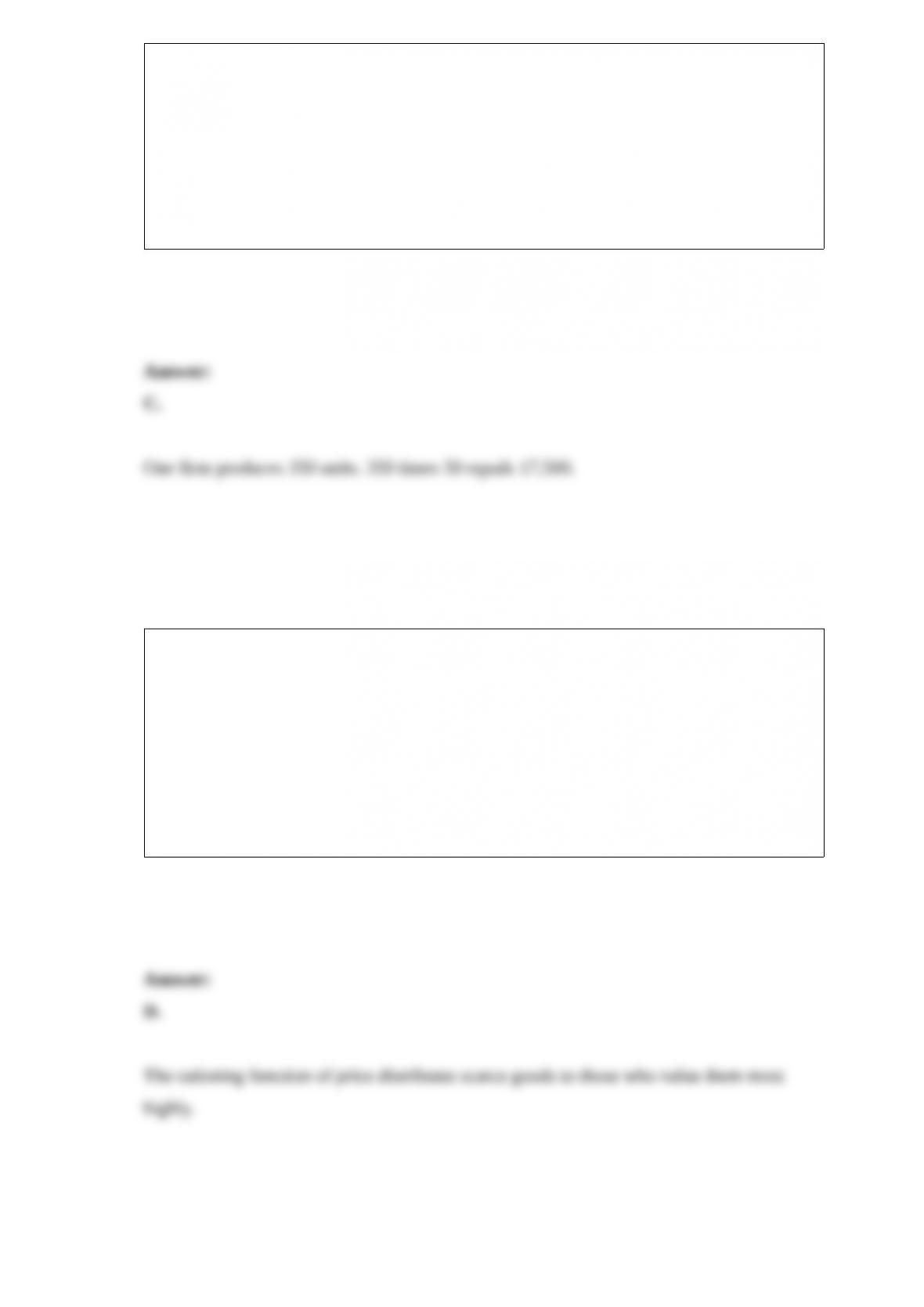
identical sellers, how much will be supplied in the market at a price of $14?
A. 350
B. 1,750
C. 17,500
D. 175,000
The statement, “price distributes goods and services to those that value them the most”
refers to the ______ function of price.
A. allocative
B. multiplicative
C. store of value
D. rationing
When actual output is less than potential output, there is ______ output gap and the
inflation rate will ____.
A. an expansionary; exceed the expected rate of inflation
B. an expansionary; be lower than the expected rate of inflation
C. a recessionary; be lower than the expected rate of inflation
D. a recessionary; exceed the expected rate of inflation
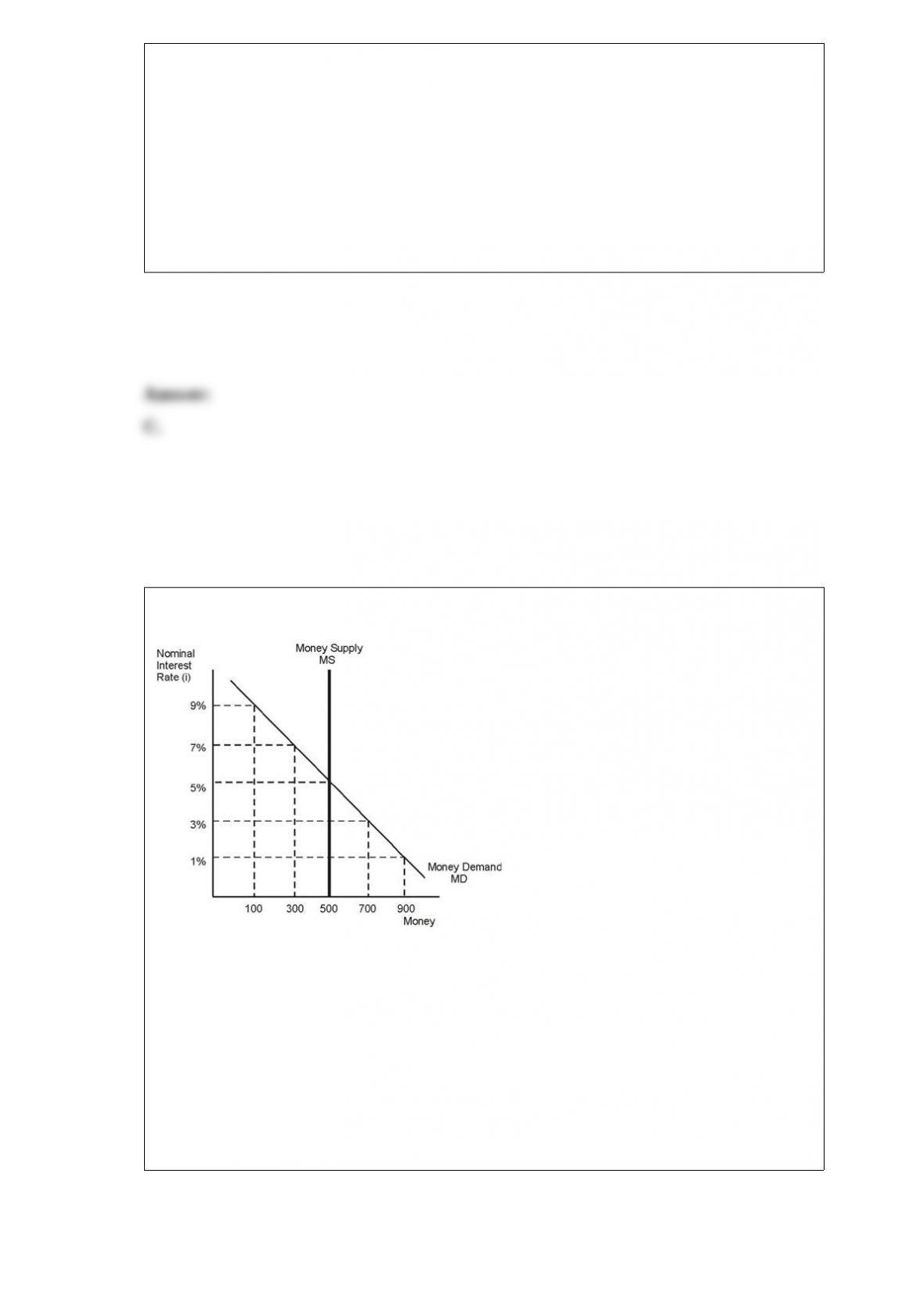
Refer to the figure above. If the Federal Reserve wants to raise the interest rate to 7%, it
must ______ the money supply to _____.
A. increase; 300
B. decrease; 300
C. increase; 900
D. increase; 700
A fixed factor of production:
A. is fixed in the long run but variable in the short run.
B. is fixed only in the short run.
C. is fixed in both the short run and the long run.
D. is common in large firms but rare in small firms.
When either the costs of production or the benefits of consumption to individuals differ
from those of society:
A. the equilibrium output will be the socially optimal output.
B. the equilibrium is not efficient.
C. the allocation of resources remains correct.
D. the invisible hand had completely failed.
Your neighbors have asked you to look after their dog while they are on vacation. It will
take you one hour per day to feed, walk, and care for the dog, which you can do either
before or after you go to work. Your regular job pays $10 per hour, and you can work
for up to eight hours per day. The smallest amount of money you would accept to take
this job is:
A. $10 per day, because that is your opportunity cost of one hour of work.
B. $15 per day, because overtime wages are generally equal to 1.5 times your regular
wage when you work more than eight hours in one day.
C. zero, because your regular job is not available for the ninth hour of work.
D. the value of one hour of leisure, which is greater than zero.
P-TV and QRS-TV are planning their fall line-up. Suppose that sit-coms are more
popular than reality shows, and so generate more advertising revenue than do reality
shows, but they are more expensive to produce since real actors must be hired. In the
following decision tree, QRS-TV announces its decision first and P-TV observes that
choice before it decides whether to air a sit-com in the same time slot or a reality show.
Both stations know all of the information shown in this diagram when they make their
decisions.
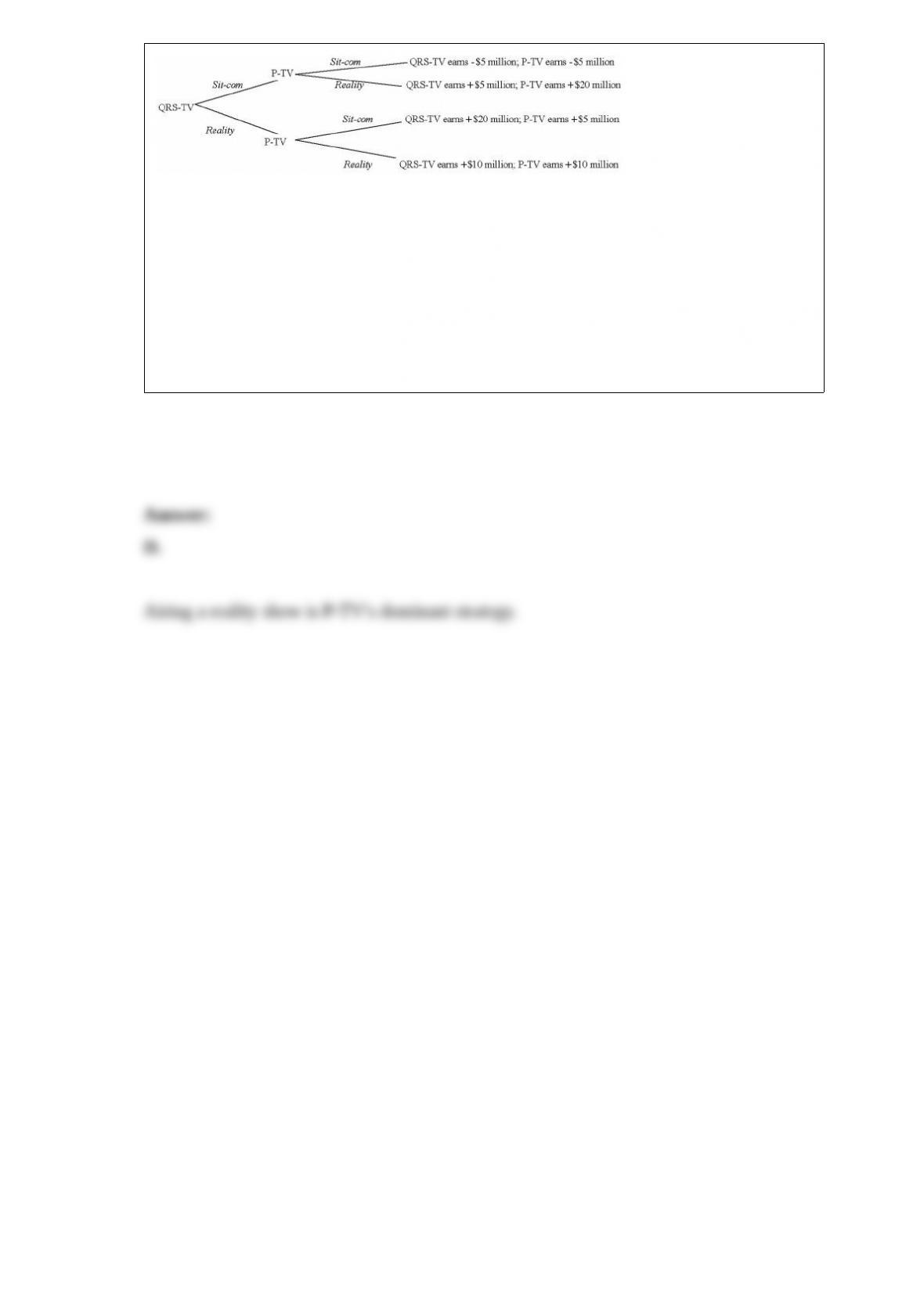
Refer to the information above. P-TV will air a sit-com:
A. only if QRS-TV is also airing a sit-com.
B. only if QRS-TV is airing a reality show.
C. always.
D. never.