
A decrease in the money supply causes the interest rate to rise so that investment falls.
a. True
b. False
According to classical macroeconomic theory, changes in the money supply affect
a. unemployment and the price level.
b. unemployment but not the price level.
c. the price level, but not unemployment.
d. neither the price level nor unemployment.
In a closed economy, investment must be equal to private saving.
a. True
b. False

Ellie and Brendan both produce apple pies and vanilla ice cream. If Ellie’s opportunity
cost of one apple pie is 1/2 gallon of ice cream and Brendan’s opportunity cost of one
apple pie is 1/4 gallon of ice cream, a mutually advantageous trade can be struck at a
price of one apple pie for 1/3 gallon of ice cream.
a. True
b. False
A policy change that reduces the natural rate of unemployment shifts both the long-run
aggregate-supply curve and the long-run Phillips curve left.
a. True
b. False
Suppose the real exchange rate is 3/4 gallon of country A’s gasoline per gallon of U.S.
gasoline, a gallon of U.S. gasoline costs $3.00 U.S., and a gallon of gas in country A
costs 6 units of their currency. What is the nominal exchange rate?
a. 3/8 of a unit of country A’s currency per dollar.

b. 3/2 units of country A’s currency per dollar.
c. 8/3 units of country A’s currency per dollar.
d. None of the above is correct.
Political Instability Abroad
Suppose that political instability in other countries makes people fear for the value of
their assets in these countries so that they desire to purchase more U.S assets.
RefertoPoliticalInstabilityAbroad.What would the change in the interest rate created
by foreigners wanting to buy more U.S. assets do to investment spending in the U.S.?
a. make it rise which by itself would increase U.S. aggregate demand.
b. make it rise which by itself would decrease U.S. aggregate demand.
c. make it fall which by itself would increase U.S. aggregate demand.
d. make it fall which by itself would decrease U.S. aggregate demand.
Which of these statements does notapply to market economies?
a. Prices prevent decentralized decision making from degenerating into chaos.

b. Prices coordinate the actions of millions of people with varying abilities and desires.
c. Prices ensure that anyone who wants a product can get it.
d. Prices ensure that what needs to get done does in fact get done.
Years ago, thousands of country music fans risked their lives by rushing to buy tickets
for a Willie Nelson concert at Carnegie Hall. This behavior indicates
a. the ticket price was above the equilibrium price.
b. the ticket price was below the equilibrium price.
c. the ticket price was at the equilibrium price.
d. nothing about the equilibrium price.
Suppose that the money supply increases. In the short run, this increases prices
according to
a. both the short-run Phillips curve and the aggregate demand and aggregate supply
model.
b. neither the short-run Phillips curve nor the aggregate demand and aggregate supply
model.
c. the short-run Phillips curve, but not according to the aggregate demand and aggregate

supply model.
d. the aggregate demand and aggregate supply model but not according to the short-run
Phillips curve.
Double taxation means that both
a. wage income and interest income are taxed, which is currently the case in the United
States.
b. wage income and interest income are taxed, which is not currently the case in the
United States.
c. the profits of corporations and the dividends shareholders receive are taxed, which is
currently the case in the United States.
d. the profits of corporations and the dividends shareholders receive are taxed, which is
not currently the case in the United States.
Workers waiting for jobs to open up is most closely associated with
a. cyclical unemployment.
b. frictional unemployment.
c. seasonal unemployment.
d. structural unemployment.

Samuelson and Solow reasoned that when aggregate demand was high, unemployment
was
a. low, so there was upward pressure on wages and prices.
b. low, so there was downward pressure on wages and prices.
c. high, so there was upward pressure on wages and prices.
d. high, so there was downward pressure on wages and prices.
Suppose the economy is in long-run equilibrium. If there is a sharp increase in the
minimum wage as well as an increase in taxes, then in the short run, real GDP will
a. rise and the price level might rise, fall, or stay the same. In the long run, the price
level might rise, fall, or stay the same but real GDP will be unaffected.
b. fall and the price level might rise, fall, or stay the same. In the long run, the price
level might rise, fall, or stay the same but real GDP will be unaffected.
c. rise and the price level might rise, fall, or stay the same. In the long run, the price
level might rise, fall, or stay the same but real GDP will be lower.
d. fall and the price level might rise, fall, or stay the same. In the long run, the price
level might rise, fall, or stay the same but real GDP will be lower.

An economist would be more likely to argue against reducing inflation if she thought
that
a. the central bank lacked credibility and if bonds were usually not indexed for
inflation.
b. the central bank lacked credibility and if bonds were usually indexed for inflation.
c. the central bank had credibility and if bonds were usually not indexed for inflation.
d. the central bank had credibility and if bonds were usually indexed for inflation.
Which of the following statements about trade is false?
a. Trade increases competition.
b. With trade, one country wins and one country loses.
c. Bulgaria can benefit, potentially, from trade with any other country.
d. Trade allows people to buy a greater variety of goods and services at lower cost.
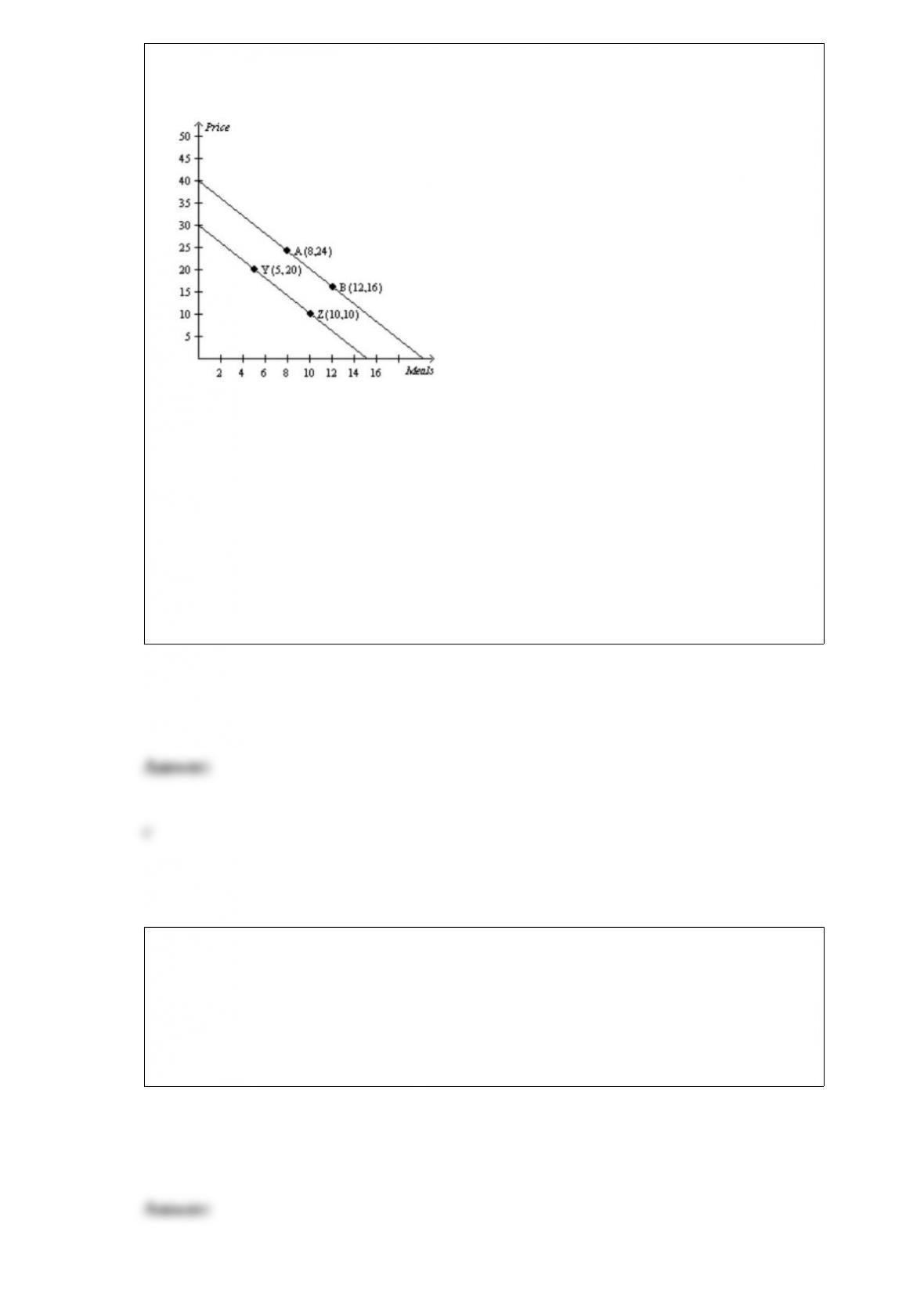
Figure 2-18
RelationshipbetweenPriceandRestaurantMeals
RefertoFigure2-18.Which of the following could result in a movement from point A to
point B?
a. a change in income
b. a change in the cost of producing a restaurant meal
c. a change in the price of restaurant meals
d. a change in the price of movies
If consumption is $1800, GDP is $4300, government purchases are $1000, imports are
$700, and investment is $1200, then exports are $300.
a. True
b. False

A marginal change is a small incremental adjustment to an existing plan of action.
a. True
b. False
In the equation for the production function H/Lrepresents
a. natural resources per worker.
b. human capital per worker.
c. output per worker.
d. physical capital per worker.
An adverse supply shock shifts the short-run Phillips curve to the
a. right. This means the unemployment rate is higher at each inflation rate.
b. right. This means the unemployment rate is lower at each inflation rate.

c. left. This means the unemployment rate is higher at each inflation rate.
d. left. This means the unemployment rate is lower at each inflation rate.
The ability of an individual to own and exercise control over scarce resources is called
a. market failure.
b. property rights.
c. externality.
d. market power.
The growth rate for the American economy is
a. lower in the 21st century than for the previous 250 years.
b. higher in the 21st century than for the previous 250 years and increasing rapidly.
c. higher in the 21st century than for the previous 250 years but increasing slowly.
d. approximately equal in the 21st century and in the previous 250 years.

If the stock market crashes, then
a. aggregate demand decreases, which the Fed could offset by purchasing bonds.
b. aggregate demand decreases, which the Fed could offset by selling bonds.
c. aggregate demand increases, which the Fed could offset by selling bonds.
d. aggregate demand increases, which the Fed could offset by purchasing the money
supply.
Suppose private saving in a closed economy is $12b and investment is $10b.
a. National saving must equal $12b.
b. Public saving must equal $2b.
c. The government budget surplus must equal $2b.
d. The government budget deficit must equal $2b.

Which of the following observations was made famous by Adam Smith in his book
TheWealthofNations?
a. There is no such thing as a free lunch.
b. People buy more when prices are low than when prices are high.
c. No matter how much people earn, they tend to spend more than they earn.
d. Households and firms interacting in markets are guided by an “invisible hand” that
leads them to desirable market outcomes.
The old adage, “Don”t put all your eggs in one basket,” is very similar to a modern bit
of advice concerning financial matters:
a. “Buy lowrisk bonds.”
b. “Use a medium of exchange.”
c. “Diversify.”
d. “Intermediate.”
When the money market is drawn with the value of money on the vertical axis, as the
price level increases which of the following increases?
a. the quantity of money demanded and the quantity of money supplied

b. the quantity of money demanded but not the quantity of money supplied
c. the quantity of money supplied but not the quantity of money demanded
d. neither the quantity of money supplied nor the quantity of money demanded
Suppose that the U.S. undertakes a policy to increase its saving rate. This policy will
likely
a. have no impact on the level of real GDP per person.
b. immediately and permanently decrease the level of real GDP per person.
c. immediately and permanently increase the level of real GDP person.
d. gradually raise the level of real GDP per person.
For which of the following problems can well-designed public policy enhance
economic efficiency?
a. both externalities and market power
b. externalities, but not market power
c. market power, but not externalities
d. neither externalities nor market power
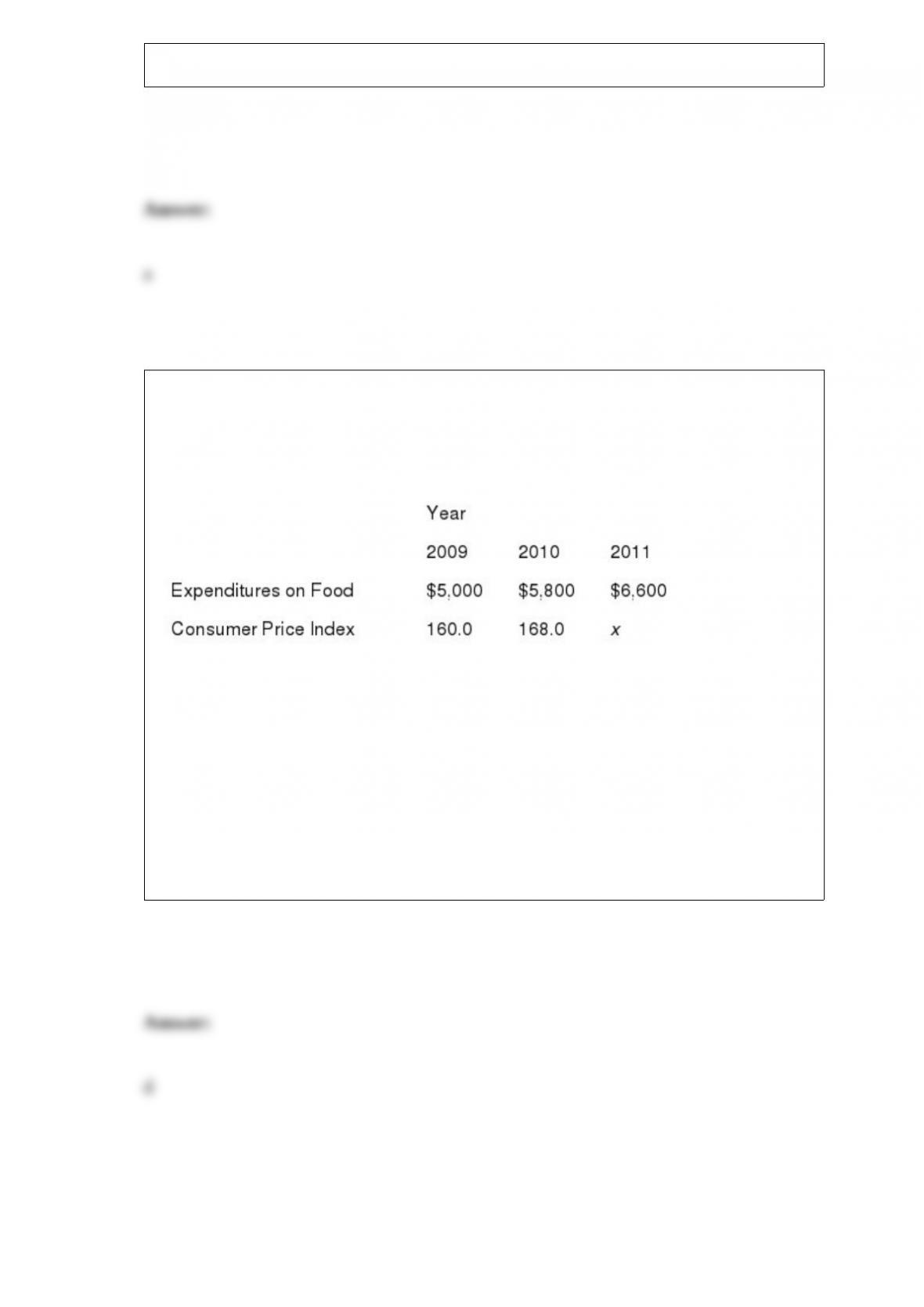
Table24-12.Will’s expenditures on food for three consecutive years, along with other
values, are presented in the table below.
RefertoTable24-12.Suppose Will’s 2010 food expenditures in 2011 dollars amount to
$6,235. Then x, the consumer price index for 2011, has a value of
a. 171.2.
b. 175.0.
c. 177.5.
d. 180.6.