1) according to the reciprocal trade agreements act of 1934, the president could lower
tariffs by up to 10 percent of the existing level without congressional approval.
a.true
b.false
2) a foreign currency option is an agreement between a holder (corporation) and a
writer (commercial bank) giving the holder the right to buy or sell a certain amount of
foreign currency at any time through some specified date.
a.true
b.false
3) if mexico fully dollarizes its economy, it agrees to
a.print pesos only to finance deficits of its national government
b.use the u.s. dollar alongside its peso to finance transactions
c.have the u.s. treasury be in charge of its tax collections
d.replace pesos with u.s. dollars in its economy
4) under a fixed exchange-rate system and high capital mobility, an expansion in the
domestic money supply leads to:
a.trade-account deficit and a capital-account surplus
b.trade-account deficit and a capital-account deficit
c.trade-account surplus and a capital-account surplus
d.trade-account surplus and a capital-account deficit
5) stringent governmental regulations (e.g., air quality standards) imposed on domestic
steel manufacturers tend to:
a.enhance their competitiveness in the international market
b.detract from their competitiveness in the international market
c.increase the profitability and productivity of domestic manufacturers
d.reduce the market share of foreign firms selling steel in the domestic market

6) the uruguay round of multilateral trade negotiations succeeded in establishing the
world trade organization.
a.true
b.false
7) in the absence of trade, a nation is in equilibrium where a community indifference
curve:
a.lies above its production possibilities curve
b.is tangent to its production possibilities curve
c.intersects its production possibilities curve
d.lies below its production possibilities curve
8) given a system of floating exchange rates, weaker u.s. preferences for imports would
trigger:
a.an increase in the demand for imports and an increase in the demand for foreign
currency
b.an increase in the demand for imports and a decrease in the demand for foreign
currency
c.a decrease in the demand for imports and an increase in the demand for foreign
currency
d.a decrease in the demand for imports and a decrease in the demand for foreign
currency
9) the balance of payments includes international transactions of households and
businesses, but not government.
a.true
b.false
10) suppose general motors charges its mexican subsidiary $1 million for auto assembly
equipment that could be purchased on the open market for $800,000. this practice is
best referred to as:
a.international dumping
b.cost-plus pricing
c.transfer pricing
d.technological transfer
11) in the long run, competitiveness depends on an industry’s natural resources, its stock
of machinery and equipment, and the skill of its workers in creating goods that people
want to buy.
a.true
b.false
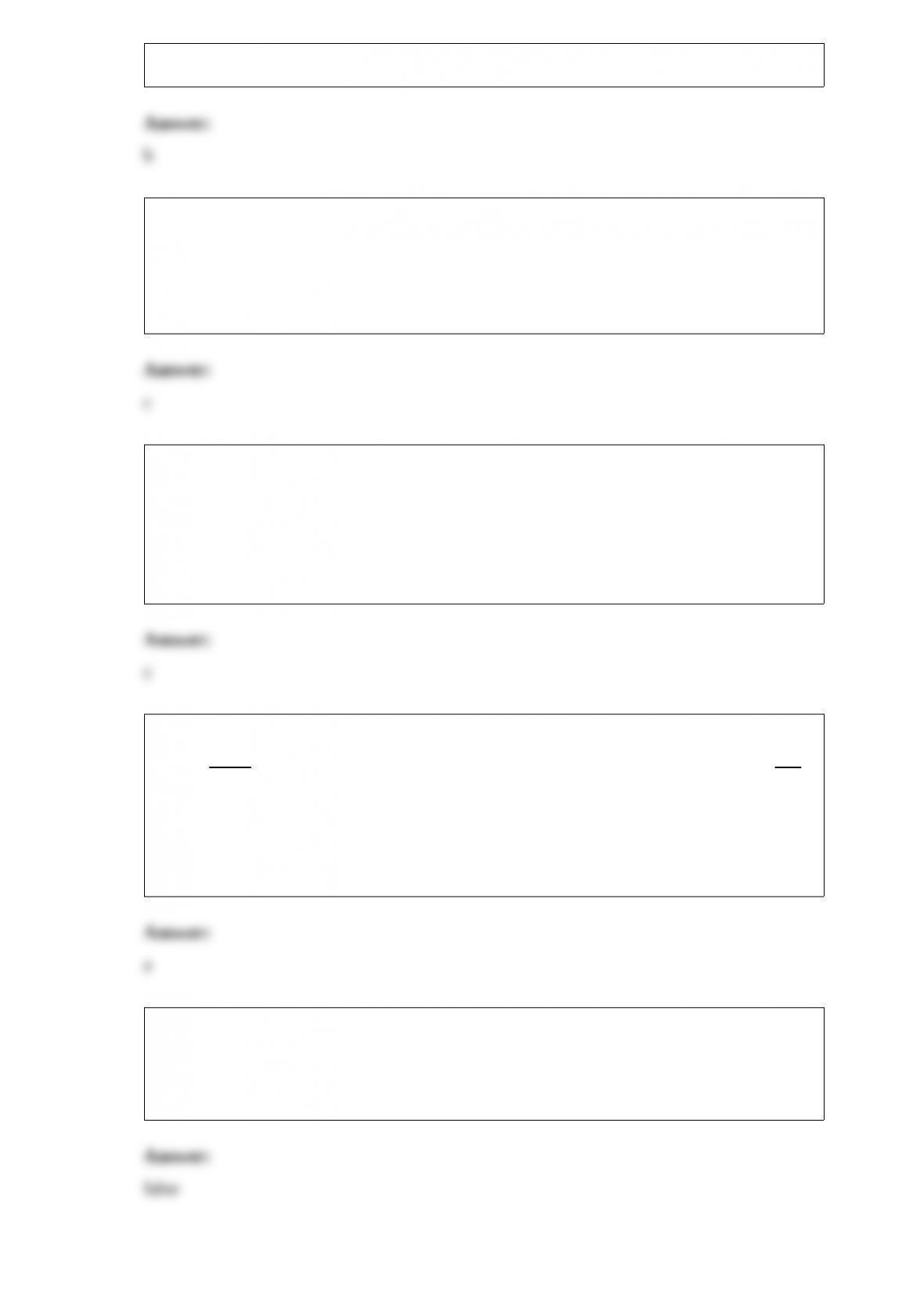
12) figure 2.2 illustrates trade data for canada. the figure assumes that canada attains
international trade equilibrium at point c.
figure 2.2. canadian trade possibilities
referring to figure 2.2, canada has a comparative advantage in:
a.televisions
b.refrigerators
c.televisions and refrigerators
d.neither televisions nor refrigerators
13) which of the following organizations is considered a regional trading arrangement?
a.organization of petroleum exporting countries
b.north atlantic treaty organization
c.benelux
d.international tin agreement
14) the j-curve effect implies that following a currency appreciation, a country’s trade
balance:
a.worsens before it improves
b.continually worsens
c.improves before it worsens
d.continually improves
15) suppose the government grants a subsidy to its export firms that permits them to
charge lower prices on goods sold abroad. the export revenue of these firms would rise
if the foreign demand is:
a.elastic in response to the price reduction
b.inelastic in response to the price reduction
c.unit elastic in response to the price reduction
d.none of the above
16) the theory of overlapping demands asserts that trade in manufactured goods is
stronger the less similar the demand structures of two countries.
a.true
b.false
17) a firm that faces problems of falling sales and excess productive capacity might
resort to international dumping if it:
a.can charge higher prices in markets that are elastic to price changes
b.earns revenues on foreign sales that at least cover variable costs
c.can sell at that price where domestic and foreign demand elasticities equate
d.is able to force foreign prices below marginal production costs
18) a nation realizes maximum gains from trade at the point where the international
terms-of-trade line is tangent to its community indifference curve.
a.true
b.false
19) what are the challenges of the international trading system?
20) does exposure to competition with the world leader in a particular industry improve
a firm’s productivity?
21) what is the basis for trade adjustment assistance?
22) what is the asset market approach to exchange rate determination?
23) how is the absorption approach used for analyzing the effects of currency
devaluation?
24) what is the basis for trade adjustment assistance?
25) what are the essential arguments in favor of free trade?
26) what are the essential arguments in favor of free trade?
27) describe some of the differences between tariffs and quotas?
28) are international reserve needs different for different exchange rate regimes?