Expansionary monetary policy enacted during a recession will cause the inflation rate to
increase.
Answer:
Early adopters are consumers who will pay a high price to be among the first to own
new products.
Answer:
An increase in the price level shifts the aggregate demand curve to the left.
Answer:
If the market wage rate increases, a firm’s labor demand curve does not shift but the
labor supply curve shifts to the right.
Answer:
A majority of people in the United States have private health insurance.
Answer:
The rate of growth of productivity in the United States was positive during the 20th
century.
Answer:
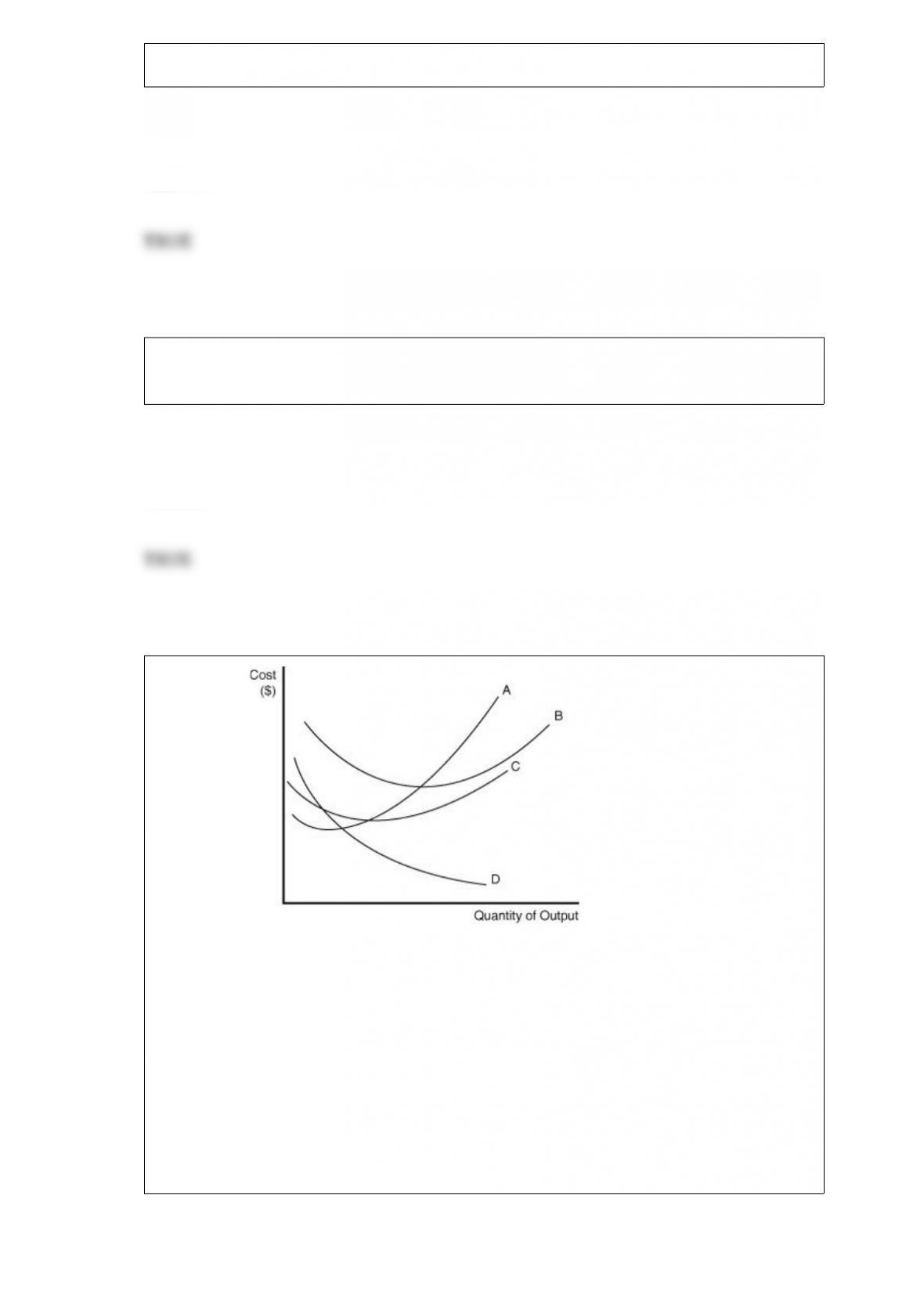
Figure 11-6 Figure 11-6 contains
information about the short-run cost structure of a firm.
In the figure above, which letter represents the average fixed cost curve?
A) A
B) B
C) C
D) D
Answer:
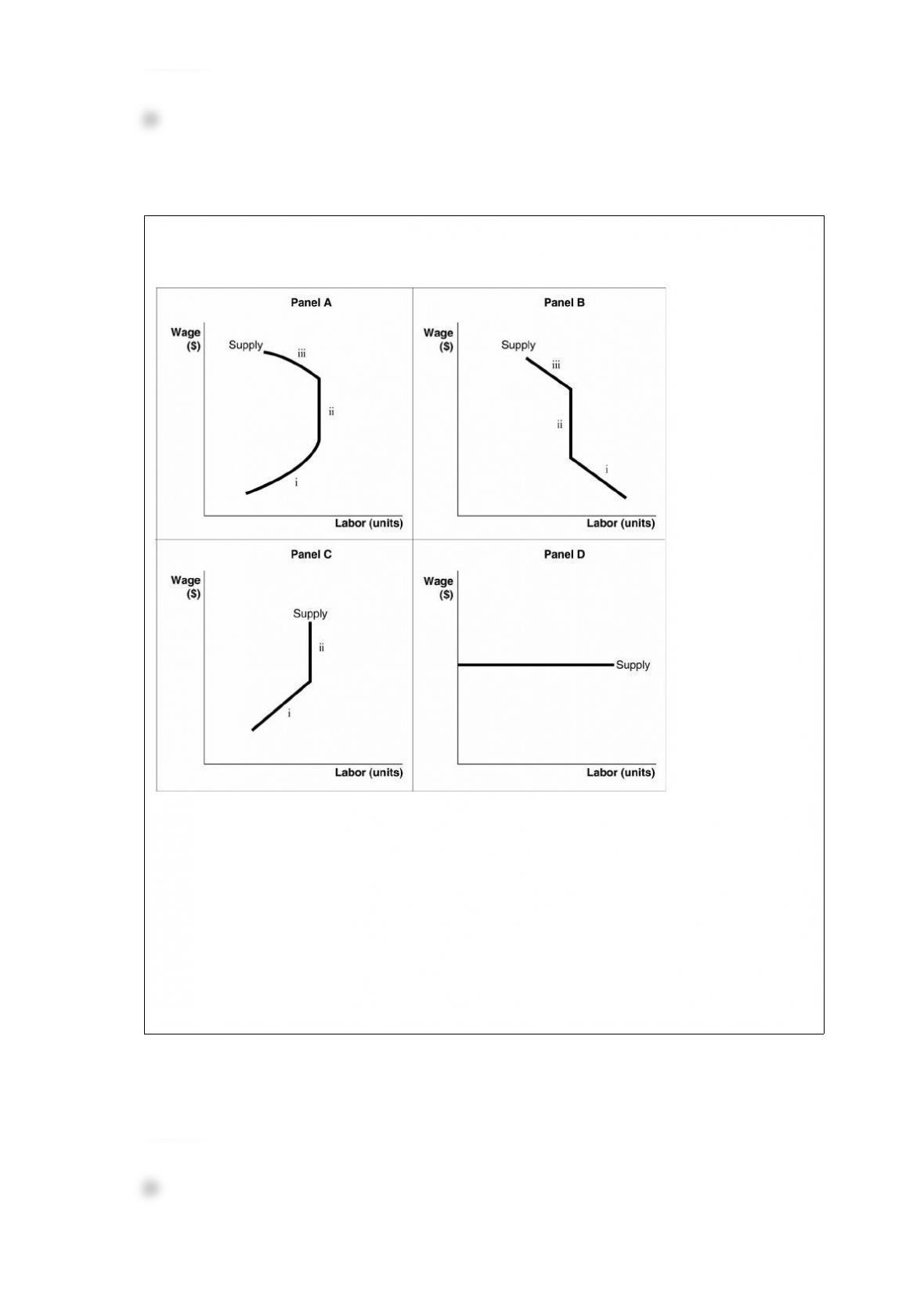
Figure 17-3
InPanel A, at high wages (segment iii)
A) the price of leisure is rising relative to the price of labor.
B) the price of leisure is falling relative to the price of labor.
C) laborers work more as wages increase.
D) labor suppliers take more leisure as wages increase.
Answer:
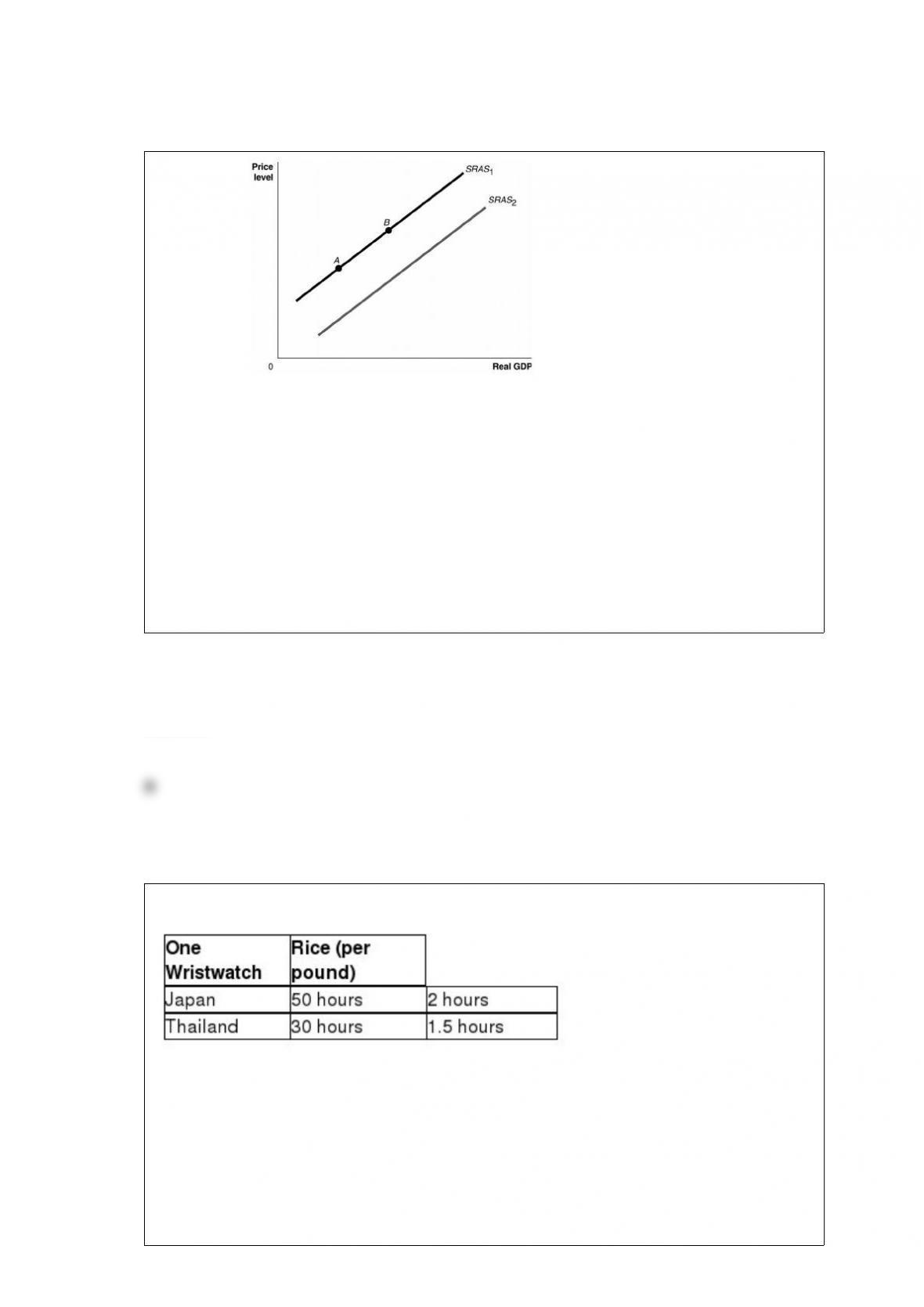
Figure 13-2
Ceteris paribus, a decrease in the labor force would be represented by a movement
from
A) SRAS1 to SRAS2.
B) SRAS2 to SRAS1.
C) point A to point B.
D) point B to point A.
Answer:
Table 2-20
Table 2-20 shows the number of labor hours required to produce a wristwatch and a
pound of rice in Japan and Thailand.
Thailand has a comparative advantage in the production of
A) rice.
B) wristwatches.
C) both products.
D) neither product.
Answer:
In preparing their estimates of the stimulus package’s effect on GDP, Obama
administration economists estimated a government purchases multiplier of 1.57. This
indicates that a ________ increase in government purchases would increase equilibrium
real GDP by $157 billion
A) $1 billion.
B) $10 billion.
C) $100 billion.
D) $157 billion.
Answer:
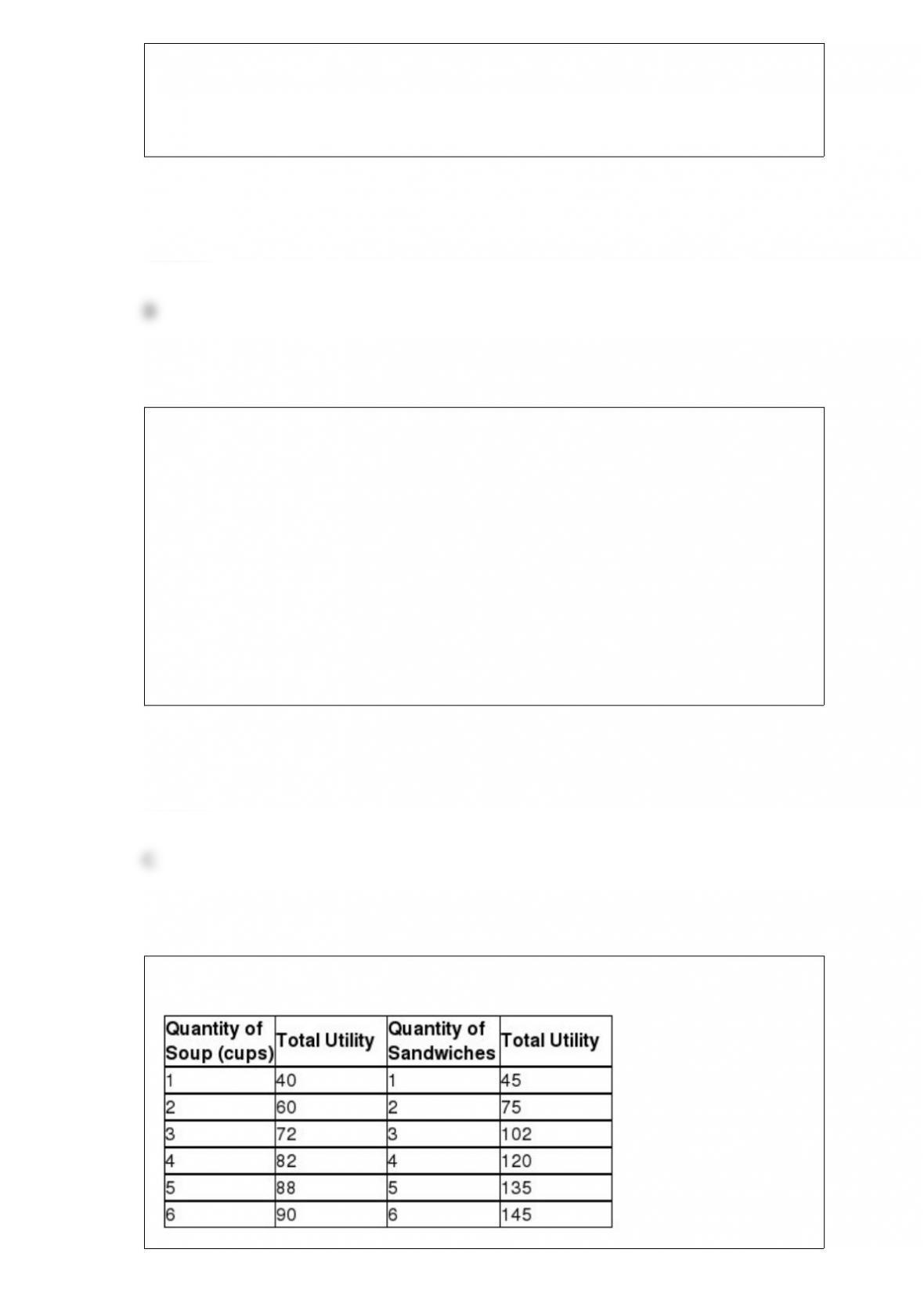
Table 10-2

Table 10-2 above shows Keira’s utility from soup and sandwiches. The price of soup is
$2 per cup and the price of a sandwich is $3. Keira has $18 to spend on these two
goods. What is Keira’s marginal utility per dollar spent on the third cup of soup?
A) 72 units of utility
B) 36 units of utility
C) 12 units of utility
D) 6 units of utility
Answer:
If buyers of a monopolistically competitive product feel the products of different sellers
are strongly differentiated, then the demand for each seller’s product is
A) perfectly inelastic.
B) perfectly elastic.
C) relatively inelastic.
D) relatively elastic.
Answer:
Increases in the price level will
A) lower consumption because goods and services are less affordable.
B) raise consumption because some goods and services are more affordable.
C) raise consumption because real wealth increases.
D) lower consumption because real wealth decreases.
Answer:
Goods that have been produced but not yet sold are referred to as
A) understocks.
B) inventories.
C) pre-sold goods.
D) capital goods.
Answer:
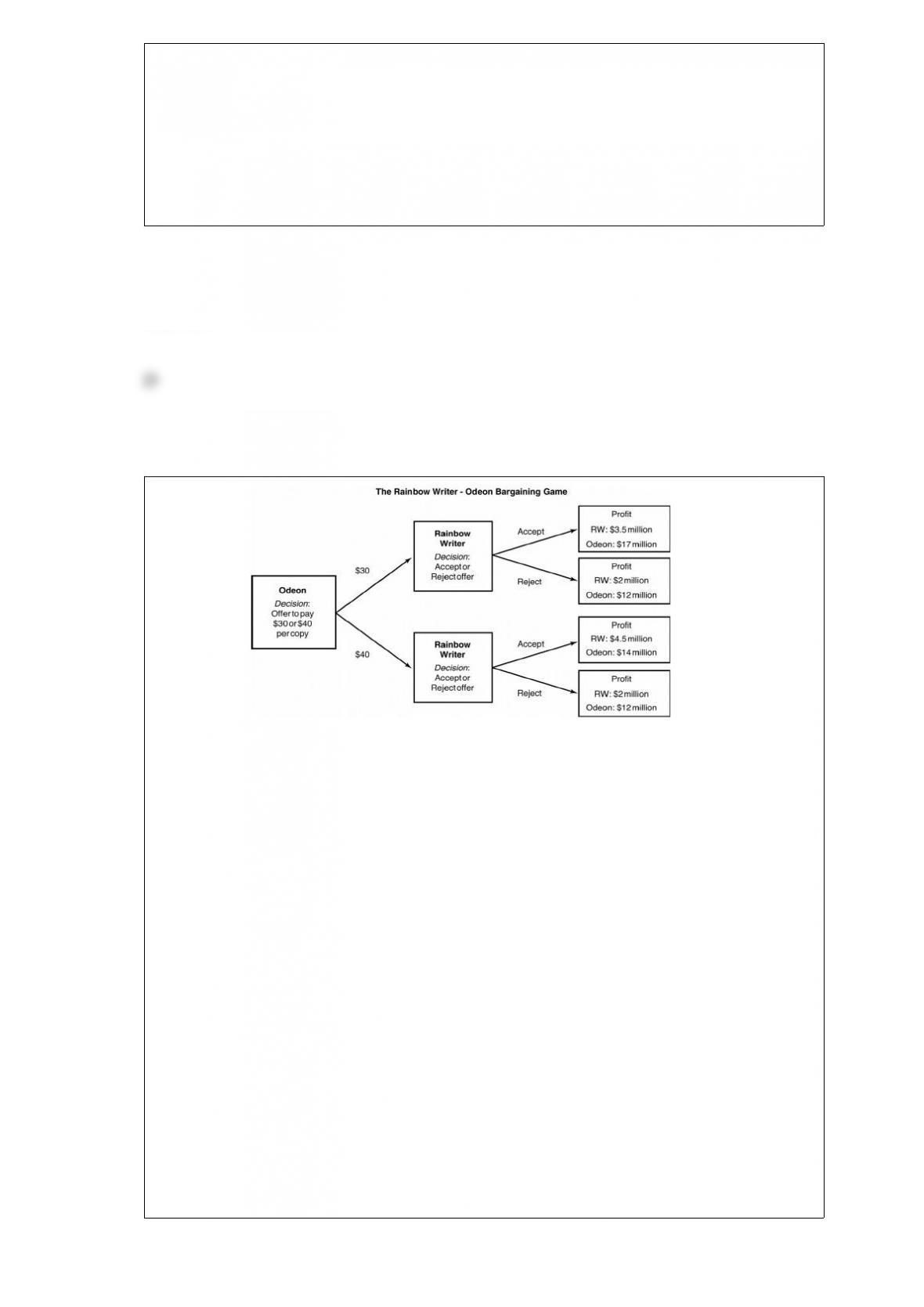
Figure 2-18
One segment of the circular flow diagram in the Figure shows the flow of funds from
market F to economic agents G. The funds represent spending on goods and services.
What is market F and who are economic agents G?
A) F = factor markets; G = households
B) F = product markets; G = households
C) F = factor markets; G = firms
D) F = product markets; G = firms
Answer:
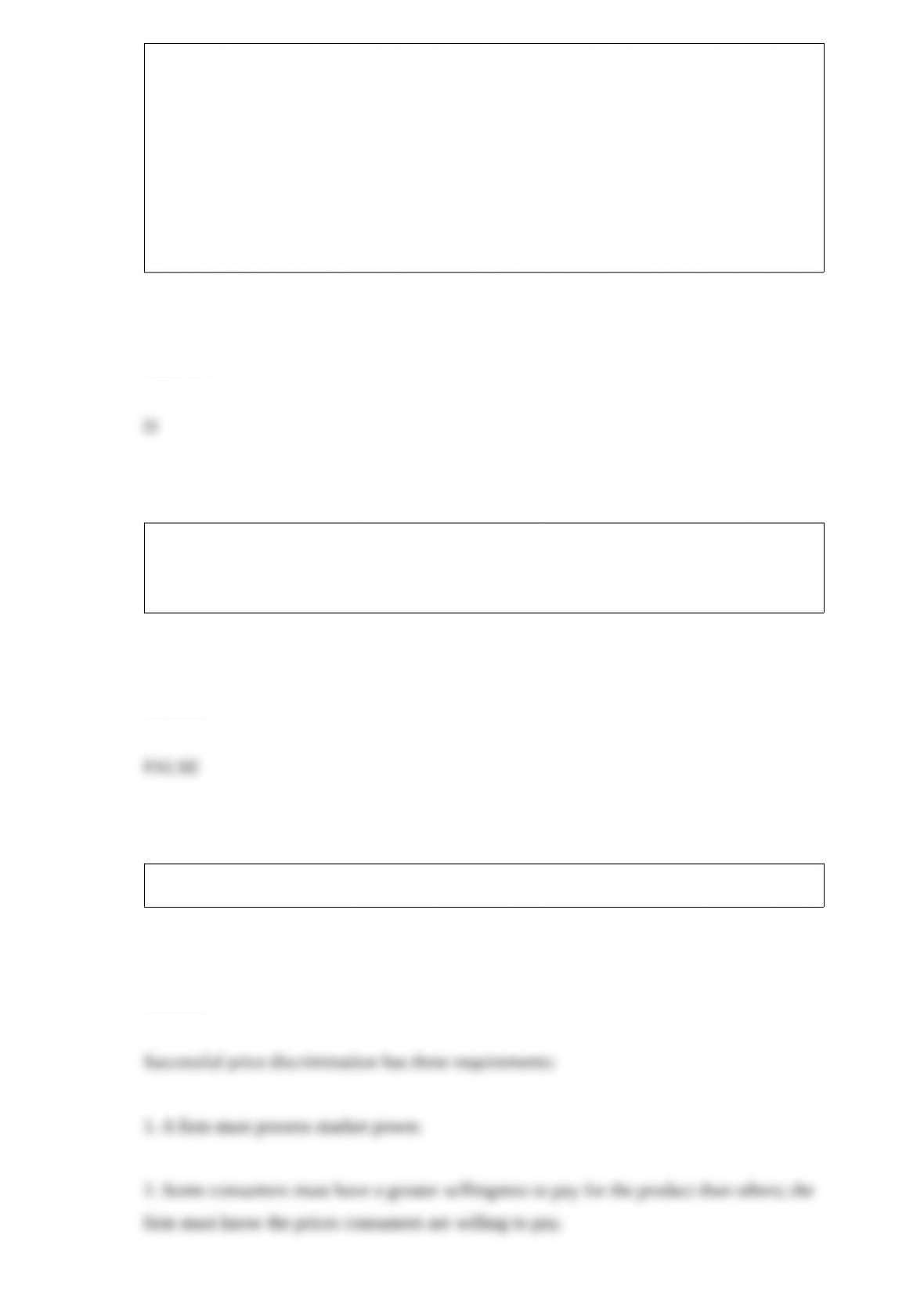
Figure 14-4 Rainbow Writer
(RW) is a small online company selling a highly rated software package for printing
color labels directly onto CDs. The firm currently earns a profit of $2 million per year
selling its package exclusively on its Web site. Odeon, the producer of the most popular
software package for editing and burning CDs and DVDs, has expressed interest in
bundling Rainbow Writer’s product into its own package. Odeon expects that bundling
would further boost its sales and allow it to sell the new bundled product at a higher
price, thus raising its profits beyond its current profit of $12 million. Figure 14-4 shows
the decision tree for the Rainbow Writer-Odeon bargaining game.
In a real world situation involving Rainbow Writer and Odeon, what scenario below
might permit Rainbow Writer to rationally refuse an offer from Odeon of $40 per copy
of the software package?
A) Odeon is also negotiating with Swift Colors, Rainbow Writer’s chief rival.
B) Odeon’s competitors are also interested in bundling Rainbow Writer’s software.
C) Odeon hires a software developer to begin developing its own proprietary color
labeling software.
D) Odeon is considering new distribution outlets for its products.

Answer:
What is the principal-agent problem?
A) It is a problem caused by a person (principal) who hires an agent to act on his behalf
but is unwilling to delegate authority to the agent to carry out the task in the best
possible way.
B) It is a problem caused by agents pursuing their own interests rather than the interests
of the principals who hired them.
C) It is a problem of the power system of boss and subordinate where the boss
(principal) exerts influence over his subordinates (agents) using punishment or threat.
D) It is a problem that exists when a person (principal) has more information about the
task than the agent he hires to perform the task.
Answer:
In a small economy in 2013, aggregate expenditure was $800 million while GDP that
year was $850 million. Which of the following can explain the difference between
aggregate expenditure and GDP that year?
A) Aggregate expenditure is always less than GDP in developed countries.
B) Firm investment in inventories was less than anticipated in 2013.
C) Firm investment in inventories was greater than anticipated in 2013.
D) Aggregate expenditure is always less than GDP in developing countries.
Answer:

The United States is called a debtor nation because
A) it has a large current account deficit and is simultaneously funded by foreign
investment.
B) it has a large financial account deficit that is used to fund the current account deficit.
C) it has a large balance of payments deficit that is used to fund the current account
deficit.
D) U.S. capital outflows are much greater than U.S. capital inflows.
Answer:
On an isoquant/isocost graph, the least cost input combination of producing a given
output is
A) any point on the isoquant curve.
B) any point on the isocost curve.
C) given by the tangency between the isoquant curve and the isocost line.
D) one of the intercept values on the graph.
Answer:
The basic activity of a firm is
A) to set the prices of its products as high as possible.
B) to compete with other firms that produce similar products.
C) to provide jobs for its employees.
D) to use inputs to produce outputs of goods and services.
Answer:
As predicted by the economic growth model, countries that start with lower levels of
GDP per capita always grow faster than countries that start with higher levels of GDP
per capita.
Answer:
What three conditions must hold for a firm to successfully price discriminate?
Answer:
Explain the difference between a firm’s revenue and its profit.
Answer:
What are the four functions of money? Can something be considered money if it does
not fulfill all four functions?
Answer:
How will a government-imposed minimum wage affect the equilibrium level of
employment in a competitive labor market and in a monopsony labor market?
Answer:
What is marginal utility and what is the law of diminishing marginal utility?
Answer: