
Figure 13-2
Ceteris paribus, an increase in the expected price of an important natural resource
would be represented by a movement from
A) SRAS1 to SRAS2.
B) SRAS2 to SRAS1.
C) point A to point B.
D) point B to point A.
How are intermediate goods treated in the calculation of GDP?
A) Their value is not counted separately, but included as part of the value of the final
good for which they are an input.
B) Their value is counted separately, and their value is also included as part of the value
of the final good for which they are an input.
C) Their value is counted separately, but is not included as part of the value of the final
good for which they are an input.
D) They are included only if they are imported.
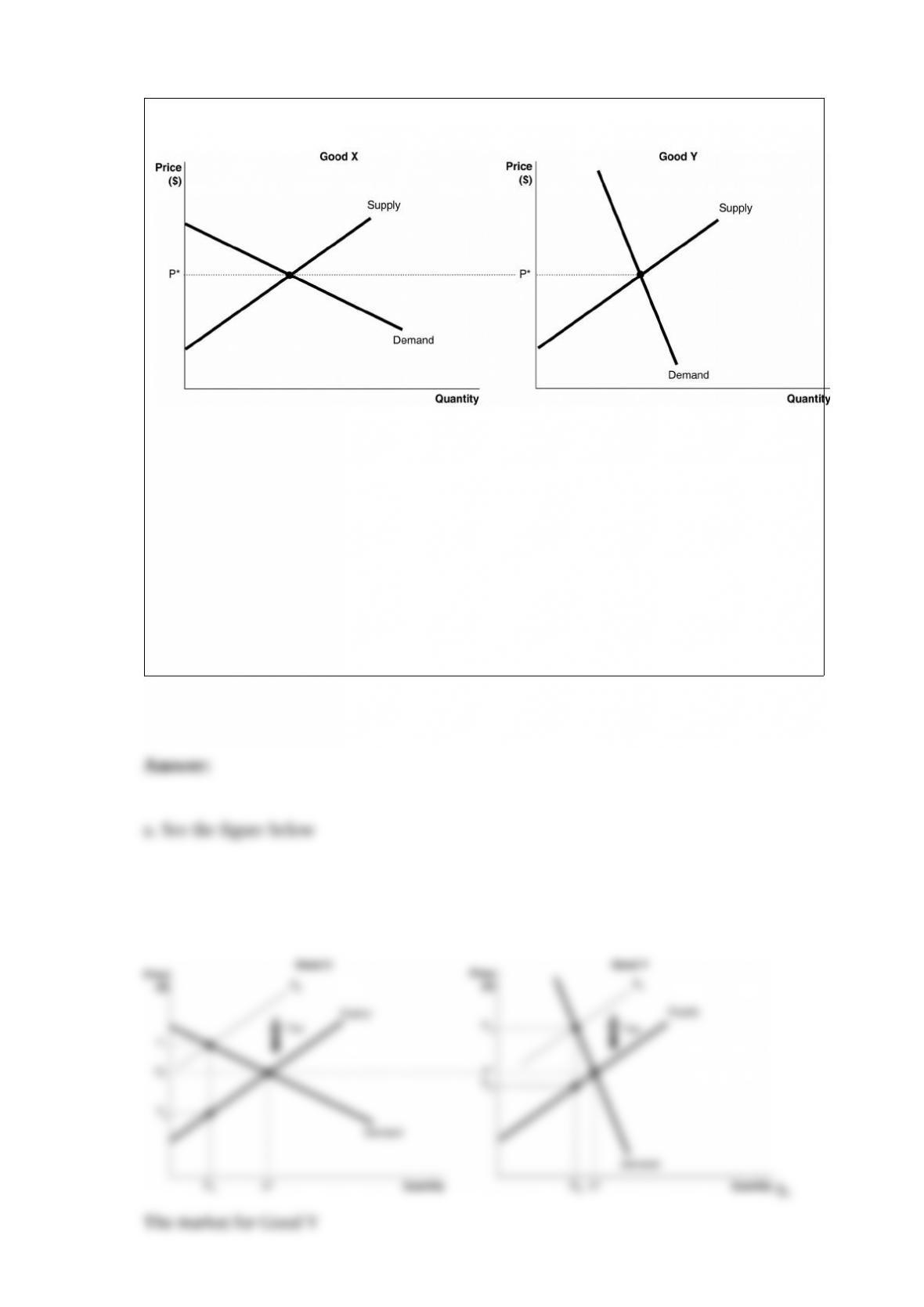
Figure 4-19
The figure above illustrates the markets for two goods, Good X and Good Y. Suppose
an identical dollar tax is imposed in each market.
a. Compare the consumer burden and producer burden in each market. Illustrate your
answer graphically.
b. If the goal of the government is to raise revenue with minimum impact to quantity
consumed, in which market should the tax be imposed?
c. If the goal of the government is to discourage consumption, in which market should
the tax be imposed?

The Federal Trade Commission (FTC) Act
A) gave the FTC full power to regulate mergers.
B) closed the loopholes in the Sherman and Clayton Acts.
C) divided authority to police mergers between the FTC and the Department of Justice.
D) prohibited charging buyers different prices if the result would reduce competition.
The best measure of the standard of living is
A) nominal GDP.
B) real GDP.
C) nominal GDP per capita.
D) real GDP per capita.
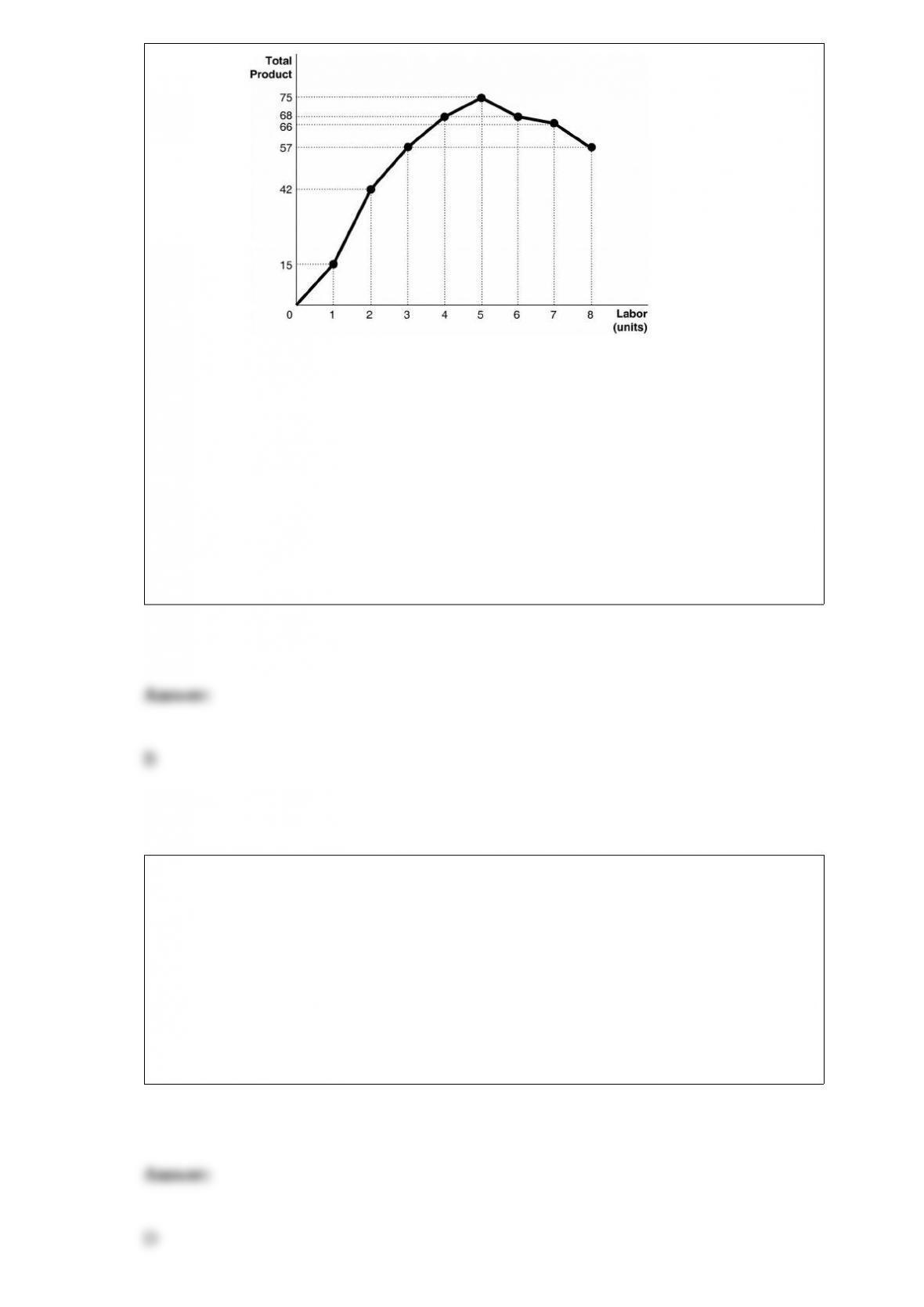
Figure 11-1
In a diagram that shows the marginal product of labor on the vertical axis and labor on
the horizontal axis, the marginal product curve
A) never intersects the horizontal axis.
B) intersects the horizontal axis at a point corresponding to the 5th worker.
C) intersects the horizontal axis at a point corresponding to the 6th worker.
D) intersects the horizontal axis at a point corresponding to the 8th worker.
When the aggregate demand curve and the short-run aggregate supply curve intersect,
A) the long-run aggregate supply curve must also intersect at the same point.
B) inflation must be increasing.
C) structural and frictional unemployment equal zero.
D) the economy is in short-run macroeconomic equilibrium.

Which of the following leads to an increase in real GDP?
A) a decrease in government spending
B) a decrease in the inflation rate in other countries, relative to the inflation in the
United States
C) a decrease in interest rates
D) Households have increasingly pessimistic expectations about future income.
Suppose the Fed purchases Treasury Securities. Interest rates in the United States will
________ and the U.S. dollar will ________ against foreign currencies.
A) decrease; appreciate
B) decrease; depreciate
C) increase; depreciate
D) increase; appreciate
Between 1980 and 2011, income inequality in the United States has increased in part
due to rapid technological change. How does technological change contribute to income
inequality?
A) Advancements in technology displace skilled and unskilled workers in certain fields,

leading to higher unemployment rates.
B) Technology complements the skills of the well-educated while rendering redundant
the labor services of unskilled and low-skilled workers. This causes a decline in the
wages of low and unskilled workers relative to other workers.
C) The opportunity cost of investing in technology is investments in human capital. The
resulting decrease in labor’s marginal productivity has led to lower wages.
D) Technological change favors the owners of capital and since high income individuals
tend to own capital, income inequality is further exacerbated.
Each point on a ________ curve shows the willingness of consumers to purchase a
product at different prices.
A) demand
B) supply
C) production possibilities
D) marginal cost
Table 9-12 Production and
Consumption Production
Without Trade With Trade
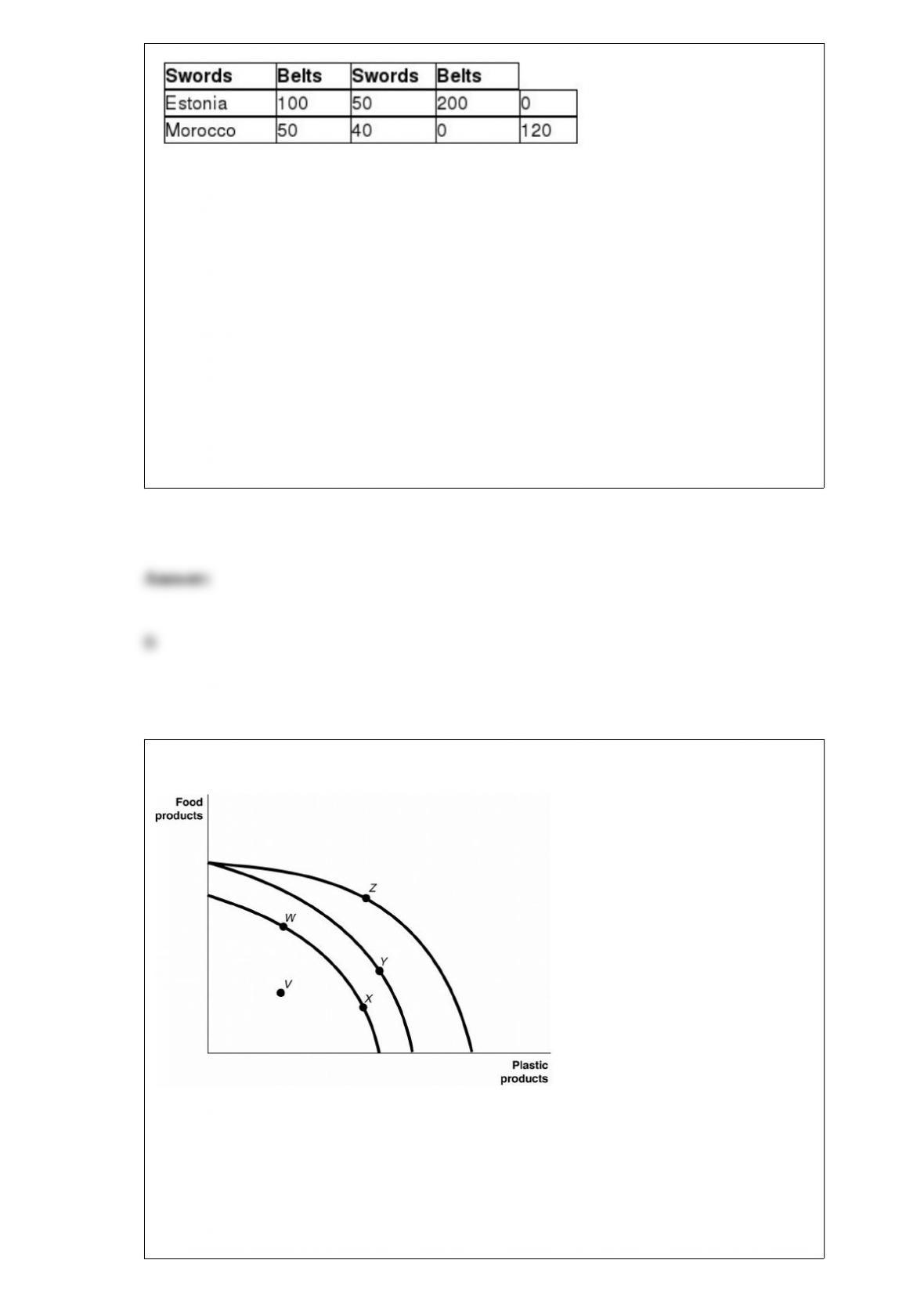
Estonia and Morocco can produce both swords and belts. Table 9-12 shows the
production and consumption quantities without trade, and the production numbers with
trade.
If the actual terms of trade are 1 belt for 1.5 swords and 70 belts are traded, how many
swords will Morocco gain compared to the “without trade” numbers?
A) 5
B) 45
C) 105
D) 150
Figure 2-4
Figure 2-4 shows various points on three different production possibilities frontiers for
a nation. Consider the following events:
a. an increase in the unemployment rate
b. general technological advancement

c. a decrease in consumer wealth Which of the events listed above could cause a
movement from X to V?
A) a only
B) a and b only
C) b and c only
D) a, b, and c
Most recessions in the United States since World War II have begun with
A) a decline in residential construction.
B) a rapid increase in the price level.
C) a substantial number of bank failures.
D) a stock market crash.
In the United States from 1981 to 2011, deaths from diabetes increased largely due to
the effects of
A) foreign-produced insulin.
B) stress in the workplace.
C) a larger immigrant population.

D) increasing obesity.
If preferences are transitive, indifference curves
A) intersect at the equilibrium consumption bundle.
B) intersect at the optimum consumption bundle.
C) intersect where the marginal rate of substitution for each indifference curve is equal.
D) do not intersect.