1) since world war ii:
a.north korea’s command economy has significantly outperformed south korea’s market
economy.
b.south korea’s command economy has significantly outperformed north korea’s market
economy.
c.north korea’s market economy has significantly outperformed south korea’s command
economy.
d.south korea’s market economy has significantly outperformed north korea’s command
economy.
2)
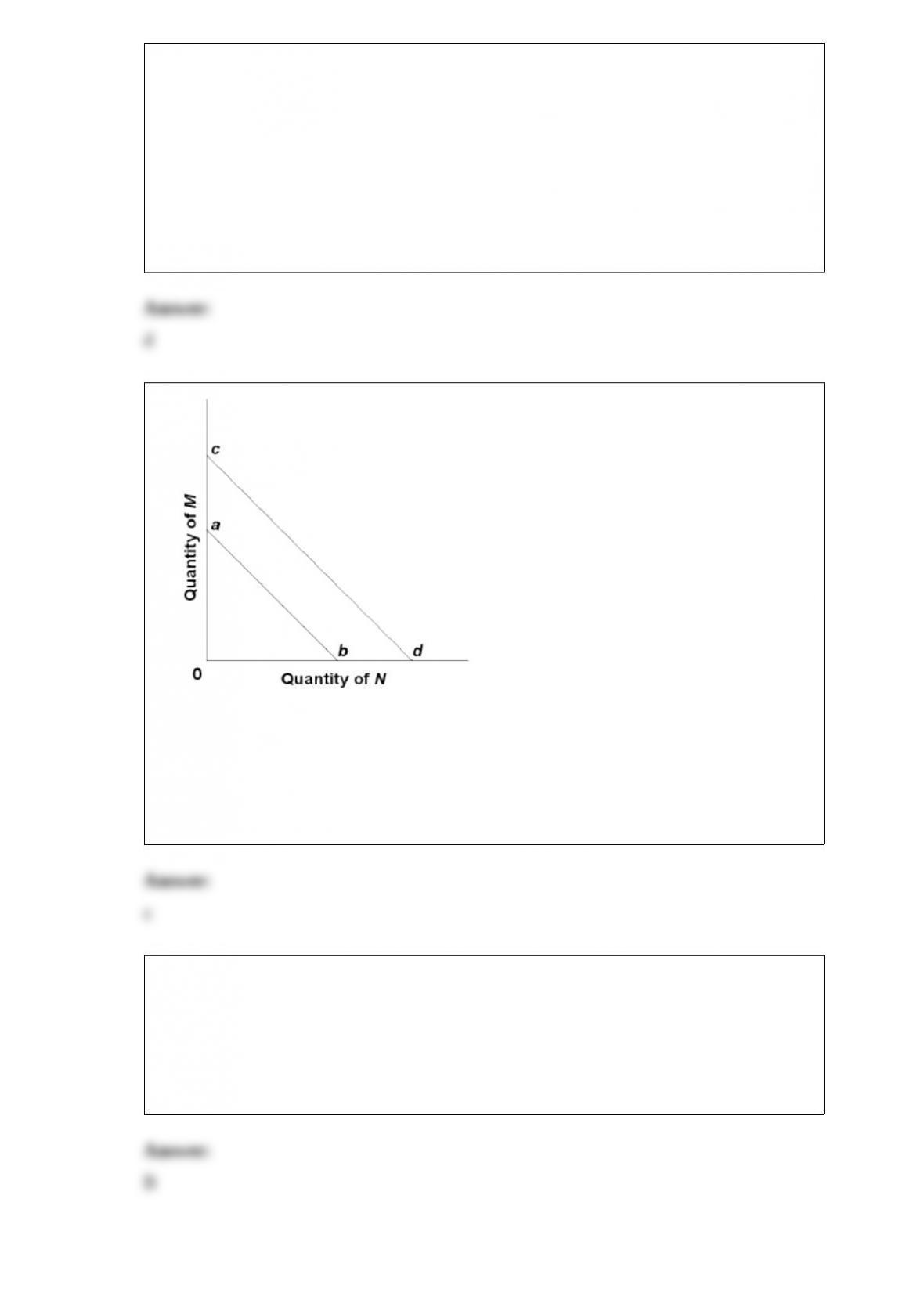
the shift of the budget line from cd to ab in the above figure is consistent with:
a.decreases in the prices of both m and n.
b.an increase in the price of m and a decrease in the price of n.
c.a decrease in money income.
d.an increase in money income.
3) The political business cycle refers to the possibility that:
A.incumbent politicians will be reelected regardless of the state of the economy.
B.politicians will manipulate the economy to enhance their chances of being reelected.
C.there is more inflation during Democratic administrations than during Republican
administrations.
D.recessions coincide with election years.

4) economies of scale refer to:
a.the idea that proprietorships are less bureaucratic and therefore more efficient than
corporations.
b.public investments in highways, schools, utilities, and such.
c.the fact that large producers may be able to use more efficient technologies than
smaller producers.
d.the reallocation of labor from less-productive to more-productive uses.
5) (Consider This) Changing World Technologies receives a $42 per barrel federal
biofuel subsidy. The purpose of such a subsidy would be to:
A.reduce the demand for biofuel.
B.reduce the supply of biofuel.
C.increase the demand for biofuel.
D.increase the supply of biofuel.
6) the invisible-hand concept suggests that:
a.market failures imply the need for a national economic plan.
b.big businesses are inherently more efficient than small businesses.
c.the competitiveness of a capitalistic market economy invariably diminishes over time.
d.assuming competition, private and public interests will coincide.
7) if the equilibrium exchange rate changes so that it takes more dollars to buy a british
pound, then:
a.the dollar has appreciated in value.
b.americans will import more british goods.
c.the british will buy fewer u.s. goods.
d.the dollar has depreciated in value.
8) most economists contend that:
a.noncash transfers are more efficient than cash transfers.
b.noncash transfers are less efficient than cash transfers.
c.noncash and cash transfers are equally efficient.
d.government can assess consumer preferences better than can consumers themselves.
9) Countries engaged in international trade specialize in production based on:
A.relative levels of GDP.
B.comparative advantage.
C.relative exchange rates.
D.relative inflation rates.
10) Which of the following is not an effect of an above-equilibrium price support on a
farm product?
A.the quantity supplied of the product will exceed the quantity demanded
B.the consumer will pay a lower price and consume more of the product
C.the gross incomes of farmers will rise
D.the consumer will pay a higher price and consume less of the product
11) which of the following is assumed in constructing a typical production possibilities
curve?
a.the economy is using its resources inefficiently.
b.resources are perfectly shiftable among alternative uses.
c.production technology is fixed.
d.the economy is engaging in international trade.
12)
the above diagram shows two product demand curves. on the basis of this diagram we
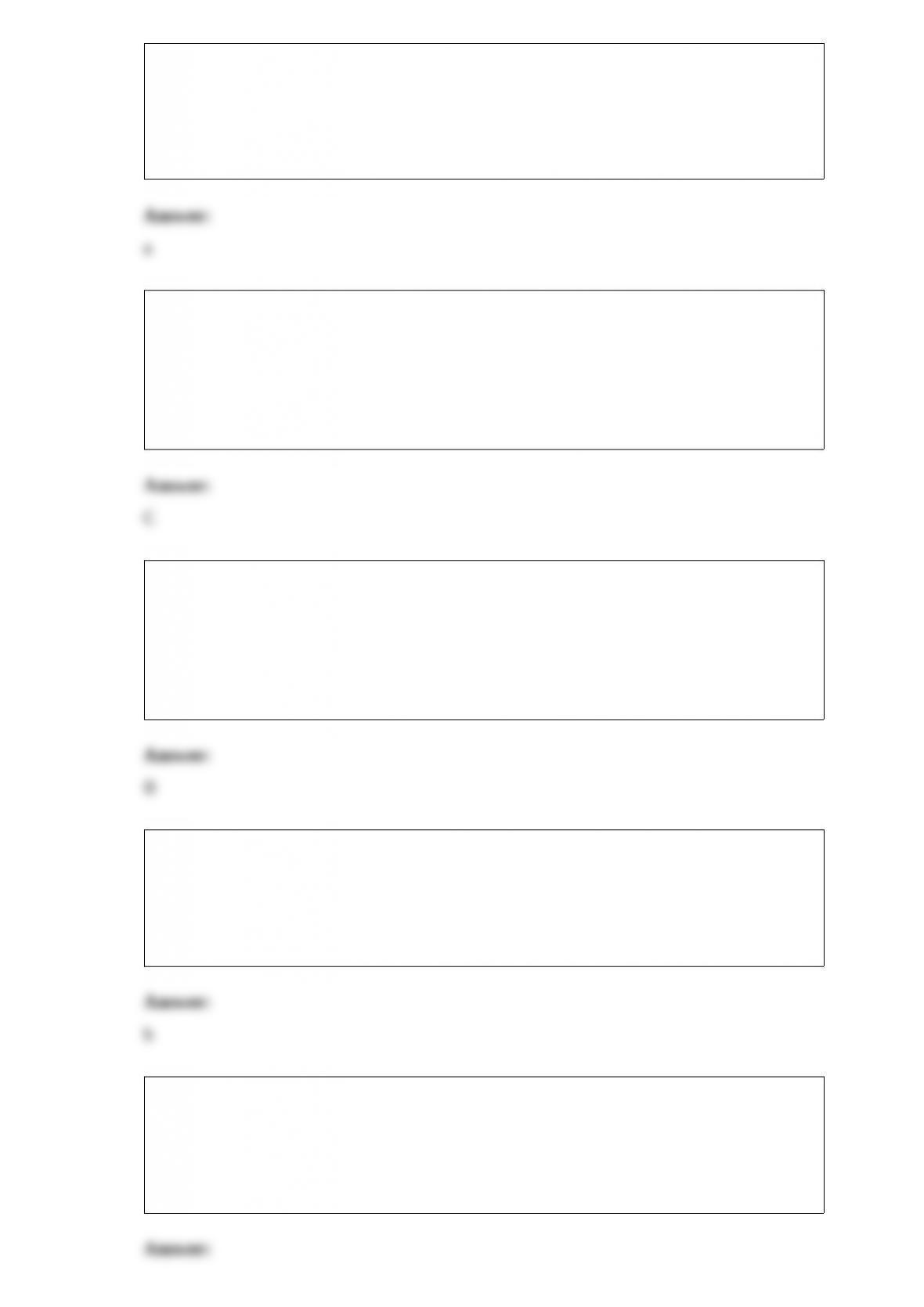
can say that:
a.over range p1p2price elasticity of demand is greater for d1than for d2.
b.over range p1p2price elasticity of demand is greater for d2than for d1.
c.over range p1p2price elasticity is the same for the two demand curves.
d.not enough information is given to compare price elasticities.
13) Which of the following does not help explain growing income inequality since
1970?
A.the entry of unusually large numbers of less experienced workers into the labor force
B.increased import competition
C.declining returns to education as college graduates have trouble finding jobs
D.increased immigration
14) Sales and excise taxes are levied on retailers, but retailers add these taxes to the
prices of their products. This illustrates the:
A.equal sacrifice theory of taxation.
B.shifting of taxes to consumers.
C.ability-to-pay principle of taxation.
D.benefits-received principle of taxation.
15) in national income accounting, consumption expenditures include purchases of:
a.both new and used consumer goods.
b.automobiles for personal use, but not houses.
c.consumer durable and nondurable goods, but not services.
d.consumer nondurable goods and services, but not consumer durable goods.
16) If government uses fiscal policy to restrain cost-push inflation, we can expect:
A.the unemployment rate to rise.
B.the unemployment rate to fall.
C.the aggregate demand curve to shift rightward.
D.tax-rate declines and increases in government spending.
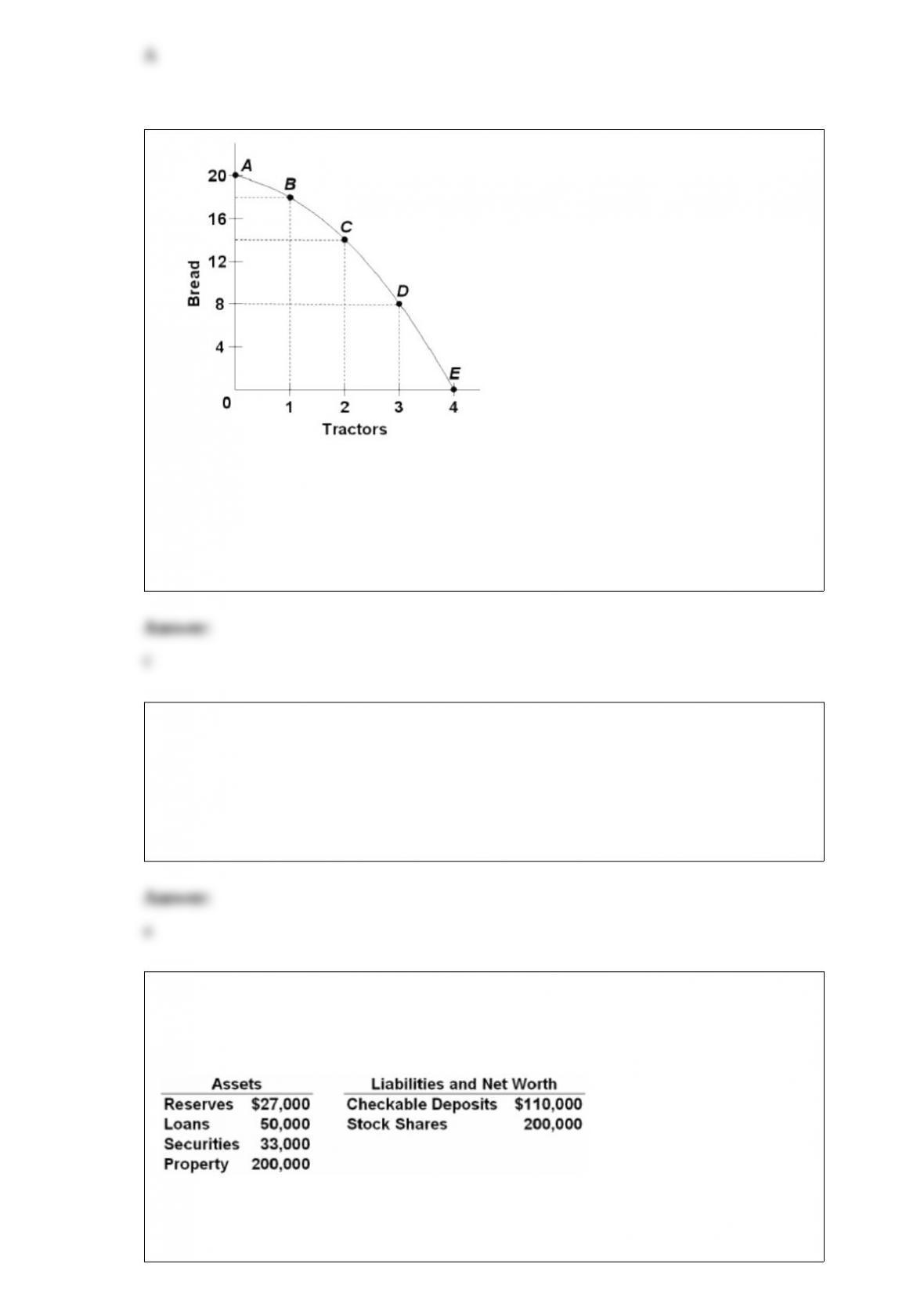
17)
refer to the above diagram. starting at point e, the production of successive units of
bread will cost:
a.a constant 8 units of tractors.
b.a constant 6 units of tractors.
c.1/8, 1/6, 1/4, and 1/2 units of tractors.
d.1/2, 1/4, 1/6, and 1/8 units of tractors.
18) (consider this) in recent years:
a.unemployment rates in europe have been higher than in the united states.
b.the natural rate of unemployment in europe has fallen sharply.
c.europe has had strong economic growth and low unemployment rates.
d.european nations have greatly reduced their unemployment rates by reducing
minimum wages, welfare benefits, and government restrictions against firing workers.
19) The following balance sheet for the ABC National Bank in answering the next
question(s). Assume the required reserve ratio is 20 percent.
Refer to the above data. This bank can safely expand its loans by a maximum of:
A.$7,000.
B.$25,000.

C.$12,000.
D.$5,000.