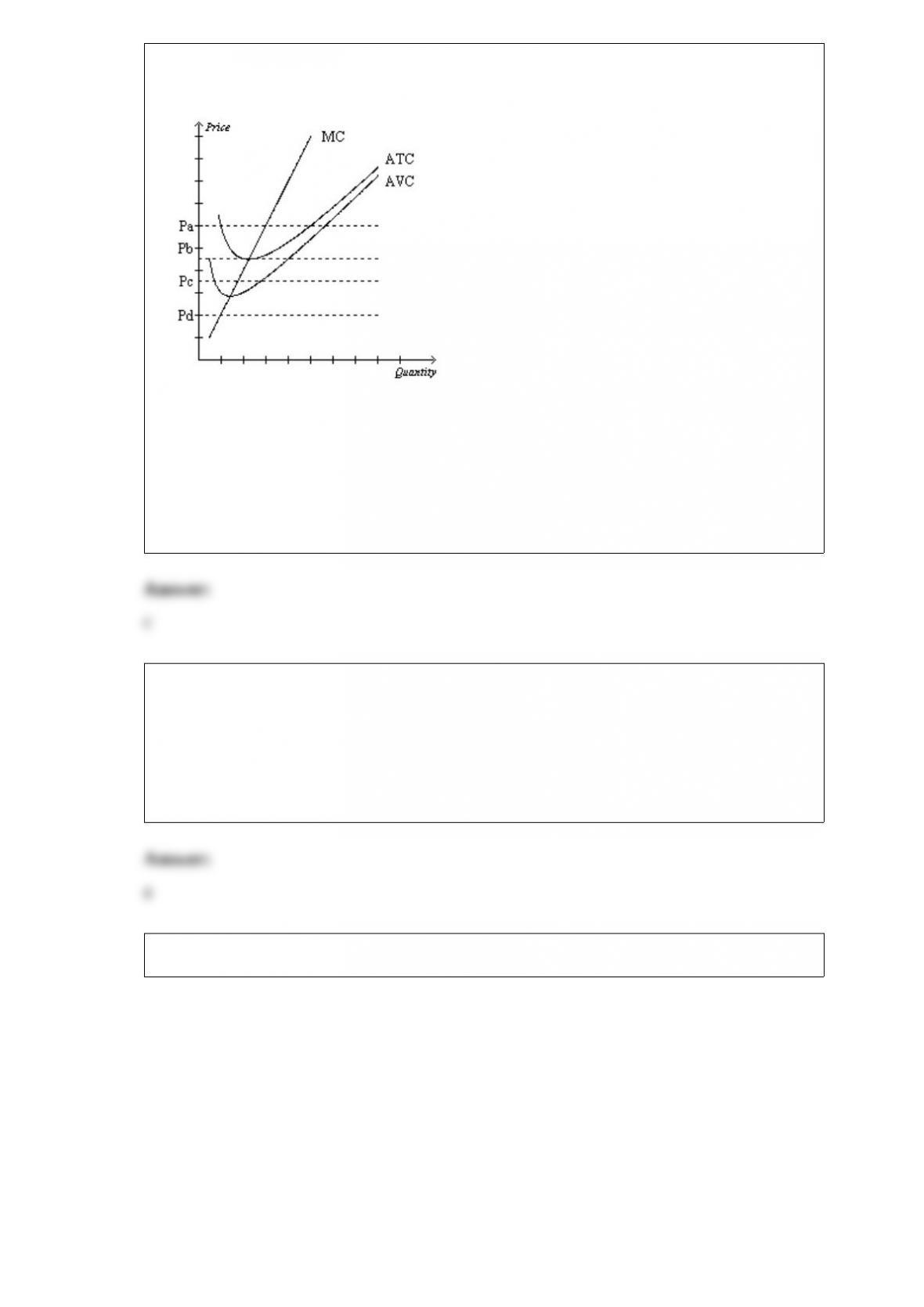
1) Figure 14-2
Suppose a firm operating in a competitive market has the following cost curves:
Which of the four prices corresponds to a firm earning negative economic profits in the
short run but trying to remain open?
a.Pa
b.Pb
c.Pc
d.Pd
2) When a country abandons a no-trade policy, adopts a free-trade policy, and becomes
an importer of a particular good,
a.consumer surplus increases and total surplus increases in the market for that good.
b.consumer surplus increases and total surplus decreases in the market for that good.
c.consumer surplus decreases and total surplus increases in the market for that good.
d.consumer surplus decreases and total surplus decreases in the market for that good.
3) Figure 7-12
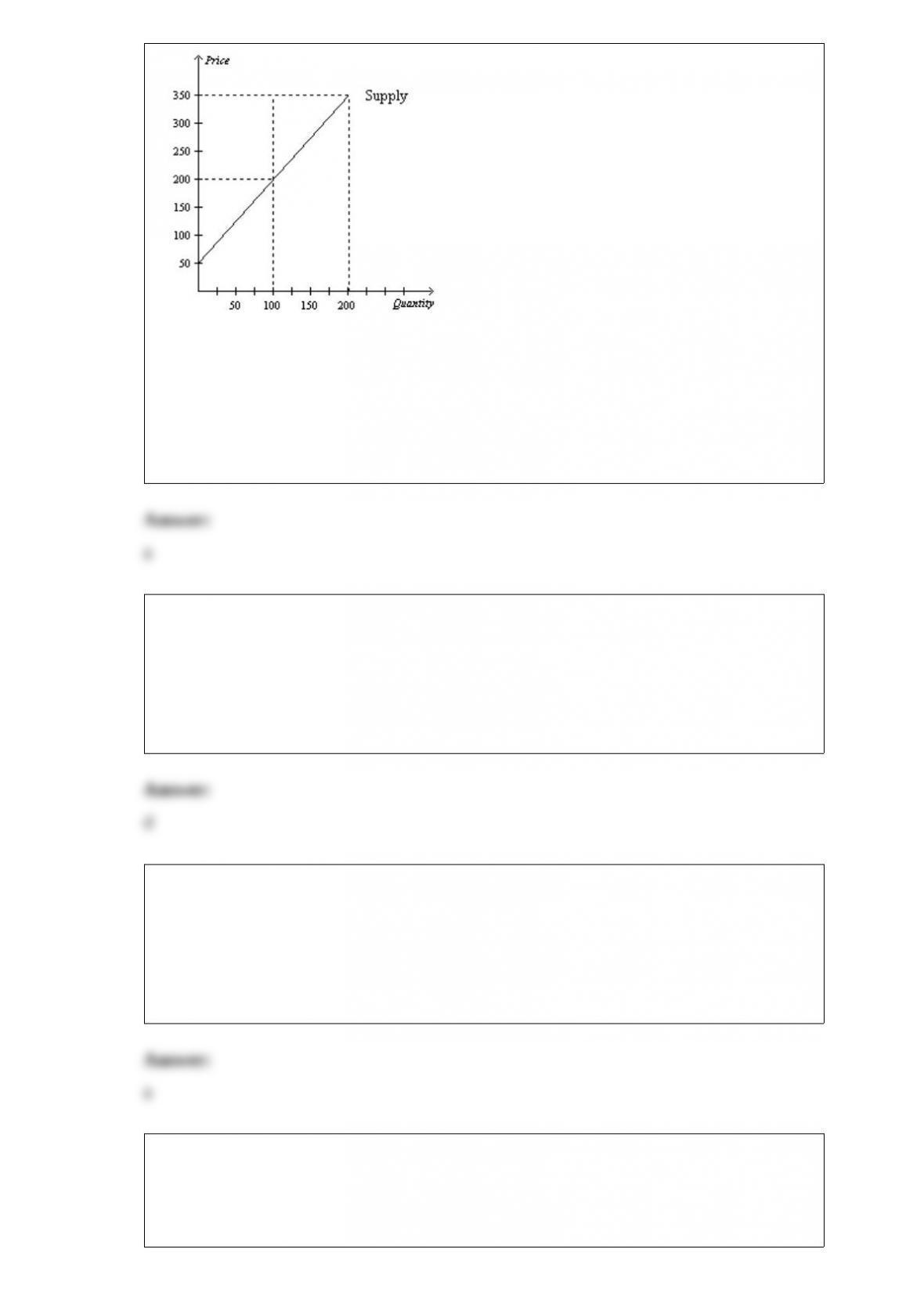
If the equilibrium price rises from $200 to $350, what is the additional producer surplus
to initial producers?
a. $15,000
b. $3,750
c. $7,500
d. $30,000
4) The Tragedy of the Commons for sheep grazing on common land can be eliminated
by the government doing each of the following except
a.assigning land property rights.
b.auctioning off sheep-grazing permits.
c.taxing sheep flocks.
d.subsidizing sheep flocks.
5) If an employer’s behavior is supportive of the theory of efficiency wages, the
employer would
a.raise wages in an effort to increase worker effort.
b.raise wages in an effort to increase worker turnover.
c.decrease wages in an effort to increase worker effort.
d.decrease wages in an effort to increase worker turnover.
6) Another term for equilibrium price is
a.dynamic price.
b.market-clearing price.
c.quantity-defining price.
d.balance price.
7) Value of marginal product is defined as the additional
a.output a firm would receive after hiring one more factor of production.
b.cost of hiring one more factor of production.
c.revenue earned from selling one more unit of product.
d.revenue earned from hiring one more factor of production.
8) One thing economists do to help them understand how the real world works is
a.make assumptions.
b.ignore the past.
c.try to capture every aspect of the real world in the models they construct.
d.All of the above are correct.
9) Suppose when a monopolist produces 50 units its average revenue is $8 per unit, its
marginal revenue is $4 per unit, its marginal cost is $4 per unit, and its average total
cost is $3 per unit. What can we conclude about this monopolist?
a.The monopolist is currently maximizing profits, and its total profits are $200.
b.The monopolist is currently maximizing profits, and its total profits are $250.
c.The monopolist is not currently maximizing its profits; it should produce more units
and charge a lower price to maximize profit.
d.The monopolist is not currently maximizing its profits; it should produce fewer units
and charger a higher price to maximize profit.
10) Both private goods and club goods are
a.rival in consumption.
b.nonrival in consumption.
c.excludable.
d.nonexcludable.
11) The term market failure refers to
a.a situation in which the market on its own fails to allocate resources efficiently.
b.an unsuccessful advertising campaign which reduces demand for a product.
c.a situation in which competition among firms becomes ruthless.
d.a firm which is forced out of business because of losses.
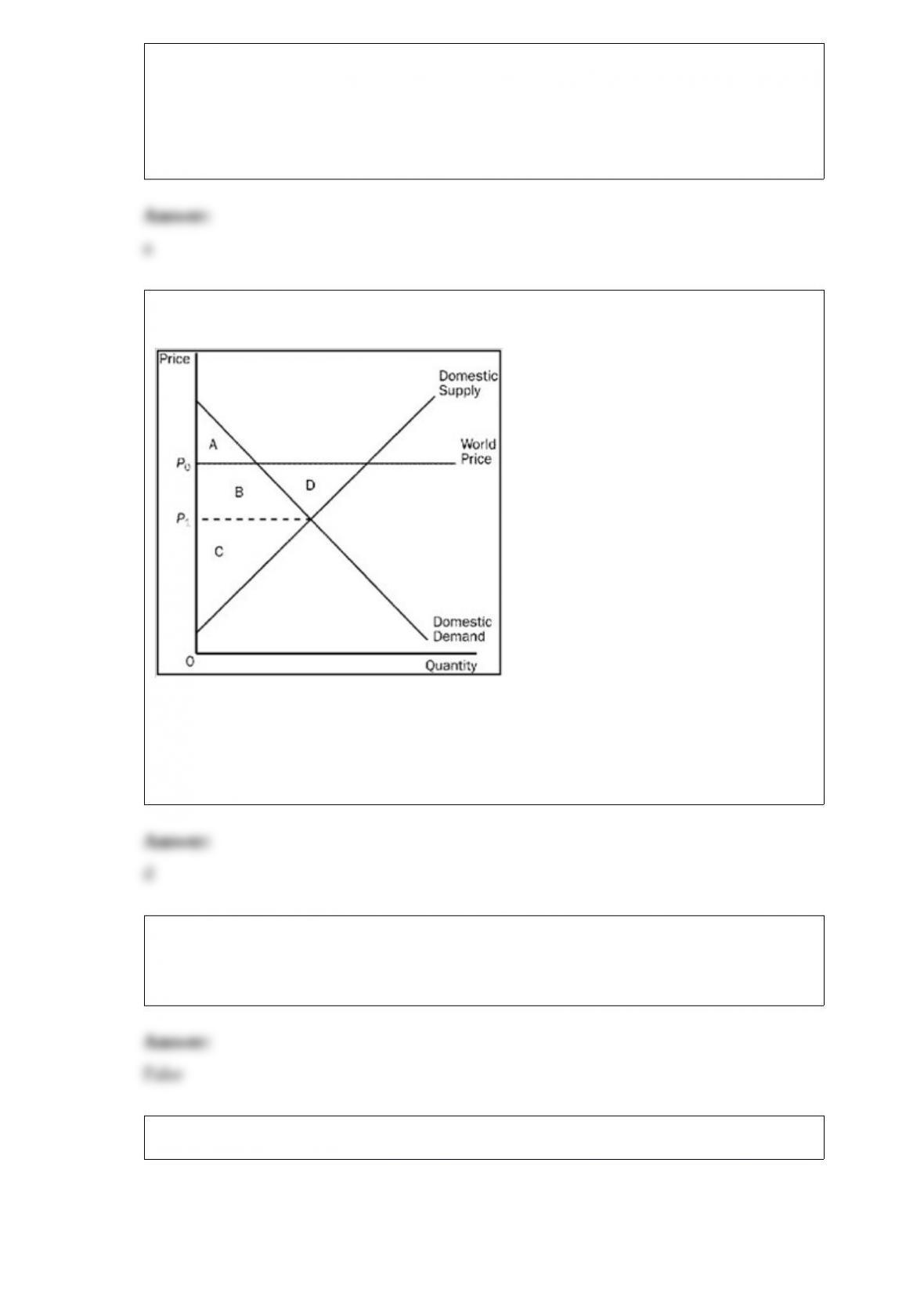
12) Figure 9-9
Producer surplus in this market before trade is
a.A.
b.A + B.
c.B + C + D.
d.C.
13) Equality means distributing society’s resources in the most efficient manner.
a.True
b.False
14) Figure 7-9
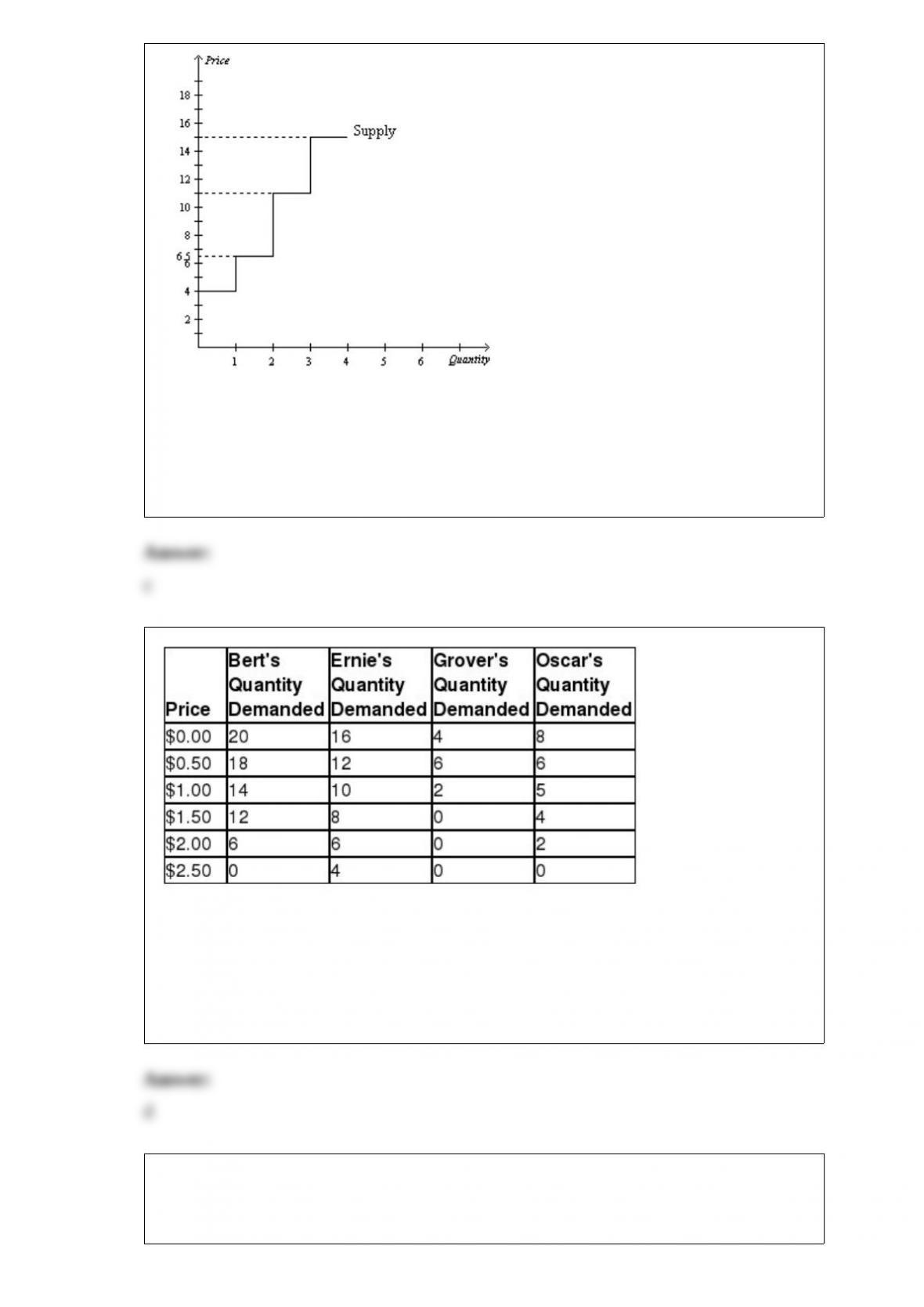
If the price of the good is $14, then producer surplus is
a. $19.50.
b. $22.50.
c. $20.50.
d. $25.00.
15) If these are the only four buyers in the market, then the market quantity demanded
at a price of $1 is
a.4 units.
b.7.75 units.
c.14 units.
d.31 units.
16) It is illegal in the United States for firms to pay different employees different wages
for doing the same job.
a.True

b.False