
If the price of propane-fueled gas grills was to decrease, then
A) the demand for propane would decrease.
B) the demand for propane would increase.
C) the quantity of propane demanded would increase.
D) the quantity of propane demanded would decrease.
If an increase in autonomous consumption spending of $10 million results in a $50
million increase in equilibrium real GDP, then
A) the MPC is 0.5
B) the MPC is 0.75
C) the MPC is 0.8
D) the MPC is 0.9
If the quantity of goods and services produced in the economy decreases,
A) it may be possible for real GDP to increase.
B) real GDP would certainly increase.
C) it may be possible for nominal GDP to increase.
D) nominal GDP would certainly increase.
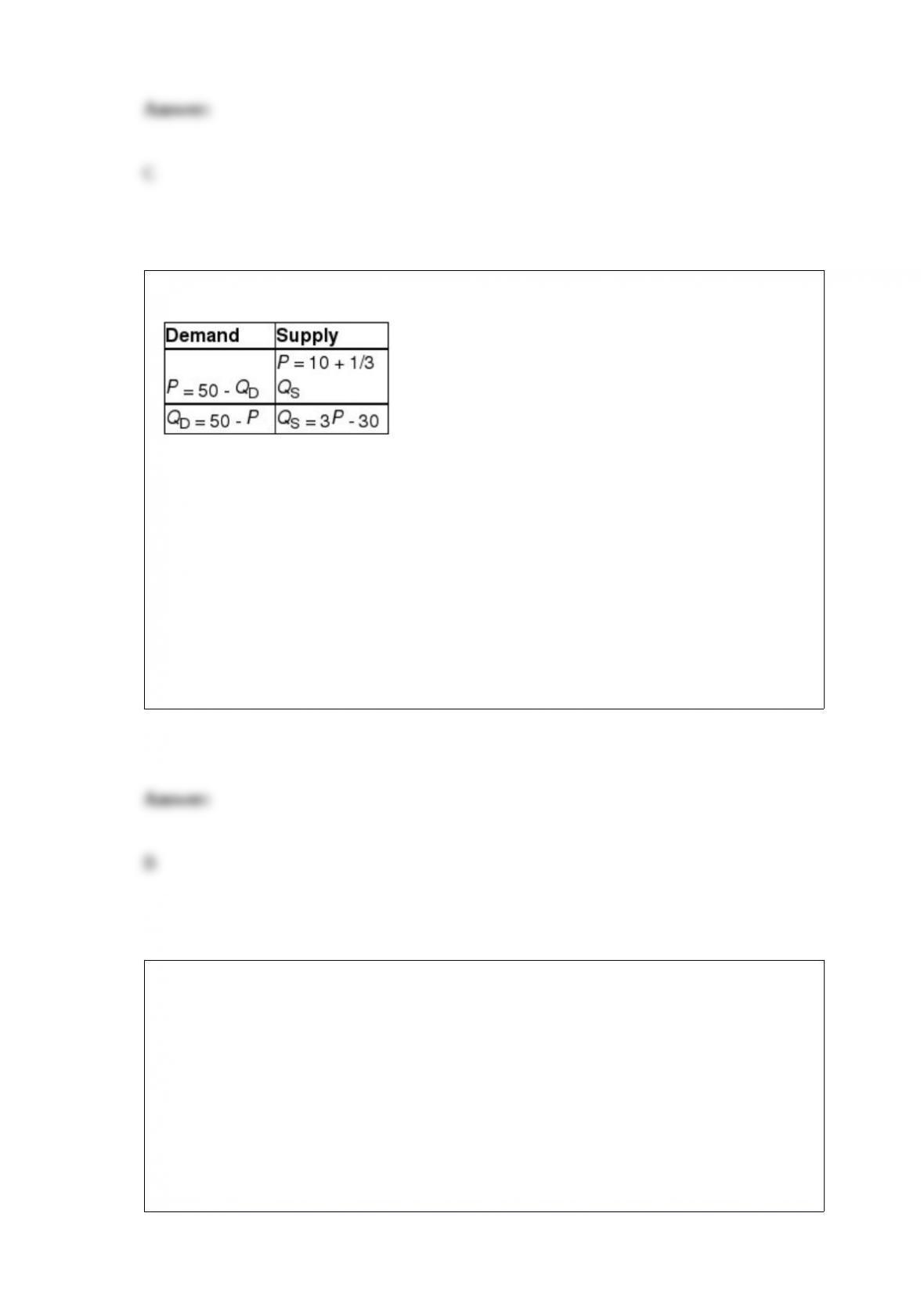
Table 4-6
Refer to Table 4-6. The equations above describe the demand and supply for Aunt
Maud’s Premium Hand Lotion. The equilibrium price and quantity for Aunt Maud’s
lotion are $20 and 30 thousand units. What is the value of consumer surplus?
A) $300 thousand
B) $450 thousand
C) $900 thousand
D) $1,500 thousand
Which of the following price indices comes closest to measuring the cost of living of
the typical household?
A) GDP deflator
B) producer price index
C) consumer price index
D) household price index
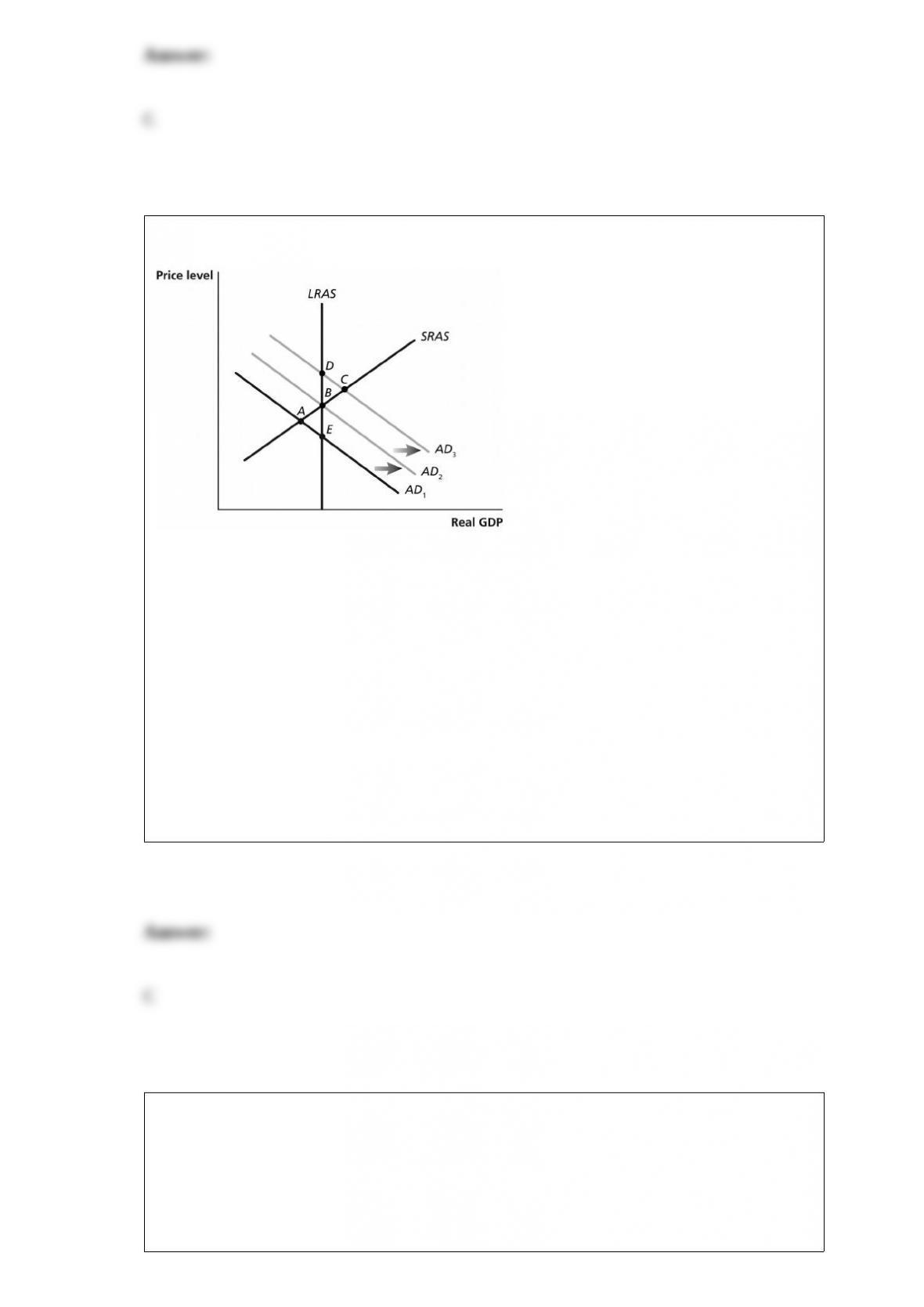
Figure 16-1
Refer to Figure 16-1. Suppose the economy is in short-run equilibrium above potential
GDP and no policy is pursued. Using the static AD–AS model in the figure above, this
would be depicted as a movement from
A) D to C.
B) A to E.
C) C to D.
D) C to B.
E) E to A.
In 1960, out-of-pocket spending on health care in the United States was
A) 2.2 percent.
B) 6 percent.
C) 48 percent.
D) 64 percent.
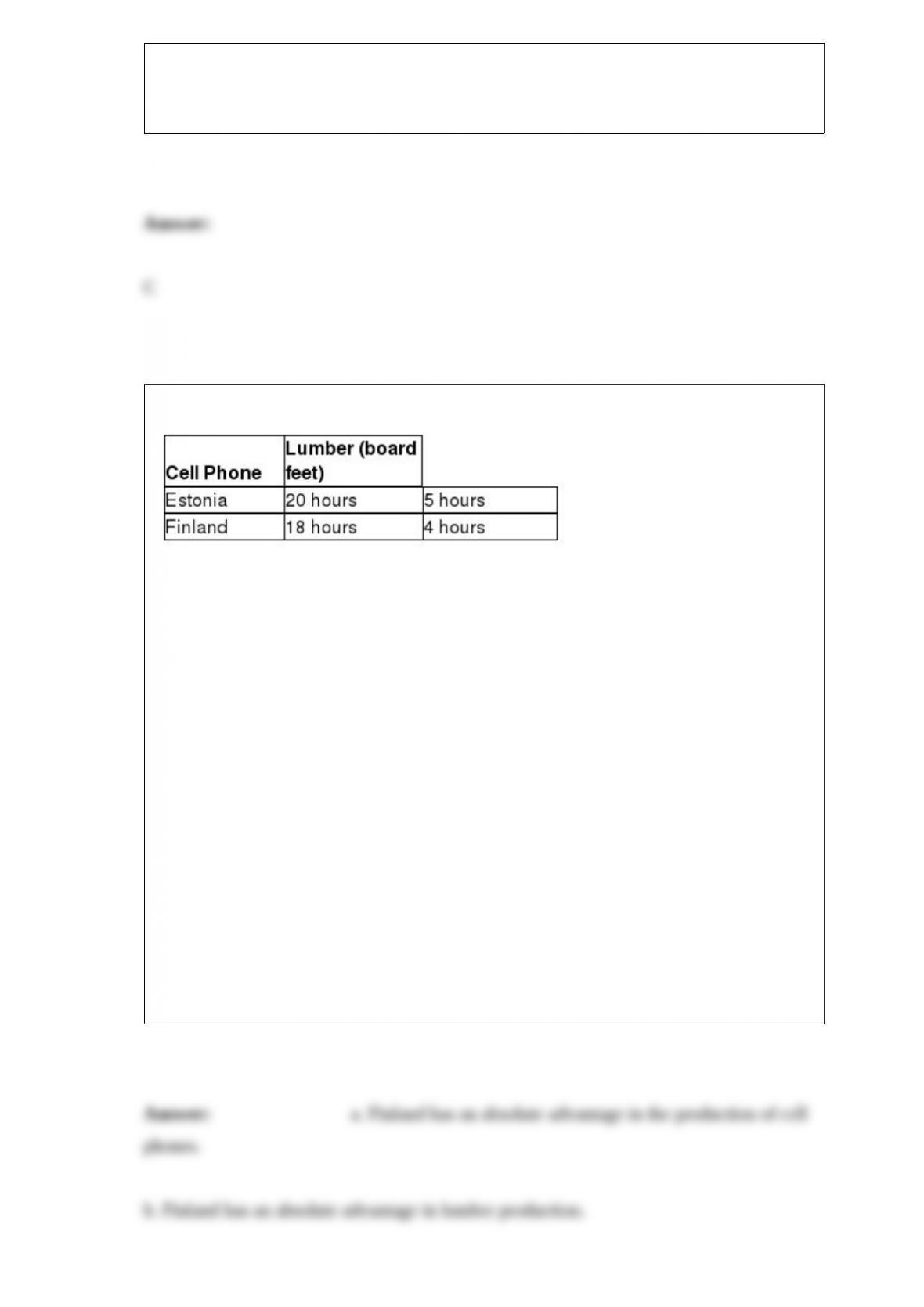
Table 2-11
Refer to Table 2-11. This table shows the number of labor hours required to produce a
cell phone and a board foot of lumber in Estonia and Finland.
a. Which country has an absolute advantage in the production of cell phones?
b. Which country has an absolute advantage in the production of lumber?
c. What is Estonia’s opportunity cost of producing one cell phone?
d. What is Finland’s opportunity cost of producing one cell phone?
e. What is Estonia’s opportunity cost of producing one board foot of lumber?
f. What is Finland’s opportunity cost of producing one board foot of lumber?
g. If each country specializes in the production of the product in which it has a
comparative advantage, who should produce cell phones?
h. If each country specializes in the production of the product in which it has a
comparative advantage, who should produce lumber?

Which of the following statements is true?
A) A decrease in demand causes a decrease in equilibrium price; the decrease in price
causes supply to decrease.
B) A decrease in demand causes equilibrium price to fall; the decrease in price then
results in a decrease in quantity supplied.
C) If both demand and supply increase, there must be an increase in equilibrium price;
equilibrium quantity may either increase or decrease.
D) If demand decreases and supply increases one cannot determine if equilibrium price
will increase or decrease without knowing which change is greater.
How are intermediate goods treated in the calculation of GDP?
A) Their value is not counted separately, but included as part of the value of the final
good for which they are an input.
B) Their value is counted separately, and their value is also included as part of the value
of the final good for which they are an input.

C) Their value is counted separately, but is not included as part of the value of the final
good for which they are an input.
D) They are included only if they are imported.
Increasing the amount of consumption spending and reducing the amount of savings
________ investment expenditures, and ________ long-run economic growth in the
economy.
A) increases; increases
B) increases; decreases
C) decreases; increases
D) decreases; decreases
Figure 4-6
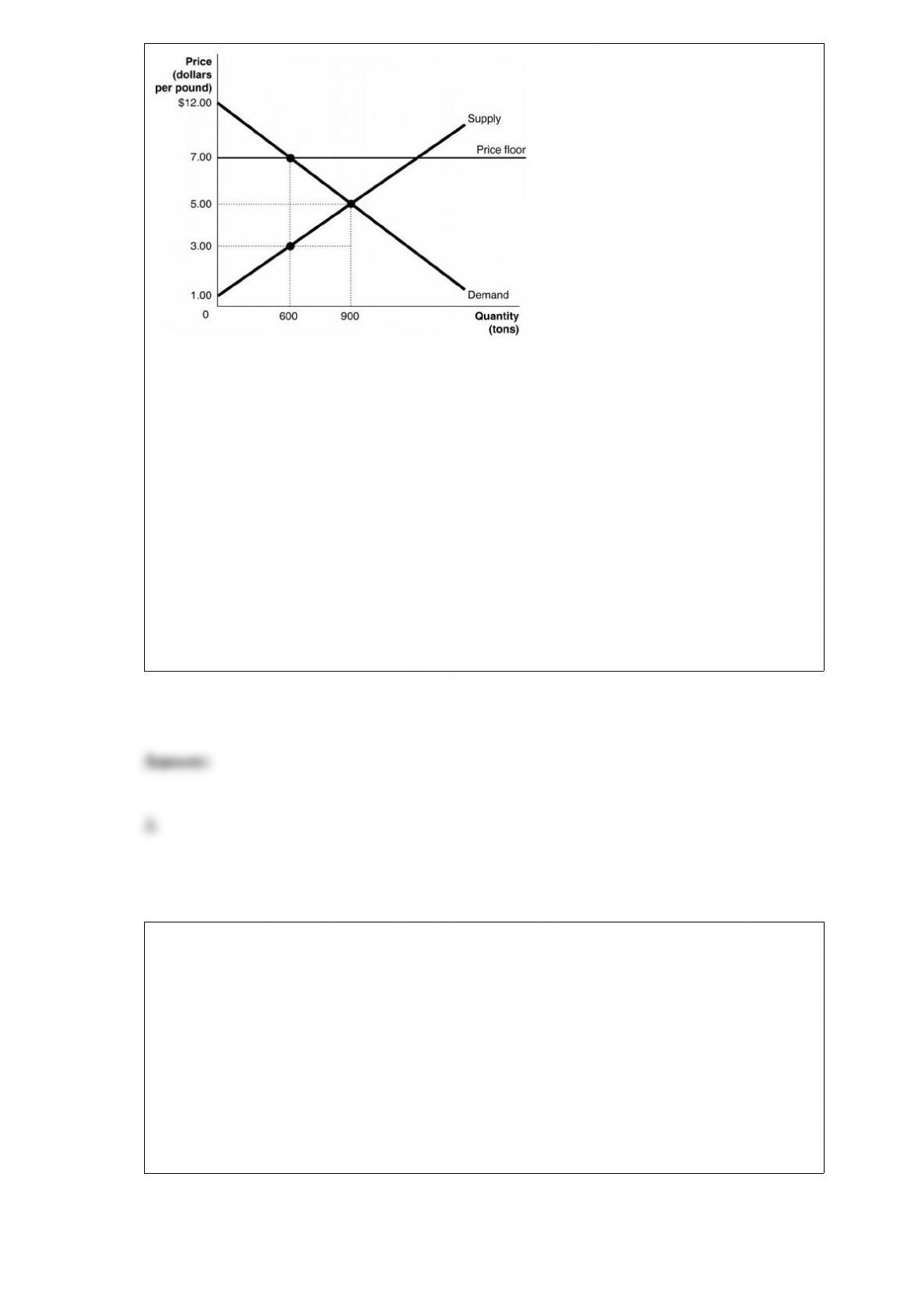
Figure 4-6 shows the demand and supply curves for the coffee market. The government
believes that the equilibrium price is too low and tries to help almond growers by
setting a price floor at $7.00.
Refer to Figure 4-6. What is the value of consumer surplus after the imposition of the
price floor?
A) $1,500
B) $2,700
C) 4,500
D) $5,700
Which of the following describes the growth in real GDP per person in the United
States from 1900 to the present?
A) It has decreased.
B) It has increased by more than eight times.
C) It has doubled.
D) It has increased twenty times.