
1) Firms that operate in perfectly competitive markets try to
a.maximize revenues.
b.maximize profits.
c.equate marginal revenue with average total cost.
d.All of the above are correct.
2) Scenario 9-1
The before-trade domestic price of peaches in the United States is $40 per bushel. The
world price of peaches is
$52 per bushel. The U.S. is a price-taker in the market for peaches.
If trade in peaches is allowed, the
a.price paid by American consumers of peaches is unchanged relative to the no-trade
situation.
b.total well-being of American producers of peaches is diminished relative to the
no-trade situation.
c.total well-being of American consumers of peaches is enhanced relative to the
no-trade situation.
d.total well-being of the United States is enhanced relative to the no-trade situation.
3) A tax places a wedge between the price buyers pay and the price sellers receive.
a.True
b.False
4) Utilitarians believe that the proper goal of the government is to maximize the sum of
the utilities of everyone in society.
a.True
b.False
5) Suppose that an economics department is offering a student exchange program with a
university in Giessen, Germany. If the department requires students to submit an essay
in order to be considered for the program, the essay may be an example of
a.signaling.
b.screening.
c.monitoring.
d.principal.
6) Data for the United States suggests that about how many millionaires inherited their
fortunes?
a.one in seven
b.one in five
c.one in three
d.one in two
7) Choosing not to attend a concert so that you can study for your exam is an example
of a tradeoff.
a.True
b.False
8) Panel (a)
Panel (b)
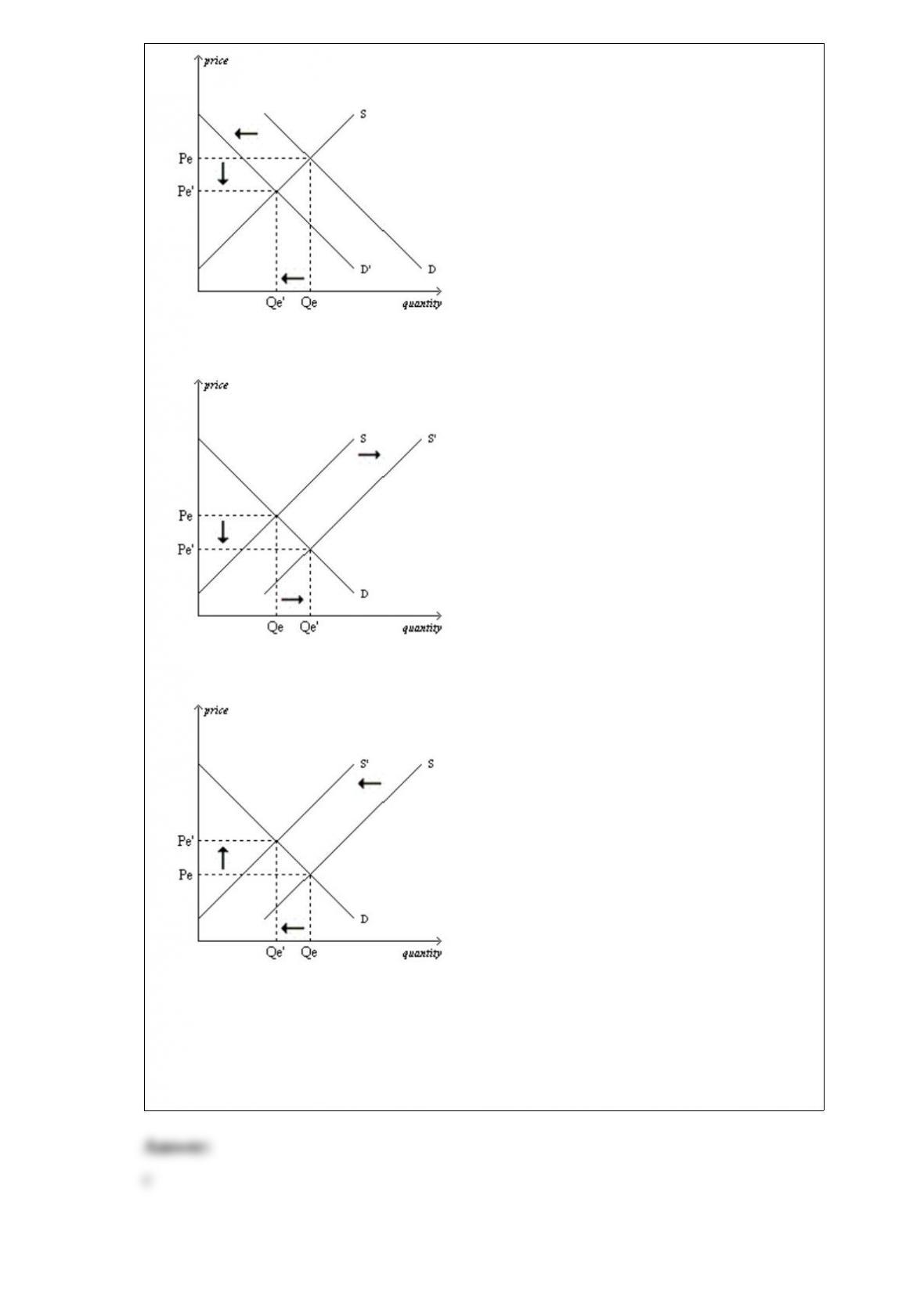
Panel (c)
Panel (d)
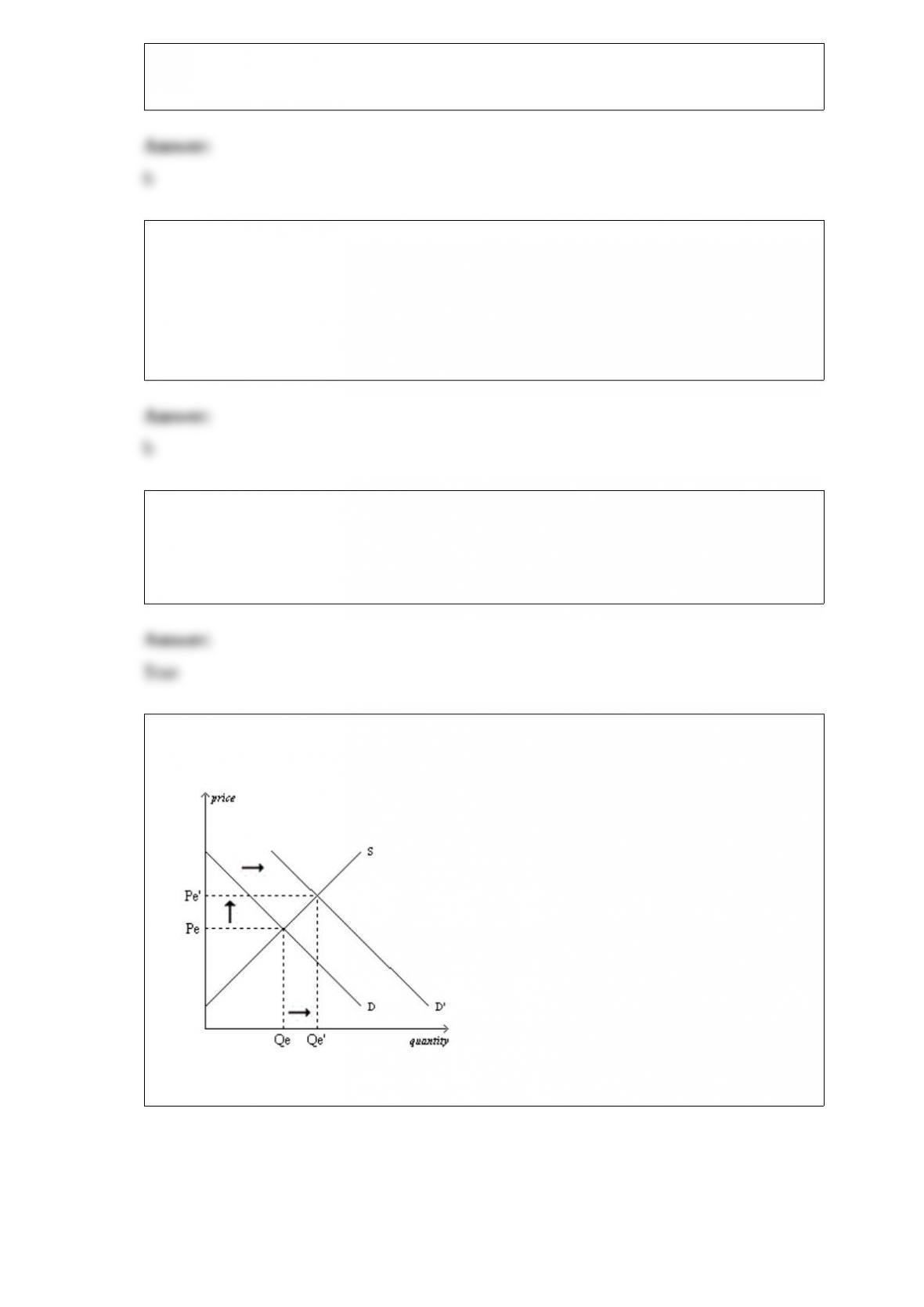
Which of the four panels illustrates an increase in quantity demanded?
a.Panel (a)
b.Panel (b)
c.Panel (c)
d.Panel (d)
9) When we compare the income distribution of the United States to those of other
countries, we find that the U.S. has
a.an income distribution similar to Japan’s.
b.an income distribution similar to South Africa’s.
c.one of the most unequal income distributions.
d.a bit more inequality than the typical country.
10) Suppose good X has a positive income elasticity of demand. This implies that good
X could be
(i)a normal good.
(ii)a necessity.
(iii)an inferior good.
(iv)a luxury.
a.(i) only
b.(i) and (ii) only
c.(i), (ii), and (iv) only
d.(iii) only
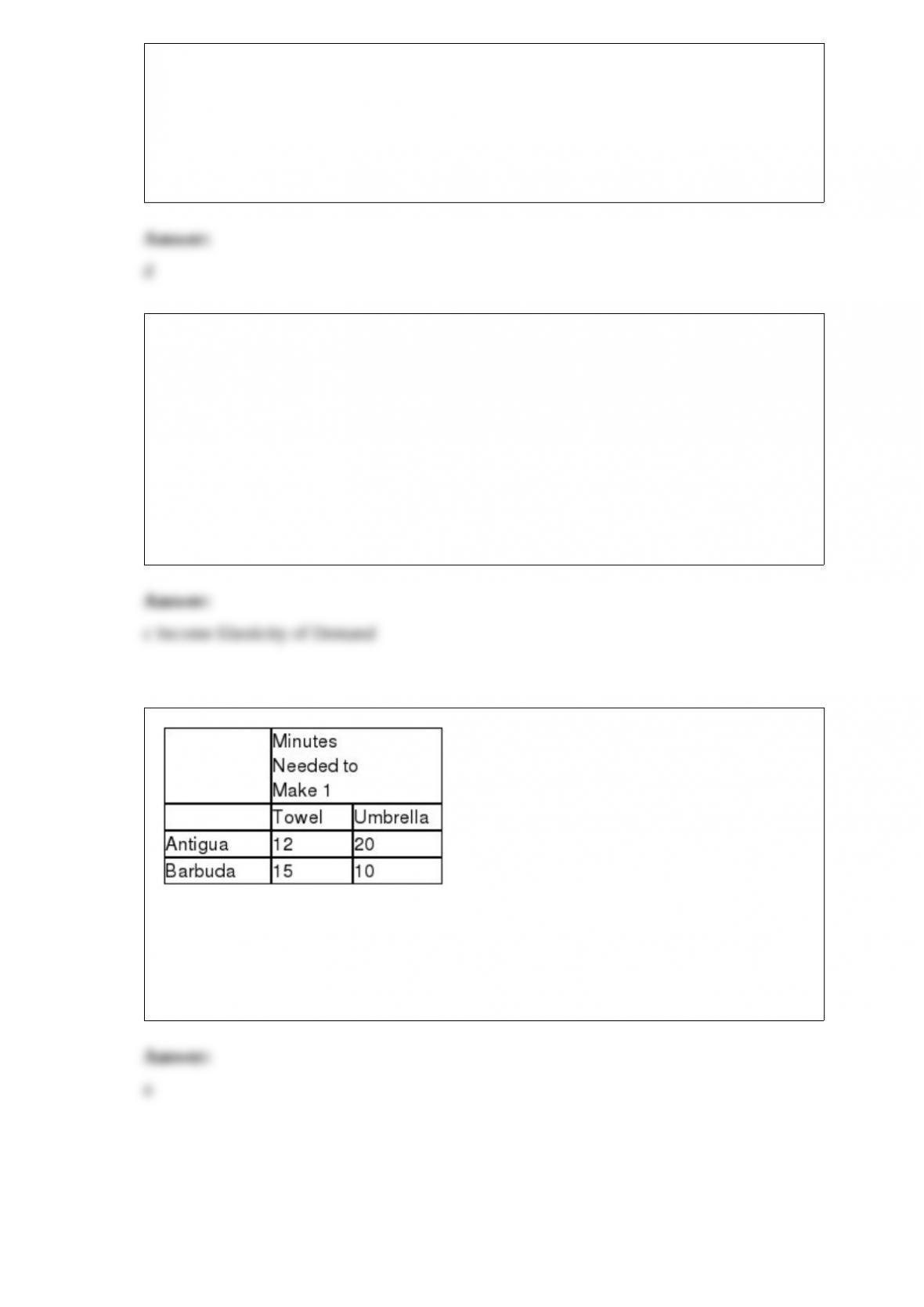
11) What is Antigua’s opportunity cost of one towel?
a.3/5 umbrellas
b.2/3 umbrellas
c.3/2 umbrellas
d.5/3 umbrellas