The primary goal of supply-side economics is to
a. balance the federal budget.
b. reduce the balance of payments deficit.
c. reduce the money supply.
d. reduce inflation and increase growth at the same time.
Prices set too low can actually be against the public interest.
a. True
b. False
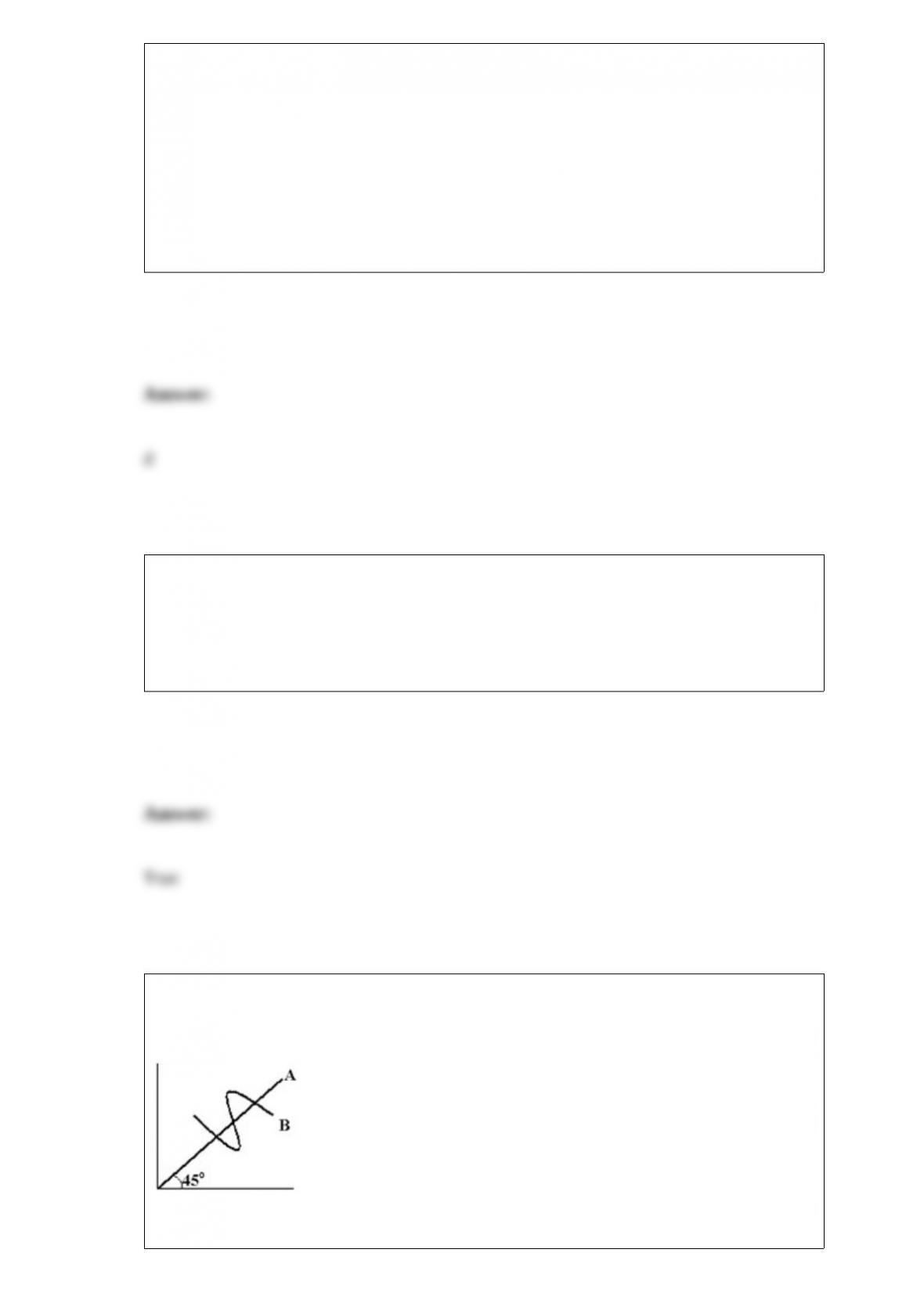
Figure 1-2
A line that rises at a 45 degree angle has a slope of

a. 0.45.
b. 1.
c. 45.
d. 1/45.
The share of industry output sold by the top four steel producers in the country are 19%,
15%, 12%, and 9% respectively. The four-firm concentration ratio for the steel industry
is
a. 0.19.
b. 0.55
c. 0.138
d. 0.65
The price of bonds is tied to the interest rate; when one goes up, the other must fall.
a. True
b. False

The production of smoke as a pollutant is a failure of the market system.
a. True
b. False
Liquidity can be defined as the
a. cash value of money.
b. value of money adjusted for inflation.
c. value of fiat money when used for spending.
d. ease with which an asset can be converted to a spendable asset.

In the Wealth of Nations, Adam Smith wrote about how countries could increase their
consumption of goods and services through specialization and trade with other
countries.
a. True
b. False
In 2008-2010, American policy makers decided to risk
a. higher inflation for the sake of decreasing unemployment.
b. higher unemployment to hold down inflation.
c. increasing taxes for the sake of reducing the budget deficit.
d. reducing government spending for the sake of balancing the budget.
If net exports are reduced, the expenditure schedule will shift
a. downward and equilibrium real GDP will rise.
b. upward and equilibrium real GDP will rise.
c. downward and equilibrium real GDP will fall.
d. upward and equilibrium real GDP will fall.

Over long periods of time, the growth rates of actual and potential GDP have been
a. diverging.
b. similar.
c. declining together.
d. usually far apart.
Stabilization policy often faces a trade-off between inflation and unemployment.
a. True
b. False
If production involves increasing opportunity cost, then moving nearer the horizontal
axis will increase the opportunity cost of
a. the good that is shown on the horizontal axis.
b. the good that is shown on the vertical axis.
c. both of the goods shown on the axes.
d. neither of the goods shown on the axes.
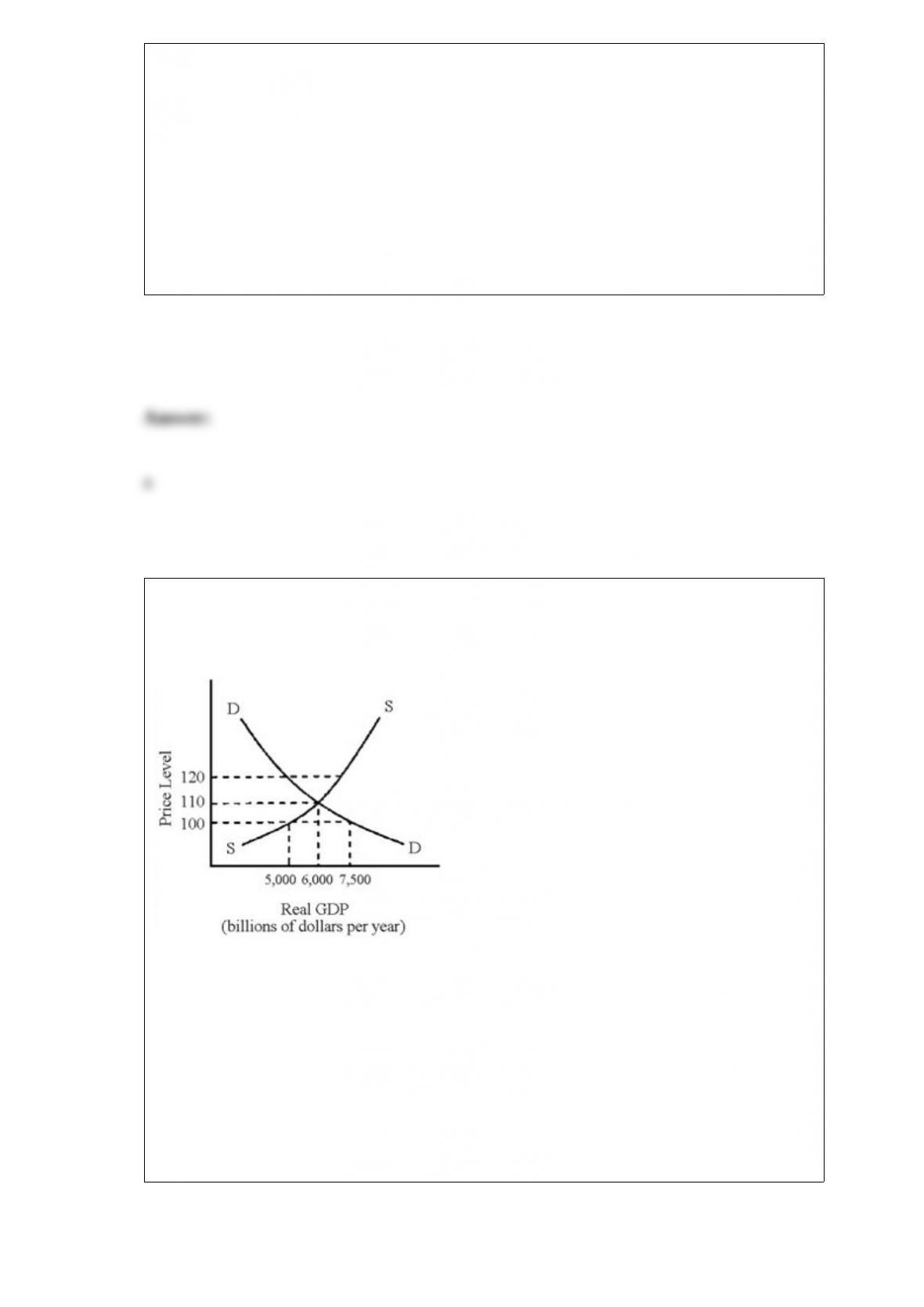
Figure 10-1
If the price level in Figure 10-1 were 120,
a. there would be excess goods on the market.
b. firms would have to raise their prices.
c. inventories would be disappearing.
d. aggregate quantity demanded would exceed aggregate quantity supplied.

If workers expect inflation, and tend to overestimate actual inflation when they
negotiate wage increases, the result will be a continuing
a. shift of AD to the left.
b. shift of AD to the right.
c. recessionary gap.
d. inflationary gap.
There are only two people in the world (Adam and Eve) and only one good (apples).
Adam has four apples and a total utility in money terms from apple consumption of
$16; Eve has four apples and a total utility from apple consumption of $20. Which of
the following statements must be true?
a. Eve’s marginal utility from consuming her fourth apple must be greater than Adam’s
marginal utility from consuming his fourth apple.
b. The total utility of society will rise if Adam gives Eve one apple.
c. If Adam and Eve each always has a positive marginal utility from consuming apples,
the total utility of society can only be increased by an increase in the total number of
apples available for consumption.
d. Adam’s average utility from consuming apples is greater than Eve’s average utility
from consuming apples.

Probably the most important factor affecting material well-being is
a. inflation rates.
b. unemployment rates.
c. budget deficits.
d. growth in productivity.
e. monopoly power.
Employers can shift payroll taxes by substituting capital for labor.
a. True
b. False

The quantity of reserves supplied increases as interest rates rise because
a. the Treasury borrows more at higher interest rates.
b. consumers don’t want to borrow as much so more money is left in banks.
c. as interest rates rise, banks fear losses so they decrease lending.
d. banks find it more profitable to loan out excess reserves to other banks.
A person’s portfolio of investments is the package of all the stocks, bonds, and other
assets the person owns.
a. True
b. False
The payroll tax represents
a. the largest source of revenue in the federal budget.
b. the second largest source of revenue in the federal budget.
c. the third largest source of revenue in the federal budget.
d. the largest source of revenue in state government budgets.

The percentage of work time lost due to strikes in the United States has been increasing
over time.
a. True
b. False
Efficiency is defined as minimizing waste.
a. True
b. False
Gross domestic product is the money value of all final goods and services produced in
an economy in a year.

a. True
b. False
The growth rate of potential GDP is the sum of the growth rates of
a. labor force and population.
b. labor force and labor productivity.
c. labor force and capital stock.
d. labor productivity and capital stock.
Compared to a perfectly competitive industry, a monopoly produces a smaller output
and charges a higher price.
a. True
b. False

If the budget deficit was eliminated, the federal government would have more money
than it could spend.
a. True
b. False
For about the last 45 years, federal taxes have remained relatively constant as a
percentage of GDP.
a. True
b. False
If the aggregate supply curve has its normal shape, deficit spending will increase
a. both GDP and the price level at about the same rate.
b. the price level before it increases real GDP.
c. the price level but decrease real GDP.

d. real GDP before it increases the price level.
Fiscal federalism refers to
a. passing money from one level of government to another.
b. leaving indirect taxes to the states.
c. keeping property taxes low.
d. making all levels of government operate on a “pay as you go” basis.
Tom is buying a quantity of wheat at which the marginal utility (in dollars) exceeds
price. He should
a. reduce wheat consumption, thus raising P to the level at which MU = P.
b. reduce wheat consumption, thus raising MU to the level at which MU = P.
c. increase wheat consumption, thus raising P to the level at which MU = P.
d. increase wheat consumption, thus lowering MU to the level at which MU = P.
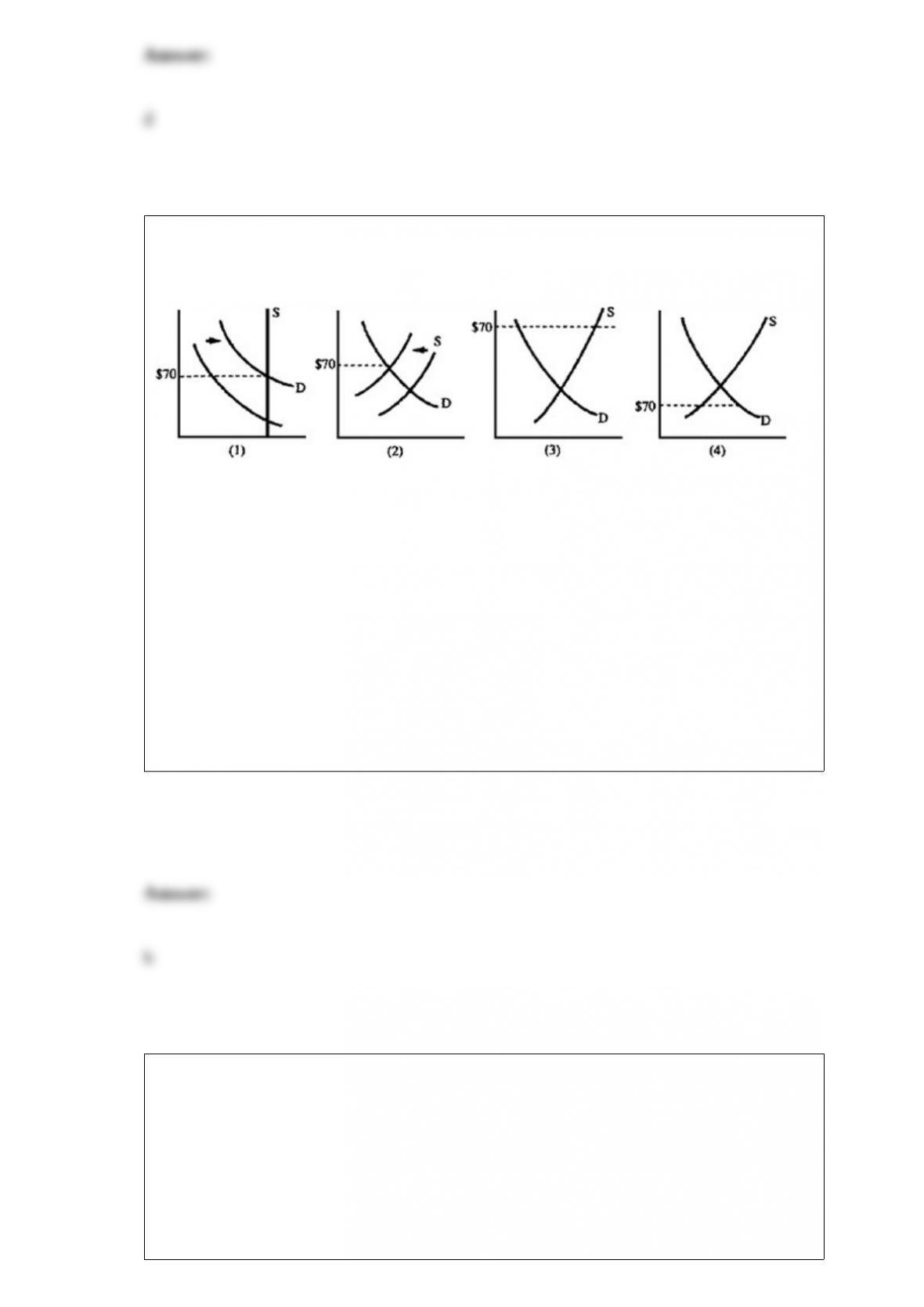
Figure 4-22
Because of falling oil prices in the past, Libya could afford fewer imported goods.
Government controls were established to limit imports of cigarettes. In 1985, the
market price of Marlboros rose to $70 a carton. Which graph in Figure 4-22 best depicts
this situation?
a. 1
b. 2
c. 3
d. 4
Given the characteristics: (1) many buyers and sellers, (2) free entry and exit, (3)
perfect information, and (4) heterogeneity of products, monopolistic competition and
perfect competition share
a. (1) and (4).
b. (1), (2), and (3).

c. (2) and (4).
d. (2), (3), and (4).
Marginal profit equals the difference between marginal revenue and marginal cost.
a. True
b. False