
The GDP deflator is the best measure that reflects the prices of goods and services
purchased by the typical household.
Answer:
The signaling hypothesis of education states that education is a costly activity that
enhances a worker’s productivity.
Answer:
The sum of consumer surplus and producer surplus is called economic surplus.
Answer:
On a diagram of a production possibility frontier, opportunity cost is represented by the
production possibility frontier shifting outward.
Answer:

If average product is decreasing, then marginal product must be negative.
Answer:
In the United States, the average length of expansions from 1950 to 2009 was more
than twice as long than they were from 1900 to 1950.
Answer:
Policies based on positive economic ideas tend to decrease economic efficiency and
reduce equity.
Answer:
Which of the following is an example of a worker experiencing frictional
unemployment?
A) A worker quits his job at the Post Office to find more interesting work.
B) A computer programmer loses her job because it is outsourced to India.
C) An employee is laid off because the economy is suffering a recession.
D) A United Airlines pilot loses her job because of lack of demand for air travel.
Answer:
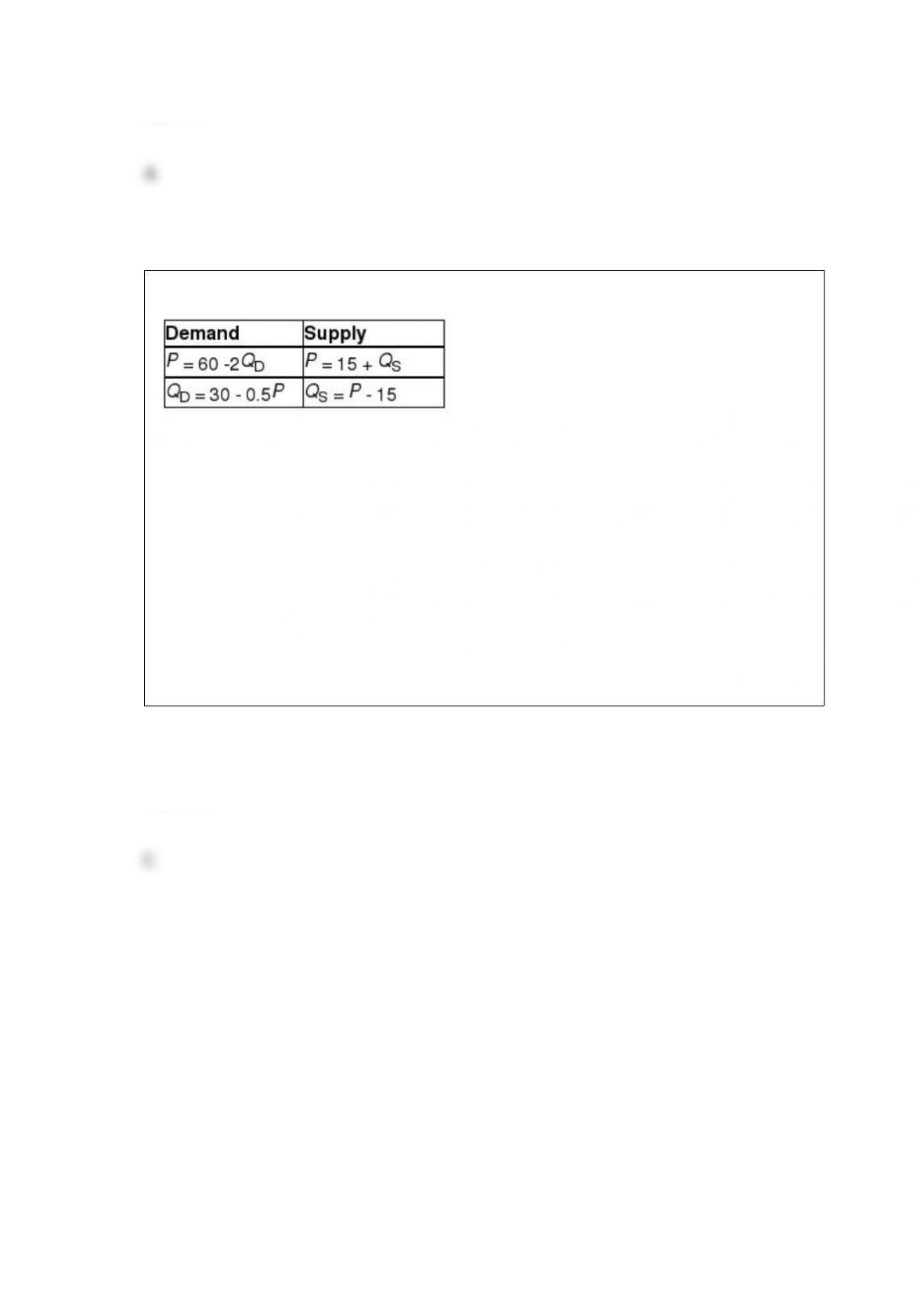
Table 4-14
The equations above describe the demand and supply for Pauline’s Pickled
Pomegranates. What are the equilibrium price and quantity (in thousands) for Pauline’s
Pickled Pomegranates?
A) $60 and 20 thousand
B) $15 and 45 thousand
C) $30 and 15 thousand
D) $20 and 10 thousand
Answer:
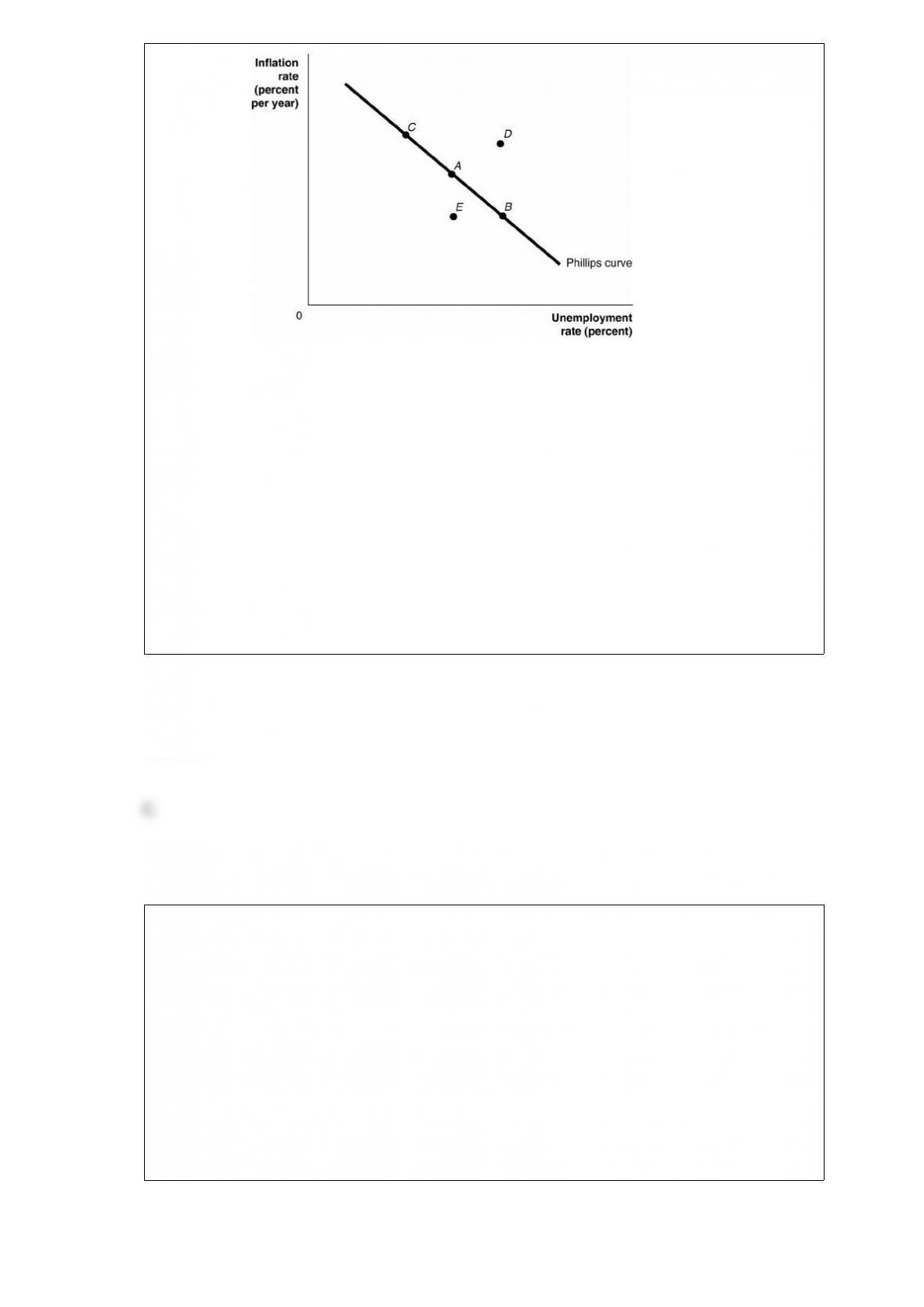
Figure 17-1
Suppose that the economy is currently at point A. If the Federal Reserve engaged in
expansionary monetary policy, where would the economy end up in the short run?
A) It would remain at point A.
B) point B
C) point C
D) point D
E) point E
Answer:
A study conducted by Alberto Alesina and Lawrence Summers concluded that countries
with highly independent central banks had ________ than countries whose central
banks had little independence.
A) higher unemployment rates
B) lower unemployment rates
C) higher inflation rates
D) lower inflation rates

Answer:
When the government runs a deficit, which of the following is true?
A) T > TR – G
B) G > T + TR
C) G > TR – T
D) T < G + TR
Answer:
The federal government debt as a percentage of GDP fell during the period
A) 2002 – 2007.
B) 1980-1992.
C) during World War I and World War II.
D) 1997-2001.
E) the Great Depression.
Answer:
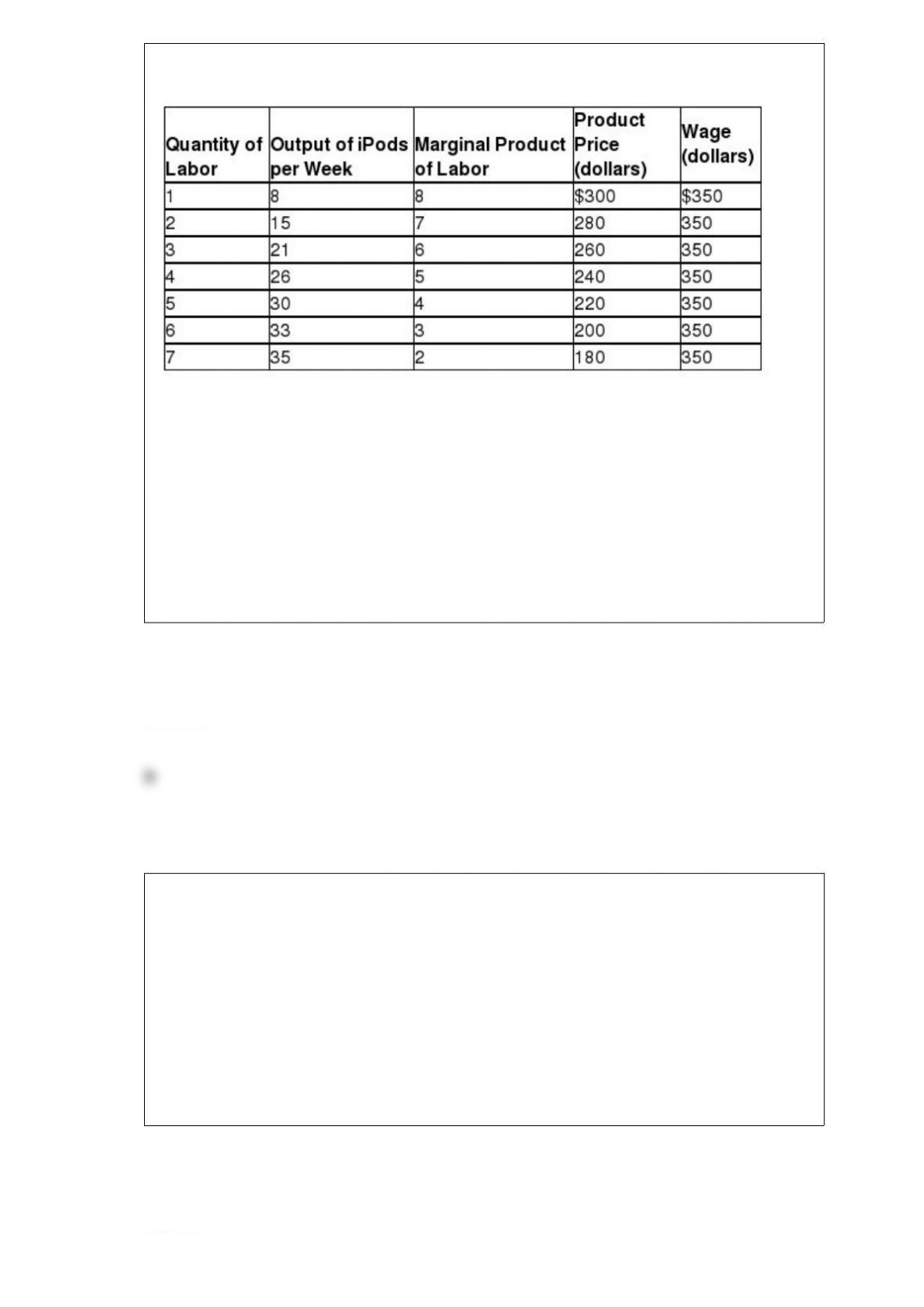
Table 17-2
The firm represented in the diagram
A) has market power in the factor market.
B) has market power in the output market.
C) has market power in both the factor and product market.
D) has no market power in the factor or product market.
Answer:
What is the government purchases multiplier if the tax rate is 0.2 and the marginal
propensity to consume is 0.8? Assume the economy is closed.
A) 2.78
B) 5
C) 6.25
D) 100
Answer:
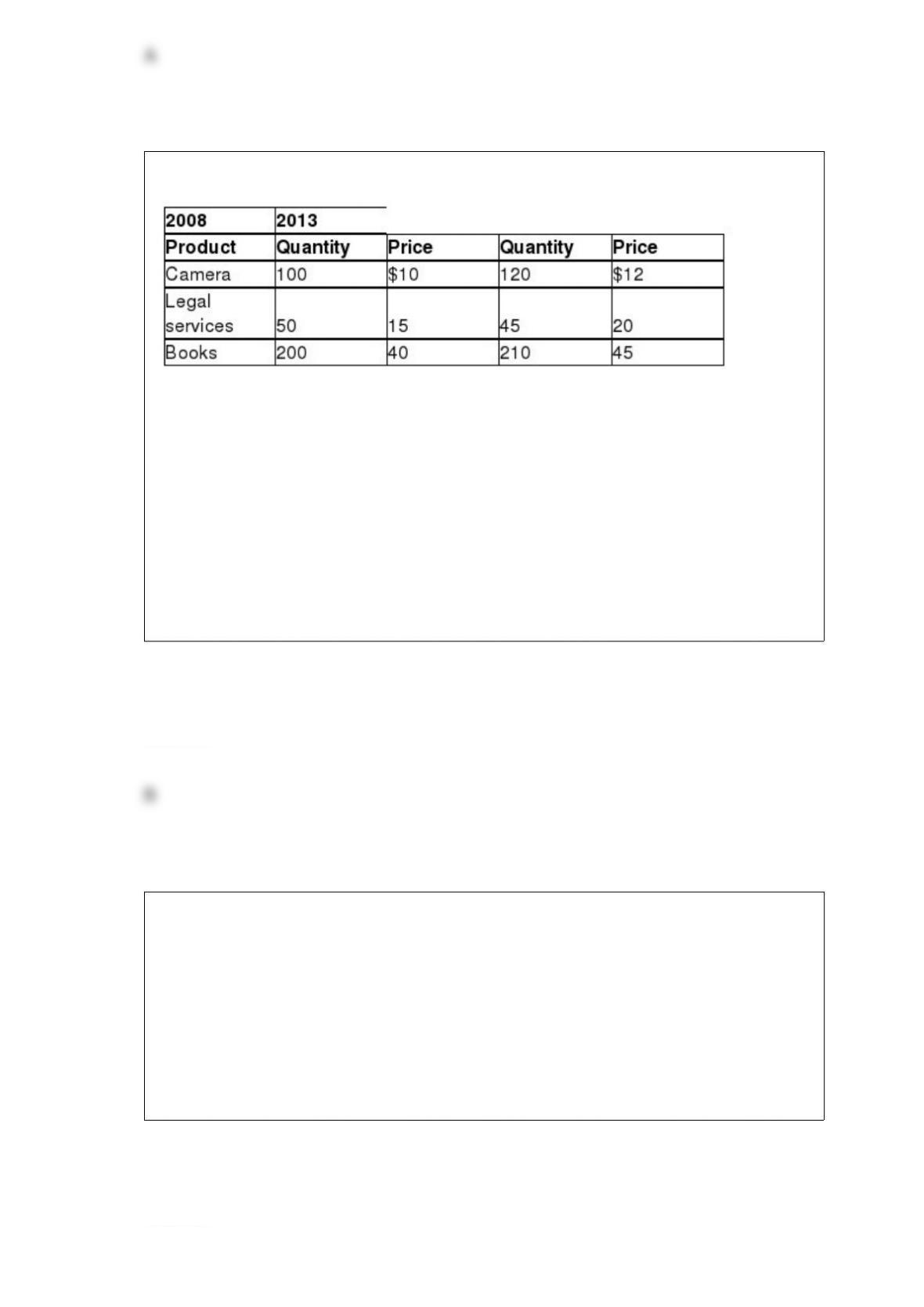
Table 19-18
A very simple economy produces three goods: cameras, legal services, and books. The
quantities produced and their corresponding prices for 2008 and 2013 are shown in the
table above. What is the GDP deflator in 2008 if 2013 is the base year?
A) 187
B) 87
C) 8.7
D) 0.87
Answer:
Hyperinflation is caused by
A) a constant increase in the money supply.
B) a high rate of growth in the money supply.
C) Real GDP growing more rapidly than the money supply.
D) the money supply growing more slowly than GDP.
Answer:
What is shown on a firm’s income statement?
A) costs
B) profits
C) revenues
D) All of these are shown on a firm’s income statement.
Answer:
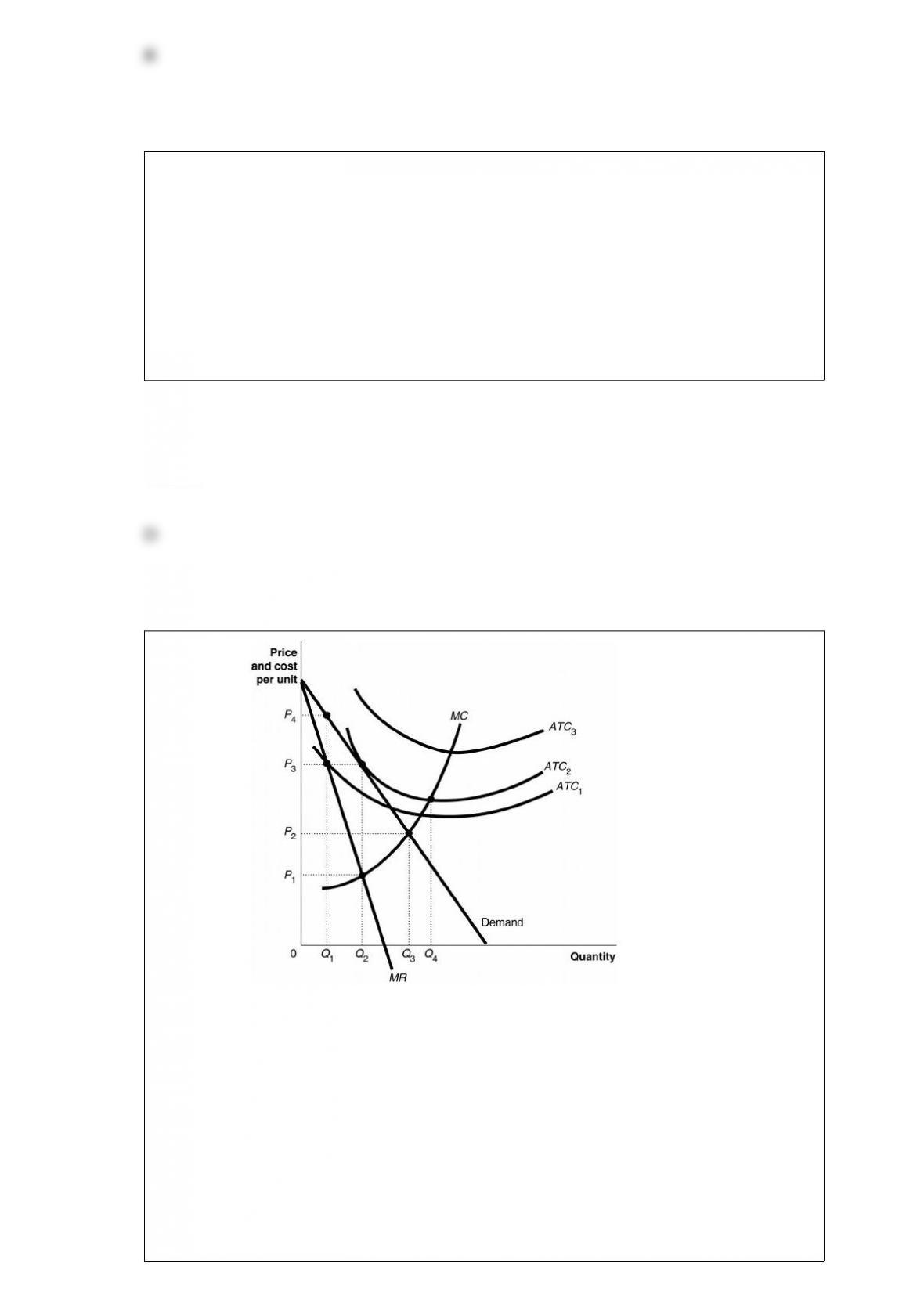
Figure 15-2
Figure 15-2 above shows the demand and cost curves facing a monopolist.
If the firm’s average total cost curve is ATC2, the firm will
A) suffer a loss.
B) break even.
C) make a profit.

D) face competition.
Answer:
You decide to work in Japan for the next 10 years, accumulate some savings, then move
back to the United States and convert your savings from yen to dollars. At the time of
your move, economists predict that consumers in the United States have reignited their
love of Japanese products, especially hybrid cars, and expect that this strong preference
for Japanese products will continue for the next decade. How should this influence your
decision to work and save in Japan?
A) You should be discouraged as the growing U.S. preference for Japanese goods
should increasethe value of the yen to the dollar and decrease the value of your savings
when converted to dollars.
B) You should be discouraged as the growing U.S. preference for Japanese goods
should decrease the value of the yen to the dollar and decrease the value of your savings
when converted to dollars.
C) You should be encouraged as the growing U.S. preference for Japanese goods should
decrease the value of the yen to the dollar and raise the value of your savings when
converted to dollars.
D) You should be encouraged as the growing U.S. preference for Japanese goods should
increase the value of the yen to the dollar and raise the value of your savings when
converted to dollars.
Answer:
Suppose favorable weather resulted in a bumper crop of oranges in Florida. In the
market for oranges
A) the supply curve shifted to the right resulting in a decrease in the equilibrium price.

B) the supply curve shifted to the right resulting in an increase in the equilibrium price.
C) the demand curve shifted to the left resulting in a decrease in the equilibrium price.
D) the demand curve shifted to the right resulting in an increase in the equilibrium
price.
Answer:
The current account deficits incurred by the United States in the 1990s and early 2000s
were caused, in the opinion of many economists, by
A) federal budget deficits.
B) “flight to quality” as foreign investors favored U.S. investments.
C) a sharp decline in private saving.
D) Both B and C are correct.
Answer:
Tanesha sells homemade candles over the Internet. Her annual revenue is $64,000 per
year, the explicit costs of her business are $17,000, and the opportunity costs of her
business are $22,000. What is her economic profit?
A) $17,000
B) $25,000
C) $42,000
D) $47,000

Answer:
In 2013, the Educational Testing Service (ETS) charged $51 to take the Scholastic
Aptitude Test (SAT) but $150 to take the Graduate Record Exam (GRE). One reason for
this difference in price is
A) more people took the SAT than the GRE in 2013.
B) the GRE is a longer test with more questions.
C) an average, those who take the GRE have higher incomes than those who take the
SAT.
D) the ETS faces competition in the market for the SAT but no competition for the
GRE.
Answer:
Scenario 17-1. In academia, professors in some disciplines receive higher salaries than
others. For example, professors teaching in business schools receive higher salaries than
professors in the English department. Suppose at Unity College, assistant professors in
the business school earn $80,000 while assistant professors in the English department
earn $50,000. Now suppose the government passes comparable worth legislation that
requires academic institutions to pay all faculty the same salaries.
Following the passage of comparable worth legislation, Unity College responds by
placing salaries at $65,000. Which of the following is the result of the legislation?
A) The supply of English professors increases and the supply of business professors
decreases.
B) The demand for English professors decreases and the demand for business
professors increases.
C) There will be a surplus in the market for English professors and a shortage in the

market for business professors.
D) There will be a surplus in the market for English professors and the market for
business professors will not be affected.
Answer:
Suppose that a price-discriminating producer divides its market into two segments. If
the firm sells its product at a price of $34 in the market segment with relatively
less-elastic customer demand, the price in the market segment with more-elastic
customer demand will be
A) greater than $34.
B) less than $34.
C) less than marginal revenue in that market segment.
D) equal to marginal revenue in that market segment.
Answer:
Erin and Deidre, two residents in Ithaca, New York, are planning a trip to Boston. Erin,
the sales manager for a large retailer, has to attend a business meeting. Deidre, a college
student on vacation, is planning a leisurely trip to visit friends and relatives. Whose
demand curve for air travel is likely to be more elastic?
A) Erin
B) Deidre
C) There is no difference in their price elasticities of demand.
D) The elasticity of the demand curves for Erin and Deidre cannot be determined

without more information.
Answer:
List the Fed’s four main monetary goals.
Answer:
What does the term “increasing marginal opportunity cost” mean? How are increasing
marginal opportunity costs represented on a bowed out production possibilities frontier?
Answer:
Central Grocery in New Orleans is famous for its muffaletta, a large round sandwich
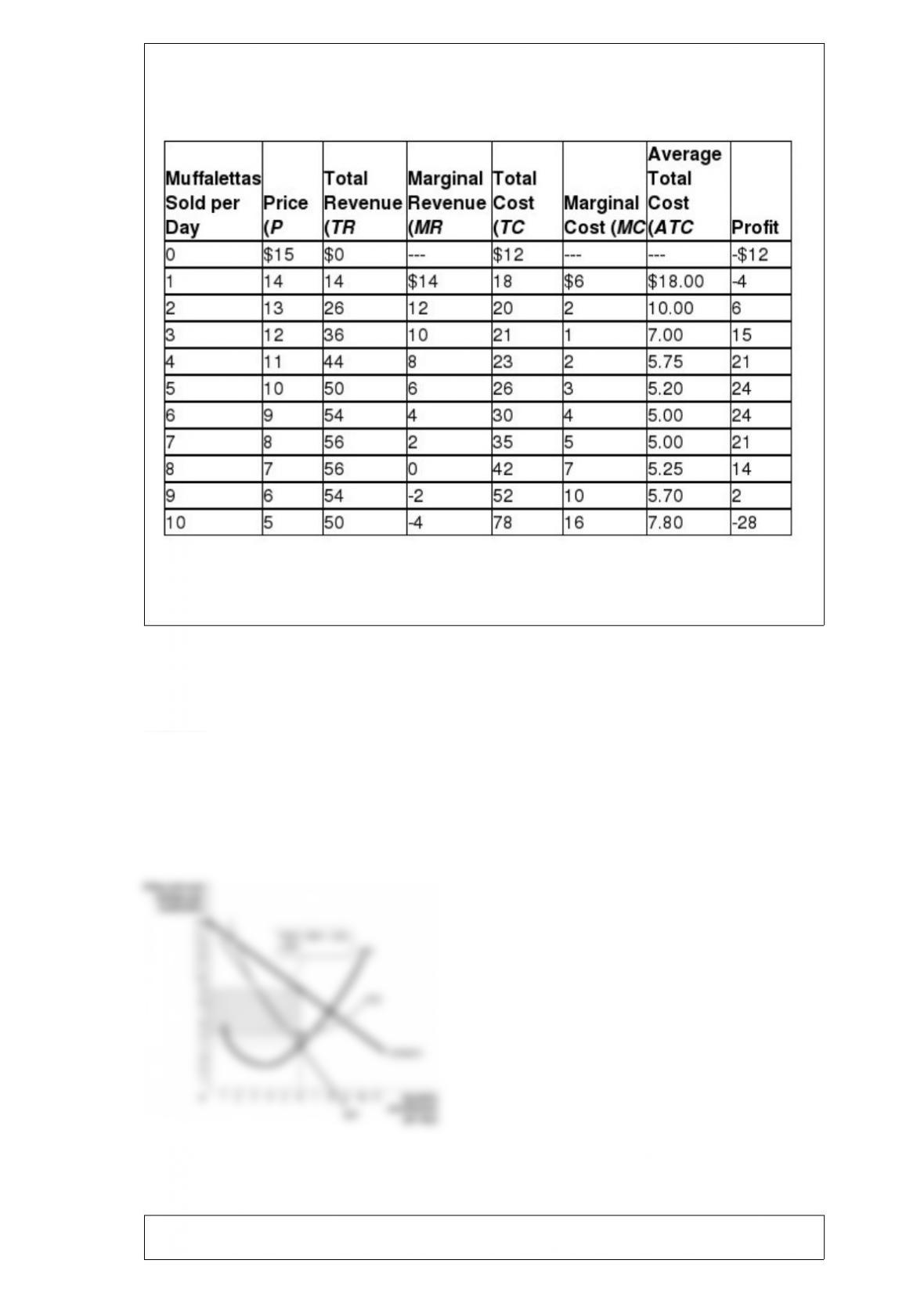
filled with deli meats and topped with a tangy olive salad. Suppose the following table
represents cost and revenue data for Central Grocery.
Illustrate this data by graphing the demand, MR, MC, and ATC curves. Identify the
profit-maximizing price and quantity, and show the area representing the total profit
received by Central Grocery.
Answer:
Does globalization promote economic growth, and how does globalization affect the
welfare of a given country’s citizens?
Answer:
List four types of government policies which can aid economic growth.
Answer:
What problems can high inflation rates cause for the economy?
Answer: