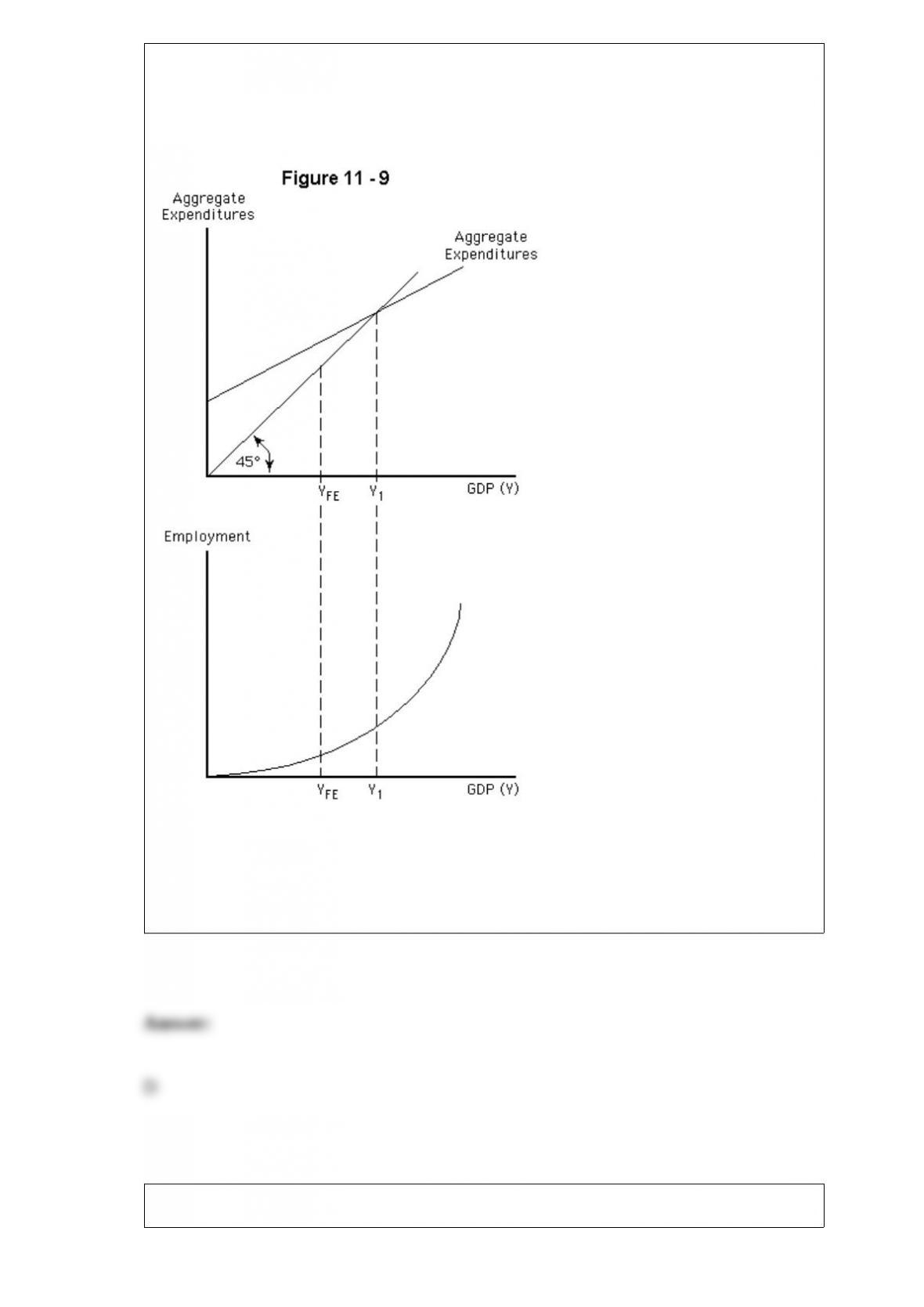
Refer to Figure 11-9. If YFErepresents the full employment level of output, the situation
depicted at Y1in the graph is
a. impossible to achieve because employment would exceed full employment
b. one in which we would expect businesses to cut production
c. one in which we would expect businesses to increase production
d. identified as an expansion
e. identified as a recession
In factor markets, firms __________ and households ____________.
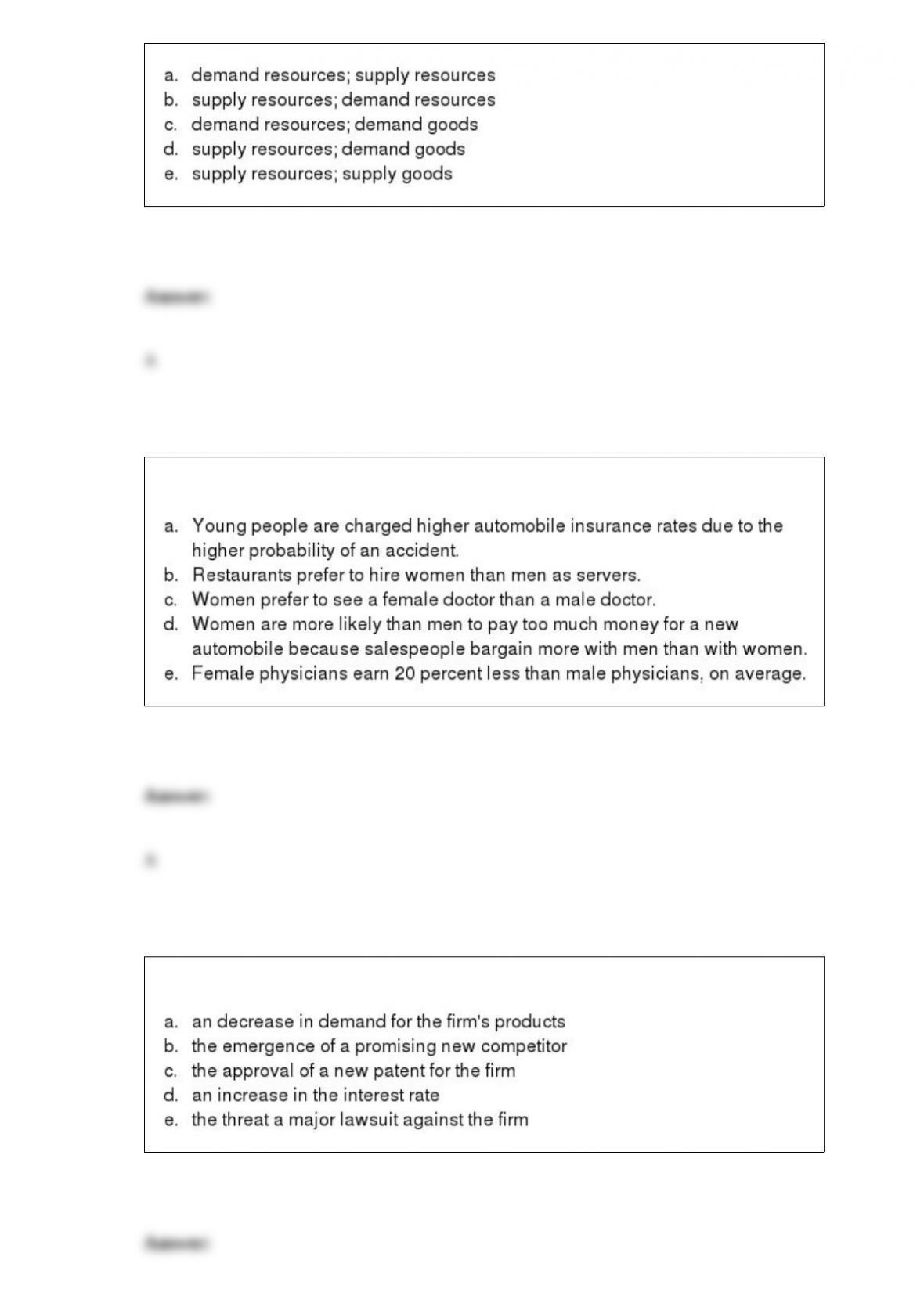
Which of the following is a form of statistical discrimination?
Which of the following would increase the price of a firm’s stock?

In the short-run macro model, firms that sell more than they produce will respond by
a. reducing output
b. increasing output
c. reducing prices
d. raising prices
e. not changing production because the market will adjust on its own
Banks are not allowed to hold reserves in excess of those required by law.
An increase in labor force participation will increase output and living standards at the
cost of
a. higher taxes
b. higher interest rates
c. longer work weeks
d. foregone leisure time
e. higher exports

The Consumer Price Index excludes all of the following, except one. Which one is
included in the CPI?
a. Services purchased directly by consumers
b. Raw materials
c. Services purchased by the government
d. Machinery purchased by firms
e. Intermediate goods purchased by firms
Which of the following statements is most accurate?
a. Most of the variation in consumption spending can be explained by changes in the
interest rate.
b. Most of the variation in consumption spending can be explained by changes in
disposable income.
c. Most of the variation in consumption spending can be explained by changes in
wealth.
d. Most of the variation in consumption spending can be explained by changes in debt.
e. There is no single factor that explains much of the variation in consumption
spending.
Which of the following would not enhance economic growth?
a. Subsidies for investments in physical capital
b. An increase in the corporate profits tax
c. Subsidies for investments in human capital
d. A tax cut that encourages saving
e. Subsidies for research and development expenditures