1) expenditure-changing policies modify the direction of aggregate demand, shifting it
between domestic output and imports.
a.true
b.false
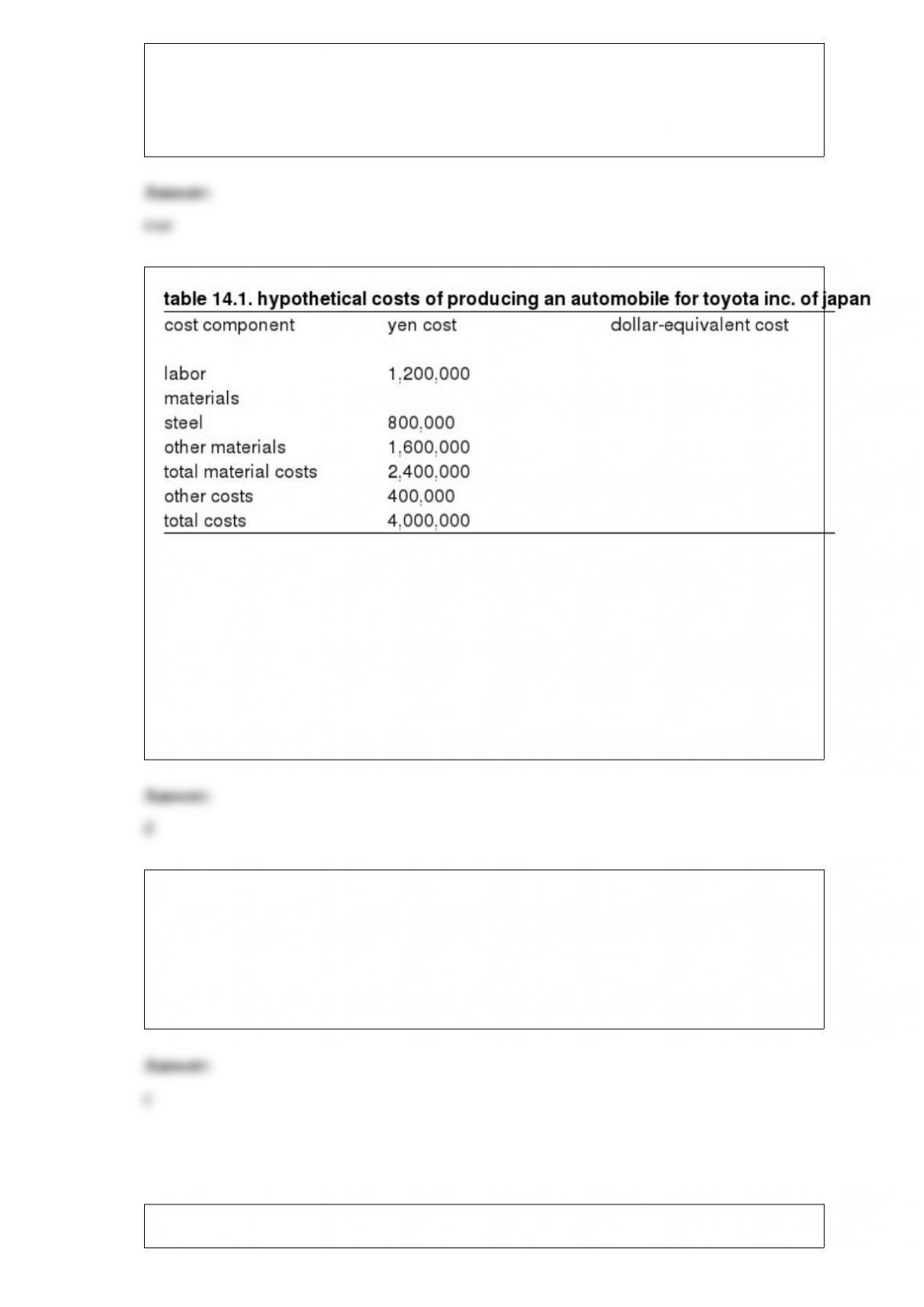
2) refer to table 14.1. assuming that toyota obtains all inputs from japanese suppliers
and that the yen/dollar exchange rate is 200 yen per dollar. the dollar-equivalent cost of
a toyota automobile equals:
a.$5000
b.$10,000
c.$15,000
d.$20,000
3) if the domestic value added before an import tariff for a product is $500 and the
domestic value added after the tariff is $550, the effective rate of protection is:
a.5 percent
b.8 percent
c.10 percent
d.15 percent
4) international trade forces domestic firms to become more competitive in terms of:
a.the introduction of new products
b.product design and quality
c.product price
d.all of the above
5) fiscal and monetary policies are generally used to combat domestic recession and
inflation and have secondary effects on the balance of payments.
a.true
b.false
6) according to the price-specie-flow-doctrine, a trade-surplus nation would experience
gold outflows, a decrease in its money supply, and a fall in its price level.
a.true
b.false
7) the balance of international indebtedness is a record of a country’s international:
a.investment position over a period of time
b.investment position at a fixed point in time
c.trade position over a period of time
d.trade position at a fixed point in time
8) figure 3.1china – us trade possibilities
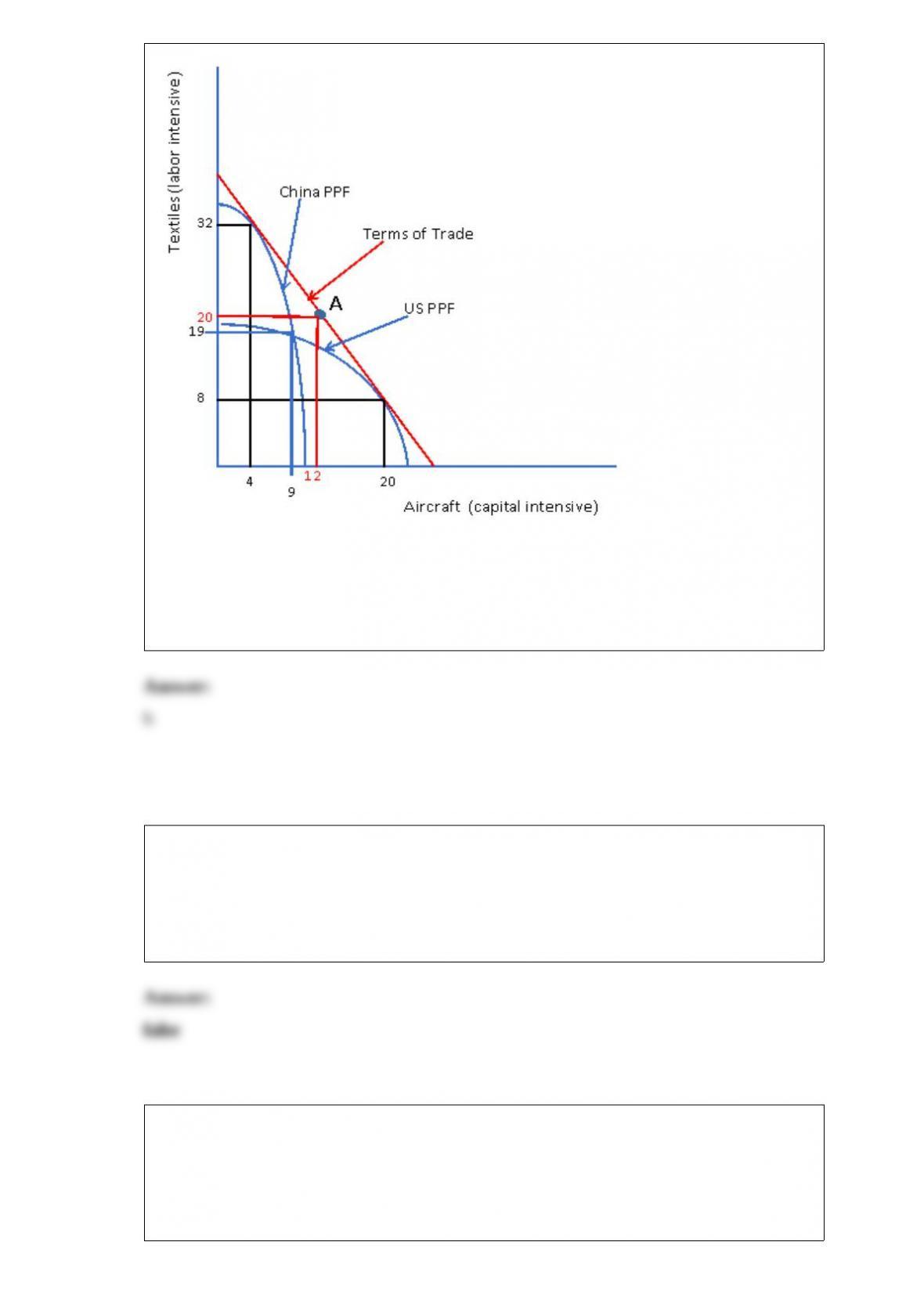
considering figure 3.1, what are the terms of trade represented?
a.the terms of trade are 1 aircraft per textile.
b.the terms of trade are 1 textiles per aircraft.
c.the terms of trade are 1 textile per aircraft.
d.the terms of trade are 2/3 textile per aircraft.
9) in an open trading system, a country will import those commodities that it produces
at relatively low cost while exporting commodities that can be produced at relatively
high cost.
a.true
b.false
10) in a two-country, two-product world, the statement “japan enjoys a comparative
advantage over france in steel relative to bicycles” is equivalent to:
a.france having a comparative advantage over japan in bicycles relative to steel
b.france having a comparative disadvantage against japan in bicycles and steel
c.japan having a comparative advantage over france in steel and bicycles
d.japan having a comparative disadvantage against japan in bicycles and steel
11) many developing nations with low inflation rates have pegged their currencies to
the u.s. dollar as a way of allowing modest increases in domestic inflation rates.
a.true
b.false
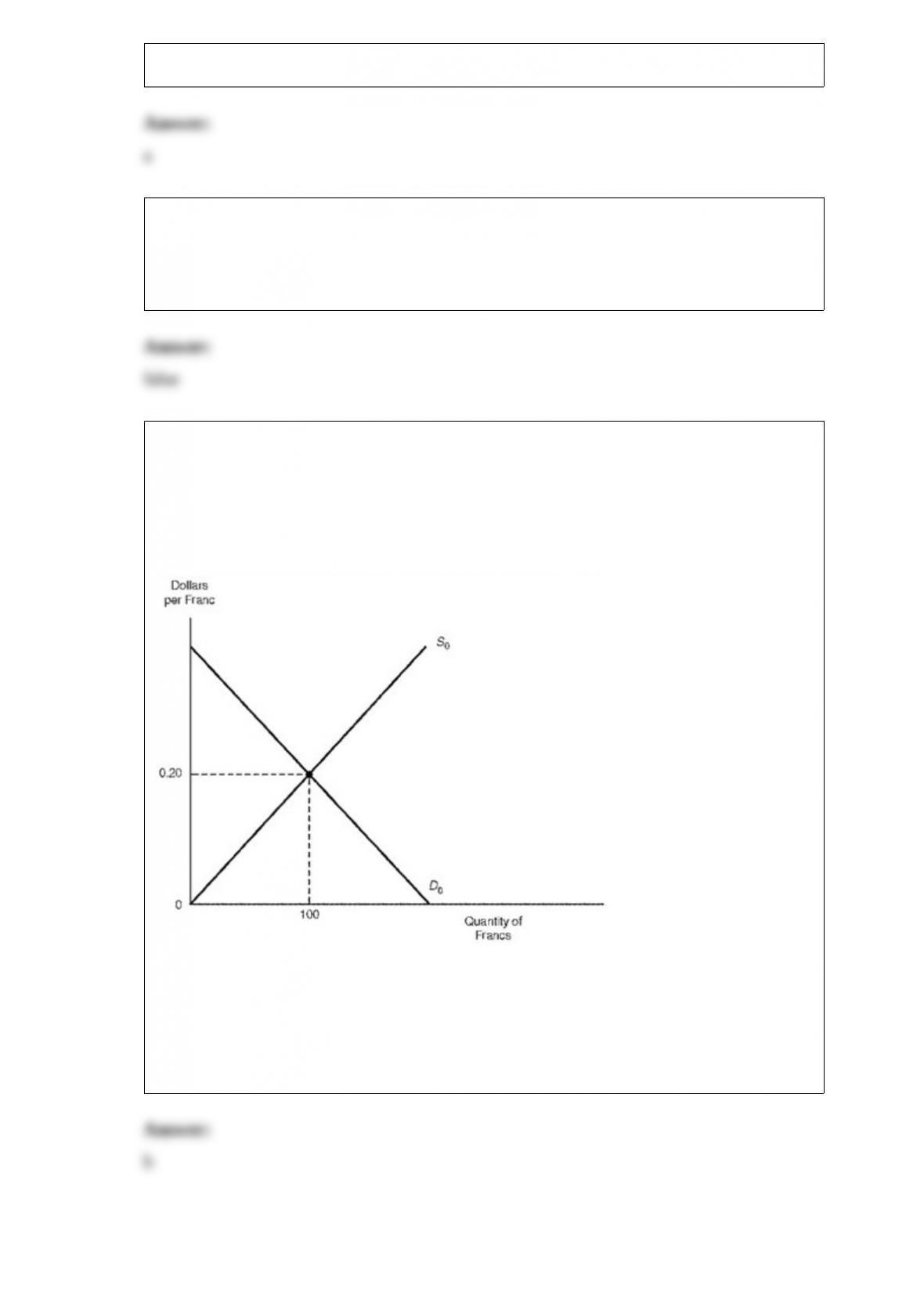
12) the figure below illustrates the supply and demand schedules of swiss francs in a
market of freely-floating exchange rates.
figure 12.1 the market for francs
refer to figure 12.1. should the united states impose tariffs on imports from switzerland,
there would occur a (an):
a.increase in the demand for francs and a depreciation of the dollar
b.decrease in the demand for francs and an appreciation of the dollar
c.decrease in the supply of francs and an appreciation of the dollar
d.increase in the supply of francs and a depreciation of the dollar