
Scenario 21-1. Take the following information as given for a small, imaginary
economy:
When income is $10,000, consumption spending is $6,500.
When income is $11,000, consumption spending is $7,300.
Refer to Scenario 21-1. The marginal propensity to consume for this economy is
a. 0.650.
b. 0.664.
c. 0.650 or 0.664, depending on whether income is $10,000 or $11,000.
d. 0.800.
Some economists argue that since inflation
a. raises the real value of fixed nominal wages, a little inflation may make it easier for
labor markets to adjust.
b. raises the real value of fixed nominal wages, a little inflation may make it harder for
labor markets to adjust.
c. reduces the real value of fixed nominal wages, a little inflation may make it easier for
labor markets to adjust.
d. reduces the real value of fixed nominal wages, a little inflation may make it harder
for labor markets to adjust.
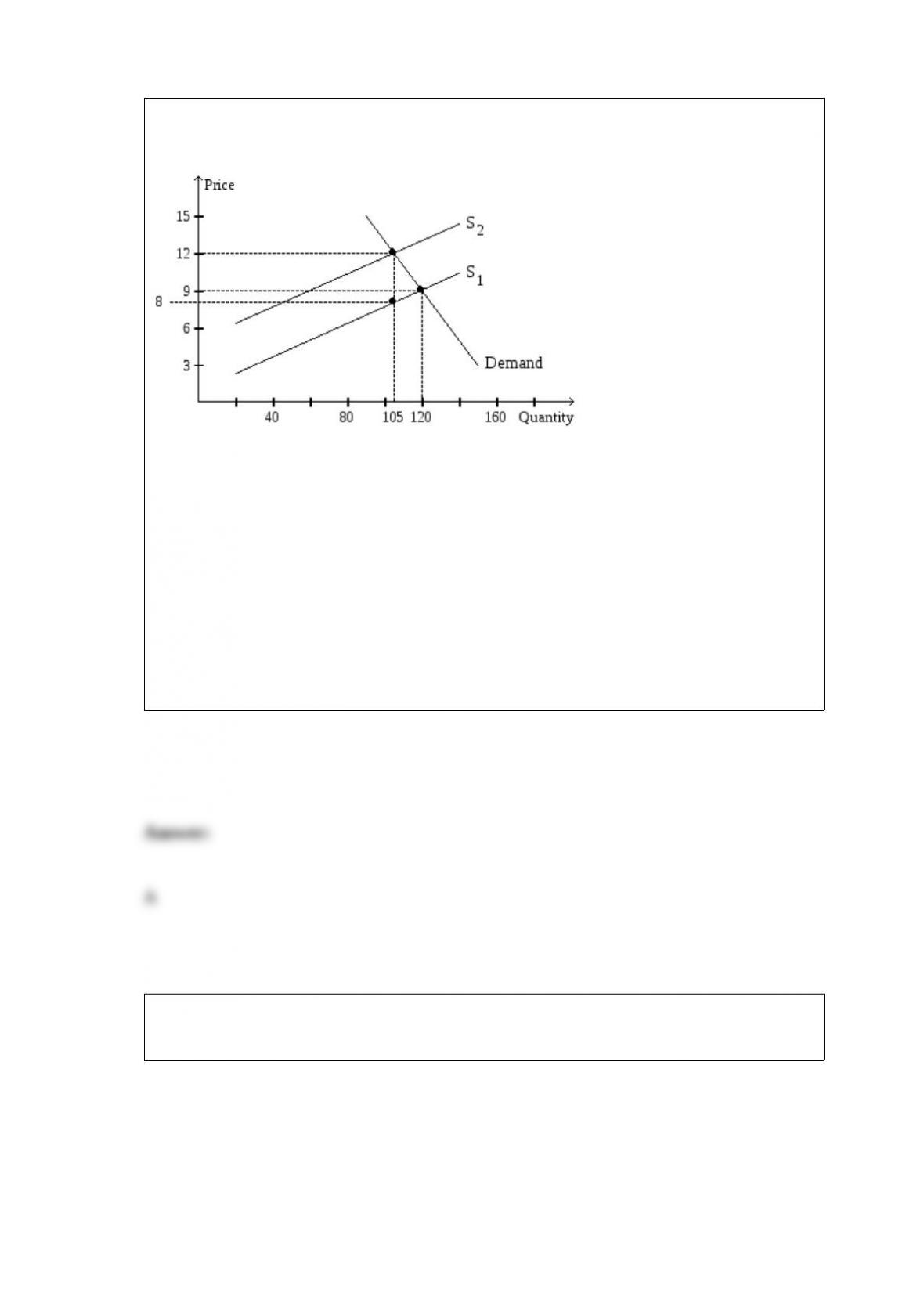
Figure 6-17
Refer to Figure 6-17. Acme, Inc. is a seller of the good. Acme sells a unit of the good
to a buyer and then pays the tax on that unit to the government. Acme is left with how
much money?
a. $8.00
b. $9.00
c. $10.50
d. $12.00
Figure 4-17

Refer to Figure 4-17. At a price of $15,
a. quantity demanded exceeds quantity supplied.
b. there is a shortage.
c. there is an excess demand.
d. All of the above are correct.
If the sacrifice ratio is 3, reducing the inflation rate from 10 percent to 6 percent would
require sacrificing
a. 2 percent of annual output.
b. 5 percent of annual output.
c. 6 percent of annual output.
d. None of the above is correct.
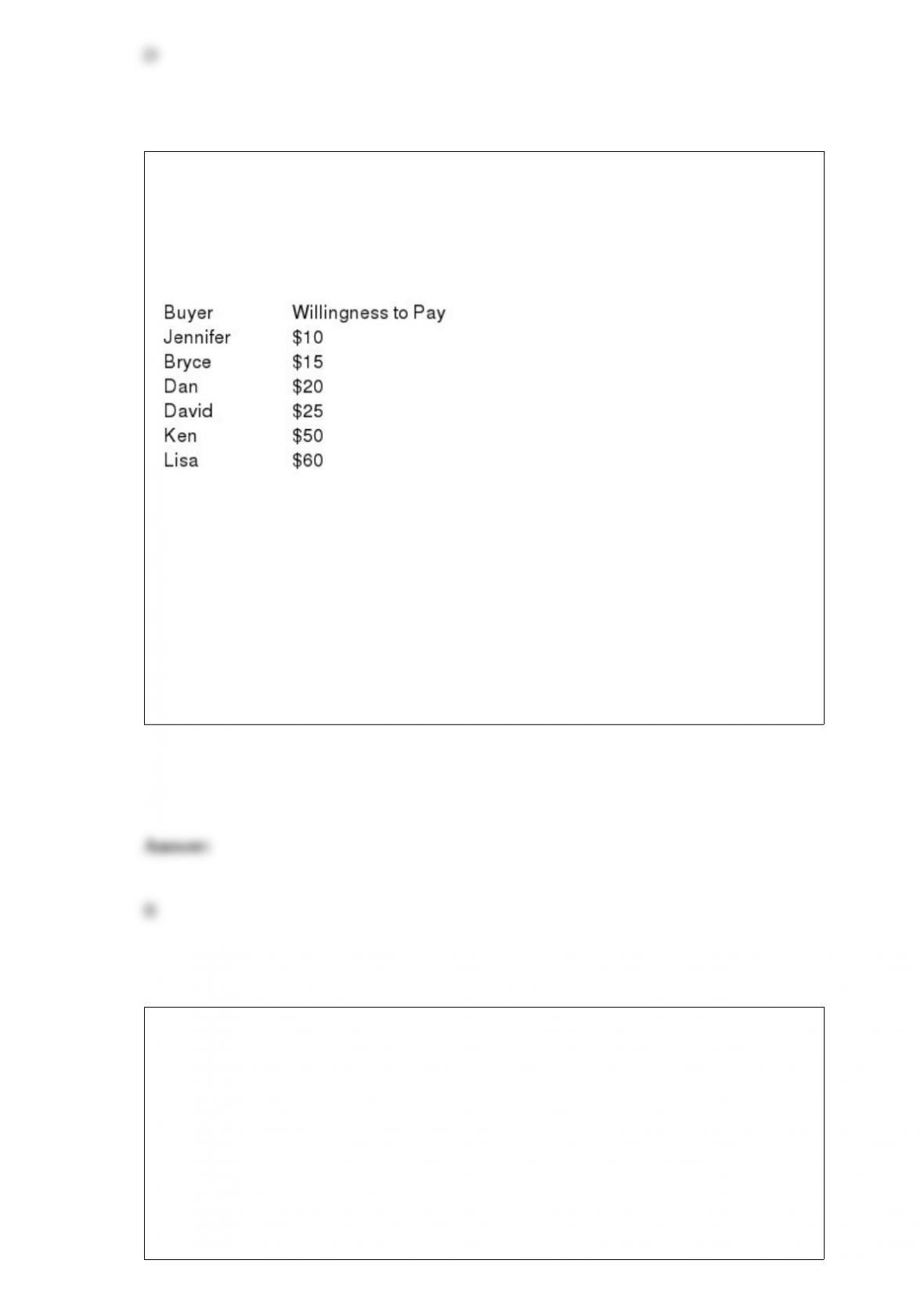
Table 7-4
The numbers in Table 7-1 reveal the maximum willingness to pay for a ticket to a
Chicago Cubs vs. St. Louis Cardinal’s baseball game at Wrigley Field.
Refer to Table 7-4. If you have two (essentially) identical tickets that you sell to the
group in an auction, what will be the selling price for each ticket?
a. $21
b. $26
c. $51
d. $61
Which of the following topics are more likely to be studied by a macroeconomist than
by a microeconomist?
a. the effect of taxes on the prices of airline tickets, and the profitability of
automobile-manufacturing firms
b. the price of beef, and wage differences between genders
c. how consumers maximize utility, and how prices are established in markets for
agricultural products

d. the percentage of the labor force that is out of work, and differences in average
income from country to country
If output is above its natural rate, then according to sticky-wage theory
a. workers and firms will strike bargains for lower wages. In response to the lower
wages firms will produce less at any given price level.
b. workers and firms will strike bargains for lower wages. In response to the lower
wages firms will produce more at any given price level.
c. will strike bargains for higher wages. In response to the higher wages firms will
produce less at any given price level.
d. workers and firms will strike bargains for higher wages. In response to the higher
wages firms will produce more at any given price level.
A bank might make mortgages to people in different regions of the country. By doing so
a. the bank reduces the risk it faces from falling house prices in its region and falling
prices in all regions.
b. the bank reduces the risk it faces of falling house prices in its region but not from
falling prices in all regions.
c. the bank reduces the risk it faces of falling house prices in all regions, but not the risk
it faces from falling house prices in its regions.
d. the bank reduces neither the risk it faces from falling house prices in its region nor
falling prices in all regions.
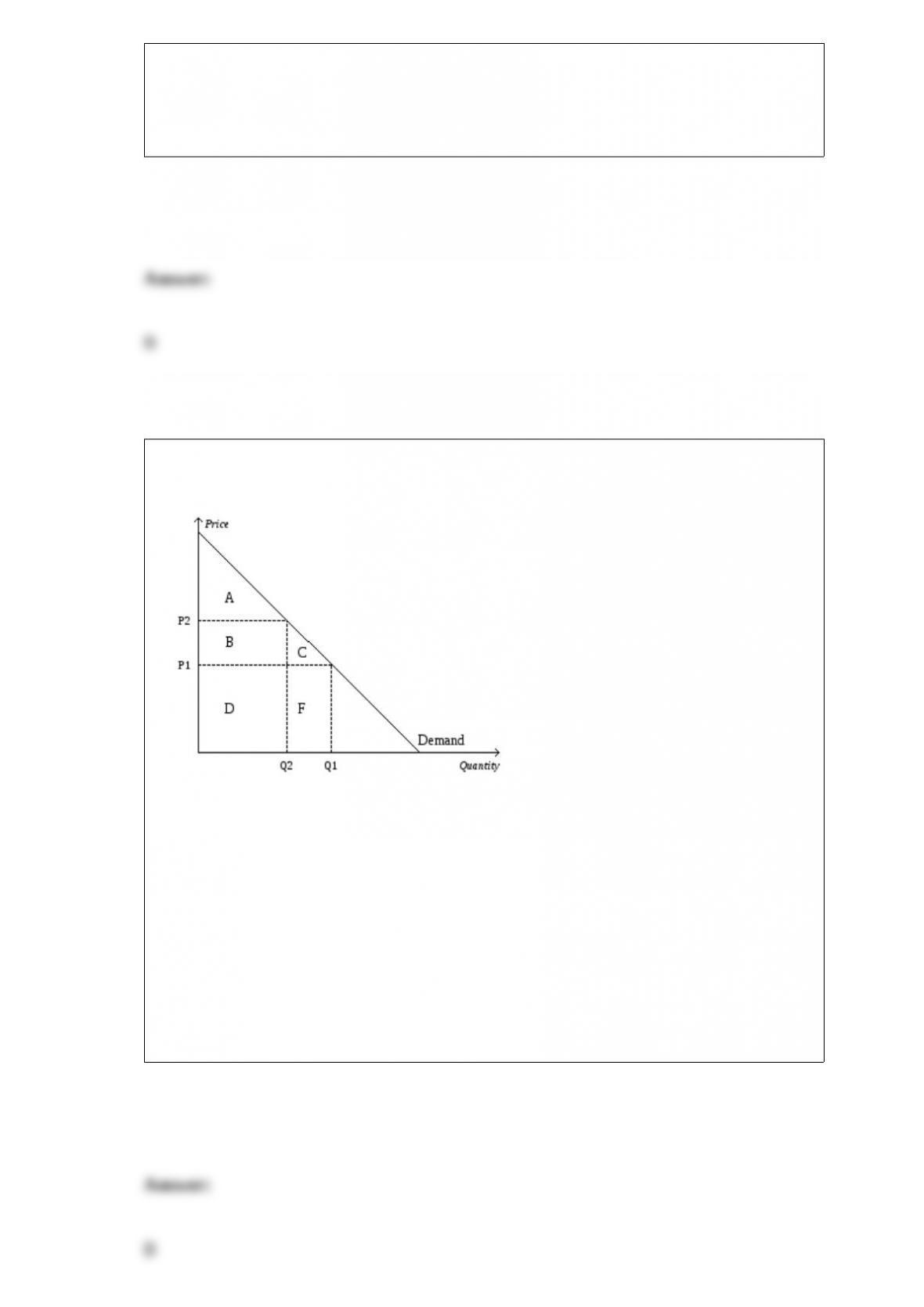
Figure 7-2
Refer to Figure 7-2. Area C represents the
a. decrease in consumer surplus that results from a downward-sloping demand curve.
b. consumer surplus to new consumers who enter the market when the price falls from
P2 to P1.
c. increase in producer surplus when quantity sold increases from Q2 to Q1.
d. decrease in consumer surplus to each consumer in the market when the price
increases from P1 to P2.
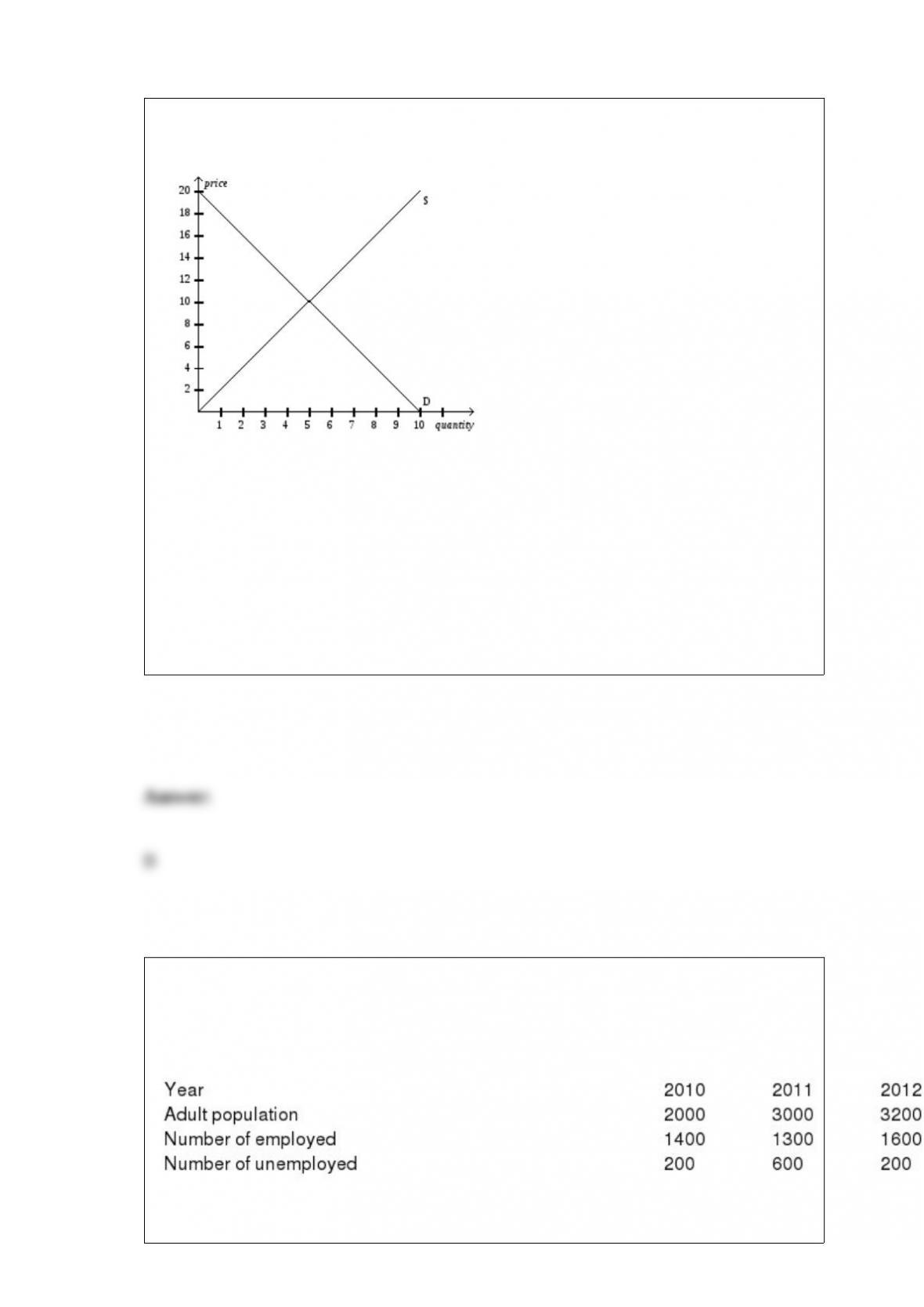
Figure 4-18
Refer to Figure 4-18. At a price of $12, there is a
a. surplus of 1 unit.
b. surplus of 2 units.
c. shortage of 1 unit.
d. shortage of 2 units.
Table 15-1
Labor Data for Aridia
Refer to Table 15-1. The number of adults not in the labor force of Aridia in 2012 was

a. 200.
b. 1400.
c. 1600.
d. 3000.
If Congress instituted an investment tax credit, the equilibrium quantity of loanable
funds would
a. rise.
b. fall.
c. be unchanged.
d. move in an uncertain direction.
Figure 4-15

Refer to Figure 4-15. At the equilibrium price,
a. 200 units would be supplied and demanded.
b. 400 units would be supplied and demanded.
c. 600 units would be supplied and demanded.
d. 600 units would be supplied, but only 200 would be demanded.
If purchasing-power parity holds, then the value of the
a. real exchange rate is equal to one.
b. nominal exchange rate is equal to one.
c. real exchange rate is equal to the nominal exchange rate.
d. real exchange rate is equal to the difference in inflation rates between the two
countries.

Table 15-1
Labor Data for Aridia
Refer to Table 15-1. The number of adults not in the labor force of Aridia in 2010 was
a. 200.
b. 400.
c. 600.
d. 1800.
Which of the following shifts the short-run aggregate supply curve right?
a. both an increase in the price level that is greater than expected and an increase in the
expected price level.
b. an increase in the price level that is greater than expected, but not an increase in the
expected price level.
c. an increase in the expected price level, but not an increase in the price level that is
greater than expected.
d. neither an increase in the price level that is greater than expected nor an increase in
the expected price level.
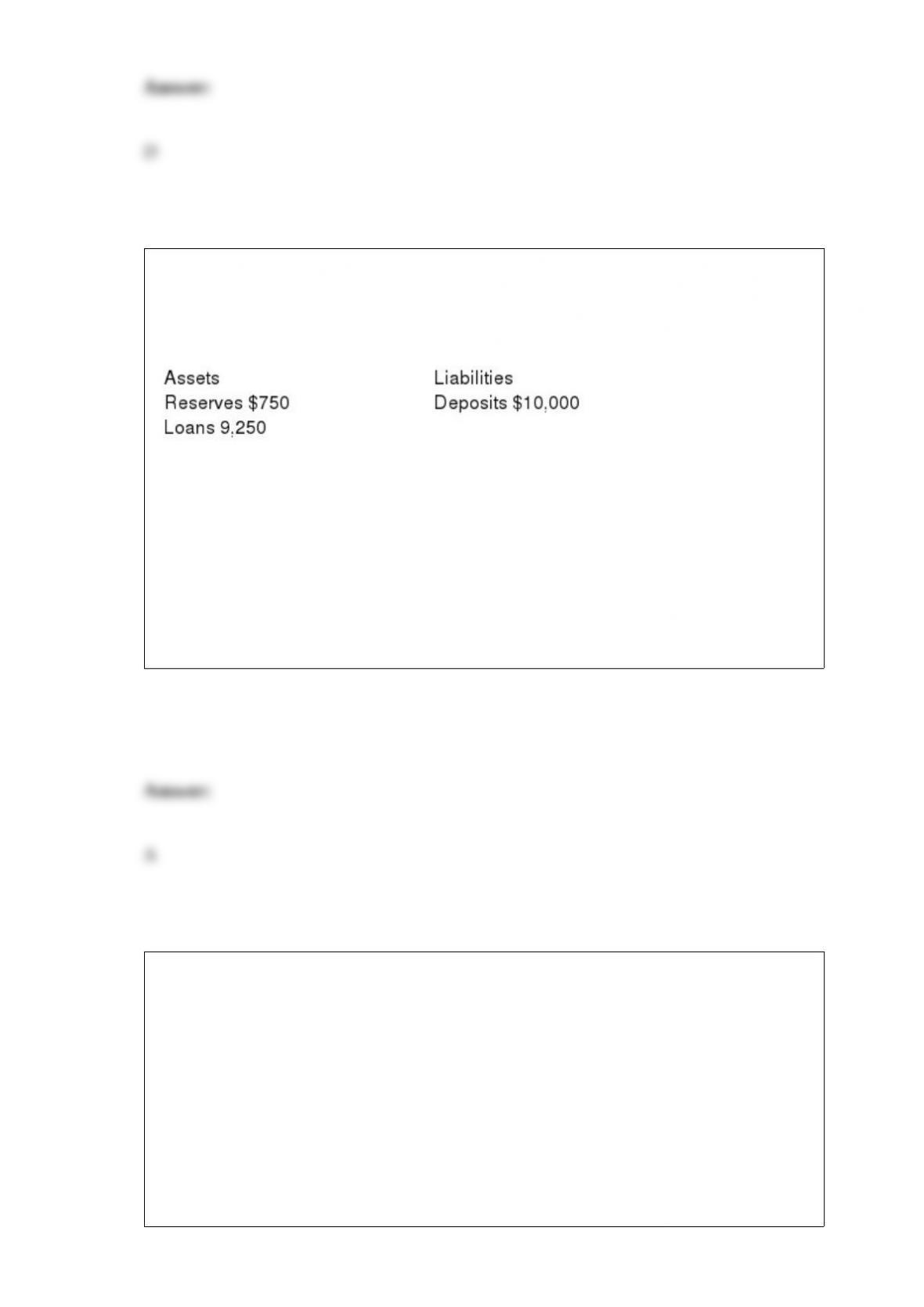
Table 16-2. An economy starts with $10,000 in currency. All of this currency is
deposited into a single bank, and the bank then makes loans totaling $9,250. The
T-account of the bank is shown below.
Refer to Table 16-2. The bank’s reserve ratio is
a. 7.50 percent.
b. 8.12 percent.
c. 92.50 percent.
d. 100 percent.
Table 3-4
Assume that the farmer and the rancher can switch between producing meat and
producing potatoes at a constant rate.
Labor Hours Needed
to Make 1 Pound of Pounds Produced
in 24 Hours

Refer to Table 3-4. The rancher has a comparative advantage in the production of
a. meat.
b. potatoes.
c. both goods.
d. neither good.
Which of the following might explain a decrease in national saving when the tax rate on
savings is reduced?
a. its substitution effect on saving and its effect on the government budget
b. its substitution effect on saving but not its effect on the government budget
c. its effect on the government budget but not its substitution effect on saving
d. neither its substitution effect on saving nor its effect on the government budget
If a U.S. citizen buys a dress made in Nepal by a Nepalese firm, then

a. U.S. consumption increases, U.S. net exports decrease, and U.S. GDP decreases.
b. U.S. consumption increases, U.S. net exports decrease, and U.S. GDP is unaffected.
c. U.S. consumption decreases, U.S. net exports increase, and U.S. GDP increases.
d. U.S. consumption decreases, U.S. net exports increase, and U.S. GDP is unaffected.