
The demand for a resource is derived from the demand for the final product it helps to
produce.
a. True
b. False
If the demand for a good is very price elastic, the imposition of a tax on that good
a. places the largest portion of the burden on the sellers of that product
b. places the burden of the tax equally on buyers and sellers
c. places the largest portion of the tax on consumers
d. will make demand more elastic than it was before the tax
e. will make demand more inelastic than it was before the tax
Which of the following is a major advantage of the sole proprietorship?
a. separation of ownership and control
b. limited liability for business debt
c. transferability of ownership and firm continuity over time

d. ease of start-up
e. ease of obtaining financing
If the price of gasoline (a normal good) decreases, other things constant,
a. the demand for gasoline increases
b. the demand for gasoline decreases
c. the quantity demanded of gasoline increases
d. the quantity demanded of gasoline decreases
e. neither the demand for gasoline nor the quantity demanded of gasoline changes
because everything is assumed constant along a demand curve
Exhibit 2-12 Maria and Hans Production Possibilities for Laundry and Typing
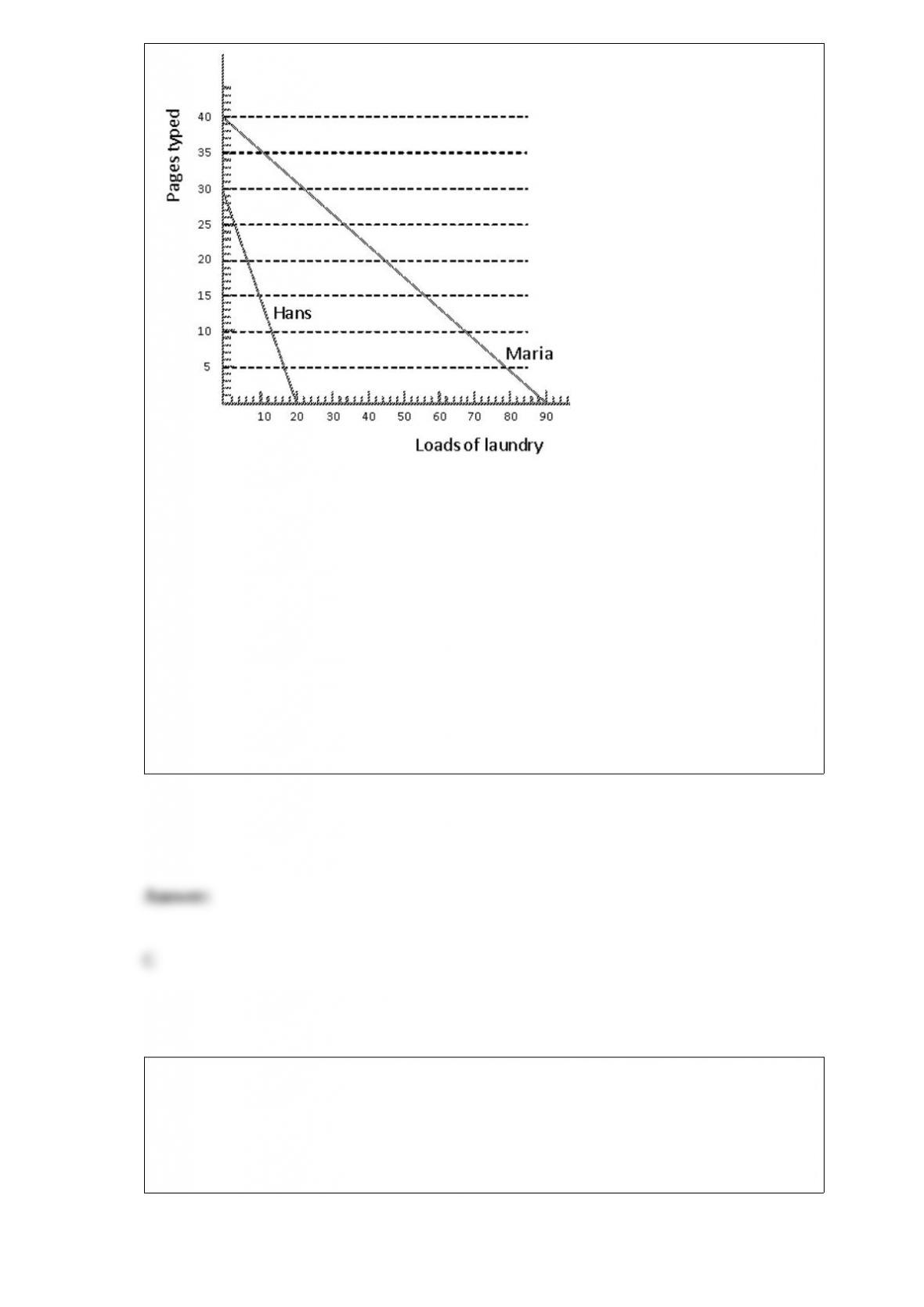
According to Exhibit 2-12, if Maria does one fewer load of laundry, how many pages
can she type in the time saved on laundry?
a. 4 pages
b. 6 pages
c. 2/3 of a page
d. 3/2 of a page
e. it cannot be determined
If demand is elastic, a tax increase will shift the demand curve to the right.
a. True
b. False

If MUx/Px > MUy/Py, the consumer can increase utility by buying less of good y, which
means the MUy will rise.
a. True
b. False
In the long run, all of a firm’s inputs are variable.
a. True
b. False
In order for a strike to be successful, the union must decrease the supply of both union
and non-union labor.
a. True
b. False
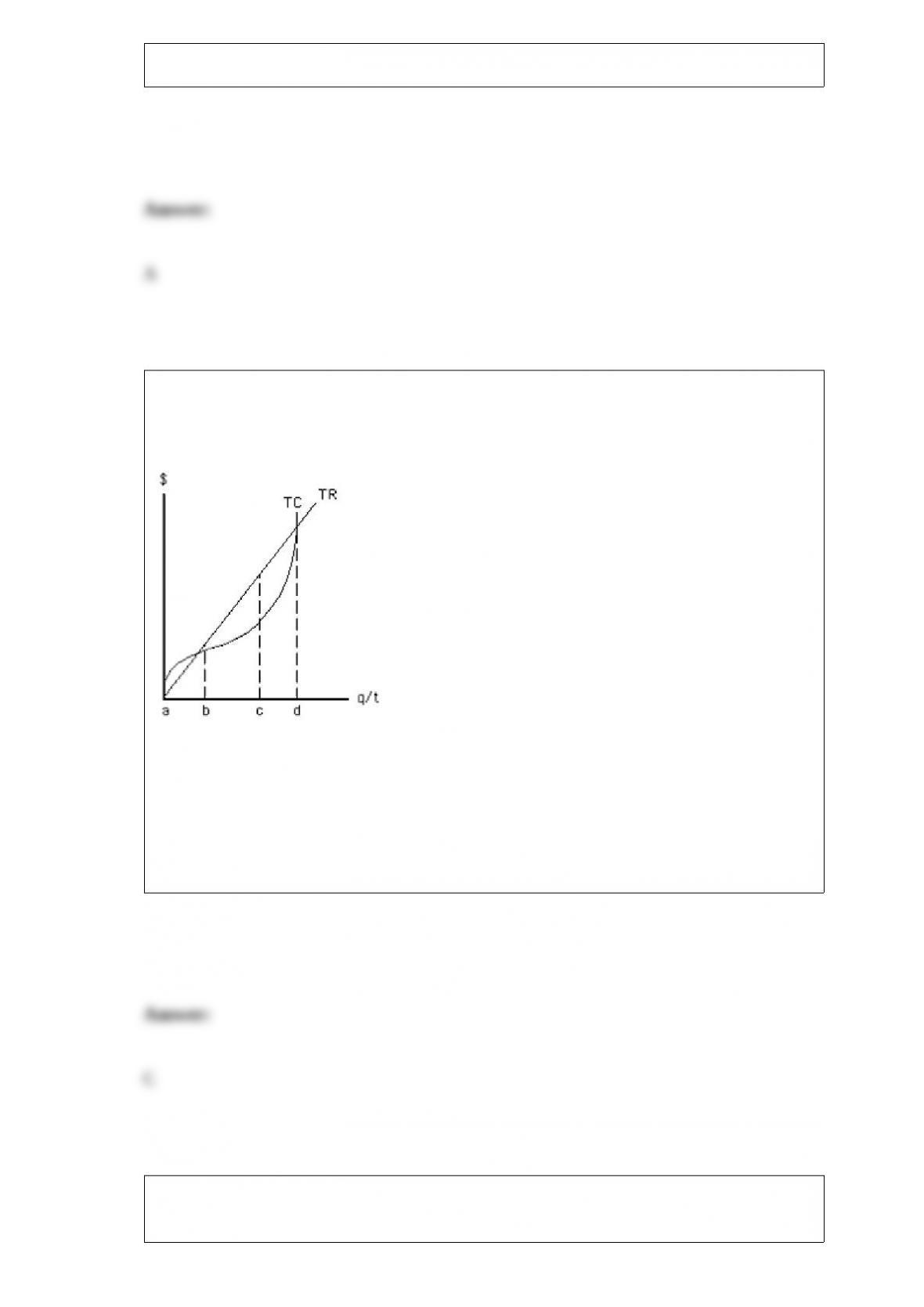
Exhibit 8-3
Which point in Exhibit 8-3 indicates the quantity at which marginal revenue and
marginal cost are equal?
a. point a
b. point b
c. point c
d. point d
e. either point b or point d
If Robin has an absolute advantage in both gardening and baking when compared to
Robert, then

a. Robin cannot benefit by trading with Robert
b. Robin can benefit by specializing in gardening if Robert specializes in baking
c. Robin can benefit by specializing in baking if Robert specializes in gardening
d. Robin and Robert may benefit from trading, but there is insufficient information to
determine who should specialize in what
e. neither Robin nor Robert can benefit from trading with the other
Economics is the study of
a. how to get rich by playing the stock market
b. the best ways to reduce people’s wants, given the scarcity of resources
c. how rational government officials determine what goods should be produced
d. money and why it is good
e. how people use limited resources to try to satisfy unlimited wants
The source of gains from trade is
a. tariffs
b. self-sufficiency
c. autarky equilibrium
d. absolute advantage
e. comparative advantage
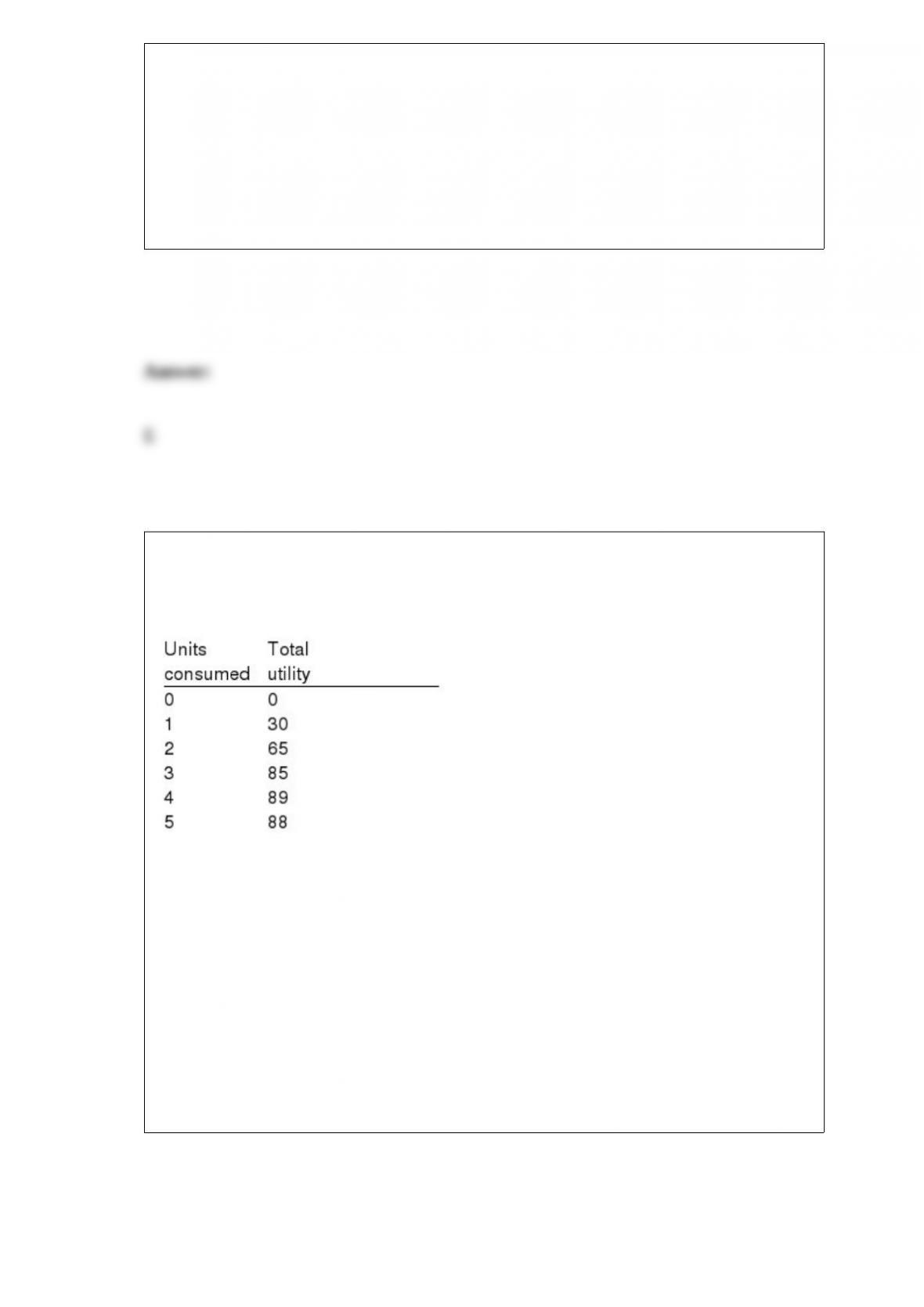
Exhibit 6-4
In Exhibit 6-4, where does marginal utility first begin to diminish?
a. sometime after the first unit consumed
b. sometime after the second unit consumed
c. sometime after the third unit consumed
d. sometime after the fourth unit consumed
e. sometime after the fifth unit consumed

Education confers positive externalities because
a. some education is done outside the market (i.e., in public schools)
b. curricula are regulated by the government, even in private schools
c. an educated person consuming education gains many benefits he or she did not
expect when the process started
d. an educated person who has consumed education usually behaves in a way that
benefits others
e. education gives benefits to individuals in excess of the costs they pay to get it
If oligopolists engaged in some sort of collusion, industry output would be __________
and the price would be __________ than under perfect competition.
a. smaller, lower
b. smaller, higher
c. smaller, no different
d. greater, lower
e. greater, higher

Consider a system in which a person earning $10,000 pays $1,000 in taxes, a person
earning $25,000 pays $1,000 in taxes and a person earning $60,000 pays $1,000 in
taxes. What type of tax is this?
a. progressive
b. proportional
c. regressive
d. transgressive
e. unfair
Exhibit 11-9
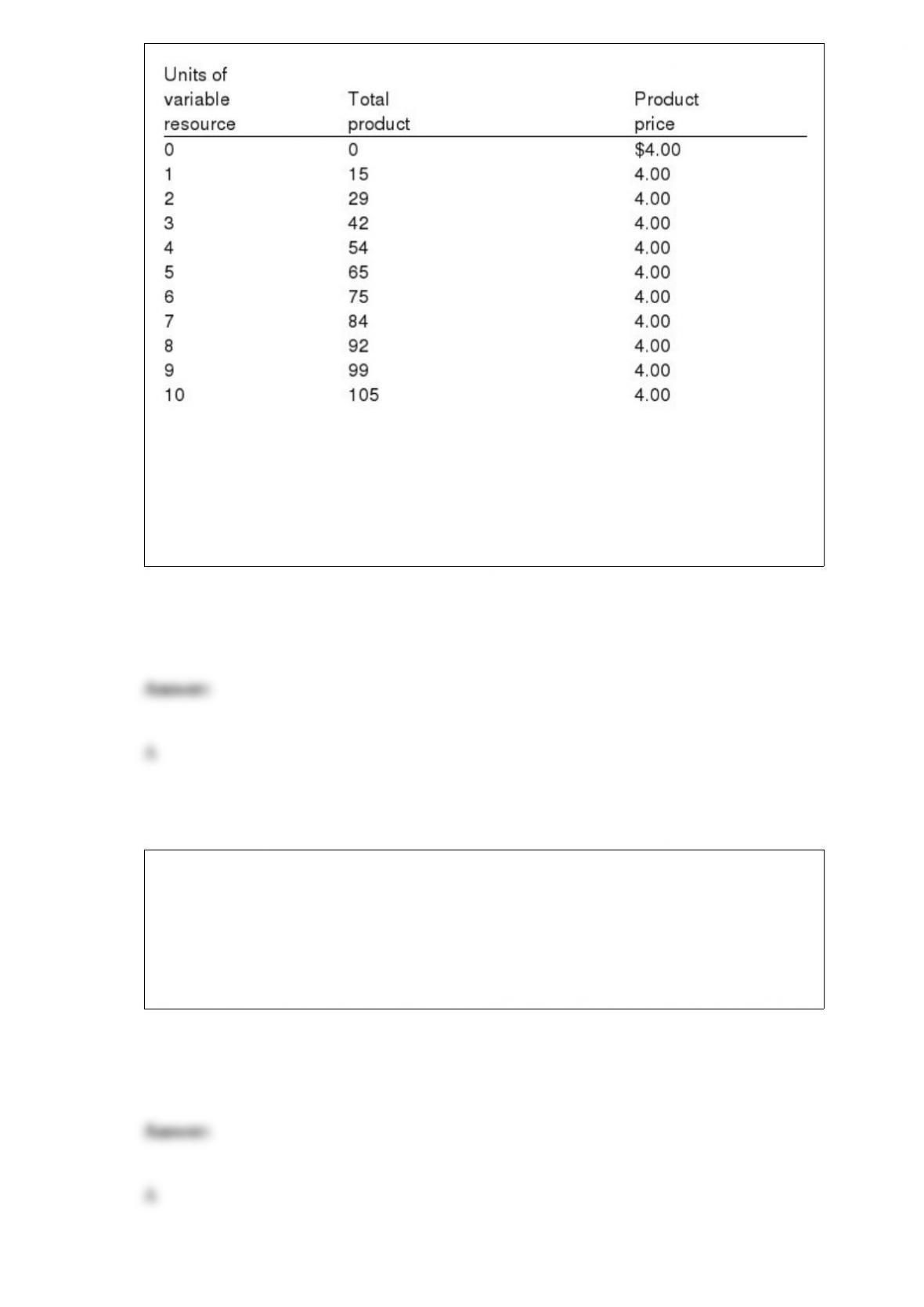
In Exhibit 11-9, the marginal revenue product curve will slope downward.
a. True
b. False
The problem with allocating income according to productivity is that some people have
difficulty earning income.
a. True
b. False

To say that people make marginal decisions means that
a. they usually wait until the last minute before making a decision to buy
b. they weigh the additional costs and additional benefits of various activities before
they make a decision
c. most people just barely get by on the incomes they earn and live from day to day on
the very edge of subsistence
d. given a choice, most people would prefer to make their own decisions concerning the
things that affect their lives
e. they consider the total cost and benefit of various activities before they make a
purchase
A tariff is
a. a tax on financial transactions
b. a tax on either imports or exports
c. the result of a treaty
d. a penalty imposed on importers of capital
e. an agreement between countries to limit trade

If marginal revenue is less than price for a firm, it must be true that the firm
a. is a monopoly
b. is in perfect competition
c. is in monopolistic competition
d. faces a perfectly elastic demand curve
e. faces a downward-sloping demand curve
Commodity products are
a. pasteurized
b. bland
c. perceived by consumers to be identical
d. made by one manufacturer
e. made by hand
Collusion among firms to raise price is rare in monopolistically competitive markets
because
a. there are too many firms
b. there are too few firms

c. there is only one firm
d. products are homogeneous
e. price leadership is used instead
Free markets produce too little output when
a. negative externalities exist
b. positive externalities exist
c. production uses fixed-production technology
d. production uses variable technology
e. the resource is exhaustible
All other things constant, higher implicit cost results in lower accounting profit.
a. True
b. False
Corporations can acquire funds for investment projects through
a. both c and e
b. all of the following
c. borrowing (e.g., from banks)
d. issuing bonds
e. issuing stock
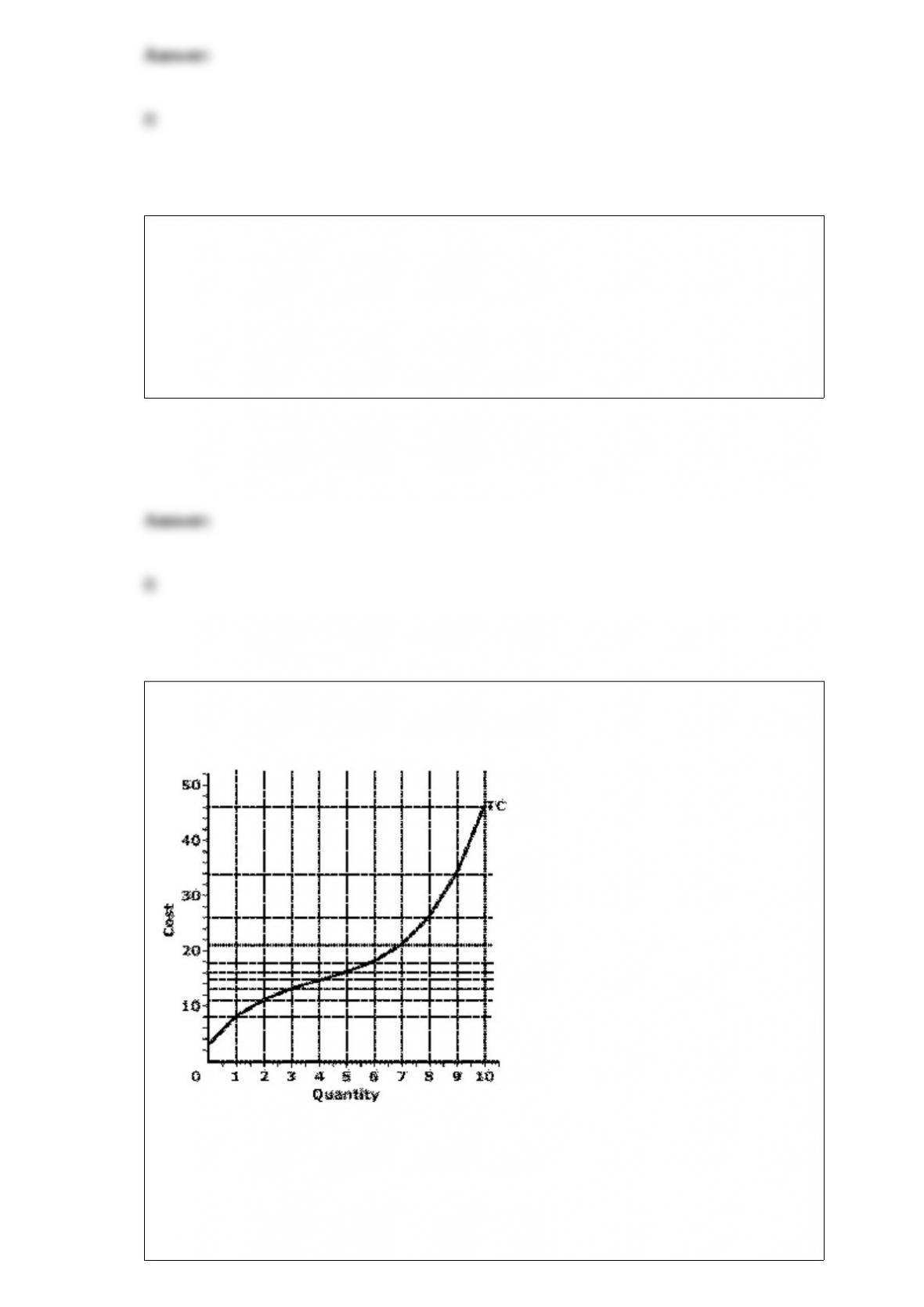
Exhibit 7-14 Total Cost Curve
In Exhibit 7-14, what are variable costs at 8 units of output?
a. $0
b. $23
c. $26
d. $30
e. cannot be determined from the total cost curve
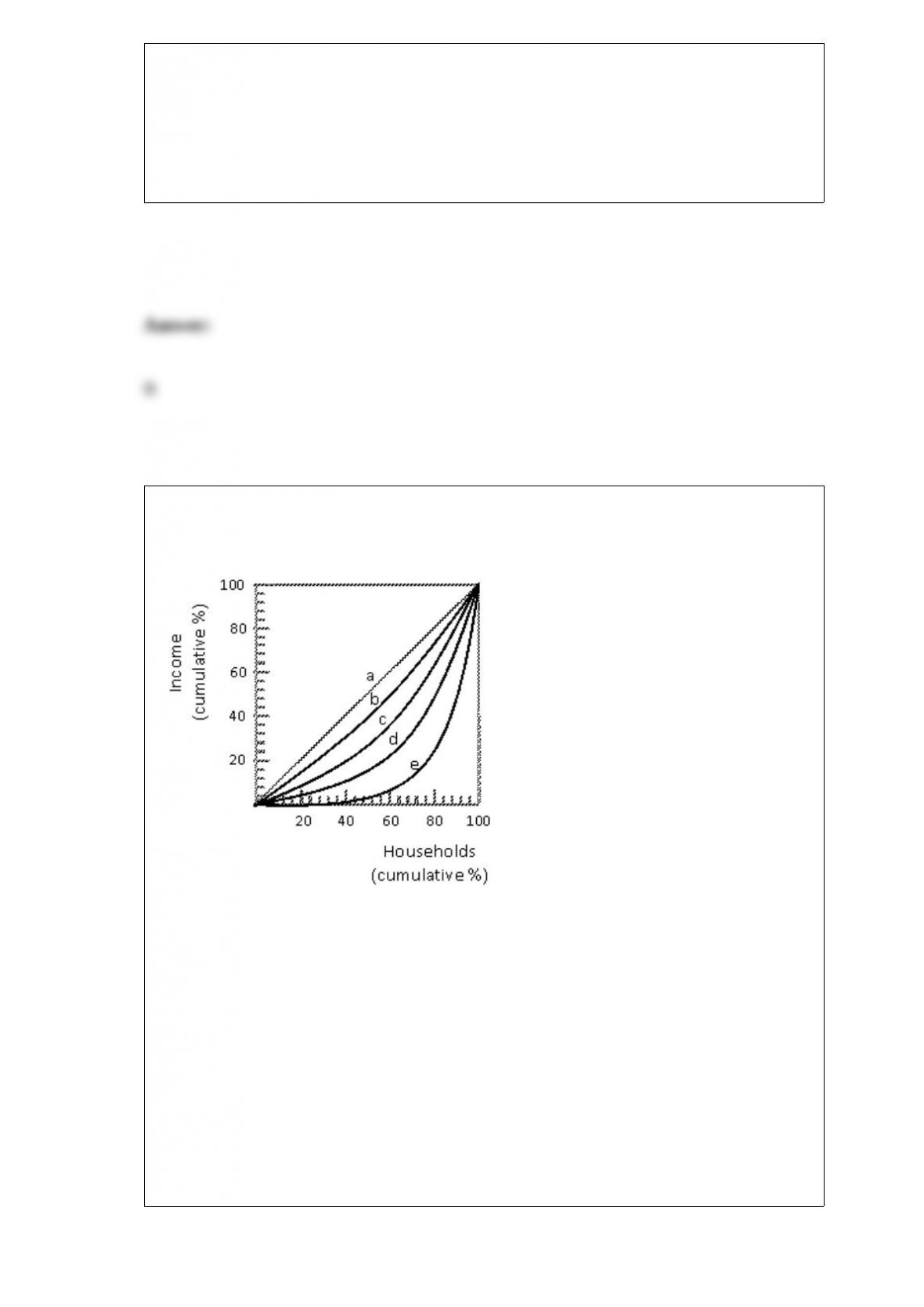
Exhibit 18-1
Exhibit 18-1 shows five different Lorenz curves. Which curve shows the most equal
distribution of income?
a. a
b. b
c. c
d. d
e. e

Which of the following is true concerning the impact of tariffs and quotas?
a. Tariffs raise the price of a good but quotas do not.
b. Tariffs reduce consumer and producer surplus whereas quotas reduce domestic
consumer surplus and increase domestic producer surplus.
c. Both tariffs and quotas increase the quantity demanded.
d. The revenue resulting from a tariff goes to the government whereas the revenue
resulting from a quota goes to whoever is awarded the right to sell the product.
e. The potential welfare loss is greater with tariffs than quotas.
Suppose a carpenter builds a bookcase for an attorney in exchange for legal services.
This transaction is
a. a means of tax avoidance
b. likely to be taxed
c. not part of the economy’s total production
d. a means of tax evasion
e. likely to result in double taxation