1) a market for human organs (rather than the current volunteer-donor system) would be
expected to:
a.reduce the quantity of organs supplied.
b.increase total health care spending.
c.decrease the demand for physicians who do transplants.
d.create a surplus of organs.
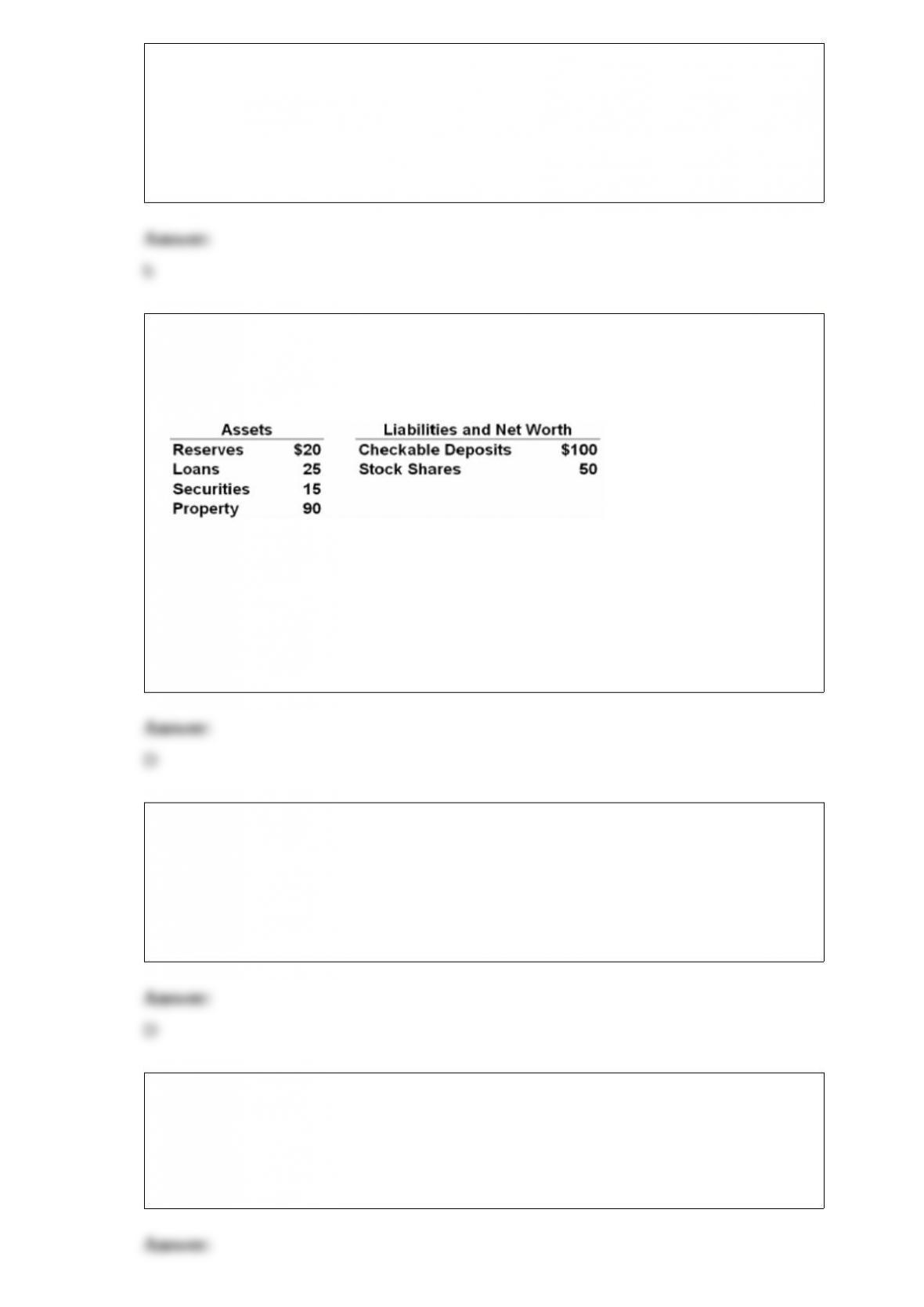
2) The following balance sheet for the First National Bank of Bunco. All figures are in
millions.
Refer to the above data. Suppose that this bank currently has $6 million in excess
reserves and that customers of this bank collectively write checks for cash at the bank in
the amount of $6 million. As a result, the bank’s excess reserves diminish to:
A.$0.
B.$6 million.
C.$0.72 million.
D.$0.84 million.
3) Which of the following statements is correct?
A.Price supports may induce either an underallocation or an overallocation of resources
to farm products.
B.Supported prices have no effect on the allocation of resources to farm products.
C.Supported prices induce an underallocation of resources to farm products.
D.Price supports induce an overallocation of resources to farm products.
4) macroeconomics approaches the study of economics from the viewpoint of:
a.the entire economy.
b.governmental units.
c.the operation of specific product and resource markets.
d.individual firms.
5) refer to the above diagram. line (2) reflects the long-run supply curve for:
error! hyperlink reference not valid.error! hyperlink reference not valid.
a.a constant-cost industry.
b.a decreasing-cost industry.
c.an increasing-cost industry.
d.a technologically progressive industry.
6) suppose a pure monopolist is charging a price of $12 and the associated marginal
revenue is $9. we thus know that:
a.demand is inelastic at this price.
b.the firm is maximizing profits.
c.total revenue is increasing.
d.total revenue is at a maximum.
7)
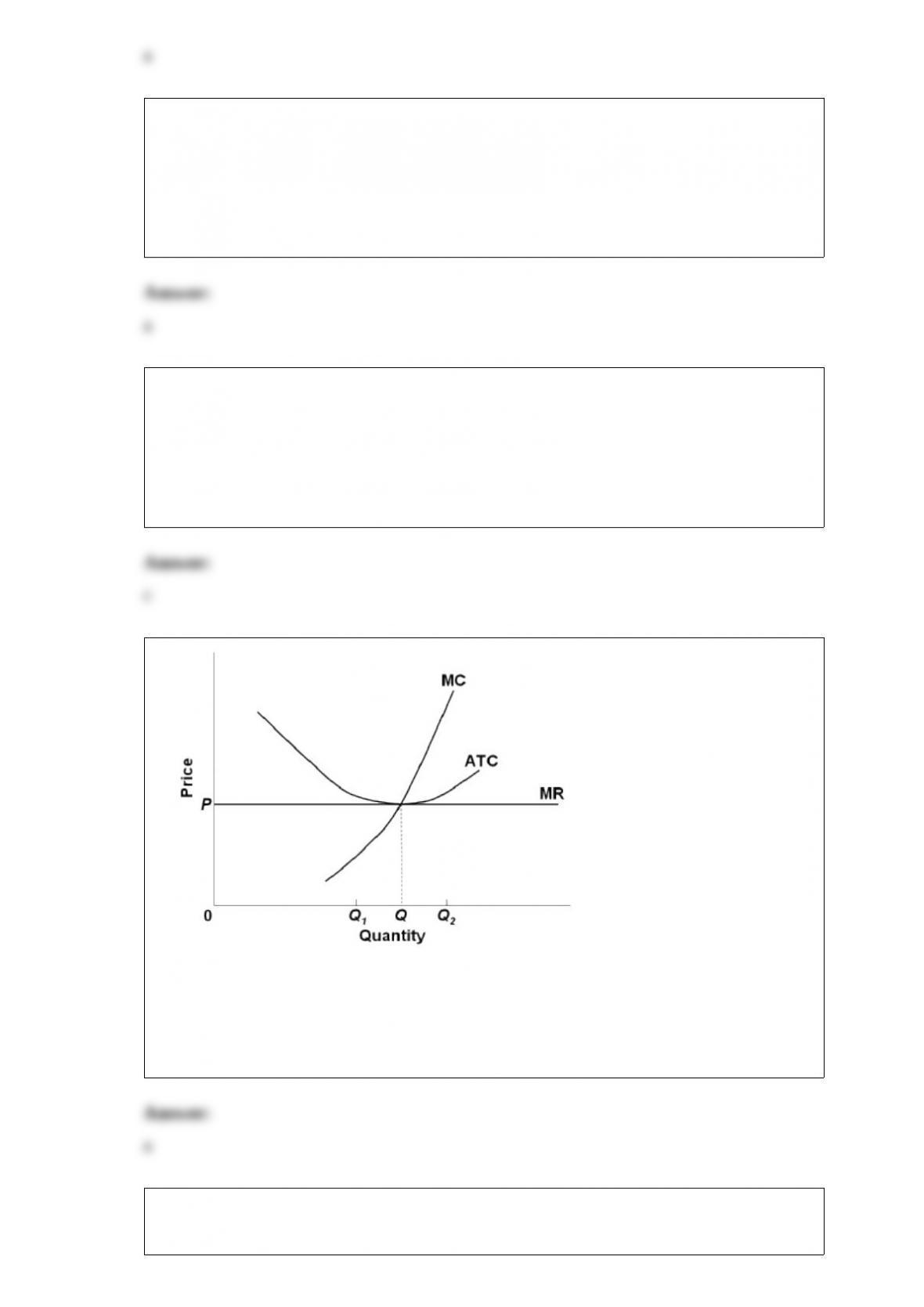
refer to the above diagram. at output level q1:
a.neither productive nor allocative efficiency are achieved.
b.both productive and allocative efficiency are achieved.
c.allocative efficiency is achieved, but productive efficiency is not.
d.productive efficiency is achieved, but allocative efficiency is not.
8) (Consider This) The “lemon” problem associated with the market for used cars:
A.results from asymmetric information and the moral hazard problem.
B.results from asymmetric information and adverse selection.
C.is an example of the Coase theorem at work.
D.in an example of a spillover benefit.
9)
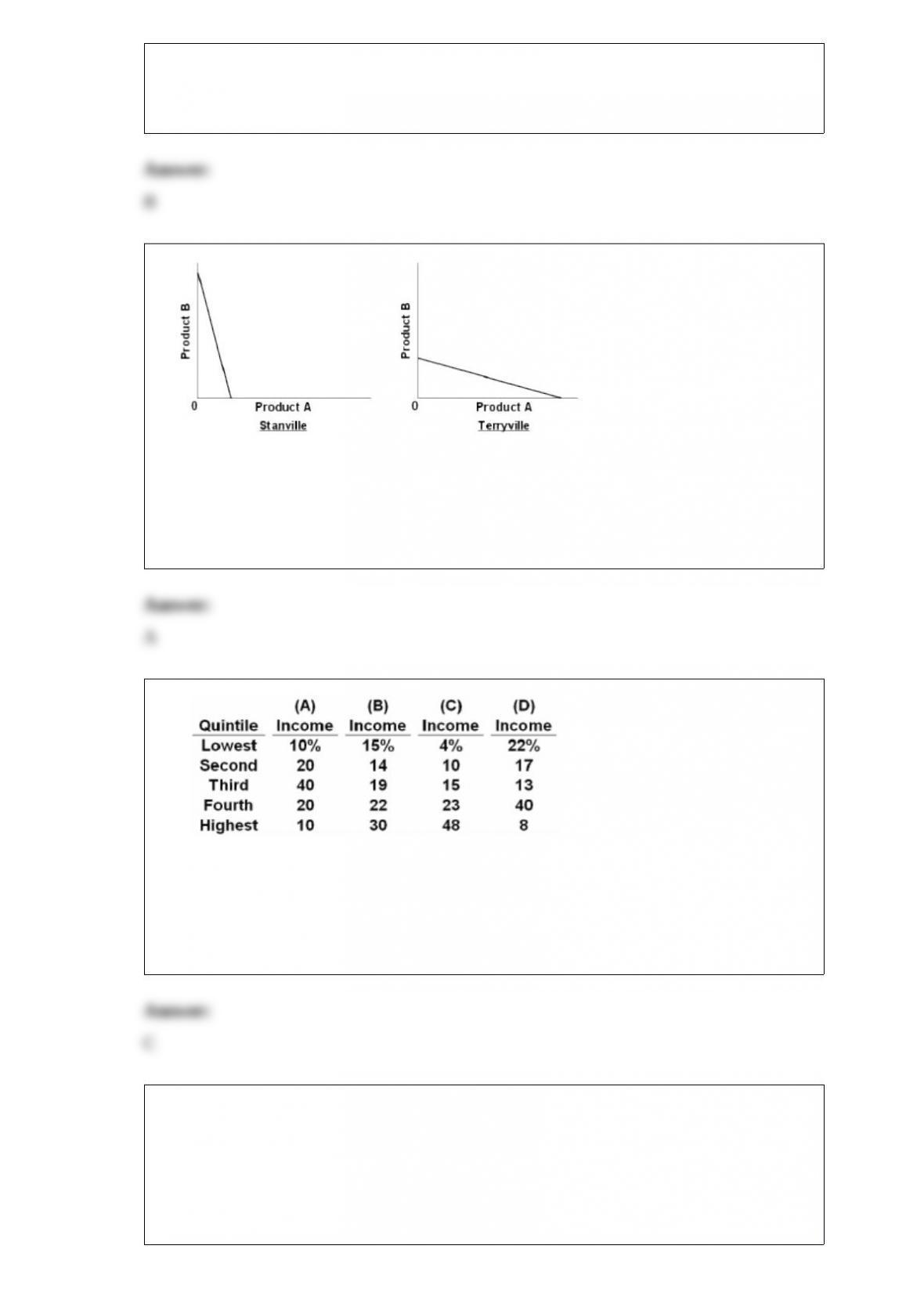
Refer to the above graphs. Terryville has a comparative advantage in producing:
A.product A
B.product B
C.both product A and B
D.neither product A nor B
10)
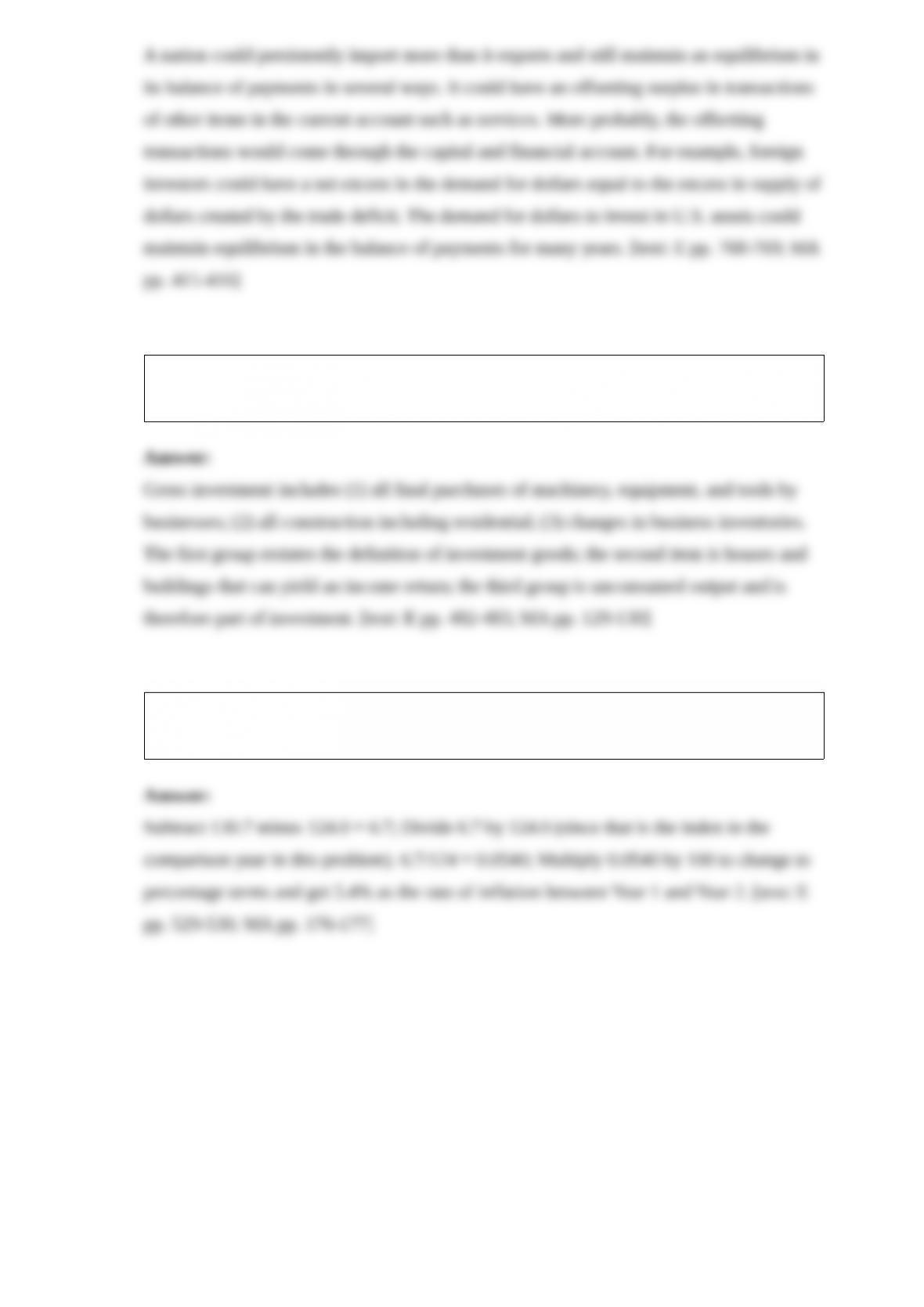
Which of the above distributions is closest to describing the United States?
A.A
B.B
C.C
D.D
11) Assuming no other changes, if balances in money market deposit accounts increase
by $50 billion and small time deposits decrease by $50 billion, the:
A.M1 and M2 money supplies will not change.
B.M2 money supply will increase.
C.M1 money supply will decline.
D.M2 money supply will increase and the M1 money supply will decrease.

12) which of the following characteristics is least unique to a market system?
a.private ownership of property resources
b.competition among buyers and sellers pursuing monetary returns
c.the widespread use of money
d.freedom of enterprise and choice
13) Describe the importance and major features of the Sherman Act of 1890.
14) Using the below axes draw a graph for a purely competitive firm that is earning
normal profit in the long run. Explain why an entrepreneur may earn an economic profit
and not just a normal profit, even in the long run.

15) A perfectly competitive firm in the factor and product markets sells its output for $1
and pays factors PL = $9 and Pc = $12. What is the profit-maximizing combination of
labor (L) and capital (C) for the firm?
16) Explain how a nation might persistently import more than it exports and still
maintain an equilibrium in its balance of payments.
17) Give the three categories which comprise gross investment and explain the
difference between them.
18) Calculate the rate of inflation between Year 1 and Year 2. The price index in Year 1
was 10. It was 130.7 in Year 2.