
Figure 21-1
In Figure 21-1, a reform in the distribution system that achieves the same distribution
with less damage to work incentives is represented by a move from which points?
a. A to B
b. C to G
c. C to F
d. B to C
A portfolio of stocks, bonds, and other investments helps reduce the risk of investment.
a. True
b. False
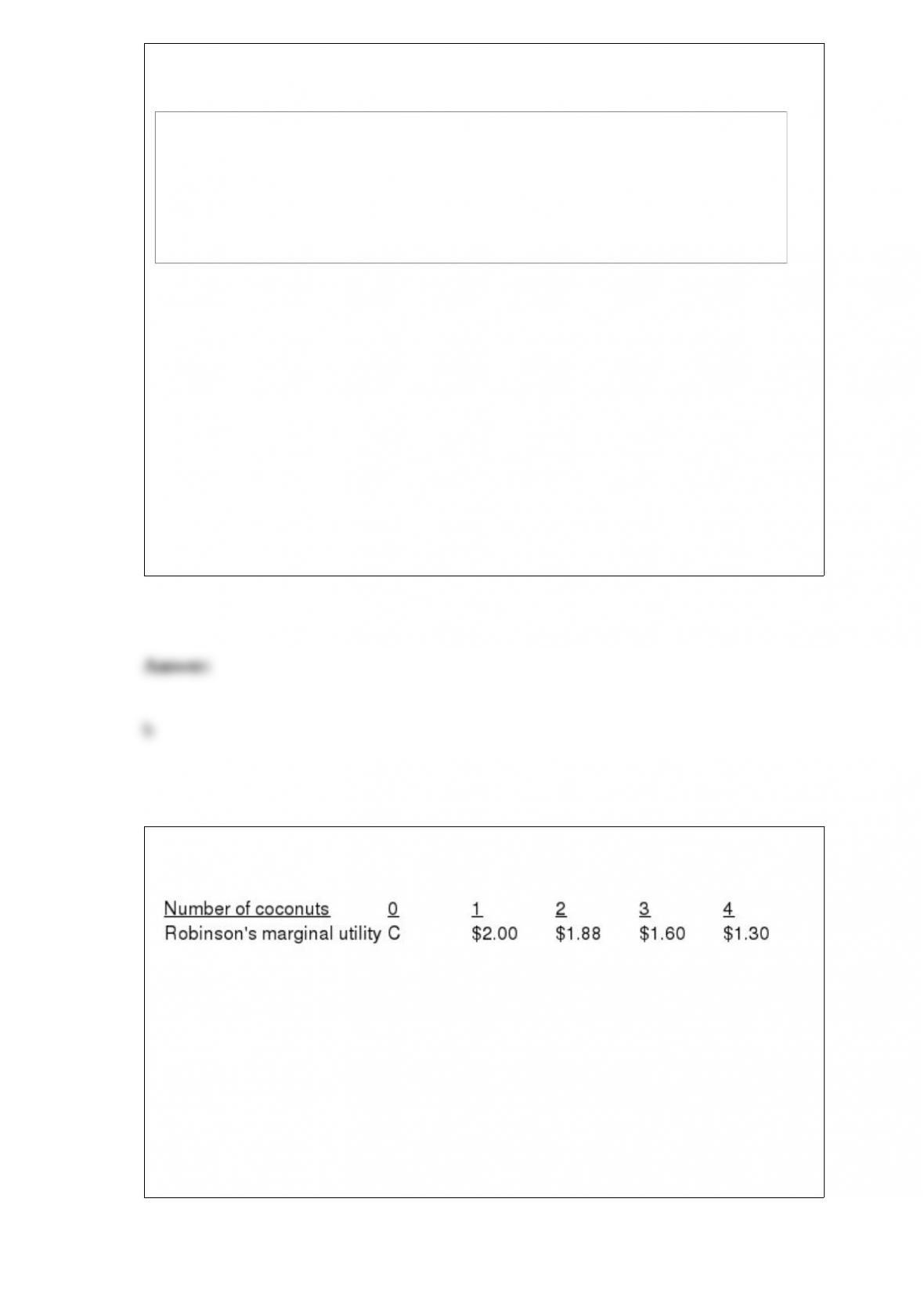
Figure 4-22
Because of falling oil prices in the past, Libya could afford fewer imported goods.
Government controls were established to limit imports of cigarettes. In 1985, the
market price of Marlboros rose to $70 a carton. Which graph in Figure 4-22 best depicts
this situation?
a. 1
b. 2
c. 3
d. 4
Table 5-2
According to Table 5-2, Robinson’s total utility from having two coconuts is ____.
a. $1.87
b. $1.66
c. $3.88
d. This is not determinable from the information in the table.

Government often finds it difficult to cope with externalities because
a. costs and benefits are difficult to assess in monetary terms.
b. taxes and subsidies are ineffective in equating MSC and MSB.
c. government has no authority to impose fines for air and water pollution.
d. marginal private cost curves cannot be shifted.
In cases of natural monopolies, society would be better off with many firms competing
with each other.
a. True
b. False
A firm earns a profit of exactly zero at its optimal output level only if
a. P = MR.
b. P = MC.

c. P = AC.
d. P = SR AVC.
Net benefit is equal to total benefit minus marginal cost.
a. True
b. False
The two ways to define poverty are which of the following?
a. relatively and absolutely
b. absolutely and definitely
c. definitely and conceptually
d. definitely and receptively

A firm’s total profit is the difference between its sales and what it pays out in costs.
a. True
b. False
The divergence between money costs and opportunity costs is the least in which of the
following situations?
a. China uses millions of otherwise unemployable workers to build roads with picks and
shovels.
b. Wilhelm, an engineer at Exxon, is drafted-his army salary is $2,000 per month.
c. Colleen quits her job to stay at home and raise her children.
d. A university, using a private contractor, builds a field house on land it purchased at
full market value from a local farmer.
The federal government, in order to fund expanded health care, imposes a lump-sum tax
on all business property. Profit-maximizing firms that stay in business will respond by
a. raising prices to pay the tax.
b. cutting output to reduce costs.
c. lowering prices to stimulate demand.
d. doing nothing.

A firm will shut down in the short run if
a. P < AVC.
b. P > AVC.
c. AVC > AFC.
d. TR > TC.
A factory produces 1,000 radios a year, AVC = $10 and TFC = $5,000. The factory’s TC
a. equals $15.
b. equals $5,005.
c. equals $15,000.
d. cannot be determined from the information given.

The divergence between money costs and opportunity costs will be greatest in which of
the following situations?
a. A university purchases 100 computers.
b. A university employs people from town in the commissary (people prefer this job to
working in the paper factory).
c. A university employs otherwise unemployed teenagers to paint crosswalks and curbs.
d. A university replaces the roof of the fine arts building.
The Herfindahl-Hirschman Index measures
a. concentration in the industry.
b. industrial average output.
c. economies of scale.
d. consumer confidence.
Beginning in the mid-1970s, Congress deregulated several industries including airlines
and trucking.
a. True
b. False

Which of the following is not a public good?
a. a coastal lighthouse
b. national defense
c. a flood-control levee
d. the latest Walt Disney movie
To the investor, stocks are riskier than bonds because
a. interest rates fluctuate more than stock prices.
b. dividends depend on profits.
c. speculators manipulate stocks but not bonds.
d. dividends are taxed twice.
The corporate income tax is

a. a tax on corporate profit, not revenue.
b. the single largest source of federal revenue.
c. a payroll tax paid partially by employees and partially by employers.
d. has increased as a proportion of federal tax revenue since 1950.