MEDICAL FORMS 641
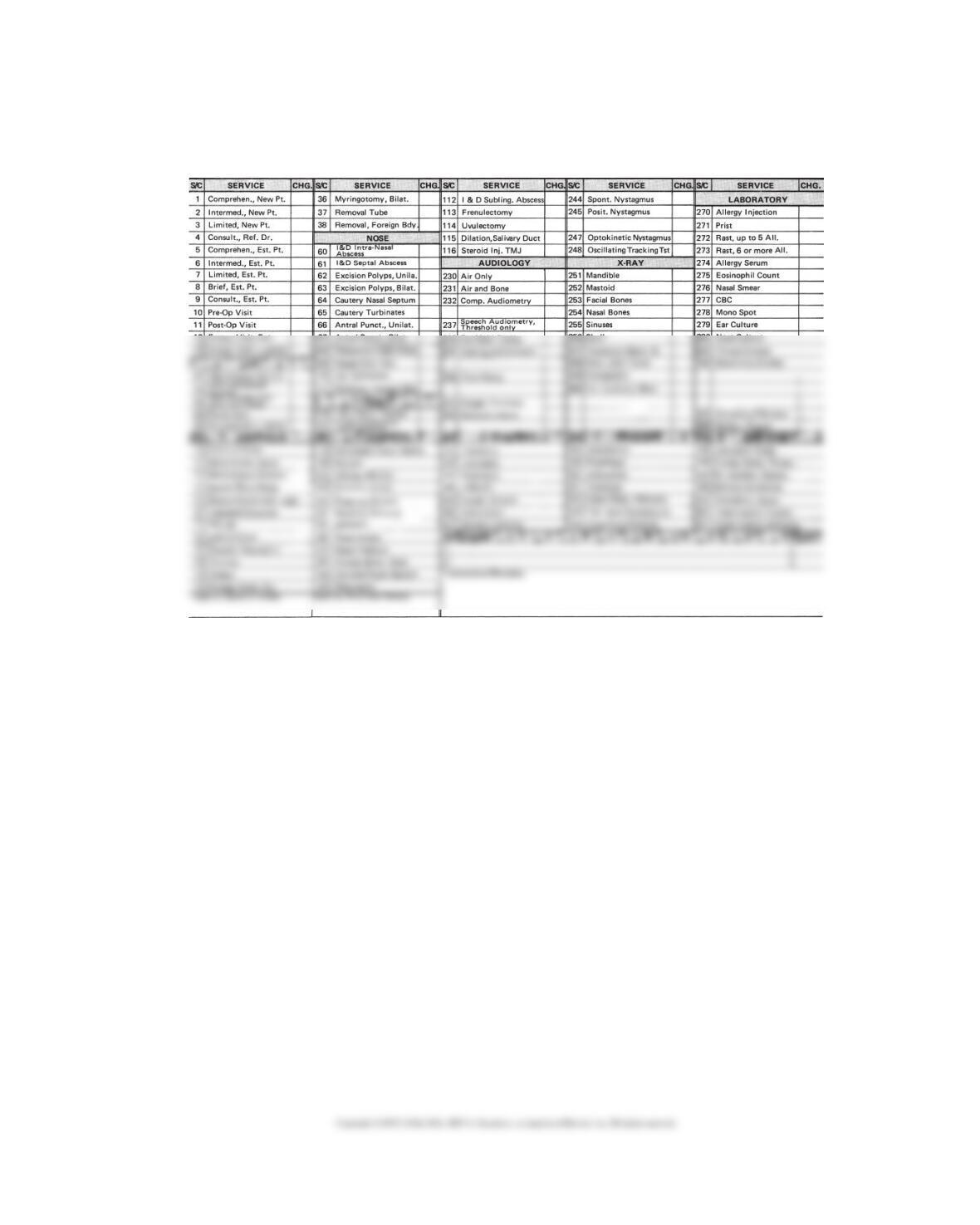
Otolaryngology Associates
642 MEDICAL FORMS
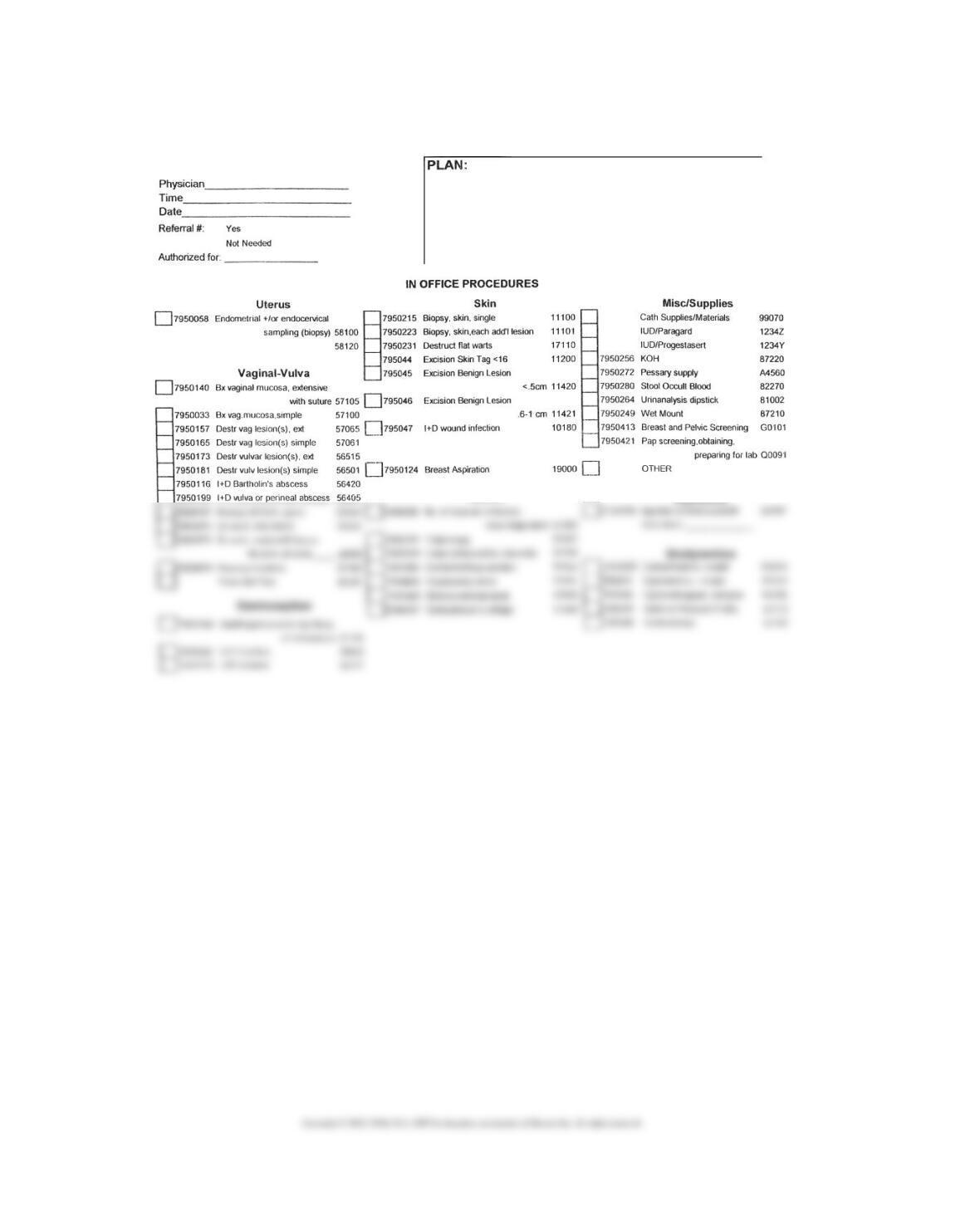
GYN Women’s Health
Encounter Form
Injections
Breast
Cervix
MEDICAL FORMS 643
644 MEDICAL FORMS
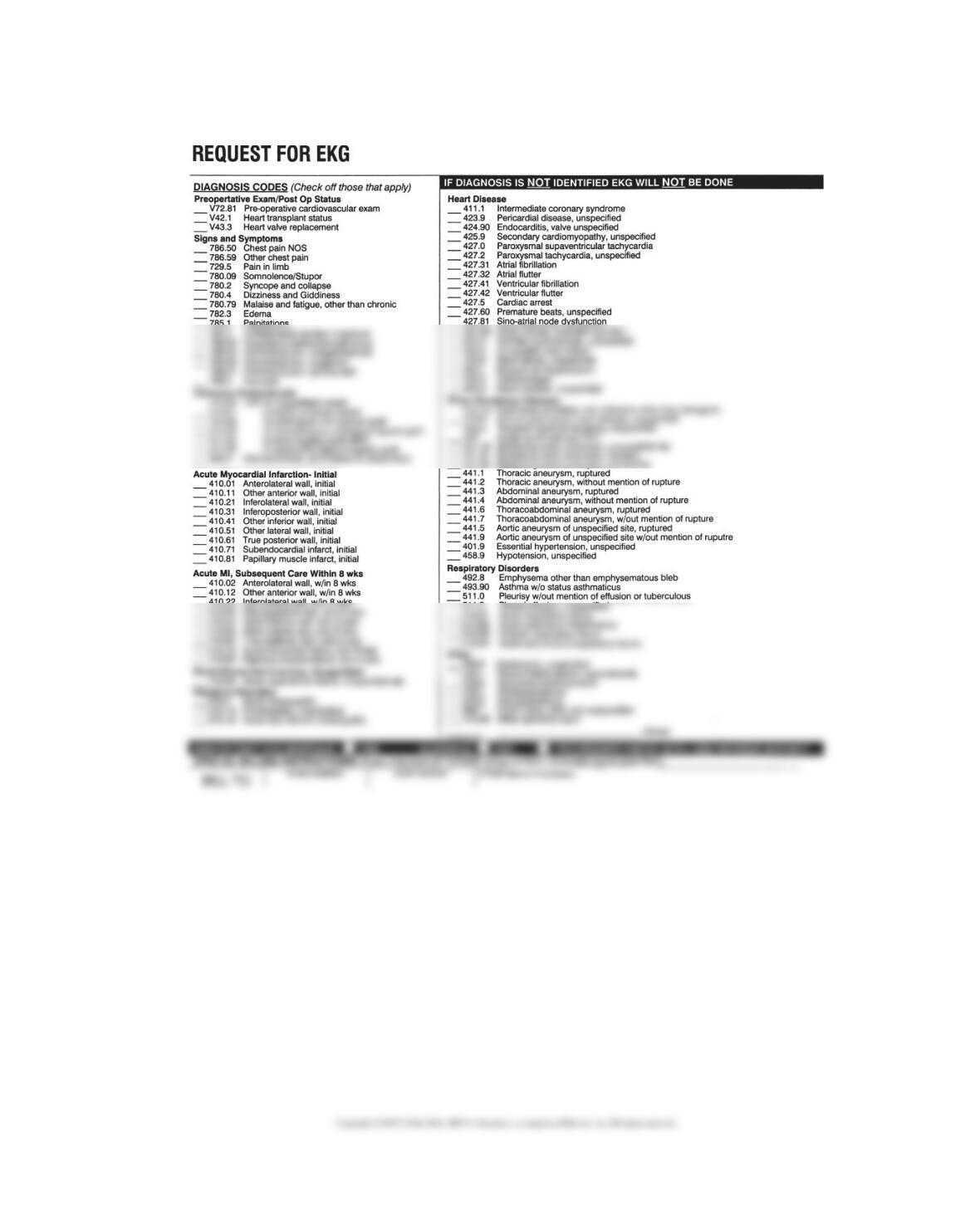
MEDICAL FORMS 645
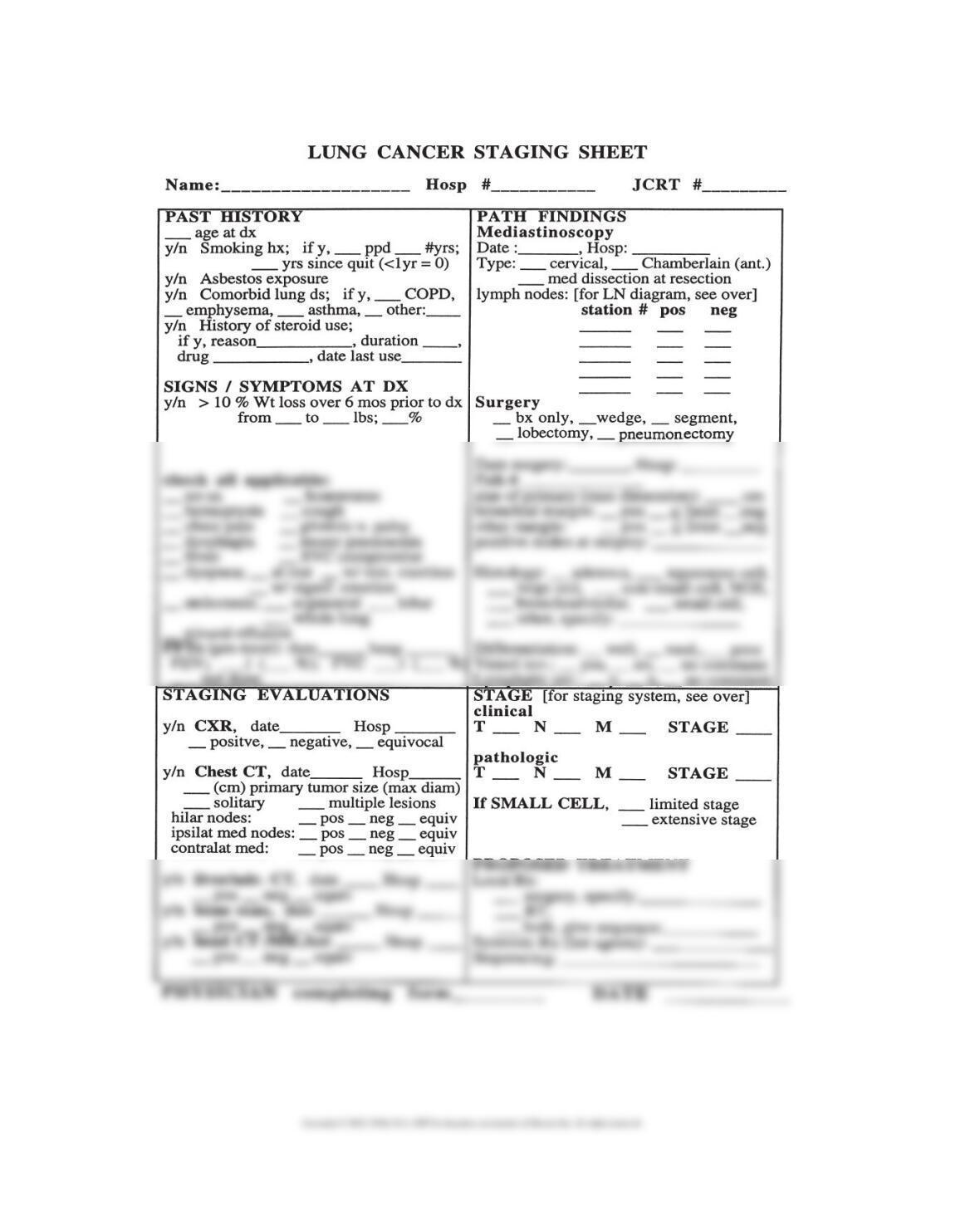
646 MEDICAL FORMS
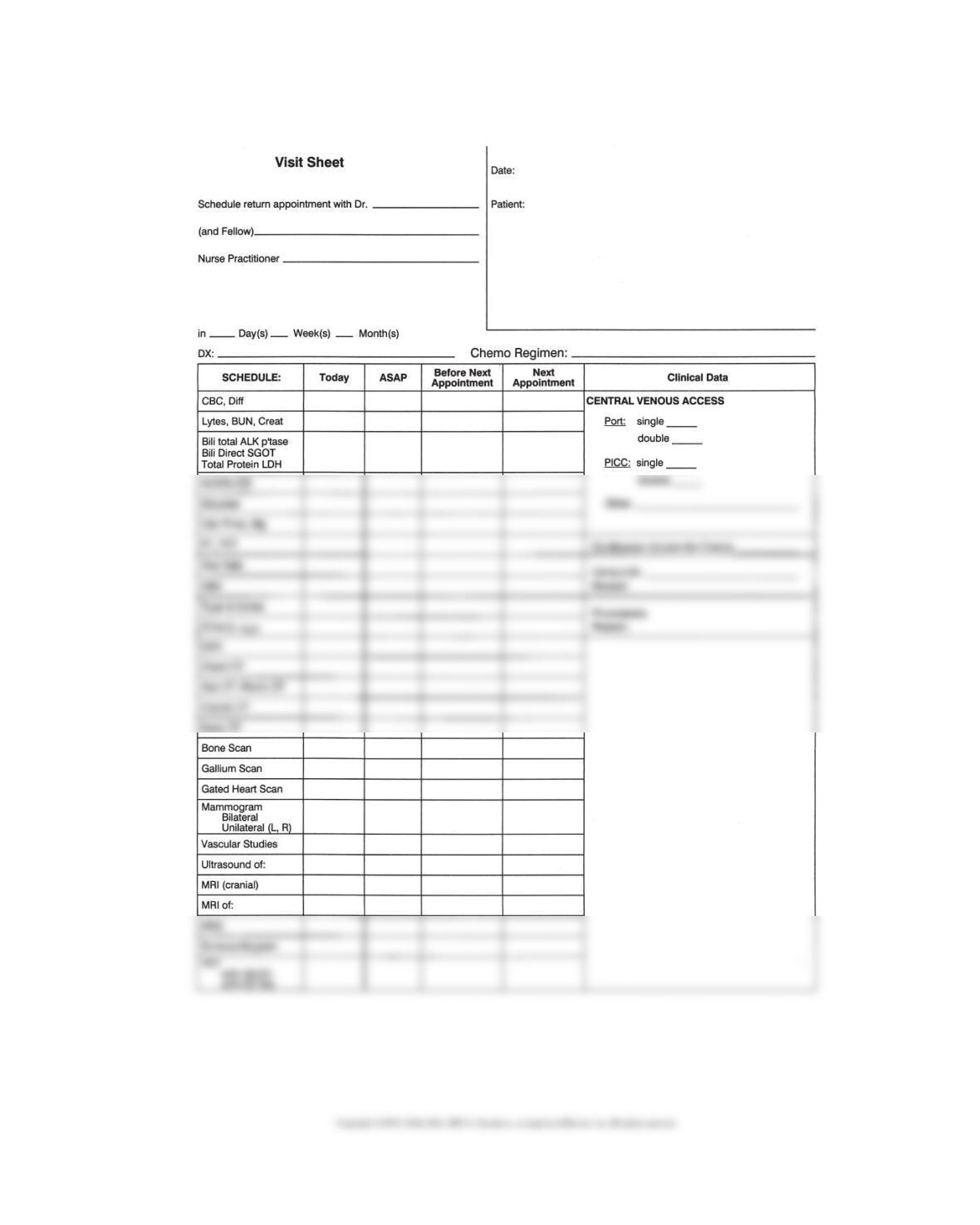
MEDICAL FORMS 647
TEACHER TO TEACHER
This section contains selected responses of medical terminology teachers to a questionnaire about
methods and activities they use in their classrooms. I hope that this will be a springboard for
you to communicate with each other and share ideas about teaching. The questions are listed
below, and following is an alphabetical list of teachers who responded and included their name
and address. I want to thank all of you who took the time to share. Hopefully, you will continue to
send comments and suggestions to me via my e-mail (Daviellenchabner@gmail.com) or our new
website for teachers and students (http://evolve.elsevier.com/chabner/language).
Questionnaire
1. What activities or teaching aids have you developed to use in your classroom to make the
subject come alive?
2. Have you developed any interesting quiz formats that your students find helpful?
3. Have you developed any supplemental handouts that are helpful to students?
4. What do you do to help students who have poor English skills?

650 TEACHER TO TEACHER
Mary Lu Albee
Biology Department
Lewis & Clark Community College
Godfrey, Illinois
Jeanne Christen
Phoenix College
Phoenix, Arizona
Carol Conti
School of Nursing
Elizabeth General Medical Center
Elizabeth, New Jersey
Brenda Erickson
John A. Logon College
Carterville, Illinois
Thomas W. Owen
Billings Business College
Billings, Montana
Lu Ann Reicks
Iowa Central Community College
Fort Dodge, Iowa
Joy Renfro
Eastern Kentucky University
Richmond, Kentucky
Connie M. Schoon
Alpena Community College
Alpena, Michigan
Mary Schrader
Southwest Wisconsin Technical College
Teachers
TEACHER TO TEACHER 651
QUESTION ONE
What activities or teaching aids have you developed to use in your classroom to make the
subject come alive?
Albee: I require students to find one article/week with at least 20 medical terms that they
define and then summarize the article in common language.
Erickson: (1) Transparencies (color) for some sections; (2) made our own cassette tapes
dictating words at the end of each chapter; (3) flash cards.
Fuller: I have included speakers: oncologist, ophthalmologist, physical therapist, x-ray
technician, ER physician, and others.
Haueisen: When I teach body planes, positions, and cavities, I use E.L. Fudge cookies and
colored toothpicks to help the students see each body area. Each student gets
two cookies and one each of red, blue, yellow, and green toothpicks. After using
Howe: I use A&P films with each unit and play Jeopardy! or Family Feud as a review.
Leitheiser: Do some lab – microscope work; anatomical models, crossword puzzles, short
worksheets to do at the end of each lecture.
Owen: Videotapes of operations. Check with doctors’ offices for this type of material.
Schoon: Students are required to make their own flash cards and then with a partner, they
flash the cards and test each other. I photocopied the diagram of the heart with
the identified parts omitted. This was used to make a transparency, reduced to
fit their flash cards, and then became a question on the test. Having the diagram
without answers is an excellent study aid for students.
Schrader: I have prepared a telecourse based on The Language of Medicine. I also teach
a medical terminology course over ITV for students in our district and have
652 TEACHER TO TEACHER
the pathologist and MT. Each segment requires the student to understand the
abbreviation and terminology before moving to the next segment. This helps in
that they must explain to me what the tests are asking for. We have fun and
results then indicate quality of patient care.
Taylor: Students must make their own flash cards—especially for word parts.
Tolson: I use personal experiences as well as those that have been shared with me by
others.
Webb: I encourage students to study with a friend and it works! I also encourage the use
of flashcards and tapes, and bring in guest speakers.
Anonymous: Guest speakers, physician speakers, videos, illustrations of procedures (found in
physician’s library at local hospital).
QUESTION TWO
Have you developed any interesting quiz formats that your students find helpful?
Albee: I select two or three paragraphs containing medical terminology and highlight
10 to 20 terms which the students define. If time permits, they summarize the
articles in common language.
James-Parks: My final exam is comprehensive, but it is done by the student outside the classroom.
Students are asked to select an article from a medical journal and rewrite a
portion of it by changing the medical terms into lay terms. This has proven to
be an interesting exercise that takes some thought and skill at interpretation of
terms.
TEACHER TO TEACHER 653
Webb: Each class begins with 10 minutes to do a crossword puzzle regarding the exam for
that night. We then do a 25-word spelling test. Then they do the exam for that night.
I use the flow charts and diagrams on the exam if there is one in the chapter.
Anonymous: I tell my students that I feel that their quiz grades are a grade for me and my
abilities as a teacher. Seems to relax them when I stress this.
Anonymous: The students grade one another in oral quizzes, listening to see if the term is
spelled correctly.
QUESTION THREE
Have you developed any supplemental handouts that are helpful to students?
Albee: I use crosswords or word searches for classroom and homework activities.
Erickson: (1) Supplemental drug (including new and unusual) and abbreviations handouts,
QUESTION FOUR
What do you do to help students who have poor English skills?
Christen: One-on-one tutoring-referral to learning center. It should be noted that medical
terminology is approached like learning any second language.
Erickson: I have prepared cassette tapes in which I dictate the terms at the end of the
chapter, pause so students can write the word, then spell the word so students can
immediately check their spelling. Some of our adult learners who have difficulty
spelling have found this to be very helpful.
654 TEACHER TO TEACHER
Anonymous: Individual tutoring if needed. Place in group with students who can assist them.
Anonymous: One-to-one tutoring is offered; all students participate in test reviews and read
the questions and answers (reading aloud helps everyone).
QUESTION FIVE
What is your method of grading and evaluating students’ work, and how do you encourage
and praise their efforts?
Anonymous: Any word misspelled is wrong; every term they get wrong I have them write
5 times correctly and then I give them half of the points they miss.
Albee: 20% of grade is weekly chapter quiz
20% of grade is based on the articles they bring in
40% of grade is 4 unit exams (4 to 6 chapters each)
69–74 D.
Fuller: 75% of grade comprises chapter examinations, 25% is comprehensive final.
Lowest grade is dropped. Final comprehensive exam is not dropped.
James-Parks: Unit exams equal two thirds3 of the final grade, and the final is third of the grade.
Owen: Always put number correct over total number/never use red to correct/believe it
or not, hand-drawn comical smiley faces for perfect papers work well.
Schoon: Personal talks and short notes on quizzes. First quiz is a no-brainer—everyone
gets 100%—a real morale booster at the beginning of semester.
Schrader: You might enjoy reading “The Teaching Professor.” There are often methods
shared by other faculty. I try very hard to give feedback. I use a system of name
cards to encourage students. As I call on a student with a question, I check the
student name card in my hand. If the student had difficulty with several questions

TEACHER TO TEACHER 655
Tolson: I give a test on each chapter and a separate spelling test on each chapter.
A comprehensive exam is also given.
Anonymous: I always mark a half point off for spelling and one1 point off for wrong answer.
Anonymous: Much verbal and written praise.
QUESTION SIX
What do you do to help students with pronunciation and spelling of medical terms?
Albee: We go over the word parts and examples together. Students take turns pronouncing
and defining the terms to get practice. I point out spelling difficulties with certain
terms as they come up.
Christen: Tapes are used, along with verbal sharing in class. Spelling is incorporated in
quizzes.
Fuller: Have them listen to tapes and pronounce words in class.
Schoon: Pronounce each term and they repeat after me. Then, divide into groups, have
them practice as groups while I stroll among them to make corrections and
QUESTION SEVEN
Do you have any special hints to teach medical terminology to handicapped (visually- or
hearing-impaired) students?
Chabner: One of my students has multiple sclerosis. I found that if I designed the exams for
all matching and multiple choice questions, she could easily circle items or put
numbers in answer spaces.
656 TEACHER TO TEACHER
Christen: Taped lectures for review. I tape quizzes and exams. We have a learning center
with special equipment for enlarging type.
Erickson: Hearing-impaired individuals can easily be accommodated with written materials.
If they can read lips, we dictate every term every class. Also, we provide a signer
for the hearing-impaired.
Schrader: I had a visually impaired student in the class and have used single-word audio
cards to spell and pronounce the term.
Sechrist: I allowed the one visually impaired student I had to sit closer to me and to the
board.
QUESTION EIGHT
What lessons have you developed to teach various sections in The Language of Medicine?
Albee: I also teach A and P and bring in models and transparencies to illustrate.
Schoon: We do most of this sort of thing with games, crosswords, word searches, regular
classroom drill, use of skeletons and models, group work, etc.
QUESTION NINE
Can you suggest ways of teaching terminology to a heterogeneous group of students (various
backgrounds and abilities)?
Albee: I use group work in class—having students work on defining terms in the practical
applications section in pairs or in small groups.
Christen: Utilization of increased student interaction. Increased use of humor and relation
to real-life situations.
Howe: I teach on at least three levels. I reinforce using personal experience or equate to
things they know. Also, they work together on teams.
James-Parks: I have developed a method of teaching medical terminology based on a method
called PSI (Personalized System of Instruction). It is a method of mastery

TEACHER TO TEACHER 657
Anonymous: I have students with less background as leaders in group sessions. Pride makes
them try harder!
Anonymous: The more advanced students help the slower ones. Study groups.
Anonymous: I bring the backgrounds of different types of students into the discussion in class.
Anonymous: Give examples of lay terms where the word parts are used. Common words can be
identified with and the background of the student doesn’t matter.
QUESTION TEN
Do you have any humorous handouts to share with other teachers?
(I have put together some of these handouts and included them in the next sections, Common
Usage Terms and Medical Terminology Bloopers and Jokes.)
Erickson: Besides a few assorted cartoons, I have a collection of Frank & Ernest cartoons