
Chapter 18 ■ DICTATION AND COMPREHENSION QUIZ: ABNORMAL 507
Chapter Eighteen
DICTATION AND COMPREHENSION QUIZ:
ABNORMAL CONDITIONS, LABORATORY
TESTS, PROCEDURES
Name: ______________________________
A. Dictation of Terms
1. ____________________________________ 11. ______________________________________
2. ____________________________________ 12. ______________________________________
3. ____________________________________ 13. ______________________________________
4. ____________________________________ 14. ______________________________________
5. ____________________________________ 15. ______________________________________
6. ____________________________________ 16. ______________________________________
7. ____________________________________ 17. ______________________________________
8. ____________________________________ 18. ______________________________________
9. ____________________________________ 19. ______________________________________
10. ____________________________________ 20. ______________________________________
B. Comprehension of Terms: Match number of the above term with its meaning below.
Test that measures hormone levels in plasma
Test that measures levels of sugar in the blood
Radioactive compound is given and localizes in the thyroid gland
Enlargement of extremities caused by excessive growth hormone after puberty
Insufficient secretion of antidiuretic hormone produces this condition
Malignant tumor of an endocrine gland in the neck
Extreme hypothyroidism during infancy and childhood produces this condition
Advanced hypothyroidism in adulthood produces this condition
Enlargement and bulging of the eyeballs caused by hyperthyroidism
Excessive hair on the face and body of adult women
Group of symptoms produced by excess of cortisol from the adrenal cortex
Enlargement of the thyroid gland
Overactivity of the thyroid gland (Graves disease)
Benign tumor of the adrenal medulla
Lack of insulin secretion or resistance of insulin to promoting sugar, starch, and fat metabolism in cells
Constant muscle contraction
Fats are improperly burned, leading to accumulation of ketones in the body
Hypofunctioning of the adrenal cortex

508 Chapter 18 ■ SPELLING QUIZ
Chapter Eighteen
SPELLING QUIZ
Name: ______________________________
A. Circle the term that is spelled correctly and write its meaning in the space provided.
1. courtisol cortisol ___________________________________________________
2. goiter goyter ____________________________________________________
3. estrogen estrogin ___________________________________________________
4. pitiutary gland pituitary gland _____________________________________________
5. gonadotrophan gonadotropin ______________________________________________
6. uthyroid euthyroid _________________________________________________
7. hypocalemia hypokalemia _______________________________________________
8. hypophysectomy hypophisectomy ____________________________________________
9. pancrease pancreas __________________________________________________
10. corticosteroid cortikosteroid ______________________________________________
B. Circle the term that is spelled correctly. The meaning of each term is given.
11. Hormone secreted by the
thyroid gland ……………………………………… thyroixine thiroxine thyroxine
12. Condition of eyeballs that
protrude outward ………………………………… exopthalmos exophthmalmos exophthalmos
13. Hormone secreted by the ovary ……………. progesterone projesterone progesteron
14. Constant muscle contraction ……………….. tetany teteny tettany
15. Hormone secreted by the islet cells
of Langerhans …………………………………….. insalin insulin insulen
16. State of equilibrium or constancy ………… homeiostasis homostasis homeostasis
17. Part of the brain that controls
the secretions of the pituitary gland ……… hypothalmus hypothalmis hypothalamus
18. Excessive thirst …………………………………… polydipsea pollydipsia polydipsia
19. Enlargement of extremities due to
hypersecretion of growth hormone ………. acromegaly accromegaly acromeagaly
20. Hyposecretion of the thyroid gland
in adulthood……………………………………….. mixadema myxedema myxademae

Chapter 18 ■ PRONUNCIATION QUIZ 509
Chapter Eighteen
PRONUNCIATION QUIZ
Name: ______________________________
A. Underline the accented syllable in the following terms:
1. glucagon 4. testosterone 7. exophthalmos 10. gonadotropin
2. parathormone 5. sella turcica 8. homeostasis
3. adenohypophysis 6. goiter 9. mineralocorticoid
B. Match the term in Column I with its meaning in Column II:
Column I Column II
1. aldosterone _______ A. Starch; storage form of sugar
2. diabetes insipidus _______ B. A mineral salt found in the blood and in tissues
3. diabetes mellitus _______ C. Hormone secreted by the adrenal cortex
4. progesterone _______ D. Hormone secreted by the adrenal medulla
5. glycogen _______ E. Hormone secreted by the ovary
6. cretinism _______ F. Disease condition due to malfunction of the posterior
lobe of the pituitary gland
7. epinephrine _______ G. Extreme hypothyroidism in childhood
8. thyroxine _______ H. Disease condition due to malfunction of cells in the
pancreas
9. electrolyte _______ I. Hormone secreted by anterior lobe of pituitary gland
10. prolactin _______ J. Hormone secreted by thyroid gland
C. Complete the following terms from their definitions below:
1. hyper __________________________ Excessive amount of calcium in the blood
2. hypo ___________________________ Deficient amount of potassium in the blood
3. hypo ___________________________ Deficient sodium in the blood
4. __________________________ ectomy Removal of the pancreas
5. glyc- ___________________________ Pertaining to sugar in the blood
6. poly ____________________________ Excessive thirst
7. __________________________ thyroid Normal thyroid function
8. tri _____________________________ Hormone secreted by the thyroid gland
510 Chapter 18 ■ DIAGRAM QUIZ
Chapter Eighteen
DIAGRAM QUIZ
Name: ______________________________
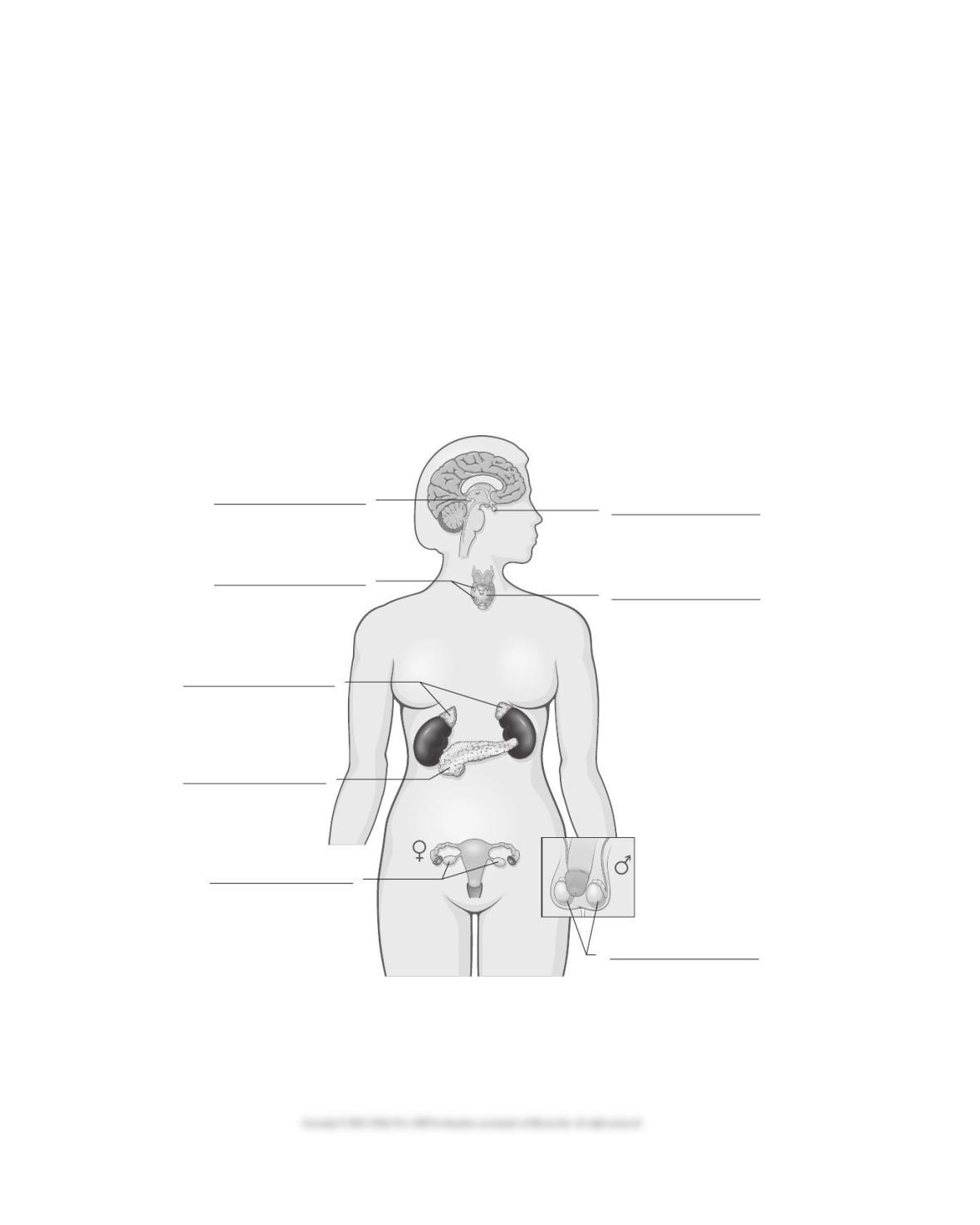
Label the diagram below using the terms listed below:
Adrenal glands
Ovaries
Pancreas
Parathyroid glands
Pineal gland
Pituitary gland
Testes
Thyroid gland
8
3
4
6
7
1
5
2
(on posterior side of
thyroid gland)

Chapter 18 ■ REVIEW SHEET QUIZ 511
Chapter Eighteen
REVIEW SHEET QUIZ
Name: ______________________________
A. Give meanings for the following combining forms:
1. aden/o _________________________ 6. dips/o ___________________________________
2. adrenal/o _______________________ 7. estr/o ___________________________________
3. andr/o _________________________ 8. gluc/o __________________________________
4. calc/o __________________________ 9. glyc/o ___________________________________
5. cortic/o ________________________ 10. gonad/o _________________________________
B. Give meanings for the following combining forms:
1. kal/i ___________________________ 6. somat/o _________________________________
2. lact/o __________________________ 7. thyr/o __________________________________
3. myx/o __________________________ 8. toxic/o __________________________________
4. natr/o __________________________ 9. ur/o ____________________________________
5. pancreat/o ______________________ 10. home/o _________________________________
C. Give meanings for the following suffixes and prefixes:
1. -agon __________________________ 8. hyper– __________________________________
2. -ectomy ________________________ 9. hypo- ___________________________________
3. -emia __________________________ 10. pan- ____________________________________
4. -genic __________________________ 11. tetra- ___________________________________
5. -tropin _________________________ 12. poly- ___________________________________
6. -uria ___________________________ 13. tri- _____________________________________
7. -megaly ________________________ 14. eu- _____________________________________

512 Chapter 18 ■ MEDICAL SCRAMBLE
Chapter Eighteen
MEDICAL SCRAMBLE
Name: ______________________________
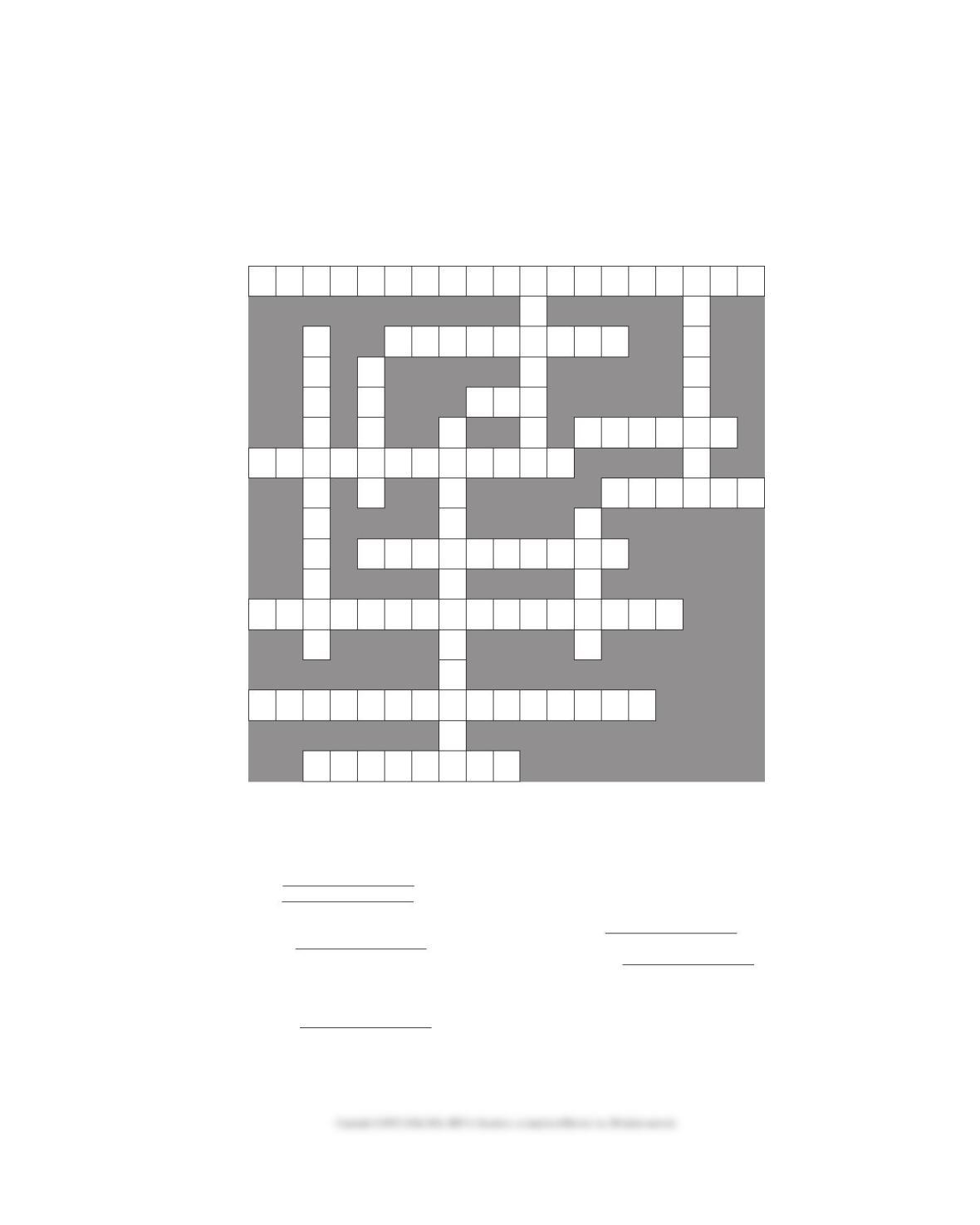
Unscramble the letters to form endocrine system–related terms from the clues. Use the letters in
the squares to complete the bonus term.
1. Clue: Condition caused by increased growth hormone after puberty
____ ____ ____ ____ ____ ____ ____ ____ E C G Y A R L A O M
2. Clue: Hormone stimulating childbirth
____ ____ ____ ____ ____ ____ I T C X O N Y O
3. Clue: The “flight or fight” hormone
____ ____ ____ ____ ____ ____ ____ E L E A N D I R N A
4. Clue: Inner portion of the gland above the kidney
____ ____ ____ ____ ____ ____ U A M L E L D
BONUS TERM: Clue: A condition caused by deficiency of thyroid hormone in an adult
Chapter 18 ■ CROSSWORD PUZZLE 513
Chapter Eighteen
CROSSWORD PUZZLE
Name: ______________________________
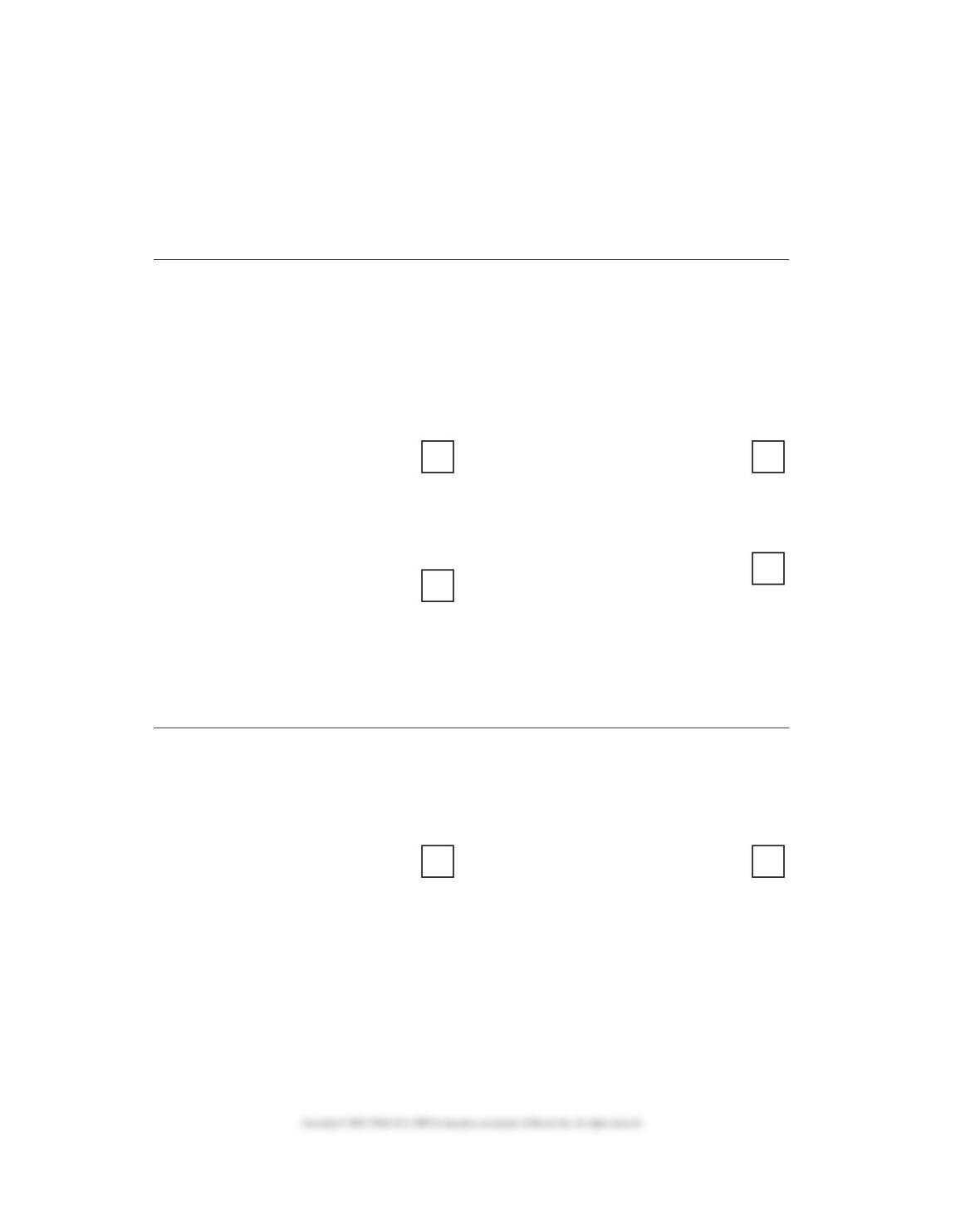
Fill in the crossword puzzle below using the clues listed underneath it.
Across Clues Down Clues
1. ACTH. 2. Produced by the islet cells of the pancreas.
5. Kal/i means . 3. Endocrine gland behind the stomach.
7. Pan- means . 4. Tendency in an organism to return to an.
9. Two endocrine glands in the scrotal sac of a male. equilibrium or constant, stable state.
10. A hormone produced by the ovaries. 6. Tri- means .
11. Toxic/o means . 8. A male hormone produced by the testes.
13. Enlargement of the extremities; pituitary gland. 12. Aden/o means .
14. T3.
15. Pertaining to mimicking or copying the effect
of the sympathetic nervous system.
16. Home/o means .
1
4
6
5
23
9
7
8
10
14
15
16
13
12
11
514 Chapter 18 ■ PRACTICAL APPLICATIONS
Chapter Eighteen
PRACTICAL APPLICATIONS
Name: ______________________________
A. Cushing Syndrome
Hypertension, both systolic and diastolic, is a common feature of Cushing syndrome. Other clinical
features are likely to attract more attention than the hypertension: obesity with “buffalo hump” and
“moon face,” muscular weakness, scattered bruises, and osteoporosis. The excessive secretion of
adrenocortical steroids that is responsible for the syndrome is frequently due to primary disease of
the adrenals, either hyperplasia or discrete tumors. However, the hyperactivity of the adrenal cortex
may be secondary to a tumor or malfunction of the pituitary or a neoplasm secreting an ACTH-like
substance elsewhere in the body. Appropriate x-ray studies, including arteriograms or retrograde
venograms of the adrenals, may disclose a tumor in the adrenals, hypophysis, or elsewhere.
1. Which is a common clinical feature
of Cushing syndrome? …………………..
A. Decreased blood flow to the heart
B. Abnormal sounds in the heart
C. Peripheral edema
D. High blood pressure when the heart is
contracting and relaxing
2. Cushing syndrome is associated with
which of the following? …………………..
A. Tendency to accumulate fat in tissues
B. Tetany
C. Bone tumors
D. Low blood pressure
3. What is a probable etiology of
Cushing syndrome? ……………………….
A. Excessive porosity of bones
B. Decreased secretion of adrenal hormones
C. Decreased secretion of pituitary hormones
D. Tumor or disease of the adrenal cortex
4. What is a likely secondary cause of
Cushing syndrome? ……………………….
A. Decreased secretion of ACTH
B. Blocked artery in the kidney
C. Tumor of the adenohypophysis
D. Muscular weakness
B. Chart Note
A 26-year-old woman is referred for Graves disease. The patient was first found to be hyperthyroid
shortly after she became pregnant. She has a tremor in her hands, a sensation of being hot, insomnia,
weakness in her legs, and exophthalmos.
Physical examination reveals thyromegaly; the gland is rather mushy and soft. No nodules were
noted. T3 and T4 levels were ordered and an appointment was made to have an uptake scan.
1. What is the cause of Graves disease? …
A. The thyroid gland is slow to function
B. The pancreas is hyperfunctioning
C. The thyroid gland is oversecreting
D. Hyperactive ovarian function
2. Why were T3 and T4 levels ordered? …..
A. To measure the extent of eyelid prolapse
B. To assess the function of the thyroid gland
C. To measure the size of the thyroid gland
D. To assess heart function
Chapter 18 ■ ANSWERS TO THE QUIZZES 515
Chapter Eighteen
ANSWERS TO THE QUIZZES
516 Chapter 18 ■ ANSWERS TO THE QUIZZES
Chapter 18 ■ ANSWERS TO THE QUIZZES 517
518 Chapter 18 ■ ANSWERS TO THE QUIZZES
Chapter 18 ■ ANSWERS TO TERMINOLOGY SECTION 519
Chapter Eighteen
Answers to Terminology Section
(textbook pages 764–767)
520 Chapter 18 ■ ANSWERS TO TERMINOLOGY SECTION