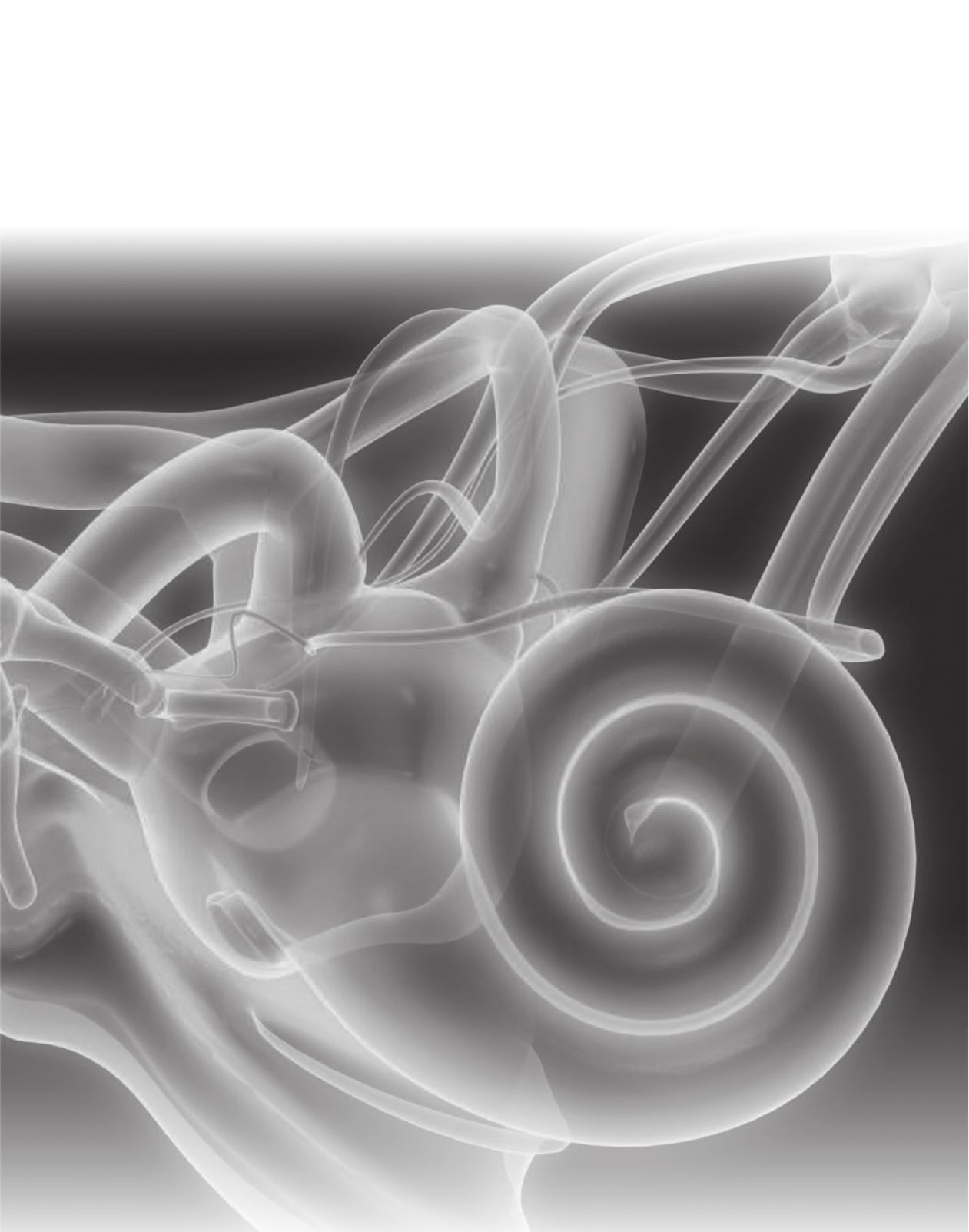
Chapter 17

454 Chapter 17 ■ MULTIPLE CHOICE QUIZ
Chapter Seventeen
MULTIPLE CHOICE QUIZ
Name: ______________________________
In the box write the letter of the choice that is the definition of the term or best answers the
question. There is only one correct answer for each question.
1. Fibrous layer of clear tissue that
extends over the anterior portion of
the eye and is continuous with the
white of the eye: ……………………………
A. Fundus
B. Ciliary body
C. Pupil
D. Cornea
E. Iris
2. Yellowish region in the retina;
contains the fovea centralis: …………….
A. Optic disc
B. Posterior chamber
C. Macula lutea
D. Sclera
E. Choroid
3. What eye structure is transparent,
biconvex, and focuses light on the
retina? …………………………………………
A. Conjunctiva
B. Lens
C. Vitreous body
D. Aqueous humor
E. Sclera
4. Place where optic nerve fibers cross
in the brain: …………………………………
A. Optic disc
B. Optic chiasma
C. Retina
D. Olfactory lobe
E. Cerebral cortex
5. Adjustment of the lens by the ciliary
body: …………………………………………..
A. Accommodation
B. Refraction
C. Binocular vision
D. Photophobia
E. Amblyopia
6. Photosensitive receptor cells of the
retina; make the perception of color
possible: ………………………………………
A. Rods
B. Cones
C. Megakaryocyte
D. Optic disc
E. Optic chiasm
7. The combining form for cornea is: ……
A. Ocul/o
B. Opt/o
C. Scler/o
D. Choroid/o
E. Kerat/o
8. The combining form for the ciliary
body is: ……………………………………….
A. Phak/o
B. Lacrim/o
C. Irid/o
D. Cycl/o
E. Dacry/o
9. The meaning of palpebr/o is: ……………
A. Eyelid
B. Cornea
C. Tear gland
D. Lens of the eye
E. Optic disc
10. An eye inflammation commonly
called “pinkeye” is: ………………………..
A. Iritis
B. Conjunctivitis
C. Dacryoadenitis
D. Scleritis
E. Uveitis
11. Impairment of vision due to
old age: ……………………………………….
A. Emmetropia
B. Diplopia
C. Esotropia
D. Presbyopia
E. Anisocoria

Chapter 17 ■ MULTIPLE CHOICE QUIZ 455
12. Myopia: ……………………………………….
A. Nearsightedness
B. Farsightedness
C. Astigmatism
D. Strabismus
E. Glaucoma
13. Astigmatism: ………………………………..
A. Localized purulent infection of the eye
B. Atrophy of the retina
C. Esotropia
D. Exotropia
E. Defective curvature of the cornea or lens
14. Glaucoma is primarily diagnosed
by: ………………………………………………
A. Tonometry
B. Ophthalmoscopy
C. Slit-lamp biomicroscopy
D. Fluorescein angiography
E. Visual field exam
15. A blind spot; area of depressed
vision surrounded by an area of
normal vision: ………………………………
A. Nyctalopia
B. Exotropia
C. Scotoma
D. Esotropia
E. Strabismus
16. Macular degeneration produces: ……….
A. Loss of central vision
B. Hemianopia
C. Retinal detachment
D. Nystagmus
E. Cataracts
17. Small hard mass on the eyelid; formed
from a sebaceous gland enlargement: ..
A. Scleral buckle
B. Blepharochalasis
C. Chalazion
D. Cataract
E. Steatoma
18. Snail-shaped, spirally wound tube
in the inner ear is the: ……………………
A. Auricle
B. Cochlea
C. Auditory meatus
D. Utricle
E. Pinna
19. Channel between the middle ear and
the nasopharynx: …………………………..
A. Organ of Corti
B. Semicircular canal
C. Labyrinth
D. Eustachian tube
E. Oval window
20. Myring/o means: ……………………………
A. Cerumen
B. Tympanic membrane
C. Stapes
D. Auditory canal
E. Semicircular canals
21. Bacterial infection of the middle
ear: …………………………………………….
A. Serous otitis media
B. Cholesteatoma
C. Mastoiditis
D. Barotitis
E. Suppurative otitis media
22. Tinnitus: ……………………………………..
A. Hearing loss occurring with old age
B. Dizziness associated with nausea and
sensations of whirling motion
C. Ringing sound in ears
D. Dysphonia
E. Aural discharge
23. Visual examination of the ear: ………….
A. Audiometry
B. Otoscopy
C. Tympanometry
D. Tuning fork test
E. Ophthalmoscopy
24. Nerve deafness occurring with
aging: ………………………………………….
A. Vertigo
B. Ménière disease
C. Acoustic neuroma
D. Presbycusis
E. Otopyorrhea
25. Fungal infection of the ear: ……………..
A. Macrotia
B. Salpingitis
C. Otomycosis
D. Cholesteatoma
E. Labyrinthitis

456 Chapter 17 ■ VOCABULARY QUIZ: THE EYE
Chapter Seventeen
VOCABULARY QUIZ: THE EYE
Name: ______________________________
A. Match the following terms with their meanings below:
accommodation choroid cornea
anterior chamber ciliary body fovea centralis
aqueous humor cone rod
biconvex conjunctiva vitreous humor
1. Fluid produced by the ciliary body and found in the anterior
chamber of the eye ________________________________________________________________
2. Photoreceptor cell in the retina; responsible for color and central vision _____________________
3. Middle, vascular layer of the eye, between the retina and the sclera __________________________
4. Normal adjustment of the eye to focus on objects from far to near __________________________
5. Tiny pit or depression in the retina that is the region of clearest vision ______________________
6. Area behind the cornea and in front of the lens and iris ___________________________________
7. Having two sides that are rounded, elevated, and curved
evenly; characteristic of the lens of the eye _____________________________________________
8. Delicate membrane under the surface of the eyelids and covering
the anterior eyeball ________________________________________________________________
9. Fibrous transparent layer of clear tissue that extends
over the anterior portion of the eyeball ________________________________________________
10. Structure surrounding the lens that connects the choroid
and iris; it alters the shape of the lens _________________________________________________
11. Soft jelly-like material behind the lens; maintains the shape
of the eyeball _____________________________________________________________________
12. Photoreceptor cell essential for vision in dim light and for
peripheral vision __________________________________________________________________

Chapter 17 ■ VOCABULARY QUIZ: THE EYE 457
B. Match the following terms with their meanings below:
fundus of the eye optic chiasm refraction
iris optic disc retina
lens optic nerve sclera
macula pupil thalamus
1. Colored, pigmented layer that opens or closes to allow more or
less light into the eye ______________________________________________________________
2. Light-sensitive nerve cell layer containing photoreceptor
cells (rods and cones) ______________________________________________________________
3. Central opening of the eye __________________________________________________________
4. Yellowish region on the retina, slightly below the optic disc;
contains the fovea centralis __________________________________________________________
5. Point at which optic nerve fibers cross in the brain ______________________________________
6. Bending of light rays by the cornea, lens, and fluids of the eye to bring them
into focus on the retina _____________________________________________________________
7. Region at the back of the eye where the optic nerve meets the retina ________________________
8. Cranial nerve carrying impulses from the retina to
the brain (cerebral cortex) __________________________________________________________
9. Transparent, biconvex body behind the pupil; it bends light rays
to focus them on the retina __________________________________________________________
10. Posterior, inner portion of the eye ____________________________________________________
11. Tough, white outer coat of the eyeball _________________________________________________
12. Relay center of the brain; optic nerve fibers pass through the thalamus
on their way to the cerebral cortex ____________________________________________________

458 Chapter 17 ■ TERMINOLOGY QUIZ: THE EYE
Chapter Seventeen
TERMINOLOGY QUIZ: THE EYE
Name: ______________________________
A. Using the following word parts, create or complete terms based on the following definitions:
aden/o cor/o ir/o, irid/o -plegic
aque/o corne/o -ectomy -ptosis
blephar/o cycl/o -ia
conjunctiv/o dacry/o -itis
1. Pertaining to a rubbing away or scratching of the cornea: ________________________ al abrasion
2. Prolapse of an eyelid: _______________________________________________________________
3. Fluid (water) found in the anterior chamber of the eye: __________________________ ous humor
4. Inflammation of tear glands: _________________________________________________________
5. Inflammation of an eyelid: __________________________________________________________
6. Pertaining to paralysis of the ciliary body of the eye: _____________________________________
7. Inflammation of the iris of the eye: ___________________________________________________
8. Condition of unequal size of pupils: aniso ______________________________________________
9. Inflammation of the membrane lining the undersurface of the eyelids: ______________________
10. Removal (a portion) of the iris: _______________________________________________________
B. Using the following word parts, create or complete terms based on the following definitions:
kerat/o ophthalm/o -itis intra-
lacrim/o opt/o, optic/o -logist
ocul/o palpebr/o -plegia
1. Pertaining to within the eye: ________________________________________________________ar
2. Paralysis of the eye: ophthalmo ______________________________________________________
3. Inflammation of the cornea: _________________________________________________________
4. Process of tearing: _____________________________________________________________ ation
5. Specialist in examining eyes and prescribing corrective lenses: _______________________ metrist
6. Pertaining to an eyelid: ___________________________________________________________ al
7. A medical doctor who specializes in treating disorders of the eye: ___________________________
8. Pertaining to tears: ______________________________________________________________ al
9. Nonmedical professional who grinds lenses and fits glasses: ____________________________ ian
10. Pertaining to vision: _____________________________________________________________ ic

Chapter 17 ■ TERMINOLOGY QUIZ: THE EYE 459
C. Using the following word parts, create or complete terms based on the following definitions:
corne/o pupill/o uve/o -itis
papill/o retin/o vitre/o -pathy
phac/o, phak/o scler/o -ia
1. Pertaining to the cornea and the sclera: ______________________________________________ al
2. Soft jelly-like material behind the lens: _______________________________________ ous humor
3. Pertaining to the central area surrounded by the iris: __________________________________ ary
4. Swelling in the region of the optic disc: __________________________________________ edema
5. Inflammation of the vascular layer of the eye: ___________________________________________
6. Disease of the retina of the eye: ______________________________________________________
7. Use of ultrasonic vibrations to fragment the lens and remove it from the eye:
_____________________________________________________________________ emulsification
8. Inflammation of the white of eye: _____________________________________________________
9. Condition of absence of a lens: a ______________________________________________________
10. Inflammation of the retina: __________________________________________________________
D. Using the following word parts, create or complete terms based on the following definitions:
ambly/o nyct/o xer/o -tropia
dipl/o phot/o -osis an-
glauc/o presby/o -opia eso-
mi/o scot/o -phobia hemi-
mydr/o
1. Contraction of the pupil: ____________________________________________________________
2. Condition of double vision: __________________________________________________________
3. Night blindness: ___________________________________________________________________
4. Condition of dull, dim vision (reduction in visual acuity): _________________________________
5. Impairment of vision in old age: ______________________________________________________
6. Condition of dry eyes: ____________________________________________________ ophthalmia
7. Increased intraocular pressure leads to retinal and optic nerve damage: __________________ oma
8. Enlargement of pupils: _________________________________________________________ iasis
9. Sensitivity to light: ________________________________________________________________
10. Area of depressed vision surrounded by an area of normal vision: _______________________ oma
11. Absence of vision in half of the visual field: _________________________________________ opsia
12. Abnormal inward turning of an eye: ___________________________________________________

460 Chapter 17 ■ PATHOLOGY QUIZ: THE EYE—ERRORS OF REFRACTION
Chapter Seventeen
PATHOLOGY QUIZ: THE EYE—
ERRORS OF REFRACTION
Name: ______________________________
Match the following abnormal conditions or symptoms with their descriptions below:
astigmatism hordeolum presbyopia
cataract hyperopia retinal detachment
chalazion macular degeneration strabismus
diabetic retinopathy myopia
glaucoma nystagmus
1. Progressive damage to the macula of the eye ________________________________________________
2. Clouding of the lens causing decreased vision _______________________________________________
3. Nearsightedness _______________________________________________________________________
4. Farsightedness ________________________________________________________________________
5. Small, hard cystic mass on the eyelid ______________________________________________________
6. Increased intraocular pressure resulting in damage to the retina and optic nerve __________________
7. Repetitive rhythmic movements of one or both eyes __________________________________________
8. Localized purulent bacterial infection of the sebaceous gland in the eyelid; stye ___________________
9. Retinal microaneurysms, hemorrhages, or new vascular growth within the retina _________________
10. Defective curvature of the cornea or lens of the eye __________________________________________
11. Abnormal deviation of the eye; esotropia and exotropia _______________________________________
12. Impairment of vision due to old age _______________________________________________________
13. Separation of retinal layers ______________________________________________________________

Chapter 17 ■ CLINICAL PROCEDURES QUIZ: THE EYE 461
Chapter Seventeen
CLINICAL PROCEDURES QUIZ:
THE EYE
Name: ______________________________
Match the following clinical procedures with their descriptions below:
enucleation LASIK slit-lamp microscopy
fluorescein angiography ophthalmoscopy visual acuity test
keratoplasty phacoemulsification visual field test
laser photocoagulation scleral buckle vitrectomy
1. Suture of a silicone band to the sclera over a detached portion
of the retina: _____________________________________________________________________
2. Surgical repair of the cornea (corneal transplant): _______________________________________
3. Visual examination of the interior of the eye: ___________________________________________
4. Measurement of the area (peripheral and central) within which
objects are seen: ___________________________________________________________________
5. Intravenous injection of a dye followed by serial photographs
of the retina: _____________________________________________________________________
6. Removal of the vitreous humor: ______________________________________________________
7. Use of an excimer laser to correct errors of refraction: ____________________________________
8. Clarity of vision is assessed: _________________________________________________________
9. Ultrasonic vibrations break up the lens, which then is aspirated through the ultrasonic
probe: ___________________________________________________________________________
10. Removal of the entire eyeball: ________________________________________________________
11. Intense, precisely focused light beam creates an inflammatory reaction that seals retinal tears and
leaky retinal blood vessels: __________________________________________________________
12. Examination of anterior ocular structures under microscopic
magnification: ____________________________________________________________________

462 Chapter 17 ■ VOCABULARY QUIZ: THE EAR
Chapter Seventeen
VOCABULARY QUIZ: THE EAR
Name: ______________________________
A. Match the following terms with their meanings below:
auditory canal cochlea incus
auditory nerve fibers endolymph labyrinth
auricle eustachian tube malleus
cerumen
1. Snail-shaped spirally wound tube in the inner ear; contains hearing
sensitive receptor cells _____________________________________________________________
2. Carry impulses from the inner ear to the brain (cerebral cortex) ____________________________
3. Waxy substance secreted by the external ear; ear wax _____________________________________
4. Second little bone of the middle ear; shaped like an anvil __________________________________
5. Channel between the middle ear and the nasopharynx; auditory tube ________________________
6. Flap of the ear ____________________________________________________________________
7. First little bone of the middle ear; shaped like a hammer __________________________________
8. Fluid within the labyrinth of the ear __________________________________________________
9. Maze-like series of canals within the inner ear __________________________________________
10. Channel that leads from the auricle to the eardrum; auditory meatus ________________________
B. Match the following terms with their meanings below:
organ of Corti perilymph stapes
ossicle pinna tympanic membrane
oval window semicircular canals vestibule
1. Third small bone of the middle ear; shaped like a stirrup __________________________________
2. Flap of the ear; auricle ______________________________________________________________
3. Central cavity of the labyrinth, connecting the semicircular
canals and the cochlea ______________________________________________________________
4. Eardrum _________________________________________________________________________
5. Membrane between the middle and inner ear ___________________________________________
6. Sensitive auditory receptive area in the cochlea of the inner ear ____________________________
7. Passages in the inner ear associated with maintenance of equilibrium _______________________
8. Small bone _______________________________________________________________________
9. Fluid contained in the labyrinth of the inner ear ________________________________________

Chapter 17 ■ TERMINOLOGY QUIZ: THE EAR 463
Chapter Seventeen
TERMINOLOGY QUIZ: THE EAR
Name: ______________________________
A. Use the following word parts to create or complete the terms from the definitions below:
acous/o aur/o, auricul/o ossicul/o -logist
audi/o cochle/o -itis -plasty
audit/o mastoid/o -gram
1. Pertaining to the ear: _____________________________________________________________ al
2. Pertaining to hearing: ____________________________________________________________ory
3. Pertaining to hearing: ____________________________________________________________ tic
4. Surgical repair of a small bone in the ear: ______________________________________________
5. Pertaining to the snail-shaped spirally wound tube in the inner ear: _______________________ ar
6. Inflammation of the posterior portion of the temporal bone: _______________________________
7. Record of hearing: _________________________________________________________________
8. Pertaining to behind the ear: post __________________________________________________ ar
9. Inflammation of the eardrum: _______________________________________________________
10. Nonmedical specialist in hearing: _____________________________________________________
B. Use the following word parts to create or complete the terms from the definitions below:
audi/o pharyng/o vestibul/o -otia
laryng/o py/o -acusis, -cusis -plasty
myc/o salping/o -logist -rrhea
ot/o tympan/o -meter
1. Condition of fungal infection in the ear: ____________________________________________ osis
2. Specialist in the study of the ear and voice box (region of): ________________________________
3. Discharge of pus from the ear: _______________________________________________________
4. Instrument to measure hearing: ______________________________________________________
5. Surgical repair of the eardrum: ______________________________________________________
6. Nerve deafness that occurs with old age: presby _________________________________________
7. Abnormally large ears: macr _________________________________________________________
8. Pertaining to the eustachian tube and the throat: _____________________________________ eal
9. Pertaining to the central cavity of the labyrinth of the ear and the cochlea:
__________________________________________________________________________ cochlear
10. Abnormally acute hearing: hyper _____________________________________________________

464 Chapter 17 ■ PATHOLOGY QUIZ: THE EAR
Chapter Seventeen
PATHOLOGY QUIZ: THE EAR
Name: ______________________________
Match the following abnormal conditions or symptoms with their descriptions below:
acoustic neuroma Ménière disease tinnitus
cholesteatoma otitis media vertigo
deafness otosclerosis
1. Hardening of the bony tissue of the middle ear: _________________________________________
2. Sensation of irregular or whirling motion, either of oneself
or of external objects: ______________________________________________________________
3. Inflammation of the middle ear: ______________________________________________________
4. Collection of skin cells and cholesterol in a sac within the middle ear: _______________________
5. Disorder of the labyrinth of the inner ear (with accumulation of fluid): ______________________
6. Benign tumor arising from the 8th cranial nerve: ________________________________________
7. Loss of the ability to hear: ___________________________________________________________
8. Sensation of noises (ringing, buzzing) in the ears: _______________________________________

Chapter 17 ■ CLINICAL PROCEDURES AND QUIZ: THE EAR 465
Chapter Seventeen
CLINICAL PROCEDURES AND
QUIZ: THE EAR
Name: ________________________
Match the following procedures or abbreviations with their descriptions below:
AD cochlear implant PE tube
AOM ear thermometry tuning fork test
audiometry ENG
AS otoscopy
1. Measurement of the temperature of the tympanic membrane by detection of infrared radiation
from the eardrum _________________________________________________________________
2. Testing the sense of hearing: _________________________________________________________
3. Left ear __________________________________________________________________________
4. Right ear ________________________________________________________________________
5. Surgically implanted device allows sensorineural hearing-impaired persons to understand
speech: __________________________________________________________________________
6. Test of balance mechanism of the inner ear by assessing eye movements
(electronystagmography): ___________________________________________________________
7. Type of inflammation of the middle ear: ________________________________________________
8. Test of ear conduction using vibration source (Rinne and Weber tests): ______________________
9. Visual examination of the ear canal: ___________________________________________________
10. Ventilating tube placed in the eardrum to treat recurrent otitis media: ______________________
466 Chapter 17 ■ ABBREVIATIONS QUIZ: EYE AND EAR
Chapter Seventeen
ABBREVIATIONS QUIZ: EYE AND EAR
Name: __________________
On the line provided, give meanings for the following abbreviations, then write each abbreviation
next to its explanation below:
1. IOL _______________________________
2. AOM ______________________________
3. ENG ______________________________
4. VA ________________________________
5. IOP _______________________________
6. ENT ______________________________
7. PERRLA ___________________________
8. AMD ______________________________
9. VF ________________________________
10. PE tube ___________________________
a. Patient reads from a Snellen chart
to test clarity of vision
b. Helps relieve chronic middle ear
infection and inflammation
c. Area within which objects are seen
when the eyes are fixed, looking straight ahead
d. Measure of fluid buildup in the
anterior portion of the eye and associated with
glaucoma
e. Severe inflammation of the middle
portion of the ear
f. Loss of central vision occurring
with old age
g. Normal result when the dark
opening of the eye is examined
h. Artificial part inserted during
cataract surgery
i. Specialty of an
otorhinolaryngologist
j. Test of the balance mechanism
of the inner ear by assessing rapidly
twitching eye movements

Chapter 17 ■ EXERCISE QUIZ 467
Chapter Seventeen
EXERCISE QUIZ
Name: ______________________________
EYE
A. Match the structure of the eye with its description below:
choroid conjunctiva iris pupil sclera
ciliary body cornea lens retina vitreous humor
1. Contains sensitive cells (rods and cones) that transmit light
energy to nervous impulses _________________________________________________________
2. Contains muscles that control the shape of the
lens and secrete aqueous humor _____________________________________________________
3. Transparent body behind the iris and in front of the vitreous humor;
refracts light rays to bring them into focus on the retina __________________________________
4. Jelly-like material behind the lens; helps to maintain
the shape of the eyeball _____________________________________________________________
5. Dark center of the eye through which light rays enter ____________________________________
6. Vascular layer of the eyeball that is continuous with the iris _______________________________
7. Delicate membrane lining the eyelids and covering the anterior eyeball ______________________
8. Fibrous layer of clear tissue that extends over the anterior
portion of the eyeball _______________________________________________________________
9. Colored portion of the eye; surrounds the pupil _________________________________________
10. Tough, white outer coat of the eyeball _________________________________________________
B. Supply the term to complete the following:
11. Region at the back of the eye where the retina meets the optic nerve is ______________________
12. The normal adjustment of the lens to bring an object into focus is __________________________
13. A yellowish region on the retina lateral to the optic disc is _________________________________
14. Bending of light rays by the cornea, lens, and fluids of the eye is ____________________________
15. Photosensitive receptor cells in the retina that make color
perception possible are _____________________________________________________________
16. Photosensitive receptor cells that make vision in dim light possible are ______________________

468 Chapter 17 ■ EXERCISE QUIZ
C. Give meanings for the following terms:
17. anisocoria ________________________________________________________________________
18. papilledema ______________________________________________________________________
19. photophobia ______________________________________________________________________
20. scotoma _________________________________________________________________________
D. Complete the medical term from its definition and word parts given:
21. inflammation of an eyelid: ________________________________________________________ itis
22. inflammation of the cornea: _______________________________________________________ itis
23. inflammation of the iris: _________________________________________________________ itis
24. inflammation of the conjunctiva: __________________________________________________ itis
25. pertaining to within the eye: intra ____________________________________________________
E. Match the following terms with their meanings below:
aphakia exotropia uveitis
esotropia hemianopsia xerophthalmia
26. Inflammation of the vascular layer of the eye ___________________________________________
27. Condition of dry eyes _______________________________________________________________
28. Outward deviation of the eye ________________________________________________________
29. Inward deviation of the eye __________________________________________________________
30. Absence of the lens of the eye ________________________________________________________
31. Absence of vision in half of the visual field ______________________________________________
F. Describe the following visual conditions:
32. presbyopia _______________________________________________________________________
33. myopia __________________________________________________________________________
34. diplopia _________________________________________________________________________
35. amblyopia ________________________________________________________________________
36. hyperopia ________________________________________________________________________
37. emmetropia ______________________________________________________________________

Chapter 17 ■ EXERCISE QUIZ 469
G. Match the following abnormal conditions of the eye with their meanings below:
cataract glaucoma macular degeneration
diabetic retinopathy hordeolum (stye) strabismus
38. Abnormal deviations of the eye _______________________________________________________
39. Increased intraocular pressure results in retinal and optic nerve damage _____________________
40. Localized purulent infection of a sebaceous gland in the eyelid _____________________________
41. Clouding of the lens causes decreased vision ____________________________________________
42. Retinal microaneurysms, hemorrhages occur secondary to an
endocrine condition _______________________________________________________________
43. Deterioration of the macula lutea of the retina __________________________________________
H. Give the meanings for the following abbreviations:
44. OU _____________________________________________________________________________
45. OD _____________________________________________________________________________
46. OS ______________________________________________________________________________
47. PERRLA _________________________________________________________________________
48. c. gl. ____________________________________________________________________________
49. VF ______________________________________________________________________________
50. s. gl. ____________________________________________________________________________

470 Chapter 17 ■ EXERCISE QUIZ
Chapter Seventeen
EXERCISE QUIZ
Name: ______________________________
EAR
A. Arrange the following in the correct order to indicate their sequence in the transmission of
sound waves to the brain from the outer ear:
auditory liquids and receptors external auditory canal pinna
auditory nerve fibers incus stapes
cerebral cortex malleus tympanic membrane
cochlea oval window
1. _______________________________ 7. ________________________________________
2. _______________________________ 8. ________________________________________
3. _______________________________ 9. ________________________________________
4. _______________________________ 10. ________________________________________
5. _______________________________ 11. ________________________________________
6. _______________________________
B. Give the meanings for the following medical terms:
12. semicircular canals ________________________________________________________________
13. cerumen _________________________________________________________________________
14. perilymph and endolymph __________________________________________________________
15. tympanic membrane _______________________________________________________________
C. Complete the following medical terms from their definitions given:
16. removal of the third bone of the middle ear: ______________________________________ ectomy
17. instrument to measure hearing: _________________________________________________ meter
18. deafness due to old age: _________________________________________________________ cusis
19. inflammation of the middle ear: ot ____________________________________________________
20. surgical repair of the eardrum: __________________________________________________ plasty

Chapter 17 ■ EXERCISE QUIZ 471
D. Give the meanings for the following medical terms:
21. vertigo __________________________________________________________________________
22. otosclerosis ______________________________________________________________________
23. tinnitus _________________________________________________________________________
24. labyrinthitis ______________________________________________________________________
25. myringitis _______________________________________________________________________
26. suppurative otitis media ____________________________________________________________
27. mastoiditis _______________________________________________________________________
28. Ménière disease ___________________________________________________________________
29. acoustic neuroma _________________________________________________________________
30. cholesteatoma ____________________________________________________________________
E. Give the meanings for the following abbreviations:
31. AS ______________________________________________________________________________
32. ENG ____________________________________________________________________________
33. EENT ___________________________________________________________________________
34. AD ______________________________________________________________________________
35. ENT ____________________________________________________________________________

472 Chapter 17 ■ DICTATION AND COMPREHENSION QUIZ: EYE
Chapter Seventeen
DICTATION AND
COMPREHENSION QUIZ: EYE
Name: ___________________________
A. Dictation of Terms
1. ____________________________________ 11. ______________________________________
2. ____________________________________ 12. ______________________________________
3. ____________________________________ 13. ______________________________________
4. ____________________________________ 14. ______________________________________
5. ____________________________________ 15. ______________________________________
6. ____________________________________ 16. ______________________________________
7. ____________________________________ 17. ______________________________________
8. ____________________________________ 18. ______________________________________
9. ____________________________________ 19. ______________________________________
10. ____________________________________ 20. ______________________________________
B. Comprehension of Terms: Match the number of the above term with its meaning below.
______ Visual examination of the eye
______ White portion of the eye
______ Fluid produced by the ciliary body; circulates through the anterior chamber of the eye
______ Pupils are of unequal size
______ Delicate membrane lining the eyelids and covering the anterior eyeball
______ Inflammation of the cornea
______ Paralysis of the ciliary muscles of the eye
______ Double vision
______ Clouding of the lens, causing decreased vision
______ Abnormal deviation of the eye (esotropia and exotropia)
______ Defective curvature of the cornea or lens of the eye
______ Small, hard cystic mass on the eyelid
______ Impairment of vision due to old age
______ Nearsightedness
______ Inflammation of the iris
______ Loss of vision in one half of the visual field
______ Swelling in the region of the optic disc
______ Process of recording blood vessels in the back of the eye after IV injection of a dye
______ Progressive damage to the yellowish region on the retina (lateral to and slightly below the optic disc)
______ Absence of the lens of the eye