
260 Chapter 11 ■ DICTATION AND COMPREHENSION QUIZ: VOCABULARY
Chapter Eleven
DICTATION AND COMPREHENSION QUIZ:
VOCABULARY AND TERMINOLOGY
Name: _________________
A. Dictation of Terms
1. ____________________________________ 11. ______________________________________
2. ____________________________________ 12. ______________________________________
3. ____________________________________ 13. ______________________________________
4. ____________________________________ 14. ______________________________________
5. ____________________________________ 15. ______________________________________
6. ____________________________________ 16. ______________________________________
7. ____________________________________ 17. ______________________________________
8. ____________________________________ 18. ______________________________________
9. ____________________________________ 19. ______________________________________
10. ____________________________________ 20. ______________________________________
B. Comprehension of Terms: Match number of the above term with its meaning below.
______ Smallest blood vessel
______ Instrument to measure blood pressure
______ Incision of a vein
______ Condition of deficient oxygen
______ Largest vein in the body
______ Pacemaker of the heart
______ Largest artery in the body
______ High levels of a fatty substance in the blood
______ Wall between the upper chambers of the heart
______ Widening of a blood vessel
______ Vessel carrying blood to the arm
______ Removal of fatty plaque (from a blood vessel)
______ New connection between two arteries
______ Inflammation of valve on the left side of the heart
______ Breakdown (destruction) of a blood clot
______ Vessel carrying blood to the lungs
______ Surgical repair of a valve
______ Hardening of arteries
______ Enlargement of the heart
______ Surgical puncture to remove fluid between the membranes surrounding the heart

Chapter 11 ■ DICTATION AND COMPREHENSION QUIZ: PATHOLOGY 261
Chapter Eleven
DICTATION AND COMPREHENSION
QUIZ: PATHOLOGY
Name: ______________________________
A. Dictation of Terms
1. ____________________________________ 10. ______________________________________
2. ____________________________________ 11. ______________________________________
3. ____________________________________ 12. ______________________________________
4. ____________________________________ 13. ______________________________________
5. ____________________________________ 14. ______________________________________
6. ____________________________________ 15. ______________________________________
7. ____________________________________ 16. ______________________________________
8. ____________________________________ 17. ______________________________________
9. ____________________________________ 18. ______________________________________
B. Comprehension of Terms: Match number of the above term with its meaning below.
______ High blood pressure of idiopathic etiology
______ Varicose veins near the anus
______ Closure (blockage) of a blood vessel
______ Collections of material (clots) that travel to and suddenly block a vessel
______ Chest pain resulting from temporary difference between supply and demand of oxygen to the heart
muscle
______ Short episodes of pallor and numbness in fingers and toes due to temporary constriction of arterioles
______ Examples are flutter, fibrillation, and heart block
______ A small duct between the aorta and pulmonary artery, which normally closes soon after birth,
remains open
______ The heart is unable to pump its required amount of blood; pulmonary edema may result
______ Congenital malformation of the heart involving four distinct defects
______ An extra heart sound heard between normal beats
______ Inflammation of the inner lining of the heart
______ Local widening of an artery caused by weakness in the arterial wall
______ Improper closure of a heart valve when the heart is pumping blood
______ Drugs used to treat abnormal heart rhythms and high blood pressure
______ Blockage of arteries in the lower extremities due to atherosclerosis
______ Bluish discoloration of the skin
______ Uncomfortable sensations in the chest

262 Chapter 11 ■ SPELLING QUIZ
Chapter Eleven
SPELLING QUIZ
Name: ______________________________
A. Circle the term that is spelled correctly, and write its meaning in the space provided.
1. capillary capilliary __________________________________________________
2. ventricle ventracle __________________________________________________
3. carbon dyoxide carbon dioxide ______________________________________________
4. vien vein ______________________________________________________
5. myocardium myocardiam ________________________________________________
6. arterosclerosis arteriosclerosis _____________________________________________
7. pulmunary pulmonary _________________________________________________
8. tricuspid valve trikuspid valve ______________________________________________
9. arterioles arteroiles __________________________________________________
10. aortia aorta ______________________________________________________
B. Circle the term that is spelled correctly. The meaning of each term is given.
11. Pertaining to the heart ………………………… coronery coronary corenary
12. Relaxation phase of the heartbeat …………. diastole diostole dieastole
13. Pain …………………………………………………… angina anjena anjina
14. Abnormal rapid heart rhythm ………………. fibrilation filbrilation fibrillation
15. Swollen blood vessels in the
rectal region ……………………………………….. hemmorhoids hemmorrhoids hemorrhoids
16. Incision of a vein ………………………………… phlebotomy phebotomy phliebotomy
17. Widening of a vessel ……………………………. vasodialation vassodialation vasodilation
18. Bluish coloration of the skin ………………… cianosis cyanosis cyianosis
19. Traveling clot that suddenly blocks
a blood vessel ……………………………………… embulus embulos embolus
20. Contraction phase of the heartbeat ………. systole sistolle sistole

Chapter 11 ■ PRONUNCIATION QUIZ 263
Chapter Eleven
PRONUNCIATION QUIZ
Name: ________________________________
A. Underline the accented syllable in the following terms:
1. diastole 4. pericarditis 7. anastomosis 10. coarctation
2. arteriolitis 5. coronary 8. phlebotomy
3. sphygmomanometer 6. capillary 9. idiopathic
B. Match the term in Column I with its meaning in Column II:
Column I Column II
1. ventricle _______ A. Contraction phase of the heartbeat
2. petechiae _______ B. Small, pinpoint hemorrhages
3. hemangioma _______ C. Largest artery in the body
4. embolus _______ D. Tumor of blood vessels
5. systole _______ E. Widening or dilation of a blood vessel
6. septum _______ F. Lower chamber of the heart
7. aorta _______ G. Swollen, twisted veins in the rectal region
8. aneurysm _______ H. Wall or partition within the heart
9. digoxin _______ I. Floating blood clot or other material
10. hemorrhoids _______ J. Drug used to reduce abnormal heart rhythms
C. Complete the following terms from their definitions:
1. ______________________________ itis Inflammation of a vein
2. ___________________________ cardia Fast heartbeat
3. __________________________ ectomy Removal of the inner lining of an artery
4. _______________________________ ia Condition of abnormal heart rhythm
5. _____________________________ osis Abnormal condition of blue coloration of the skin
6. ____________________________ emia High levels of cholesterol in the bloodstream
7. _____________________________ ium Muscle layer of the heart
8. vaso ____________________________ Widening of a blood vessel
9. thrombo ________________________ Destruction of clots
10. hyp _____________________________ Decreased oxygen condition
264 Chapter 11 ■ DIAGRAM QUIZ
Chapter Eleven
DIAGRAM QUIZ
Name: ________________________________
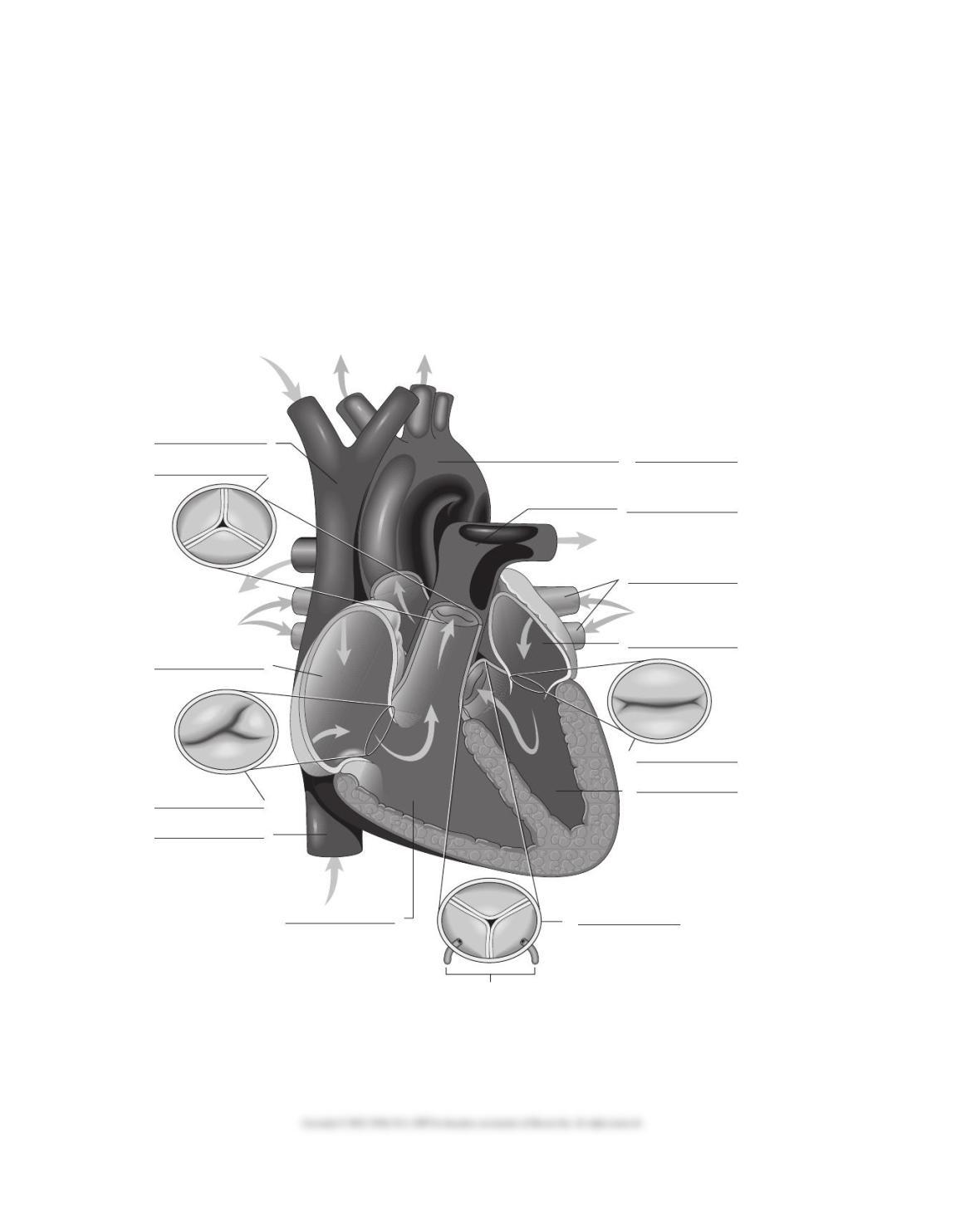
Label the diagram below using the following terms:
To lungs
To the
head
From lungs
RIGHT SIDE
OF THE
HEART
LEFT SIDE
OF THE
HEART
1
To lungs
From lungs
Coronary arteries
12
13
11
10
7
9
8
6
3
2
4
5
Aorta Left ventricle Right atrium
Aortic valve Mitral valve Right ventricle
Inferior vena cava Pulmonary artery Superior vena cava
Left atrium Pulmonary valve Tricuspid valve
Pulmonary vein
Chapter 11 ■ FLOW CHART QUIZ 265
Chapter Eleven
FLOW CHART QUIZ
Name: ________________________________
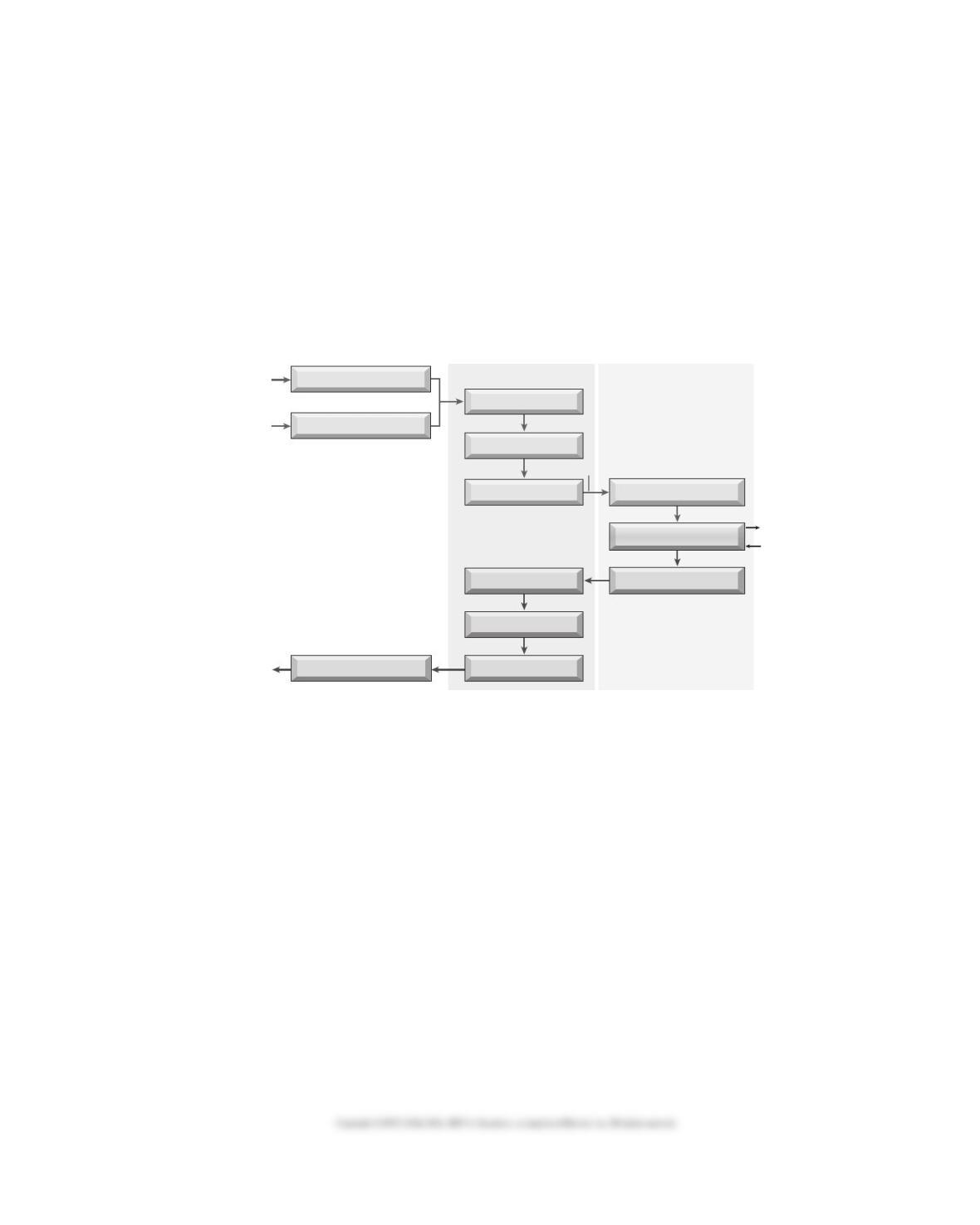
Label the flow chart using the following terms:
Aorta Lung capillaries Right atrium
Inferior vena cava Mitral valve Right ventricle
Left atrium Pulmonary artery Superior vena cava
Left ventricle Pulmonary vein Tricuspid valve
1
3Blood enters heart
Blood travels
to all parts
of the body
Aortic
valve
Pulmonary valve
HEART LUNG
O2 is
inhaled
CO2 is
exhaled
4
5
9
10
11
12
6
7
8
2

266 Chapter 11 ■ REVIEW SHEET QUIZ
Chapter Eleven
REVIEW SHEET QUIZ
Name: ________________________________
A. Give meanings for the following combining forms:
1. angi/o __________________________ 6. aort/o ___________________________________
2. ather/o _________________________ 7. axill/o __________________________________
3. brachi/o ________________________ 8. coron/o _________________________________
4. my/o ___________________________ 9. pulmon/o _______________________________
5. phleb/o _________________________ 10. ox/o ____________________________________
B. Give meanings for the following combining forms:
1. cyan/o _________________________ 6. vas/o ___________________________________
2. thromb/o _______________________ 7. myx/o __________________________________
3. atri/o __________________________ 8. ventricul/o ______________________________
4. valvul/o ________________________ 9. ven/o ___________________________________
5. sphygm/o _______________________ 10. vascul/o _________________________________
C. Give meanings for the following suffixes:
1. -constriction ____________________ 6. -sclerosis ________________________________
2. -dilation ________________________ 7. -stenosis ________________________________
3. -graphy ________________________ 8. -tomy ___________________________________
4. -megaly ________________________ 9. -lysis ___________________________________
5. -plasty _________________________ 10. -emia ___________________________________
D. Give meanings for the following prefixes:
1. brady- __________________________ 6. inter– ___________________________________
2. hyper– __________________________ 7. tri- _____________________________________
3. hypo- __________________________ 8. tachy- __________________________________
4. endo- __________________________ 9. peri- ____________________________________
5. dys- ___________________________ 10. a-, an- __________________________________

Chapter 11 ■ MEDICAL SCRAMBLE 267
Chapter Eleven
MEDICAL SCRAMBLE
Name: ______________________________
Unscramble the letters to form cardiovascular terms from the clues. Use the letters in the squares
to complete the bonus term.
1. Clue: Localized widening of an arterial wall
____ ____ ____ ____ ____ R M E Y U A S N
2. Clue: Contraction phase of the heartbeat
____ ____ ____ ____ ____ ____ E O S L S T Y
3. Clue: Swollen, dilated veins in the rectal region
____ ____ ____ ____ ____ ____ R I H E O D R S H M O
4. Clue: Blue discoloration of skin due to hypoxia
____ ____ ____ ____ ____ ____ ____ O C N S Y S A I
BONUS TERM: Clue: Flutter and fibrillation are examples
268 Chapter 11 ■ CROSSWORD PUZZLE
Chapter Eleven
CROSSWORD PUZZLE
Name: ______________________________
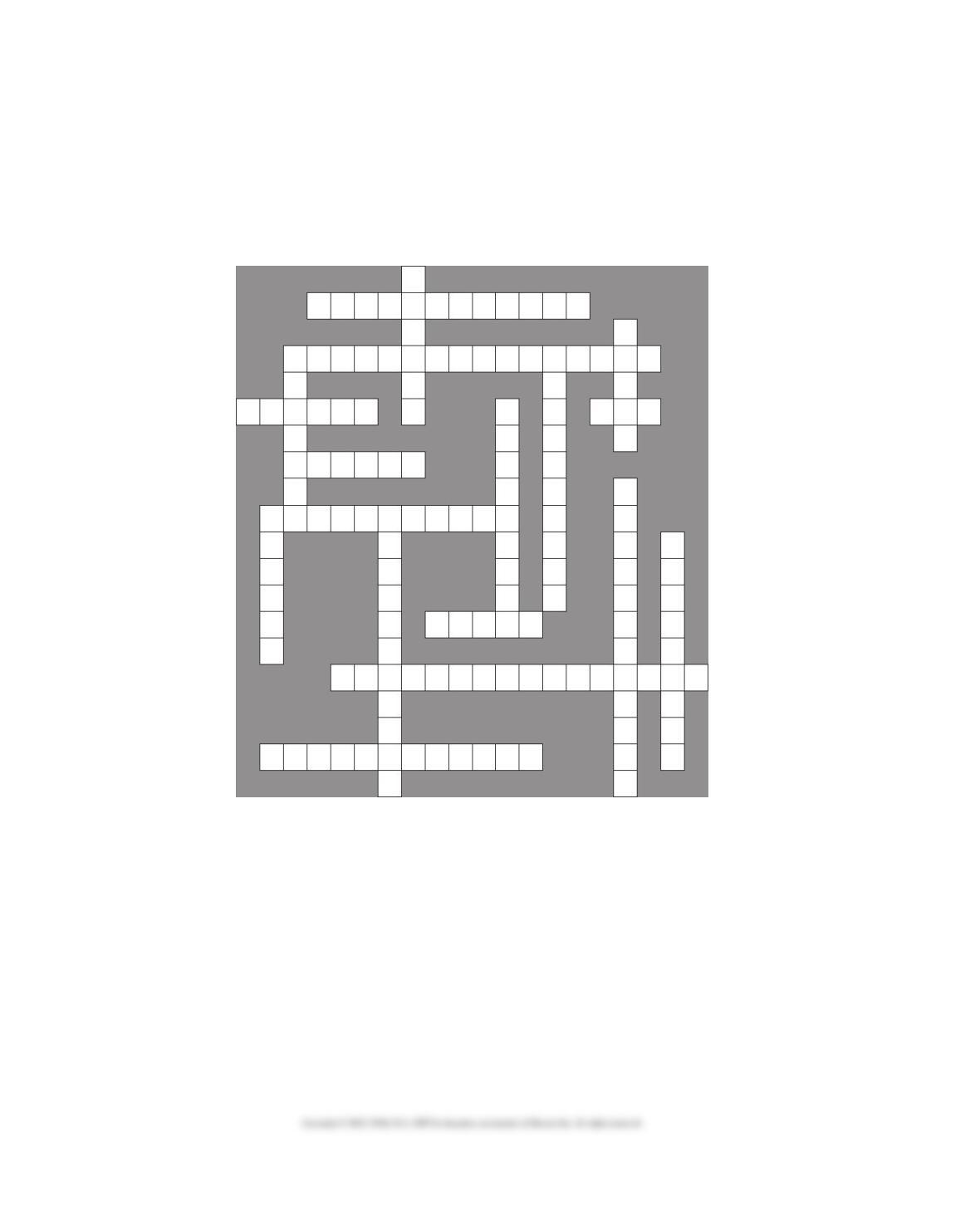
Fill in the crossword puzzle below using the clues listed underneath it.
Across Clues Down Clues
2. Listening with a stethoscope. 1. An abnormal heart sound.
4. Instrument to measure blood pressure. 3. Cardi/o means ________.
6. Angi/o means ________. 4. Contraction phase of the heartbeat.
8. Brachi/o means ________. 5. Muscle layer of the heart.
9. Gas that enters the blood through the lungs. 7. Sensitive tissue in the right atrium.
11. Saclike membrane surrounding the heart. that begins the heartbeat; sinoatrial node.
14. Coron/o. 10. Pain, tension, and weakness in a leg after.
15. Process of using ultrasound to record images of the heart. walking has begun, but absence of pain at rest.
16. Inflammation of the inner lining of the heart; 11. Open; as in _____ ductus arteriosus.
etiology is bacterial. 12. Abnormal heart rhythms.
13. Small, pinpoint hemorrhages.
1
2
3
4
6
9
10
13
14
11 12
15
16
78
5

Chapter 11 ■ PRACTICAL APPLICATIONS 269
1. What type of problem did the patient
have before coming to the ER? ………..
A. Chest pain
B. Low blood pressure
C. High blood pressure
D. Rapid heartbeat
2. What did the EMTs do for the patient?
A. They administered an electrocardiogram
and put him on a heart monitor
B. They administered a drug to reverse his
arrhythmia
C. They checked his cardiac enzymes and got
him to the hospital
D. They shocked his heart into a normal rhythm
3. What is a sinus rhythm? …………………
A. A normal heart rhythm
B. A rapid heartbeat
C. A very slow heartbeat
D. An abnormal heartbeat caused by
respiratory problems
4. ST and T waves are elements of: ………
A. An EEG
B. An ECG
C. A cardiac scan
D. Echocardiography
B. Patient Assessment
The patient is a 58-year-old male who has had angina for 3 years. His symptom of substernal
(stern/o means breastbone) tightness occurs with exertion and is relieved promptly by rest (typical
of angina). A treadmill stress test showed definite ST segment abnormalities consistent with
myocardial ischemia at stage 3 of the test. In addition, the patient has multiple risk factors including
hypertension, hypercholesterolemia, and history of smoking.
I have started the patient on Cardizem (a calcium channel blocker) as antianginal medication.
If the patient has evidence of significant stenosis in the future, he should undergo coronary
angiography and possibly PCI.
Chapter Eleven
PRACTICAL APPLICATIONS
Name: ______________________________
A. Emergency Room—Patient Report
Mr. Smith was seen by the emergency medical technicians (EMTs) and found to have tachycardia.
Lidocaine (a cardiac antiarrhythmic) was started and by the time he reached the ER his heart rate
was between 75 and 80 with a sinus rhythm. He had excellent ST segments and T waves. Blood
pressure was 156/88. He had a good carotid pulse bilaterally. No cardiomegaly and no murmurs.
He was started on a cardiac monitor and observed for any ECG change. He had no episode of
hypotension and no further arrhythmia. There was no evidence to do cardiac enzyme studies, and
the patient was discharged to be followed by his regular physician.
1. What is the patient’s major symptom?
A. Pain in his left arm
B. High blood pressure
C. High blood levels of cholesterol
D. Chest pain
2. What did the treadmill test show? …….
A. Hypertension
B. Decrease in blood flow to heart muscle
C. Fracture of the breastbone
D. History of smoking
3. What is the effect of Cardizem? ………..
A. Increases blood pressure
B. Lowers blood cholesterol
C. Decreases myocardial ischemia
D. Promotes aortic stenosis
4. What procedures are recommended? …
A. X-ray of heart blood vessels and balloon
angioplasty with stent placement
B. Coronary artery bypass surgery
C. Thrombolytic therapy
D. Exercise tolerance test and radioactive scan

270 Chapter 11 ■ PRACTICAL APPLICATIONS
C. General Hospital Nuclear Cardiology Center Stress Test Imaging Report
Patient Name: SALLY SMITH Procedure Date: 14-APR-2013
Procedure: MYOCARDIAL IMAGING, SPECT Date of Birth: 21-OCT-1971
Ref Physician: TOM JONES, MD
CLINICAL HISTORY:
Family history of CAD. Ex-smoker, palpitations. Sudden onset of SSCP and shortness of breath with
radiation to back and down both arms at rest.
INDICATION(S):
Diagnosis of ischemia.
MEDICATIONS:
ASA, Premarin.
PROCEDURE:
The patient underwent a 99mTc sestamibi exercise treadmill stress test using standard Bruce protocol
[patient must get to 85% of maximum heart rate for age]. Sestamibi at 8 A M .
302MBq [radioactive dose] 99mTc sestamibi was injected intravenously at peak exercise and
tomographic imaging data acquired. Additional data were acquired following intravenous injection
of another 893MBq 99mTc sestamibi at rest on the same day.
ENDPOINT(S):
Exercise was limited by fatigue. Chest pain did not occur.
REST ECG:
The baseline cardiac rhythm was normal sinus rhythm. The rest electrocardiogram revealed
nonspecific ST segment and T-wave abnormalities.
STRESS ECG:
No ST segment changes were observed during this test.
Arrhythmias: None.
STRESS TEST COMMENTS
Negative for ischemia.
CONCLUSIONS:
The patient has excellent exercise capacity. The ECG response to stress was negative for ischemia.
The perfusion images show equivocal mild anterior ischemia.

Chapter 11 ■ PRACTICAL APPLICATIONS 271
1. What type of test is the patient
receiving? ……………………………………..
A. Cardiac MRI and stress test
B. Radioactive scan to image blood flow to
heart muscle with an exercise stress test
C. Image of cardiac structures with
ultrasound and exercise stress test
D. Computed tomography after exercise
stress test
E. Holter monitor with stress test
2. Why was the procedure indicated? …….
A. History of previous MI
B. Symptoms of intermittent claudication
C. Congestive heart failure
D. Substernal chest pain and SOB
E. Family history of essential hypertension
3. What are the results of the test? ………
A. Patient experienced angina
B. Patient experienced palpitations and
tiredness
C. Heart function is good and ischemia is
not clearly evident
D. Abnormal heart rhythms were evident
with ST and T-wave abnormalities
E. Heart block and ischemia occurred
272 Chapter 11 ■ ANSWERS TO THE QUIZZES
Chapter Eleven
ANSWERS TO THE QUIZZES
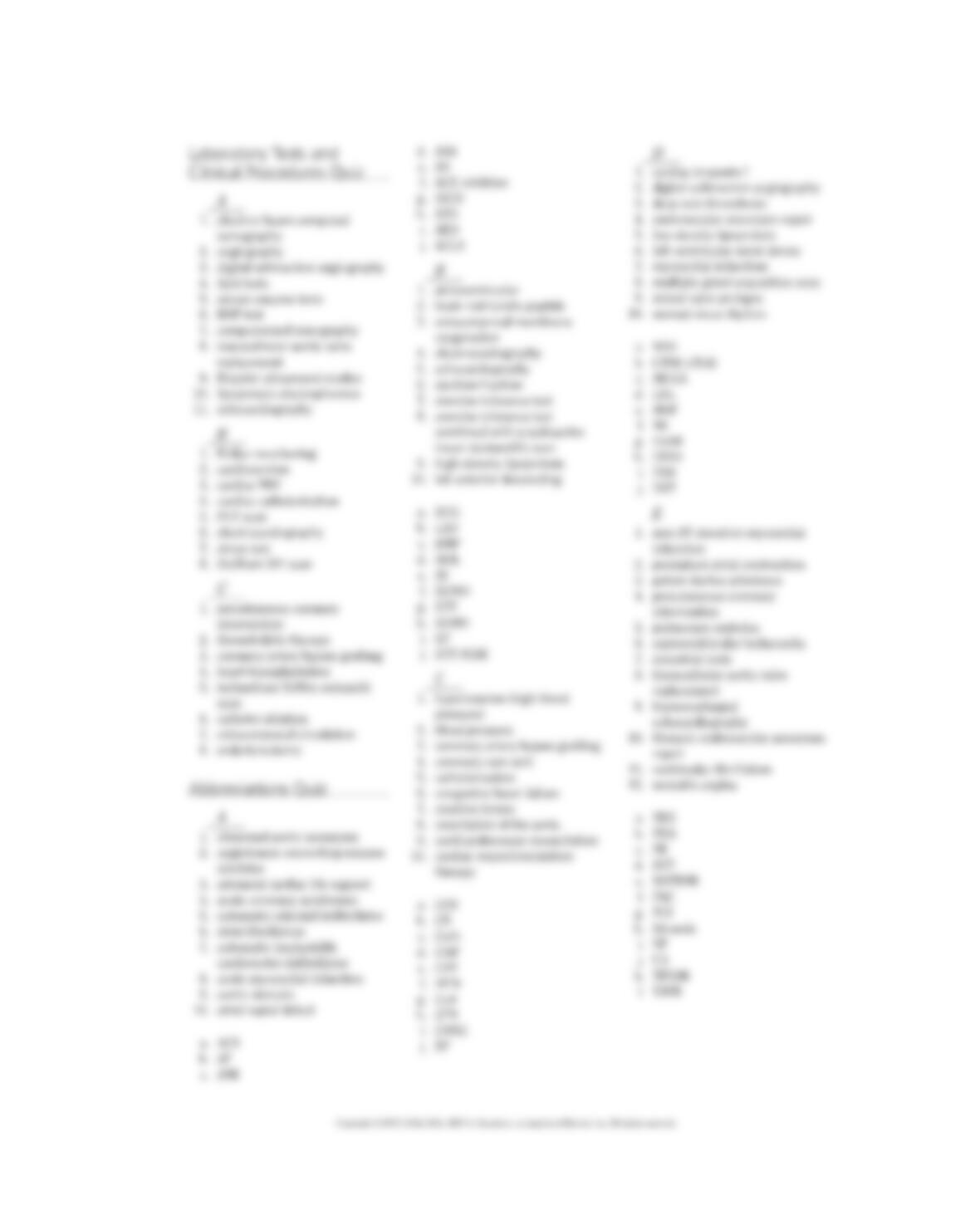
Chapter 11 ■ ANSWERS TO THE QUIZZES 273
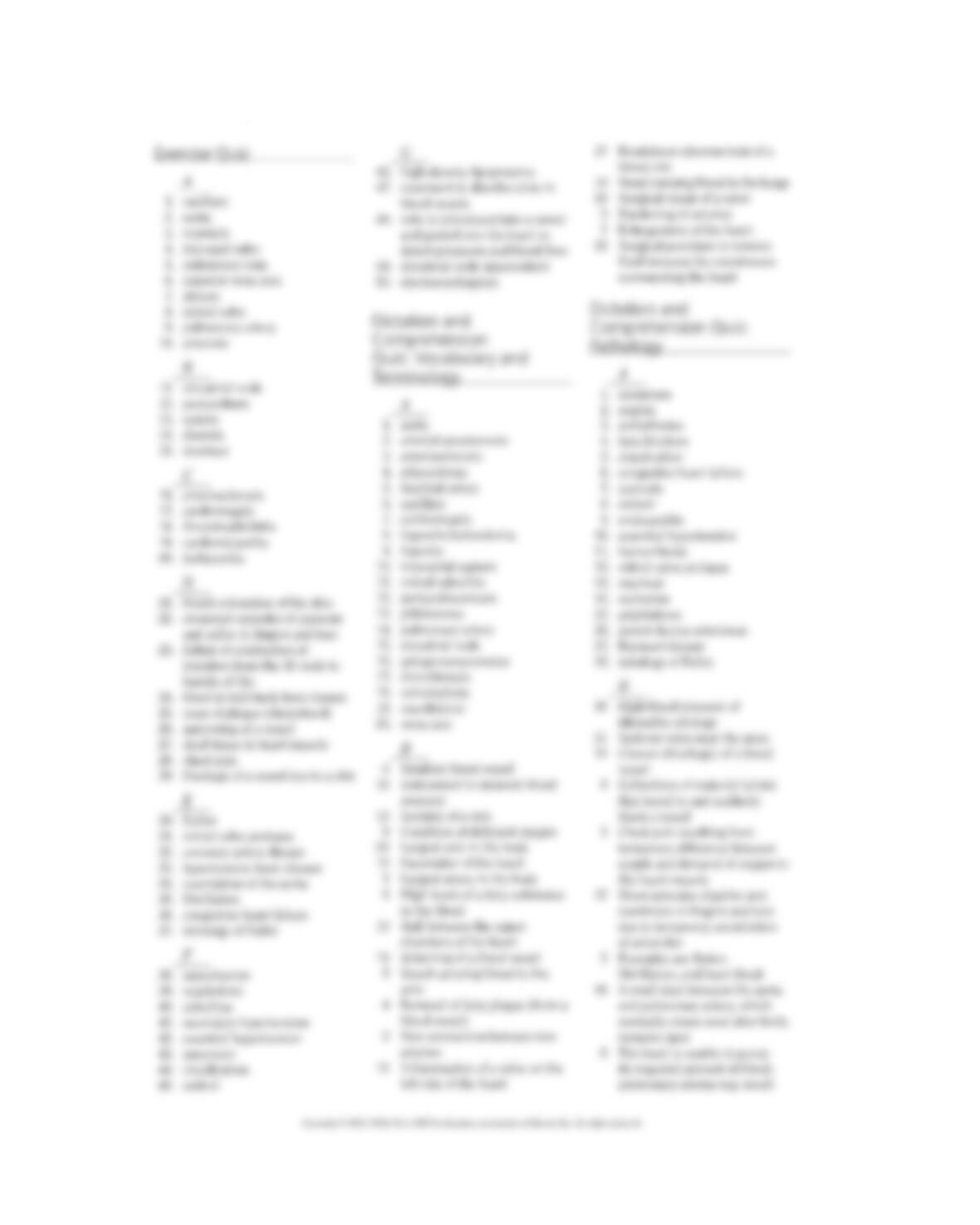
274 Chapter 11 ■ ANSWERS TO THE QUIZZES
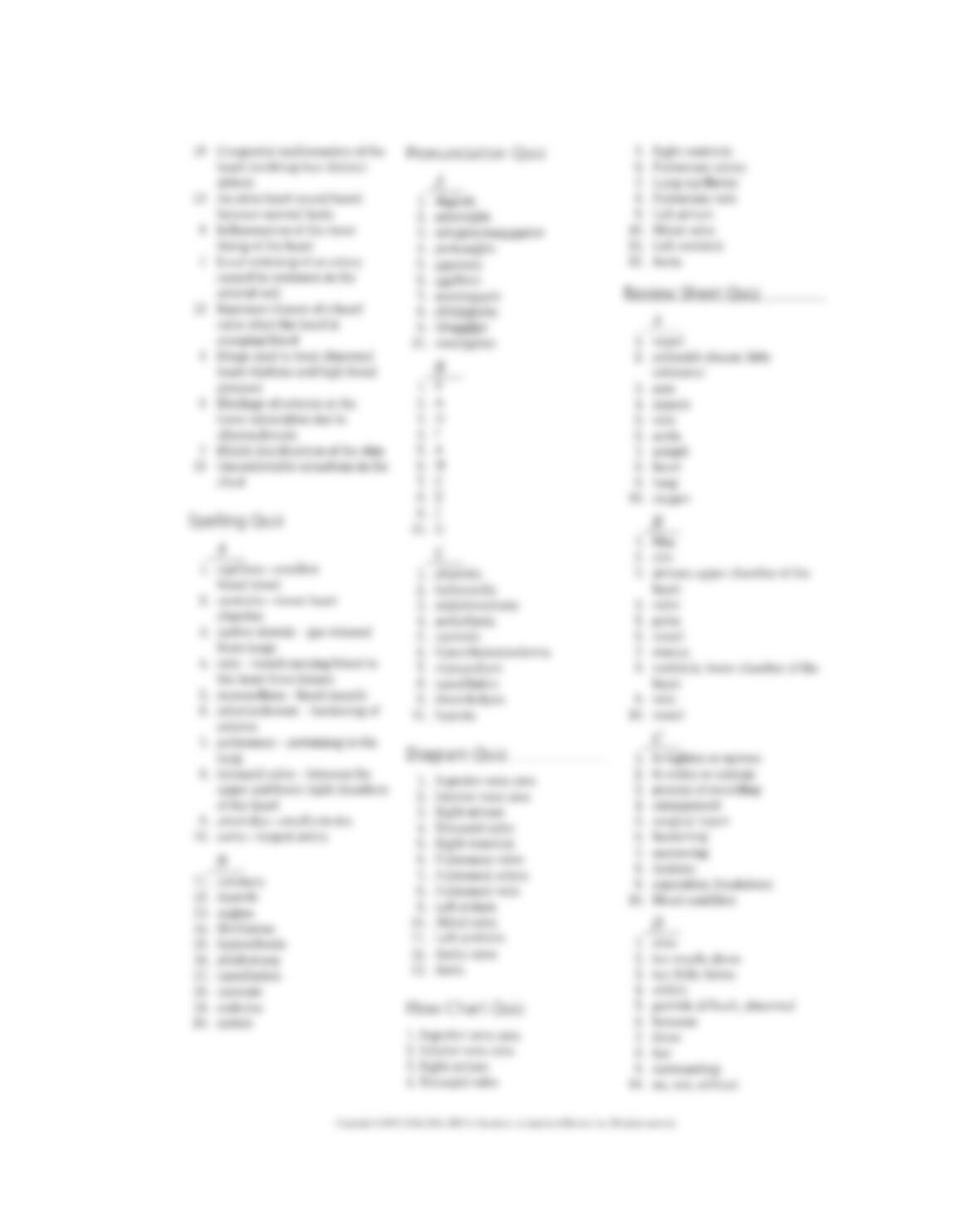
Chapter 11 ■ ANSWERS TO THE QUIZZES 275
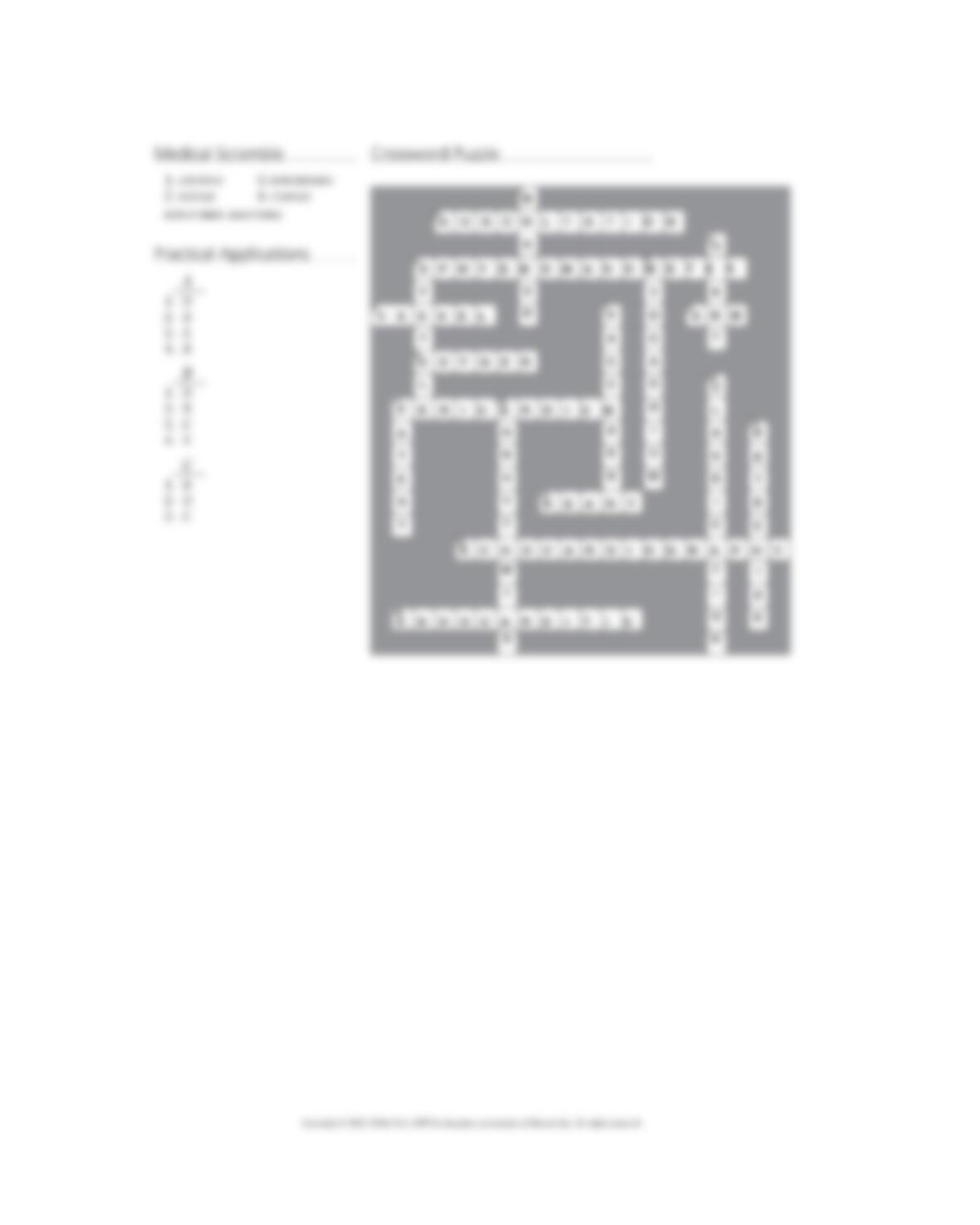
276 Chapter 11 ■ ANSWERS TO THE QUIZZES
Chapter 11 ■ ANSWERS TO TERMINOLOGY SECTION 277
Chapter Eleven
Answers to Terminology Section
(textbook pages 411–414)