
MORE PRACTICAL
APPLICATIONS
On the next pages you will find additional examples of medical terminology in context. Here are
paragraphs about disease conditions, case reports, research reports, and a wide variety of examples
of medical writing. Medical terms are underlined to draw attention to terminology that students
may define. I use paragraphs like this for dictation or discussion in class. Sometimes I include
a paragraph on a quiz as a bonus question, asking the students to explain the meaning of the
sentences in their own words. Many of the paragraphs on diseases were written by me in response to
questions that came up in class that were not covered in The Language of Medicine or that needed
further explanation.
I have noted the chapter in The Language of Medicine with which you may choose to use each
of the following.
• Chapter 4
Reye syndrome. This is an acute disease of childhood, characterized by severe edema of
the brain, and increased intracranial pressure, hypoglycemia, and fatty infiltration and
dysfunction of the liver.
The etiology of Reye syndrome is unknown, but it is almost always associated with a previous
• Chapter 5
Mr. Smith’s hemoglobin was normal and his leukocyte count was 16,000 mm3, showing
slight neutrophilia. Physical examination of the abdomen revealed a mass, and a histological
examination disclosed it to be a pancreatic adenocarcinoma. His condition progressively
worsened and he died after 23 hospital days. Autopsy revealed carcinoma of the pancreas
with metastatic hepatic and peritoneal lesions as well as peritonitis.
• Chapter 5
Colonoscopy. The patient had a previous colonoscopic polypectomy and now presents for
follow-up interval examination. She has some rectal bleeding that has been attributed to
hemorrhoids.

624 MORE PRACTICAL APPLICATIONS
The instrument was advanced through the descending, transverse, and ascending colons
to the cecum. There was no evidence for any recurrent mass lesion. On withdrawal of the
instrument, small internal hemorrhoids were seen.
• Chapter 5
Thrush is an infection of the oral mucous membrane by a fungus (Candida albicans). It
is characterized by white patches on a red, moist inflamed surface, occurring anywhere
• Chapter 5 or 6
Colic is acute, paroxysmal abdominal pain. It is marked by spasmodic contractions of the
intestine, most commonly during the first 3 months of life. The infant may pull up his or
her arms and legs, cry loudly, turn red-faced, and expel gas from the anus or belch it up from
the stomach. Etiology is not known, but several factors may contribute to its occurrence.
These include excessive aerophagia, too rapid feeding or overfeeding, overexcitement, and
occasionally allergy to milk.
• Chapter 6
Ms. Jones had been taking birth control pills for several years. Lower abdominal pain
and non-bloody diarrhea made her seek a doctor’s advice after experiencing postprandial
• Chapter 6
The patient, a 53-year-old male, had been well until 3 weeks before hospital admission. At
that time he noted anorexia, malaise, and epigastric discomfort. On the day of admission
he had hematemesis but had observed no sign of melena or change in bowel habits.
He had previously undergone cholecystectomy for calculi and partial colectomy for
diverticulitis.
• Chapter 6
Barrett esophagus is a premalignant condition that should be suspected in any patient
presenting with signs and symptoms of chronic reflux esophagitis. The condition itself
is asymptomatic but can be diagnosed by barium swallow, which reveals esophageal
strictures or ulcerations with a hiatal hernia.
• Chapter 6
Fatigue is often an important symptom of underlying hepatic disease. Intense pruritus and

MORE PRACTICAL APPLICATIONS 625
• Chapter 6
Bilirubin is classified as indirect (“free” or unconjugated) when it is en route to the liver
from the spleen, where erythrocytes are destroyed. Bilirubin is classified as direct (bilirubin
• Chapter 7
Persons suffering from nephrotic syndrome have been known to occasionally develop as
much as 40 L of excess fluid, and 15 L of this is ascites. In addition, joints swell and pleural
and pericardial cavities can become partially filled with fluid. Intravenous infusion of large
quantities of plasma proteins can be of only temporary benefit because enough protein can
be lost in the urine in a day to return the person to his or her original predicament.
• Chapter 7
Peritoneal dialysis versus hemodialysis. Peritoneal dialysis is more quickly initiated because
no dialysis machine is needed; anticoagulants are not necessary and there is no need for
• Chapter 7
A 65-year-old man with a 2-month history of weakness, gross hematuria, and intermittent
hemoptysis was admitted to the hospital. Past history included alcohol abuse, asbestos
exposure, and heavy smoking (two packs a day for 42 years). A cystoscopy with retrograde
pyelography showed a filling defect in the base of the bladder. Transurethral biopsy of the
bladder revealed a transitional-cell carcinoma, grade IV. Chest x-ray showed a right lower
lobe lesion, and CT scan confirmed the presence of the abnormality. Biopsy of the lung
mass revealed a metastatic bladder carcinoma.
• Chapter 8
Much of the focus of neonatology now is on improving survival of premature infants, and
• Chapter 8
A 28-year-old premenopausal woman, G0 P0, presented with an upper outer quadrant
breast mass of 3 months’ duration. Modified radical mastectomy was performed; none of
the 33 nodes was positive for metastasis. Tumor size 3.7 cm; pathology report indicated
infiltrating ductal carcinoma, grade IV. The tumor is estrogen receptor positive. Bone scan
and chest x-ray are negative and liver enzymes are normal.

626 MORE PRACTICAL APPLICATIONS
• Chapter 8
Ovarian cancer. The ovary is the second most common site of cancer in the female
reproductive organs (endometrial carcinoma is the first). Unlike endometrial cancer
there is no obvious warning sign (bleeding) and unlike cervical cancer there is no routine
diagnostic test (like the Pap smear) that will detect early or occult disease of the ovary.
The common malignancies of the ovary are believed to arise from the surface epithelium of
the ovary. The names of the common epithelial tumors are serous, mucinous, endometrioid,
• Chapter 8
Kegel exercises, named after Dr. Arnold Kegel, a gynecologist who first developed the
exercises to strengthen pelvic-vaginal muscles, are used to control stress incontinence.
Patients are taught awareness of the pubococcygeus muscle, a sphincteric muscle that
surrounds the vagina, and how to control it. Once the muscle has been strengthened it
tends to maintain its strength and is in a state of partial contraction at all times.
• Chapter 9
Chlamydial infections. Chlamydia is a type of bacteria. Chlamydia infections have replaced
gonorrhea as the most prevalent STD in the United States. Symptoms may be very mild, and
those affected may not be aware that they have the disease. Often they do not seek treatment
until a serious complication occurs. In males, the symptoms, when they do occur, are dysuria
and watery discharge from the penis. Women may suffer pruritus and burning sensation in
the genital area; an odorless, thick leukorrhea; dull abdominal pain; and metrorrhagia.
MORE PRACTICAL APPLICATIONS 627
• Chapter 9
I saw Mr. John Smith for symptoms of prostatism (lessening of force of urinary flow,
hesitancy in initiating voiding, inability to end micturition abruptly, urinary retention) in
1988. At that time he underwent TURP of a clinically benign prostate, and pathology report
• Chapter 10 and Chapter 16
Neurofibromatosis (also called von Recklinghausen disease) is an inherited disorder
marked by pigmented skin lesions, multiple tumors of spinal and cranial nerves, tumors
of the skin, and brain tumors. There is an increased association with adrenal gland tumors
(pheochromocytomas), kidney vascular disease (causing hypertension), fibrous tissue
dysplasia, and tumors in the gastrointestinal tract.
• Chapter 10
Bacterial meningitis. Common etiologic agents are meningococcus, streptococcus,
pneumococcus, and tubercle bacillus.
The streptococcal and pneumococcal types reach the meninges from the middle ear or
frontal sinus, but they may be carried by the bloodstream from the lungs as well. The
meningococcal type comes from the nose or throat.
Meningococcus is usually the type causing epidemics. The infection is spread by carriers,
who harbor the organisms in their throat but do not themselves develop the infection.

628 MORE PRACTICAL APPLICATIONS
• Chapter 10
Viral meningitis (encephalitis or aseptic meningitis). In this type of inflammation, no
pyogenic organisms can be found in the cerebrospinal fluid. The illness may appear following
viral infections such as in chickenpox, measles, smallpox vaccination, and others.
• Chapter 10
Pain. Receptors for pain stimuli are the dendrites of neurons distributed in the superficial
layers of the skin and in certain deeper tissues such as the periosteum, joint surfaces, and
arterial walls. The gastrointestinal mucosa is also quite sensitive to irritation and painful
stimuli. The parenchymal tissues of the liver and the lung (air sacs) are insensitive to
pain, whereas the bile ducts and associated liver tissue, bronchi, and parietal pleura are
extremely sensitive.
Some stimuli that excite the pain receptors are mechanical stress of trauma, extremes of
Referred pain occurs in a part of the body distinct from where the cause that produced the
pain is situated. Thus, pain originates in a visceral organ but is felt in the skin or another
area of the body. Referred pain probably occurs because pain signals from the viscera travel
along the same neural pathways used by pain signals from the skin. The person perceives
the pain but interprets it as having originated in the skin rather than in a deep-seated
visceral organ. An example of this type of pain is radiating pain in the left arm that is
felt when a person has heart muscle damage (myocardial infarction) due to ischemia and
necrosis.
Analgesics are agents that relieve pain. Aspirin is an example of a non-narcotic analgesic.
It relieves pain by blocking the production of prostaglandins.
• Chapter 10
Migraine. Migraine is a paroxysmal disorder characterized by recurrent attacks of cephalgia,
with or without associated visual and GI disturbances.

MORE PRACTICAL APPLICATIONS 629
Aspirin or codeine may help in mild attacks. In severe attacks, only codeine or stronger
analgesics offer relief and only if taken before the headache has lasted 2 hours.
• Chapter 11
Angelo Payne, a 70-year-old house painter, noticed chest discomfort in the form of a
• Chapter 11
A 35-year-old female with an 8-year history of heroin abuse was admitted to the hospital
confused, agitated, and with a right hemiparesis of 2 days’ duration. A left common
• Chapter 11
Beta-blockers are drugs that block the action of epinephrine at the beta-adrenergic
receptors on cells of certain organs. There are two types of these receptors: beta receptors
in the myocardium and beta receptors in the bronchial and vascular smooth muscle
cells.
Normally if the beta receptors in the myocardium are stimulated by the secretion of
epinephrine, they will cause the heart to beat more rapidly. Beta-blockers counter this
• Chapter 11
An apolipoprotein (apo- is a prefix used in biochemistry to denote the protein portion of a
complex molecule) is a protein associated with lipids (such as triglycerides, phospholipids,
and cholesterol) to form the various lipoproteins found in plasma and tissues. These
proteins transport cholesterol, triglycerides, and phospholipids between tissues, and
possess specific binding sites that are recognized by tissues. Apolipoprotein A-I and A-II
are components of high-density lipoproteins (HDLs), which transport cholesterol to the
liver to be metabolized.
• Chapter 11
Poisonous chicken soup. A 70-year-old man presented with profound weakness of 3 days’
duration. He had a 2-year history of congestive heart failure following a myocardial infarction.

630 MORE PRACTICAL APPLICATIONS
watch his salt intake). On the day of admission he had eaten a large bowl of chicken soup
to “treat a cold.” The patient was found to have hyperkalemia resulting from an overdose
of potassium chloride found in the salt substitute. Consumption of a large amount led to
depression of the SA node and bradyarrhythmia. A transvenous pacemaker was inserted
and hyperkalemia controlled with drugs. Patients with congestive heart failure and renal
impairment should be warned about the hazards of using salt substitutes.
• Chapter 12
Patients with non–small cell lung cancer are candidates for palliative therapy only if they
have any one or more of the following:
•Distantmetastatic disease
• Chapter 12
Tonsils. The tissue usually referred to as tonsils are the palatine tonsils, a pair of oval
structures about the size of small almonds, partially embedded in the mucous membrane,
one on each side of the oropharynx. Below them, at the base of the tongue, are the lingual
tonsils. On the upper rear wall of the mouth cavity are the pharyngeal tonsils, or adenoids,
which are of fair size in childhood but usually shrink after puberty.
• Chapter 12
Chronic obstructive pulmonary disease. This is a term applied to a group of disorders of
lung function that share an element of irreversible expiratory airflow obstruction. The
three disorders commonly included are emphysema, chronic bronchitis, and chronic
asthma in adults.
Emphysema is destruction of alveolar spaces, usually accompanied by the loss of the natural
elastic recoil of the lung and weakening of the walls of the bronchiolar airways.

MORE PRACTICAL APPLICATIONS 631
Diagnosis is based on clinical presentation and the results of spirometry, which show
reduction in expiratory flow rates and volumes. The main complications of COPD are
respiratory failure, overwhelming infections, and right-sided heart failure. When symptoms
are present chronically at rest, the prognosis is poor.
• Chapter 12 or 15
Case Report:
A 29-year-old man with complaints of pain in the low back and mid-epigastrium was found
• Chapter 12
Nosocomial pneumonia accounts for about 10% to 17% of hospital-acquired infections. The
rate of acquiring pneumonias in the hospital is 6 to 20 times higher in patients receiving
mechanical ventilation, but the disease is most common in elderly intubated patients with
chronic underlying disease.
• Chapter 12
Pleurodesis induces scarring of the pleura to prevent fluid accumulation in the pleural
• Chapter 12
A 67-year-old man had a 10-year history of COPD from heavy cigarette smoking. When
he was hospitalized the first time, his major complaints included a 3-year history of
increasing cough, SOB, fever, and weight loss. The occurrence of gross hemoptysis
set off the alarm for any of several diagnoses: tuberculous pneumonia, pneumonia,
acute and chronic bronchitis, bronchiectasis, trauma, pulmonary embolism, and lung
cancer.
• Chapter 13
In summary, this 68-year-old man had diffuse histiocytic lymphoma for 7 years and is
• Chapter 13
G6PD is glucose-6-phosphate dehydrogenase. It is an enzyme normally found in erythrocytes.
Deficiency of this enzyme can lead to hemolysis. Several forms of genetic deficiencies of the
enzyme are recognized, affecting some black males, people of Chinese origin, Sephardic

632 MORE PRACTICAL APPLICATIONS
• Chapter 14
Parasitic infections are caused by small plants or animals that live on or within another
living organism at whose expense they obtain some advantage. Some examples of these
infections are:
acariasis Infection with mites or ticks. Mange and scabies are examples.
candidiasis Infection by fungus. Most commonly affects skin, oral mucosa
(thrush), respiratory tract and vagina. The most prominent
symptom of vaginitis due to Candida infection is severe pruritus.
Candidiasis is often associated with AIDS infection.
• Chapter 14
Kaposi sarcoma. Kaposi (named for Morris Kaposi, Austrian dermatologist, 1837-1902)
sarcoma (KS) is a rare malignancy that consists of multiple lymph node tumors and
angiosarcomas. These lesions appear on the legs or toes as purple or dark brown nodules.
It is multifocal and metastasizing, involving chiefly the skin. This is an opportunistic
neoplasm associated with AIDS. With metastatic lymphadenopathy, prognosis for a
• Chapter 14
Sarcoidosis is a chronic disorder in which the lymph nodes in many parts of the body
are enlarged, and small, fleshy nodules called granulomas develop in the lungs, liver, and
spleen. The skin, eyes, nervous system, muscles and bones, and salivary glands also can be
affected.

MORE PRACTICAL APPLICATIONS 633
Etiology is unknown, and it is likely that the disease results from an abnormal immune
response. In the United States, it is 10 to 20 times more frequent in blacks than in whites,
but in Europe it affects mostly whites. Females are slightly more susceptible than males.
Most people are between 20 and 40 when they are diagnosed with the illness, but it can
occur in children and the elderly.
lead to kidney stones.
• Chapter 15 or Chapter 16
Systemic lupus erythematosus (SLE) is a chronic inflammatory disease of connective
tissue. It also affects the skin and internal organs. Typically there is an erythematous,
scaly rash on the face, around the nose and the cheeks, in the shape of a butterfly. Other
characteristics of the disease are arthritis and nephropathy.
Although the etiology is unknown, it is thought to be an autoimmune disease and can be
diagnosed by the presence of abnormal antibodies in the bloodstream. Another test shows
characteristic white blood cells, called LE cells.
• Chapter 15
Scleroderma. This connective tissue and skin disorder is about four times more common
in women than in men; it is rare in children. It may be an autoimmune disorder, meaning
that the body produces antibodies against its own good tissue. Common initial complaints
are Raynaud phenomenon and swelling of the fingers and toes with gradual thickening of
the fingers. Induration (hardening) of the skin is symmetric and may be confined to the
fingers or affect most of the body. As the disease progresses, the skin becomes taut, shiny,
and hyperpigmented; the face becomes mask-like, and telangiectases appear on the fingers,
face, lips, and tongue. Esophageal dysfunction is the most frequent internal disturbance
634 MORE PRACTICAL APPLICATIONS
• Chapter 15 or 16
Researchers conducted a study to determine the incidence of bacteremia in association with
decubitus ulcers in a general hospital population. The incidence was higher in men, and
• Chapter 16
Hexachlorophene is an antibacterial substance used in soaps and detergents to inhibit
bacterial growth. It is contained in pHisoHex. The pH of pHisoHex is slightly acid (5.0 to
6.0). It has a bacteriostatic action against staphylococci and other bacteria.
• Chapter 16
Leprosy is a chronic infectious disease caused by a bacillus, which is a rod-shaped bacterium.
The bacillus attacks the skin, mucous membranes, and peripheral nerves (nerves that are
outside the brain and spinal cord). Transmission occurs most often through infected nasal
discharges.
Only about 5% of contacts acquire the disease; others appear to be immune. Leprosy is
found mainly around the equator, in Southeast Asia, Africa, and South America. Of the
becomes inactive.
• Chapter 16 or Chapter 19
Progress Notes
This 50-year-old patient has had a progressively worsening headache for 6 months, and
episodic weakness of his R leg for the past several months. These episodes last 5 to 10
minutes and are described as “numbness” or clumsiness of gait, with inability to walk or
lift the leg. Has noted a dark mole that progressively enlarged on the upper tip of the R
earlobe over the past 3 yr. Suspected a melanoma but did not consult a physician.
FH/SH: denies sun exposure. No fam. hx of cancer. Works as a clerk. No children.
Unmarried.
MORE PRACTICAL APPLICATIONS 635
ROS: Smoker (30 pack yr) but not known to have COPD. Heart—no known disease. Had
total colectomy for ulcerative colitis at age 12. No Sx since. Has lost about 10 pounds in
past few months.
CT and MRI demonstrate R and L cerebral lesions. Chest: multiple 1 cm nodules.
PE: Pale, asthenic, bearded man in NAD (no apparent distress). Conversation appropriate.
Large, 1 cm long bluish mole on R earlobe.
No other susp. Lesions. No nodes.
• Chapter 18
Cushing syndrome (named for Dr. Harvey Cushing, who first described it in 1932) is a
group of symptoms produced by an excess of cortisol from the adrenal gland. This can be
caused by hyperplasia of the gland (due to increased stimulation from the pituitary gland
and ACTH), ectopic production of ACTH from tumors in the lung or thyroid gland, and
iatrogenically by too much administration of corticosteroids by physicians.
Diagnosis is made by laboratory findings indicating a continuous elevation of plasma
• Chapter 19
Alpha-fetoprotein (AFP) is a globulin present in the serum of the fetus, infant, and normal
pregnant female. High concentrations are often diagnostic of hepatocellular carcinoma in
adults. Although they often do not reach the levels found in association with hepatocellular
carcinoma, elevated concentrations of AFP are found in association with a variety of
malignant neoplasms and inflammatory conditions.
636 MORE PRACTICAL APPLICATIONS
In fetuses with open spina bifida or anencephaly, AFP leaks into the amniotic fluid and
maternal serum, and its measurement is of significant diagnostic value.
• Chapter 22
Alcoholism. Alcohol is a toxic drug, harmful to all body tissues. Chronic use can lead to
pathologic changes in the CNS, liver, heart, kidney, and gastrointestinal tract. Cirrhosis is
the most recognized complication of alcoholism, but dementia and brain damage can also
occur in the early stages of the disease. Fetal alcohol syndrome with growth deficiency,
MEDICAL FORMS
These are a collection of medical forms that I use in class with my students. They contain many
terms that are taught in chapters of The Language of Medicine. I suggest that you use them because
they pertain to the terminology you are teaching. For example, in Chapter 3, when I introduce the
different types of blood cells, I hand out a laboratory form and show students the section pertaining
to the different types of white blood cells, red cells (cell morphology), and platelets. Students see
the terms in their actual context on a laboratory sheet.
You can also use the forms as a quiz by creating questions and asking students to find specific
terms or abbreviations on the form that answer the questions. Please let me know (davichabner@
gmail.com) if you find these helpful, and please share any interesting ways of using them in your
classes. Also, please let me know if you have other forms that you include in your teaching.
The medical forms included here are:
1. Health Laboratories sheet, page 624
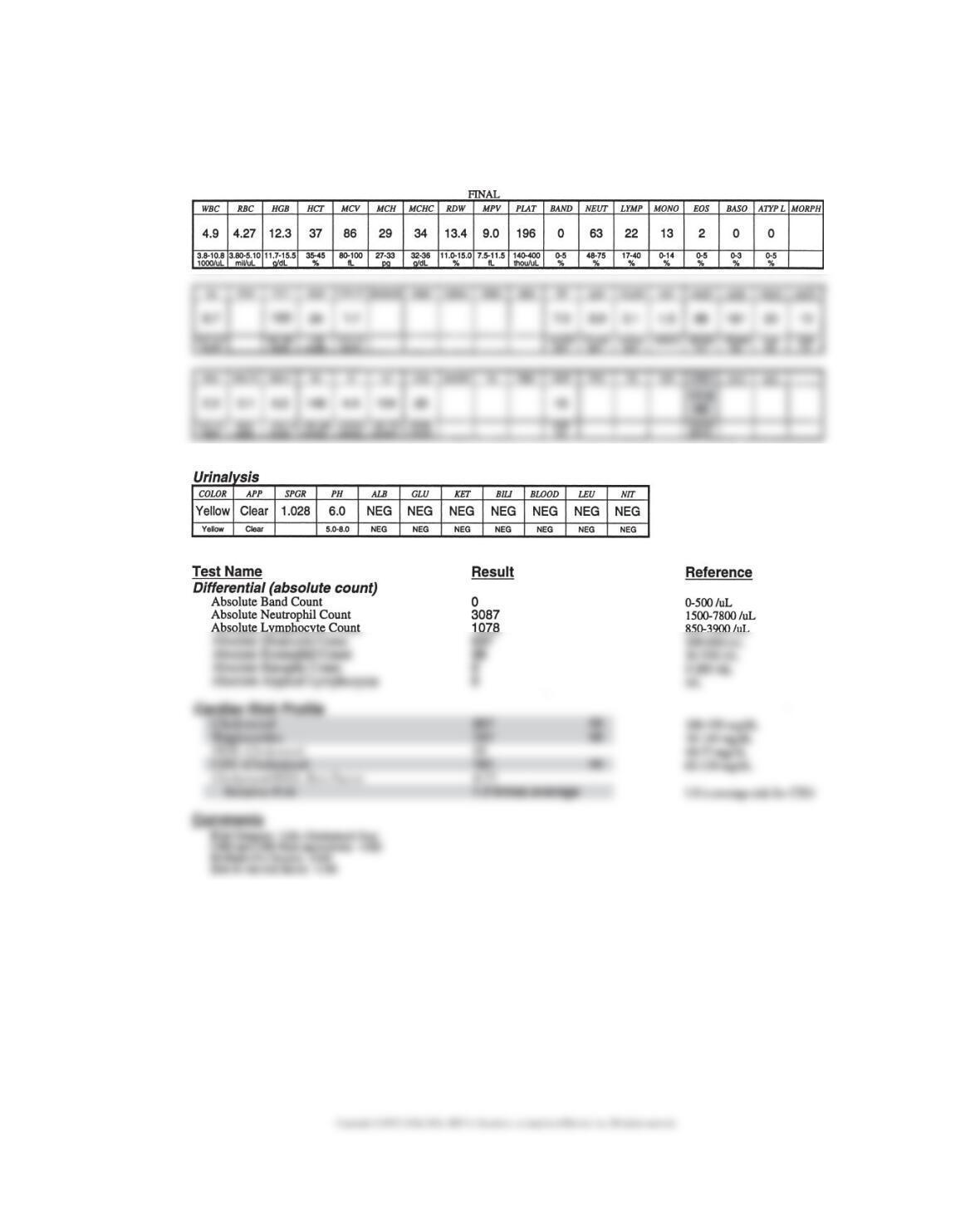
2. Laboratory Diagnostics, page 625 (This form shows laboratory results from Sarah
Smith, who is an 84-year-old patient who has been increasingly lethargic and gaining
weight. After obtaining these laboratory results, the physician at her nursing home
Copyright © 2017, 2014, 2011, 2007 by Saunders, an imprint of Elsevier Inc. All rights reserved. 637
638 MEDICAL FORMS
HEALTH LABORATORIES
CHEMISTRIES
____________
GLUCOSE
(65-110)
BUN
(10-25)
CREATININE
(0.7-1.4)
NA+
(135-145)
mg/dl
mg/dl
mg/dl
meq./1
_____
_____
_____
_____
CALCIUM
(8.5-11.0)
PHOSPHATE
(2.5-4.5)
CHOLESTEROL
(150-300)
TRIGLYCERIDES
(30-200)
mg/dl
mg/dl
mg/dl
mg/dl
_____
_____
_____
_____
_________________________________________________________
PATIENT NAME ACCESSION #
______________________
DOCTOR
______________________
DATE
THYROID CHEMISTRIES
_____________________
T-4 ______ mcg/dl (4.5-13.5)
T-3 ______ % (25-35%)
SYPHILIS SEROLOGY
___________________
______ REACTIVE
______ NON REACTIVE
COLOR
APPEARANCE
REACTION
SPEC. GRAVITY
GLUCOSE
PROTEIN
ACETONE
WBC/HPF
RBC/HPF
EPITH. CELLS
BACTERIA
CRYSTALS
CASTS
OTHER:
WHITE BLOOD COUNT
_________ x103/mm3
4-11
________________________________
________________________________
________________________________
________________________________
________________________________
________________________________
________________________________
________________________________
________________________________
________________________________
________________________________
________________________________
________________________________
________________________________
COMPLETE BLOOD COUNT
________________________
MALE
_____
4-11
FEMALE
________
LYMPH
_________ %
20-40
20-40
MALE
_____ FEMALE
________
ORGANISM (S)
_____________
ANTIBIOTICS
900 AMPICILLIN
902 CARBENICILLIN
904 CEPHALOTHIN
906 CHLOPAMPHENICOL
908 CLINDAMYCIN
910 COLISTIN
912 ERYTHROMYCIN
PROTHROMBIN TIME
__________________
PATIENT ____ sec ____ %act.
CONTROL ____ sec
DIGOXIN _______ ng/ml
(0.8-2.0)
PREGNANCY TEST ______
MEDICAL FORMS 639
PATIENT: SARAH SMITH
Laboratory Diagnostics
640 MEDICAL FORMS