Walker & Hemmens, Legal Guide for Police (10th ed.)
Test Bank—Chapter 2
Multiple-Choice Questions
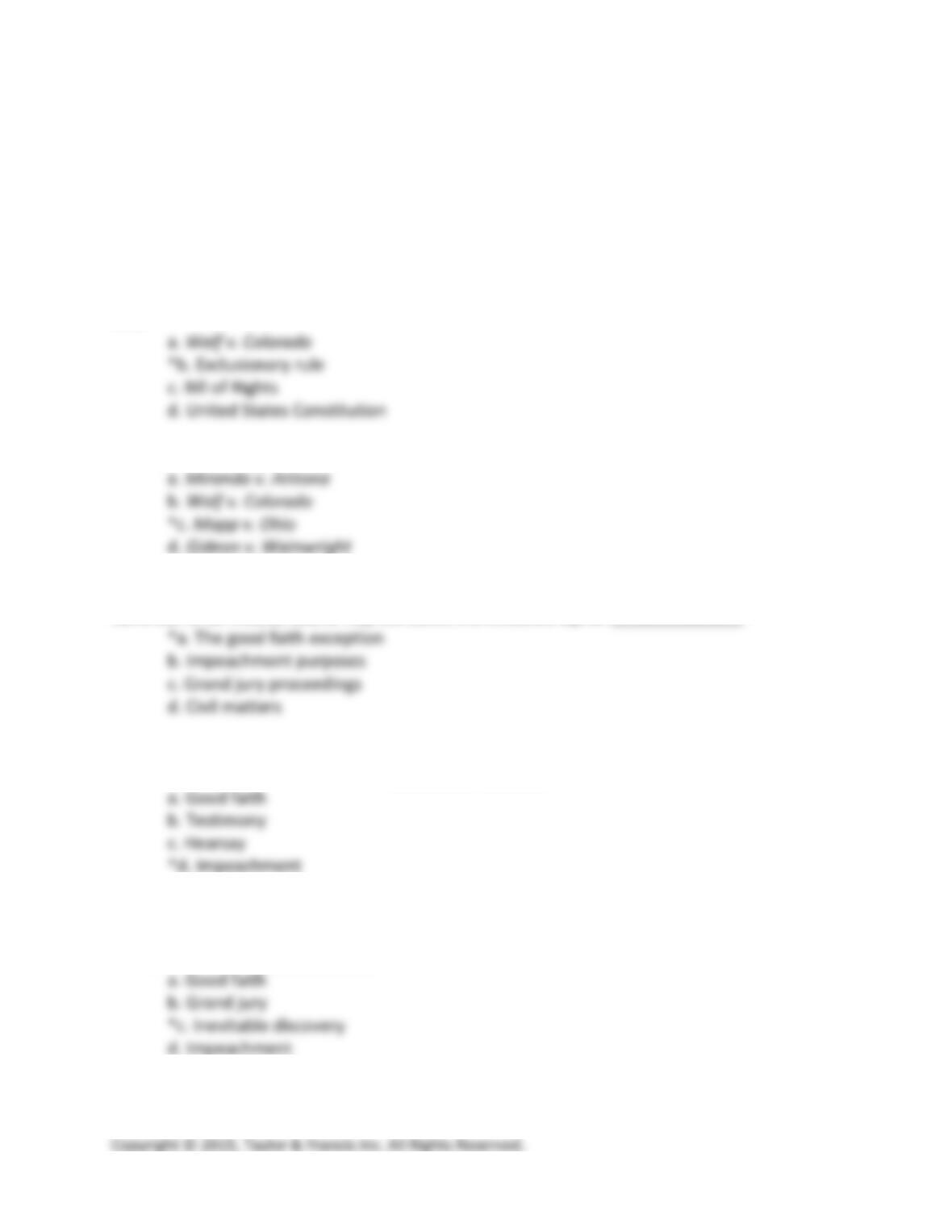
1. The _____________ states that unconstitutionally seized evidence will not be admitted at
trial.
2. The exclusionary rule was extended to all courts in ________________.
3. If officers act under the impression they have a valid search warrant and that warrant later
turns out to be invalid, Courts may still admit the evidence by/for ______________.
4. Unconstitutionally seized evidence can be used as a rebuttal to the testimony of the
defendant. This practice is known as _________________.
5. If unconstitutionally seized evidence would have been found at some point in the future,
regardless of the unconstitutional search, the Court will allow this evidence to be admitted
during trial via the _____________ exception.
6. The plaintiff in a tort action must prove that _____________.
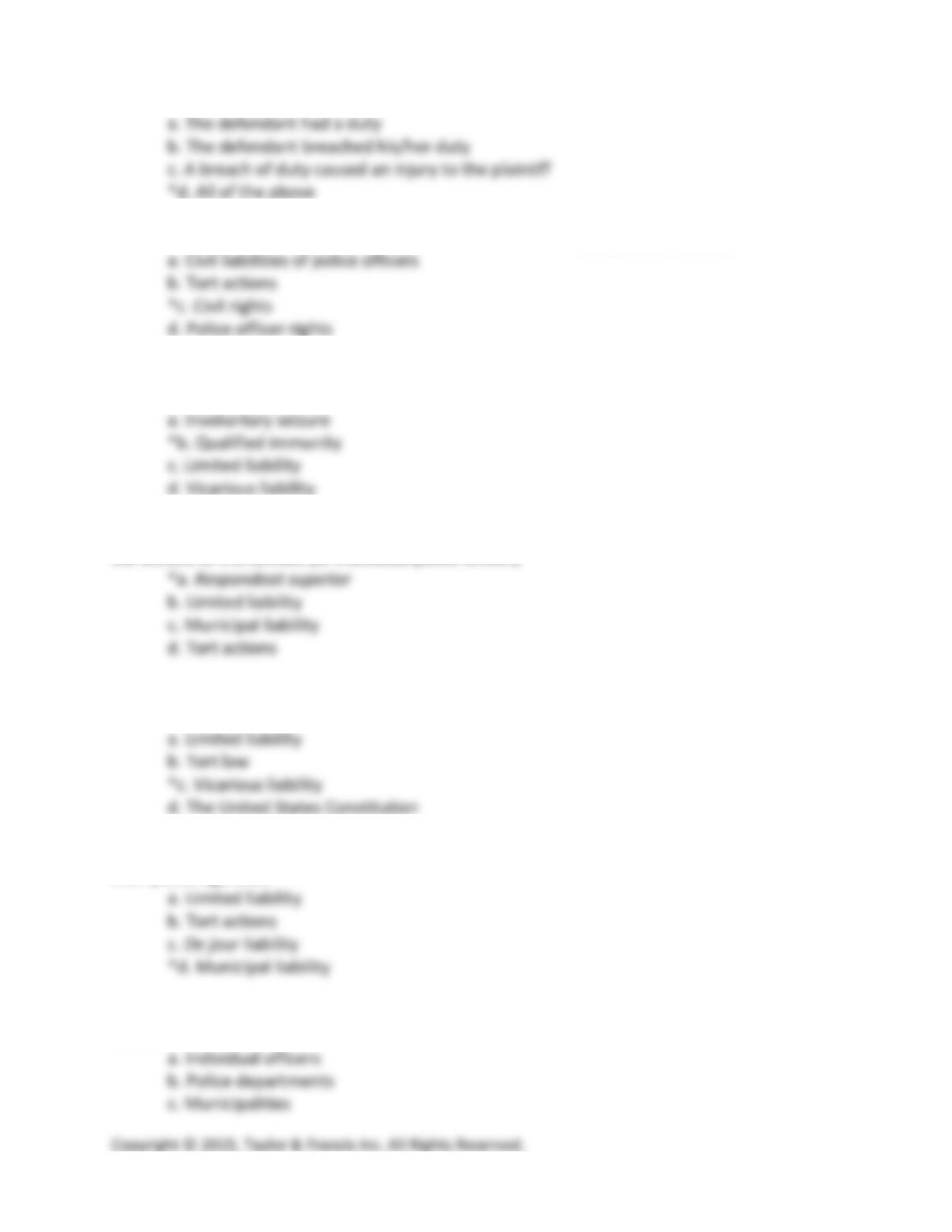
7. The statute of Title 42 United States Code § 1983 concerns _________________.
8. If an officer is alleged to have violated an individual’s civil rights, he or she may use the
defense of ________.
9. The doctrine of ______________________ states that a master (or police agency) is liable for
the actions of the servant (or individual police officer).
10. _______________ states that police agencies can be held civilly liable for the actions of the
officers they employ.
11. The doctrine of ______________ states that cities can be held civilly liable for the actions of
their police agencies.
12. Title 42 United States Code § 1983 allows individuals claiming civil rights violations to sue
_______________.
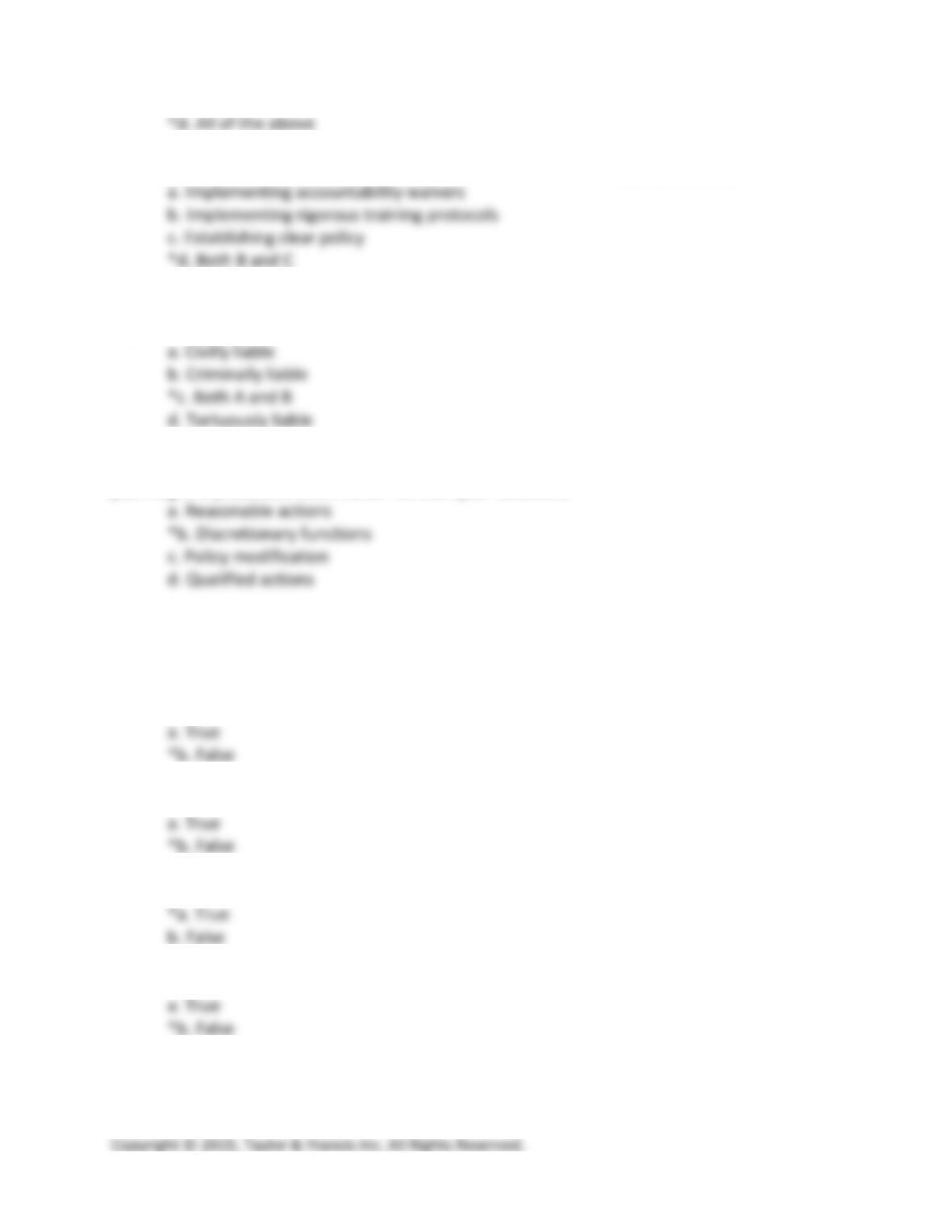
13. Agencies and municipalities often try to avoid civil liability by _______________.
14. Title 42 United States Code § 1983 states that officers can be held _____________ for civil
rights violations.
15. The police often engage in ______________. These actions are not amenable to prior
planning and procedure and involve “on-the-spot” decisions.
True/False Questions
1. The exclusionary rule is explicitly written in the Constitution.
2. All countries utilize the exclusionary rule.
3. Mapp v. Ohio applied the exclusionary rule to state court proceedings.
4. The exclusionary rule excludes all evidence seized without a warrant.
5. The good faith exception to the exclusionary rule is usually limited to mistakes made by
magistrates.
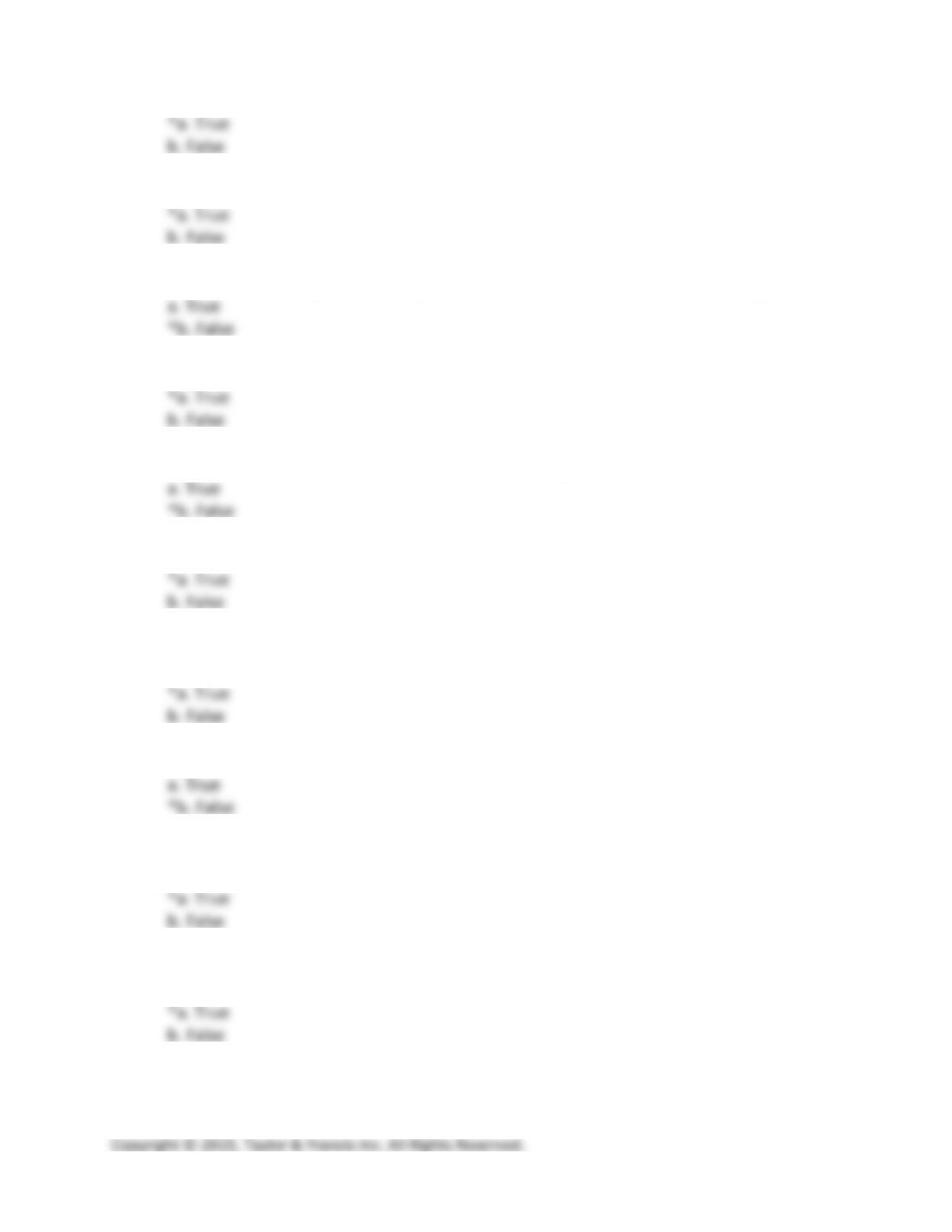
6. Illegally seized evidence can be used for impeachment purposes.
7. The exclusionary rule applies to all illegally seized evidence at grand jury proceedings.
8. Police officers can be held civilly liable for violating the civil rights of an individual.
9. Police officers cannot be held criminally liable for violating the civil rights of an individual.
10. Police officers can claim qualified immunity during civil and criminal proceedings.
11. An action fulfills the requirement of willfullness if the action was done voluntarily and
intentionally.
12. A supervisor and agency can never be held liable for the action of a subordinate.
13. The Supreme Court has stated that municipalities can be held liable for the actions of the
officers they employ.
14. Officers can be held liable for failing to intervene as another officer violates the civil rights
of an individual.
15. Mapp v. Ohio primarily concerns evidence seized by violating Fourth Amendment
protections.