
1
Chapter 9: Wellness and Self-Care for Professional Counselors
Multiple Choice
____________________ is defined as a conscious, self-directed process leading toward
fulfilling one’s unique potential that is holistic and multidimensional.
a. Wellness
b. Self-care
c. Burnout
d. Optimal health
In the 21st century, how did investigations of personal wellness begin to change?
a. Personal wellness was becoming increasingly researched
b. Cultural factors affecting personal wellness began being investigated
c. Investigations became less anecdotally based and more empirically based
d. The biological, spiritual, and sociopsychological aspects of the individual
began to be viewed as interrelated
In the indivisible self model of wellness, which ‘self’ includes thinking, emotions,
control, work, and positive humor?
a. Coping self
b. Creative self
c. Essential self
d. Social self
Which ‘self’ includes the elements that help individuals make meaning of the world
in the indivisible self model of wellness?
a. Social self
b. Physical self
c. Creative self
d. Essential self

2
All of the following are conceptualizations of wellness except:
a. Holism
b. Balance
c. Synergy
d. Energy
“Each component part interacts with others to have an effect on our lives that is
greater than the sum of each alone” is the definition of which conceptualization of
wellness?
a. Synergy
b. Energy
c. Holism
d. Balance
Which of the following is a true statement regarding counselor wellness?
a. Majority of mental health professionals will experience difficulties
maintaining their optimal level of functioning
b. Wellness is often comprised due to the physical, psychological, and
emotional drain the profession has on counselors
c. Productivity demands, reduced funding, and challenging clients contribute
to difficulties maintaining wellness
d. All of the above
What is a possible outcome for clients if a counselor is burned out?
a. Counselor may be less efficient with clients
b. Counselor may be less interested in clients
c. Counselor may take more time to complete paperwork
d. Counselor may be less effective with clients
______________________ is a marked depletion of physical, emotional, cognitive, and
spiritual resources.
a. Exhaustion
b. Burnout

3
c. Vicarious trauma
d. Compassion fatigue
Which of the following is not a characteristic of burnout among helping
professionals?
a. Physical exhaustion
b. Emotional exhaustion
c. Depersonalization
d. Diminished sense of accomplishment
______________________ occurs as individuals become less energetic about the activities
that once provided a source of enthusiasm and self-efficacy related to professional
activities.
a. Physical exhaustion
b. Emotional exhaustion
c. Depersonalization
d. Diminished sense of accomplishment
All of the following variables are mentioned in the textbook to contribute to the
development of burnout except:
a. Personal lifestyle
b. Psychological factors
c. Work environment
d. Beginning a new job
Lack of balance between work and restorative activities, minimal use of social
supports, and having few hobbies are examples of what variables that can
contribute to burnout?
a. Personal lifestyle factors
b. Personality factors
c. Work lifestyle factors
c. Psychological factors

4
Counselors experiencing burnout are more likely to:
a. Overcompensate by seeing clients more frequently
b. Seek additional supervision
c. Serve clients less effectively
d. Be unaware of burnout symptoms
______________________ is defined as adverse emotional, spiritual, cognitive, and physical
reactions associated with providing care to clients that are not transient, supersede
interpersonal stamina, and are associated with undesired changes in functioning.
a. Burnout
b. Vicarious trauma
c. Compassion fatigue
d. Emotional exhaustion
What is the difference between compassion fatigue and burnout?
a. Counselors experiencing compassion fatigue are not as distressed and are
able to rebound using available supports
b. Counselors experiencing burnout are not as distressed and are able to
rebound using available supports
c. Compassion fatigue refers to emotional and psychological exhaustion
d. Burnout is less impairing than compassion fatigue
______________________ is defined as changes in how therapists think, feel, and behave in
relation to others and themselves as a result of their exposure to and empathic
bonding with their clients’ traumatic material.
a. Burnout
b. Compassion fatigue
c. Emotional empathizing
d. Vicarious trauma
Which of the following is least impairing?

5
a. Vicarious trauma
b. Burnout
c. Exhaustion
d. Compassion fatigue
Which of the following is most impairing?
a. Compassion fatigue
b. Vicarious trauma
c. Burnout
d. Exhaustion
Vicarious trauma are ____________________ stressors.
a. Transient
b. Permanent
c. Consistent
d. Difficult
________________ professional counselors are vulnerable to the experiences of vicarious
trauma, compassion fatigue, and burnout.
a. Experienced
b. Supervisor
c. Novice
d. All
Michelle is working with a client who has experienced a violent sexual assault. After
sessions with the client, Michelle feels “off” and continues to feel that way even
when she gets home from work. What is Michelle experiencing?
a. Compassion fatigue
b. Vicarious trauma
c. Emotional empathizing
d. Burnout

6
Preventing burnout includes self-care on a variety of levels. Which of the following
is not included in the textbook?
a. Physical
b. Emotional
c. Cognitive
d. Social
Setting realistic beliefs about what can be accomplished and setting professional-
personal boundaries is an example of self-care on what level?
a. Emotional
b. Work
c. Cognitive
d. Social
When managing burnout, it is recommended that individuals:
a. Take a leave from work
b. Receive a formal or informal evaluation from a medical or mental health
professional
c. Participate in counseling
d. All of the above
What is the purpose of a developmental plan?
a. To promote change following burnout
b. To assist counselors recover from vicarious trauma
c. To help counselors identify the most effective self-care for them
d. To identify specific clinical skills that need to be worked on
To help manage burnout, many companies provide employee assistance programs.
What types of costs may this cover?
a. Short-term support from accountants or legal advisors
b. Unemployment while counselors take a leave of absence
c. Additional paid vacation time
d. Resources to make the job more manageable

7
Leaving work at work and taking regular breaks is consistent with which aspect of
wellness?
a. Emotional
b. Career
c. Physical
d. Cognitive
An example of the ______________________ aspect of wellness includes engaging in get-
togethers, going to parties, and spending time with loved ones.
a. Cognitive
b. Emotional
c. Enjoyment
d. Social
As a way to practice wellness, Theresa enjoys journaling, reading for leisure, and
ensures she sets realistic expectations for herself. Theresa is practice which aspect
of wellness?
a. Spiritual
b. Physical
c. Social
d. Cognitive
Practicing mindfulness and focusing on the here and now are consistent with which
aspect of wellness?
a. Spiritual
b. Physical
c. Holistic
d. Emotional
What is the purpose of wellness?
8
a. Prevents burnout
b. Prevents compassion fatigue
c. Allows counselors to practice self-care
d. All of the above
True/False
The indivisible self model of wellness is comprised of eight domains.
Of all of the conceptualizations of wellness, balance is the easiest to achieve.
It is more important for individuals to have a meaningful definition of personal
wellness rather than a complex definition of personal wellness.
There is no link between counselors’ wellness and counselors’ work with clients.
Burnout is the opposite of optimal functioning.
Depersonalization represents a state in which individuals begin to demonstrate
deficits in their overall vocational effectiveness.
Symptoms of burnout indicate a chronic condition, therefore counselors
experiencing the symptoms should seek help immediately.
Individual with dispositions such as being a perfectionist or having a pessimistic
outlook on clients may be more susceptible to experiencing burnout symptoms.
Work environment variables play a small role in contributing to counselor burnout.
9
Counselors who experience burnout may complain of stomachaches, headaches, and
anxiety.
In the absence of reflection and maintaining personal wellness through self-care,
counselors are at risk for vicarious traumas that can lead to compassion fatigue and
ultimately a state of burnout.
Monitoring one’s own emotions is not a particularly useful prevention strategy for
burnout, as it is more important to monitor clients’ emotions.
Relationships are an important support for counselors when trying to overcome
burnout.
Wellness is practiced in the similar ways among counselors and each agency is
responsible for creating counselors’ wellness plans.
It is a misconception that taking care of oneself requires a lot of time and energy,
which takes away from one’s professional performance.
Short-Answer/Essay
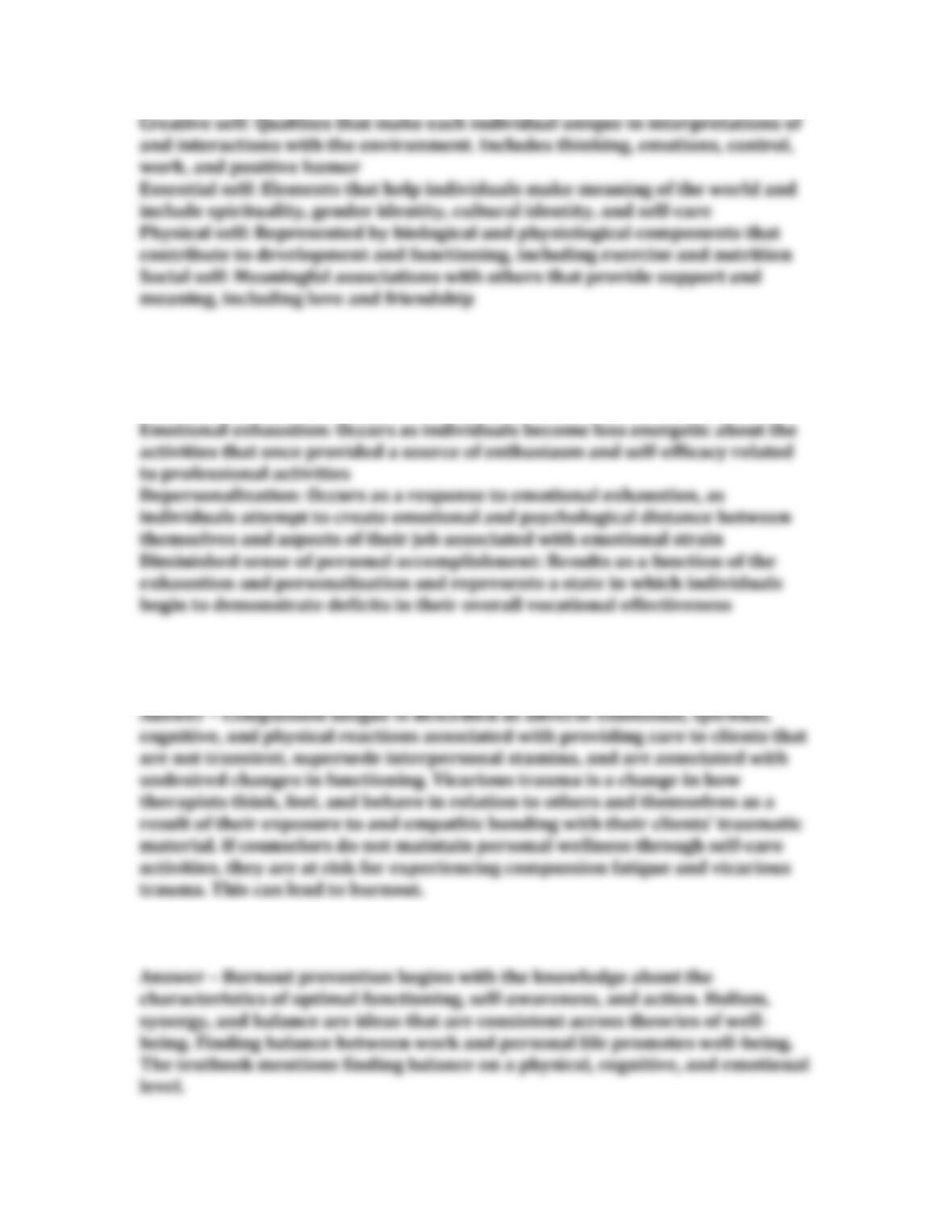
What are the five domains of the indivisible self model of wellness? Briefly describe
each domain.
Answer –
10
Describe the three characteristics of burnout among helping professionals.
Answer –
Describe compassion fatigue and vicarious trauma. How does this relate to burnout
for counselors?
What are strategies counselors can use for self-care and burnout prevention?

11
What are the six domains of wellness that are specific to counselors?