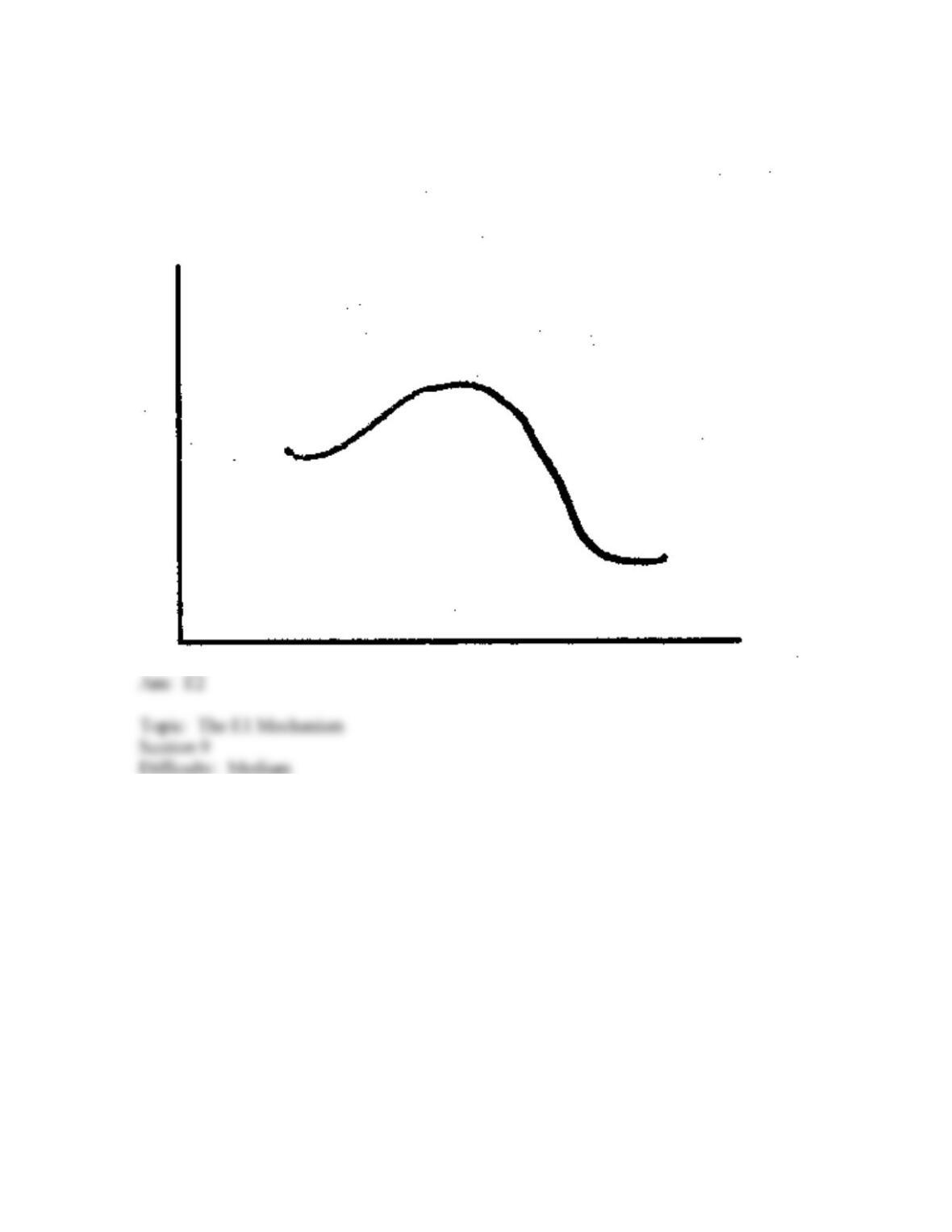
60. Based upon the following energy diagram, is this reaction an E1 or an E2
elimination?
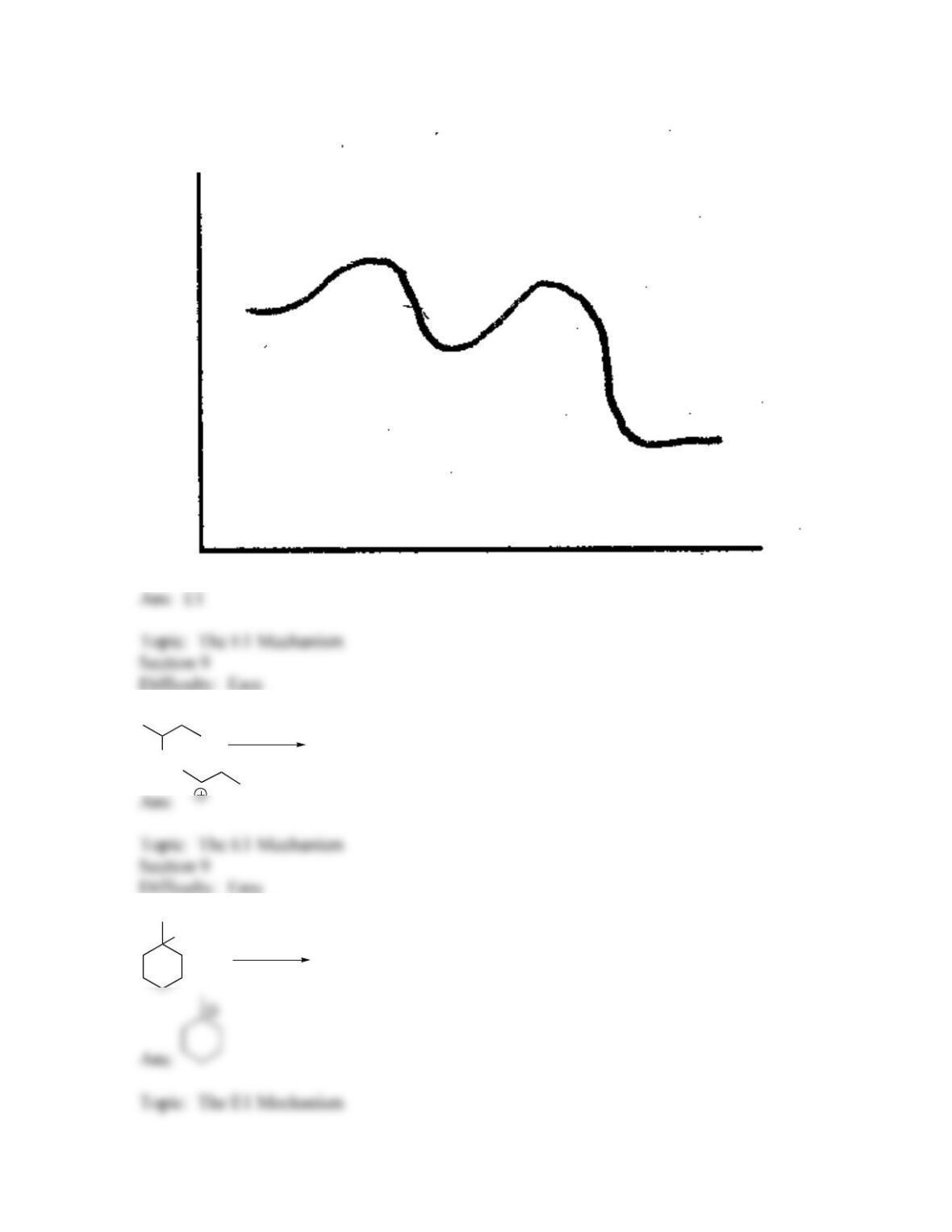
61. Based upon the following energy diagram, is this reaction an E1 or an E2
elimination?
62. For the following dehydration, draw the structure of the intermediate carbocation.
OH
H2SO4
63. For the following dehydration, draw the structure of the intermediate carbocation.
OH H2SO4
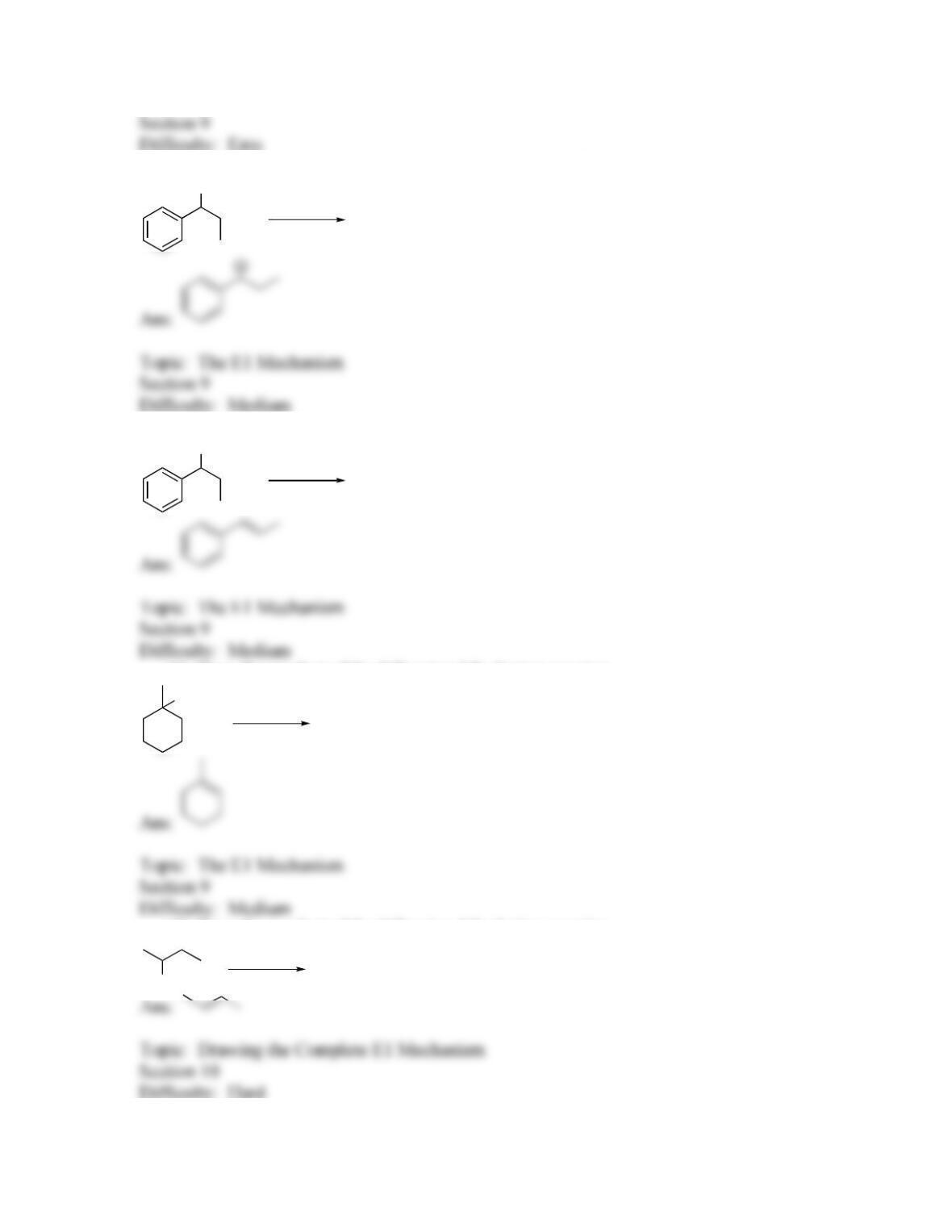
64. For the following dehydration, draw the structure of the intermediate carbocation.
OH
H2SO4
65. Draw the product of the following dehydration reaction.
OH
H2SO4
66. Draw the product of the following dehydration reaction.
OH H2SO4
67. Draw the product of the following dehydration reaction.
OH
H2SO4
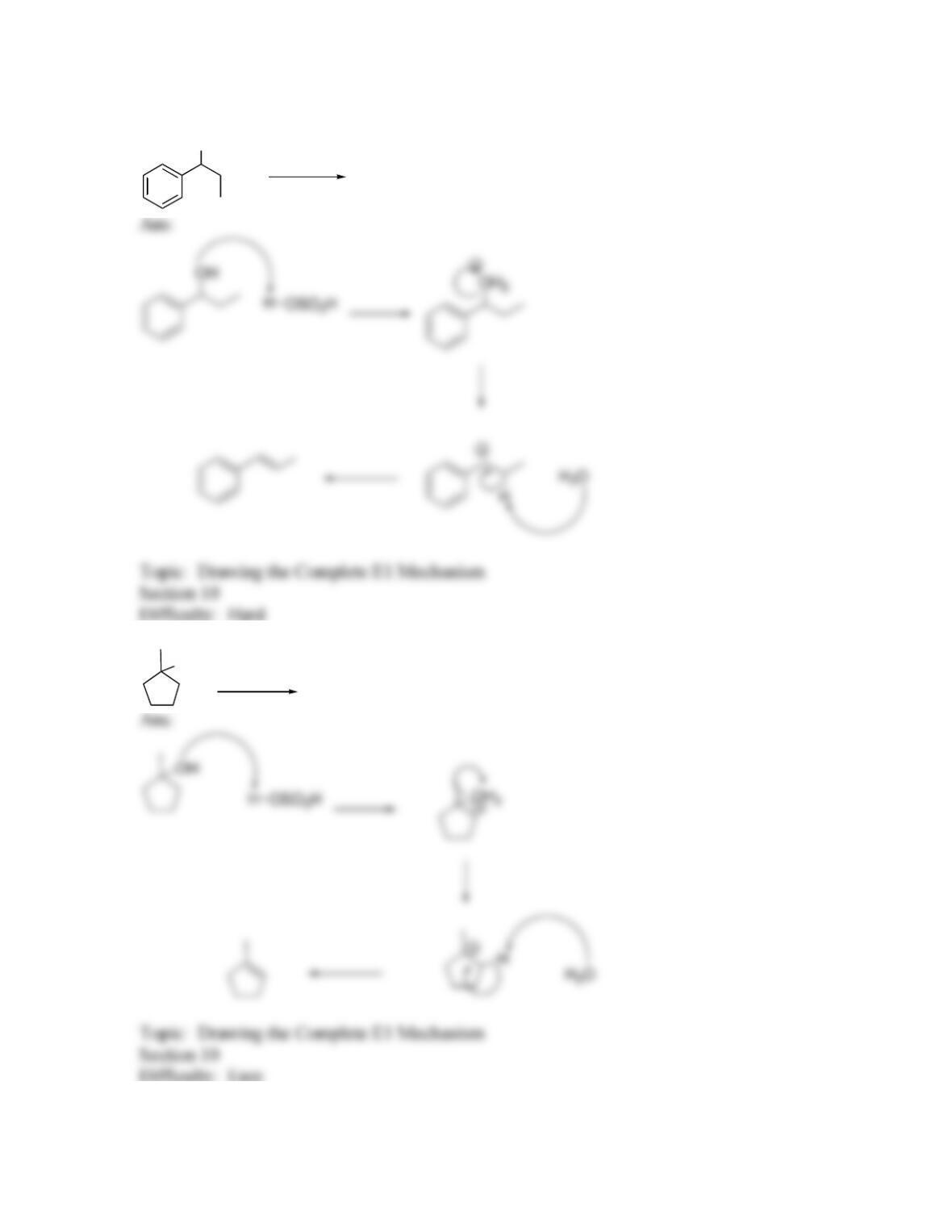
68. Draw the mechanism for the following dehydration.
OH
H2SO4
69. Draw the mechanism for the following dehydration.
OH H2SO4
70. Which of the following is the first step for the following dehydration?
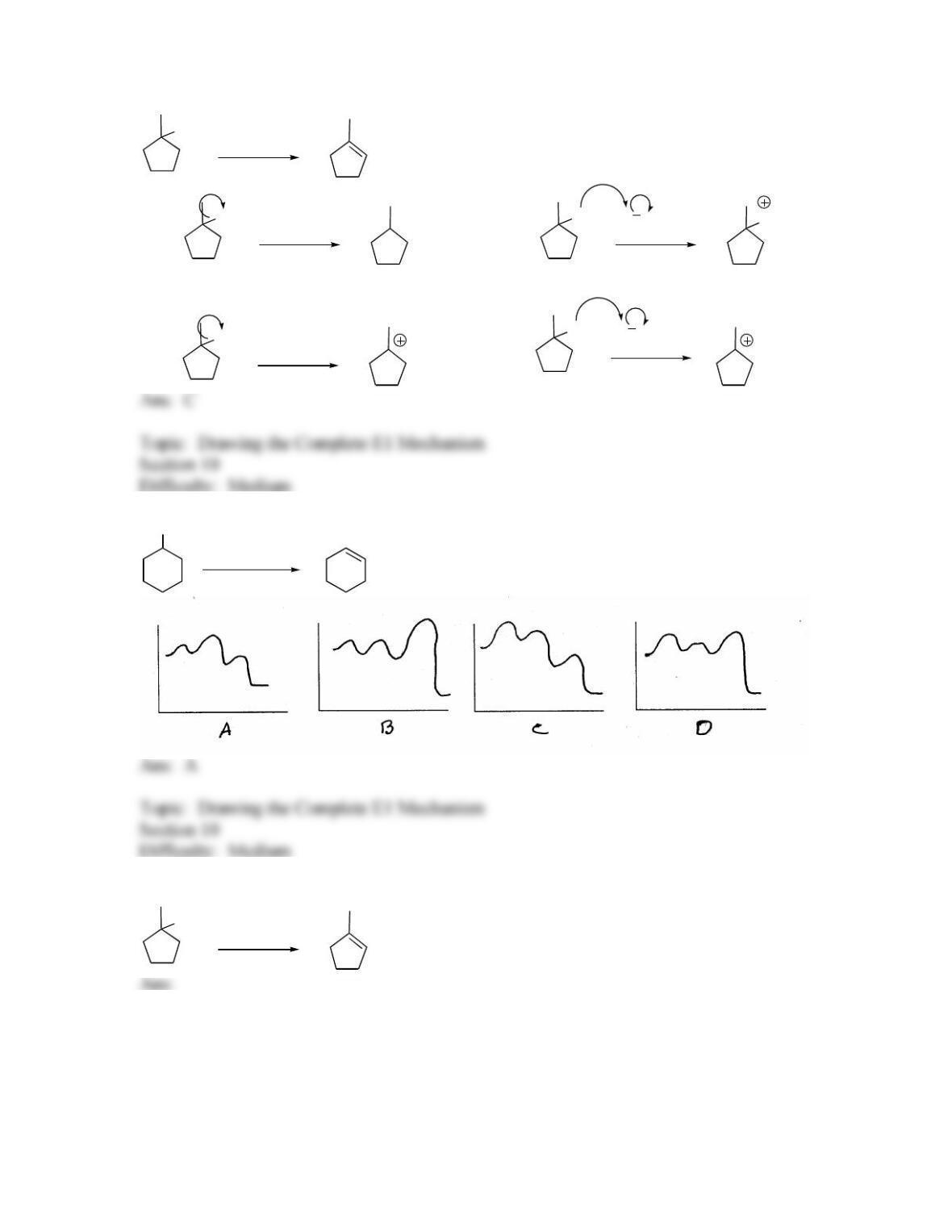
OH H2SO4
OH
A.
B. OH
C.
OH H OSO3HOH2
D. OH H OSO3H
71. Which of the following is the energy diagram for the following reaction?
OH
H2SO4
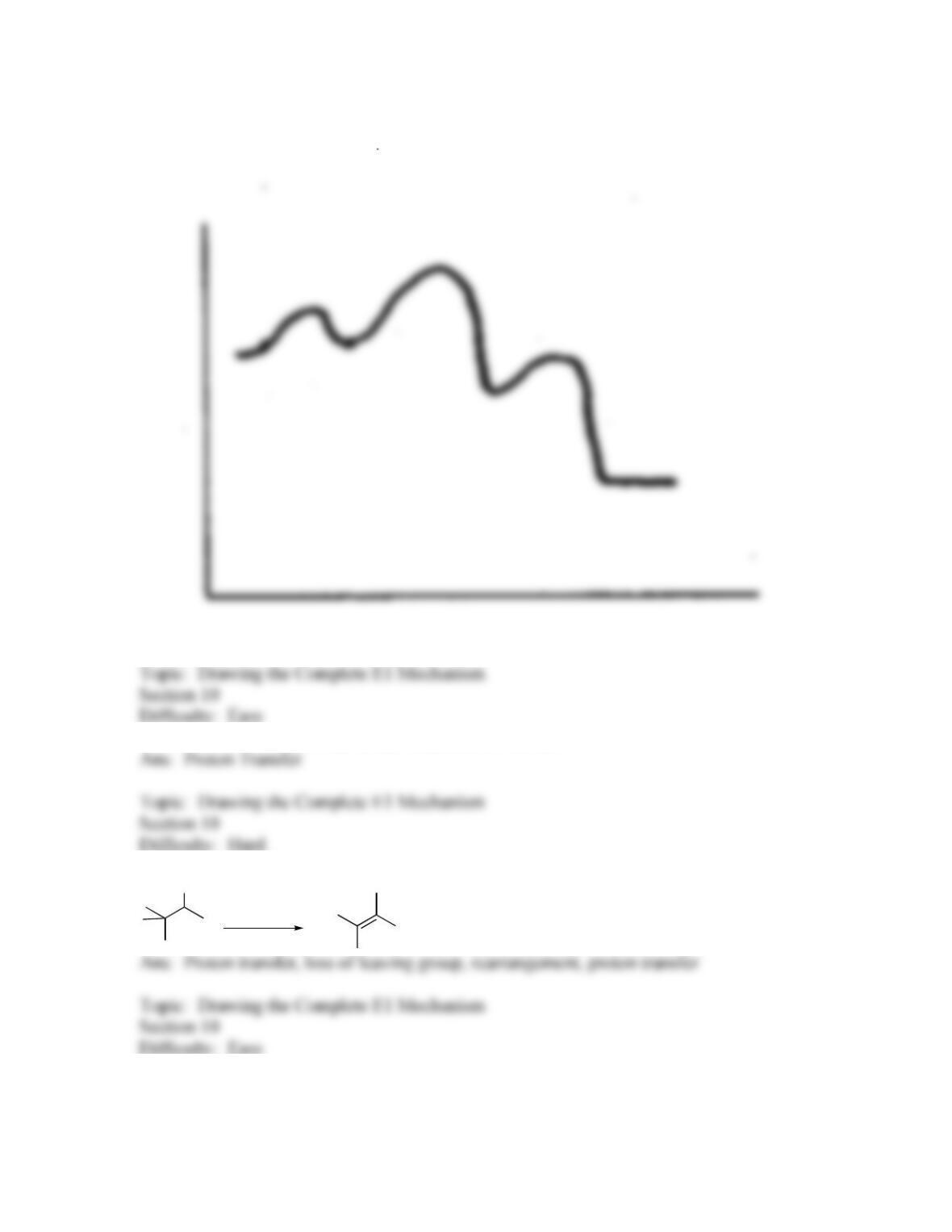
72. Draw an energy diagram for the following reaction, assuming that it is
exothermic.
OH H2SO4
73. What is the first step in any dehydration reaction?
74. What are the steps in the following mechanism?
OH
H2SO4
75. Will the following alcohol undergo rearrangement during a dehydration reaction?
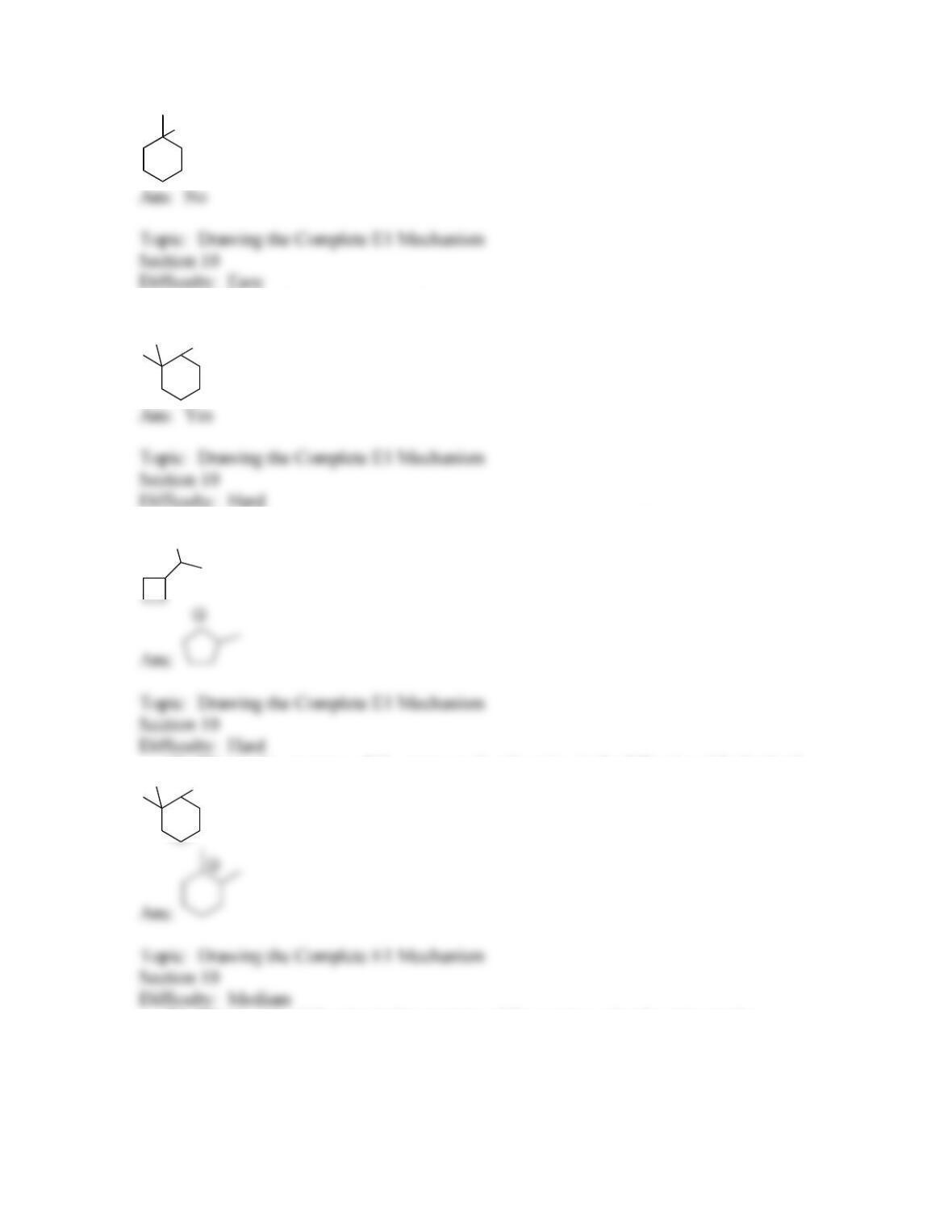
OH
76. Will the following alcohol be likely to undergo rearrangement during a
dehydration reaction?
OH
77. What is the structure of the rearranged carbocation in the following dehydration?
HO
78. What is the structure of the rearranged carbocation in the following dehydration?
OH
79. Which of the following is the structure of the rearranged carbocation in the
following dehydration?
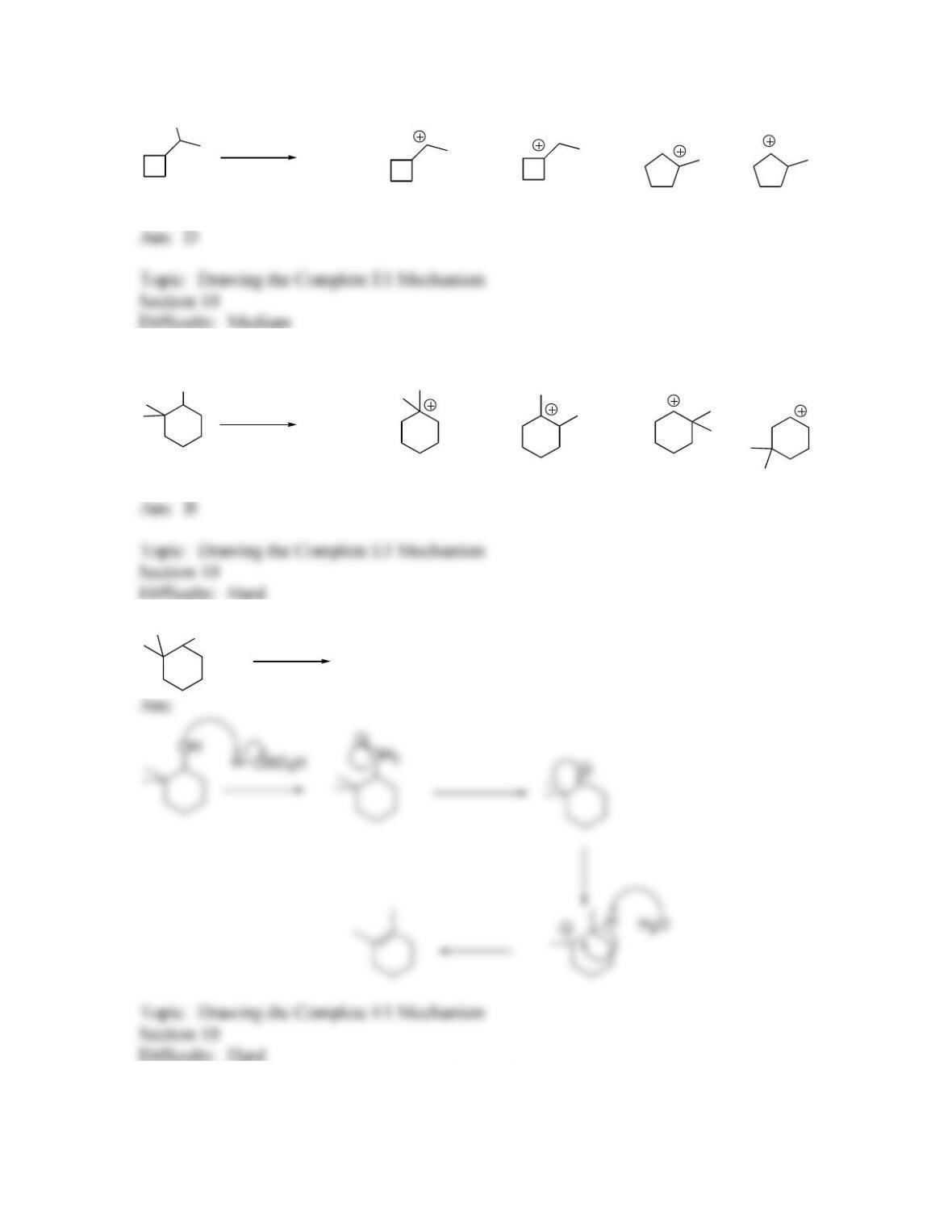
HO
H2SO4
A. B. C. D.
80. Which of the following is the structure of the rearranged carbocation in the
following dehydration?
OH
H2SO4
A. B. C. D.
81. Draw the mechanism and product for the following elimination.
OH H2SO4
82. Draw the mechanism and product for the following elimination.
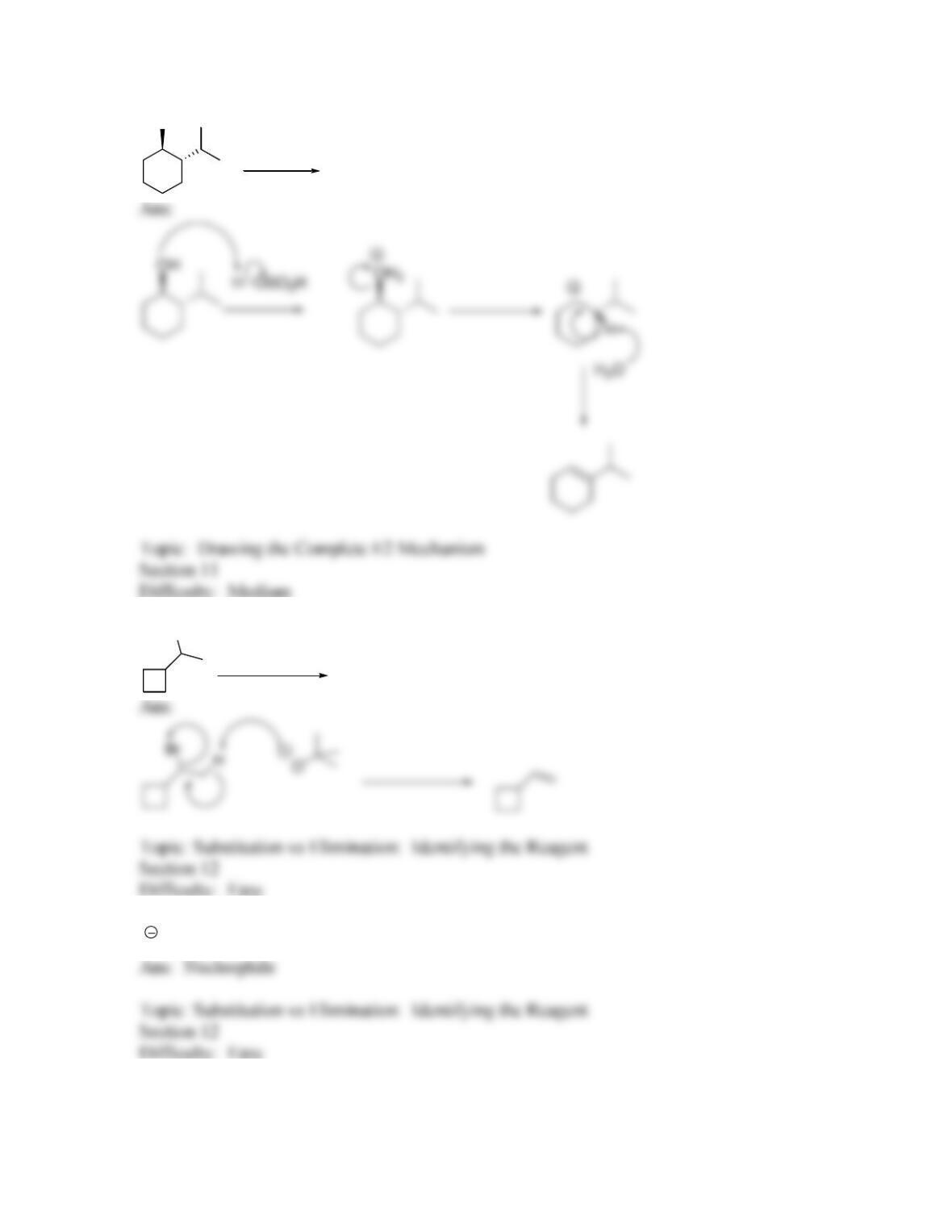
OH
H2SO4
83. Draw the mechanism and product for the following elimination.
Br
KOtBu
84. Is the following more likely a nucleophile or a base?
CN
85. Is the following more likely a nucleophile or a base?
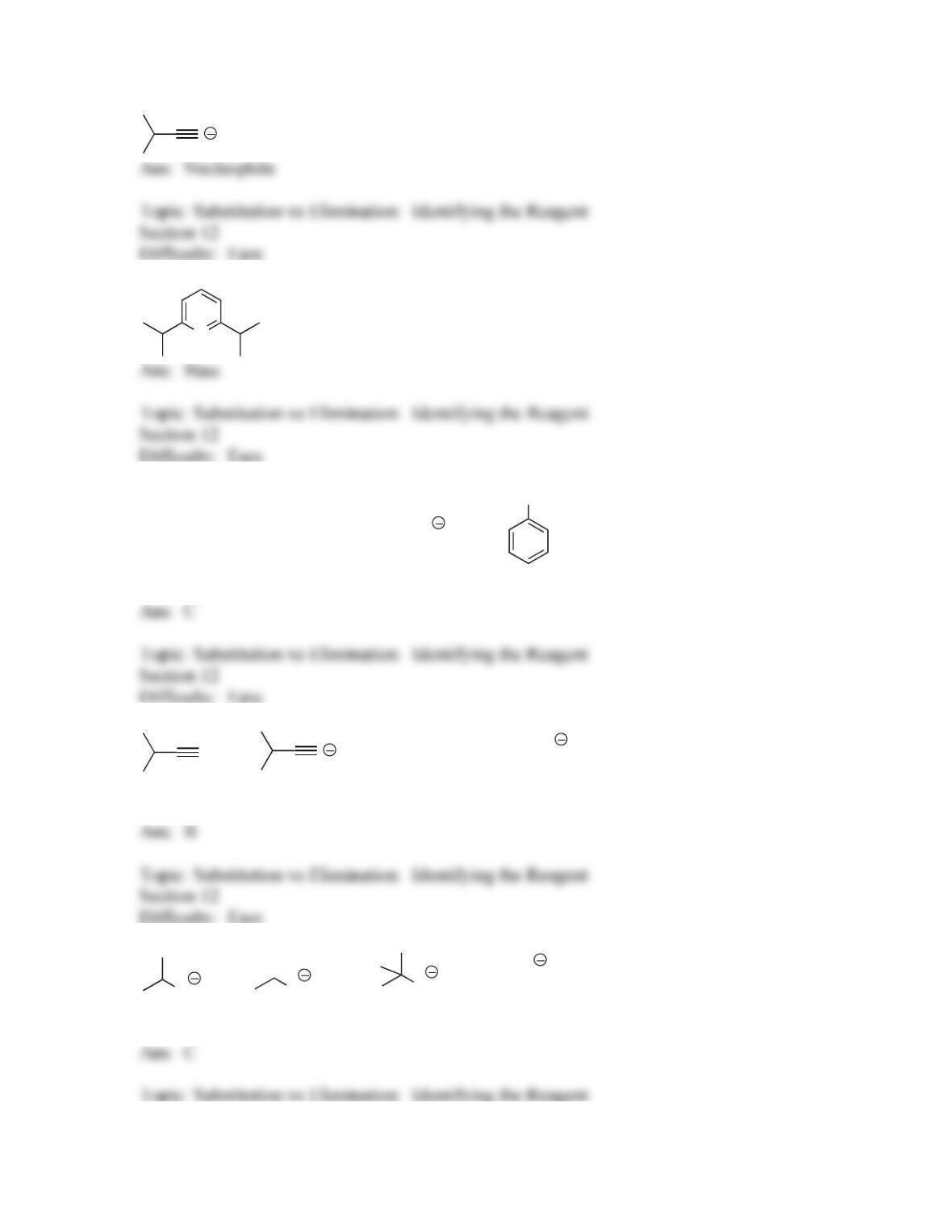
86. Is the following more likely a nucleophile or a base?
N
87. Which of the following is the strongest nucleophile?
MeOH MeSH
SH
A. B. C. D.
MeSe
88. Which of the following is the strongest nucleophile?
MeOH MeO
A. B. C. D.
89. Which of the following is most likely to act as a base rather than a nucleophile?
OOOMeO
A. B. C. D.
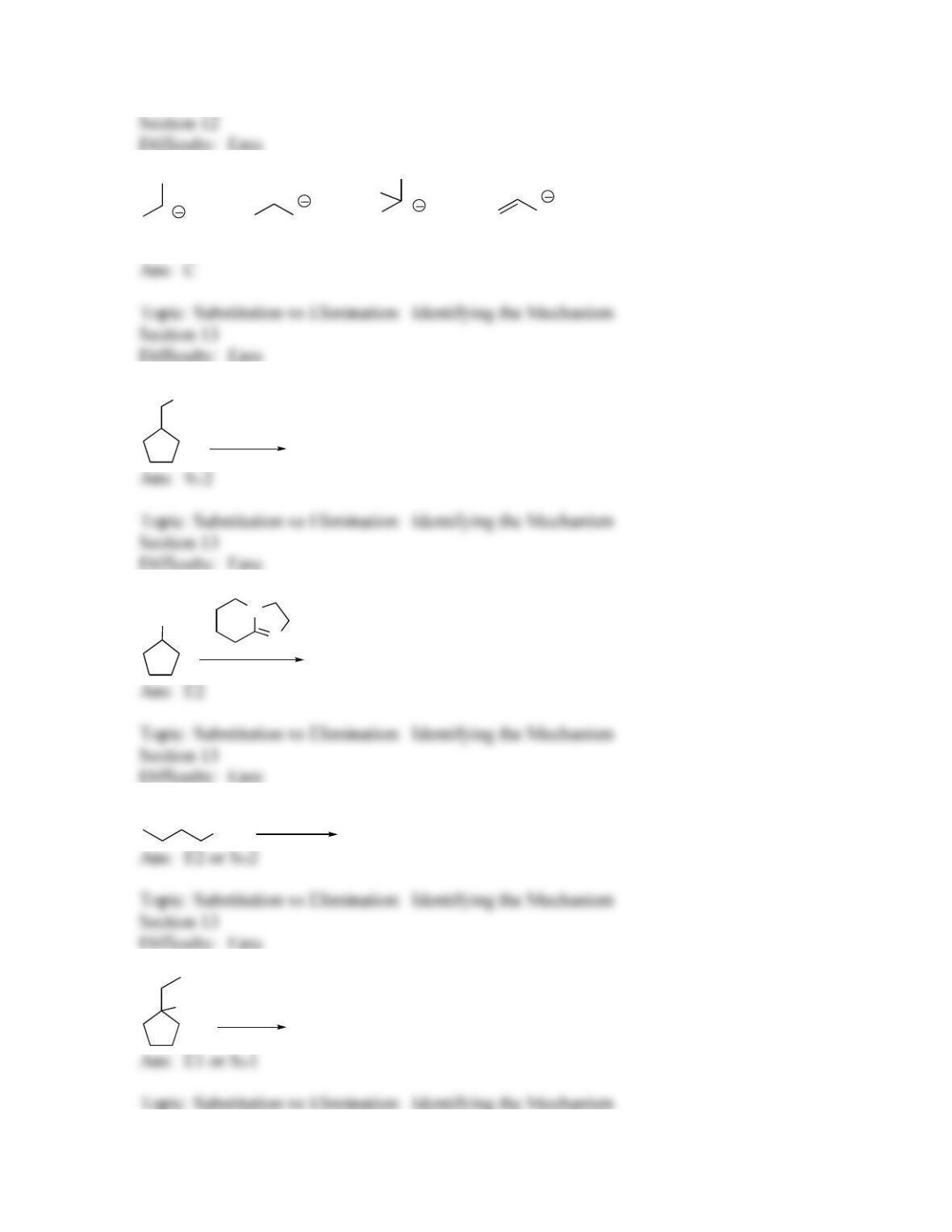
90. Which of the following is most likely to act as a base rather than a nucleophile?
A. B. C. D.
91. By what mechanism is the following reaction likely to occur?
Br
NaSH
92. By what mechanism is the following reaction likely to occur?
IN
N
93. By what mechanism is the following reaction likely to occur?
Cl
NaOMe
94. By what mechanism is the following reaction likely to occur?
Br H2O
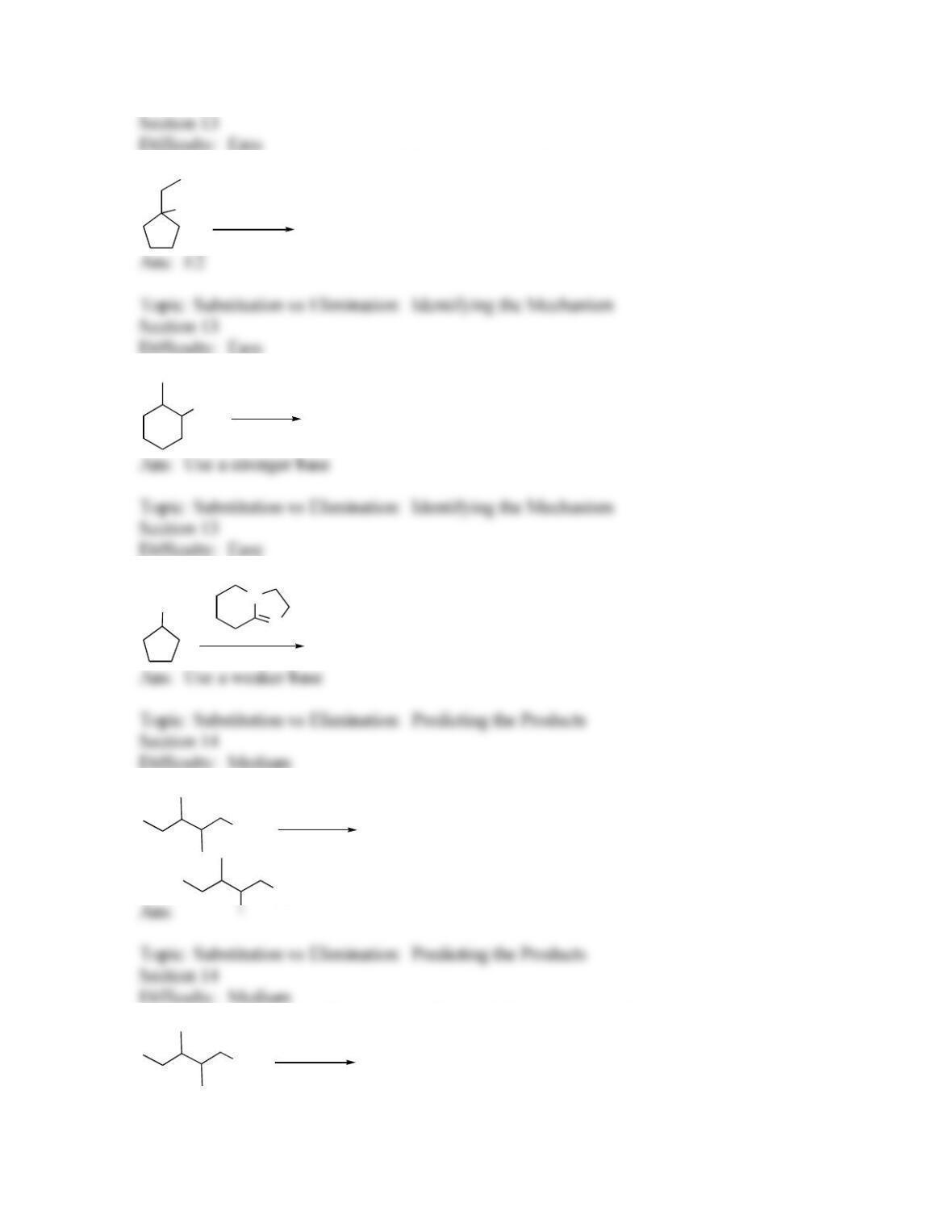
95. By what mechanism is the following reaction likely to occur?
Br NaOMe
96. How would you change the following reaction to favor an E2 mechanism?
Br H2O
97. How would you change the following reaction to favor an E1 mechanism?
IN
N
98. What is the most likely product for the following reaction?
Br
NaCN
CN
99. What is the most likely product for the following reaction?
OH
H2SO4
100. What is the most likely product for the following reaction?
OTs NaSH
101. What is the most likely product for the following reaction?
OTs H2O
102. What is the most likely product for the following reaction?
INaOMe
103. What is the most likely product for the following reaction?
Br KOtBu
104. What is the most likely product for the following reaction?
OH HBr
105. What is the most likely product for the following reaction?
OH HBr