Page 1
1.
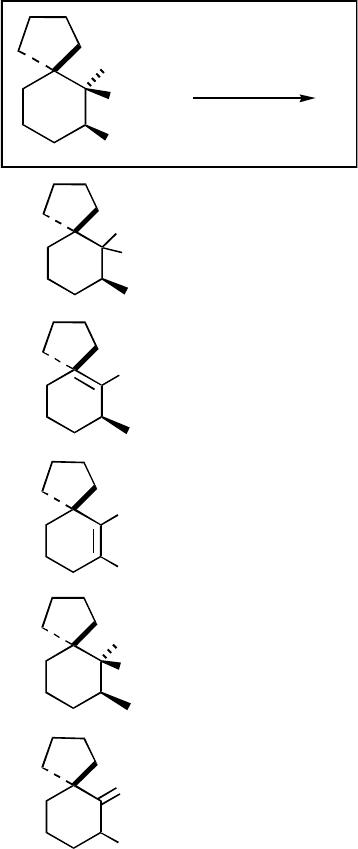
Indicate the expected major product of the following reaction:
CH3
CH3
Cl NaOEt ?
A)
CH3
OEt
CH3
B)
CH3
CH3
C)
CH3
CH3
D)
CH3
OEt
CH3
E)
CH3
CH2
Page 2
2.
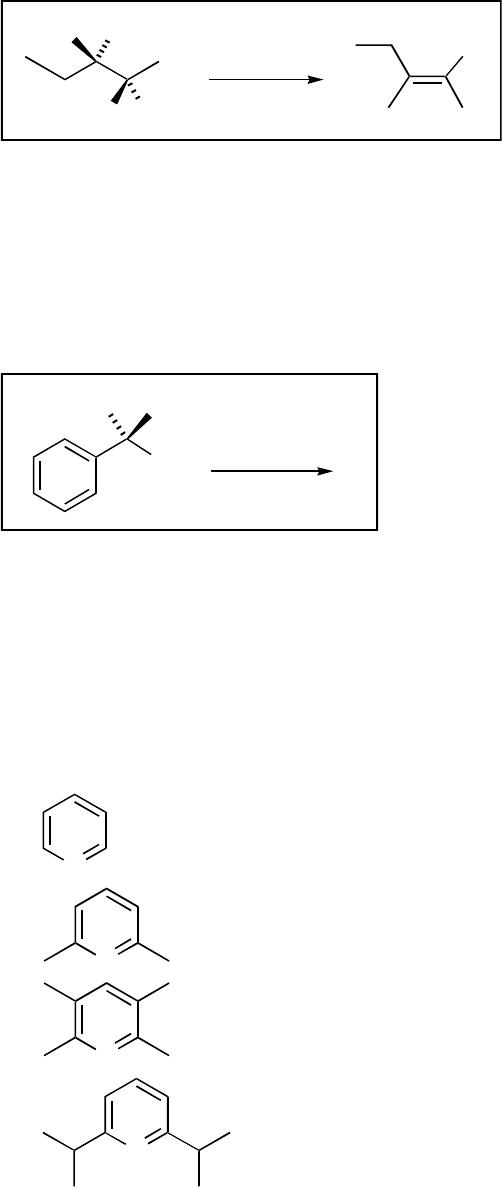
If the concentration of NaOH is doubled in the following reaction, what will happen to
the reaction rate?
Br H
HCH3H
NaOH
A)
no change
B)
double
C)
quadruple
D)
cut in half
E)
None of the above.
3.
The major product of the following reaction conditions will result from:
Br
CH3
CH3CH2
NaN3?
A)
SN2
B)
SN1
C)
E2
D)
E1
E)
there is no way to know
4.
Which of the following is the least nucleophilic base?
A)
(CH3CH2)3N
B)
N
C)
N
D)
N
E)
N
Page 3
5.
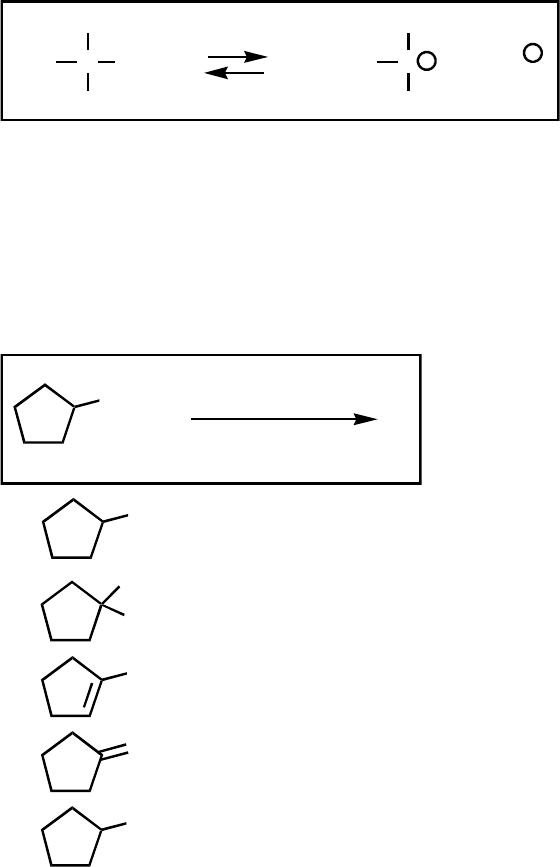
To which side, if any, would the following equilibrium lie? (Do not consider any further
reactions here.)
CH3
C
CH3
H3CBr
CH3
C
CH3
H3CBr
+
+–
A)
to the left
B)
to the right
C)
equally to the right and left
D)
there is no way to tell
E)
this reaction cannot occur at all
6.
What would be the major organic product of the following reaction?
CH2Cl K+ –OC(CH3)3
HOC(CH
3)3
?
A)
CH2OC(CH3)3
B)
CH3
OC(CH3)3
C)
CH3
D)
CH2
E)
CH2OH
Page 4
7.
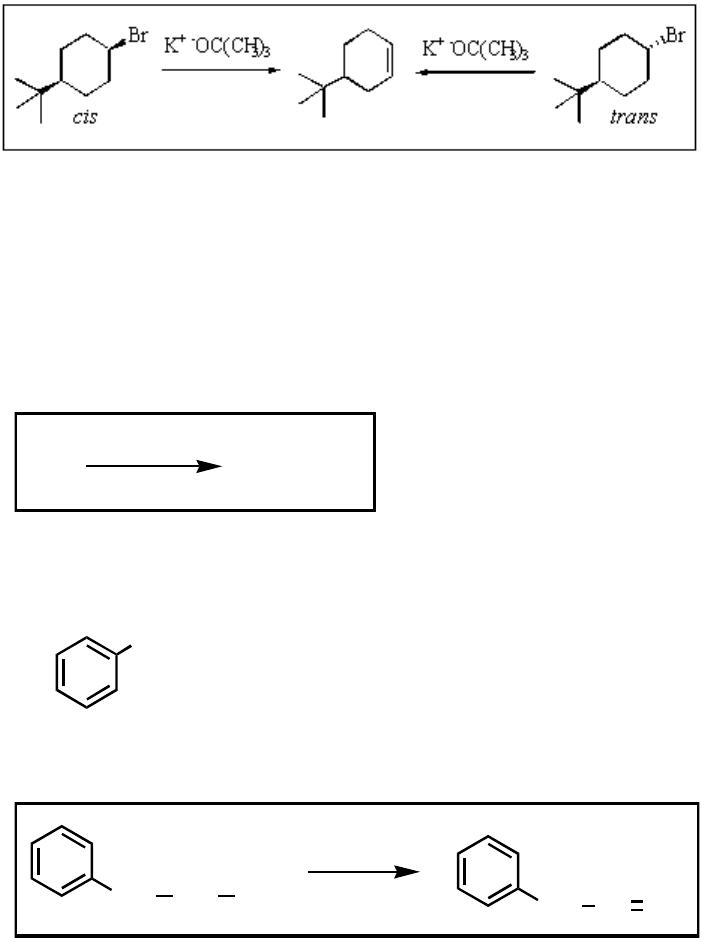
Which would be true of the following reactions?
A)
cis would react faster
B)
trans would react faster
C)
cis and trans would react at the same rates
D)
no reaction is expected under these conditions
E)
the product shown would not be formed
8.
Which of the haloalkanes below would you expect to most rapidly undergo the reaction
shown?
RX ROH + HX
H2O
acetone
A)
CH3CH2Br
B)
CH3Br
C)
(CH3)3CBr
D)
CH3CHBrCH3
E)
Br
9.
Which of the bases below would be best to accomplish the following reaction?
CH2CH2CH2Br CH2CH CH2
?
A)
CH3O– Na+
B)
CH3CH2O– Na+
C)
(CH3)2CHO– Na+
D)
(CH3)3CO– Na+
E)
Na+ –OH
Page 5
10.
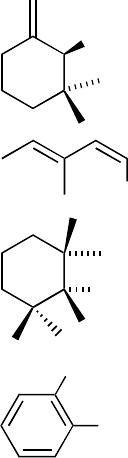
Which of the following molecules will readily undergo an elimination reaction when
treated with NaOCH3?
A)
Br
B)
Cl
C)
Br
D)
Br
H
E)
None of the above.
11.
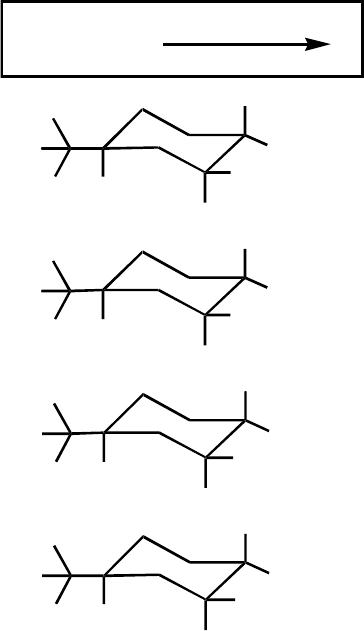
Which mechanism proceeds with inversion of configuration?
A)
bimolecular elimination (E2)
B)
unimolecular elimination (E1)
C)
unimolecular substitution (SN1)
D)
bimolecular substitution (SN2)
E)
free-radical halogenation
Page 6
12.
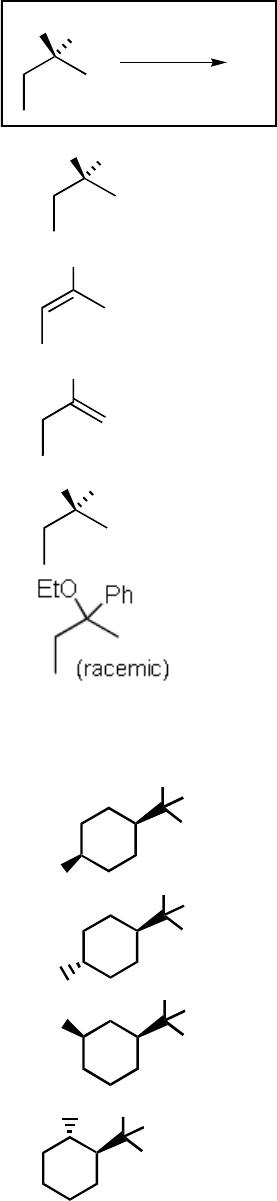
Which of the cyclohexyl bromides would you expect to react the fastest in the following
reaction?
?
CH3O– Na+
CH3OH
alkyl bromide
A)
H
Br
H
D
H
B)
H
Br
H
H
D
C)
H
H
Br
D
H
D)
H
H
Br
H
D
E)
All would react at the same rate.
Page 7
13.
Predict the major product of the following SN1 reaction:
Br Ph EtOH ?
A)
EtO Ph
B)
Ph
C)
Ph
D)
Ph OEt
E)
14.
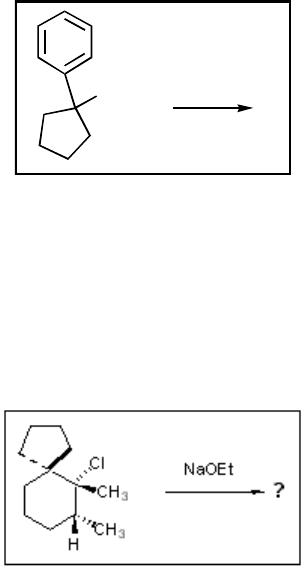
Which one of the following would undergo E2 elimination most rapidly?
A)
Br
B)
Br
C)
Br
D)
Br
E)
All would react at the same rate.
Page 8
15.
Which of the nucleophiles shown below would not cause an E2 elimination as the
predominant reaction?
Cl Nu ?
A)
NaNH2
B)
CH3CH2OH
C)
–CN
D)
–OH
E)
CH3O–
16.
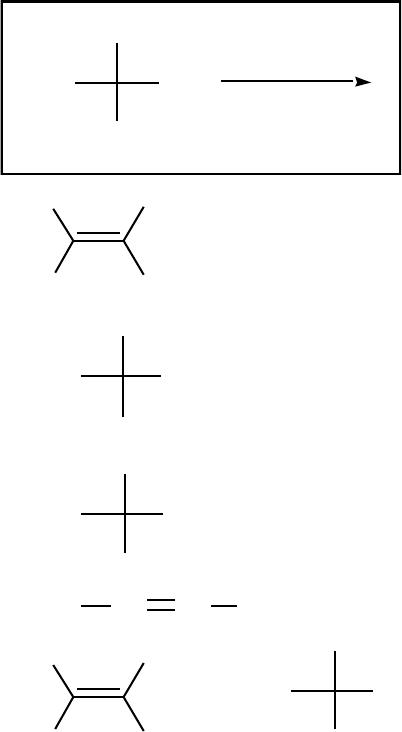
How many alkene products are possible in the following reaction?
A)
None; cannot eliminate
B)
One
C)
Two
D)
Three
E)
Four
17.
Solvolysis of 2-bromo-2-methylpropane occurs through what mechanism?
A)
SN2
B)
E1
C)
E2
D)
SN1
E)
A and C
Page 9
18.
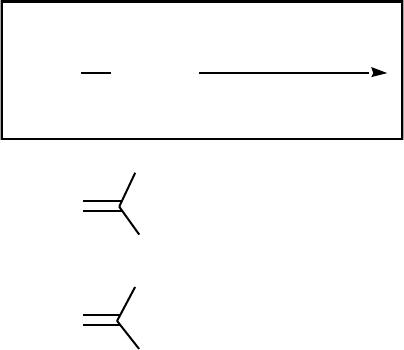
Predict the major product of the following reaction:
Br
CH3
CH3
H3CEthanol
heat
A)
H
H
CH3
CH3
only
B)
H3C
CH3
OH
CH3
C)
H3C
CH3
CH3
OEt
only
D)
H3C CH CH CH3
E)
H
H
CH3
CH3
and
H3C
CH3
CH3
OEt
Page 10
19.
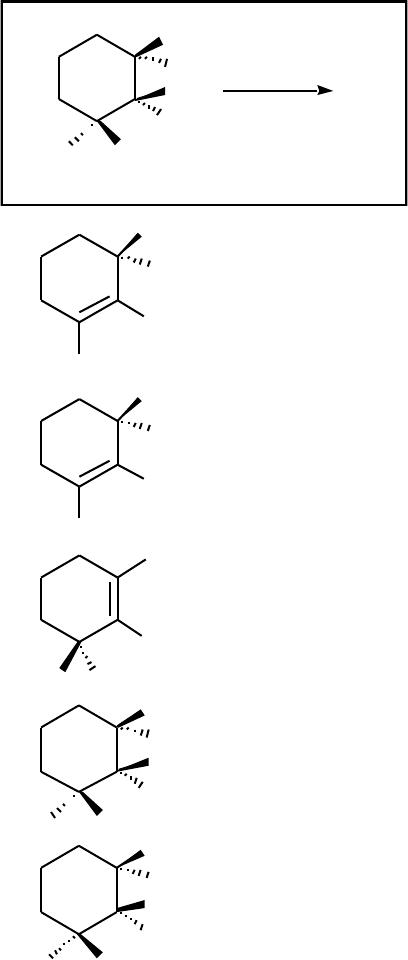
(S)-1-bromo-1-fluoroethane reacts with NaOMe to give:
H3C CHBrF 1 Eq. NaOMe
A)
CH2
H
Br
B)
CH2
H
F
C)
CH3CHFOCH3
D)
CH3CHBrOCH3
E)
CH3CH(OCH3)2
Page 11
20.
Predict the product of reaction of the following deuterated compound.
HD
Br
H
CH3
H
NaOCH3
MeOH
A)
H
H
H
CH3
B)
D
H
H
CH3
C)
CH3
H D
H
D)
HD
OCH3
H
CH3
H
E)
HD
H
OCH3
CH3
H
Page 12
21.
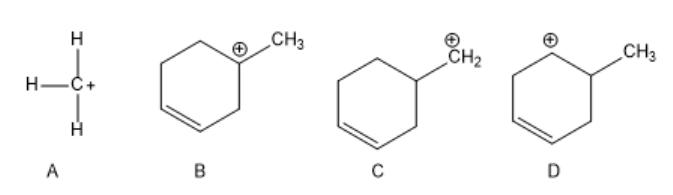
Rank the following carbocations according to their increasing stability.
A)
A<B<C<D
B)
A<C<B<D
C)
C<A<B<D
D)
A<C<D<B
E)
None of the above.
22.
Rank the following according to their increasing reactivity with water.
CH3BrCH3CH2Br (CH3)2CHBr
(CH3)3CBr
A)
CH3Br < CH3CH2Br < (CH3)3CBr < ( CH3)2CHBr
B)
CH3Br < CH3CH2Br < ( CH3)2CHBr < (CH3)3CBr
C)
(CH3)3CBr < ( CH3)2CHBr < CH3CH2Br < CH3Br
D)
All of these will react with water at the same rate.
E)
None of the above will react with water.
Page 13
23.
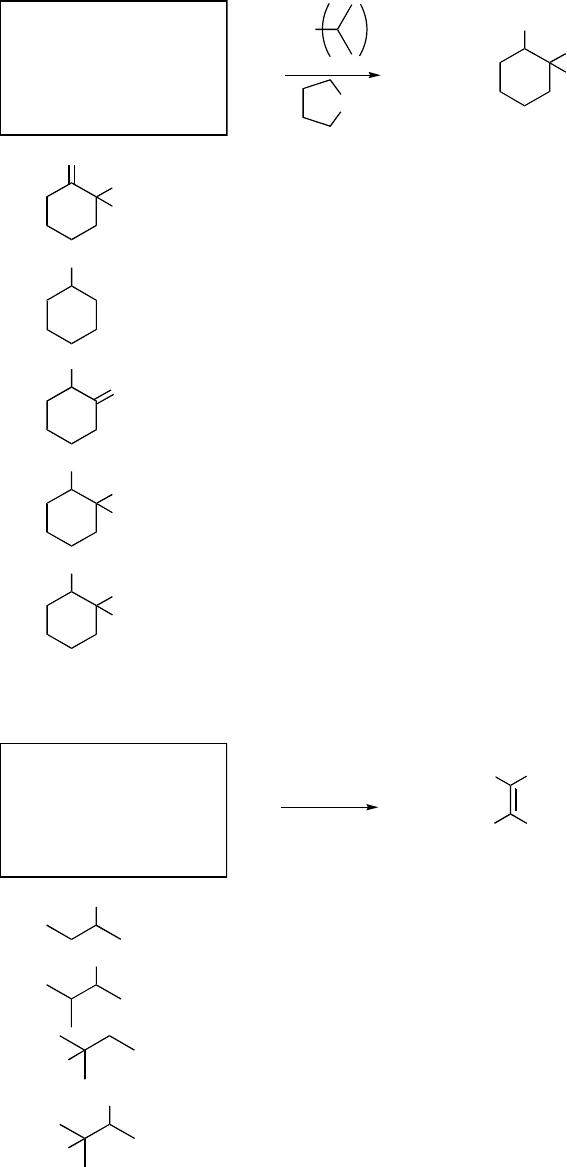
For the transformation below, give the structure of the starting material.
CH3
CH3
OLi
LiN
2
O
?
A)
CH3
CH3
O
B)
OH
C)
OH
CH2
D)
CH3
CH3
OH
E)
CH3
CH3
OCH3
24.
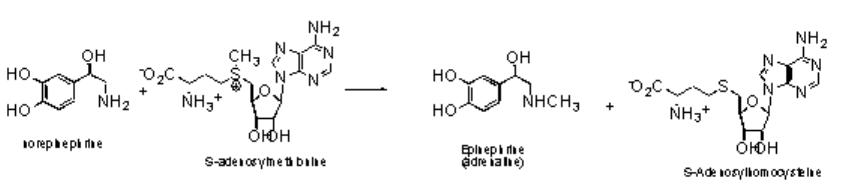
For the transformation below, give the structure of the starting material.
CH3
CH3
H
H3C
NaOCH3
HOCH3
?
A)
Br
B)
Br
C)
Br
D)
Br
Br
E)
Both B and C will provide the product shown.
Page 14
25.
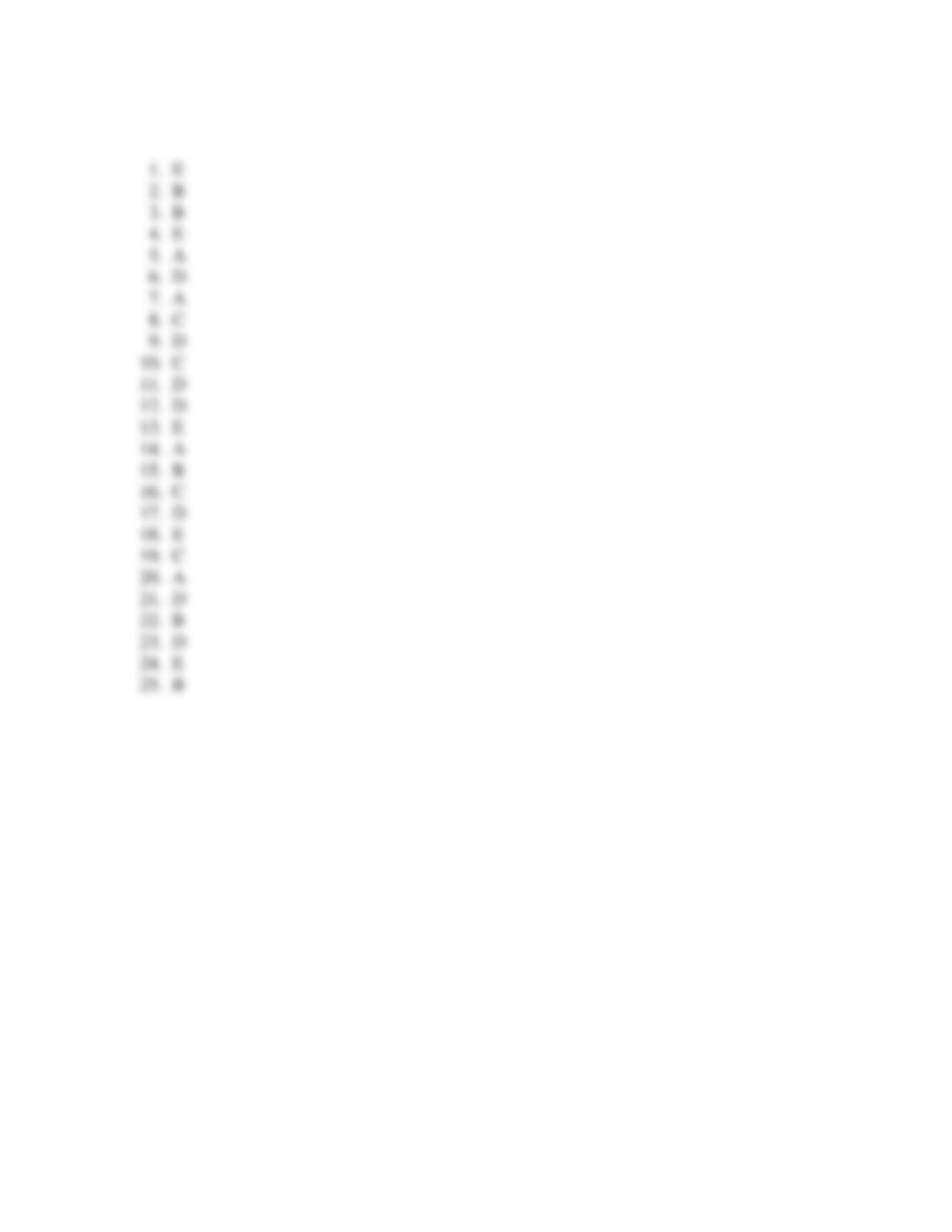
For the transformation of norepinephrine to epinephrine (adrenaline), what is the likely
mechanism?
A)
SN1
B)
SN2
C)
E1
D)
E2
E)
both A and B are likely
Page 15
Answer Key