Page 1
1.
Which of the following would you expect to have the highest boiling point?
A)
CH3CH2CH2Br
B)
CH3CH2CH2I
C)
CH3CH2CH2Cl
D)
CH3CH2CH2F
E)
CH3CH2CH3
2.
What would be the name of the following?
CH3CH2CHBrCHBrCH(CH 3)2
A)
3,4-dibromo-2-methylhexane
B)
1,2-dibromo-1-isopropylbutane
C)
2,3-dibromohexane
D)
3,4-dibromo-5-methylhexane
E)
3,4-dibromo-3-methylhexane
3.
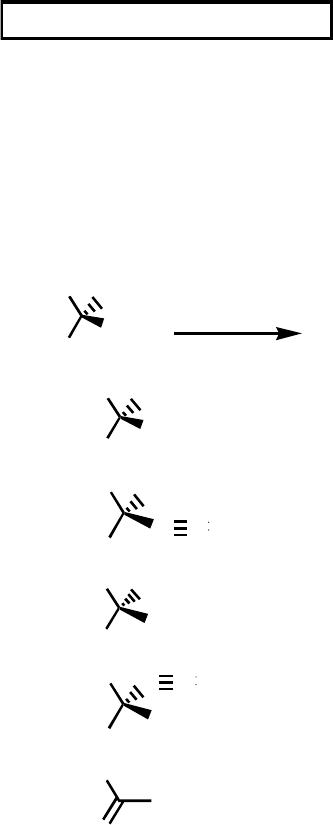
What would be the major product of the following reaction?
H3C
CH3CH2
Br
HNa+ –CN
DMSO ?
A)
H3C
CH3CH2
CN
H
B)
H3C
CH3CH2
N
H
C
C)
H3C
CH3CH2
H
CN
D)
H3C
CH3CH2
H
N C
E)
H3C
CH3CH
H
Page 2
4.
Which of the following would you expect to react fastest with the nucleophile I–
(iodide)?
A)
CH3CH2CH2Br
B)
CH3CH2CH2Cl
C)
(CH3)2CHCH2Br
D)
(CH3)2CHCH2Cl
E)
(CH3)3CCH2Br
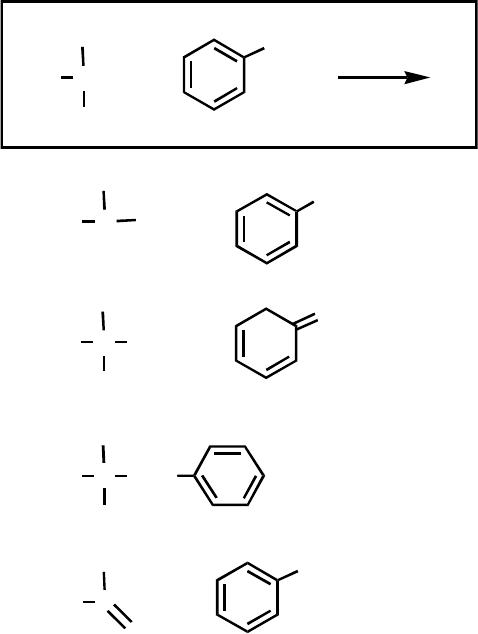
5.
Complete the following reaction:
CH3
P
CH3
H3C
CH2Br
+?
:
A)
CH3
PH3CBr CH 2CH3
+
B)
CH3
P
CH3
H3C
CH2
H
Br–
++
C)
CH3
P
CH3
H3CCH2
Br–
+
D)
CH3
P
CH2
H3C
CH3
+ + HBr
E)
no reaction will occur
6.
Which of the following would you expect to have the weakest C-X bond?
A)
CH3Cl
B)
CH3CH2Br
C)
CH3F
D)
CH3CH2I
E)
(CH3)2CHBr
Page 3
7.
Which of the following haloalkanes would not undergo the reaction below?
R–X + CH3S– CH3SR + X –
A)
(CH3)2CHI
B)
CH3Cl
C)
(CH3)3CBr
D)
CH3CH2Br
E)
CH3CH2CH2I
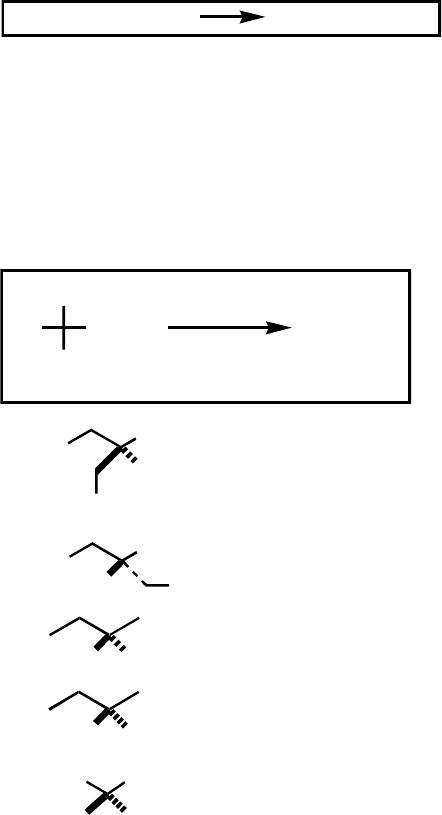
8.
Predict the major product of the following reaction:
H
Me
OTs
Et
?
NaCN
-OTs = -O3SC6H4CH3
A)
Et Me
CN
H
B)
Et Me
HCN
C)
NC H
D)
HCN
E)
Et Me
TsO CN
Page 4
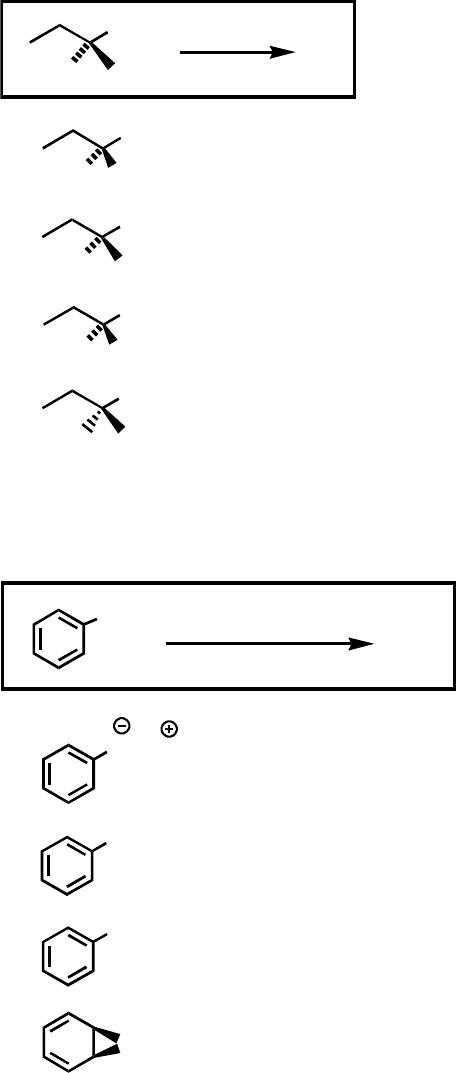
9.
Predict the major product of the following reaction:
Ph
I
H
KN3?
A)
Ph
N3
H
B)
Ph
H
N3
C)
H
Ph
N3
D)
N3
Ph H
E)
no reaction occurs
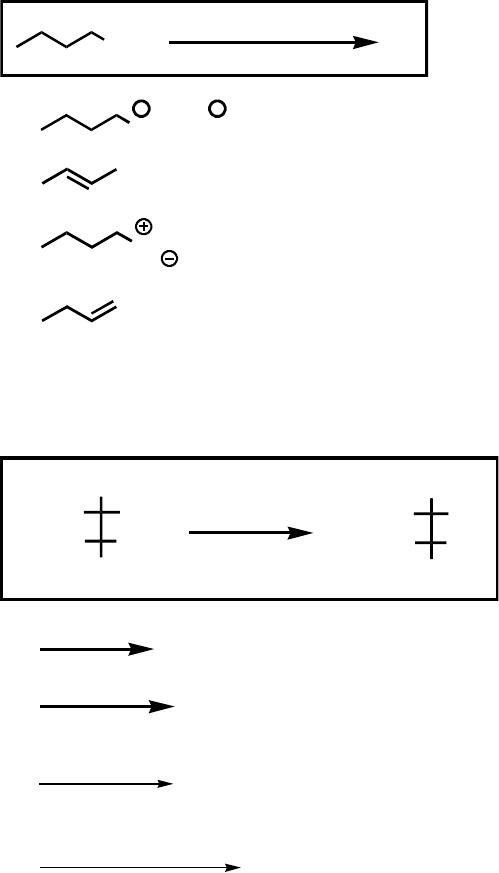
10.
What is the major product of the following two-step reaction?
OH 1) TsCl, pyridine
2) NaCN ?
A)
ONa
B)
CN
C)
OTs
D)
O
E)
no reaction occurs
Page 5
11.
What is the major product of the following reaction:
Br Ph3P / DMSO ?
A)
PPh3Br
+–
B)
C)
P
Br
D)
E)
no reaction occurs
12.
Indicate the reagents required to achieve the following transformation:
HCH3
Br
CH3
CH3O H HCH3
CN
CH3
CH3O H
?
A)
NaCN
B)
1) NaF
2) KCN
C)
1) NaI
2) NaCN
D)
1) NaOMe
2) HCN / light
E)
None of the above.
Page 6
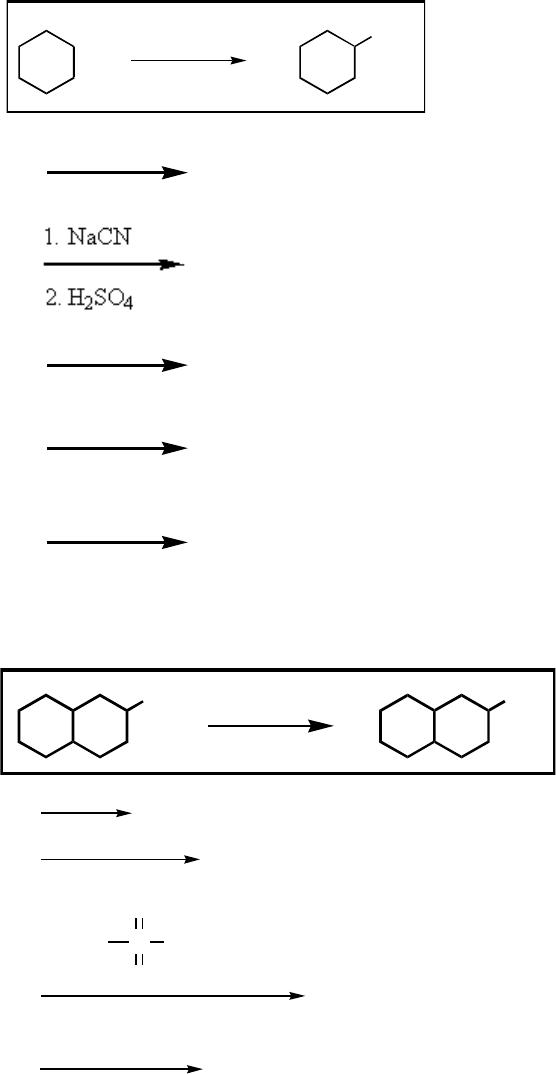
13.
What reactants are required to achieve the following transformation?
CN
?
A)
1. PBr3
2. NaCN
B)
C)
1. Br2, h
2. HCN
D)
1. SOCl2
2. KCN
E)
1. Br2, h
2. KCN
14.
What reactants are required to achieve the following transformation?
OH CN
?
A)
NaCN
B)
1) NaOH
2) KCN
C)
1.
2. KCN
Cl S
O
O
CH3
, pyridine
D)
1) Br2 / light
2) NaCN
E)
None of the above.

Page 7
15.
To which side (if any) would the following equilibrium lie?
CH3CH2S– K+ + HOH CH
3CH2SH + KOH
A)
to the left
B)
to the right
C)
equally to the right and left
D)
there is no way to tell
E)
only SN2, SN1 and E2 reactions are possible
16.
Several alkyl halides, including iodomethane, are known carcinogens or cancer-suspect
materials. To destroy these materials by conversion to non-electrophilic species, you
can react them with nucleophiles. Which of the following would be the best for rapidly
destroying methyl iodide (iodomethane)?
A)
CH3OH
B)
NH3
C)
H2O
D)
NaI
E)
CH3CO2H
17.
Which of the following is not normally a good leaving group on carbon?
A)
Br
B)
OCH3
C)
Cl
D)
OSO2R
E)
I
Page 8
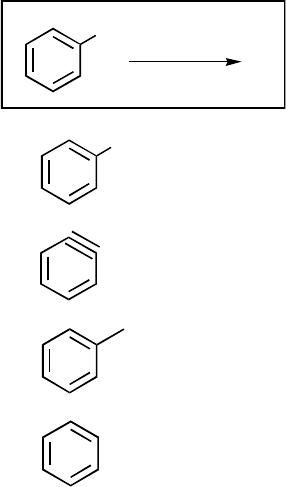
18.
Predict the major product of the following reaction:
Br NaN3?
A)
N3
B)
C)
D)
E)
no reaction occurs
19.
Which of the following reagents would best accomplish a typical SN2 reaction?
A)
CH3OH
B)
H2O
C)
HCN
D)
KCN
E)
KOtBu
Page 9
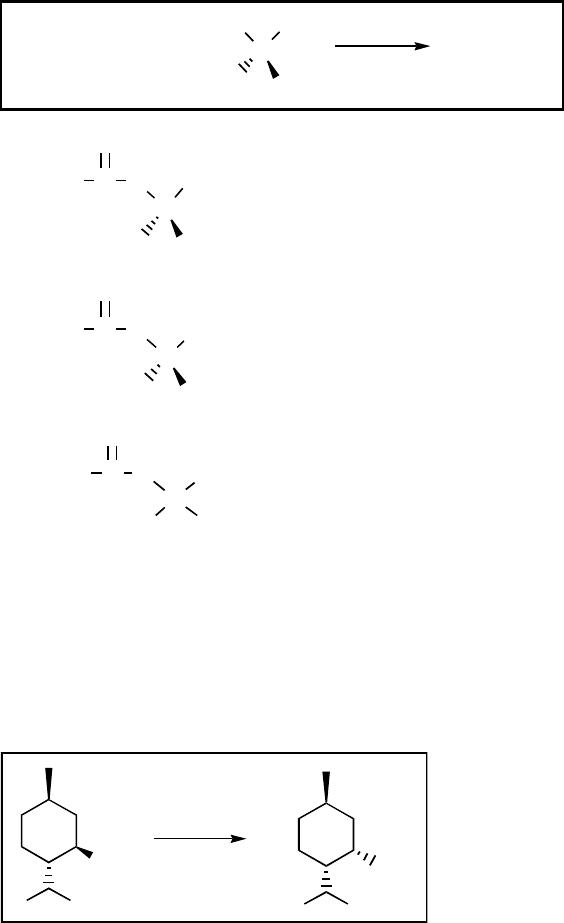
20.
What would be the organic product of the following reaction?
C
CH3
D
HBr
CH3CO2– K++ ? + KBr
A)
C
CH3
D
OH
C
O
H3C
B)
C
D
H3C
OH
C
O
H3C
C)
CCH3
D
O HC
O
H3C
(racemic)
D)
All of the above.
E)
None of the above.
21.
SN2 substitution at secondary halides and sulfonates is often complicated by competing
E2 elimination. Which of the nucleophiles below would you choose to obtain the
highest yield in an SN2 reaction with menthyl bromide?
Br Nu
Nu
(SN2)
A)
CH3ONa
B)
CH3CO2Na
C)
(CH3)3N
D)
(CH3)3COK
E)
C6H5SNa
Page 10
22.
Arrange the following in order of increasing nucleophilicity.
NH2NH3OH H2ONH4
A)
NH4OH
H2ONH3NH2
B)
NH4OH NH2H2O NH3
C)
NH4
H2O
NH3
OH
NH2
D)
NH4H2ONH3OH
NH2
E)
NH4H2O NH3OH NH2
23.
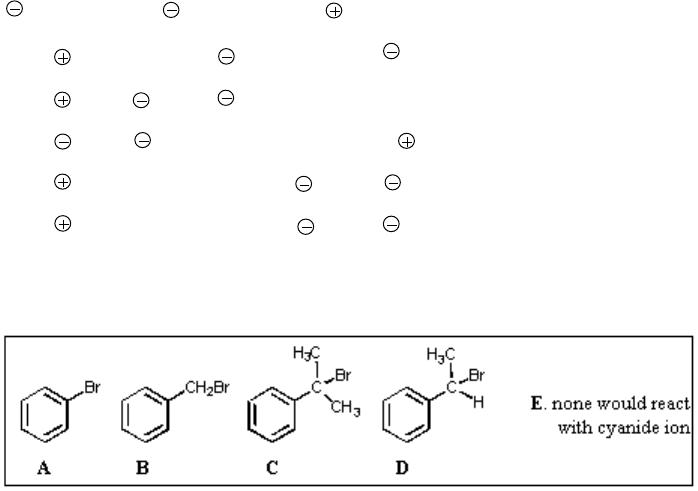
Which of the haloalkanes shown below would react most rapidly with cyanide ion?
A)
A
B)
B
C)
C
D)
D
E)
E
24.
The Walden Inversion (inversion of configuration) is associated with which of the
following?
A)
E1 reaction
B)
free-radical halogenation
C)
SN1 reaction
D)
SN2 reaction
E)
None of the above.
Page 11
25.
Predict the major product of the following reaction:
Cl P(CH3)3
A)
P(CH3)3
Cl
B)
C)
Cl
HPCH3
+
D)
P(CH3)3
Cl
E)
None of the above.
26.
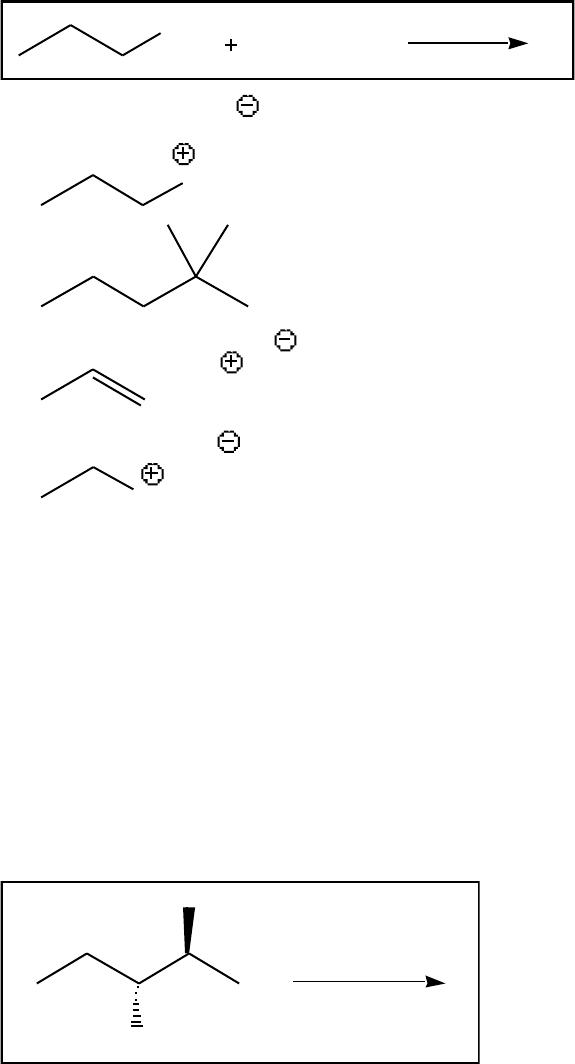
Which of the following can be used to synthesize (R)-2-cyanopentane from
(R)-2-bromopentane?
A)
NaBr
B)
NaCN
C)
NaI followed by KCN
D)
NaCN followed by HI
E)
this reaction cannot occur
27.
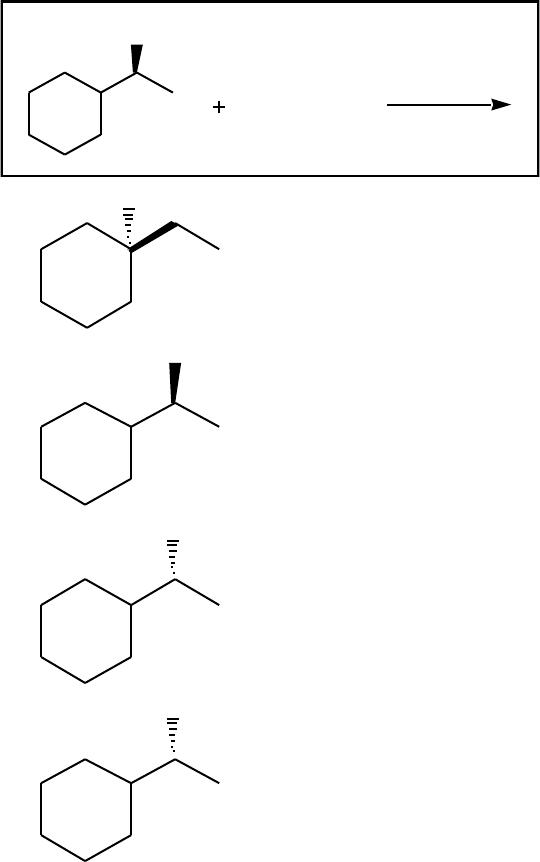
What is the correct stereochemistry of the product of the following reaction:
Cl
Br
excess NaCN
A)
3R,4S
B)
2S,3R
C)
2R,3S
D)
2R,3R
E)
3R,4R

Page 12
28.
Which of the following is the best leaving group?
A)
I
B)
NH2
C)
HO
D)
F
E)
CH3O
Page 13
29.
Predict the major product of the following reaction:
Cl
NaSCH3
A)
SCH3
B)
SCH3
C)
CH3
D)
SCH3
E)
no reaction will occur
Page 14
30.
If the reaction rate of the following reaction is x, doubling the concentration of KCN
would give what rate?
Cl +KCN
A)
2x
B)
x/2
C)
x2
D)
x2/2
E)
no change in reaction rate
31.
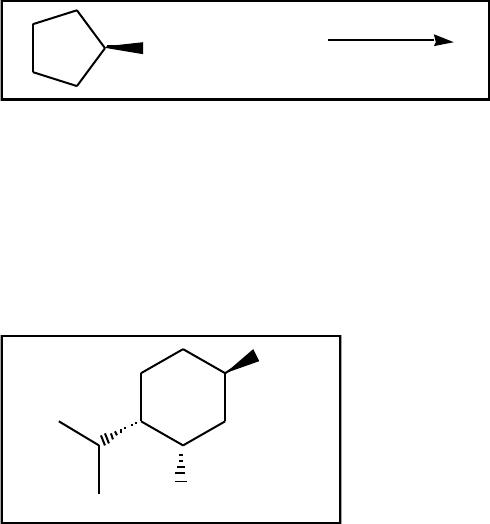
Name the following compound:
Cl
Br
A)
(1S, 2S, 5R)-1-bromo-2-isopropyl-5-chlorocyclohexane
B)
(1R, 2R, 5R)-1-bromo-2-isopropyl-5-chlorocyclohexane
C)
(1S, 3S, 4R)-1-chloro-3-bromo-4-isopropylcyclohexane
D)
(1S, 2S, 4R)-2-bromo-4-chloro-1-isopropylcyclohexane
E)
(1R, 2S, 4R)-2-bromo-4-chloro-1-isopropylcyclohexane
Page 15
32.
Predict the major product of the following reaction:
CH2CH3
H3C I
H
NaN3?
A)
CH2CH3
H3C N3
H
B)
CH2CH3
H3C I
N3
C)
CH2CH3
N3CH3
H
D)
N3
H CH2CH3
CH3
E)
None of the above.
33.
Which of the following statements best describes why I– is a better nucleophile than F–
in solution?
A)
F– is a stronger base than I–.
B)
Solvation of F– impedes its nucleophilicity compared to I–.
C)
I– is a stronger base than F–.
D)
Solvation of I– increases its nucleophilicity compared to that of F–.
E)
A and B both offer explanations as to why I– is a better nucleophile than F– in
solution.
Page 16
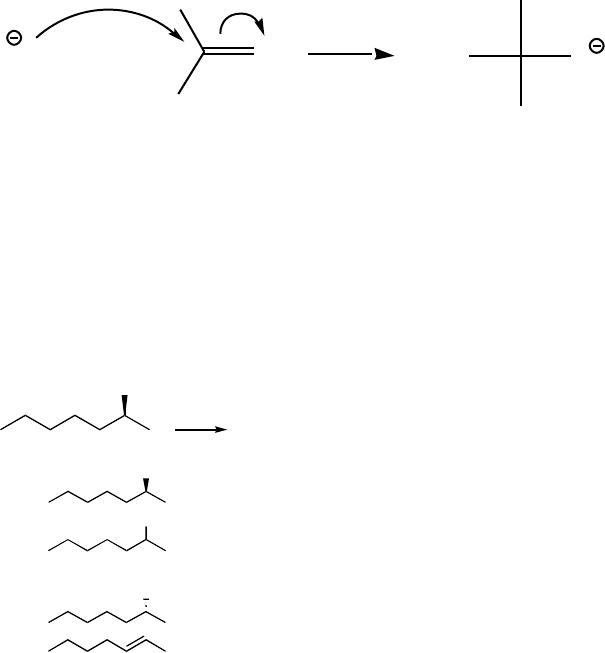
34.
The curved arrows below represent what type of reaction mechanism?
OH O
R
R
R
HO
R
O
A)
nucleophilic substitution
B)
dissociation
C)
nucleophilic addition
D)
electrophilic addition
E)
None of the above.
35.
For the following reaction what is the most likely product?
Br
NaSH
acetone
A)
SH
B)
SH
racemic mixture
C)
SH
D)
E)
no reaction
36.
Which of the following statements are true of an SN2 reaction.
A)
follow a first order rate law
B)
typically are stereoselective
C)
the fastest step is the rate-determining step
D)
the carbocation intermediate adopts a trigonal planar geometry
E)
all of the above
Page 17
37.
Which set of reagents will best accomplish the following reaction?
OH
Br
H
H
O
H
H
A)
NaBr, acetone
B)
H2SO4, H2O
C)
Br2, hv
D)
NaOEt, DMSO
E)
None of the above.
38.
What is the best way to prepare the compound below?
OCH3
A)
OH H2SO4, CH3OH
B)
OH 1) NaH
2) CH3I
C)
CH3OH
1) NaH
2) I
D)
CH3OH
H2SO4
OH
E)
None of the above.

Page 18
Answer Key