67) Which of the following represents an INCORRECT breakdown sequence for that food?
A) carbohydrates – polysaccharides – coenzyme A
B) starch – maltose and dextrins – maltose – glucose
C) protein – polypeptides – small peptides – amino acids
D) fats and oils – glycerol, glycerides, and fatty acids – fatty acids to CO2 and water
E) fats and oils – glycerol, glycerides, and fatty acids – glycerol to triose phosphate
68) Apart from bringing the reactants close together, how does the binding of substrates in the active site
of the enzyme serve to catalyze a reaction?
A) Binding lowers the activation energy of the reaction.
B) Enzymes provide energy upon substrate binding to drive the reaction.
C) Binding of the substrate maintains the optimal temperature for the reaction.
D) Binding maintains the optimal pH for enzyme activity.
E) Binding lowers the energy of the products increasing the reaction rate.
69) Many insecticides contain compounds which inhibit the enzyme acetylcholine esterase which is
essential for respiration and other vital functions in insects. These compounds exert their inhibitory
effects by covalently bonding to active site amino acid side chains. What would be the most likely
explanation for the inhibitory effects of these compounds?
A) Bonding of these compounds denatures the enzyme disrupting its secondary and tertiary structure.
B) Bonding changes the primary structure of the enzyme profoundly affecting the activity of the enzyme.
C) These compounds compete for the active site of the enzyme where they bind covalently and block the
subsequent binding of substrate molecules.
D) Covalent bonding of these compounds changes the pI of the enzyme which causes it to become less
soluble and precipitate.
E) Bonding of these compounds raises the activation energy of the reaction catalyzed by the enzyme.
70) Which of the following combinations make up the nucleic acid, RNA?
A) phosphate ribose and the bases A, G, U, C
B) phosphate ribose and the bases A, G, T, C
C) phosphate deoxyribose and the bases A, G, T, C
D) phosphate deoxyribose and the bases A, G, U, C
71) Which of the following is correct with respect to the purine and pyrimidine bases in nucleic acids?
A) G + A = C + T
B) A = C
C) G = T
D) T = C
72) Choose the INCORRECT statement.
A) The nucleus of the cell contains chromosomes that cause replication from one generation to the next.
B) Genes are portions of the chromosome that carry specific traits.
C) The usual form for DNA is a double helix.
D) Nucleic acids are made up of heterocyclic amines, a 5-carbon sugar and phosphate groups.
E) The bases in the two chains of the double helix are randomly paired.
73) Which of the following structural elements cannot be found in DNA?
A) purine
B) pentose
C) phosphate
D) heme
E) pyrimidine
74) Which of the following is a pyrimidine?
A) thymine
B) adenine
C) glycine
D) arginine
E) pyridine
75) Which of the following is a minor component of a cell?
A) amino acids
B) carbohydrates
C) proteins
D) nucleic acids
E) hormones
16
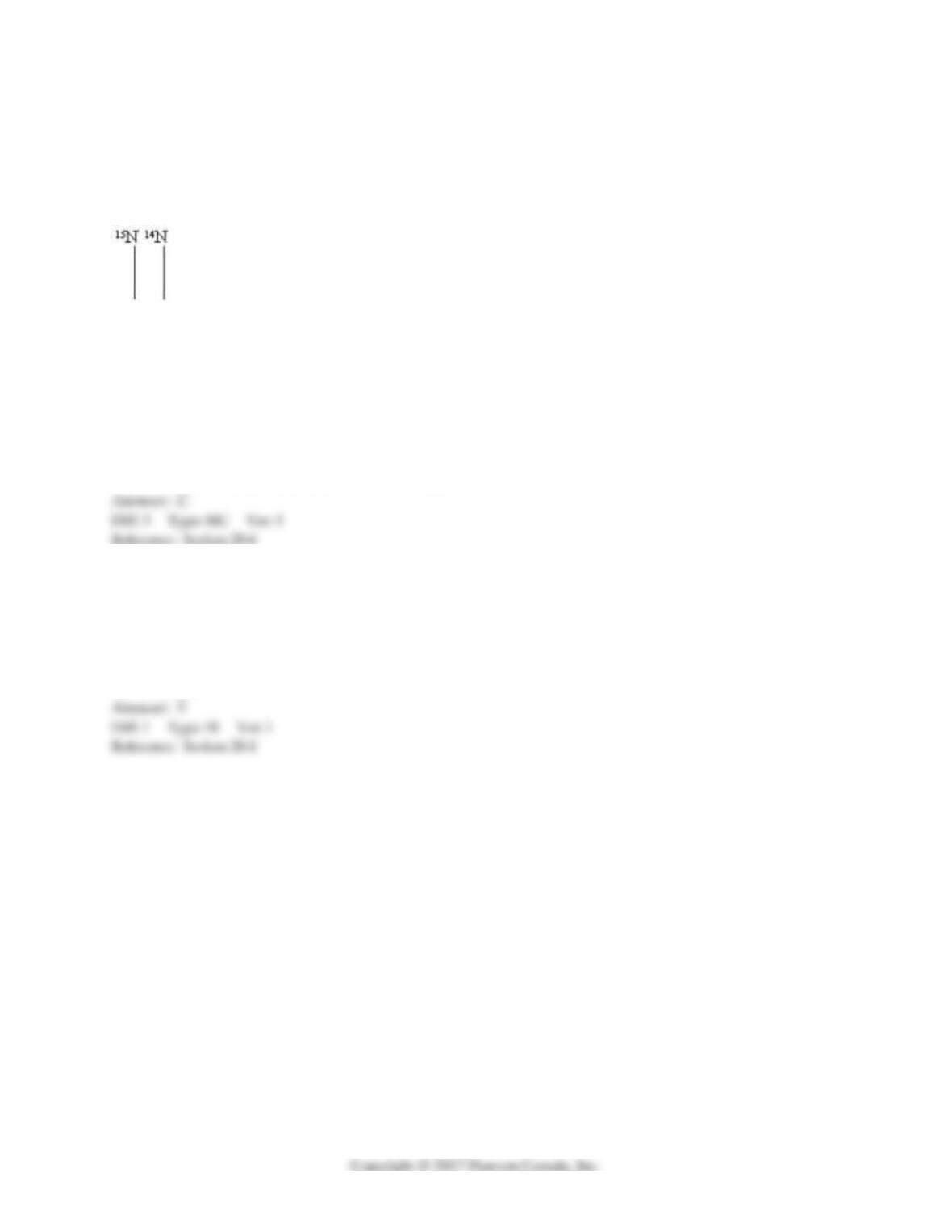
76) Below is a double stranded DNA composed of one strand containing 15N atoms and the other strand
containing 14N atoms. If the cell which contains this DNA is grown for one generation (replication) on
15N medium and then transferred to 14N media for a second generation, what would the resulting
double stranded DNA molecules look like?
A) Four molecules; each containing one 14N strand and one 15N strand.
B) Two molecules; one with a 15N and a 14N strand, the other with two 14N strands.
C) Four molecules; three containing one 14N strand and one 15N strand and one molecule with two 14N
strands.
D) Four molecules; one with two 15N strands, two molecules with two 14N strands, and one molecule
with one 14N and one 15N strands.
E) Four molecules; all molecules have 14N strands.
77) What four elements make up approximately 96% of the total human body mass?
A) C, N, O, P
B) C, O, Ca, N
C) Mg, Cu, Fe, N
D) C, O, N, H2O
E) C, H, N, O
17
78) What is the correct structure for glyceryl trilinolenate?
A)
CH2-OOC(CH2)7(CH=CHCH2)3CH3
∣
CH-OOC(CH2)7(CH=CHCH2)3CH3
∣
CH2-OOC(CH2)7(CH=CHCH2)3CH3
B)
CH2-OOC(CH2)16CH3
∣
CH-OOC(CH2)16CH3
∣
CH2-OOC(CH2)16CH3
C)
CH2OH
∣
CHOH
∣
CH2OH
D)
CH2-OOC(CH2)14CH3
∣
CH-OOC(CH2)14CH3
∣
CH2-OOC(CH2)14CH3
E)
O
HOC(CH2)2CH3
18
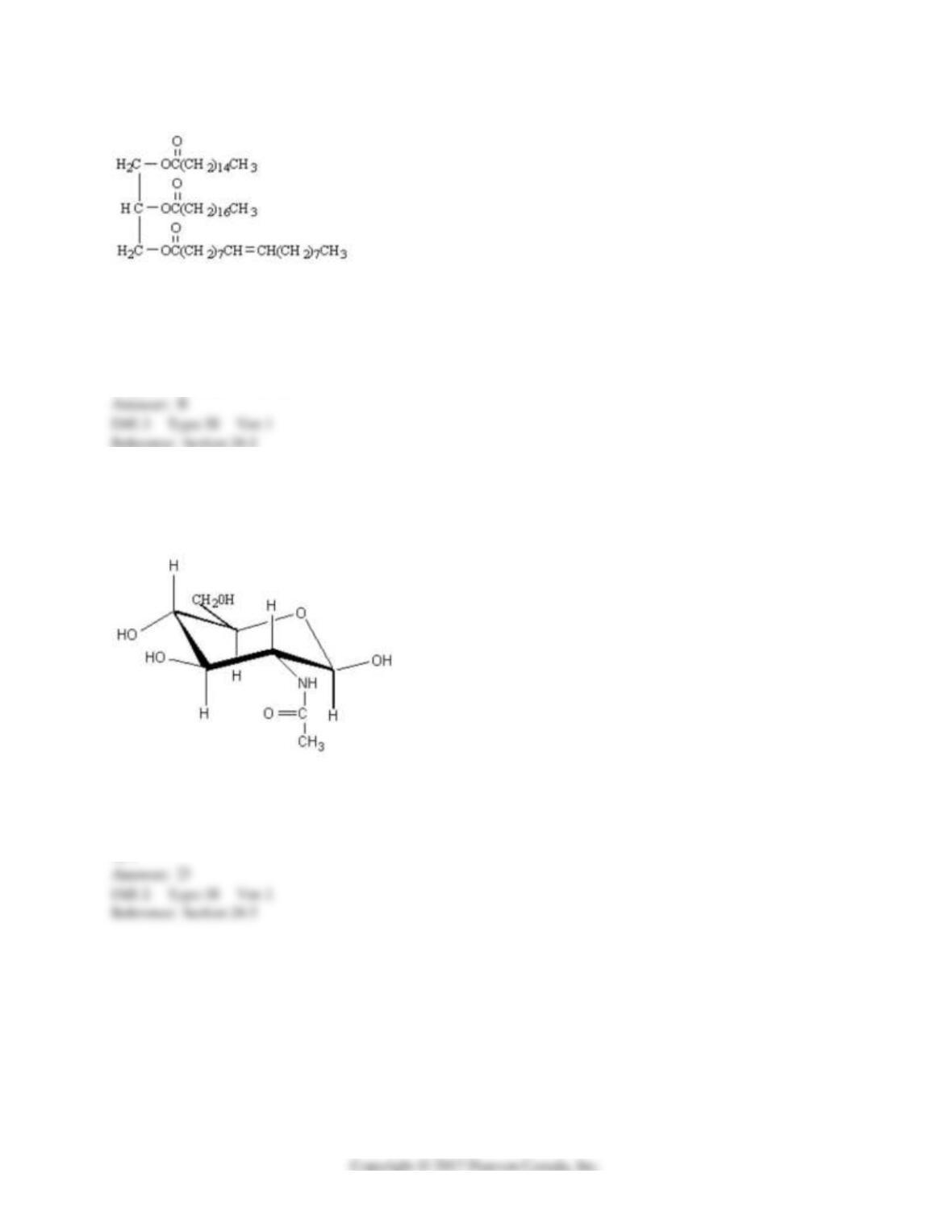
79) What is the common name of the following triglyceride?
A) glyceryl myristolaurolinoleneate
B) glyceryl palmitostearooleate
C) glycero laurostearooleate
D) glycero palmitostearooleate
E) glyco stearooleolaurate
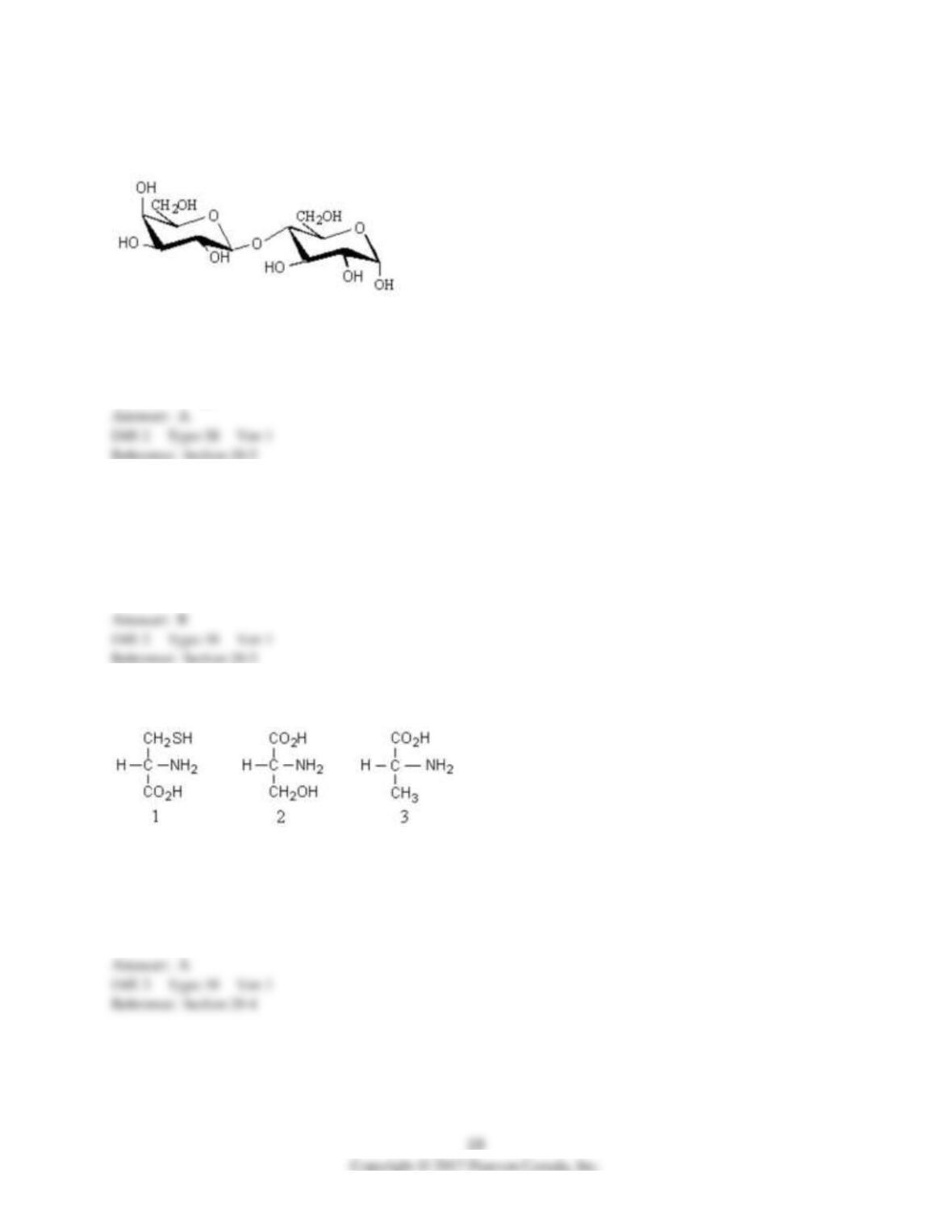
80) β-D-N-Acetylglucosamine (shown below) is a glycose found in many glycoproteins which are an
integral part of cell membranes. One chair conformation of this glycose is shown below. How many of the
hydroxyl groups on the six-membered ring occupy equatorial positions?
A) 2
B) 4
C) 0
D) 3
E) 1
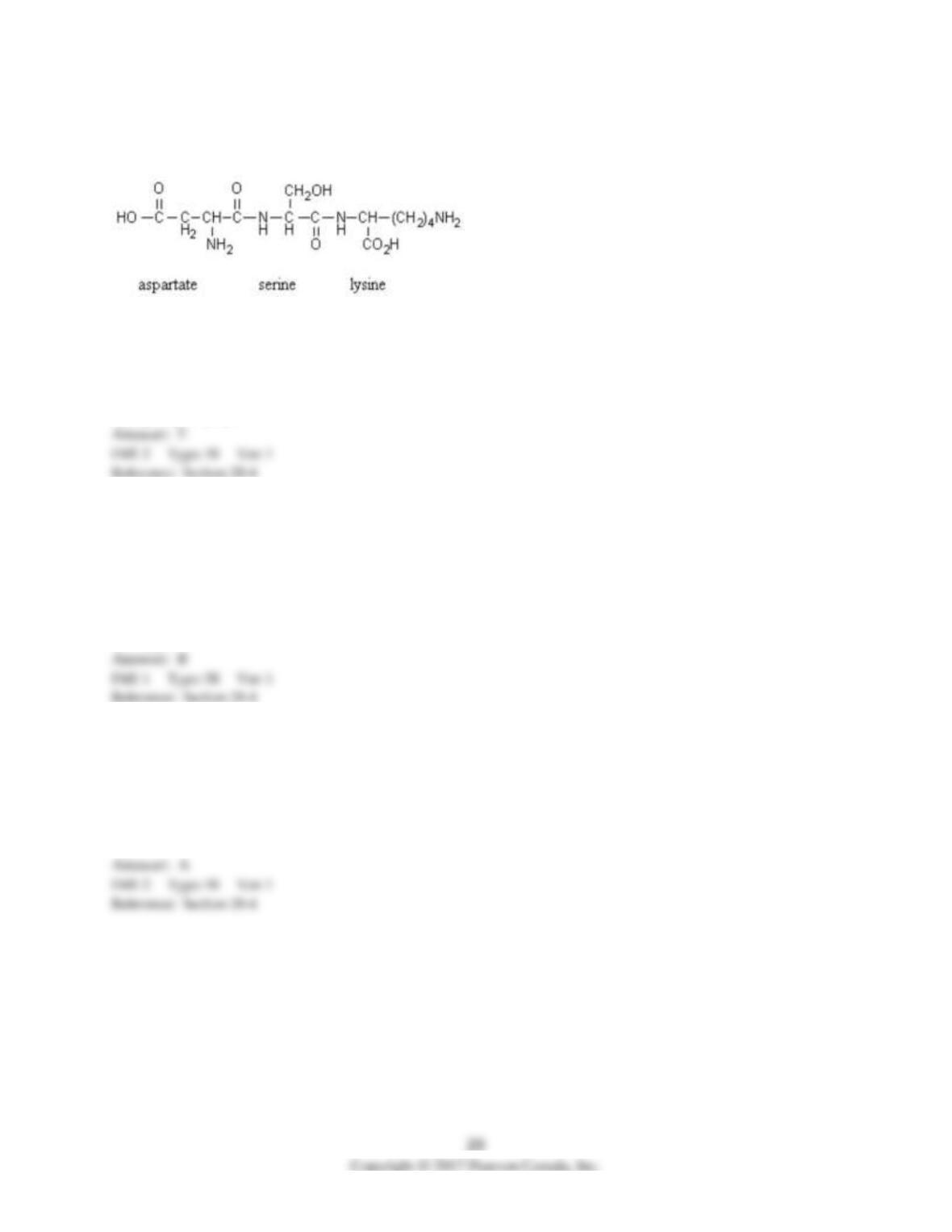
81) Lactose, the sugar found in milk, is a disaccharide of galactose and glucose in a 1,4 linkage. What is
the configuration of the 1,4 linkage between the two glycoses in lactose?
A) β configuration
B) α configuration
C) D configuration
D) axial configuration
E) chair configuration
82) How many peptide bonds are present in a hexapeptide?
A) 4
B) 5
C) 6
D) 7
E) 3
83) What is the absolute configuration of the following amino acids?
A) 1L, 2D, 3D
B) 1l, 2d, 3d
C) 1D, 2D, 3D
D) 1L, 2L, 3L
E) 1d, 2l, 3l
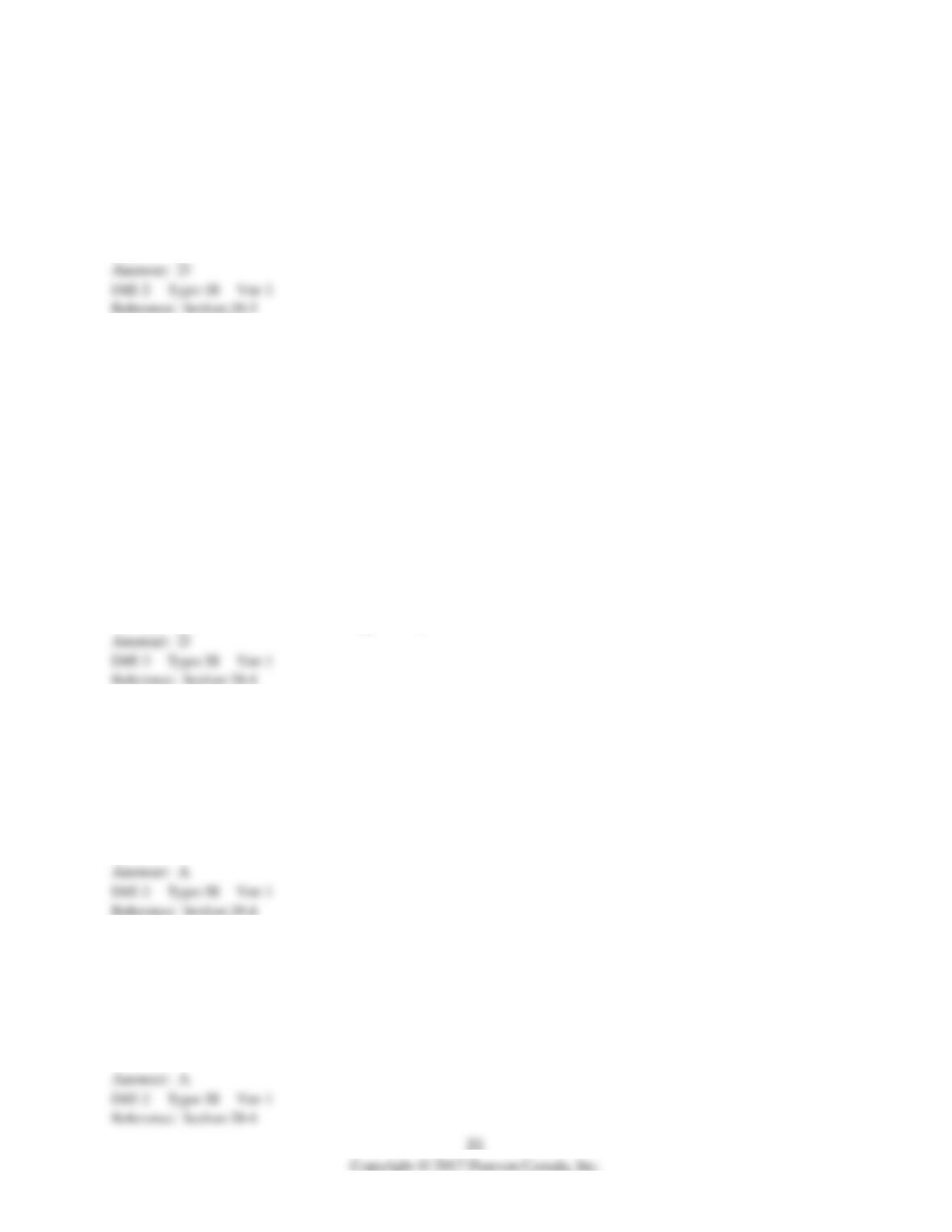
84) What is the name of the following tripeptide (the names of each amino acid are given directly below
its position in the tripeptide)?
A) lysylserylaspartate
B) aspartylserinyllysine
C) aspartyllysinylserine
D) aspartineserinelysine
E) aspartylseryllysine
85) All amino acids always contain one chemical element which is absent in the structures of
carbohydrates. This element is ________.
A) carbon
B) nitrogen
C) phosphorus
D) sulfur
E) oxygen
86) Predict the isoelectric point for tyrosine, 4-OHC6H4CH2CH(NH2)CO2H, given pKa1 = 2.2 and pKa2 =
9.1.
A) 5.7
B) 6.9
C) 11.3
D) 7.0
87) A tetrapeptide is known to contain four different amino acids (A, B, C, and D). How many different
sequences are possible for this polypeptide?
A) 4
B) 6
C) 8
D) 12
E) 24
88) Partial hydrolysis of an eleven amino acid polypeptide containing an N-terminal glycine yielded the
fragments shown below (shown N- to C-terminus from left to right). What is the sequence of the original
peptide?
gly cys-met-cys
ala-val-val ile-his
his-trp-met gly-cys
val-ile met-cys-ala-val
A) C-gly-cys-met-cys-ile-val-val-ala-his-trp-met-N
B) N-gly-trp-met-cys-val-ile–ala-val-val-ile-his-C
C) N-gly-cys-val-val–ile-trp-his-met-cys-ala-val-C
D) N-gly-cys-met-cys-ala-val-val–ile-his-trp-met-C
E) C-gly-cys-ala-val-ala-val-val-his trp-met-cys-N
89) A protein molecule has a molecular weight of 7.70 × 10⁵ g/mol. The mass percent of magnesium in the
protein is 3.16 × 10⁻³%. How many magnesium atom(s) are there in one protein molecule?
A) 1
B) 2
C) 3
D) 24
E) 5
90) What is the zwitterion form of the amino acid cysteine?
A) NH3+-CH(CH2SH)CO2–
B) NH3+-CH(CH2S–)CO2H
C) NH3+-CH(CH2SH)CO2H
D) NH2-CH(CH2SH)CO2–
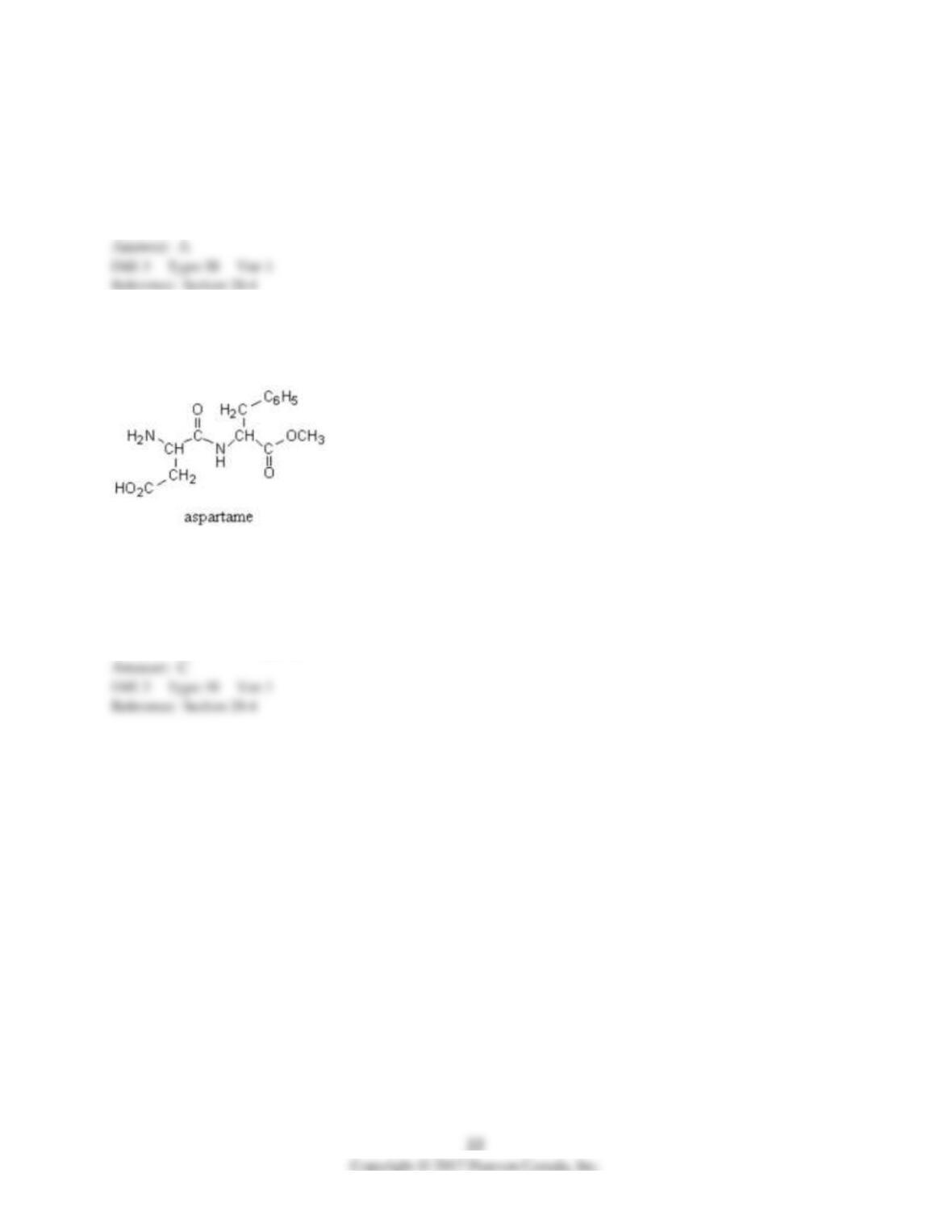
91) How many tripeptides can be formed from serine, alanine, and glycine?
A) 6
B) 4
C) 8
D) 10
92) The artificial sweetener Nutrasweet® (aspartame) is not a derivative of sugar, but is actually a small
dipeptide. What two amino acids make up the basic structure of Nutrasweet®?
A) glutamic acid and phenylalanine
B) asparagine and tyrosine
C) aspartic acid and phenylalanine
D) serine and glycine
E) aspartic acid and tryptophan
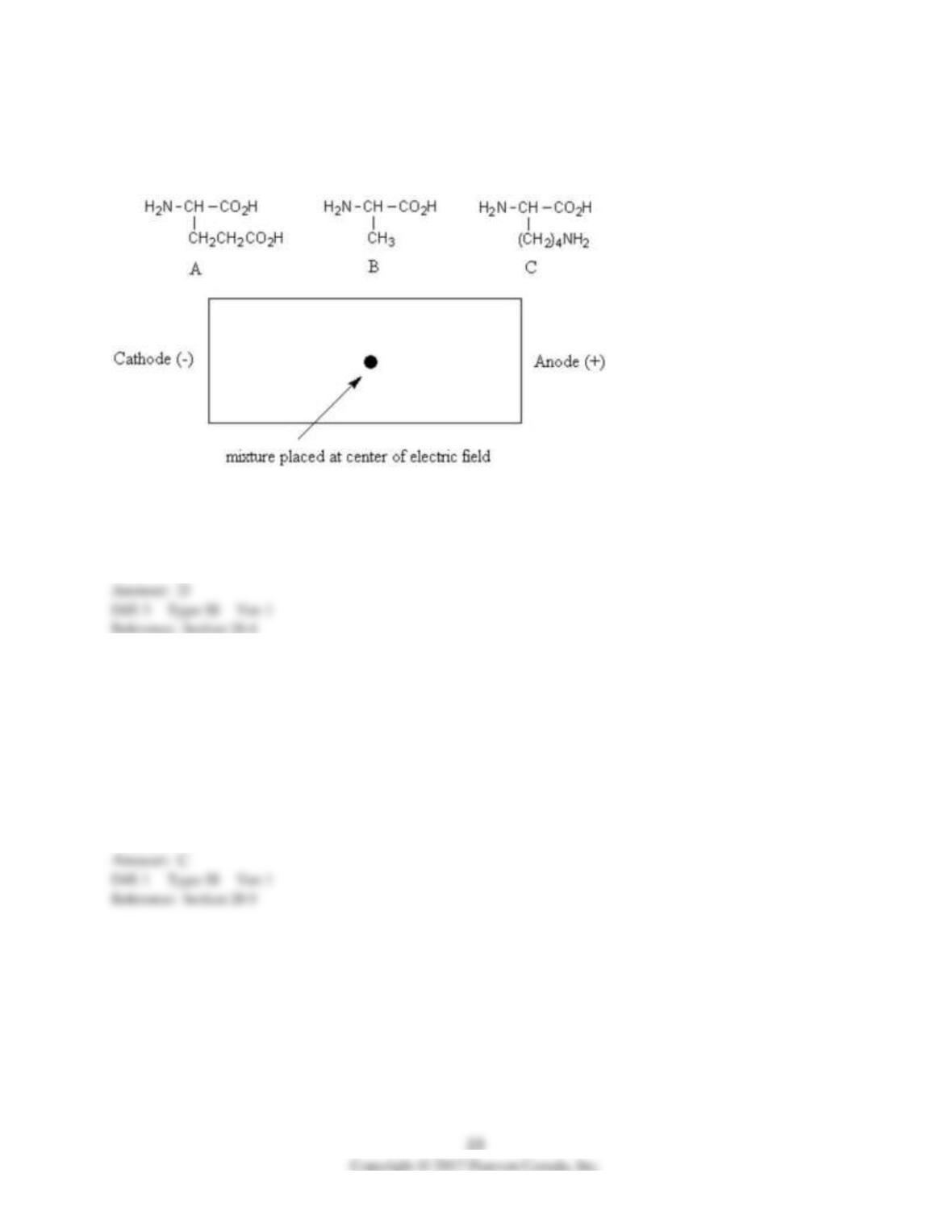
93) A mixture of the three amino acids shown below was buffered to pH 7.0 and placed in the center of an
electric field with the cathode to the left and the anode to the right. From left to right, what would be the
positional order of the amino acids after sufficient time to allow migration?
A) A, B, C
B) B, C, A
C) B, A, C
D) C, B, A
E) C, A, B
94) When the equation for the oxidation of glucose is balanced, the coefficients are: ________.
C6H12O6 + O2 → CO2 + H2O
A) 2, 6, 12, 12
B) 1, 3, 6, 6
C) 1, 6, 6, 6
D) 1, 9, 6, 12
E) 4, 2, 4, 2
95) ΔG° = -2880 kJ/mol for the oxidation of glucose (C6H12O6). What is ΔG° for the oxidation of 3.45
grams of glucose?
A) -342 kJ
B) -55.2 kJ
C) -0.215 kJ
D) -9.94 × 10³ kJ
E) -621 kJ
96) Below is a single stranded DNA sequence from an unwound chromosome that is in the process of
replication. What would be the sequence of the complementary DNA strand produced during the
replication of this strand?
ATTGCGCTTATTCGCGTTAAAGGCCTCTGATG
A) GCCATATCCGCCTATACCGGGAATTCTCAGCA
B) CGGTATAGGCGGATATGGCCCTTAAGAGTCGT
C) ACCTGTGTTAAGTGTACGTAAAGCTAATGGGT
D) TAAGCGCAATAACGCGAATTTCCGGAGAGTAG
E) TAACGCGAATAAGCGCAATTTCCGGAGACTAC
97) The hydrolysis of tristearin produces the soap potassium stearate and ________.
98) What is the chemical structure of the tetrapeptide (H2N-end)-Ala-Cys-Asp-Glu?
99) What is the direction of migration of the amino acid phenylalanine in a gel that is 0.25 M in NaH2PO4
and 0.50 M in Na2HPO4? For phenylalanine, pI = 5.74.
100) What is the complementary base sequence that corresponds to the following sequence of DNA
bases?
TCGAGTTG
101) Which one of the following amino acids does not contain a basic side chain?
A) arginine
B) histidine
C) lysine
D) threonine
102) Which one of the following amino acids contains a polar side chain?
A) alanine
B) glycine
C) threonine
D) valine
103) Which one of the following amino acids contains a hydrophobic side chain?
A) valine
B) histidine
C) glutamine
D) glutamic acid
104) In the sequence His-Tyr-Val-Pro, which amino acid contains the N-terminal group?
A) valine
B) tyrosine
C) proline
D) histidine
105) In the sequence Arg-Pro-Leu-Gln, which amino acid contains the C-terminal group?
A) proline
B) leucine
C) glutamine
D) arginine