General Chemistry, 11e (Petrucci)
Chapter 25 Nuclear Chemistry
1) Radioactive decay series decay by alpha and positron emission.
2) Artificially induced radioactivity is caused by bombarding a nucleus with another particle.
3) Transuranium elements are elements with atomic numbers greater than 92.
4) Radioactivity is a first order kinetics process.
5) The nuclear binding energy is the energy required to separate the neutrons and protons.
6) Radioactive nuclides that lie above the band of stability become more stable by positron emission.
7) Odd proton, odd neutron isotopes are generally more stable than even proton, even neutron isotopes.
8) Fission is the process of combining small nuclei into larger nuclei.
9) Fusion is the process of combining small nuclei into larger nuclei.
10) Ion production is the way radiation causes the most damage.
11) Cancerous cells are more easily killed by radiation than normal cells.
12) Choose the INCORRECT statement.
A) Radioactivity is the emission of ionizing radiation.
B) An alpha particle is the nucleus of a helium-4 atom.
C) A beta particle is a neutron.
D) A positron is like a beta particle but with a positive charge.
E) Gamma rays are emitted from a nucleus in an excited state.
13) Radioactive decay is:
A) temperature independent
B) a second-order process
C) a zero-order process
D) a process with a large activation energy
14) The most massive particle is:
A) alpha
B) beta
C) gamma
D) positron
E) neutron
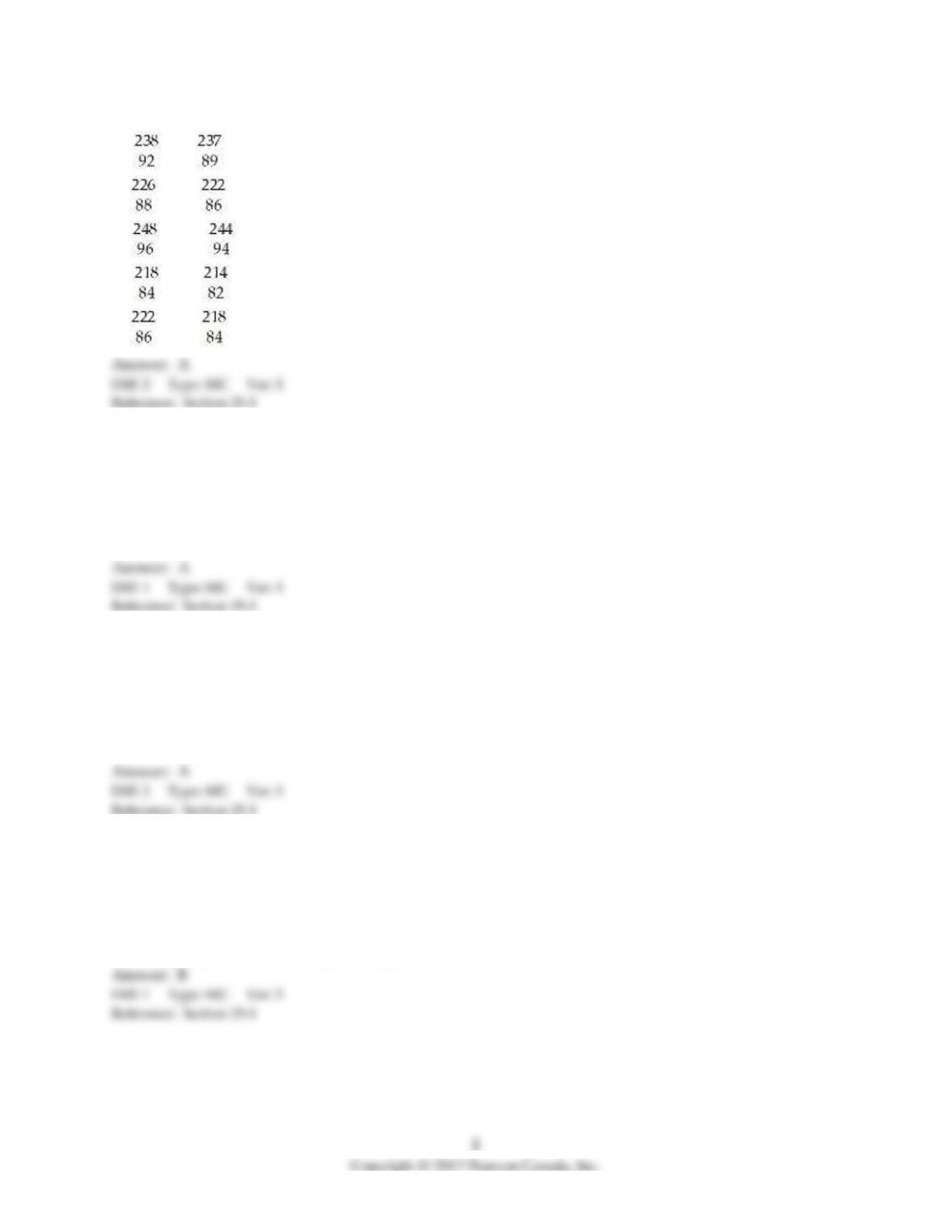
15) Identify a reaction that follows a different decay process than the rest.
A) U → Ac
B) Ra → Rn
C) Cm → Pu
D) Po → Pb
E) Rn → Po
16) The most highly charged particle is:
A) alpha
B) beta
C) gamma
D) positron
E) neutron
17) When a nuclide undergoes positron emission, the change in the number of protons, neutrons, and
mass number is, respectively:
A) -1, +1, no change
B) +1, -1, no change
C) -1, +1, -1
D) +1, +1, -1
18) Which of the following statements concerning alpha decay is INCORRECT?
A) It involves nuclides with atomic number larger than 83 and mass number larger than 200.
B) It has great penetrating power, but little ionizing power.
C) It often leaves the nucleus in an excited state.
D) The atomic number decreases by two.
E) The alpha particle is made up of two protons and two neutrons.
19) Which of the following is FALSE?
A) A β– particle is essentially an e– originating from the nucleus.
B) A β– decay results in a decrease in atomic number.
C) A β– decay is accompanied by the emission of a neutrino.
D) A β+ decay converts a proton to a neutron in the nucleus of an atom.
E) An e– capture converts a proton to a neutron in the nucleus of an atom.
20) Which of the following are true for alpha particles?
I) α particles are equivalent to 2 p+ 2 n.
II) α decay decreases the atomic number by four.
III) α particles are deflected more strongly than e– by magnetic fields, but in the opposite direction.
IV) α particles are easily stopped as they strike matter.
A) I and II
B) I, II, III
C) I and III
D) I and IV
E) I, II, III, and IV
21) Which of the following types of nuclear decay result in a decrease in nuclear charge?
I) gamma emission
II) beta emission
III) positron emission
IV) electron-capture
A) I and II
B) II and IV
C) I and III
D) III and IV
E) IV only
22) Which of the following would have the greatest penetrating power through matter?
A) gamma rays
B) alpha particles
C) protons
D) beta particles
E) positron particles
5
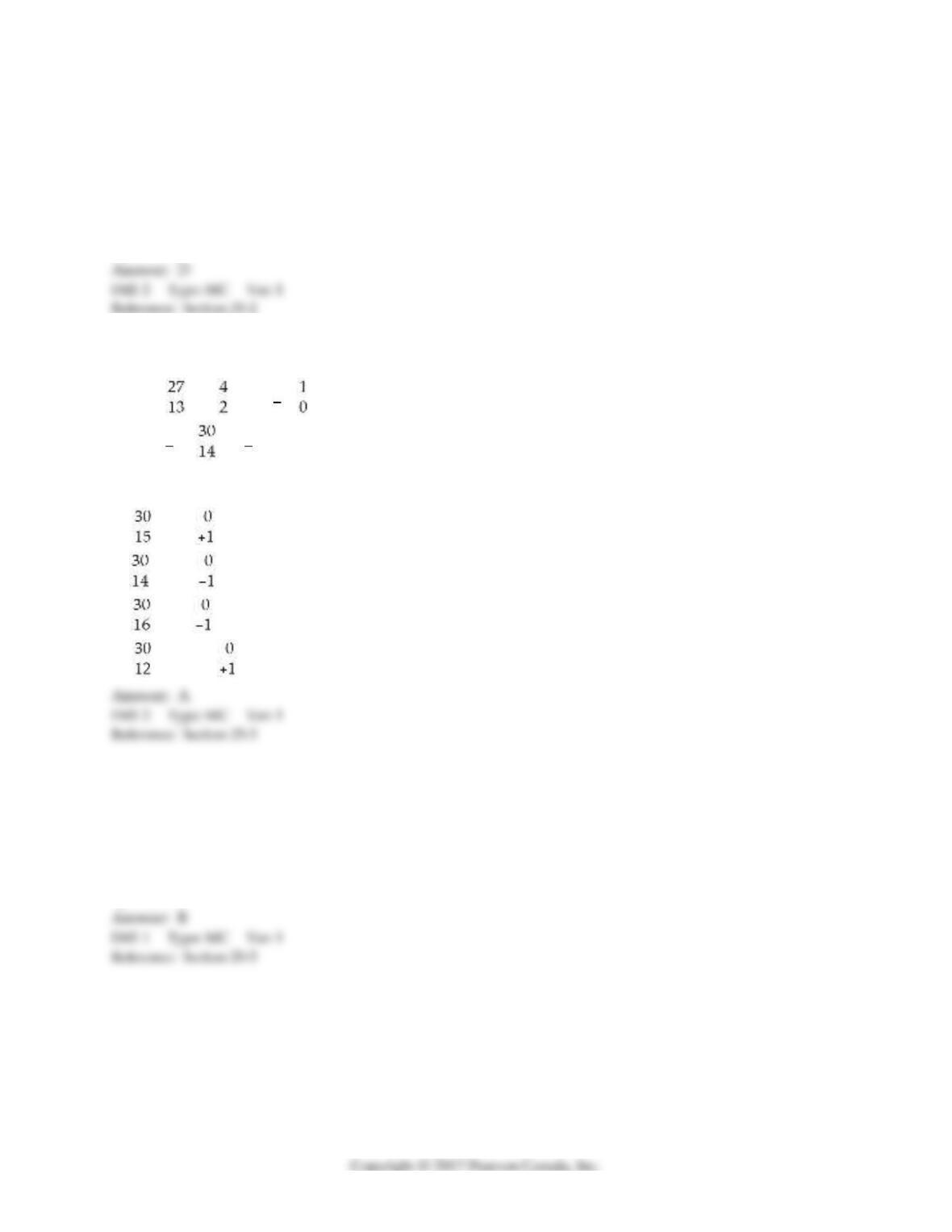
23) Most periodic tables indicate the elements for which all isotopes are radioactive. Which pair of
elements with atomic number less than 83 have only radioactive isotopes?
A) Pb and At
B) Tc and Cd
C) K and Pm
D) Tc and Pm
E) C and K
24) Consider the following nuclear reactions.
Al + He → 1 + n
1 → Si + 2
What are the nuclides 1 and 2, respectively?
A) P and β
B) Si and β
C) S and β
D) Mg and 2 β
25) Choose the possible products for the nuclear reaction 40Ca + 4He(alpha).
A) 43Ar + n
B) 43Sc + p
C) 43Ca + n
D) 42Ca + 2H
E) 42Ti + n
26) Transuranium elements can be produced by bombarding nuclei with:
A) neutrons
B) other nuclei
C) alpha particles
D) positrons
E) neutrons and/or other nuclei
27) There have been two ways of making transuranium elements: neutron bombardment and:
A) beta bombardment
B) gamma bombardment
C) positron bombardment
D) photon bombardment
E) heavy-atom bombardment
28) There have been two ways of making transuranium elements: heavy-atom bombardment and:
A) beta bombardment
B) gamma bombardment
C) positron bombardment
D) photon bombardment
E) neutron bombardment
29) In the case of radioactive element X, which decays by electron emission with a half-life of 4 days to a
stable nuclide of element Z:
A) 2 g of element X is required to produce 1.5 g of element Z after 8 days
B) element Z will weigh considerably less than element X after decay is complete because of the loss of
electrons
C) element Z will weigh more than element X when decay is complete since Z has the higher atomic
number
D) after 8 days the sample will consist of one-fourth element Z and three-fourths element X
E) after 8 days element X will be all element Z
30) Choose the INCORRECT statement.
A) Bi-209 has the highest mass number and atomic number of any stable isotope.
B) The radioactive decay law is A = θN.
C) Radioactive decay is a first-order process.
D) The half-life is the length of time for all atoms of an isotope to decay.
E) Wood can be dated by radiocarbon dating.
31) What is the decay constant for 131I if the half-life is 8.04 d?
A) 9.98 × 10⁻⁷ s-1
B) 9.31 × 10⁻⁵ s-1
C) 3.48 × 10⁻⁶ s-1
D) 4.81 × 10⁻⁴ s-1
32) A nuclide has a decay constant of 4.28 × 10⁻⁴/h. If the activity of a sample is 3.14 × 10⁵/s, how many
atoms of the nuclide are present in the sample?
A) 7.34 × 10⁸
B) 2.64 × 10¹²
C) 4.84 × 10⁵
D) 1.34 × 10²
E) 2.34 × 10¹¹
33) The charcoal from ashes found in a cave gave 3.34 14C counts per gram per minute. Wood from the
outer portion of a growing tree gives a comparable count of 16.0. The half-life of 14C is 5700 years. How
old are the ashes?
A) 8.93 × 10³ yr
B) 6.87 × 10³ yr
C) 1.29 × 10⁴ yr
D) 1.93 × 10⁴ yr
E) 1.90 × 10⁴ yr
34) A wooden artifact is subjected to radiocarbon dating. The activity associated with its 14C content is 12
dis min-1 g-1. A sample of wood from a modern source gave 15 dis min-1 g-1. If the half-life of 14C is
5730 y, what is the age of the artifact?
A) 1.8 × 10³ y
B) 800 y
C) 1.3 × 10³ y
D) 7.2 × 10³ y
35) If the decay constant for 131I is 9.98 × 10⁻⁷ s-1, calculate the activity of a 1.00 mg sample.
A) 4.59 × 10¹² atoms/s
B) 4.73 × 10¹² atoms/s
C) 4.61 × 1024 atoms/s
D) 9.98 × 10⁻⁴ atoms/s
36) Half-life is:
I) the time for a sample to decay completely.
II) constant for a given radioisotope.
III) the time required for half of a sample to decay.
IV) inversely proportional to the decay constant.
A) I and II
B) I, II, and III
C) I and III
D) I, III, and IV
E) II, III, and IV
37) The observation that a 30 g sample of C-14 has a decay rate faster than that of a 20 g sample of C-14
would be consistent with the:
A) Half-Life Principle
B) Disintegration Rule
C) Radioactive decay law
D) Mass-Rate Principle
E) Mass-decay ratio
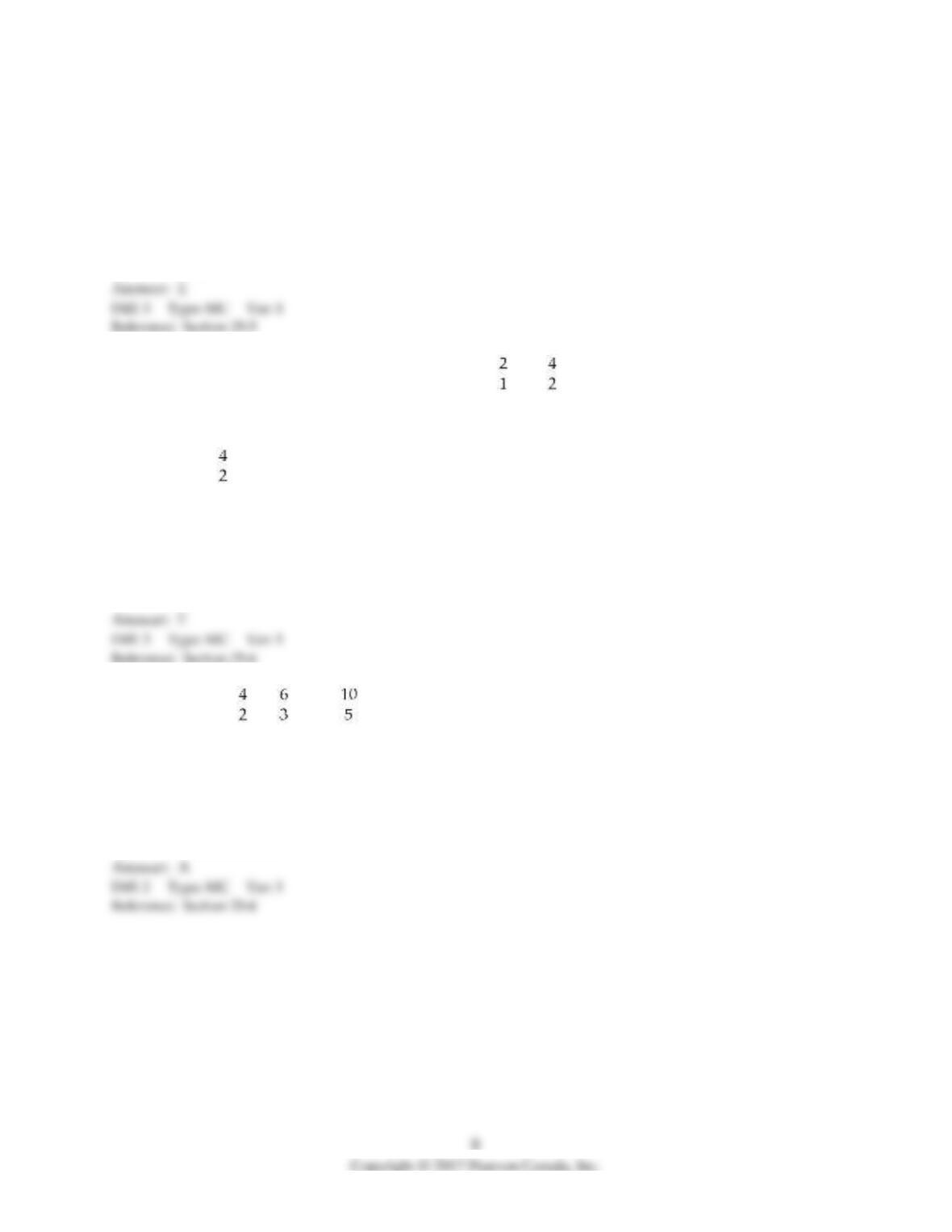
38) The half-life of 238U, which decomposes to 206Pb, is 4.51 × 10⁹ y. A rock contains equal masses of
these two isotopes. How old is this rock?
A) 4.07 × 10⁹ y
B) 4.06 × 10⁹ y
C) 9.02 × 10⁹ y
D) 4.51 × 10⁹ y
E) 5.00 × 10⁹ y
39) The following nuclear reaction is known to occur: 2 H → He This reaction is used in a fusion
bomb or H bomb. How many joules of energy are produced by this reaction if 33.0 g of 2H are used? You
are given the following masses: electron 0.00055 amu; proton 1.00782 amu; neutron 1.00867 amu; 2H atom
2.010410 amu; He atom 4.00260 amu.
A) 3.82 × 10⁻¹² J
B) 2.30 × 10¹² J
C) 3.77 × 10¹³ J
D) 7.60 × 10¹³ J
E) 1.34 J
40) The masses of He, Li and B are 4.0015, 6.0135 and 10.0102 amu, respectively. Splitting a boron-
10 nucleus to helium-4 and lithium-6 would:
A) absorb energy
B) evolve energy
C) result in no energy change
D) boron cannot be split
E) cannot be determined
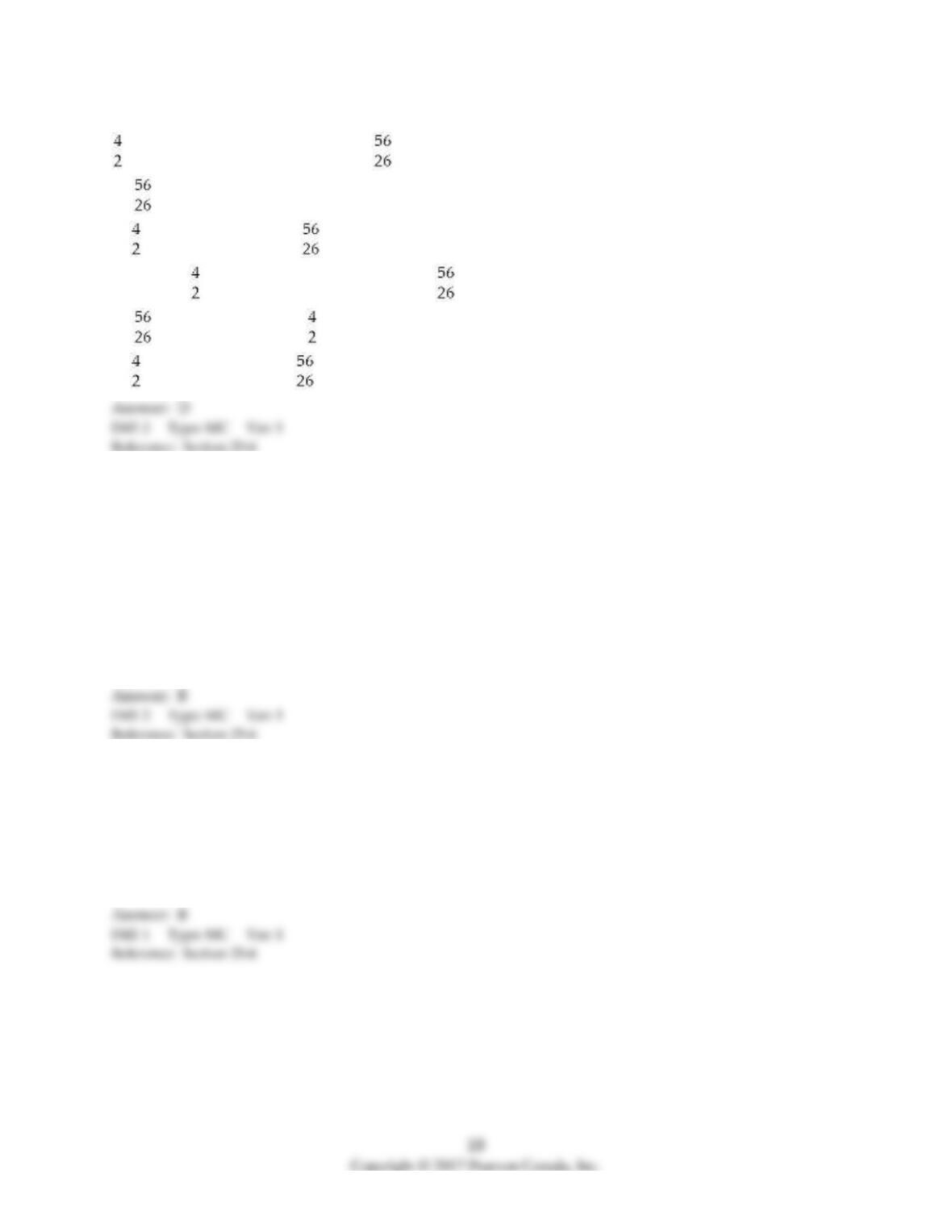
41) On forming the nuclide from the protons, neutrons and electrons, the mass loss per nucleon for the
He is 0.00759 amu, whereas that for Fe is 0.00944 amu. This means that:
A) Fe undergoes nuclear fission
B) He is more stable than Fe
C) thirteen He nuclei could react to form one Fe nucleus
D) Fe is more stable than He
E) He weighs more than Fe
42) Nuclear binding energy is:
I) the energy liberated when forming a nucleus
II) related to “lost” mass by the relationship 1 amu = 28.4 MeV
III) related to “lost” mass by the relationship 1 amu = 931.5 MeV
IV) the force which holds the 3 atomic particles together
A) I and II
B) I and III
C) I, II, and IV
D) I, III, and IV
E) III and IV
43) The binding energy per nucleon is largest for:
A) 3He
B) 59Co
C) 235U
D) 98Tc
E) 1H
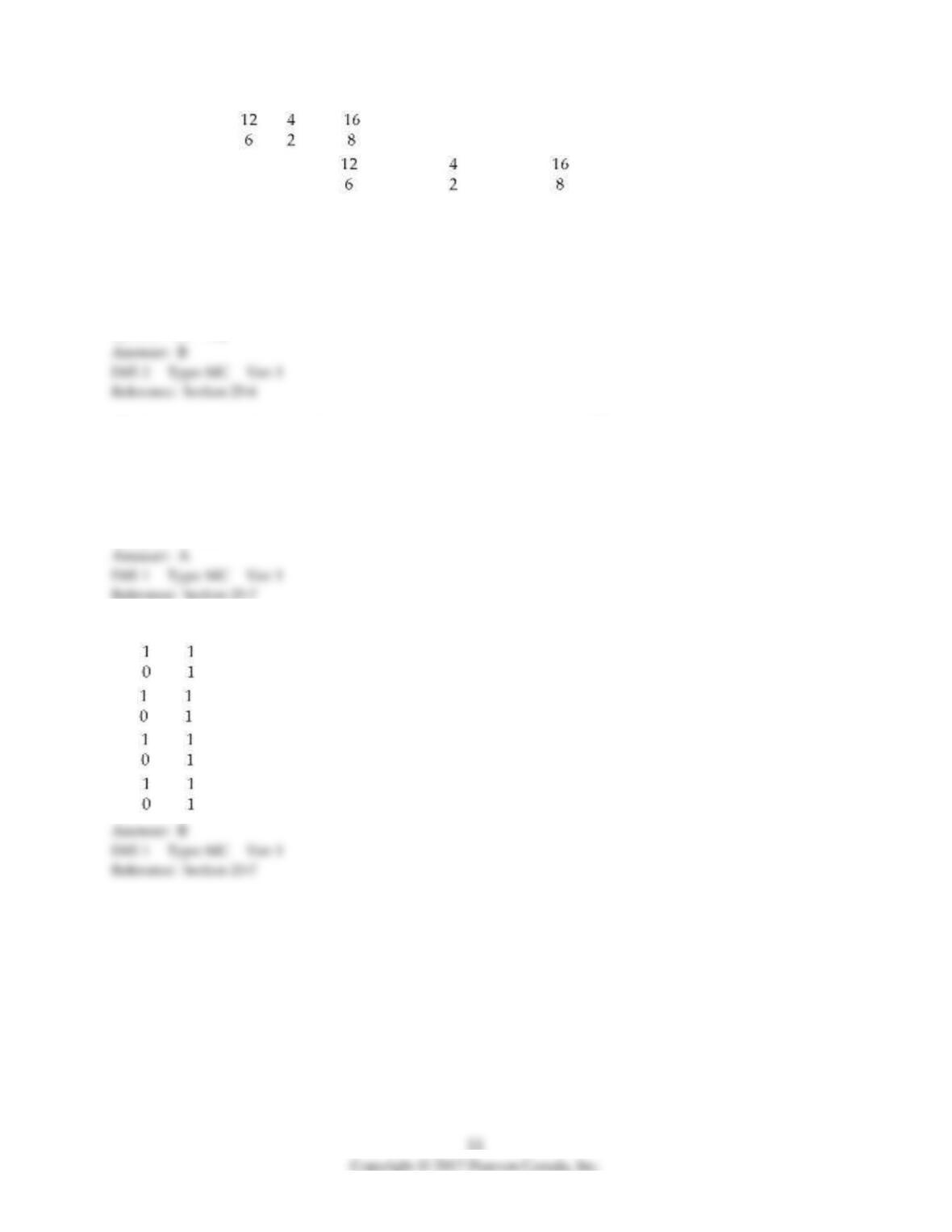
44) In the reaction C + He → O how much energy is produced per gram of carbon used? Masses,
in unified atomic mass units are: C= 12.00000, He= 4.00260, O = 15.99491.
Express your answer in Joules/gram of carbon.
A) 2.10 × 10¹⁹ J/g
B) 5.76 × 10¹⁰ J/g
C) 7.77 × 10⁴ J/g
D) 2.80 × 10¹¹ J/g
E) 3.36 × 10¹⁵ J/g
45) An isotope which has too high a neutron-proton ratio can gain stability by:
A) beta emission
B) K-capture
C) proton emission
D) gamma emission
E) alpha emission
46) Which of the following is true concerning the nuclei of stable heavier elements?
A) # n = # p
B) # n > # p
C) # n < # p
D) # n = # p > #e–
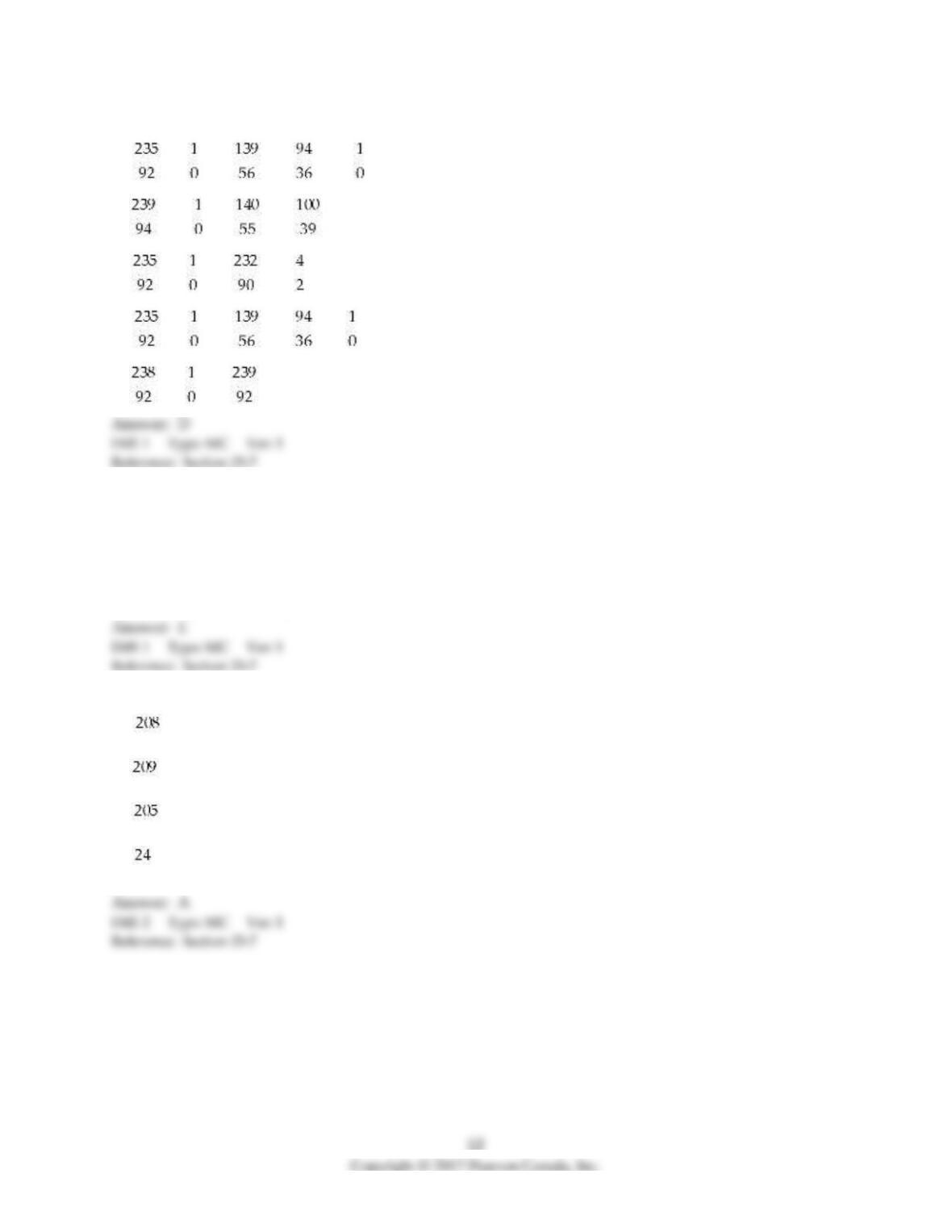
47) Find the INCORRECT nuclear reaction.
A) U + n → Ba + Kr + 3 n
B) Pu + n→ Cs + Y
C) U + n → Th + He
D) U + n → Ba + Kr + n
E) U + n → U
48) Choose the INCORRECT statement.
A) The nuclear binding energy is the mass changed to energy that holds the nucleus together.
B) Magic numbers are certain numbers of protons and/or neutrons which are especially stable.
C) Even numbers of protons and neutrons are more stable.
D) Particular ratios of neutrons to protons are more stable.
E) All isotopes below Bi are stable.
49) Which of the following nuclides is most likely to be stable?
A) Pb
B) Bi
C) Tl
D) Na
50) The nuclear binding energy for cobalt-59 is the energy released when:
A) 27 protons and 32 neutrons form cobalt-59
B) iron-56 and 2 protons form cobalt-59
C) 27 protons and 27 neutrons form cobalt-59
D) cobalt-58 and 1 neutron form cobalt –59
51) Choose the correct statement.
A) Instability leading to decay by alpha particle emission is found mostly in nuclides of very large mass
number.
B) Decay by beta emission is confined to nuclides of very low mass number.
C) Ejection of an electron by a nuclide results in a nuclide of next lower mass number.
D) All radiations emitted by radioactive nuclides consist of charged, high energy particles.
E) Many alpha and beta emissions are followed by gamma emissions.
52) Choose the correct word to describe the nuclear stability of the following isotope. If it is radioactive,
choose the most likely mode of decay.
212Po
A) radioactive, beta
B) radioactive, fission
C) radioactive, alpha
D) radioactive, neutron
E) stable
53) Choose the correct word to describe the nuclear stability of the following isotope. If it is radioactive,
choose the most likely mode of decay.
197Au
A) radioactive, beta
B) radioactive, fission
C) radioactive, alpha
D) radioactive, neutron
E) stable
54) Choose the correct word to describe the nuclear stability of the following isotope. If it is radioactive,
choose the most likely mode of decay.
50Mn
A) radioactive, beta plus (positron)
B) radioactive, fission
C) radioactive, alpha
D) radioactive, neutron
E) stable
55) Choose the correct word to describe the nuclear stability of the following isotope. If it is radioactive,
choose the most likely mode of decay.
238U
A) radioactive, beta
B) radioactive, fission
C) radioactive, alpha
D) radioactive, neutron
E) stable
56) Choose the correct word to describe the nuclear stability of the following isotope. If it is radioactive,
choose the most likely mode of decay.
19F
A) radioactive, beta
B) radioactive, fission
C) radioactive, alpha
D) radioactive, neutron
E) stable
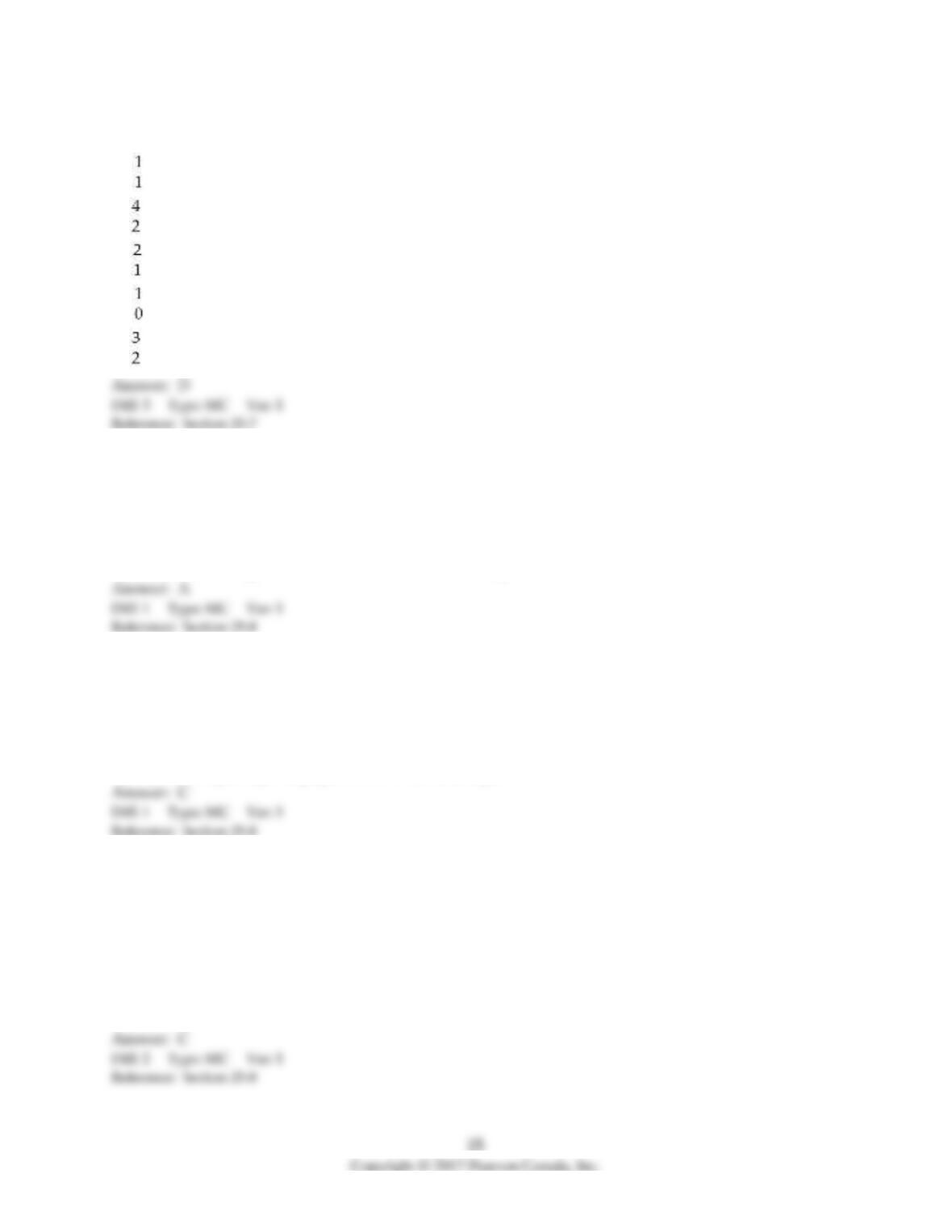
57) Which of the following nuclear species would require the least amount of kinetic energy to penetrate
the nucleus of a lead (Pb) atom?
A) H
B) He
C) H
D) n
E) He
58) Choose the INCORRECT statement.
A) Fission is the combining of small nuclei into a larger nucleus.
B) Thermal neutrons induce more fission reactions than energetic neutrons.
C) Water is a good moderator, it slows down neutrons.
D) Control rods absorb neutrons.
E) Breeder reactors generate new fuel as well as electricity.
59) Choose the INCORRECT statement.
A) An isotope that will fission when hit by a neutron is said to be fertile.
B) A moderator slows down neutrons.
C) Control rods absorb energy to control the fission reaction.
D) Electrons dislodged from an atom or molecule by alpha or beta particles are called primary electrons.
E) Radiation exposes photographic film the same as light.
60) What total energy is released when 0.75 grams of 235U undergo fission if each atom averages 3.2 × 10–
11 J of energy released?
A) 1.45 × 10¹³ J
B) 6.01 × 1031 J
C) 6.15 × 10¹⁰ J
D) 6.15 × 10⁷ J
E) 1.45 × 10¹⁰ J
61) Choose the INCORRECT statement.
A) Fusion is the basis of the hydrogen bomb.
B) Fusion is the splitting of a nucleus into two smaller nuclei.
C) Fusion is a reaction that occurs on the sun.
D) Fusion is not now used to produce electricity commercially.
E) Fusion can produce an almost unlimited amount of energy.
62) Which statement below is correct?
A) In order for fusion to be sustained, the critical mass must be exceeded.
B) Fission reactions with light nuclei, such as helium are easily controlled but do not produce as much
energy as with heavy nuclei.
C) Breeder reactors are able to convert fissile nuclides into fertile ones, thus “breeding” more fuel.
D) In a pressurized water reactor, cadmium metal usually acts as the moderator.
E) U requires energetic neutrons in order to undergo fission and subsequently produces Pu.
63) Choose the INCORRECT statement.
A) Geiger-M ller counters detect radiation by the ionization caused in the gas in the counter.
B) Bubble chambers detect radiation by the ionization trail left by the radiation.
C) Radiation causes no harm to the human body.
D) Radiation kills cancer cells more easily than normal cells.
E) Alpha particles are less penetrating than beta particles.
64) An employee at a chemical laboratory studying radioisotopes would wear a badge to keep a check on
the amount of radiation to which he is exposed. This radiation dosage would be measured in the unit:
A) curie
B) rad
C) rem
D) joules
E) joules per kilogram