65) Which of the following instruments would be least suitable for detecting particles given off in
radioactive decay?
A) electron microscope
B) bubble or cloud chamber
C) film
D) Geiger counter
E) Geiger-M ller counter
66) The unit of radiation which is equivalent to 0.010 J/kg of matter is the:
A) curie
B) roentgen
C) rad
D) rem
E) MeV
67) Radiation can be detected as it interacts with matter by the use of:
I) photographic film
II) a bubble chamber
III) Geiger-M ller counter
A) I, II, III
B) I and II
C) I and III
D) II and III
E) III only
68) Choose the INCORRECT statement.
A) Cancer cannot be caused by ionizing radiation.
B) Cancer can be treated with gamma rays.
C) Radiation works against cancer because cancer cells are more easily damaged than normal cells.
D) Protons, X-rays, and neutrons can also be used against cancer cells.
E) Ionizing radiation tends to kill all cells.
18
69) Choose the INCORRECT statement.
A) Radioactive 32P as a phosphate can be used to trace the uptake of phosphorus in plants.
B) The thyroid gland can be studied by the use of radioactive iodine.
C) There is no difference in physical properties between isotopes.
D) The mechanism of a chemical reaction can be followed by a radioactive tracer such as 35S.
E) Industrial catalysts can be followed by a tracer such as 192Ir.
70) The type of radioactive emission with the greatest penetrating power is ________.
A) alpha
B) beta
C) gamma
D) positron
E) neutrino
71) Fe can be prepared by electron-capture from ________.
A) Mn
B) Fe
C) Co
D) Co
E) Mn
72) 210Pb → 4He + ________.
A) 214Pb
B) 206Hg
C) 214Hg
D) 206Pb
E) 206Br
Answer: B
Diff: 1 Type: BI Var: 1
Reference: Section 25-1
19
73) 8Be → 4He + ________.
A) 3Be
B) 8He
C) 4He
D) 4Li
E) 12C
74) 6He → + ________.
A) 6H
B) 5He
C) 7He
D) 6Li
E) 7Be
75) 205Pb + ________ → 205Tl.
A) n
B) He
C) β
D) gamma
E) β
76) ________ + β → 37Cl.
A) 37Ar
B) 38Ar
C) 38Cl
D) 37K
E) 36K
77) When a nitrogen nucleus containing six neutrons emits a positron, the product is ________.
A) N
B) C
C) C
D) C
E) N
78) The beta decay of Na produces an isotope of ________.
A) Al
B) Mg
C) Na
D) Ne
E) O
79) Emission of which one of the following leaves both atomic number and mass number unchanged?
A) alpha particle
B) positron
C) neutron
D) gamma radiation
E) beta ray
80) The most ionizing radiation is of what type?
A) alpha
B) beta
C) gamma
D) electron
E) neutron
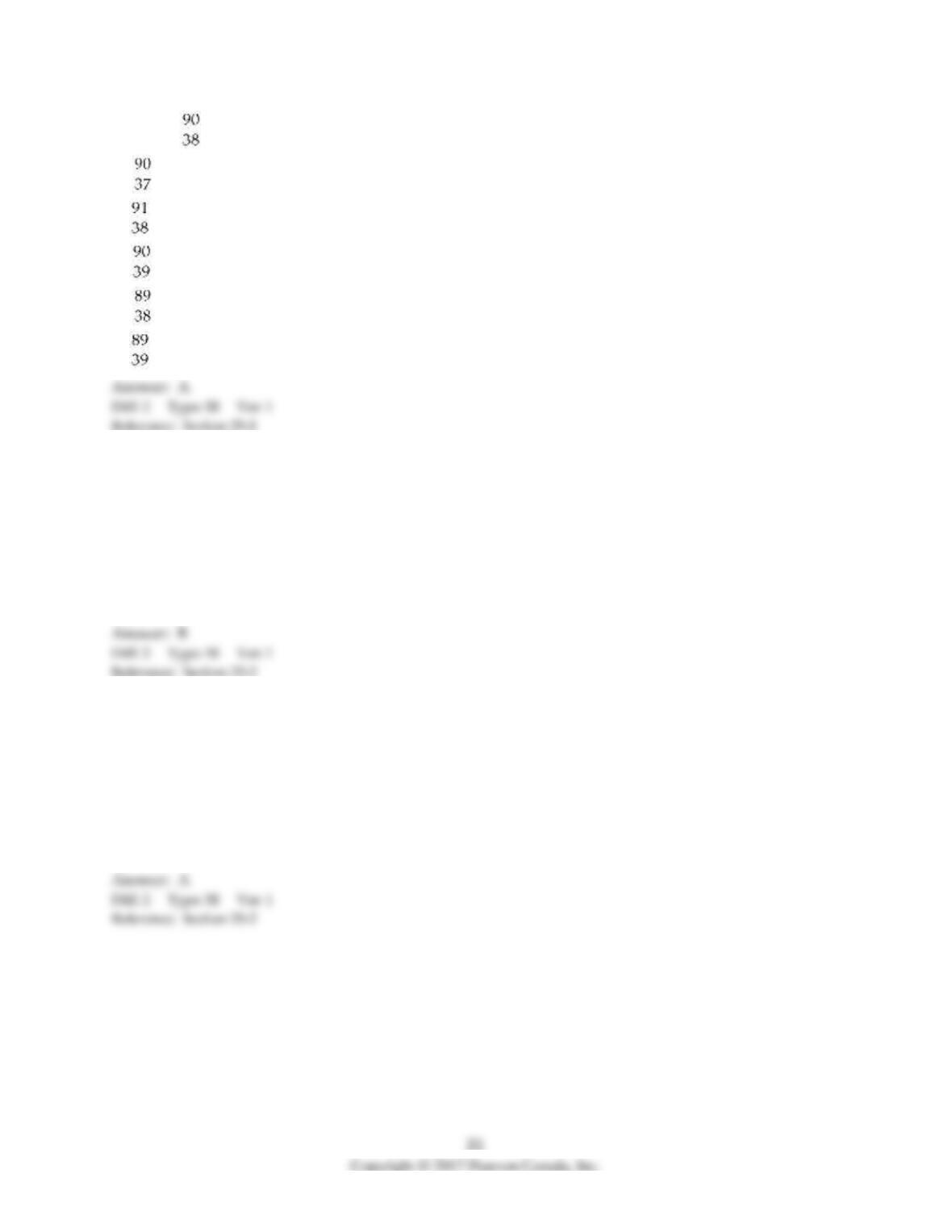
81) When Sr undergoes positron emission, the product nucleus is ________.
A) Rb
B) Sr
C) Y
D) Sr
E) Y
82) There are three radioactive series: the thorium series, which begins with 232Th, the actinium series
which starts with 235U and the uranium series which starts with what isotope?
A) 223Fr
B) 238U
C) 221Rn
D) 214Pb
E) 232Th
83) There are three radioactive series: the thorium series, which begins with 232Th, the uranium series
which starts with 238U and the actinium series which starts with what isotope?
A) 235U
B) 216Po
C) 221Rn
D) 214Pb
E) 226Ra
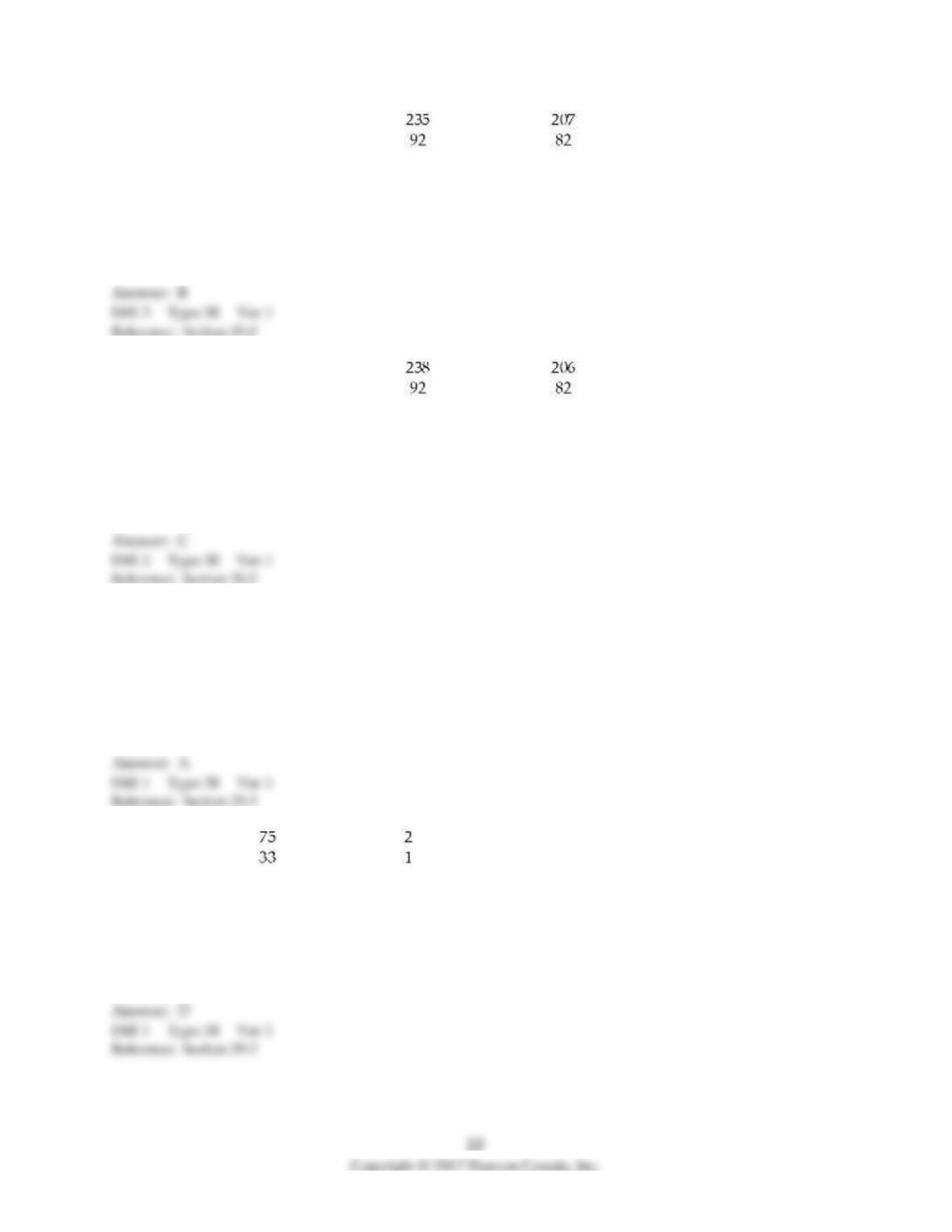
84) A certain radioactive series starts with U and ends with Pb. In the overall process, ________
alpha particles and ________ beta particles are emitted.
A) 7, 10
B) 7, 4
C) 8, 6
D) 14, 10
E) 7, 8
85) A certain radioactive series starts with U and ends with Pb. In the overall process, ________
alpha particles and ________ beta particles are emitted.
A) 7, 5
B) 7, 4
C) 8, 6
D) 8, 7
E) 8, 3
86) Alpha particle bombardment of 27Al followed by neutron emission produces ________.
A) 30P
B) 30Si
C) 31Si
D) 29P
E) 32P
87) Bombardment of As by a deuteron, H, forms a proton and an isotope which has a mass number
of ________ and an atomic number of ________.
A) 75, 32
B) 75, 33
C) 73, 32
D) 76, 33
E) 74, 34
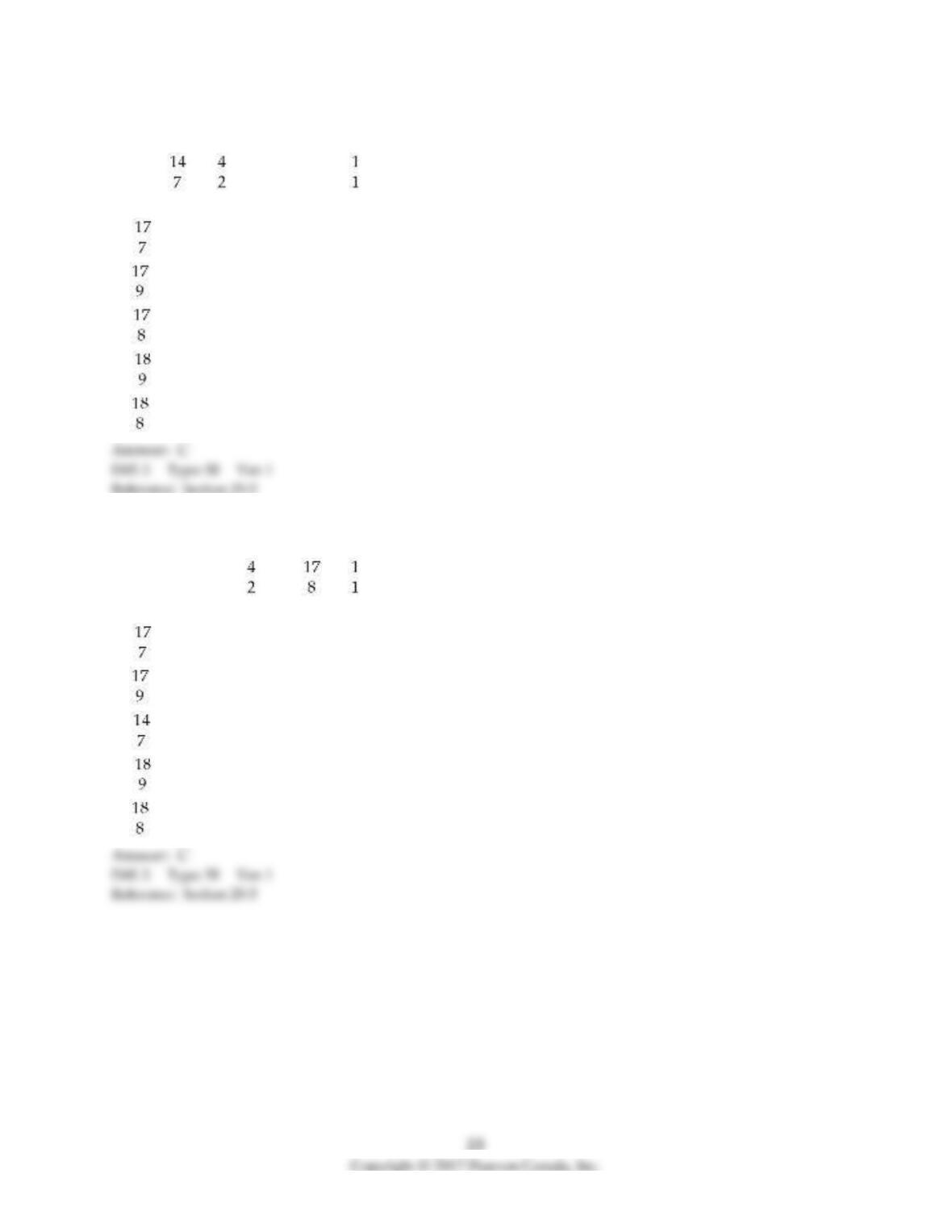
88) In the following process, what is the missing particle?
N + He → ________ + p
A) N
B) F
C) O
D) F
E) O
89) In the following process, what is the missing particle?
________ + He → O + p
A) N
B) F
C) N
D) F
E) O
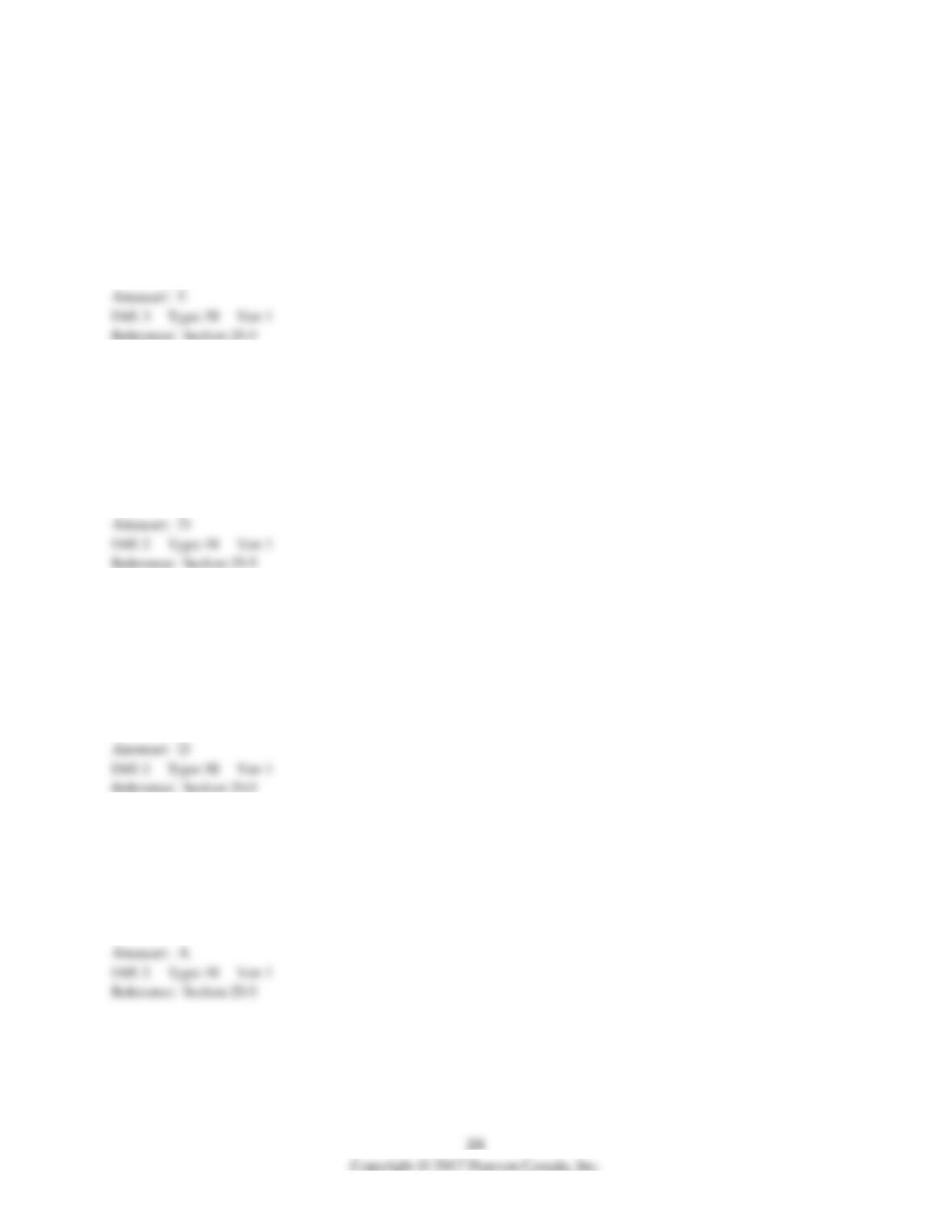
90) The charcoal from ashes found in a cave gave 7.4 14C counts per gram per minute. Wood from the
outer portion of a growing tree gives a comparable count of 15.3. The half-life of 14C is 5700 years. How
old are the ashes?
A) 5700 y
B) 5437 y
C) 3245 y
D) 9220 y
E) 5970 y
91) The initial decay rate of a nuclide is 1.77 × 10¹²/m. After 7.63 d, the decay rate is 1.82 × 10¹¹/m. What
is the half-life of the isotope?
A) 139 d
B) 0.298 d
C) 0.207 d
D) 2.32 d
E) 2.50 d
92) If 1.0 gram of an isotope has a half-life of 15 hours, the half-life of a 0.50 gram sample of the same
isotope is ________.
A) 60 hours
B) 30 hours
C) 7.5 hours
D) 15 hours
E) 3.75 hours
93) A certain isotope has a half-life of 14.7 min. How long will it take for 24.2% of the isotope to decay?
A) 5.88 min
B) 30.1 min
C) 4.07 min
D) 0.0131 min
E) 0.400 min
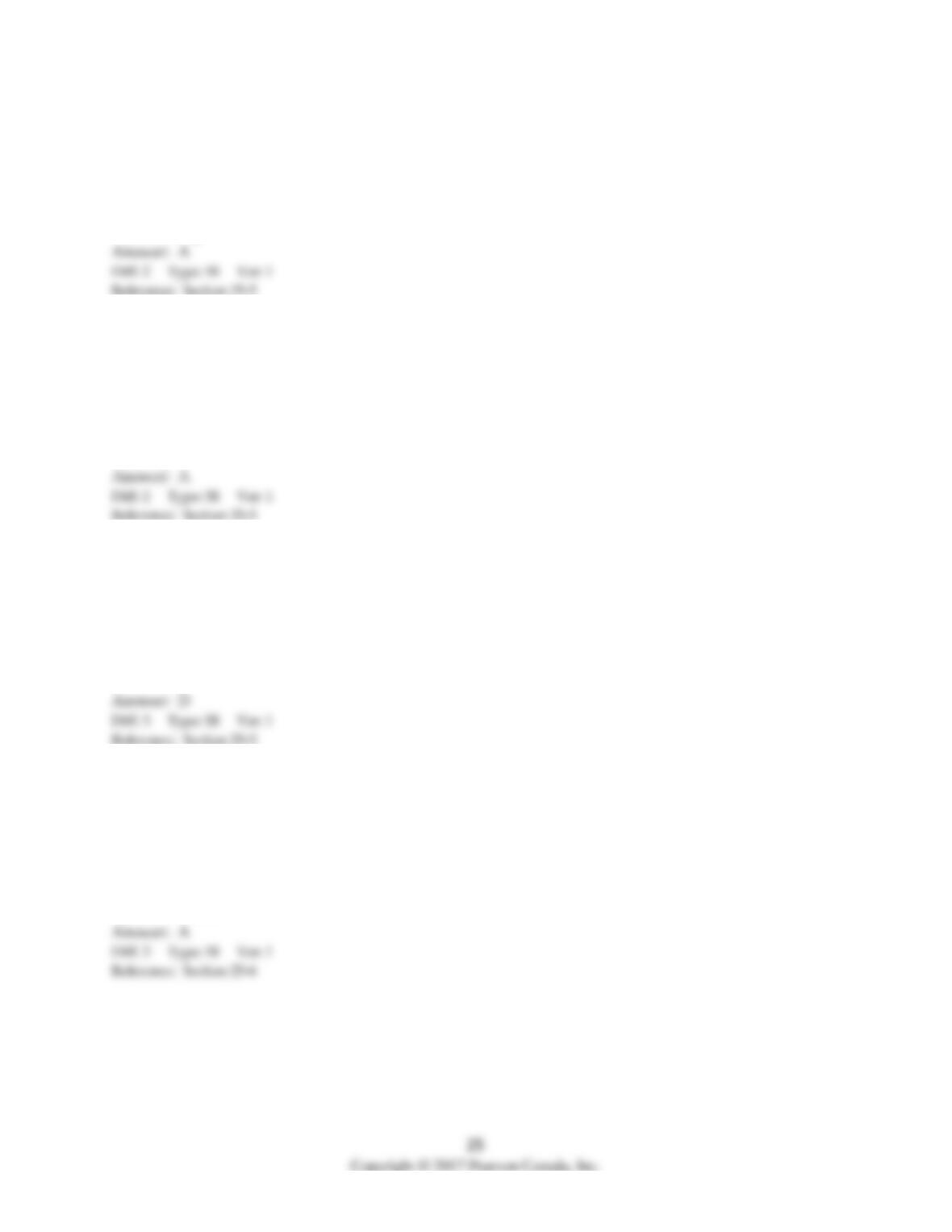
94) Approximately what mass of a 1.00 mg sample of 131I remains after 40.2 days? The half-life of 131I is
8.04 d.
A) 0.0313 mg
B) 0.200 mg
C) 0.0249 mg
D) 0.0156 mg
95) Phosphorus-32 has a half-life of 14.3 days. How many grams remain from a 10.0 gram sample after
30.0 days?
A) 2.34 g
B) 7.18 g
C) 4.64 g
D) 0.340 g
E) 3.59 g
96) A newly synthesized element is found to have a half-life of 3.82 minutes. How long after its formation
will the activity be only 10% of original activity?
A) 12.1 min
B) 6.03 min
C) 0.603 min
D) 12.7 min
E) 1.27 min
97) What is the binding energy, in amu, of 13C? Masses are: proton = 1.00728 amu, neutron = 1.00867 amu,
electron = 0.00055 amu, and 13C = 13.00335 amu.
A) 0.10432 amu
B) 0.0102 amu
C) 0.10487 amu
D) 0.10817 amu
E) 0.00335 amu
26
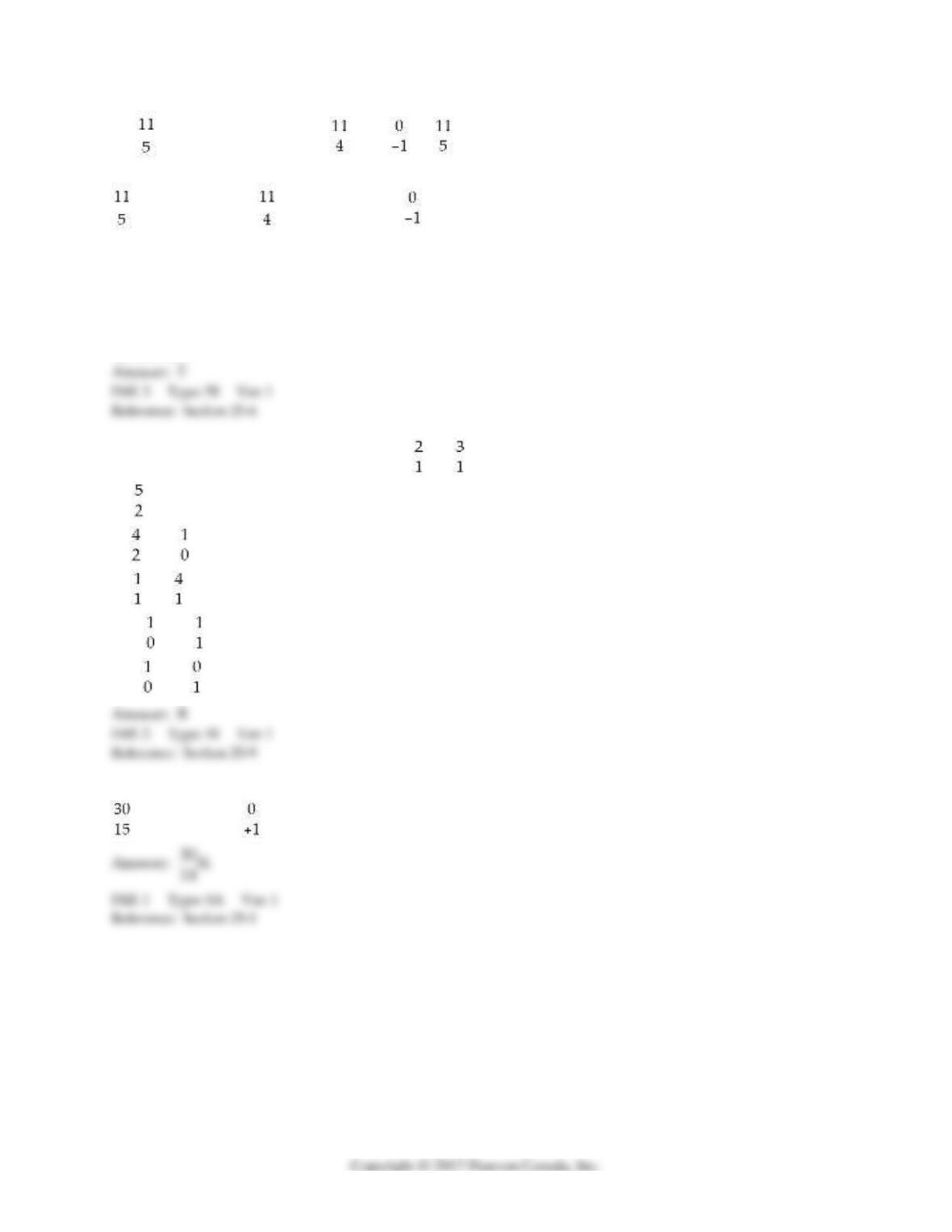
98) B decays via the reaction Be → e + B+ + λ
What is the maximum energy of the gamma ray produced if atomic masses are:
B = 11.00931 amu, Be = 11.0216 amu, e = 0.00055 amu? Please express your answer in electron
volts, amu = 931.5 MeV.
A) 11.4 MeV
B) 0.0118 MeV
C) 13.2 MeV
D) 12.0 MeV
E) 10.8 MeV
99) Complete the following fusion reaction: H + H
A) He
B) He + n
C) H + H
D) 3 n + 2 H
E) 5 n + 2 e
100) Fill in the blank in the following nuclear reaction.
P → ________ + β
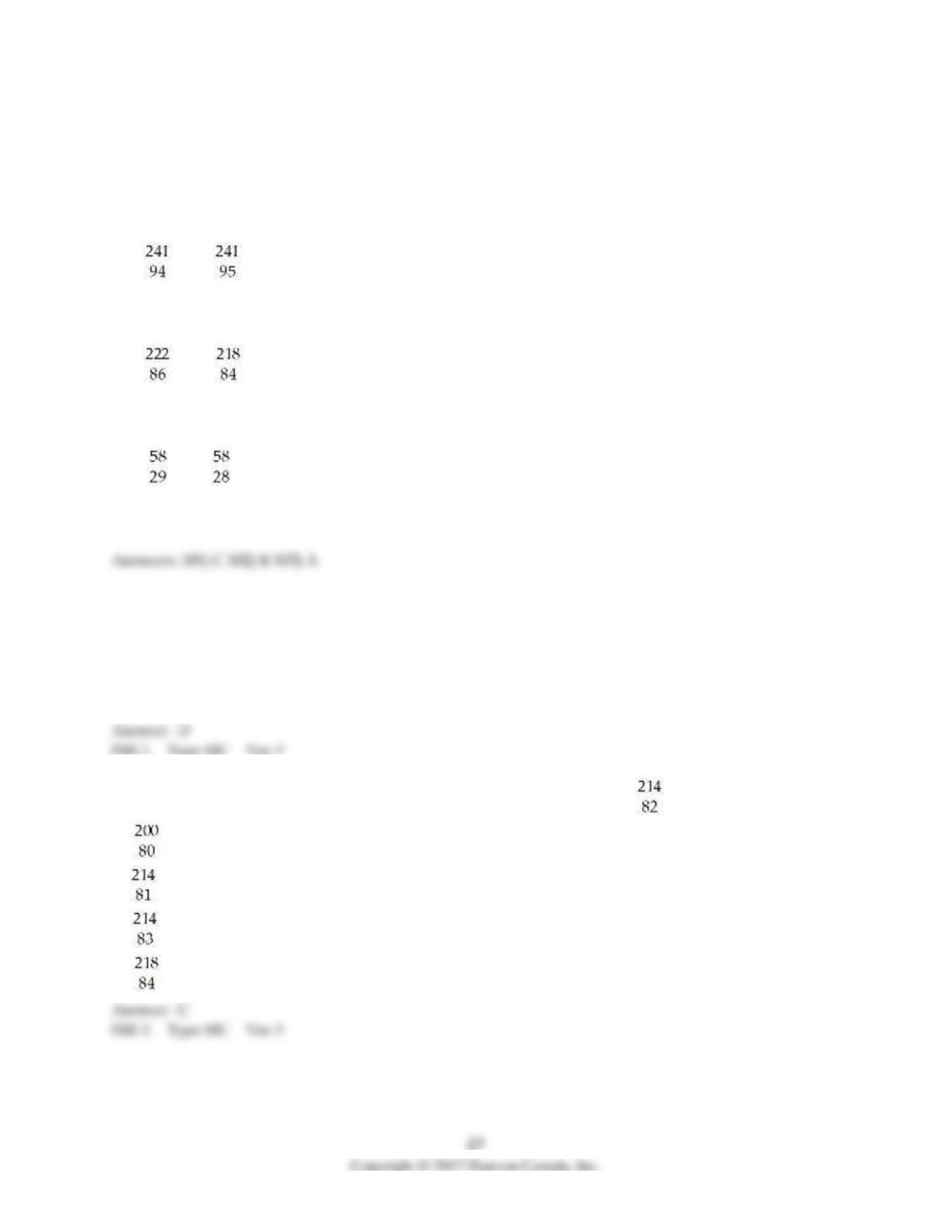
Match the following nuclear changes with the particle emitted.
A) positron
B) α-particle
C) β–-particle
101) Pu → Am
Diff: 2 Type: MA Var: 1
Reference: Section 25-1
102) Rn → Po
Diff: 2 Type: MA Var: 1
Reference: Section 25-1
103) Cu → Ni
Diff: 2 Type: MA Var: 1
Reference: Section 25-1
104) Beta decay of 60Co produces a beta particle and:
A) 56Mn
B) 59Co
C) 60Fe
D) 60Ni
105) In addition to a beta particle, what is the other product of beta decay of Pb?
A) Hg
B) Tl
C) Bi
D) Po
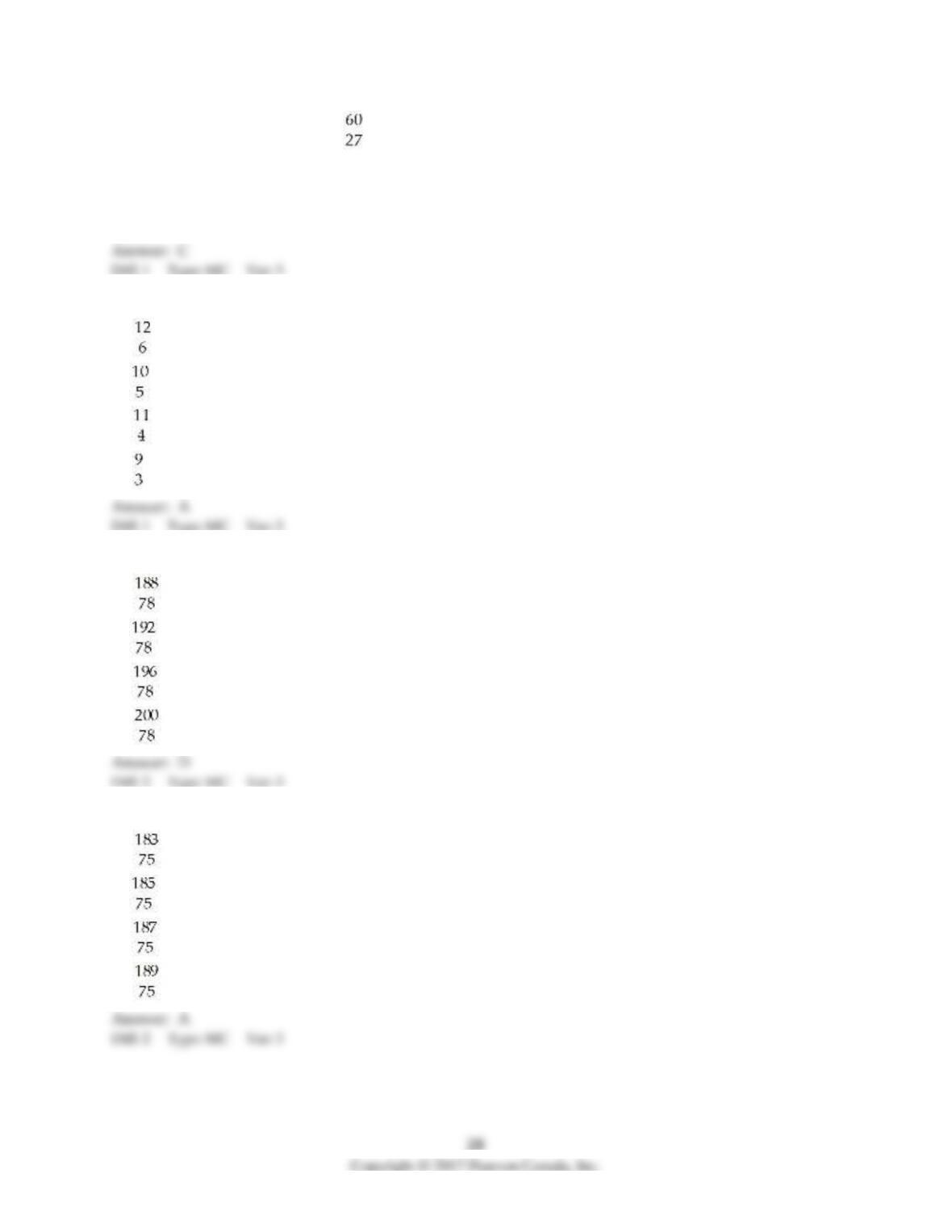
106) The number of nucleons in a Co nucleus is:
A) 27
B) 33
C) 60
D) 87
107) Which of the following elements would be expected to be particularly stable?
A) C
B) B
C) Be
D) Li
108) Which of the following nuclides is most likely to undergo beta decay?
A) Pt
B) Pt
C) Pt
D) Pt
109) Which nuclide below is most likely to decay by electron capture?
A) Re
B) Re
C) Re
D) Re
110) Neptunium-239 has a half-life of 2.35 days. How many days must elapse for a sample of 239Np to
decay to 0.100% of its original quantity?
A) 0.0427 days
B) 1.491 days
C) 2.04 days
D) 23.4 days
111) What percentage of a radioactive substance remains after 7.00 half-lives have elapsed?
A) 0.391%
B) 0.78%
C) 1.56%
D) 3.12%
112) The half-life of cobalt-60 is 5.20 y. How many milligrams of a 1.000-mg sample remain after 6.55
years?
A) 0.418
B) 1.61 × 10⁻¹⁵
C) 2.390
D) 0.794
E) 0.582
113) Strontium-90 is a byproduct in nuclear reactors fuelled by the radioisotope uranium-235. The
of is 28.8 y. What percentage of a strontium-90 sample remains after 75.0 y?
A) 68.1
B) 16.4
C) 7.40
D) 38.4
E) 2.60
114) Carbon-11 is used in medical imaging. The half-life of this radioisotope is 20.4 min. What percentage
of a sample remains after 60.0 min?
A) 71.2
B) 5.28
C) 13.0
D) 34.0
E) 2.94
115) A rock contains 0.313 mg of lead-206 for each milligram of uranium-238. The for the decay
of uranium-238 to lead-206 is 4.5 × 10⁹ y. The rock was formed ________ y. ago.
A) 1.41 × 10⁹
B) 1.08 × 10⁹
C) 1.39 × 10⁹
D) 2.00 × 10⁹
E) 1.56 × 10⁹
116) Potassium-40 decays to argon-40 with a half-life of 1.27 × 10⁹ yr. The age of a mineral sample that has
a mass ratio of 40Ar to 40K of 0.812 is ________ y.
A) 1.56 × 10⁹
B) 1.02 × 10⁹
C) 1.47 × 10⁹
D) 7.55 × 10⁸
E) 1.09 × 10⁹
117) If we start with 1.000 g of strontium-90, 0.908 g will remain after 4.00 y. This means that the
of strontium-90 is ________ y.
A) 3.05
B) 4.40
C) 28.7
D) 3.63
E) 41.6
118) If we start with 1.000 g of cobalt-60, 0.675 g will remain after 3.00 y. This means that the of
is ________ y.
A) 3.08
B) 4.44
C) 2.03
D) 5.29
E) 7.65
31
119) A freshly prepared sample of curium-243 undergoes 3312 disintegrations per second. After 6.00 y.,
the activity of the sample declines to 2755 disintegrations per second. The of is
________ y.
A) 4.99
B) 32.6
C) 7.21
D) 0.765
E) 22.6