Page 1
1.
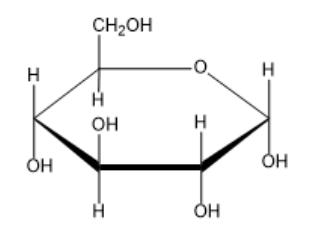
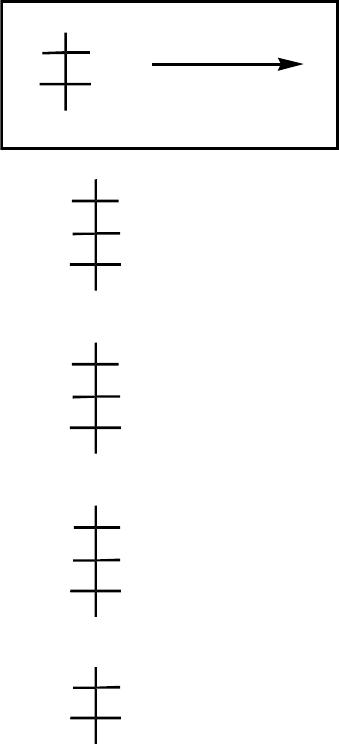
What would be the name of the following sugar?
A)
-D-glucopyranose
B)
-D-galactopyranose
C)
-D-glucopyranose
D)
-D-galactopyranose
E)
-D-glucofuranose
Page 2
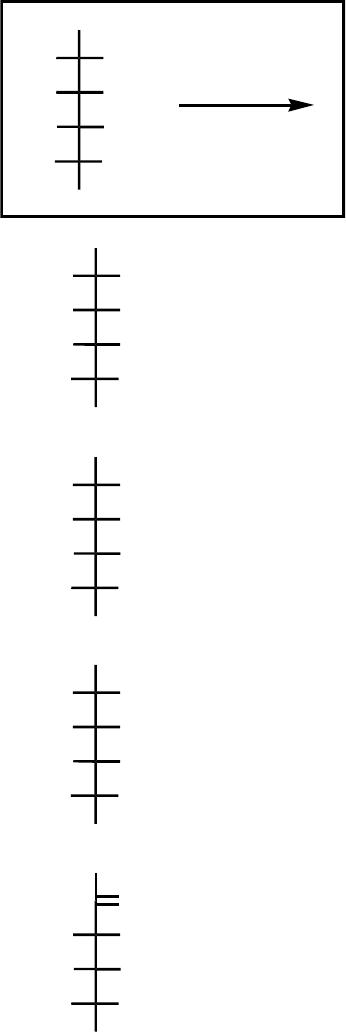
2.
Which compound would result from the following reaction?
CHO
CH2OH
HHO
HHO
HHO
OHH
Br2, H2O
pH 5-6 ?
A)
CO2H
CH2OH
HHO
HHO
HHO
OHH
B)
CHO
CO2H
HHO
HHO
HHO
OHH
C)
CO2H
CO2H
HHO
HHO
HHO
OHH
D)
CH2OH
CH2OH
O
HHO
HHO
OHH
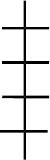
Page 3
E)
CH2OH
CH2OH
HHO
HHO
HHO
OHH

Page 4
3.
Which one of the following could not rotate plane polarized light?
A)
CH2OH
C
C
C
C
CH2OH
OH
H
OH
OH
H
HO
H
H
B)
CHO
C
C
C
C
CH2OH
OH
H
H
OHH
HO
HO
H
C)
CO2H
C
C
C
C
CH2OH
OH
H
OH
OHH
H
HO
H
D)
CO2H
C
C
C
C
CO2H
OH
H
H
HO
HO
HOH
H
E)
CHO
C
C
C
CH2OH
OH
OH
OHH
H
H
Page 5
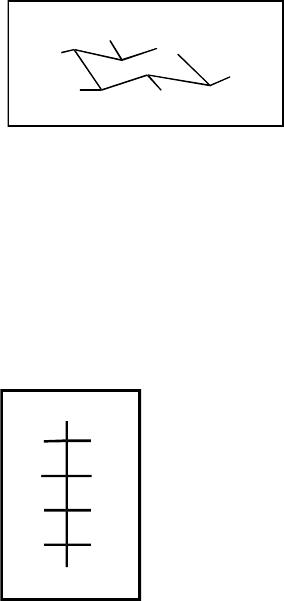
4.
Bromine is a dense, deep red-brown liquid obtained by the oxidation of bromide ion in
seawater. Bromine is very toxic. Which of the following reactions of bromine with
organic materials would be least likely in a biological system (would not occur)?
A)
Addition to non-aromatic carbon-carbon double bonds (e.g., in fatty acids)
B)
Electrophillic aromatic substitution of very activated aromatic rings (e.g., in
tyrosine, a phenol)
C)
Oxidation of aldoses to aldonic acids (e.g., CHO to CO2
D)
-bromination of fatty acids (e.g., RCH2CO2H → RCHBrCO2H)
E)
None of these reactions could occur in living systems.
5.
What would be the name of the following sugar structure?
O
OH
OH
HO
HO
HOH2C
A)
-D-galactopyranose
B)
-D-glucopyranose
C)
-D-galactopyranose
D)
-D-glucopyranose
E)
-D-galactofuranose
6.
What would be the name of the following sugar?
CHO
H
HO
OH
H
HHO
HHO
CH2OH
A)
D-glucose
B)
L-glucose
C)
L-galactose
D)
L-mannose
E)
D-mannose
Page 6
7.
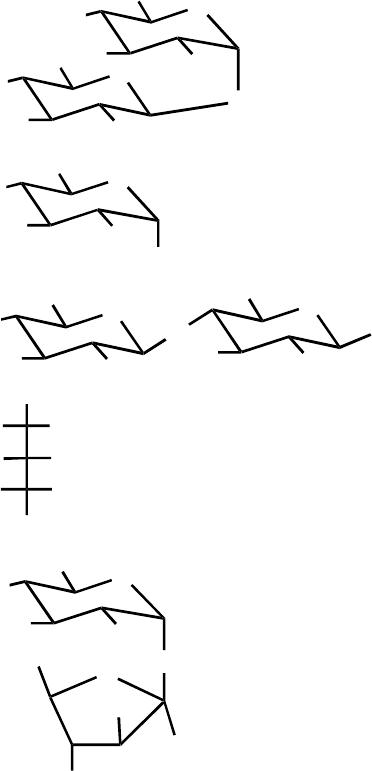
What would result from the following series of reactions?
CHO
H
HO
OH
H
CH2OH
?
1. HCN
2. H2, Pd,
H2O, H+
A)
H
HO
OHH
CH2OH
OHH
CHO
B)
H
HO
OHH
CH2OH
OHH
CH2OH
C)
H
HO
OHH
CH2OH
HHO
CHO
D)
CH2OH
H
HO
OHH
CH2OH
E)
both A and C
Page 7
8.
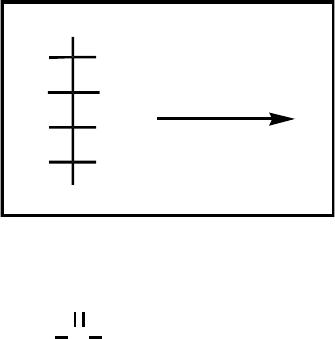
Which of the following would be a reducing sugar (i.e., react with Ag+)?
A)
O
O
OH
HO
HO
HOH2C
O
OH
HO
HO
HOH2C
B)
O
OCH3
OH
HO
HO
HOH2C
C)
O
OH
HO
HO
HOH2CO
OH
OH
HO
O
HOH2C
D)
H
HO
OHH
CH2OH
OHH
CH2OH
E)
O
O
OH
HO
HO
HOH2C
O
CH2OH
HOH2C
HO
OH
Page 8
9.
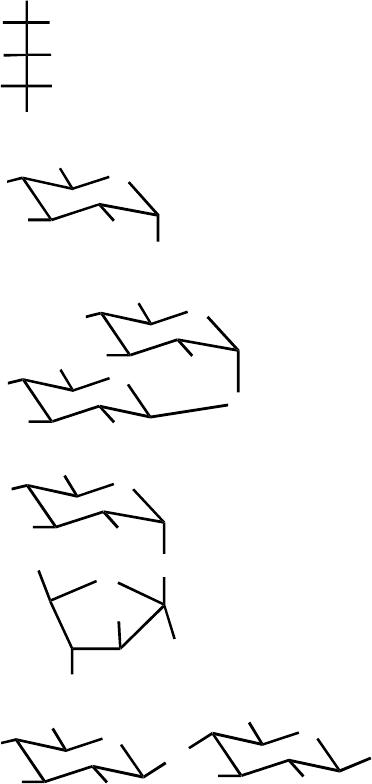
Qualitatively (not quantitatively), what products would be formed from the following
reaction?
CHO
OH
H
HHO
OHH
OHH
CH2OH
?
(excess)
HIO4
A)
CO2
B)
CH2O
C)
H C
O
OH
D)
both B and C
E)
A, B and C
Page 9
10.
Which of the following would you expect to exhibit mutarotation?
A)
H
HO
OHH
CH2OH
OHH
CH2OH
B)
O
OCH3
OH
HO
HO
HOH2C
C)
O
O
OH
HO
HO
HOH2C
O
OH
HO
HO
HOH2C
D)
O
O
OH
HO
HO
HOH2C
O
CH2OH
HOH2C
HO
OH
E)
O
OH
HO
HO
HOH2CO
OH
OH
HO
O
HOH2C
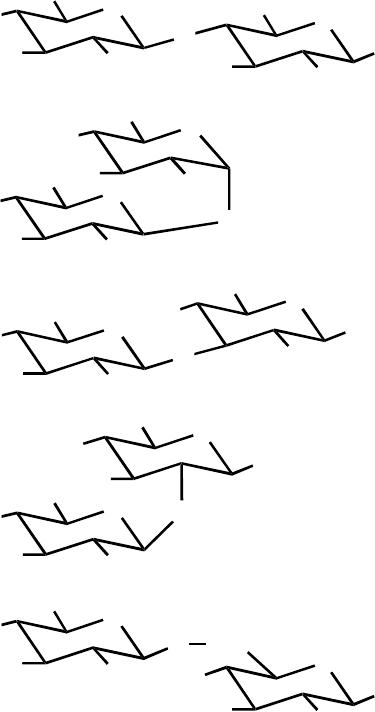
Page 10
11.
In which of the following is a typical (most common) disaccharide linkage present (i.e.,
in what way does nature link most di- and poly-saccharides: 1,1′ vs 1,2′ vs 1,3′ vs
1,4′ vs 1,6′)?
A)
O
OH
HO
O
HOH2C
O
OH
HO
HO
HOH2C
OH
B)
O
O
OH
HO
HO
HOH2C
O
OH
HO
HO
HOH2C
C)
O
OH
O
HOH2C
O
OH
HO
HO
HOH2COH
HO
D)
O
HO
O
HOH2C
O
OH
HO
HO
HOH2C
OH
HO
E)
O
OH
HO
H2C
O
OH
HO
HO
HOH2C
OH
HO
O
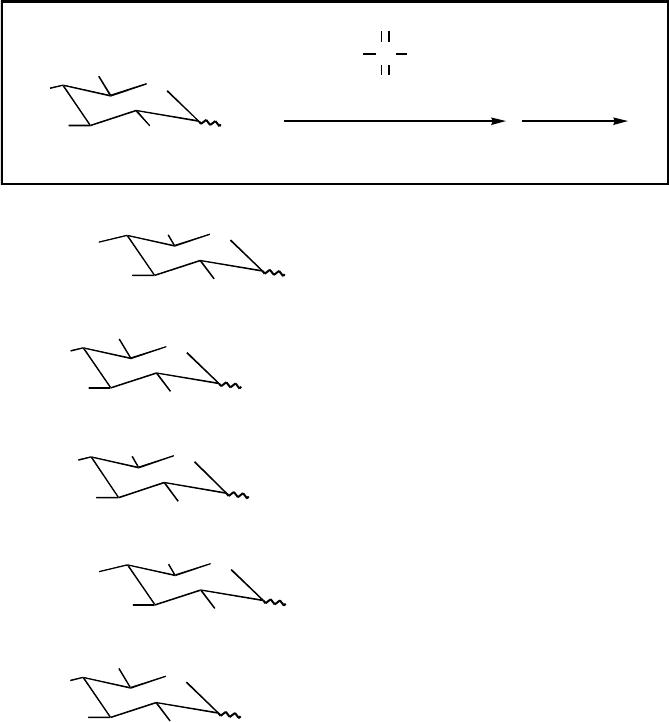
Page 11
12.
What would result from the reactions shown below?
O
OH
OH
HO
HO
HOH2C
( and )
(large excess)
H3CO S
O
O
OCH3
NaOH
H3O+?
A)
O
OCH3
OCH3
H3CO
H3CO
H3COCH 2
B)
O
OCH3
OH
HO
HO
HOH2C
C)
O
OH
OH
HO
HO
H3COCH2
D)
O
OH
OCH3
H3CO
H3CO
H3COCH 2
E)
O
OH
OCH3
HO
HO
HOH2C
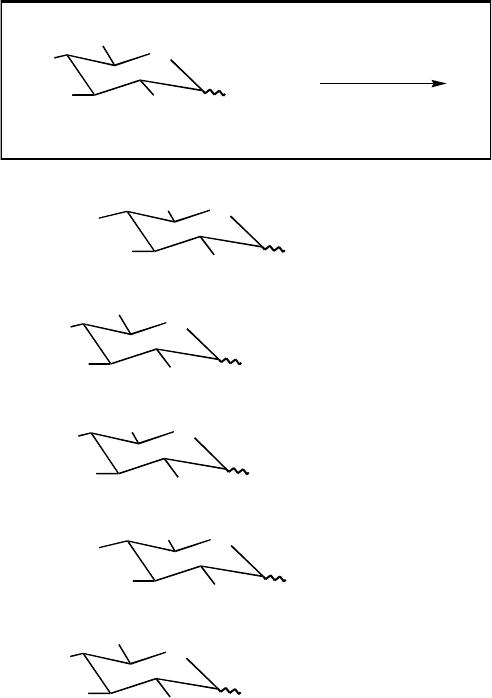
Page 12
13.
What would result from the reaction shown below?
O
OH
OH
HO
HO
HOH2C
( and )
?
CH3OH
H+
A)
O
OCH3
OCH3
H3CO
H3CO
H3COCH 2
B)
O
OCH3
OH
HO
HO
HOH2C
C)
O
OH
OH
HO
HO
H3COCH2
D)
O
OH
OCH3
H3CO
H3CO
H3COCH 2
E)
O
OH
OCH3
HO
HO
HOH2C
14.
Which disaccharide possesses a 1,1′ linkage?
A)
Cellobiose
B)
Maltose
C)
Lactose
D)
Sucrose
E)
Glucose
15.
The main difference between the two forms of starch, amylose and amylopectin, is
what?
A)
Amylose is more soluble in water than is amylopectin.
B)
Amylose is a linear polymer while amylopectin is branched.
C)
Amylopectin has a lower molecular weight than amylose.
D)
Amylose is metabolized in mammals, while amylopectin is not.
E)
Amylopectin is metabolized in mammals, while amylose is not.
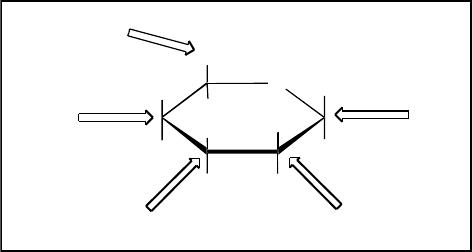
Page 13
16.
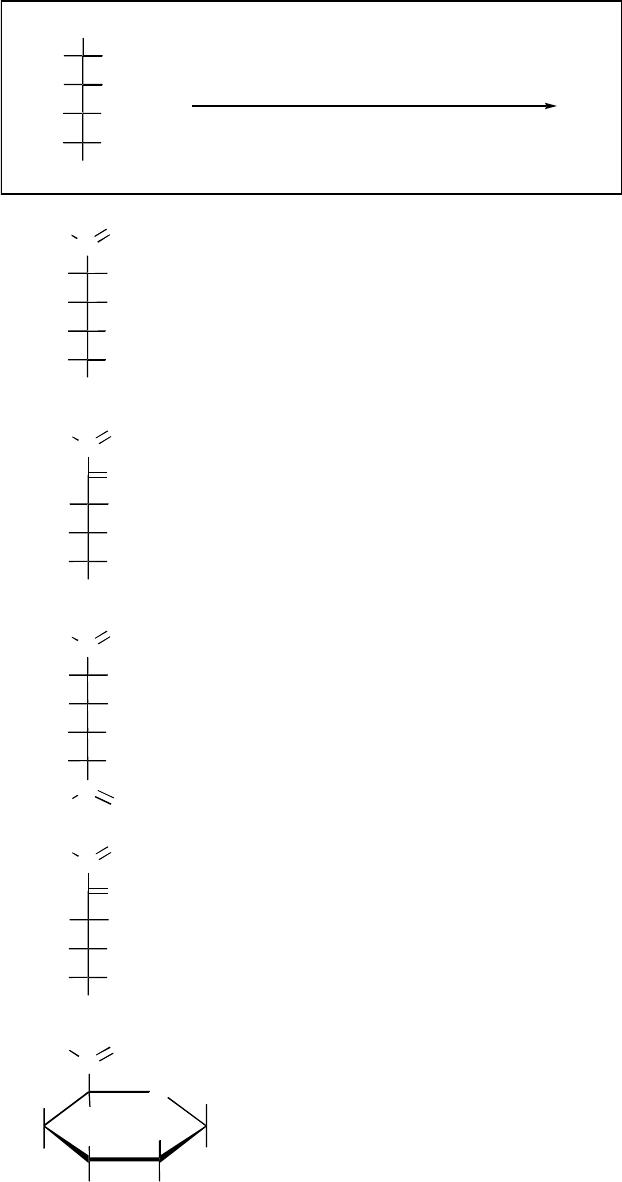
Which of the following is referred to as the anomeric carbon?
(A)
(B)
(C) (D)
HO
OH
OH
H
OH
HH
OH
CH2OH
H(E)
A)
A
B)
B
C)
C
D)
D
E)
E
Page 14
17.
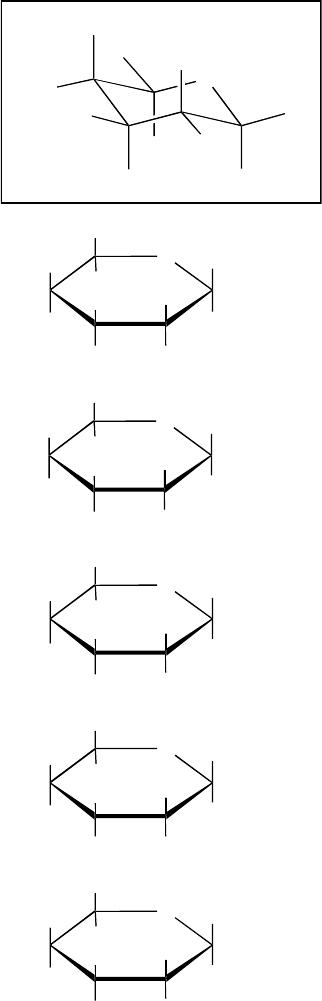
Predict the major product of the following reaction.
?
HO
CHO
H
HHO
OHH
OHH
CH2OH
CH3CH2OH
C6H5NHNH2 (>3 equivalents)
Heat
A)
HO
C
H
HHO
OHH
OHH
CH2OH
NNHC6H5
H
B)
C
O
HHO
OHH
OHH
CH2OH
NNHC6H5
H
C)
HO
C
H
HHO
OHH
OHH
C
NNHC6H5
H
HNNHC6H5
D)
C
NNHC6H5
HHO
OHH
OHH
CH2OH
NNHC6H5
H
E)
HO
OH
OH
H
OH
HH
OH
C
H
NNHC6H5
H
Page 15
18.
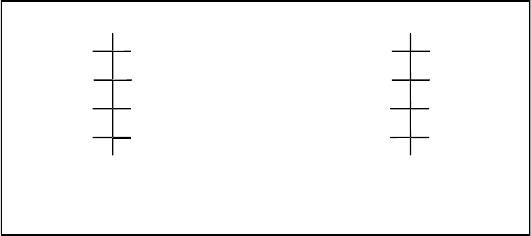
The chair conformation for -D-Glucopyranose (shown below) may also be
correctly represented by which of the following Haworth projections?
O
H
HO
H
HO
OH
H
H
OH
H
CH2OH
A)
HO
OH
OH
H
OH
HH
OH
CH2OH
H
B)
HO
OH
H
OH
H
OHH
OH
CH2OH
H
C)
OH O
H
H
OH
H
OHH
OH
CH2OH
H
D)
HO
OH
H
OH
H
OHOH
H
CH2OH
H
E)
HO
OH
H
OH
H
OHH
OH
OH
H
Page 16
19.
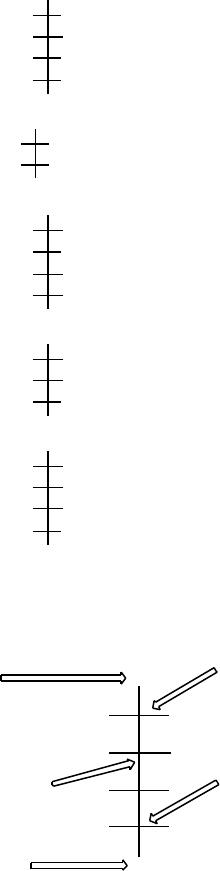
D–(+)-Glucose and D–(+)-Mannose have the same molecular formula
(C6H12O6). Which of the following describes the relationship between these two
sugars?
H
CHO
OH
HHO
OHH
OHH
CH2OH
HO
CHO
H
HHO
OHH
OHH
CH2OH
D–(+)-Glucose D-(+)-Mannose
A)
Constitutional isomers
B)
Diastereomers
C)
Enantiomers
D)
Anomers
E)
no correct answer
20.
The term “epimer” is best defined as:
A)
Molecules which are enantiomers of each other
B)
Meso compounds
C)
Any pair of diastereomers
D)
Two diastereomers that differ in configuration at only one stereocenter
E)
Racemic mixture
Page 17
21.
Which of the following represents an L sugar?
A)
CHO
H OH
HO H
H OH
H OH
CH2OH
B)
CHO
H OH
CH2OH
H OH
C)
CHO
HO H
H OH
HO H
HO H
CH2OH
D)
CHO
HO H
HO H
CH2OH
H OH
E)
CHO
HO H
HO H
HO H
H OH
CH2OH
22.
Which of the following arrows correctly points to the anomeric carbon?
CHO
H OH
HO H
H OH
H OH
CH2OH
(A) (B)
(C) (D)
(E)
A)
Arrow A
B)
Arrow B
C)
Arrow C
D)
Arrow D
E)
Arrow E
Page 18
23.
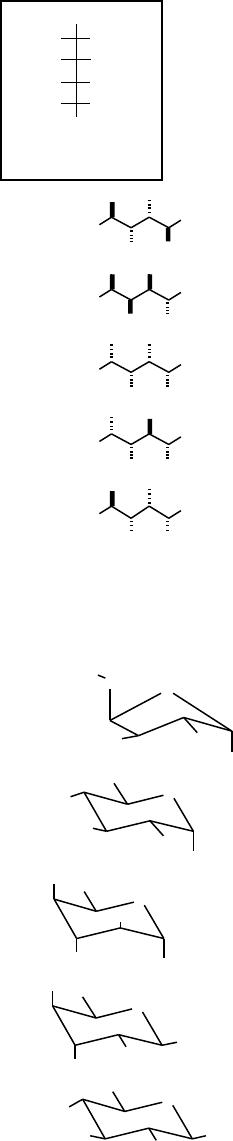
Which of the following “dash–wedge” (zig-zag) structures correctly depicts
D-Glucose?
CHO
H OH
HO H
H OH
H OH
CH2OH
D–Glucose
A)
HOH2CCHO
OH
OH
OH
OH
B)
HOH2CCHO
OH
OH
OH
OH
C)
HOH2CCHO
OH
OH
OH
OH
D)
HOH2CCHO
OH
OH
OH
OH
E)
HOH2CCHO
OH
OH
OH
OH
24.
Which of the following conformations correctly depicts the structure of:
-D–(+)-Glucopyranose?
A)
O
OH
OH
HO
CHOH
HOH2C
B)
O
OH
OH
HO
HO
HOH2C
C)
O
OH
CH2OH
OH
OH
OH
D)
O
CH2OH
OH
OH
OH
OH
E)
O
CH2OH
OH
OH
HO
HO
Page 19
25.
Which polysaccharide has -1,4 glycosidic bonds?
A)
Cellulose
B)
Glycogen
C)
Amylose
D)
Amylpectin
E)
B, C, and D
26.
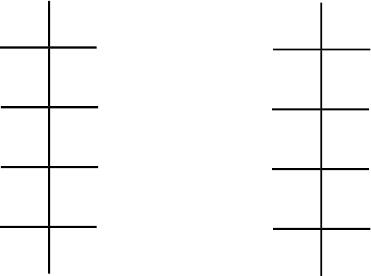
The carbohydrate structures below are related as
CHO
OHH
HHO
HHO
OHH
CH2OH
CHO
HO H
H OH
H OH
HO H
CH2OH
A)
Anomers
B)
Enantiomers
C)
Diastereomers
D)
D and L stereoisomers
E)
both B and D
Page 20
27.
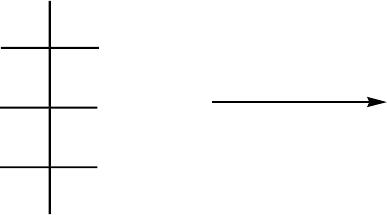
Periodic acid degradation of the following carbohydrate will yield (quantitatively) what
products?
CHO
HO H
H OH
H OH
CH2OH
4 HIO4
A)
4 HCO2H + 1 CO2
B)
3 HCO2H + 1 HCHO + 1 CO2
C)
4 HCO2H + 1 HCHO
D)
5 HCHO
E)
4 HCHO + 1 CO2
Page 21
Answer Key