Page 1
1.
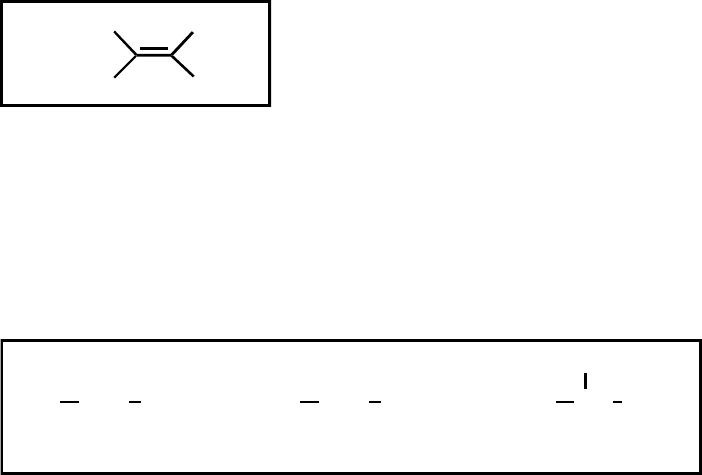
Which would be the best name of the following compound?
CO2H
Br
H3C
(CH3)2CH
A)
2-bromo-3-isopropylbutenoic acid
B)
(E)-2-bromo-3,4-dimethyl-2-pentenoic acid
C)
(E)-2-bromo-3-methyl-2-hexenoic acid
D)
(E)-2-bromo-3-methyl-2-pentenoic acid
E)
(Z)-2-bromo-3-methyl-2-pentenoic acid
2.
Rank the following in decreasing order of acidity (most acidic on left):
H3CCH2CO2H H3CCH CO2H
Br
H3CCH2CH 2OH
ZYX
A)
X > Z > Y
B)
Y > X > Z
C)
Z > X > Y
D)
Z > Y > X
E)
X > Y > Z
Page 2
3.
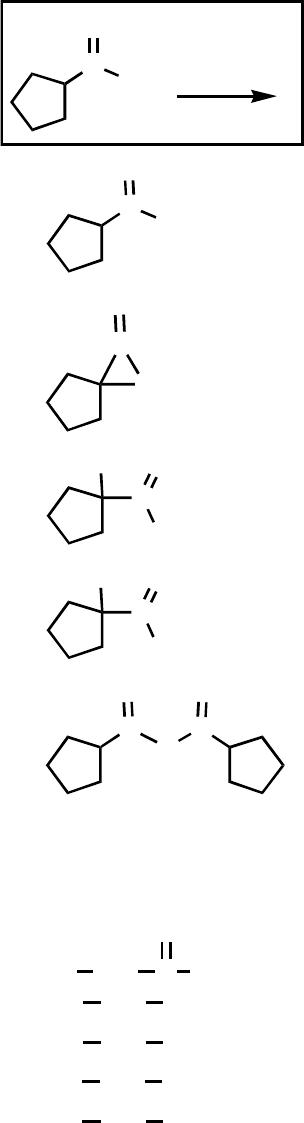
What would be the major organic product of the following reaction?
C
O
OH ?
heat
SOCl2
A)
C
O
Cl
B)
C
O
O
C)
C
O
OH
Cl
D)
C
O
Cl
Cl
E)
C
O
OC
O
4.
The reaction of propanoic acid with lithium aluminum hydride, followed by water,
would result in what product?
A)
H3CCH2C
O
H
B)
H3CCH2CO2Li
C)
H3CCH2CH2Li
D)
H3CCH2CH2OH
E)
H3CCH2CH3
Page 3
5.
What would the common name of the following di-acid be?
CO2HHO2CCH2CH2
A)
Malonic acid
B)
Oxalic acid
C)
Succinic acid
D)
Adipic acid
E)
Glutaric acid
6.
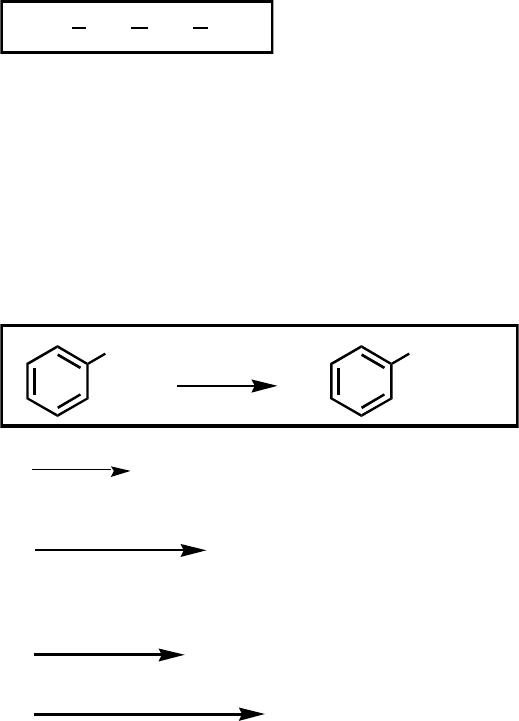
Which of the following sets of reagents would convert benzyl bromide to
phenylethanoic acid?
CH2Br CH2CO2H
?
A)
H2CrO4
H2O
B)
1. Mg, ether
2. CO2
3. H3O+
C)
HCO2– K+
D)
1. NaCN
2. H+, H2O, heat
E)
both B and D
7.
The higher acidity of carboxylic acids compared to other functional groups is best
explained by
A)
hydrogen bonding.
B)
electronegativity of oxygen.
C)
water solubility.
D)
resonance.
E)
electronegativity of carbon.
Page 4
8.
What would be the name of the following?
HO2CCH2CO2H
A)
Malonic acid
B)
Propanoic acid
C)
Oxalic acid
D)
Succinic acid
E)
Butanedioic acid
9.
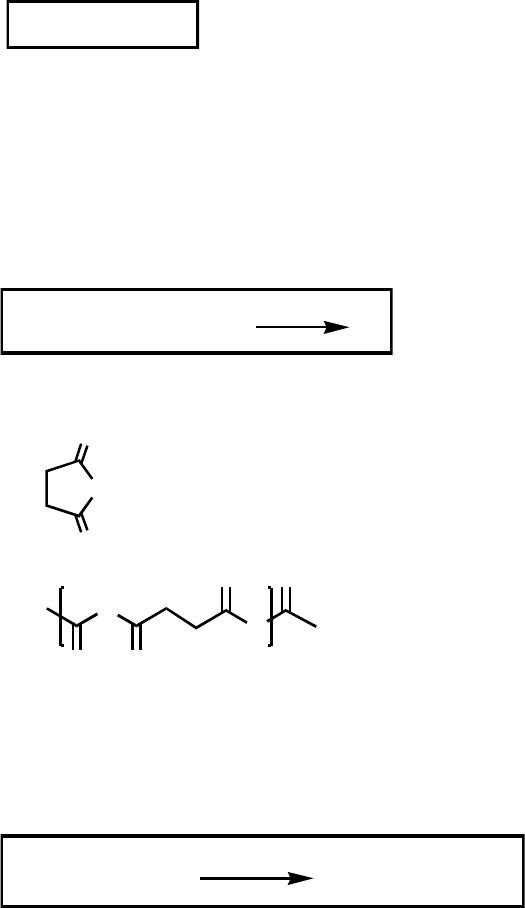
What would be the organic product of the following reaction?
?
heat
HO2CCH2CH2CO2H
A)
CH3CH2CO2H + CO2
B)
2 CH3CO2H
C)
O
O
O
D)
O
O O
O
OO
(a polymeric anhydride)
n
E)
None of these are formed.
10.
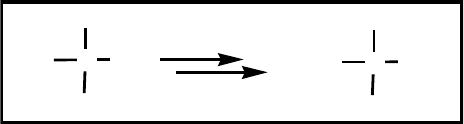
What reagent(s) would accomplish the following conversion?
CH3CH2CO2H CH
3CHBrCO2H
?
A)
Br2
B)
PBr3
C)
Br2/light
D)
Br2 + cat. PBr3
E)
PBr3 + cat. Br2
Page 5
11.
Which of the following sets of reagents would accomplish the chemical transformation
shown?
CH3
C
CH3
H3CBr
CH3
C
CH3
H3CCO2H
?
A)
1. NaCN
2. H3O+, heat
B)
1. M g, ether
2. CO2
3. H3O+
C)
1. KOH, heat
2. O3
3. H2O2, H+
D)
1. HCO2H, H+
2. LiAlH4
3. H3O+
E)
1. HCN, NaCN
2. KOH, H
2O, heat
3. H3O+

Page 6
12.
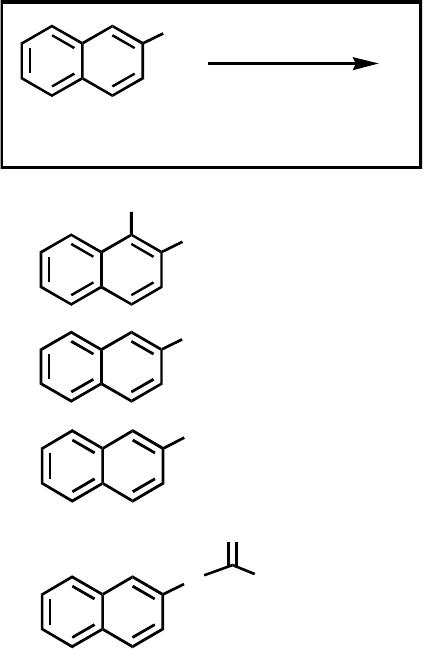
Several 2-arylpropanoic acids are used as analgesics (painkillers). Three of these
[Ibuprofen (= Advil), Naproxen (= Aleve) and Ketoprofen (= Orudis KT)] are currently
available in over-the-counter form. Which of the following sets of reagents would
accomplish conversion of an ethyl aromatic to a 2-arylpropanoic acid?
CH3CH CO 2H
Ar
ArCH2CH 3
?(Ar = aryl group)
A)
1. Br2, light
2. NaCN
3. H3O+, ?
B)
1. Br2, light
2. M g, ether
3. CO2
4. H3O+
C)
1. Br2, light
2. KOH
3. O3
3. H2O2, H+
D)
1. Br2, light
2. CH3CO2– K+
3. H3O+
E)
both A and B
Page 7
13.
What would be the product of the following reaction?
Br
?
1. Mg, ether
2. CO2
3. H3O+
A)
OH
CO2H
B)
OH
C)
CO2H
D)
O
O
CH3
E)
none of these
14.
Which would be the strongest acid of the following?
A)
BrCH2CH2CO2H
B)
ClCH2CH2CO2H
C)
CH3CHClCO2H
D)
CF3CO2H
E)
CH3CHClCOCl
15.
What best accounts for the unusually high boiling points of carboxylic acids relative to
other organic compounds of similar molecular weight?
A)
The relatively large concentration of oxygen atoms.
B)
The presence of intramolecular hydrogen bonding.
C)
Carboxylic acids are mostly ionized and thus are mostly ionic compounds.
D)
The presence of intermolecular hydrogen bonding.
E)
Carboxylic acids do not have unusually high boiling points.

Page 8
16.
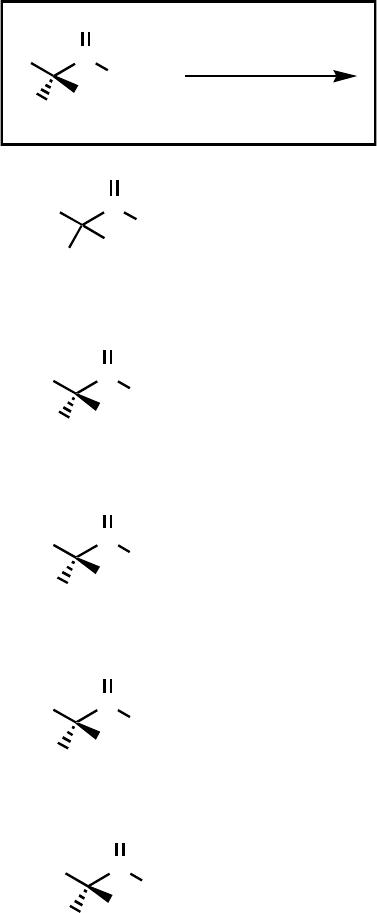
What reagent is needed to complete the reaction shown?
H3C
CH
H3C
CO2HH3C
CH
H3C
COCl
?
A)
CH3Cl
B)
PCl3
C)
Cl2
D)
LiAlH4
E)
none of these
Page 9
17.
What major product would result from the following reaction?
COH
O
R
CH3
H
Cl2/heat
catalytic PCl
3
(S)
A)
COH
O
R
CH3
Cl
racemic
B)
CCl
O
R
CH3
H
(S)
C)
COH
O
R
CH3
Cl
(R)
D)
CCl
O
R
CH3
Cl
(R)
E)
COH
O
R
Cl
H3C
(S)
Page 10
18.
What reagent(s) is (are) needed to complete the reaction shown?
CH3CH2CO2H
1. CO2
2. H3O+
?
A)
CH3CH2Br
B)
KMnO4/ –OH
C)
CH3CH2MgBr
D)
CH3Li
E)
CH3COCl
19.
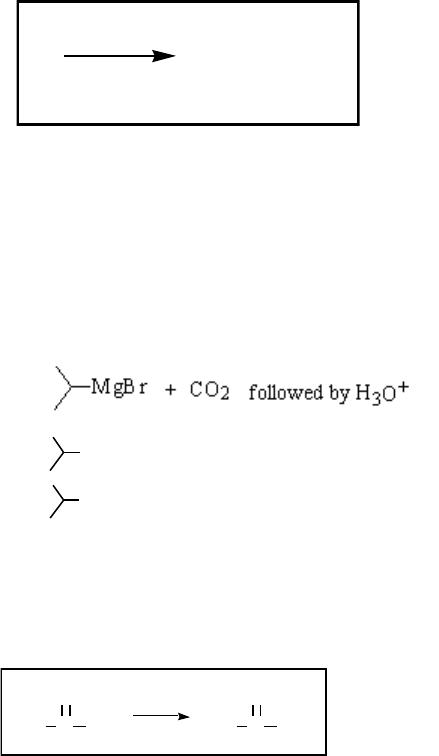
Which, if any, of the reactions below would produce 2-methylpropanoic acid?
A)
B)
Br + KCN followed by H
3O+
and heat
C)
CH2OH + H2CrO4
D)
All of these reactions would produce the desired product.
E)
None of these reactions would produce the desired product.
20.
What reagent(s) would accomplish the following?
R C
O
OH R C
O
Cl
A)
Cl2, light
B)
Cl2, H2O
C)
SOCl2
D)
MgCl2
E)
aqueous HCl
Page 11
21.
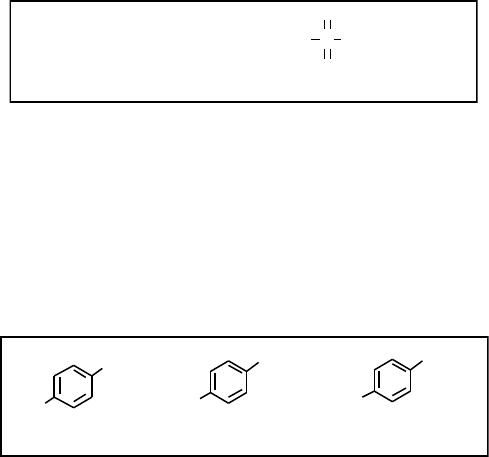
Rank the following in order of decreasing acidity (more acidic > less acidic):
ROH RCO2H RNH2R S
O
O
OH R3C-H
III III IV V
A)
II > III > I > IV > V
B)
IV > II > I > III > V
C)
II > IV > I > III > V
D)
V > III > I > II > IV
E)
II > IV > I > V > III
22.
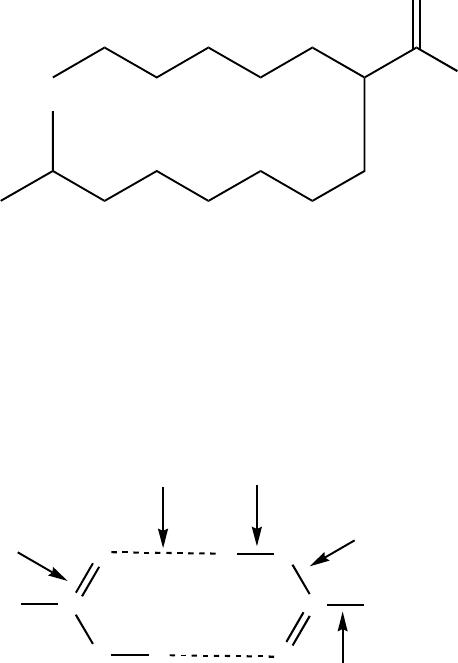
Rank the following benzoic acids in order of decreasing acidity:
CO2H
H
CO2H
O2N
CO2H
CH3O
III III
A)
III > I > II
B)
I > III > II
C)
II > I > III
D)
I > II > III
E)
III > II > I
23.
Carboxylic acids have unusually high boiling points because:
A)
they are significantly heavier than organic molecules with the same molecular
weight.
B)
they repel each other in the gas phase.
C)
they strongly attract each other in the liquid phase.
D)
they are usually solids, and solids are not volatile.
E)
they exist mostly as ions (RCO2– + H+) and ionic materials are not volatile.
Page 12
24.
What is the IUPAC name of the following compound?
O
OH
A)
2-hexyl-9-methyldecanoic acid
B)
2-isononyloctanoic acid
C)
1-methyl-9-carboxypentadecane
D)
2-hexyldecanoic acid
E)
14-methyl-7-carboxypentadecane
25.
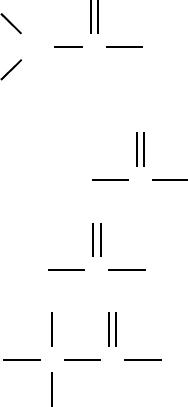
In the carboxylic acid dimer (below), which bond(s) has a strength of about 6-8
kcal/mol?
R C
O
O
H
RC
O
O
H
a
bc
d
e
A)
Bond a
B)
Bond b
C)
Bond c
D)
Bond d
E)
Bond e
Page 13
26.
Which compound best fits the following spectroscopic data?
1H NMR = 1.00 (t, J=7.4 Hz, 3H); 1.65 (sextet, J=7.5 Hz, 2H); 2.31 (t, J=7.4 Hz, 2H);
and 11.68 (s, 1H) ppm. 13C NMR = 13.4, 18.5, 36.3, 179.6 ppm.
A)
CH C
O
OH
H3C
H3C
B)
CH3CH2CH2C
O
OH
C)
CH3CH2C
O
CH2–OH
D)
C C
O
H
OH
CH3
H3C
E)
none of the above

Page 14
27.
Which of the following intermediates are not involved in the acid catalyzed
esterification reaction of a carboxylic acid?
A)
R C
O
OH
H
B)
R C
OH
OH
OCH3
H
C)
R C
OH
OH
OCH3
H
D)
R C
O
OCH3
H
E)
All of the above are intermediates.
Page 15
Answer Key