Introductory Chemistry: Atoms First, 5e (Russo/Silver)
Chapter 18 Synthetic and Biological Polymers
18.1 Multiple Choice Questions
1) The monomer used in making PVC is ________.
A) chloroethene
B) chloroethane
C) chloroethyne
D) chlorbenzene
2) Which of the following is made out of PVC?
A) tiles
B) raincoats
C) plumbing pipes that carry sewage
D) all of the above
3) The monomer used to make Teflon is ________.
A) tetrafluoroethane
B) tetrafluoroethene
C) tetrafluorooctane
D) tetrafluorobenzene
4) Which is/are the starting reagent(s) required for the synthesis of Nylon 66?
A) hexanedioic acid chloride
B) 1,6-diaminohexane
C) vinyl chloride
D) both A and B
5) The bond found between the monomers in Nylon-66 is a(n) ________ bond.
A) amide
B) ester
C) ketone
D) alcohol
6) Which of the following is a polysaccharide?
A) sucrose
B) starch
C) glucose
D) DNA
7) What is the repeating monomer found in cellulose?
A) glucose
B) fructose
C) sucrose
D) amylose
8) What two functional groups are found at the ends of any protein structure?
A) alcohol and amine
B) amine and carboxylic acid
C) alcohol and carboxylic acid
D) amine and aldehyde
9) Which of the following amino acids has more than one amine group?
A) lysine
B) alanine
C) glycine
D) glutamic acid
10) The number of amino acids that are used to build all proteins is ________.
A) 4
B) 10
C) 20
D) 30
11) The name of the bond that combines two amino acids together is called ________.
A) peptide
B) glycoside
C) acetal
D) ketal
12) The number of amino acids that a human body cannot synthesize is ________.
A) 5
B) 10
C) 15
D) 20
13) The essential amino acids are ________.
A) the amino acids that make all proteins known on earth
B) the amino acids that the body can synthesize
C) the amino acids that the body cannot synthesize
D) the amino acids that get metabolized
14) The term used to describe a substance with a medium number of amino acids is ________.
A) peptide
B) polypeptide
C) protein
D) polymer
15) In sickle-cell anemia patients, ________ type(s) of amino acid has been replaced by another
amino acid.
A) 1
B) 5
C) 10
D) all
16) Which of the following is not an amino acid?
A) threonine
B) tyrosine
C) thymine
D) lysine
17) Which of the following is not an amine base present in DNA?
A) thymine
B) alanine
C) cytosine
D) guanine
18) DNA molecules, as found in human cells, are best described as ________.
A) a large, single-stranded molecule made of proteins
B) a large, double-stranded molecule that contains phosphate groups, carbohydrate units, and
bases from amino acids
C) a polysaccharide
D) a large, double-stranded molecule made of amino acids
19) Which of the following statements about a DNA molecule is incorrect?
A) All DNA molecules are made from a repeating unit consisting of a phosphate group, a sugar
group, and an amine base.
B) Complementary base pairs in DNA molecules are held together by hydrogen bonds.
C) Normal DNA is double-stranded and helical in shape.
D) Complementary bases in DNA molecules are held together by covalent bonds.
20) Which of the following may be classified as a natural biopolymer?
A) starch
B) protein
C) DNA
D) all of the above
21) Which of the following does not appear in a DNA strand?
A) deoxyribose sugar
B) phosphate
C) amino acids
D) amine base
22) Which of the following nucleic acids is not found in DNA?
A) guanine
B) uracil
C) cytosine
D) adenine
23) What is the biomolecule found in the shell of a virus?
A) carbohydrate
B) DNA
C) fatty acid
D) protein
24) What is the complementary DNA strand of ATCGATT?
A) ATCGATT
B) TTAGCTA
C) CGATCGG
D) TAGCTAA
18.2 True/False Questions
1) Polymers are very large molecules.
2) Teflon is synthesized with a monomer containing carbons and chlorines.
3) Nylon contains only one type of monomer.
4) Sucrose is the smallest building block for carbohydrates.
5) All amino acids are made of only carbon, hydrogen, and oxygen atoms.
6) Only 10 different amino acids are needed to build every type of protein molecule found in
humans.
7) The human body is able to synthesize as much of every type of amino acid as it needs.
8) Lysine is considered an essential amino acid.
9) Amino acids are the smallest building blocks for proteins.
10) DNA molecules contain codes from which proteins and other materials can eventually be
synthesized.
11) DNA molecules contain four specific base pair codes, which can be assigned to the
individual amino acids.
12) Through the “genetic engineering” of human DNA, it is hoped that someday a wide variety
of diseases can be prevented or cured.
13) The complete human genetic “blueprint” (the human genome) was determined many years
ago, and is really not all that complicated.
14) Viruses are not living organisms.
15) Human DNA molecules consist of just a single strand, just like protein molecules.
16) It is possible to splice specific pieces of DNA between two different types of living
organisms.
18.3 Short Answer Questions
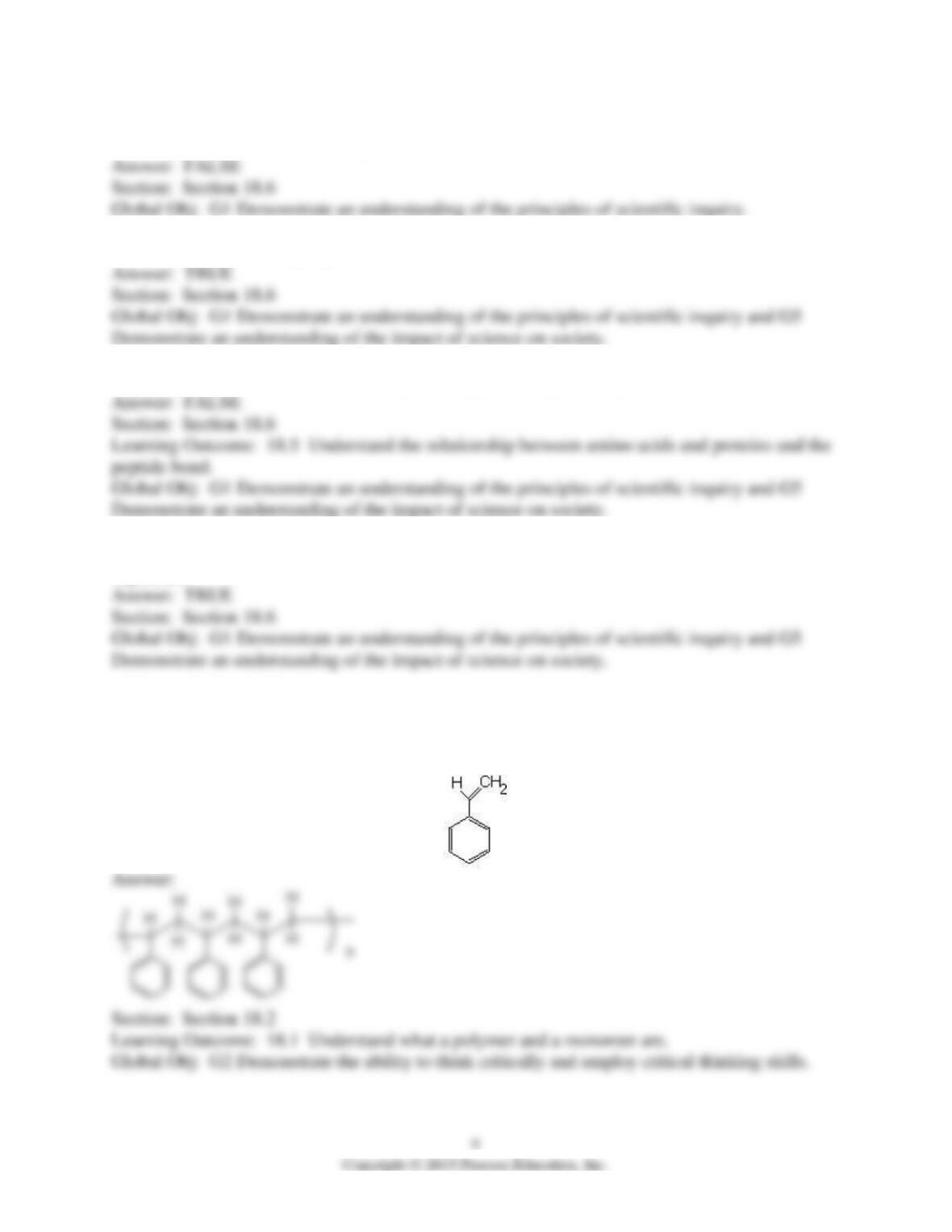
1) Connect three monomeric styrene units to make a short segment of the polymer polystyrene.
The structure of styrene is below.
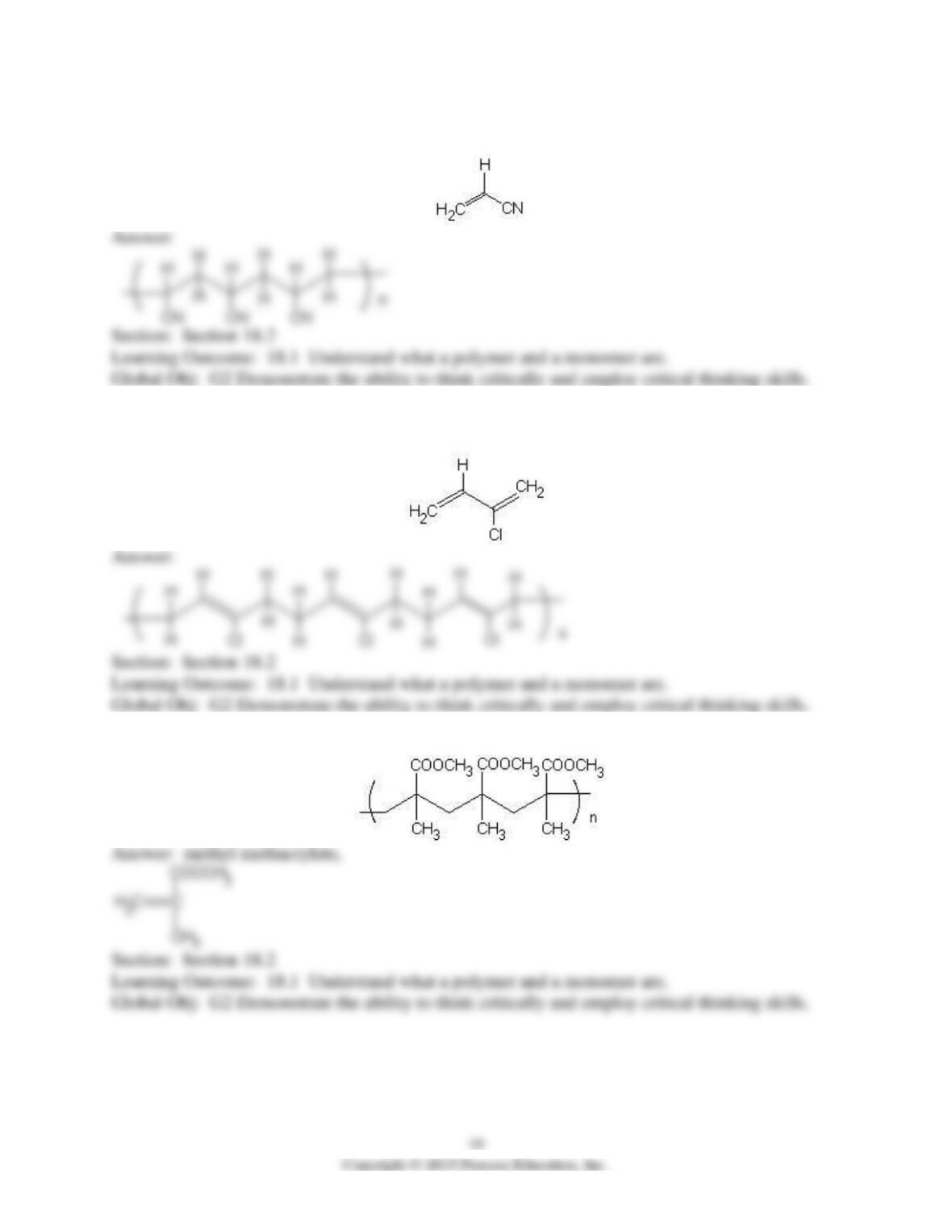
2) Connect three monomeric acrylonitrile units to make a short segment of the polymer
polyacrylonitrile. The structure of acrylonitrile is below.
3) Connect three monomeric chloroprene units to make a short segment of the polymer
neoprene, polychloroprene. The structure of chloroprene is below.
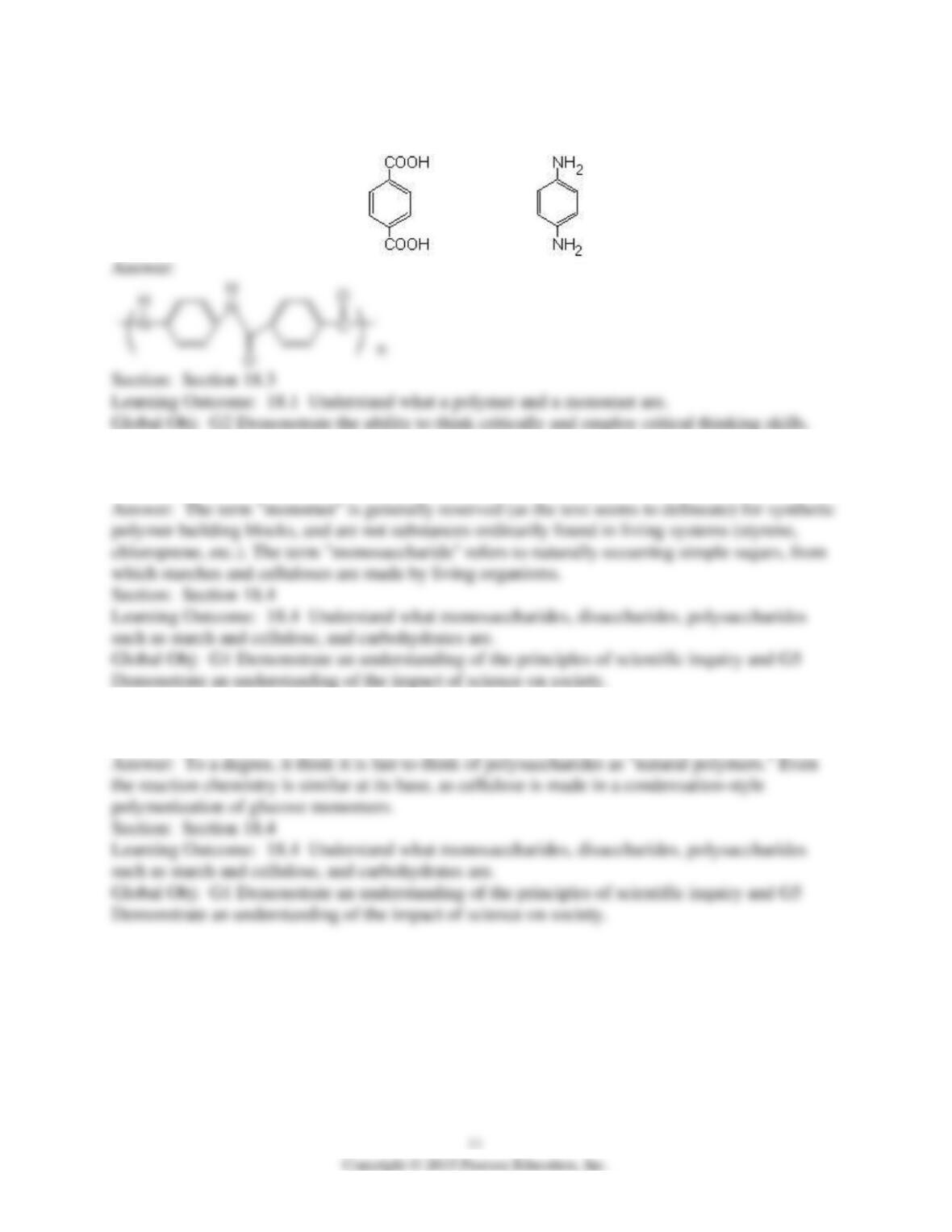
4) Identify the monomeric unit in the following polymer structure:
5) Draw the repeating, monomeric unit of Kevlar, a polyamide made from terephthalic acid and
1,4-diaminobenzene. These compounds are pictured below:
6) Contrast the terms “monomer” and “monosaccharide.” What types of materials are usually
constructed from monomers? What types of materials are usually made from monosaccharides?
7) Think for a moment about the terms “polymer” and “polysaccharide.” Is it right to refer to
polysaccharides as “nature’s polymers”? Why or why not?
8) Cellulose and starch are both polysaccharides of glucose. Explain why humans can consume
and digest starch but not cellulose.
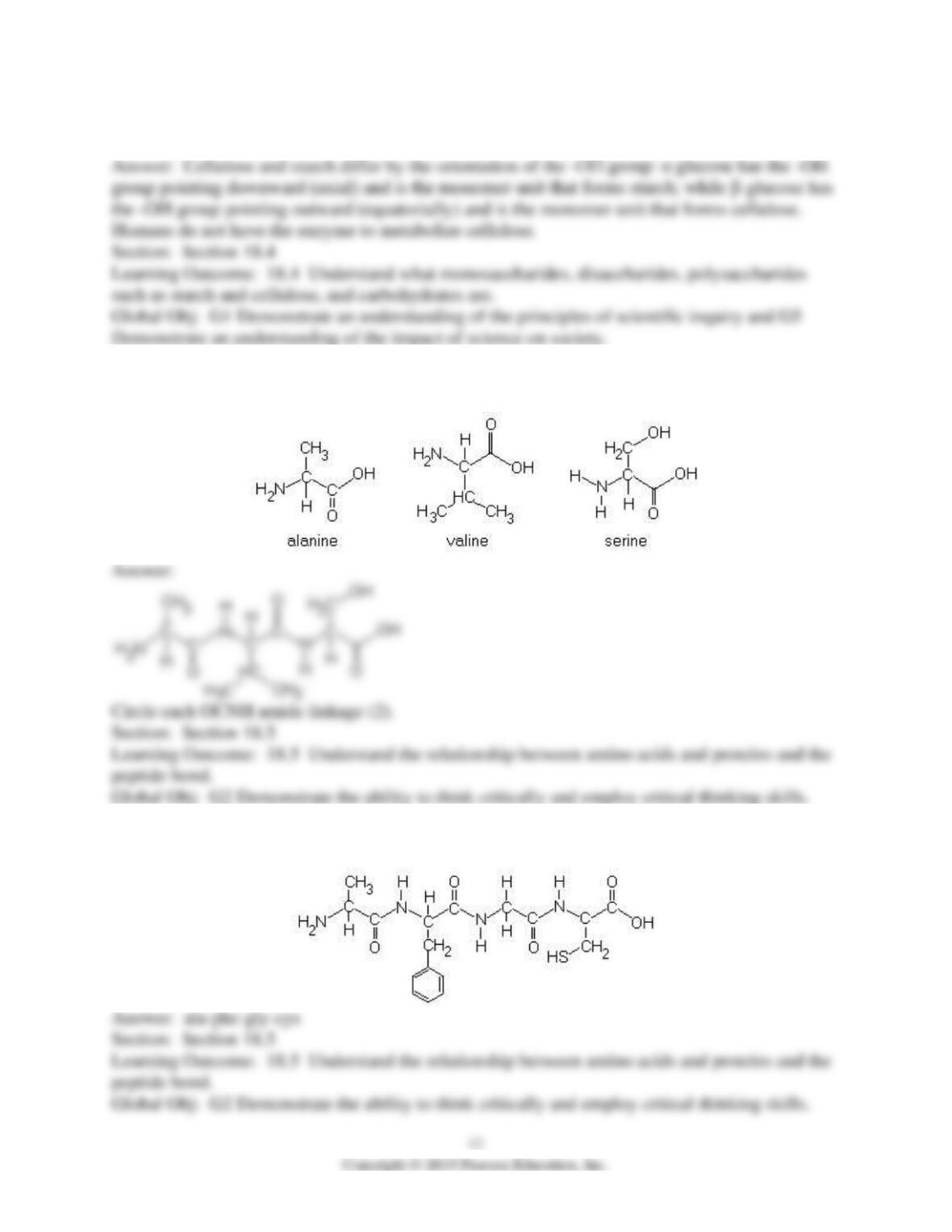
9) Construct a polypeptide consisting of alanine, valine, and serine. Circle the peptide bonds. The
structures of the amino acids (prior to linkage) are shown below:
10) Write the three-letter, abbreviated amino acid sequence of this polypeptide (review the figure
in the text that shows the structures of the various amino acid residues while doing this exercise):
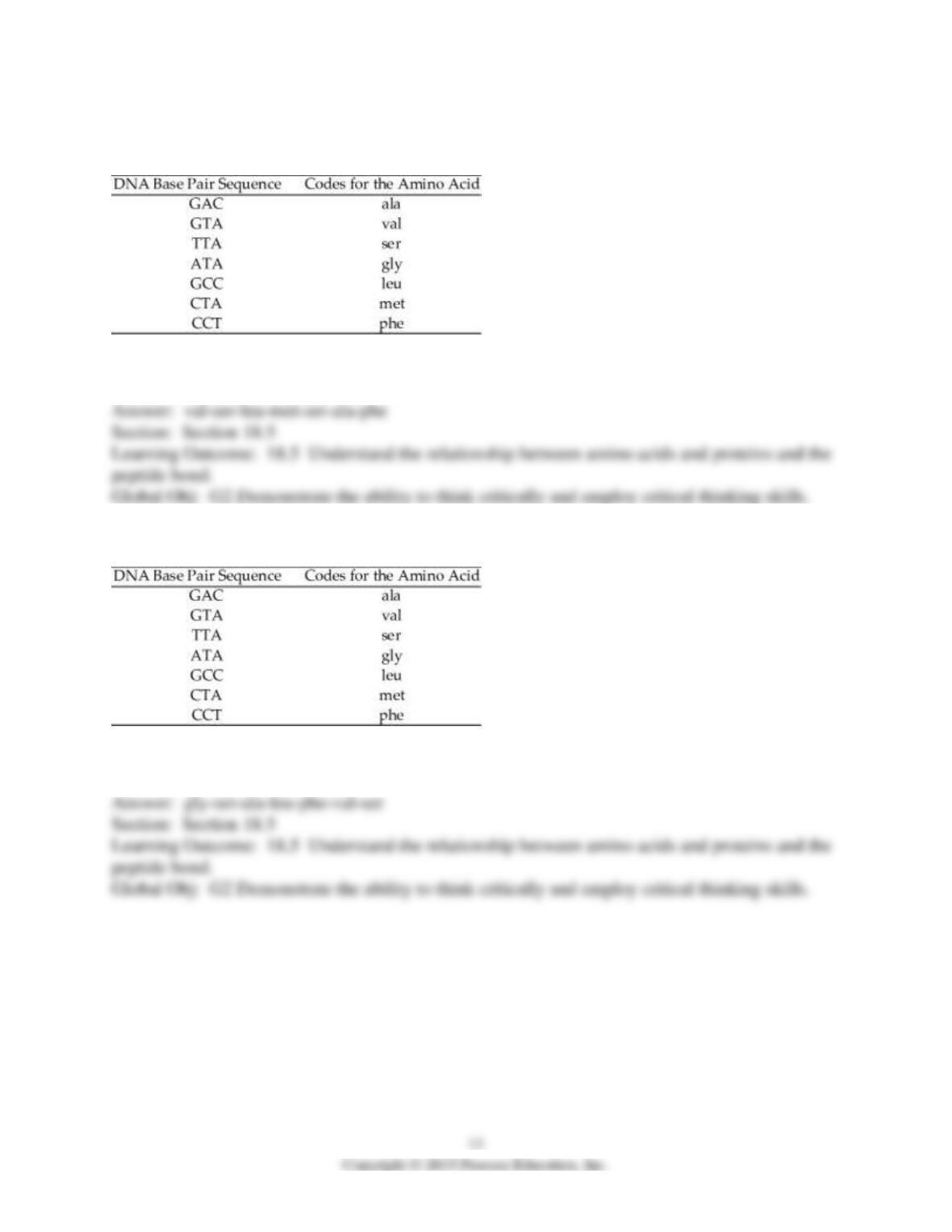
11) Assume the following three-base code system is true:
Construct the amino acid sequence coded by the following piece of a DNA molecule:
G T A T T A G C C C T A T T A G A C C C T
12) Assume the following three-base code system is true:
Construct the amino acid sequence coded by the following piece of a DNA molecule:
A T A T T A G A C G C C C C T G T A T T A
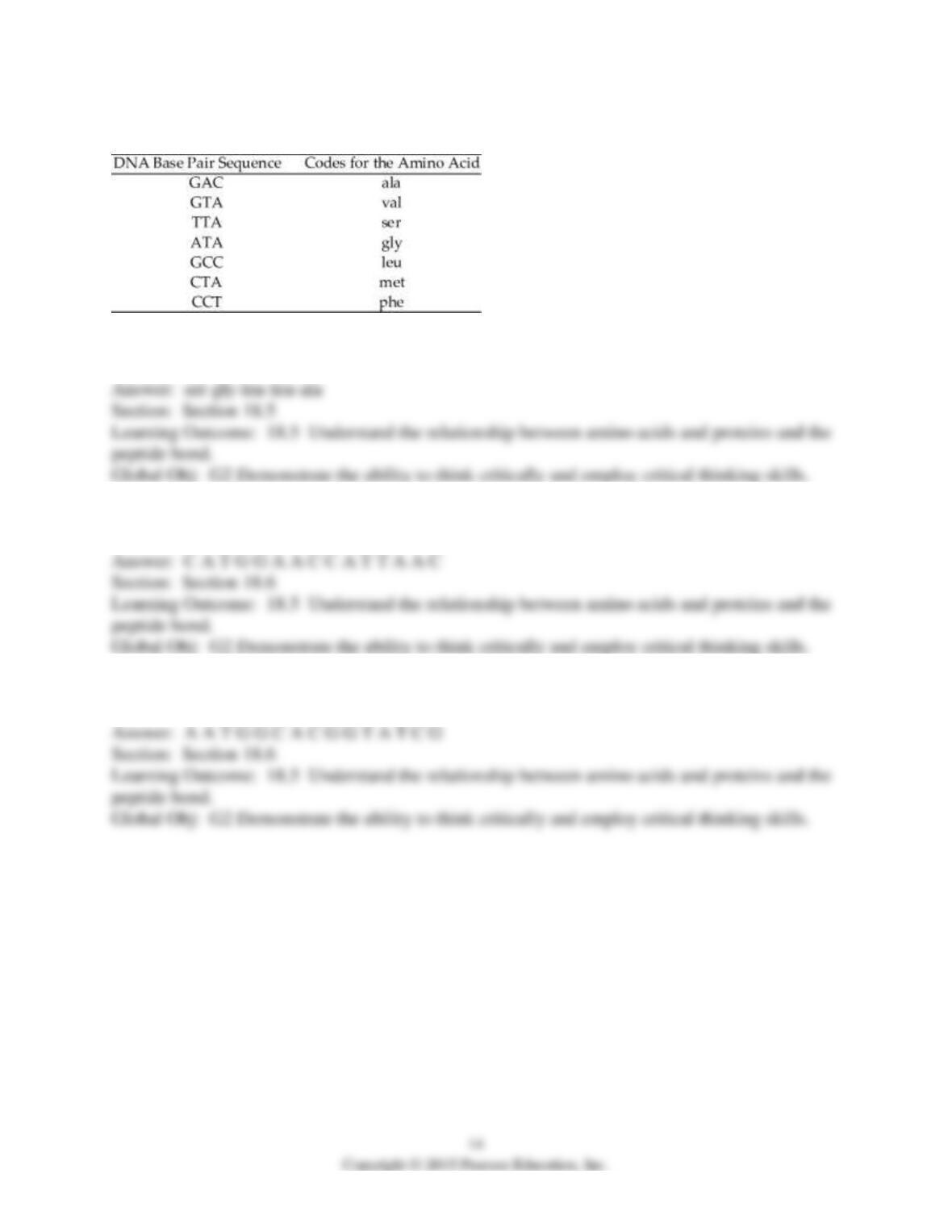
13) Assume the following three-base code system is true:
Construct the amino acid sequence coded by the following piece of a DNA molecule:
T T A A T A G C C G C C G A C
14) Construct the complementary strand of this piece of a DNA molecule:
G T A C C T T G G T A A T T G
15) Construct the complementary strand of this piece of a DNA molecule:
T T A C C G T G C C A T A G C

18.4 Matching Questions
Match the plastic in the left column with the monomer in the right column.
A) hexanedioic acid and 1,6-diaminohexane
B) chloroethene
C) tetrafluoroethene
D) propylene oxide
E) ethene
1) PVC
Section: Section 18.2
Learning Outcome: 18.1 Understand what a polymer and a monomer are.
Global Obj: G2 Demonstrate the ability to think critically and employ critical thinking skills.
2) Polyethylene
Section: Section 18.2
Learning Outcome: 18.1 Understand what a polymer and a monomer are.
Global Obj: G2 Demonstrate the ability to think critically and employ critical thinking skills.
3) Teflon
Section: Section 18.2
Learning Outcome: 18.1 Understand what a polymer and a monomer are.
Global Obj: G2 Demonstrate the ability to think critically and employ critical thinking skills.
4) polypropylene oxide
Section: Section 18.2
Learning Outcome: 18.1 Understand what a polymer and a monomer are.
Global Obj: G2 Demonstrate the ability to think critically and employ critical thinking skills.
5) nylon
Section: Section 18.3
Learning Outcome: 18.3 Know the monomers used to make nylon and how they polymerize via
formation of an amide bond.
Global Obj: G2 Demonstrate the ability to think critically and employ critical thinking skills.