Page 1
1.
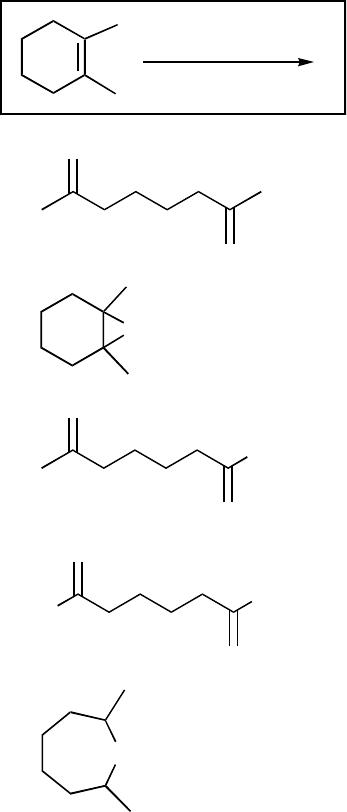
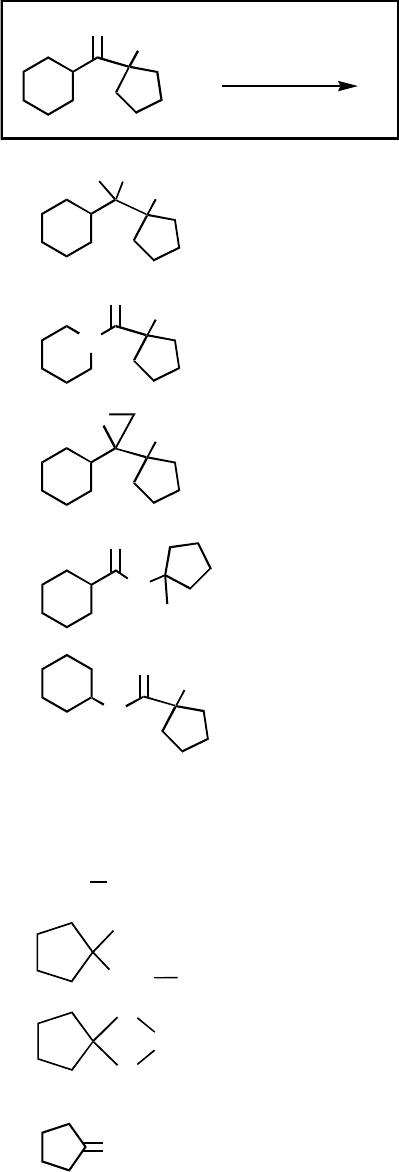
What would be the major product of the following reaction sequence?
?
1. O3
2. (CH3)2S
A)
O
O
B)
O
C)
H
O
O
D)
HH
O
O
E)
O
Page 2
2.
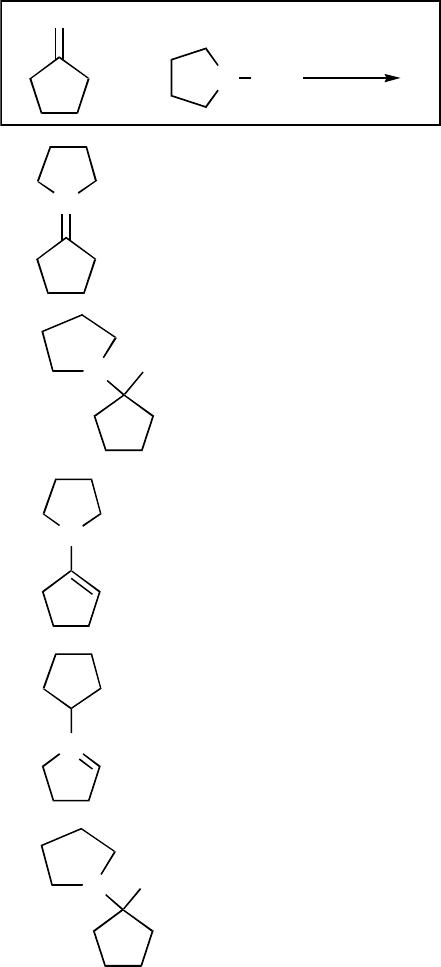
What would be the expected product of the following reaction sequence?
O
N H ?
H+
– H2O
+
A)
N+
B)
NOH
C)
N
D)
N
E)
ONH2
Page 3
3.
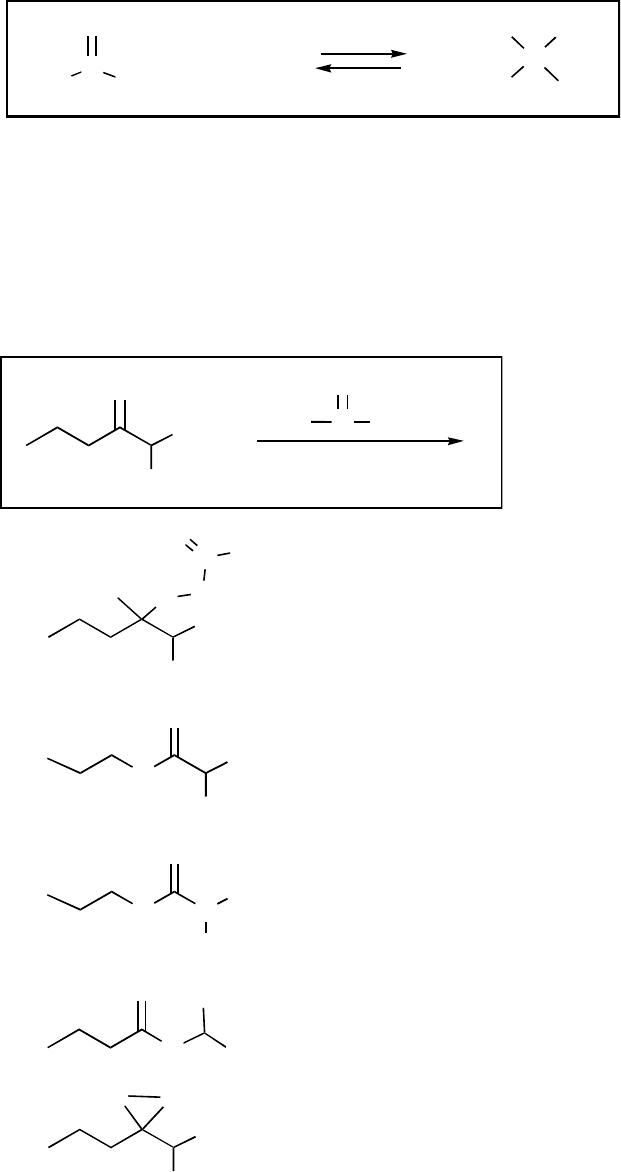
Indicate to which side, if any, the following equilibrium lies:
H3CCCH3
O
H3CC
CH3
HO OH
H+
+ H2O
A)
To the right
B)
To the left
C)
Equally to right and left
D)
Reaction cannot occur
E)
A different product is formed
4.
What would be the major product of the following reaction?
F3C C
O
OOH
O
CH3
CH3?
A)
HO
CH3
CH3
OO
C
OCF3
B)
O
O
CH3
CH3
C)
O O
O
CH3
CH3
D)
O
CH3
CH3
O
E)
O
CH3
CH3
O
Page 4
5.
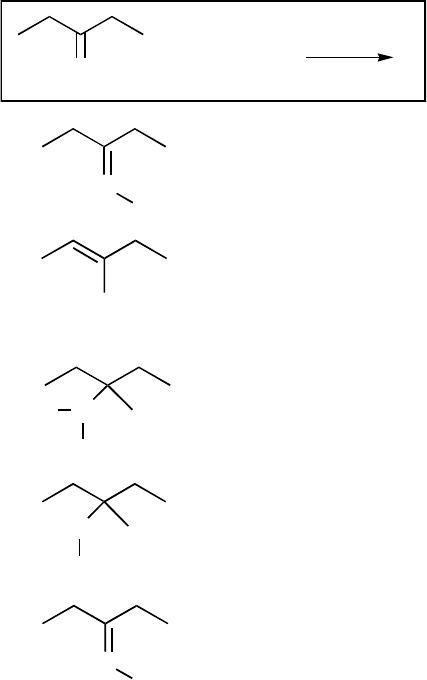
What product would you expect from the following reaction?
O?+ NH2OH
A)
NOH
B)
O+
–
H3NOH
C)
OH
N
OH
H
D)
OH
O
NH2
E)
ONH2
Page 5
6.
What product would you expect from the following reaction? (Hint: In what form does
the reactant actually exist?)
HO O
H?
CrO3
(CrVI )
A)
HO O
OH
O
B)
HO
H
O
C)
HO
OH
O
D)
O
O
E)
HO OH
7.
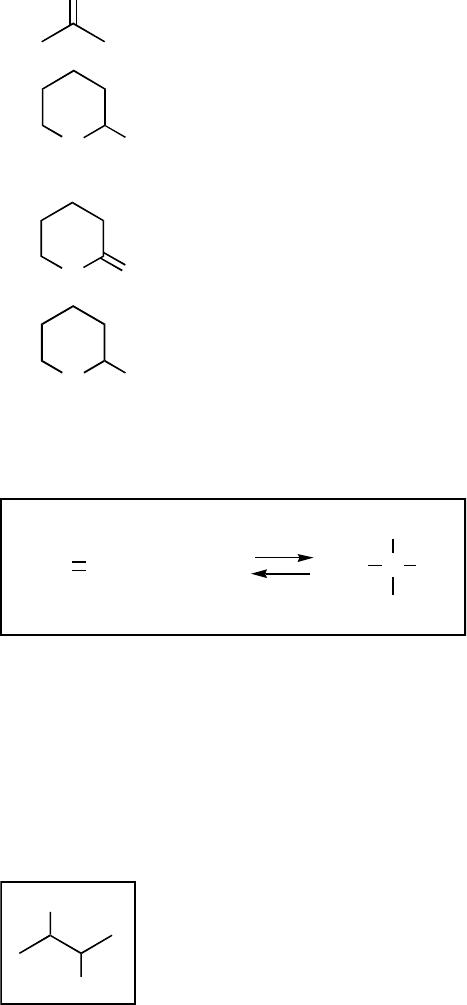
What would be the best name of the following compound?
CHO
O
A)
6-oxo-2-hexanone
B)
5-oxohexanal
C)
Hexan-5-one-1-al
D)
1,5-dioxohexane
E)
2-oxohexanal
Page 6
8.
Which of the following would react with Ag+ under basic conditions?
A)
O
B)
OOH
C)
CH3CH2CO2CH2CH3
D)
O O
E)
O OCH3
9.
To which side (if any) would the following equilibrium lie?
H C H
OH
OH
H2C O + H2OH+
A)
To left
B)
To right
C)
Equally to the right and left
D)
Reaction cannot occur at all
E)
Equilibrium favors a different product.
10.
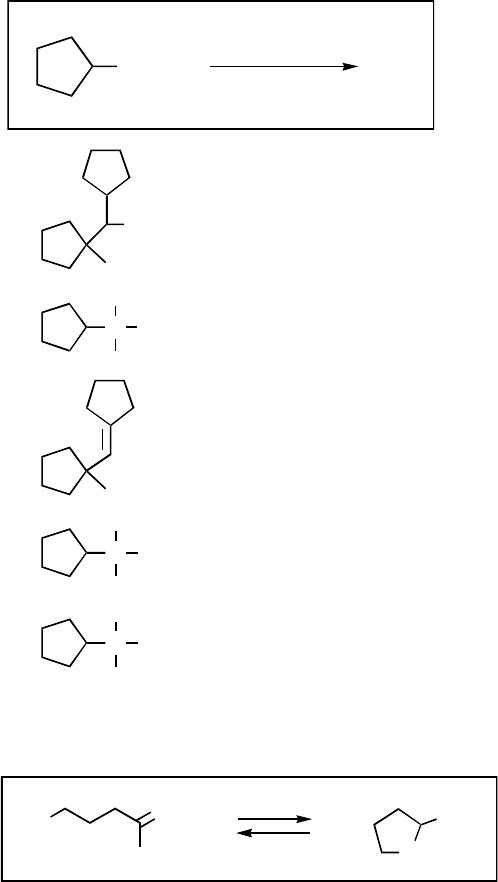
What would be the proper name of the following molecule?
OH
CHO
A)
3-formyl-2-butanol
B)
2-(hydroxyethyl)propanal
C)
3-hydroxy-2-methylbutanal
D)
2,3-dimethylpropan-3-ol-1-al
E)
1-methyl-3-formyl-1-propanol
Page 7
11.
What would you expect to result from the following reaction?
CHO NaCN
HCN ?
A)
CHO
OH
B)
C
OH
H
OH
C)
CHO
D)
C
OH
H
CN
E)
C
CN
H
CN
12.
Indicate which side, if any, would be favored in the reaction shown below.
HO O
HO
OH
A)
To the right
B)
To the left
C)
Equally to both sides
D)
This reaction cannot occur
E)
A different product would be favored.
Page 8
13.
Predict the major organic product of the following reaction sequence.
Br 1) (Ph)3P
2) NaH
3) Benzaldehyde
?
A)
B)
C)
D)
E)
Page 9
14.
What is the major organic product of the reaction below?
OCH3MCPBA
CH2Cl2
?
A)
OHCH3
HO
B)
O
OCH3
C)
CH3
O
D)
O
O
CH3
E)
OCH3
O
15.
Which of the following could not be involved in a given Wittig reaction?
A)
Ph3PCH2
+–
B)
O –
CH2PPh3
+
C)
O
C
H2
PPh3
D)
CH2
E)
All of these are involved.
Page 10
16.
Why is the reaction of the type shown below usually done?
O
CO2CH3
HOCH2CH2OH
H+, -H2OCO2CH3
OO
A)
To make the hydrogens more acidic
B)
To protect a ketone or aldehyde carbonyl
C)
To make the molecule more reactive
D)
To make an aldehyde or ketone less water soluble
E)
To increase the oxygen content
17.
Suppose that a special catalyst was discovered that would allow an equilibrium to occur
between the two molecules shown below. To which side, if any, would you expect the
equilibrium to lie?
H3CCCH3
Ocatalyst
H3CCH2C
O
H
A)
To the right
B)
To the left
C)
Equally to the right and left
D)
There is no way to predict this.
E)
These molecules are not isomers.
Page 11
18.
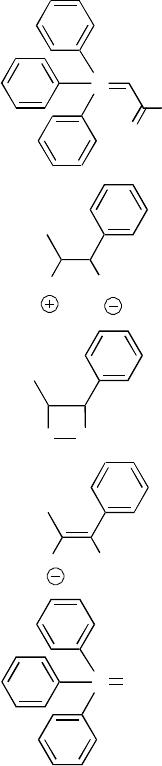
Which of the following represents an oxaphosphetane intermediate formed during a
Wittig reaction?
A)
P
O
OEt
B)
(Ph)3P O
C)
(Ph)3P O
D)
(Ph)3POH
E)
P O
19.
Which of the following is a typical 13C-NMR shift value for a carbonyl carbon?
A)
208 ppm
B)
29.3 ppm
C)
9.8 ppm
D)
45.2 ppm
E)
1700 cm–1
Page 12
20.
What test is used to detect the presence of an aldehyde?
A)
Tollen’s
B)
Lucas
C)
Fehling
D)
A and B
E)
A and C
21.
Predict the product of the following reaction:
O
CH2Cl2
MCPBA
A)
O
O
B)
O
O
C)
OH
D)
O
E)
OH
Page 13
22.
Predict the product of the following reaction:
1. PCC / CH
2Cl2
2.
3. O3
/ CH2Cl2
OH
H2C P(Ph)3/ THF
4. Zn / CH3CO2H
A)
O
B)
OH
C)
C
HH
O
D)
CH3OH
E)
Both A and C
23.
Given the geometry of nitrogen (which is not represented properly here), the oxime
shown below could exist as how many isomers?
N
OH
A)
Only one isomer is possible.
B)
Two enantiomers are possible.
C)
Two diastereomers are possible.
D)
Three stereoisomers are possible.
E)
There are no stereoisomers of this compound possible.

Page 14
24.
What reactants would be required to prepare the oxime shown below?
N OH
A)
NH
HH
+ H2O
B)
N H
H
+ CH2=O
C)
O+ NH2OH
D)
CH2
+ N=O
E)
None of these would produce the desired product.
25.
Old bottles of benzaldehyde (a liquid that smells like cherries) are often observed to
have crystals on the bottom; what is the identity of this solid?
A)
CHO
B)
CH2OH
C)
CH3
D)
CO2H
E)
C
HO OH
H
26.
What is the name of the reaction by which aldehydes and ketones are converted directly
to alkenes?
A)
Friedel-Crafts
B)
Williamson
C)
Wittig
D)
Hofmann
E)
Fischer
Page 15
27.
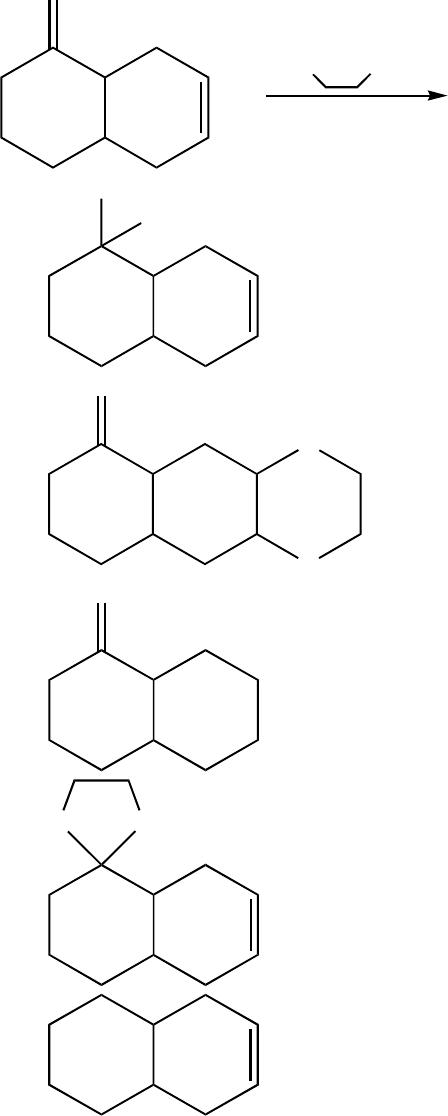
At which atom of the following structure will a nucleophile attack?
H
C
C
CH3
OCH3
O
A)
At the carbonyl oxygen
B)
At the carbonyl carbon
C)
At the methyl carbon
D)
At the ether oxygen
E)
At the aldehyde hydrogen
Page 16
28.
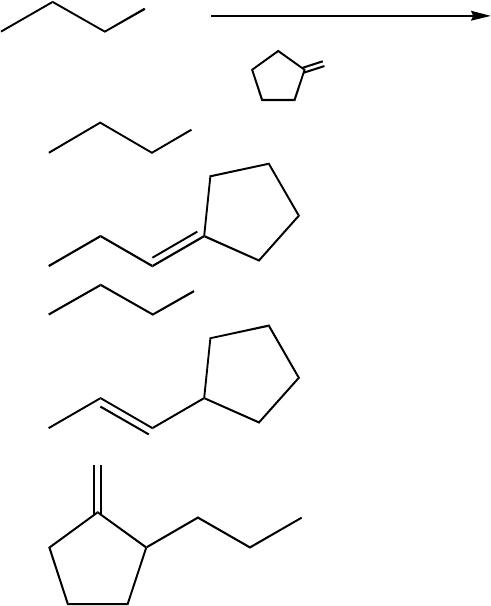
Predict the product from the following reaction.
O
ZnCl2
Et2O
SHHS
A)
OH
H
B)
O
S
S
C)
O
D)
S S
E)
Page 17
29.
Predict the product from the following reaction sequence.
Br 1) PPh3
2) CH3O–Na+, CH3OH
3) O
A)
PPh3–Br+
B)
C)
OCH3
D)
E)
O
Page 18
30.
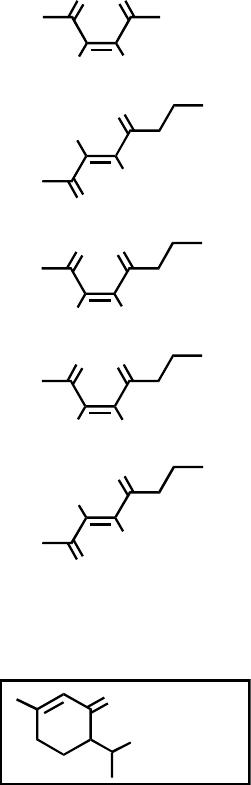
Which of the following structures represents: (Z)-3-fluoro-3-octen-2,5-dione?
A)
F H
OO
B)
OH
FO
C)
F H
OO
D)
H F
OO
E)
OF
HO
31.
The IUPAC name for piperitone is
Opiperitone
A)
6-isopropyl-3-methyl-2-cyclohexenone.
B)
2-isopropyl-5-methyl-5-cyclohexenone.
C)
6-isopropyl-3-methylcyclohexanone.
D)
1-methyl-4-isopropylcyclohexen-3-one.
E)
6-isopropyl-3-methyl-3-cyclohexenone.

Page 19
32.
Which is the structure of 3,7-dimethyl-2,6-octadienal?
A)
CH2OH
CH3
B)
CHO
CH3
C)
CHO
CH3
D)
CHO
CH3
E)
CH2OH
Page 20
Answer Key