Page 1
1.
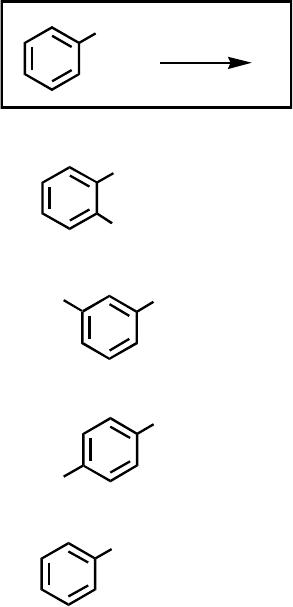
What major product(s) would you expect from the following reaction?
CH3
?
Br2
FeBr3
A)
CH3
Br
B)
CH3
Br
C)
CH3
Br
D)
CH2Br
E)
both A and C
Page 2
2.
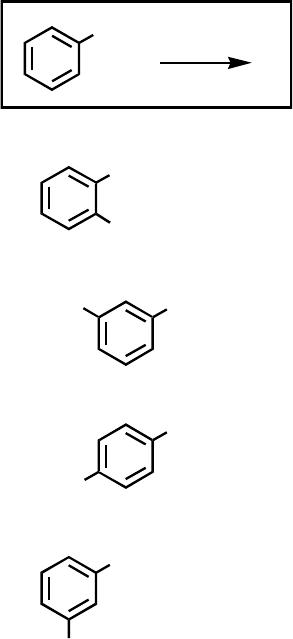
What major product(s) would you expect from the following reaction?
NO2
?
HNO3
H2SO 4
A)
NO2
NO2
B)
NO2
O2N
C)
NO2
O2N
D)
NO2
SO3H
E)
both A and C
Page 3
3.
What major product would you expect from the following reaction?
OH
?
HNO3
H2SO 4
A)
OH
NO2
B)
OH
O2N
C)
NO2
OH
D)
OH
NO2
E)
OH
NO2
Page 4
4.
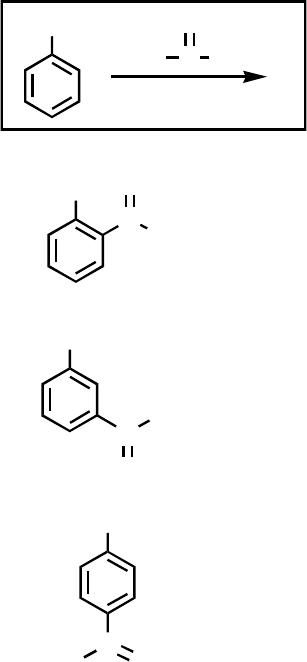
What major product(s) would you expect from the following reaction?
H3C C
O
Cl
NO2
?
AlCl3
A)
NO2C
O
CH3
B)
NO2
O
CH3
C
C)
NO2
H3CO
C
D)
both A and C
E)
No reaction occurs.
Page 5
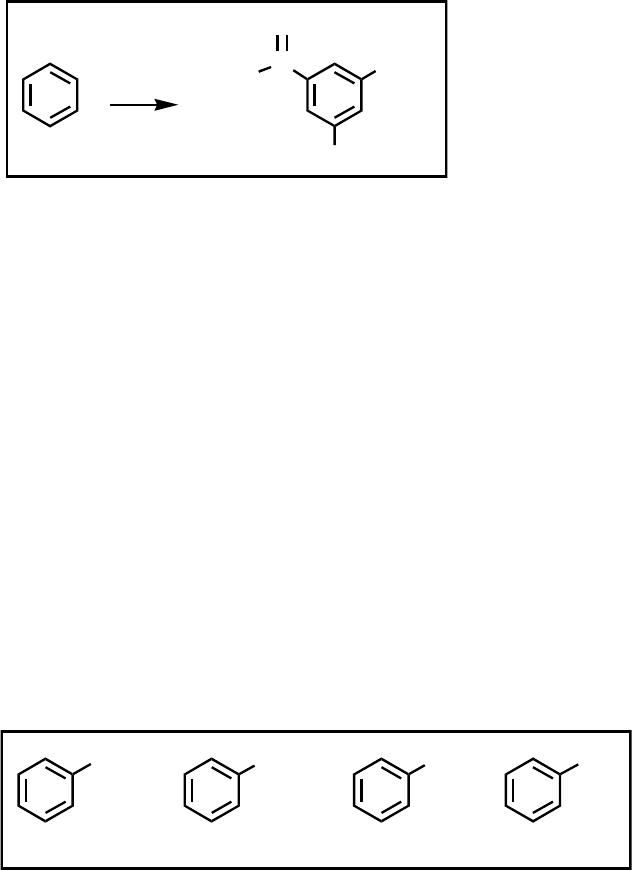
5.
Which of the following sequences of reactants would you expect to convert benzene to
the substituted aromatic shown below?
NO2
C
H3C
O
Br
?
A)
1. HNO3, H2SO 4
2. Br2, FeBr3
3. CH3COCl, AlCl3
B)
1. Br2, FeBr3
2. CH3COCl, AlCl3
3. HNO3, H2SO 4
C)
1. CH3COCl, AlCl3
2. HNO3, H2SO 4
3. Br2, FeBr3
D)
both A and B
E)
both B and C
6.
Rank the following aromatics in order of decreasing reactivity toward electrophilic
aromatic substitution (most reactive > least reactive).
CH3OHBrNO2
DCBA
A)
A > C > D > B
B)
D > C > A > B
C)
B > C > A > D
D)
D > A > C > B
E)
C > A > D > B
Page 6
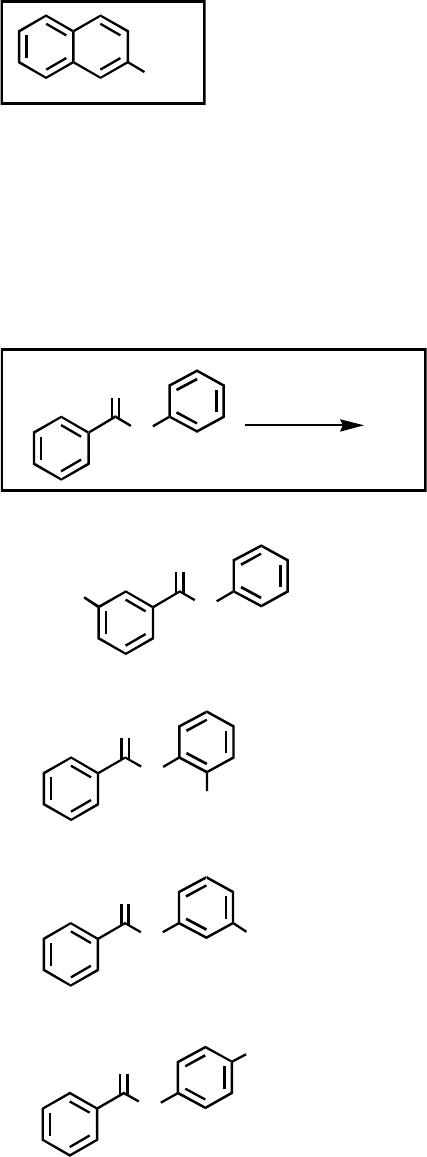
7.
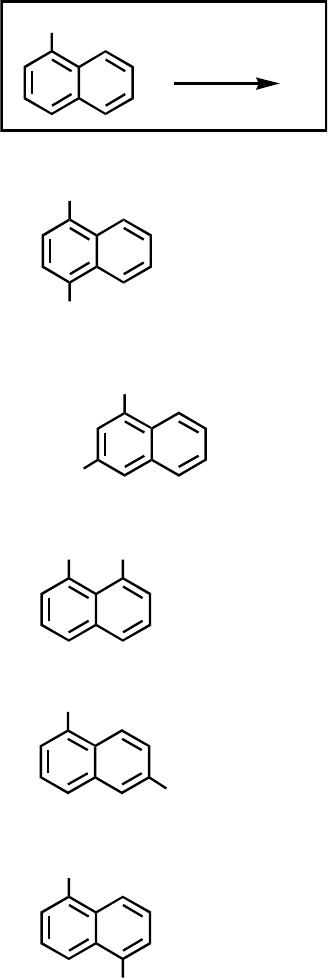
What would be the proper name of the molecule below?
CH3
A)
benzotoluene
B)
3-methylnapthalene
C)
3-methyldibenzene
D)
2-methylnapthalene
E)
1-methylnapthalene
8.
What product(s) would you expect from the following reaction?
O
OHNO3
H2SO4
?
A)
O
O
O2N
B)
O
O
NO2
C)
O
O
NO2
D)
O
ONO2
E)
both B and D

Page 7
9.
The explosive TNT is an isomer of trinitrotoluene. Given what you know about
electrophilic aromatic substitution, which isomer is it most likely to be?
A)
CH3NO2
O2N
NO2
B)
CH3NO2
O2N
NO2
C)
CH3
O2N
O2NNO2
D)
CH3
NO2
O2N
NO2
E)
CH3NO2
O2N
NO2
Page 8
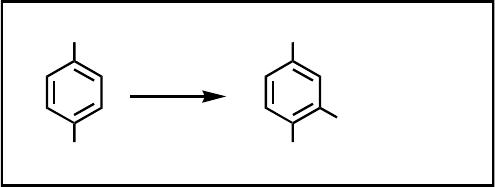
10.
What reagent(s) would be required to accomplish the following reaction?
CH3
CH3
CH3
CH3
CH2CH2CH3
?
A)
CH3CH2C(=O)Cl, AlCl3
B)
CH3CH2CH2Cl, AlCl3
C)
Reagents in A, followed by HCl, Zn(Hg),
D)
Reagents in B followed by zinc and HCl
E)
CH3CH=CH2, H2SO4
11.
In which electrophilic aromatic substitution reaction can unintended poly-substitution
(i.e., disubstitution, trisubstitution, etc.) be a problem?
A)
Nitration
B)
Friedel-Crafts acylation
C)
Bromination
D)
Friedel-Crafts alkylation
E)
Chlorination
Page 9
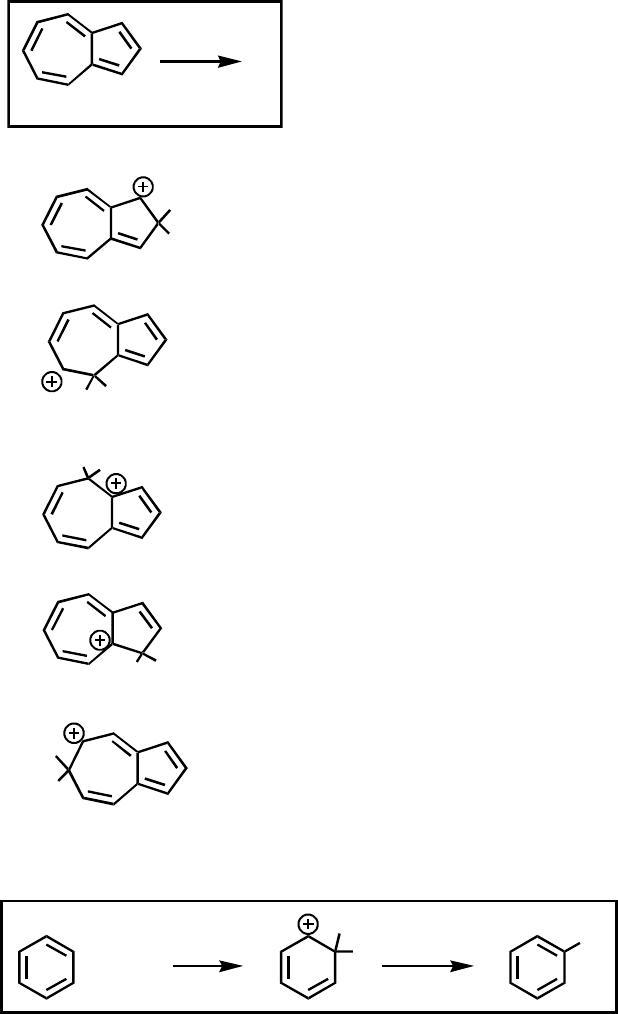
12.
One of the interesting aspects of azulenes is that they are soluble in strong aqueous acids
because of a reaction with H+. Which of the structures below would represent the most
stable form of protonated azulene?
?
H+
azulene
A)
H
H
B)
HH
C)
HH
D)
HH
E)
H
H
13.
Which of the following statements is not true of the process shown below?
EE
H– H+
+ E+
A)
Benzene is less reactive with E+ than other alkenes are.
B)
The overall process is a substitution reaction.
C)
There are three resonance structures of the intermediate possible.
D)
The first step is rate determining.
E)
None of the above. All these statements are true.
Page 10
14.
Carefully consider the effect of the nitro groups on the stability of the intermediates
involved as you decide which product(s) the reaction shown provides.
NO2
O2N
NO2
?
Br2
FeBr3
A)
NO2
O2N
NO2
Br
B)
NO2
O2N
NO2
Br
C)
NO2
O2N
NO2
Br
D)
both A and C
E)
None of these would be formed.
Page 11
15.
What major product(s) would you expect from the reaction shown?
O
?
Br2
FeBr3
A)
OBr
B)
O
Br
C)
O
Br
D)
Br Br
E)
both A and C

Page 12
16.
Which of the following resonance structures is the most stable?
A)
CH3
NO2
H
B)
CH3
NO2
H
C)
CH3
NO2
H
D)
CH3
NO2
H
E)
CH3
NO2
H
Page 13
17.
Rank the following in order of decreasing reactivity toward nitration (more reactive >
less reactive).
CH3CH3
CH3
CH3
CH3
DCBA
A)
D > C > B > A
B)
B > D > C > A
C)
D > B > C > A
D)
C > D > B > A
E)
A > C > D > B
18.
What would be the best way to prepare the ketone shown below?
C
CH3
NO2
O
H3C
A)
C
H3CNO2
O
Cl
CH3
AlCl3
+
B)
CNO2
Cl
O
H3C
CH3
+AlCl3
C)
C
NO2
O
ClCl
H3C
CH3
+ + AlCl3
D)
Any of these would work.
E)
None of these would work.
Page 14
19.
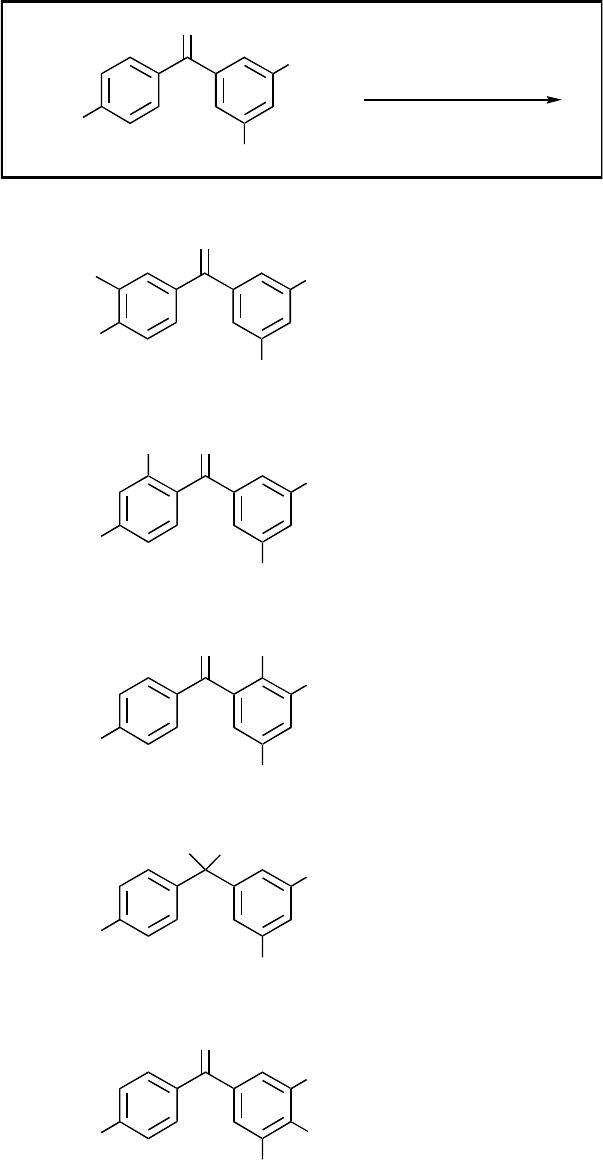
What significant product(s) would not be formed in the following reaction?
?
Br2
FeBr3
CH3
A)
CH3
Br
B)
CH3
Br
C)
CH3
Br
D)
Neither A nor B would be formed.
E)
Neither A nor C would be formed.
Page 15
20.
Predict the major organic product of the following reaction.
O
CH3O
NO2
NO2
Br2 / FeBr3?
A)
O
CH3O
NO2
NO2
Br
B)
O
CH3O
NO2
NO2
Br
C)
O
CH3O
NO2
NO2
Br
D)
CH3O
NO2
NO2
OHBr
E)
O
CH3O
NO2
NO2
Br

Page 16
21.
Which of the following aromatics could you expect to make from benzene in the
highest yield?
A)
CH3
Br
B)
NO2
NO2
C)
Br
NO2
D)
CO2CH3
NO2
E)
H3CCH3
22.
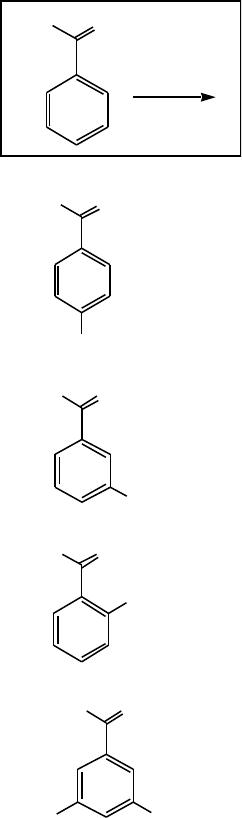
Which of the following are not electron-withdrawing groups?
A)
Carbonyl
B)
Cyano
C)
Alkyl
D)
Sulfonyl
E)
Nitro
Page 17
23.
Predict the major product of the following reaction:
HO O
Br2, FeBr3
A)
HO O
Br
B)
HO O
Br
C)
HO O
Br
D)
HO O
Br Br
E)
None of these are products.
Page 18
24.
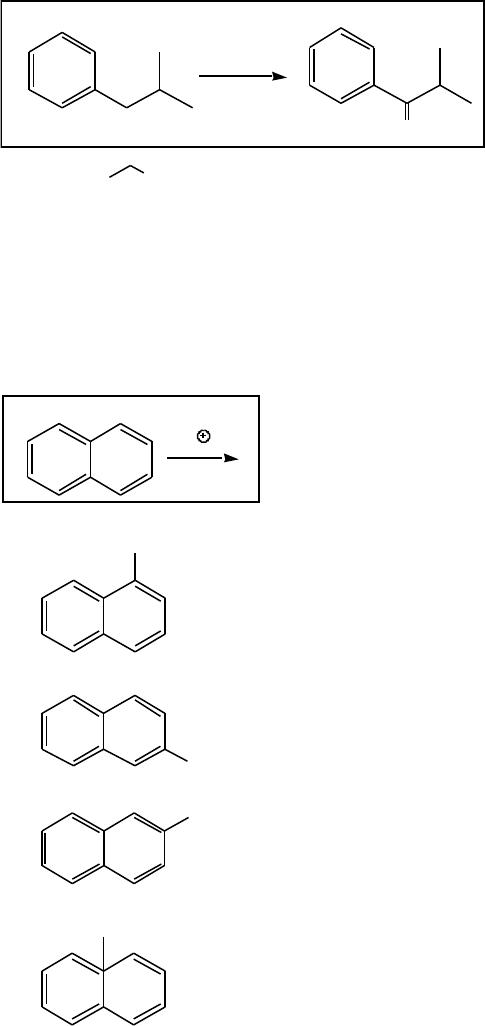
Choose the appropriate reagents necessary to achieve this reaction:
O
A)
H2, Pd, OH
B)
Zn(Hg). HCl,
C)
Fe, HCl
D)
CrO3, H+, H2O
E)
None of these are appropriate reagents.
25.
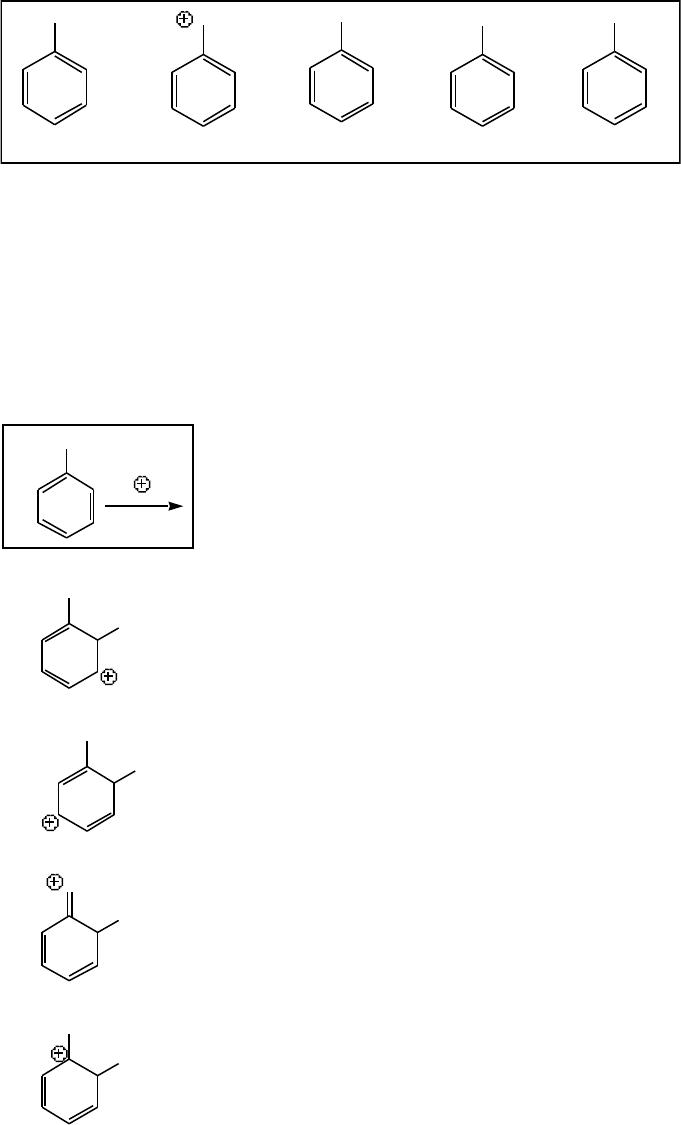
Predict the product of the following reaction:
E
A)
E
B)
E
C)
E
D)
E
E)
None of these are products.
Page 19
26.
Rank the following in order of increasing reactivity toward electrophilic substitution:
OH CH2Cl
CH3
CF3N(CH3)3
III III IV V
A)
I, IV, V, II, III
B)
II, III, V, IV, I
C)
III,V,IV,I,II
D)
II,V, IV, III, I
E)
V, IV, II, III, I
27.
Considering the intermediate formed upon addition of an electrophile to this aromatic
ring, which of the following is not a correct resonance structure:
OCH3
E
A)
OCH3
E
B)
OCH3
E
C)
OCH3
E
D)
OCH3
E
E)
All of these are correct.
Page 20
28.
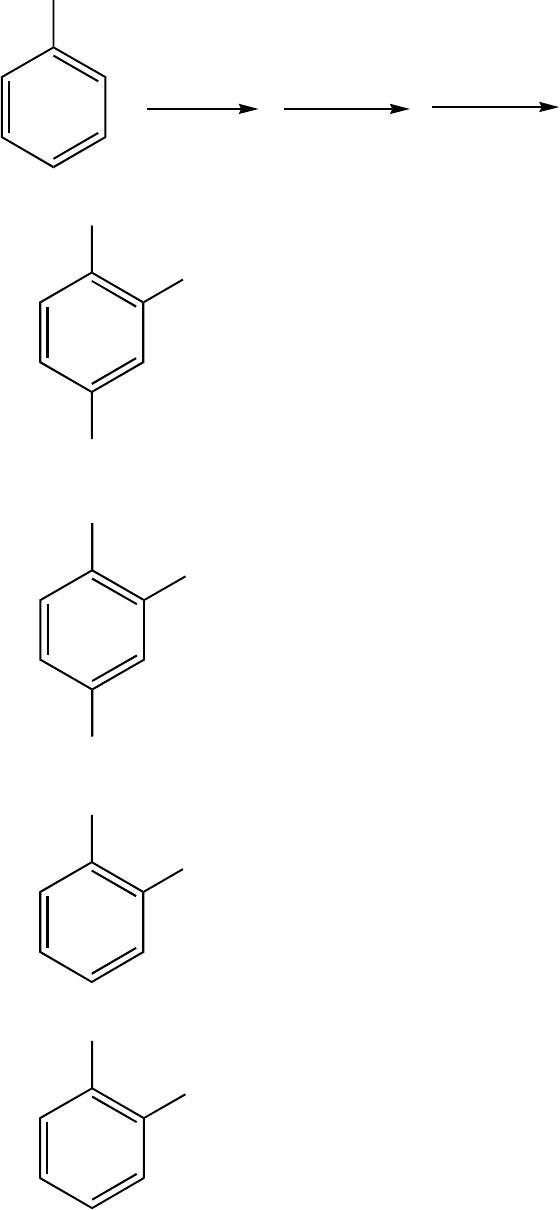
What would be the major product from the following reaction sequence?
OCH3
SO3
H2SO4
Br2
FeBr3
H+, H2O,
A)
OCH3
Br
SO3H
B)
OCH3
SO3H
Br
C)
OCH3
Br
D)
OCH3
SO3H
Page 21
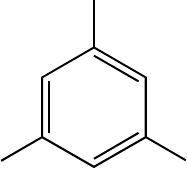
E)
OCH3
BrHO3S
Page 22
29.
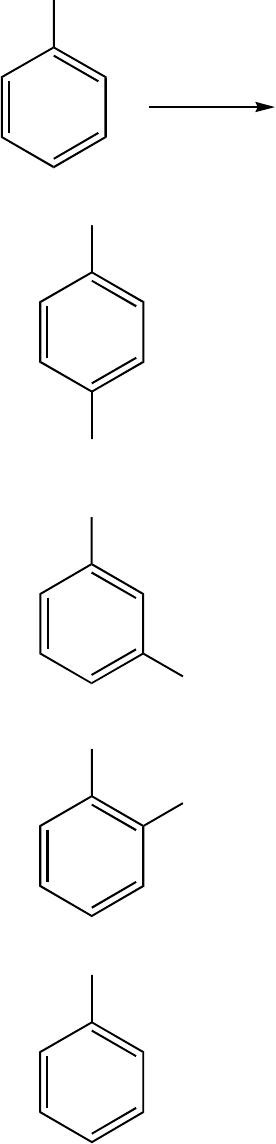
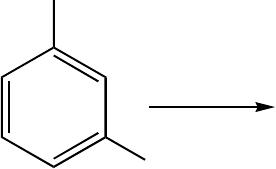
What would be the major product from the following reaction?
CF3
Br2
FeBr3
A)
CF3
Br
B)
CF3
Br
C)
CF3
Br
D)
CBr3
E)
both A and C
Page 23
30.
How many lines would be seen in the 13C NMR spectrum of the product from the
following reaction?
NO2
Br2
FeBr3
NO2
A)
2
B)
3
C)
4
D)
5
E)
6
Page 24
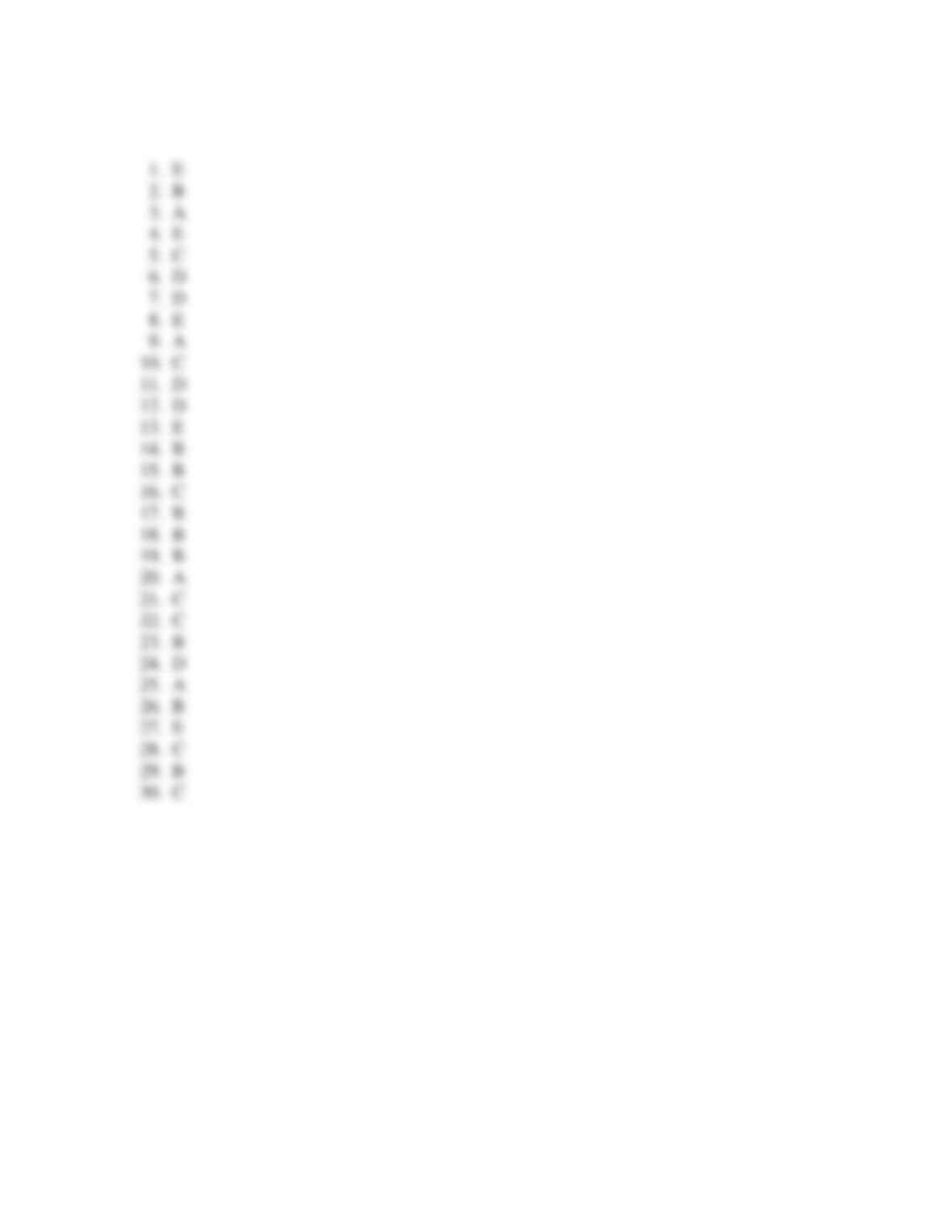
Answer Key