Introductory Chemistry: Atoms First, 5e (Russo/Silver)
Chapter 13 When Reactants Turn into Products
13.1 Multiple Choice Questions
1) Which of the following is an exothermic reaction?
A) burning propane gas in a barbecue
B) burning gasoline when driving a car
C) creating an explosion by detonating nitroglycerine
D) All of the above are exothermic reactions.
2) Which of the following is endothermic?
A) melting ice
B) freezing water
C) dry ice formed from carbon dioxide
D) condensing water vapor
3) Which statement is true about the reaction energy profile?
A) plots the relative energies of both the reactants and products
B) plots energy on the y-axis
C) traces the progress of the reaction on the x-axis
D) All of the above are true.
4) The difference in energy between the reactants and products in a chemical reaction is called
________.
A) the heat of reaction
B) the activation energy
C) the energy of products
D) either B or C
5) If the products have a higher energy than the reactants ________.
A) the reaction is exothermic
B) the reaction is endothermic
C) the reactants have less energy than the products
D) both B and C
6) If the reaction has a negative overall energy change, then ________.
A) the reaction is exothermic
B) energy is absorbed by the reactants
C) the reaction is endothermic
D) the products are not stable
7) Which of the following is true about enzymes?
A) They speed up reactions in a selective fashion.
B) They are very large proteins.
C) They contain specifically shaped pockets that fit only specific reactant molecules.
D) All of the above are true.
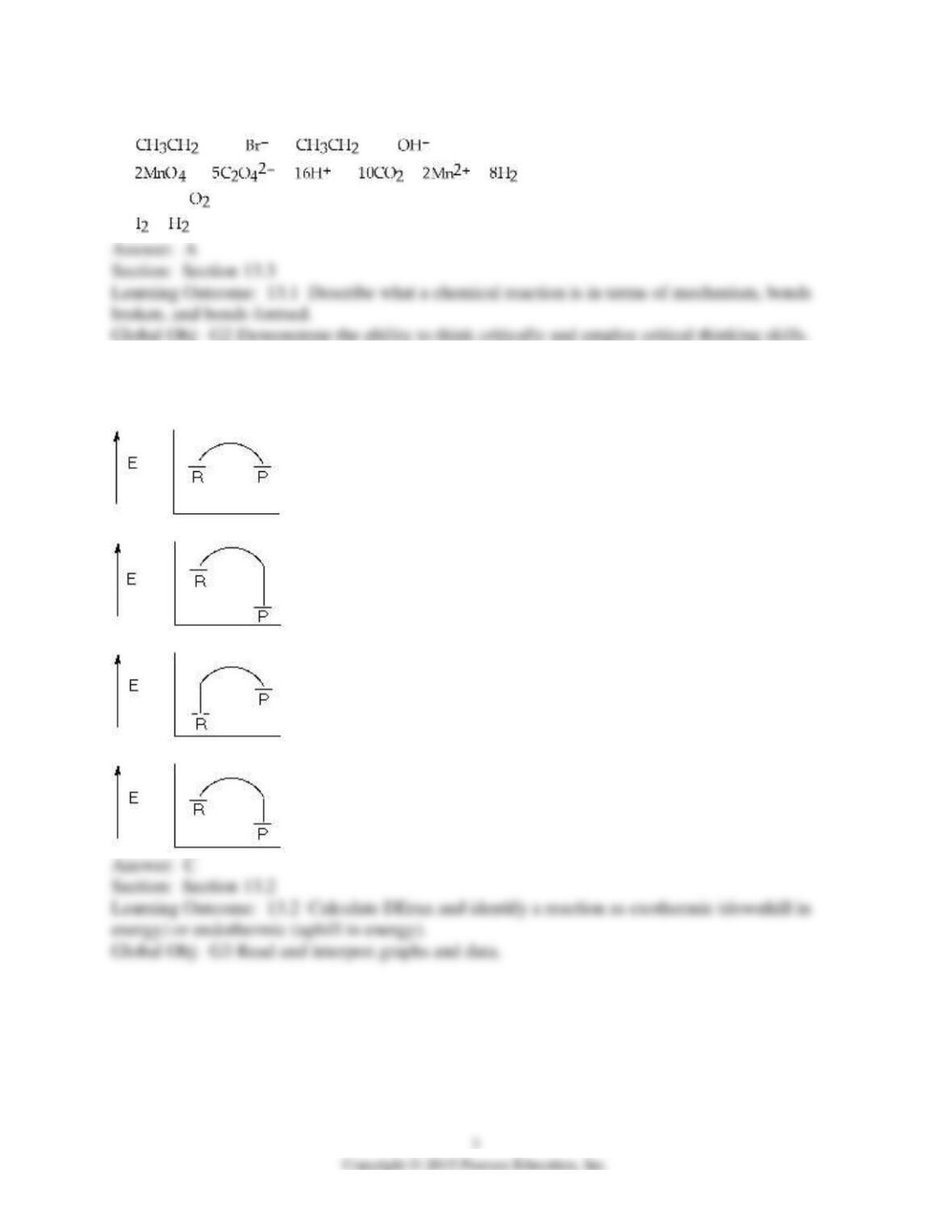
8) Which of the following is an example of a substitution reaction?
A) OH + → Br +
B) – + + → + + O
C) 2Mg + → 2MgO
D) + → 2HI
9) Which of the following reaction coordinate diagrams represents a chemical reaction that is
endothermic?
A)
B)
C)
D)
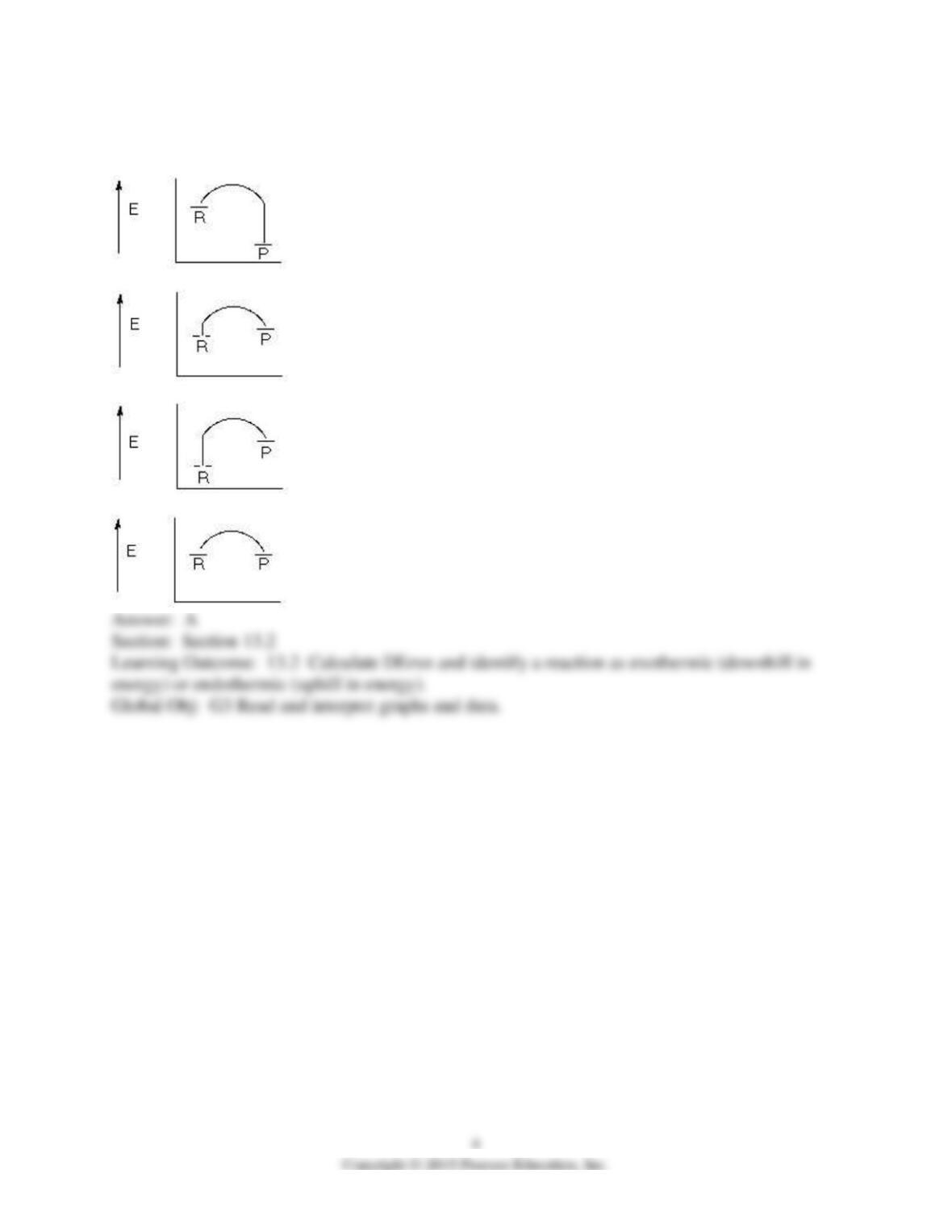
10) Which of the following reaction coordinate diagrams represents a chemical reaction that is
exothermic?
A)
B)
C)
D)
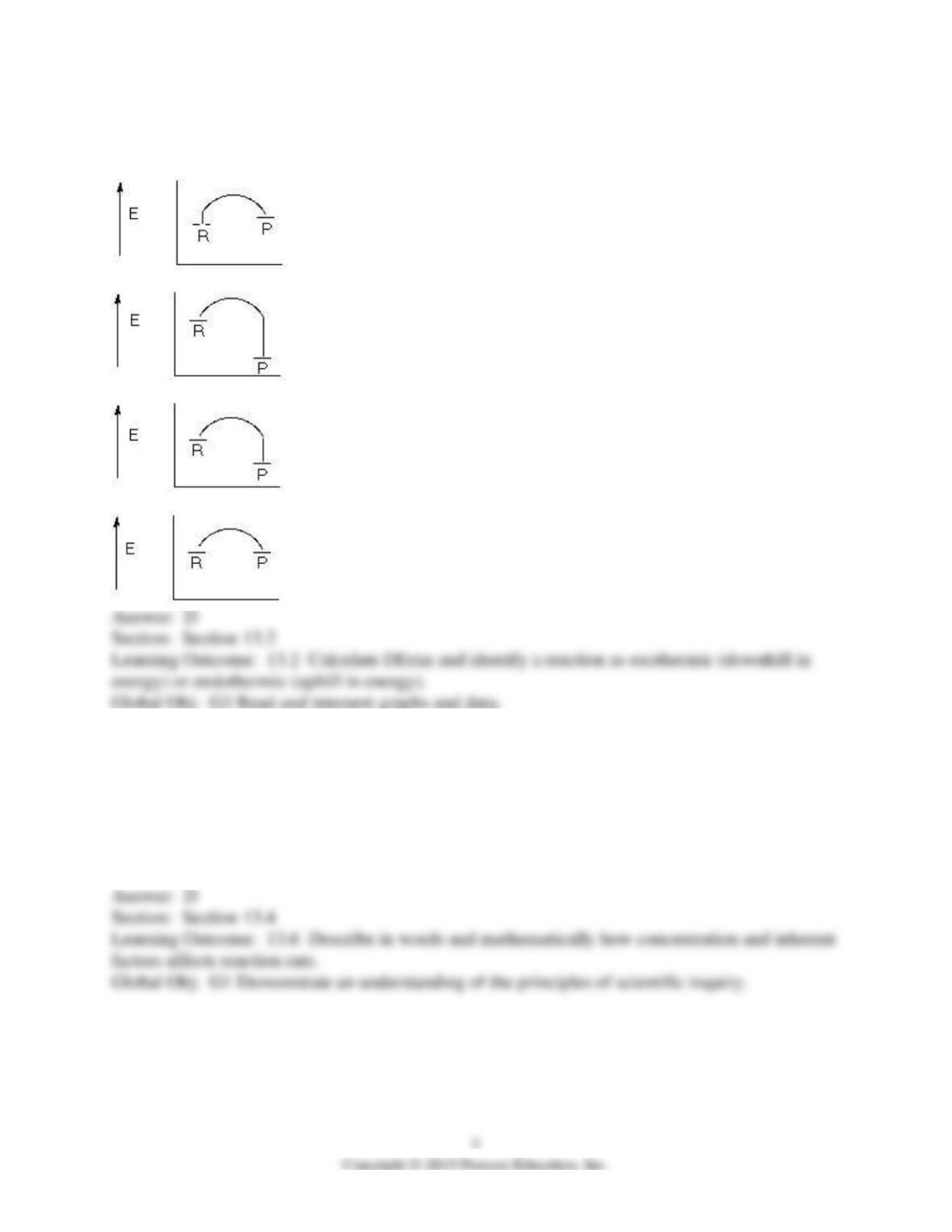
11) Which of the following represents a reaction coordinate diagram for a chemical reaction
whose ΔErxn = 0?
A)
B)
C)
D)
12) Which of the following “adjustments” can be made to a chemical reaction system to increase
the rate of reaction?
A) increase the reaction temperature
B) increase the concentrations of the reactants
C) add a catalyst
D) All of the above will increase the rate of reaction.
E) None of the above will increase the rate of reaction.
13) Which of the following is not a substitution reaction?
A) NaOH + HCl→ NaCl + H2O
B) AgNO3 + NaCl → NaNO3 + AgCl
C) 2Fe + O2 → 2FeO
D) CH3OH + HCl → CH3Cl + H2O
14) Which of the following does not influence the speed of a chemical reaction?
A) concentration of the reactants
B) molecular mass of the reactants
C) surface area of solid reactants
D) temperature
15) Consider the reaction A → B with the following data:
Energy of reactants = 50 kJ/mole;
Energy of products = 70 kJ/mole;
Energy of transition state = 80 kJ/mole.
The reaction is ________, has a heat of reaction of ________ kJ/mole, and the energy of
activation is ________ kJ/mole.
A) exothermic; 20; 30
B) endothermic; 20; 30
C) exothermic; 30; 20
D) endothermic; 30; 20
16) Consider the reaction C → D with the following data:
Energy of reactants = 30 kJ/mole;
Energy of products = 20 kJ/mole;
Energy of transition state = 60 kJ/mole.
The reaction is ________, has a heat of reaction of ________kJ/mole, and the energy of
activation is ________ kJ/mole.
A) exothermic; -10; 30
B) endothermic; 10; 30
C) exothermic; 40; 30
D) endothermic; 40; 30
17) Consider the reaction X → Y with the following data:
Energy of reactants = 25 kJ/mole;
Energy of products = 75 kJ/mole;
Energy of transition state = 100 kJ/mole.
The energy of activation for the reverse reaction is ________ kJ/mole.
A) 25
B) 50.
C) 75
D) 100
18) Consider the reaction X → Y with the following data:
Energy of reactants = 50 kJ/mole;
Energy of reaction = -30 kJ/mole;
Energy of transition state = 90 kJ/mole.
The energy of products for the reaction is ________ kJ/mole.
A) -30
B) 20
C) 30
D) 80
19) In order for a chemical reaction to occur, ________.
A) the reactants must be in sufficient concentration
B) the products must be of lower energy than the reactants
C) the reactants must be of lower energy than the products
D) the reactants must possess sufficient energy to overcome the barrier of the activation energy
20) Which of the following is not true when the temperature of the reaction mixture is
decreased?
A) The average kinetic energy of both the reactant and product molecules is decreased.
B) The rate of the reaction is decreased.
C) The fraction of reactant molecules that have a low kinetic energies is increased.
D) The activation energy of the reaction is increased.
21) Which of the following is true about the activation energy?
A) It may increase by decreasing the temperature.
B) It may decrease by decreasing the temperature.
C) It may increase by increasing the concentration of reactants.
D) It is practically independent of both temperature and concentration of reactants.
22) If the kinetic energy of the reactant molecules is not high enough to overcome the activation
energy barrier, ________.
A) the reverse reaction will occur
B) no reaction takes place
C) the reaction will occur anyway
D) the products will form at a slower rate
23) The energy of activation may be affected by ________.
A) increasing the concentration of the reactants
B) higher temperature
C) decreasing the concentration of the reactants
D) the presence of a catalyst
24) Which of the following is true about a catalyst?
A) It increases the rate of a reaction.
B) It can be used in trace amounts.
C) It is not used up in the process.
D) All of the above are true.
25) In a catalyzed reaction the activation energy is ________ when compared to the uncatalyzed
reaction.
A) identical
B) less
C) more
D) either less or more depending on the reaction
26) Which of the following may be considered as biochemical catalysts?
A) carbohydrates
B) DNA
C) enzymes
D) lipids
27) Generally in a biochemical reaction the first step involves ________.
A) the reaction of the enzyme with the active site of the substrate
B) the reaction of the substrate with the active site of the enzyme
C) the reaction of the substrate with the enzyme-substrate complex
D) the reaction of the enzyme with the enzyme-substrate complex
11
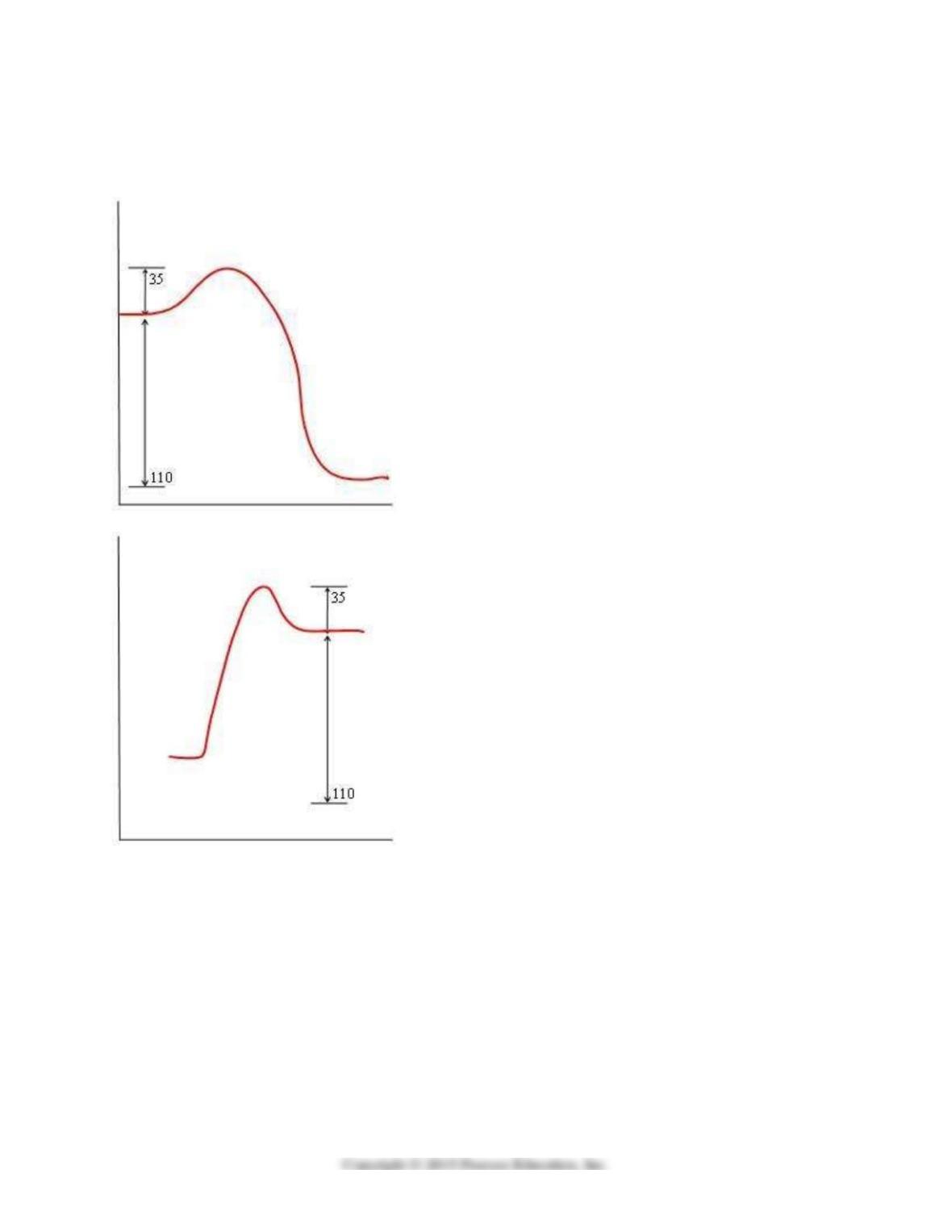
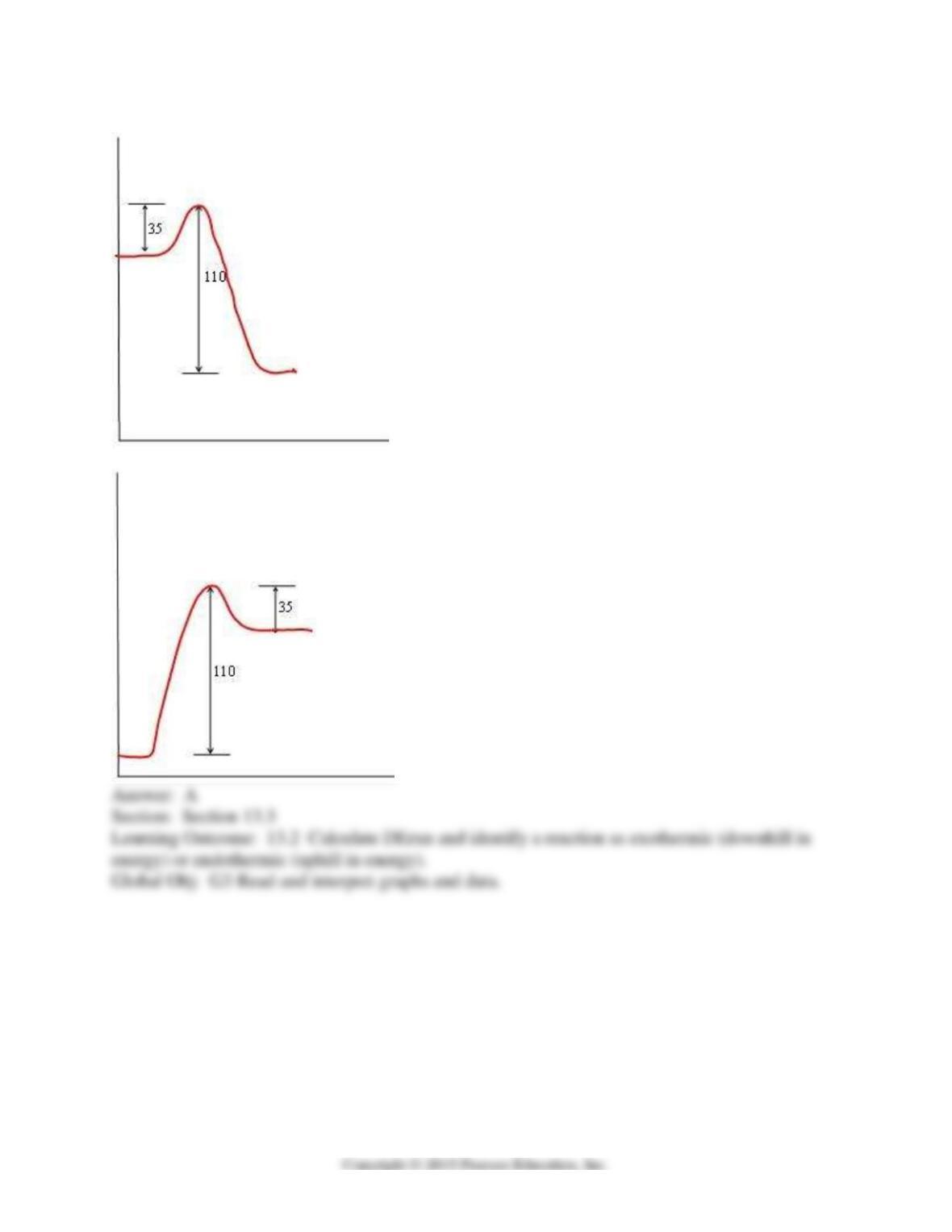
28) In each of the following diagrams, the x-axis is the reaction coordinate and the y-axis is the
potential energy. Which diagram corresponds to a reaction that has an activation energy of 35 kJ
and an overall reaction energy of -110 kJ?
A)
B)
12
C)
D)
13
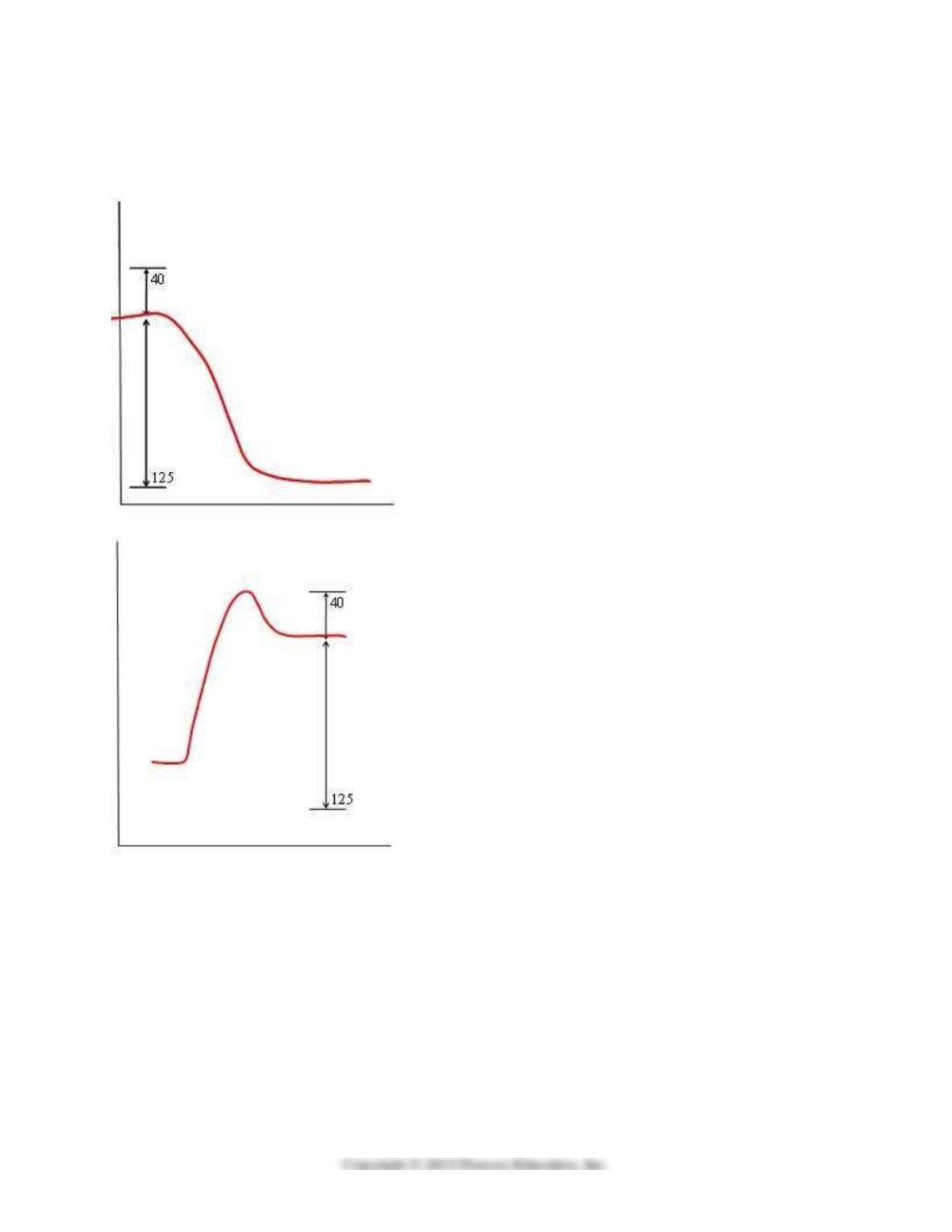
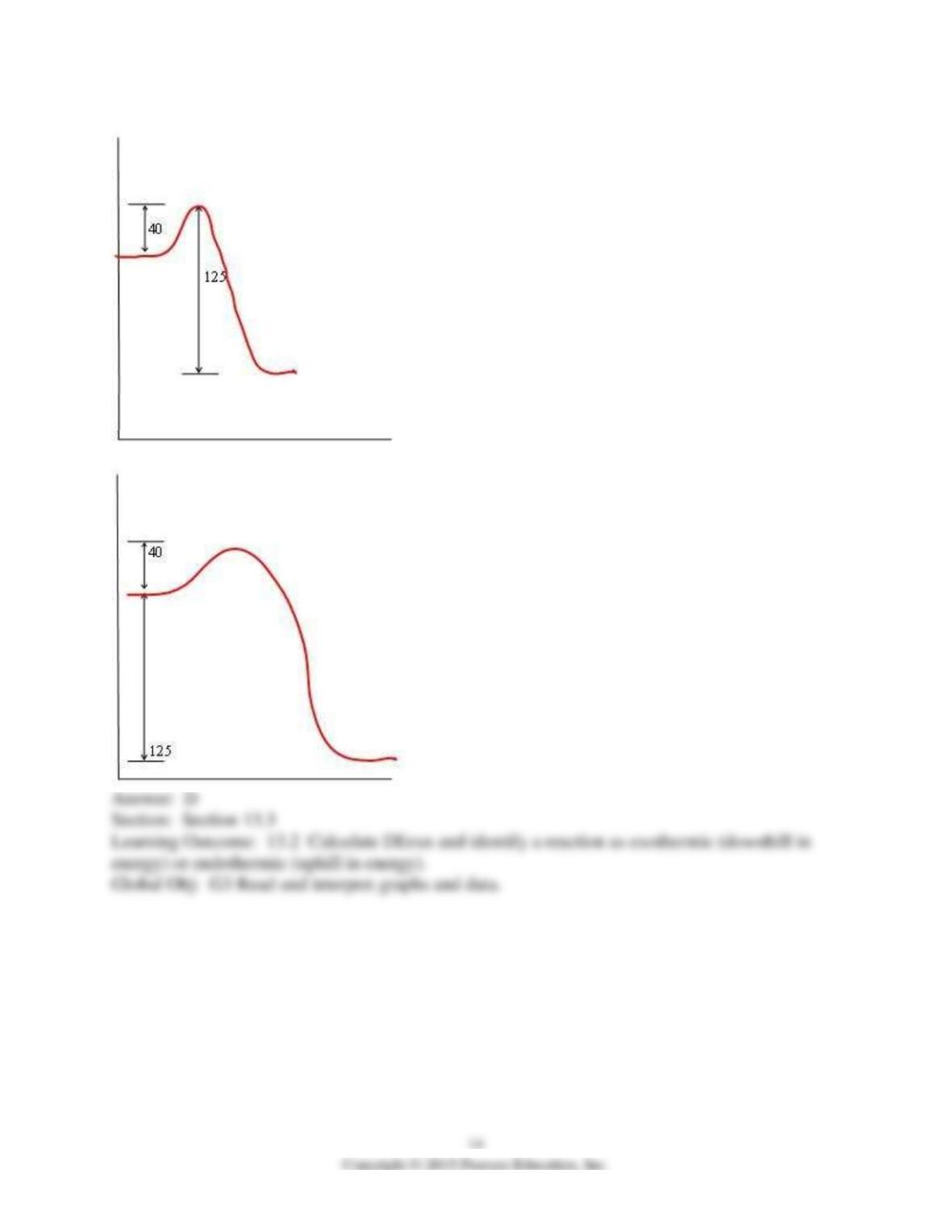
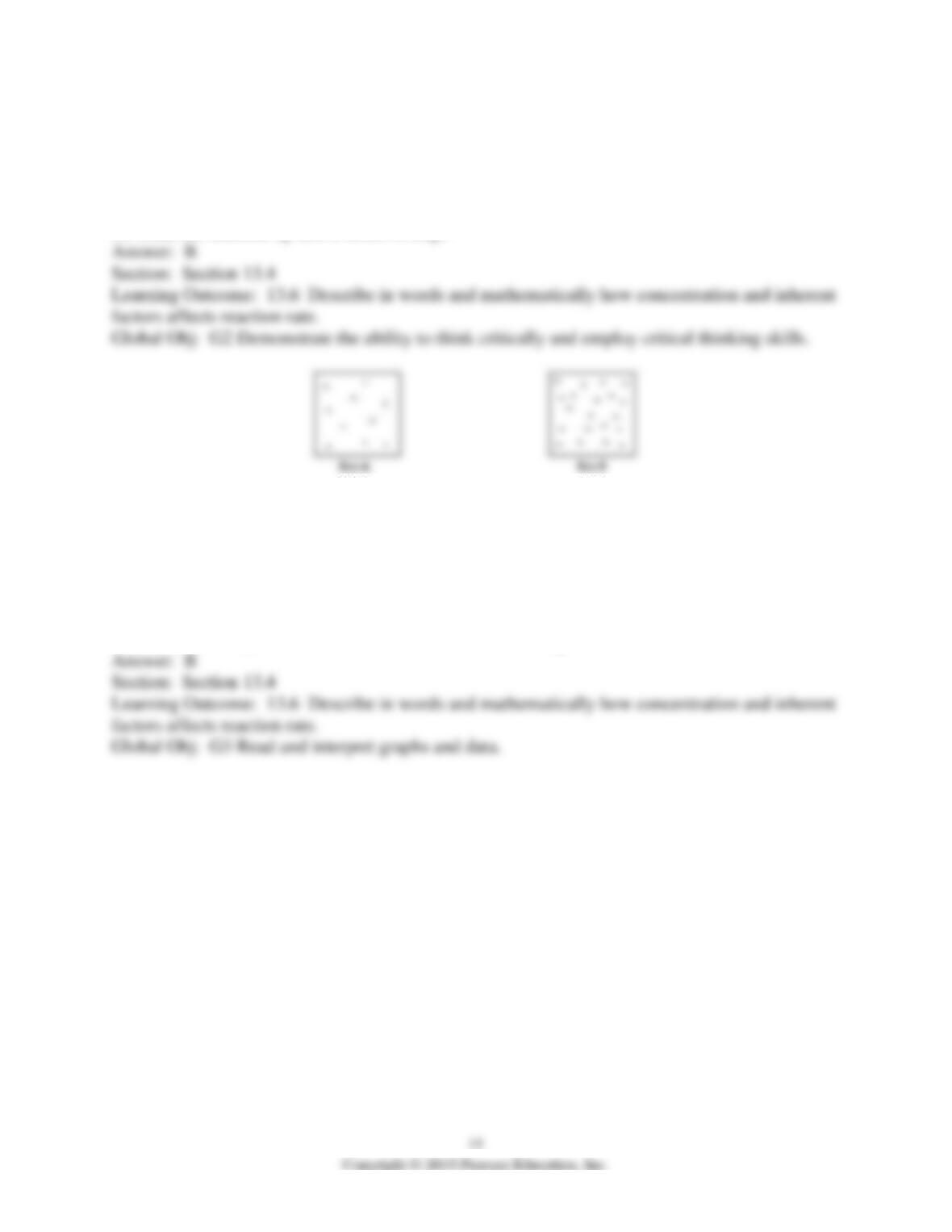
29) In each of the following diagrams, the x-axis is the reaction coordinate and the y-axis is the
potential energy. Which diagram corresponds to a reaction that has an activation energy of 40 kJ
and an overall reaction energy of -125 kJ?
A)
B)
C)
D)
30) Which of the following can be done to increase the likelihood that a chemical reaction will
take place?
A) decrease the average speed of the reacting molecules
B) induce more collisions between reacting molecules
C) remove all the water from the reaction mixture
D) break the reaction up into a series of steps
31) In the diagram above, the two containers shown (Box A and Box B) have exactly the same
size (volume), are held at the same temperature, and contain the same reactant molecules (dots).
In which box will the rate of reaction be faster?
A) Box A
B) Box B
C) The rate will be about the same in each box.
D) There is no way to tell which will be faster from this diagram.
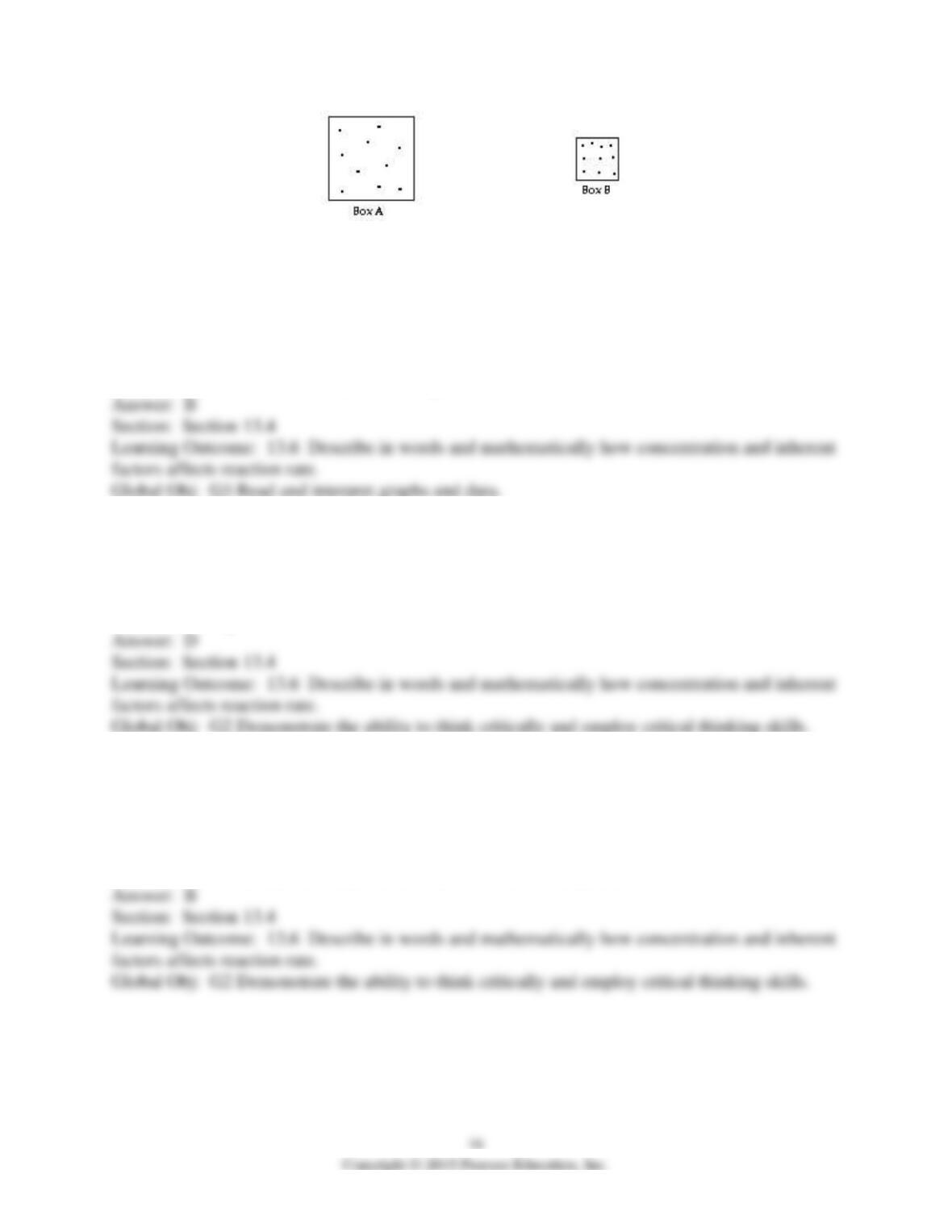
32) In the diagram above, the containers shown (Box A and Box B) contain exactly the same
number of the same reactant molecules and are at the same temperature. In which box will the
rate of reaction be faster?
A) Box A
B) Box B
C) Rate is about the same in each box.
D) No way to tell which is faster from this picture.
33) Which of the following does not affect the rate of a reaction?
A) the concentration of the reactants
B) the energy of activation
C) the temperature
D) the external pressure
34) Which of the following is not a term involved in determining the overall rate of a chemical
reaction?
A) the total number of collisions per unit time
B) the total number of collisions in the gas phase
C) the fraction of collisions with energy greater than the activation energy
D) the fraction of collisions which occur with a favorable orientation
35) This factor depends on concentration and can be manipulated.
A) the total number of collisions that occur per unit time
B) the fraction of collisions with energy larger than the energy of activation
C) the fraction of collisions with the proper orientation
D) All of the above are correct.
36) The fraction of collisions with the proper orientation depends on ________.
A) the strength of the bonds that are to be broken
B) the molecular shape of the molecule
C) the concentration
D) both A and B
37) Which of the following statements is true?
A) Lowering the concentration of the reactants increases the number of collisions.
B) Increasing the concentration of the reactants decreases the rate of reaction.
C) Increasing the collision rate increases the rate of the reaction.
D) Decreasing the collision rate occurs at higher temperatures.
38) The rate of a reaction may be increased by ________.
A) increasing the concentration of reactants
B) increasing the temperature
C) adding a catalyst
D) all of the above
39) Which of the following factors could increase the reaction rate?
2A + B2 → 2AB
I. decreasing the temperature
II. adding a catalyst
III. increasing the surface area of solid reactants
A) I and II
B) I, II, and III
C) I and III
D) II and III
E) III only
40) The units for the rate of a reaction are ________.
A) concentration per unit of time
B) concentration multiplied by the unit of time
C) unit of time per unit of concentration
D) One cannot say with certainty since rate laws vary from reaction to reaction.
41) If the concentration of A is doubled while the concentration of B is unchanged, the rate will
________.
A (g) + 3 B (g) → C (g) + 2 D (g)
Rate = k[A][B]3
A) stay the same
B) be reduced by a factor of 8
C) double
D) be increased by a factor of 8