59) How many “dots” should be shown for the oxygen symbol in lithium oxide?
A) 2
B) 4
C) 6
D) 8
E) 10
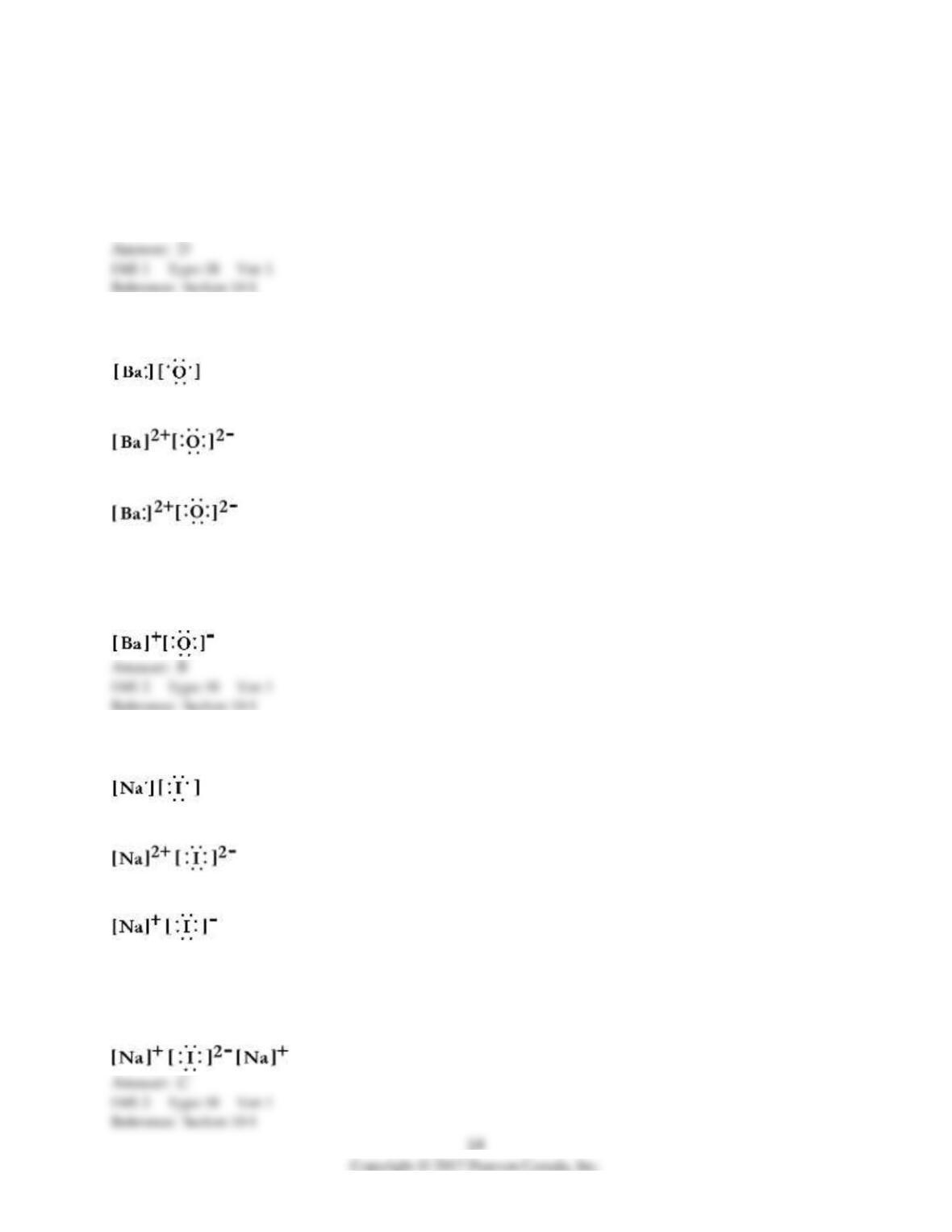
60) Write a Lewis structure for BaO.
A)
B)
C)
D)
[Ba—O]
E)
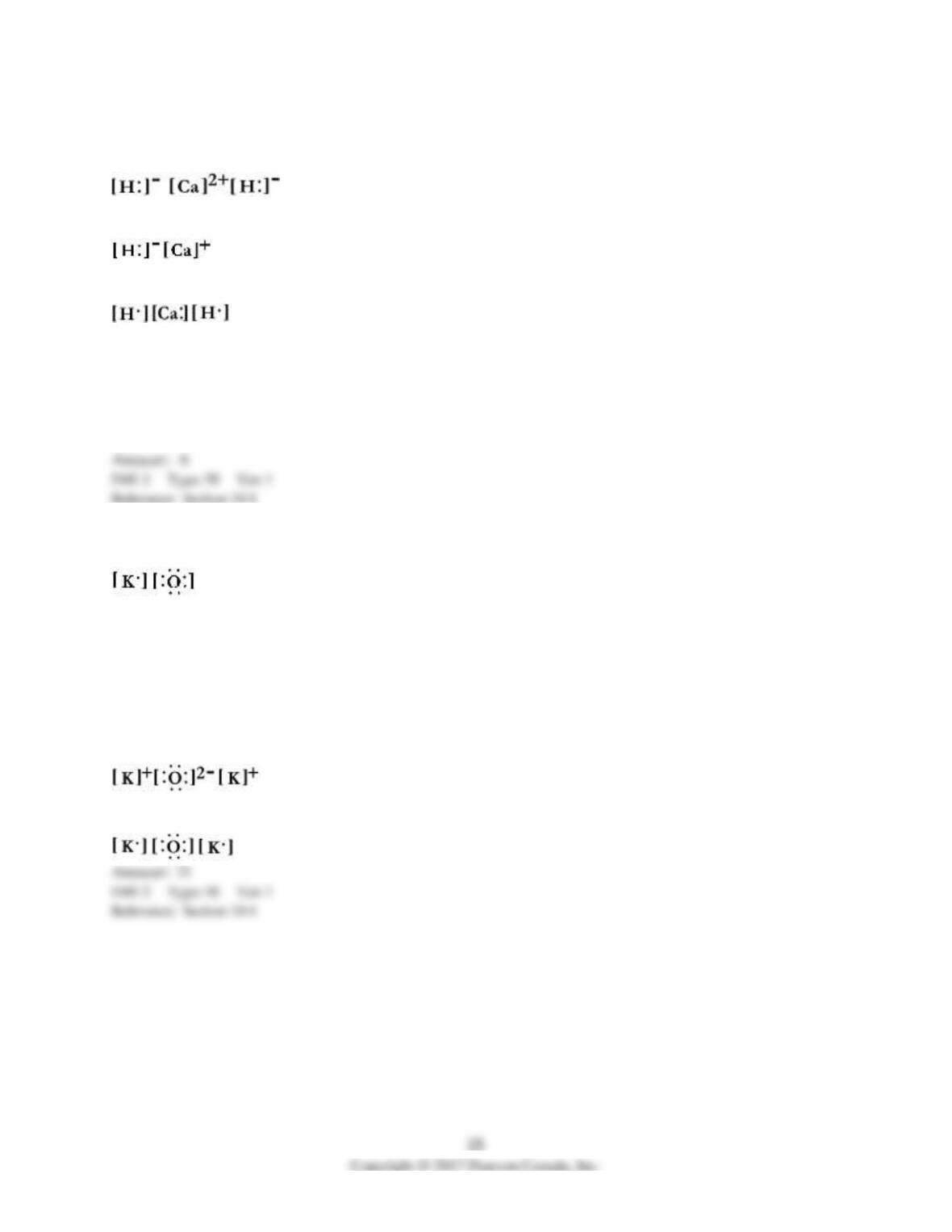
61) Write a Lewis structure for sodium iodide.
A)
B)
C)
D)
Na—I
E)
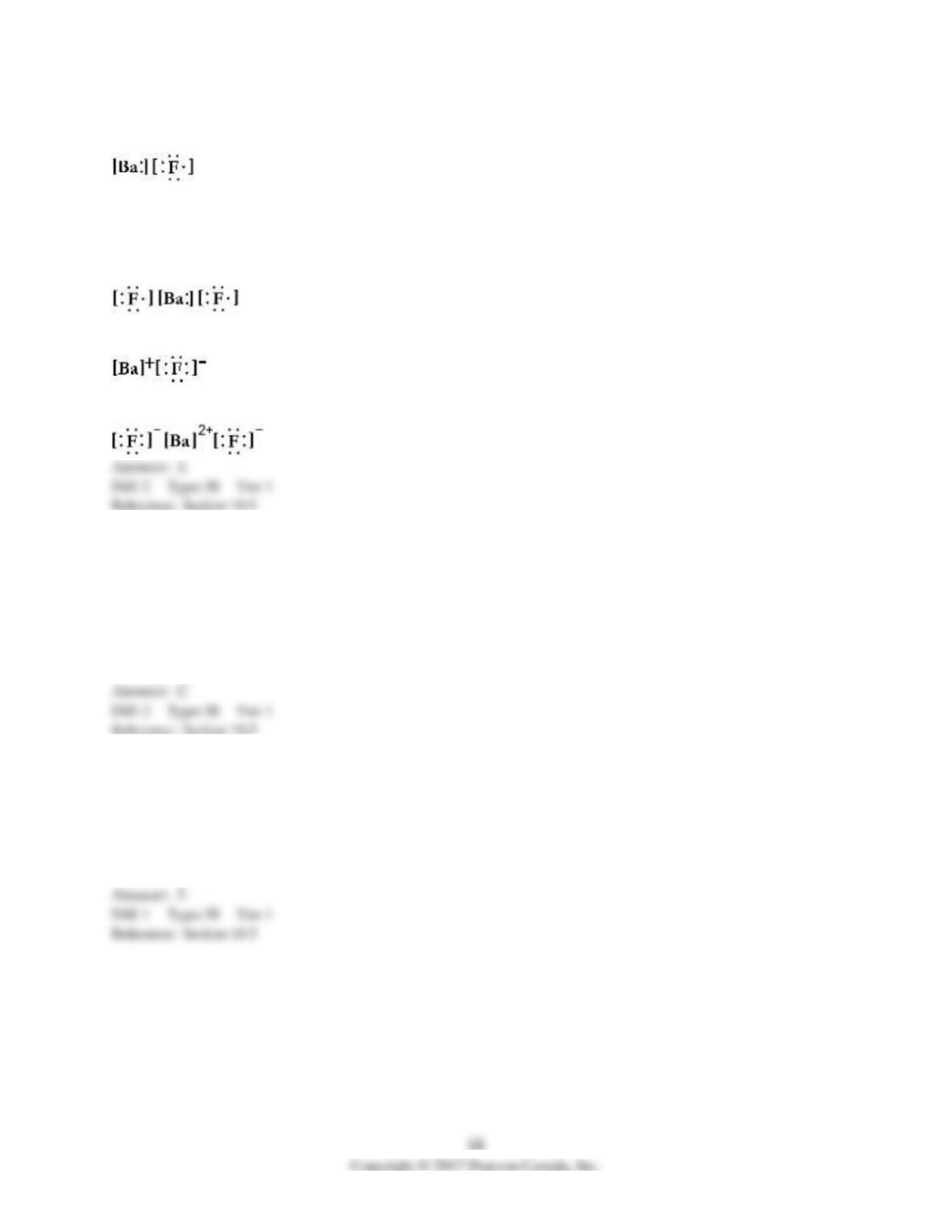
62) Write a Lewis structure for calcium hydride.
A)
B)
C)
D)
H—Ca—H
E)
Ca—H
63) Write a Lewis structure for potassium oxide.
A)
B)
K—O
C)
K—O—K
D)
E)
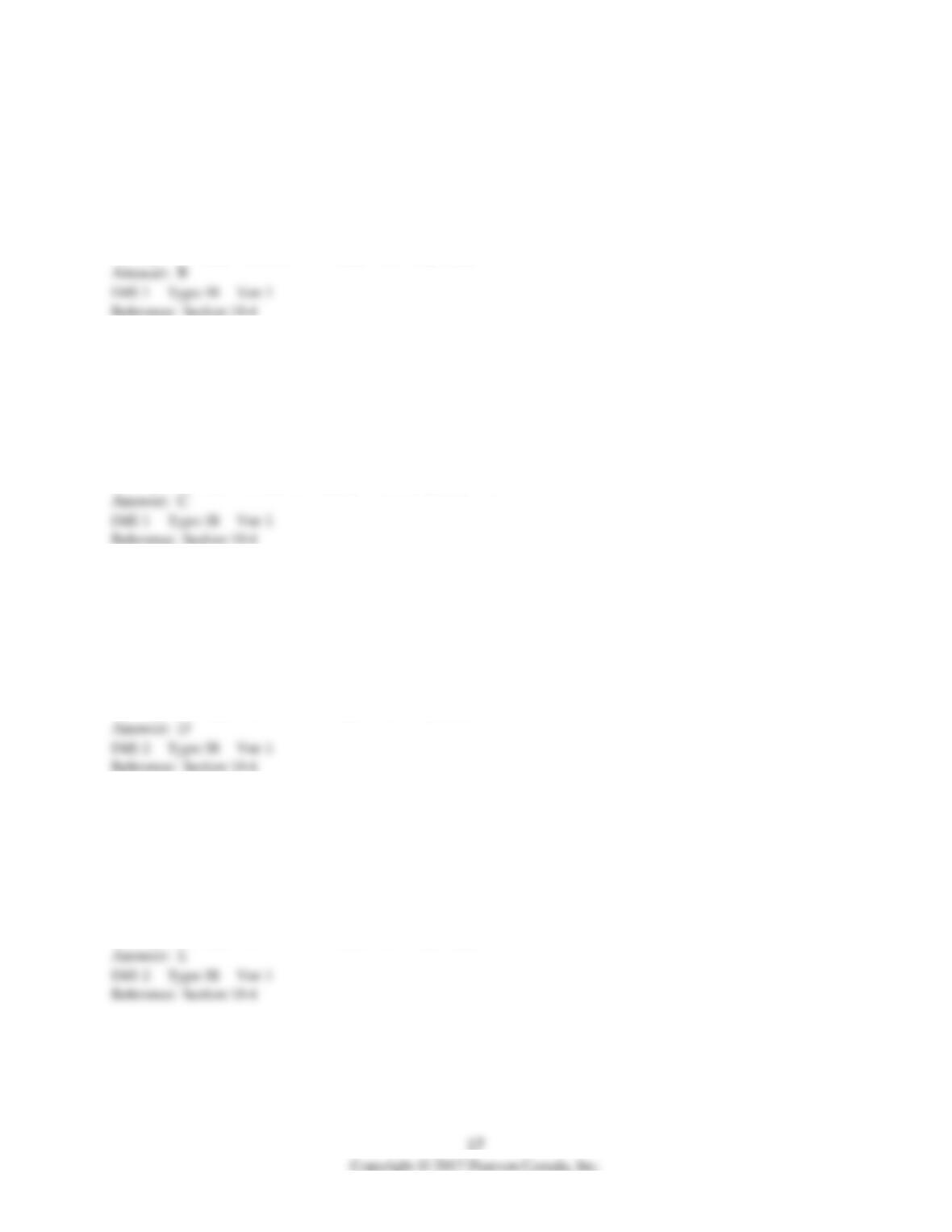
64) Write a Lewis structure for barium fluoride.
A)
B)
F—Ba—F
C)
D)
E)
65) How many bond pairs (“bp”) and how many lone pairs (“lp”) should be shown in the Lewis structure
for carbon monoxide?
A) 1 bp/4 lp
B) 2 bp/3 lp
C) 3 bp/2 lp
D) 4 bp/1 lp
E) 5 bp/0 lp
66) Arrange the following in order of increasing electronegativity: Cs, F, As, Cl.
A) As < Cl < Cs < F
B) Cl < As < F < Cs
C) As < F < Cs < Cl
D) Cl < Cs < F < As
E) Cs < As < Cl < F
67) After drawing the Lewis dot structure for PCl3, determine the number of single bond(s), double
bond(s), and lone pair(s) on the central atom.
A) single bond(s) = 2, double bond(s) = 1, lone pair(s) = 1
B) single bond(s) = 3, double bond(s) = 0, lone pair(s) = 1
C) single bond(s) = 2, double bond(s) = 0, lone pair(s) = 2
D) single bond(s) = 3, double bond(s) = 1, lone pair(s) = 0
E) single bond(s) = 3, double bond(s) = 1, lone pair(s) = 1
68) After drawing the Lewis dot structure for CO2, determine the number of single bond(s), double
bond(s), and lone pair(s) on the central atom.
A) single bond(s) = 2, double bond(s) = 2, lone pair(s) = 0
B) single bond(s) = 2, double bond(s) = 0, lone pair(s) = 2
C) single bond(s) = 0, double bond(s) = 2, lone pair(s) = 0
D) single bond(s) = 2, double bond(s) = 0, lone pair(s) = 1
E) single bond(s) = 0, double bond(s) = 2, lone pair(s) = 2
69) After drawing the Lewis dot structure for CH3Cl, determine the number of single bond(s), double
bond(s), and lone pair(s) on the central atom.
A) single bond(s) = 4, double bond(s) = 1, lone pair(s) = 0
B) single bond(s) = 4, double bond(s) = 0, lone pair(s) = 1
C) single bond(s) = 3, double bond(s) = 0, lone pair(s) = 1
D) single bond(s) = 4, double bond(s) = 0, lone pair(s) = 0
E) single bond(s) = 3, double bond(s) = 1, lone pair(s) = 0
70) After drawing the Lewis dot structure for CH2O, determine the number of single bond(s), double
bond(s), and lone pair(s) on the central atom.
A) single bond(s) = 1, double bond(s) = 2, lone pair(s) = 0
B) single bond(s) = 2, double bond(s) = 1, lone pair(s) = 1
C) single bond(s) = 3, double bond(s) = 0, lone pair(s) = 1
D) single bond(s) = 3, double bond(s) = 1, lone pair(s) = 0
E) single bond(s) = 2, double bond(s) = 1, lone pair(s) = 0
71) What is the formal charge on B in BF4–?
A) +1
B) –1
C) +2
D) 0
E) –2
72) What is the formal charge on N in NO3–?
A) +2
B) –2
C) +1
D) –1
E) 0
73) What is the formal charge on P in PCl5?
A) +5
B) +2
C) +1
D) 0
E) –1
74) What is the formal charge on carbon in the bicarbonate ion HOCO2–?
A) +2
B) –2
C) +1
D) –1
E) 0
75) After drawing the Lewis dot structure for BeCl2, determine the number of single bond(s), double
bond(s), and lone pair(s) on the central atom.
A) single bond(s) = 2, double bond(s) = 0, lone pair(s) = 0
B) single bond(s) = 2, double bond(s) = 0, lone pair(s) = 2
C) single bond(s) = 2, double bond(s) = 0, lone pair(s) = 1
D) single bond(s) = 0, double bond(s) = 2, lone pair(s) = 0
E) single bond(s) = 1, double bond(s) = 1, lone pair(s) = 0
76) After drawing the Lewis dot structure for XeCl4, determine the number of single bond(s), double
bond(s), and lone pair(s) on the central atom.
A) single bond(s) = 4, double bond(s) = 0, lone pair(s) = 0
B) single bond(s) = 4, double bond(s) = 0, lone pair(s) = 2
C) single bond(s) = 4, double bond(s) = 0, lone pair(s) = 1
D) single bond(s) = 3, double bond(s) = 1, lone pair(s) = 0
E) single bond(s) = 1, double bond(s) = 3, lone pair(s) = 0
77) After drawing the Lewis dot structure for XeCl2, determine the number of single bond(s), double
bond(s), and lone pair(s) on the central atom.
A) single bond(s) = 2, double bond(s) = 0, lone pair(s) = 2
B) single bond(s) = 0, double bond(s) = 2, lone pair(s) = 0
C) single bond(s) = 0, double bond(s) = 2, lone pair(s) = 1
D) single bond(s) = 2, double bond(s) = 0, lone pair(s) = 3
E) single bond(s) = 2, double bond(s) = 0, lone pair(s) = 0
78) After drawing the Lewis dot structure for IF7, determine the number of single bond(s), double
bond(s), and lone pair(s) on the central atom.
A) single bond(s) = 3, double bond(s) = 2, lone pair(s) = 1
B) single bond(s) = 7, double bond(s) = 0, lone pair(s) = 1
C) single bond(s) = 7, double bond(s) = 0, lone pair(s) = 0
D) single bond(s) = 1, double bond(s) = 0, lone pair(s) = 0
E) single bond(s) = 4, double bond(s) = 0, lone pair(s) = 0
79) The electron-group geometry of H2O is ________.
A) tetrahedral
B) linear
C) trigonal planar
D) bent
E) V-shaped
80) What is the molecular shape of BrF5?
A) linear
B) square pyramidal
C) square planar
D) octahedral
E) trigonal bipyramidal
81) What is the correct molecular geometry for SeBr3+?
A) trigonal pyramidal
B) tetrahedral
C) trigonal planar
D) bent
E) T-shaped
82) What is the correct molecular geometry for the carbon atom in urea (NH2)2CO?
A) Tetrahedral
B) T-Shaped
C) Trigonal planar
D) Trigonal pyramidal
E) Trigonal bipyramidal
83) What is the correct molecular geometry for each silicon atom in disilane Si2H6?
A) Tetrahedral
B) Square planar
C) Octahedral
D) Linear
E) Bent
84) Given the following bond lengths in pm:
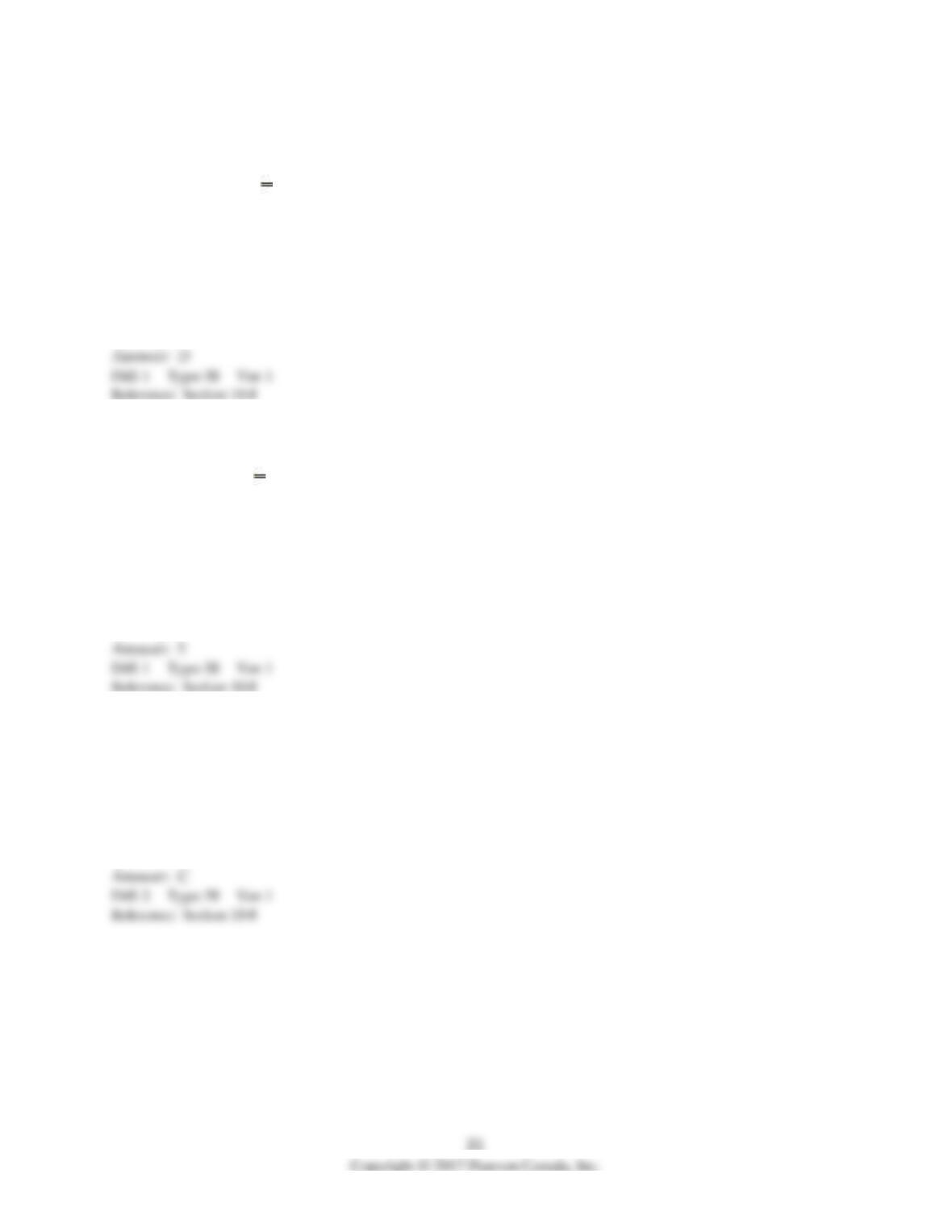
N—N, 145; N N, 123; Br—Br, 228
What is the best estimate of the N—Br bond length in NBr3 in pm?
A) 373 pm
B) 125 pm
C) 351 pm
D) 216 pm
E) 561 pm
85) Given the following bond lengths in pm:
C—C, 154; C C, 134; Cl—Cl, 199
What is the best estimate of the C—Cl bond length in CCl4 in pm?
A) 353 pm
B) 706 pm
C) 167 pm
D) 333 pm
E) 177 pm
86) What is the bond order for the carbon-oxygen bond in formaldehyde (CH2O), which has no O—H
bonds?
A) 0
B) 1
C) 2
D) 3
E) 4
87) Given the listed bond lengths, what would be the most reasonable estimate for the carbon-oxygen
bond length in carbon dioxide?
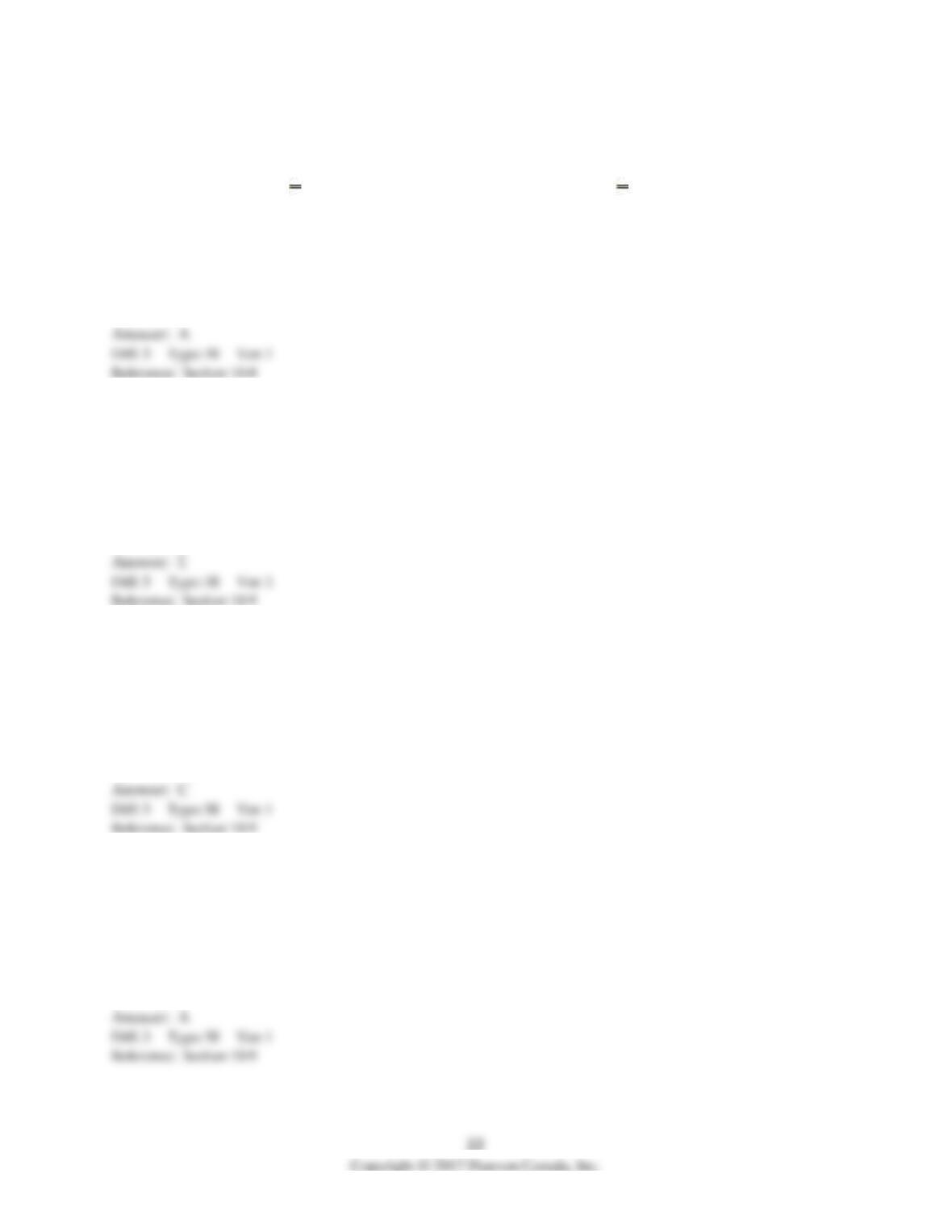
C—C/154 pm C C/120 pm C—O/143 pm O—O/145 pm O O/121 pm
A) ca. 120 pm
B) ca. 130 pm
C) ca. 140 pm
D) ca. 150 pm
E) > 150 pm
88) Given the bond enthalpies N—H (389), Cl—Cl (243), N—Cl (201), and H—Cl (431) in kJ/mol, compute
ΔH° in kJ/mol for: NH3(g) + Cl2(g) → NH2Cl + HCl(g).
A) -393 kJ/mol
B) -1100 kJ/mol
C) +71 kJ/mol
D) +393 kJ/mol
E) 0 kJ/mol
89) Given the bond enthalpies I—Cl (209), H—H (435), H—I (297), and H—Cl (431) in kJ/mol, compute
ΔH° in kJ/mol for: ICl3(g) + 2 H2(g) → HI(g) + 3 HCl(g).
A) +264 kJ/mol
B) -84 kJ/mol
C) -93 kJ/mol
D) -523 kJ/mol
E) +84 kJ/mol
90) Given the bond enthalpies Cl—Cl (243), C—Cl (339), H—Cl (431),C—H (414) all in kJ/mol, estimate
ΔH° for the following reaction: CH4(g) + Cl2(g) → CH3Cl(g) + HCl(g).
A) -113 kJ/mol
B) -356 kJ/mol
C) 301 kJ/mol
D) -1427 kJ/mol
E) -30 kJ/mol
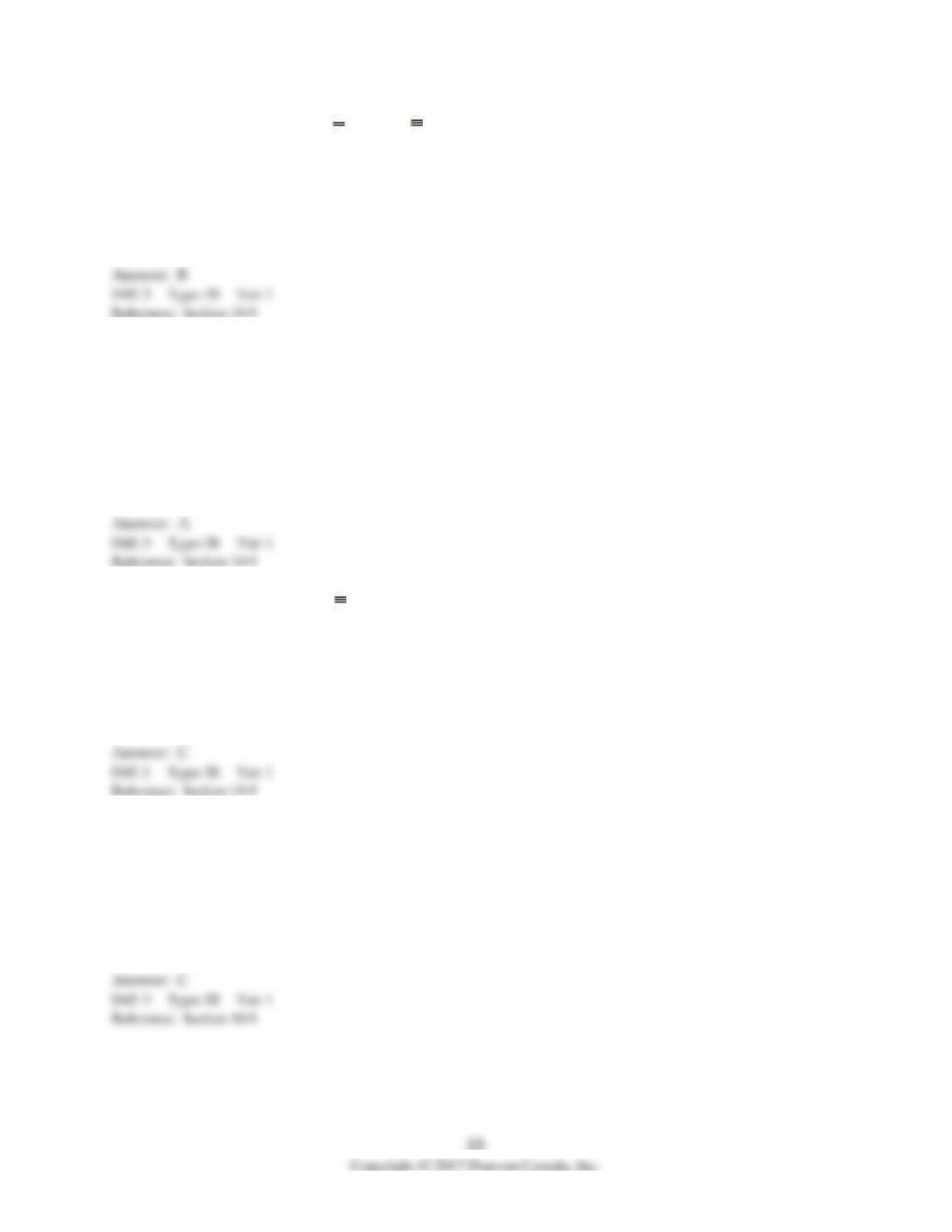
91) Given the bond enthalpies C C (611), C C (837), H—H (436),C—H (414) all in kJ/mol, estimate ΔH°
for the following reaction: C2H2(g) + H2(g) → C2H4(g).
A) -60 kJ/mol
B) -166 kJ/mol
C) -994 kJ/mol
D) +166 kJ/mol
E) 98 kJ/mol
92) Compound EX4 reacts with Y2 giving two products: EX3Y and XY. Calculate the E-X bond enthalpy if
the reaction liberates 243.6 kJ/mol and other bond enthalpies are: Y-Y 109 kJ/mol, X-Y 123.1 kJ/mol and E-
Y 290 kJ/mol.
A) 60.5 kJ/mol
B) 547.7 kJ/mol
C) 20.6 kJ/mol
D) 234.7 kJ/mol
E) 176.9 kJ/mol
93) Given the bond enthalpies N N (946), H—H (436), H—N (389), all in kJ/mol, estimate ΔH° for the
following reaction: N2(g) + 3 H2(g) → 2NH3(g).
A) -215 kJ/mol
B) -863 kJ/mol
C) -80 kJ/mol
D) 568 kJ/mol
E) -1476 kJ/mol
94) Given the bond enthalpies H—O (464), Cl—Cl (243), Cl—O (205), and H—Cl (431) in kJ/mol, compute
ΔH° in kJ/mol for: H2O(g) + Cl2(g) → HOCl(g) + HCl(g).
A) -393 kJ/mol
B) -1100 kJ/mol
C) +71 kJ/mol
D) +393 kJ/mol
E) +1100 kJ/mol
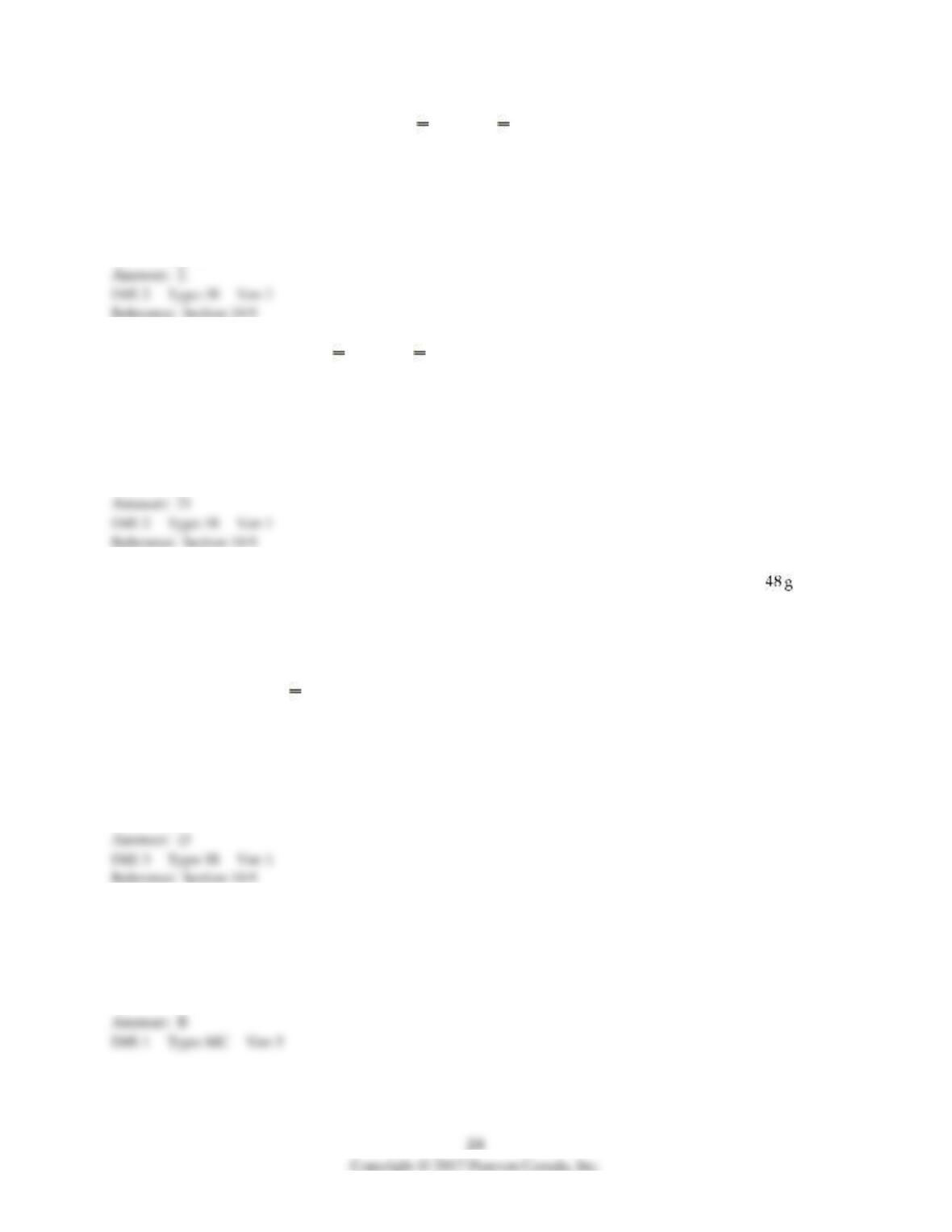
95) Given the bond enthalpies C—O (360), C O (707), O O (498), H—O (464), C—H (414), all in kJ/mol,
estimate ΔH° for the following reaction: CH3OCH3(g) + 3 O2(g) → 2 CO2(g) + 3 H2O(g).
A) -2332 kJ/mol
B) -242 kJ/mol
C) 870 kJ/mol
D) -2106 kJ/mol
E) -914 kJ/mol
96) Given the bond enthalpies C O (707), O O (498), H—O (464), and C—H (414) in kJ/mol, compute
ΔH° in kJ/mol for: CH4(g) + 2 O2(g) → CO2(g) + 2 H2O(g).
A) +618 kJ/mol
B) +259 kJ/mol
C) -519 kJ/mol
D) -618 kJ/mol
E) -259 kJ/mol
97) Given the listed average bond energies, calculate the enthalpy change for the production of of
methanol by the reaction:
CO2(g) + 3 H2(g) → CH3OH(g) + H2O(g)
C—O(360 kJ/mol) C O(736 kJ/mol) H—H(436 kJ/mol)
H—O(464 kJ/mol) H—C(414 kJ/mol)
A) +214 kJ
B) +639 kJ
C) 0 kJ
D) -214 kJ
E) -108 kJ
98) Of the following elements, which has the highest electronegativity?
A) S
B) Cl
C) Ti
D) Se
99) Of the following elements, which has the lowest electronegativity?
A) Sr
B) I
C) Ba
D) At
100) The electronegativity is 2.1 for H and 1.9 for Pb. Based on these electronegativities, PbH4 would be
expected to:
A) be ionic and contain H– ions
B) be ionic and contain H+ ions
C) have polar covalent bonds with a partial negative charge on the H atoms
D) have polar covalent bonds with a partial positive charge on the H atoms
101) The compound ClF contains:
A) ionic bonds
B) nonpolar covalent bonds
C) polar covalent bonds with partial negative charges on the F atoms
D) polar covalent bonds with partial negative charges on the Cl atoms
102) The phosphorus atom in PCl3 would be expected to have a:
A) partial positive (δ+) charge
B) partial negative (δ-) charge
C) 3+ formal charge
D) 3- formal charge
103) The iodine atom in I2 would be expected to have a:
A) formal charge of 1-
B) partial charge δ–
C) partial charge δ+
D) formal charge of 0
104) In the best Lewis structure for CN–, what is the formal charge on the N atom?
A) -1
B) 0
C) +1
D) +2
26
105) How many lone pairs of electrons are on the As atom in AsCl3?
A) 0
B) 1
C) 2
D) 3
106) How many lone pairs of electrons are on the S atom in SF4?
A) 0
B) 1
C) 2
D) 3
107) How many lone pairs are on the Br atom in BrCl2–?
A) 0
B) 1
C) 2
D) 3